Custom Walk in Milan, Italy by paulnwhyte_ac2fe4 created on 2026-07-22
Guide Location: Italy » Milan
Guide Type: Custom Walk
# of Sights: 10
Tour Duration: 3 Hour(s)
Travel Distance: 6.6 Km or 4.1 Miles
Share Key: KLWLZ
Guide Type: Custom Walk
# of Sights: 10
Tour Duration: 3 Hour(s)
Travel Distance: 6.6 Km or 4.1 Miles
Share Key: KLWLZ
How It Works
Please retrieve this walk in the GPSmyCity app. Once done, the app will guide you from one tour stop to the next as if you had a personal tour guide. If you created the walk on this website or come to the page via a link, please follow the instructions below to retrieve the walk in the app.
Retrieve This Walk in App
Step 1. Download the app "GPSmyCity: Walks in 1K+ Cities" on Apple App Store or Google Play Store.



Step 2. In the GPSmyCity app, download(or launch) the guide "Milan Map and Walking Tours".
Step 3. Tap the menu button located at upper right corner of the "Walks" screen and select "Retrieve custom walk". Enter the share key: KLWLZ
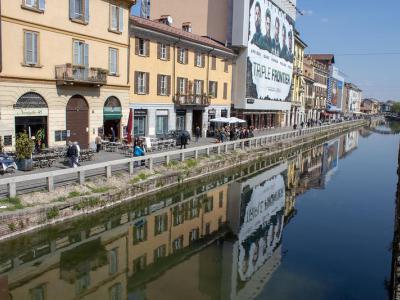
1) Quartiere Navigli (Navigli District)
Milan's Navigli District is a lively and vibrant area known for its picturesque canals, which were once used to transport goods throughout the city, and which now provide a scenic backdrop for the many bars, restaurants, and cafes that line their banks.
As the city's liveliest neighbourhood, Navigli is particularly popular with young people, and is known for its nightlife, with many bars and clubs staying open until the early hours of the morning. During the day, the area is a hub of activity, with a bustling street market selling everything from vintage clothing to handmade crafts.
Picturesque remnants of the city's ancient past, including the Roman basilica of San Lorenzo, the early-Christian church of Saint Eustorgius, and the 19th-century triumphal arch on Piazza XXIV Maggio, serve as a backdrop to the scene.
A unique blend of history, culture, and contemporary urban living, the Navigli district is a must-visit destination.
As the city's liveliest neighbourhood, Navigli is particularly popular with young people, and is known for its nightlife, with many bars and clubs staying open until the early hours of the morning. During the day, the area is a hub of activity, with a bustling street market selling everything from vintage clothing to handmade crafts.
Picturesque remnants of the city's ancient past, including the Roman basilica of San Lorenzo, the early-Christian church of Saint Eustorgius, and the 19th-century triumphal arch on Piazza XXIV Maggio, serve as a backdrop to the scene.
A unique blend of history, culture, and contemporary urban living, the Navigli district is a must-visit destination.
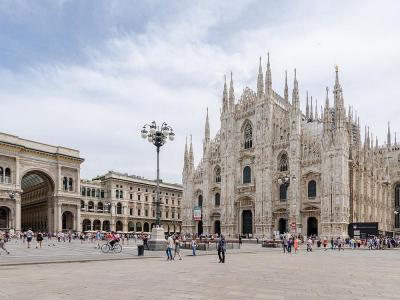
2) Piazza del Duomo (Cathedral Square) (must see)
Milan's central square-vast, echoing, alive with camera clicks, quick footsteps, and pigeons who clearly believe they own the place. It feels grand, almost theatrical. On the one side stands the Museum of the Twentieth Century, cool and modern against the Gothic drama of the Duomo.
Strangely, no café terraces spread across the square itself. The space is left open, almost ceremonial. But slip under the porticoes, and you’ll find Camparino, founded in 1867 by the Campari family.
Right here, at the entrance to the Vittorio Emanuele II Gallery, Giuseppe Verdi used to stop for a drink after his concerts. In 1877, Milanese aristocrats gathered at this very spot to witness one of the city’s first experiments with electric lighting. Imagine the excitement-people staring upward as bulbs flickered to life...
Today, inside its Art Nouveau interior, the ritual continues. Suits loosen ties. Conversations soften. Coffee arrives. Campari glows red in the glass, usually accompanied by olives large enough to demand attention.
Now turn to the south side of the Duomo and meet the Royal Palace. Beneath its neoclassical façade lies a complicated past. This was once the Broletto (or Milan’s medieval town hall), destroyed by Frederick Barbarossa in 1162. Rebuilt in 1171, it later became the Ducal Palace of the Visconti and Sforza dynasties. When Galeazzo Visconti married Beatrice d’Este, the couple celebrated their entrance into Milan with eight full days of festivities here. Eight days! No short reception, indeed...
In 1336, the Visconti added their private chapel, San Gottardo in Corte. Its elegant colonnaded bell tower still rises behind the palace, even though the church itself disappeared during later renovations. In 1412, drama returned when Giovanni Maria Visconti was murdered on the church steps. After that, the family wisely moved to the more secure Sforzesco Castle. Under the Sforzas, a theater operated inside the palace, and in 1595, a 14-year-old Mozart performed here.
Also standing proudly in the piazza is an 1896 equestrian statue of Vittorio Emanuele II, the first king of unified Italy, who entered Milan triumphantly in 1859. Horse rearing up. King upright. History cast in bronze. In this square, Milan does not whisper. It performs!
Strangely, no café terraces spread across the square itself. The space is left open, almost ceremonial. But slip under the porticoes, and you’ll find Camparino, founded in 1867 by the Campari family.
Right here, at the entrance to the Vittorio Emanuele II Gallery, Giuseppe Verdi used to stop for a drink after his concerts. In 1877, Milanese aristocrats gathered at this very spot to witness one of the city’s first experiments with electric lighting. Imagine the excitement-people staring upward as bulbs flickered to life...
Today, inside its Art Nouveau interior, the ritual continues. Suits loosen ties. Conversations soften. Coffee arrives. Campari glows red in the glass, usually accompanied by olives large enough to demand attention.
Now turn to the south side of the Duomo and meet the Royal Palace. Beneath its neoclassical façade lies a complicated past. This was once the Broletto (or Milan’s medieval town hall), destroyed by Frederick Barbarossa in 1162. Rebuilt in 1171, it later became the Ducal Palace of the Visconti and Sforza dynasties. When Galeazzo Visconti married Beatrice d’Este, the couple celebrated their entrance into Milan with eight full days of festivities here. Eight days! No short reception, indeed...
In 1336, the Visconti added their private chapel, San Gottardo in Corte. Its elegant colonnaded bell tower still rises behind the palace, even though the church itself disappeared during later renovations. In 1412, drama returned when Giovanni Maria Visconti was murdered on the church steps. After that, the family wisely moved to the more secure Sforzesco Castle. Under the Sforzas, a theater operated inside the palace, and in 1595, a 14-year-old Mozart performed here.
Also standing proudly in the piazza is an 1896 equestrian statue of Vittorio Emanuele II, the first king of unified Italy, who entered Milan triumphantly in 1859. Horse rearing up. King upright. History cast in bronze. In this square, Milan does not whisper. It performs!
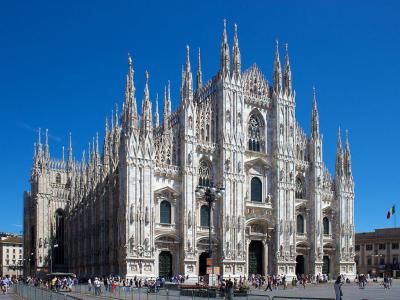
3) Duomo di Milano (Milan Cathedral) (must see)
Some cities have a landmark; Milan has a marble mountain. The Milan Cathedral - or simply the Duomo - is not just big. It’s enormous. This is the seat of the Archbishop of Milan, the largest church in Italy, the third largest in Europe, and the fourth in the world. It spreads across 12,000 square meters and weighs around 325,000 tons. In other words, subtle it is not...
Dedicated to Saint Mary Nascent, the Duomo has been at the heart of city life since 1386. Its foundation stone was laid by Gian Galeazzo Visconti, the first duke of Milan, who had grand ambitions - but unfortunately died in 1402 when only half the cathedral was done. Construction then politely paused for almost 80 years. The reason? - No money and a clear plan. Just a very large unfinished church...
Work finally resumed around 1500, and by 1510, the octagonal dome was complete, decorated with rows of statues straight out of the Bible - 60 figures watching over Milan from above.
Then came Napoleon. In 1805, he decided the façade needed to be finished - promptly. Seven years later, it was done. To thank him, a statue of Napoleon was placed on one of the spires. Not modest, but effective. The Duomo even hosted his coronation.
Still, the cathedral refused to rush history. It wasn’t until 1965, with the final gate completed, that this centuries-long building project could finally call itself finished.
Now, about visiting. The real adventure begins when you climb to the roof. 201 steps through a narrow spiral passage - unless you wisely choose the elevator. Up there, 70 meters above the piazza, you walk among spires, statues, gargoyles, and flying buttresses, with Milan stretching out below you. It feels less like a rooftop and more like a marble forest in the sky.
Below ground, the Paleo-Christian baptistery beneath the west side reveals even older layers of the city. So yes, the Duomo works both up and down.
If you do one thing in Milan, make it this. Book your ticket online, skip the queue, and stay until evening. When the white lights illuminate the façade, the cathedral stops being impressive - and becomes unforgettable!
Dedicated to Saint Mary Nascent, the Duomo has been at the heart of city life since 1386. Its foundation stone was laid by Gian Galeazzo Visconti, the first duke of Milan, who had grand ambitions - but unfortunately died in 1402 when only half the cathedral was done. Construction then politely paused for almost 80 years. The reason? - No money and a clear plan. Just a very large unfinished church...
Work finally resumed around 1500, and by 1510, the octagonal dome was complete, decorated with rows of statues straight out of the Bible - 60 figures watching over Milan from above.
Then came Napoleon. In 1805, he decided the façade needed to be finished - promptly. Seven years later, it was done. To thank him, a statue of Napoleon was placed on one of the spires. Not modest, but effective. The Duomo even hosted his coronation.
Still, the cathedral refused to rush history. It wasn’t until 1965, with the final gate completed, that this centuries-long building project could finally call itself finished.
Now, about visiting. The real adventure begins when you climb to the roof. 201 steps through a narrow spiral passage - unless you wisely choose the elevator. Up there, 70 meters above the piazza, you walk among spires, statues, gargoyles, and flying buttresses, with Milan stretching out below you. It feels less like a rooftop and more like a marble forest in the sky.
Below ground, the Paleo-Christian baptistery beneath the west side reveals even older layers of the city. So yes, the Duomo works both up and down.
If you do one thing in Milan, make it this. Book your ticket online, skip the queue, and stay until evening. When the white lights illuminate the façade, the cathedral stops being impressive - and becomes unforgettable!
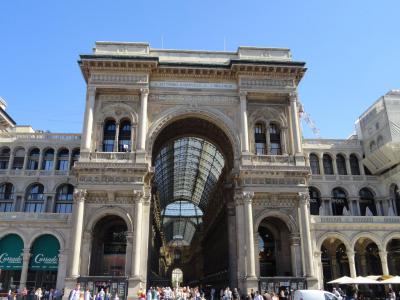
4) Galleria Vittorio Emanuele II (Vittorio Emanuele II Gallery) (must see)
Walk into the Galleria Vittorio Emanuele II, and you’re not simply entering a mall - you’re stepping straight into Italy’s grand 19th-century statement piece. Five storeys high, wrapped in curved glass and iron, dressed up with patriotic mosaics and statues, it feels like a country saying, “We’re unified now - and we’re fabulous!”
Construction began in 1865 under architect Giuseppe Mengoni, the mastermind behind the grand plan connecting the Milan Cathedral to La Scala Opera House. The gallery was named after Vittorio Emanuele II, the first king of a united Italy, and officially opened in 1867.
But perfection takes time. Work continued for another decade. Then came the twist: in December 1877, just one day before completion, Mengoni fell from the top of the triumphal arch and died. A truly dramatic ending for a dramatic project...
Architecturally, it’s bold. The layout forms a Latin cross: two grand glass-vaulted passages - one 196 meters long, the other just over 105 - intersect beneath a soaring dome nearly 47 meters high. Iron and glass do the heavy lifting, pioneering the idea of the enclosed shopping arcade. Some even say this iron confidence later inspired the Eiffel Tower in Paris.
Now look down. The floor is a marble map of Italian pride, with mosaics representing major cities. And there it is - the famous bull. Tradition says that you should place your right heel on a certain anatomical detail, spin around, and make a wish. Centuries of enthusiastic spinning have worn an actual hole into the mosaic. A vivid example of Milanese optimism, carved in marble...
Indeed, visiting here feels like stepping into a perfectly preserved postcard of 19th-century Milan - light streaming through the dome, elegant shopfronts glowing, conversations echoing under glass. And yes, you can sit down at one of the cafés, order something indulgent, and watch the stylish parade drift by without emptying your wallet.
At the far end, opposite the statue of Leonardo da Vinci, you’ll even find a museum dedicated to the master himself.
For the best experience, come early in the morning or late at night, when the crowds thin out and the dome belongs almost entirely to you. And whatever you do - find the bull. Spin. Make the wish. Milan expects nothing less...
Construction began in 1865 under architect Giuseppe Mengoni, the mastermind behind the grand plan connecting the Milan Cathedral to La Scala Opera House. The gallery was named after Vittorio Emanuele II, the first king of a united Italy, and officially opened in 1867.
But perfection takes time. Work continued for another decade. Then came the twist: in December 1877, just one day before completion, Mengoni fell from the top of the triumphal arch and died. A truly dramatic ending for a dramatic project...
Architecturally, it’s bold. The layout forms a Latin cross: two grand glass-vaulted passages - one 196 meters long, the other just over 105 - intersect beneath a soaring dome nearly 47 meters high. Iron and glass do the heavy lifting, pioneering the idea of the enclosed shopping arcade. Some even say this iron confidence later inspired the Eiffel Tower in Paris.
Now look down. The floor is a marble map of Italian pride, with mosaics representing major cities. And there it is - the famous bull. Tradition says that you should place your right heel on a certain anatomical detail, spin around, and make a wish. Centuries of enthusiastic spinning have worn an actual hole into the mosaic. A vivid example of Milanese optimism, carved in marble...
Indeed, visiting here feels like stepping into a perfectly preserved postcard of 19th-century Milan - light streaming through the dome, elegant shopfronts glowing, conversations echoing under glass. And yes, you can sit down at one of the cafés, order something indulgent, and watch the stylish parade drift by without emptying your wallet.
At the far end, opposite the statue of Leonardo da Vinci, you’ll even find a museum dedicated to the master himself.
For the best experience, come early in the morning or late at night, when the crowds thin out and the dome belongs almost entirely to you. And whatever you do - find the bull. Spin. Make the wish. Milan expects nothing less...
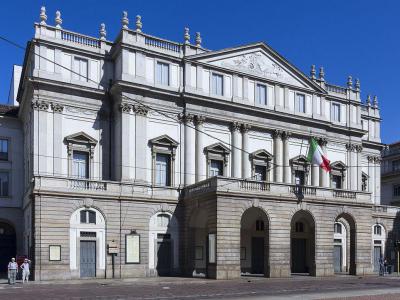
5) La Scala (Opera House and Museum) (must see)
If Milan had a heartbeat, it might sound like an orchestra tuning up inside La Scala Opera House. Since 1778, this legendary theater has been setting the standard for opera worldwide. Its Chorus, Ballet, and Orchestra have helped make it one of the most respected musical institutions on the planet. The greatest Italian voices - and many international stars - have stepped onto this stage, knowing that a triumph at La Scala can define a career.
The theater rose from ashes, quite literally. After the Teatro Regio Ducale burned down in 1776, Milan decided it needed something even grander. The new opera house was built on the site of the former church of Santa Maria alla Scala, and that’s where the name comes from.
Construction was financed by selling lavishly decorated theater boxes to wealthy families. These boxes were not just seats; they were status symbols, mini living rooms for Milan’s elite. Even the French writer Stendhal was impressed.
Curious fact: in those early days, the main floor had no chairs, so audiences stood through performances. And believe it or not, there was no proper orchestra pit either. Indeed, opera was an endurance sport...
World War II left the building badly damaged, but Milan was not ready to lose its cultural soul. La Scala reopened in 1946 with a historic concert conducted by Arturo Toscanini, featuring a remarkable solo by Renata Tebaldi. It was not just a reopening; it was a statement!
A major renovation between 2002 and 2004 updated the theater for the modern age, while preserving its historic charm. From the outside, the façade looks surprisingly modest. Step inside, however, and you find red velvet, gold details, and an atmosphere that feels both grand and intimate - often said to rival, and even surpass, opera houses in New York and London.
The La Scala Orchestra, with its 135 musicians, is famous for its refined and unified sound. The theater is equally admired for its symphonic concerts. Next door, the museum displays an extraordinary collection of musical treasures. A visit even allows you to sit in one of the prestigious boxes - perfect for a photo and a moment of quiet admiration.
A practical note: second-row balcony seats are best avoided if you are not tall. And after 6 pm, same-day tickets are often available at a generous discount - because even legends can have last-minute offers...
The theater rose from ashes, quite literally. After the Teatro Regio Ducale burned down in 1776, Milan decided it needed something even grander. The new opera house was built on the site of the former church of Santa Maria alla Scala, and that’s where the name comes from.
Construction was financed by selling lavishly decorated theater boxes to wealthy families. These boxes were not just seats; they were status symbols, mini living rooms for Milan’s elite. Even the French writer Stendhal was impressed.
Curious fact: in those early days, the main floor had no chairs, so audiences stood through performances. And believe it or not, there was no proper orchestra pit either. Indeed, opera was an endurance sport...
World War II left the building badly damaged, but Milan was not ready to lose its cultural soul. La Scala reopened in 1946 with a historic concert conducted by Arturo Toscanini, featuring a remarkable solo by Renata Tebaldi. It was not just a reopening; it was a statement!
A major renovation between 2002 and 2004 updated the theater for the modern age, while preserving its historic charm. From the outside, the façade looks surprisingly modest. Step inside, however, and you find red velvet, gold details, and an atmosphere that feels both grand and intimate - often said to rival, and even surpass, opera houses in New York and London.
The La Scala Orchestra, with its 135 musicians, is famous for its refined and unified sound. The theater is equally admired for its symphonic concerts. Next door, the museum displays an extraordinary collection of musical treasures. A visit even allows you to sit in one of the prestigious boxes - perfect for a photo and a moment of quiet admiration.
A practical note: second-row balcony seats are best avoided if you are not tall. And after 6 pm, same-day tickets are often available at a generous discount - because even legends can have last-minute offers...
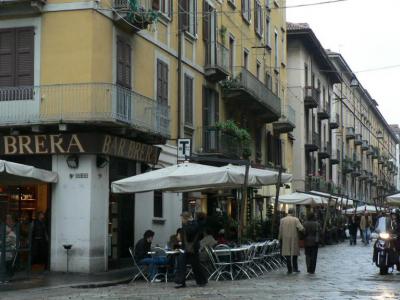
6) Quartiere Brera (Brera District)
Milan's Brera district is one of the city's most charming and historic neighborhoods, sometimes referred to as "the Milanese Montmartre". Known for its narrow, winding streets lined with antique shops, art galleries, and fashionable boutiques, Brera offers visitors a glimpse into Milan's rich cultural heritage.
One of the district's main attractions is the Pinacoteca di Brera, a world-class art museum housed in a beautiful 18th-century palace. The museum boasts an impressive collection of Italian Renaissance art, including works by some of the most famous artists of the era, such as Raphael, Caravaggio, and Titian.
Another must-see attraction is the Orto Botanico di Brera, a botanical garden located in the heart of the neighborhood. Founded in the late 18th century, it is home to over 4,000 species of plants, including many rare and exotic specimens.
The district is also home to the historic Teatro alla Scala, one of the world's most famous opera houses. Visitors can take a tour of the theater, which has hosted some of the greatest names in opera and ballet.
For those interested in shopping, the streets of Brera are filled with high-end boutiques, designer shops, and artisanal crafts stores. There are also plenty of cafes and restaurants, making it a popular destination for foodies and coffee lovers.
Overall, a vibrant and lively district with plenty to see and do. Whether you're interested in art, shopping, or simply soaking up the atmosphere of one of Milan's oldest neighborhoods, Brera is definitely worth a visit.
One of the district's main attractions is the Pinacoteca di Brera, a world-class art museum housed in a beautiful 18th-century palace. The museum boasts an impressive collection of Italian Renaissance art, including works by some of the most famous artists of the era, such as Raphael, Caravaggio, and Titian.
Another must-see attraction is the Orto Botanico di Brera, a botanical garden located in the heart of the neighborhood. Founded in the late 18th century, it is home to over 4,000 species of plants, including many rare and exotic specimens.
The district is also home to the historic Teatro alla Scala, one of the world's most famous opera houses. Visitors can take a tour of the theater, which has hosted some of the greatest names in opera and ballet.
For those interested in shopping, the streets of Brera are filled with high-end boutiques, designer shops, and artisanal crafts stores. There are also plenty of cafes and restaurants, making it a popular destination for foodies and coffee lovers.
Overall, a vibrant and lively district with plenty to see and do. Whether you're interested in art, shopping, or simply soaking up the atmosphere of one of Milan's oldest neighborhoods, Brera is definitely worth a visit.
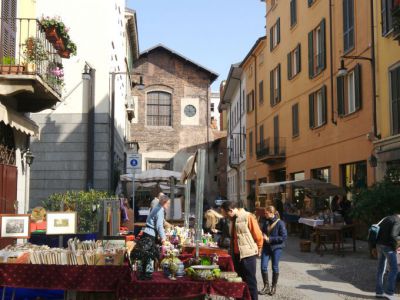
7) Mercato dell'Antiquariato di Brera (Brera Antiques Market)
Brera is a neighborhood in Milan that offers a timeless atmosphere, far from the noise of the city's bustling life. Its winding streets are home to historic buildings such as the Pinacoteca, and its reputation as an artists' hub can be traced back to the eponymous Academy.
While visitors can experience Brera's charm on any day, certain Sundays offer an even more unique and captivating environment. These are the days when the neighborhood hosts antique markets, held annually, which transport visitors to a bygone era of Milan.
Every third Sunday of the month (excluding August), Via Fiori Chiari, Via Madonnina, and Via Formentini transform into streets lined with stalls offering modern antiques, jewelry, books, and even clothing. This initiative began in 1981 and has since brought life to the area throughout the day.
From 9 am to 6 pm, visitors can marvel at ancient porcelain pieces that tell stories of grandmothers and gatherings among friends, try on jewelry with a slightly retro style, and rediscover objects they thought no longer existed but that they would like to have in their homes.
As evening falls, Brera takes on a well-known charm that is present every day of the year. The neighborhood comes alive with the colors of fortune tellers, candle vendors, and lively venues, all of which animate the area in a picturesque and delicate way.
While visitors can experience Brera's charm on any day, certain Sundays offer an even more unique and captivating environment. These are the days when the neighborhood hosts antique markets, held annually, which transport visitors to a bygone era of Milan.
Every third Sunday of the month (excluding August), Via Fiori Chiari, Via Madonnina, and Via Formentini transform into streets lined with stalls offering modern antiques, jewelry, books, and even clothing. This initiative began in 1981 and has since brought life to the area throughout the day.
From 9 am to 6 pm, visitors can marvel at ancient porcelain pieces that tell stories of grandmothers and gatherings among friends, try on jewelry with a slightly retro style, and rediscover objects they thought no longer existed but that they would like to have in their homes.
As evening falls, Brera takes on a well-known charm that is present every day of the year. The neighborhood comes alive with the colors of fortune tellers, candle vendors, and lively venues, all of which animate the area in a picturesque and delicate way.
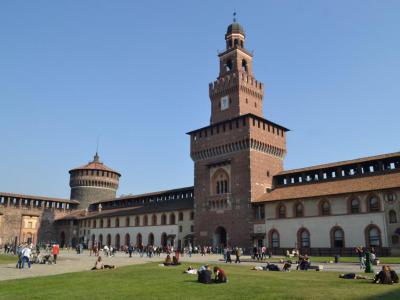
8) Castello Sforzesco (Sforzesco Castle) (must see)
Now let’s turn to the heavyweight of Milanese history: Sforzesco Castle. One of the largest fortresses in Europe, it began life in the 14th century as the power base of the Duchy of Milan. And power bases, as you might imagine, tend to attract trouble. Battles, invasions, looting, destruction - the castle has seen it all.
Take the Filarete Tower. In 1521, lightning struck the structure, which, at the time, was used to store ammunition. The result was a catastrophic explosion, heavy casualties, and major damage. Not exactly the kind of fireworks you plan for...
Slide into the Napoleonic era, and things didn’t calm down much either. The castle was damaged again and repurposed as military quarters. Its frescoed ducal rooms, apparently, were found perfect for stables. Horses where dukes once walked... Indeed, history has a sense of irony.
Then came the twist. After Italy’s Unification in the late 19th century, architect Luca Beltrami led a major restoration. By 1905, the castle was handed back to Milan - not as a fortress, but as a cultural landmark. Today, it houses seven museums and stands as one of the city’s main artistic centers.
Inside, the real showstopper waits in the Sala delle Asse. Look up. That extraordinary ceiling fresco was painted by Leonardo da Vinci, commissioned by the Sforza family. Sixteen mulberry trees rise overhead, their branches woven together with a golden rope, forming an illusion of a pergola. It feels less like a room and more like standing beneath a Renaissance garden canopy.
Sure thing, every room here offers two layers of art: what hangs on the walls - and what stretches above your head. Even the ceilings compete for attention.
If you're on a budget, there's good news. Entry to the castle grounds is free. You can wander the courtyards, admire the architecture, and soak in the scale without paying a cent. The full museum ticket is reasonably priced - and well worth it.
Planning tip: exploring everything, including the surrounding gardens, is not a quick stop. So, give it time. And if you happen to be here on the first or third Tuesday of the month around 2 pm, museum entry is free. Also, if you want access to the battlements, you’ll need to book a guided tour in advance.
Take the Filarete Tower. In 1521, lightning struck the structure, which, at the time, was used to store ammunition. The result was a catastrophic explosion, heavy casualties, and major damage. Not exactly the kind of fireworks you plan for...
Slide into the Napoleonic era, and things didn’t calm down much either. The castle was damaged again and repurposed as military quarters. Its frescoed ducal rooms, apparently, were found perfect for stables. Horses where dukes once walked... Indeed, history has a sense of irony.
Then came the twist. After Italy’s Unification in the late 19th century, architect Luca Beltrami led a major restoration. By 1905, the castle was handed back to Milan - not as a fortress, but as a cultural landmark. Today, it houses seven museums and stands as one of the city’s main artistic centers.
Inside, the real showstopper waits in the Sala delle Asse. Look up. That extraordinary ceiling fresco was painted by Leonardo da Vinci, commissioned by the Sforza family. Sixteen mulberry trees rise overhead, their branches woven together with a golden rope, forming an illusion of a pergola. It feels less like a room and more like standing beneath a Renaissance garden canopy.
Sure thing, every room here offers two layers of art: what hangs on the walls - and what stretches above your head. Even the ceilings compete for attention.
If you're on a budget, there's good news. Entry to the castle grounds is free. You can wander the courtyards, admire the architecture, and soak in the scale without paying a cent. The full museum ticket is reasonably priced - and well worth it.
Planning tip: exploring everything, including the surrounding gardens, is not a quick stop. So, give it time. And if you happen to be here on the first or third Tuesday of the month around 2 pm, museum entry is free. Also, if you want access to the battlements, you’ll need to book a guided tour in advance.
9) Colonne di San Lorenzo (Columns of San Lorenzo)
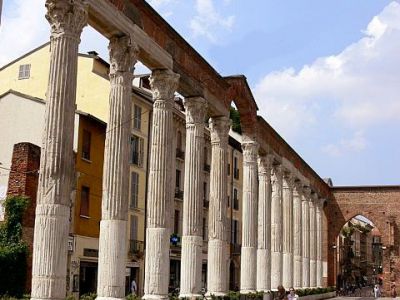
The Columns of San Lorenzo is a popular group of ancient Roman ruins, located in front of the Basilica of San Lorenzo in central Milan, which dates back to the 4th century AD. Consisting mainly of 16 tall Corinthian columns in a row, extracted from a likely 2nd-century pagan temple or public bath house structure, the collonade now fronts an open square. South of the columns, one of the medieval gates still has some Roman marble decoration in place.
Up until 1935, the space between the church and columns was entirely occupied by old houses abutting onto the façade of the church itself. Despite the plans to conserve this ancient urban fabric, the renovations led to the demolition of the old houses and the isolation of the monument on the front side. Following bombing during World War II, the church complex became further isolated on the rear side, where the fenced park now stands, allowing popular views of the Basilica.
A great place to explore and soak up the atmosphere of Milan.
Up until 1935, the space between the church and columns was entirely occupied by old houses abutting onto the façade of the church itself. Despite the plans to conserve this ancient urban fabric, the renovations led to the demolition of the old houses and the isolation of the monument on the front side. Following bombing during World War II, the church complex became further isolated on the rear side, where the fenced park now stands, allowing popular views of the Basilica.
A great place to explore and soak up the atmosphere of Milan.
10) Mercatone dell'Antiquariato del Naviglio Grande (Naviglio Grande Antiques Market)
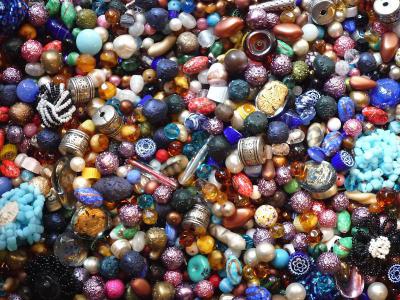
Every last Sunday of the month, a grand specialized market takes place along the first stretch of Naviglio Grande, from Viale Gorizia to the bridge of Via Valenza, spanning almost two kilometers along the oldest canal in Milan. More than 380 exhibitors, mostly dealing in antiques, set up shop here, with two streets, Corsico and Paoli, dedicated to high-quality vintage items. Each edition of the event features carefully selected and closely scrutinized stalls.
On display are a wide range of items, including furniture, watches, porcelain, silverware, jewelry, dolls, games, collectibles, books, glasses, radios, modern antiques, walking sticks, bronzes, glassware, comics, and prints, all meticulously arranged for the pleasure of both local citizens and international tourists.
Throughout the duration of the event, all the local shops, as well as numerous restaurants and art studios, remain open, making the market an enjoyable experience for all visitors.
On display are a wide range of items, including furniture, watches, porcelain, silverware, jewelry, dolls, games, collectibles, books, glasses, radios, modern antiques, walking sticks, bronzes, glassware, comics, and prints, all meticulously arranged for the pleasure of both local citizens and international tourists.
Throughout the duration of the event, all the local shops, as well as numerous restaurants and art studios, remain open, making the market an enjoyable experience for all visitors.
