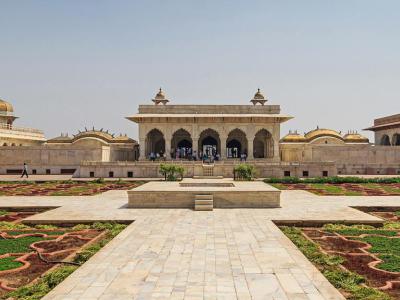


Agra Fort, Agra (must see)
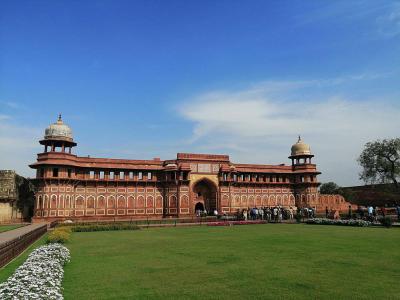
Agra Fort, a UNESCO World Heritage Site, stands as one of India’s most impressive monuments of Mughal power and artistry. Spread across 94 acres on the banks of the Yamuna River, this vast red sandstone fortress functioned not only as a military bastion but also as a royal city within walls rising up to seventy feet high. Its semicircular layout is reinforced by double ramparts, sturdy bastions, and intricate battlements, making it both formidable and elegant in design.
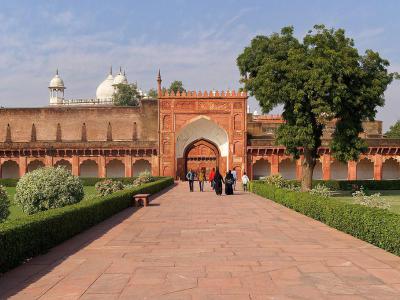
Construction of the current fort began in 1565 under Emperor Akbar, who ordered the rebuilding of an earlier fortification to serve as the new center of the Mughal Empire. Over 4,000 workers labored daily for nearly eight years to complete the massive red sandstone walls and inner structures. The fort’s grand gateways reflect its importance: the Delhi Gate once served as the main ceremonial entrance, while the Lahori Gate-now called the Amar Singh Gate-is the primary entry point for visitors today.
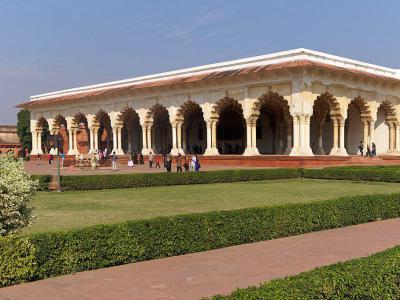
Inside, the fort unfolds like a self-contained city, with palaces, audience halls, mosques, and courtyards connected through a maze of passageways. The Diwan-i-Am (meaning Hall of Public Audience) features elegant arches where emperors addressed their subjects, while the Diwan-i-Khas (meaning Hall of Private Audience) hosted foreign dignitaries and courtly gatherings beneath its delicately carved marble pillars.
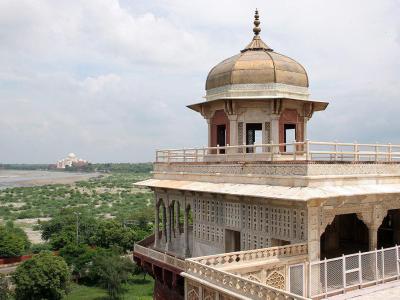
Under Shah Jahan, Akbar’s grandson and the builder of the Taj Mahal, many of the sandstone palaces were transformed with white marble and intricate inlay work, creating a striking contrast between military might and imperial refinement. From the Musamman Burj, a marble tower overlooking the river, Shah Jahan is said to have spent his final years gazing at the distant Taj Mahal.
Throughout its history, Agra Fort has mirrored the changing fortunes of the Mughal dynasty, showcasing a blend of Hindu and Islamic architectural motifs that together tell the story of one of India’s most dynamic and artistically rich eras.
Construction of the current fort began in 1565 under Emperor Akbar, who ordered the rebuilding of an earlier fortification to serve as the new center of the Mughal Empire. Over 4,000 workers labored daily for nearly eight years to complete the massive red sandstone walls and inner structures. The fort’s grand gateways reflect its importance: the Delhi Gate once served as the main ceremonial entrance, while the Lahori Gate-now called the Amar Singh Gate-is the primary entry point for visitors today.
Inside, the fort unfolds like a self-contained city, with palaces, audience halls, mosques, and courtyards connected through a maze of passageways. The Diwan-i-Am (meaning Hall of Public Audience) features elegant arches where emperors addressed their subjects, while the Diwan-i-Khas (meaning Hall of Private Audience) hosted foreign dignitaries and courtly gatherings beneath its delicately carved marble pillars.
Under Shah Jahan, Akbar’s grandson and the builder of the Taj Mahal, many of the sandstone palaces were transformed with white marble and intricate inlay work, creating a striking contrast between military might and imperial refinement. From the Musamman Burj, a marble tower overlooking the river, Shah Jahan is said to have spent his final years gazing at the distant Taj Mahal.
Throughout its history, Agra Fort has mirrored the changing fortunes of the Mughal dynasty, showcasing a blend of Hindu and Islamic architectural motifs that together tell the story of one of India’s most dynamic and artistically rich eras.
Want to visit this sight? Check out these Self-Guided Walking Tours in Agra. Alternatively, you can download the mobile app "GPSmyCity: Walks in 1K+ Cities" from Apple App Store or Google Play Store. The app turns your mobile device to a personal tour guide and it works offline, so no data plan is needed when traveling abroad.
Download The GPSmyCity App



Agra Fort on Map
Sight Name: Agra Fort
Sight Location: Agra, India (See walking tours in Agra)
Sight Type: Attraction/Landmark
Guide(s) Containing This Sight:
Sight Location: Agra, India (See walking tours in Agra)
Sight Type: Attraction/Landmark
Guide(s) Containing This Sight:
Nearby Sights

Walking Tours in Agra, India

Create Your Own Walk in Agra
Creating your own self-guided walk in Agra is easy and fun. Choose the city attractions that you want to see and a walk route map will be created just for you. You can even set your hotel as the start point of the walk.
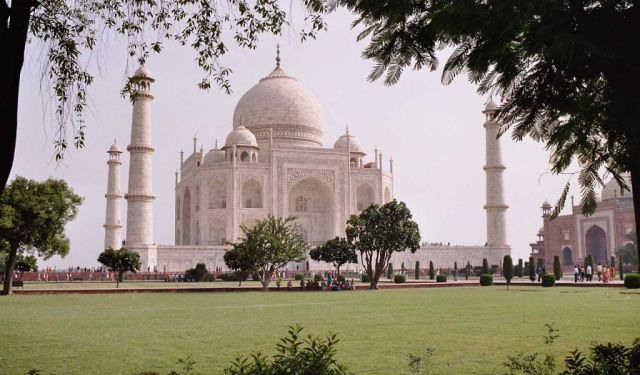
Taj Mahal Walking Tour
Agra is most known for containing one of the seven wonders of the modern world - the Taj Mahal. This finest example of Mughal architecture attracts thousands of tourists and visitors, who admire its magnificence and beauty. Take the following tour to see the marvelous attractions in the Taj area!
Tour Duration: 1 Hour
Travel Distance: 0.7 Km or 0.4 Miles
Tour Duration: 1 Hour
Travel Distance: 0.7 Km or 0.4 Miles
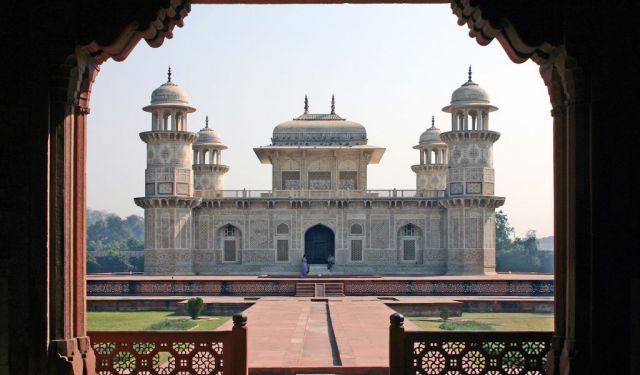
Agra's Top Attractions Walking Tour
Agra, the former capital of India under the powerful Mughal emperors, today is perhaps India's most popular tourist destination, in large part due to the magnificent Taj Mahal located here. Still, other than the iconic mausoleum, Agra is renowned for its colossal historic heritage manifested in numerous sites. To find out what else the city has to offer, take this orientation walk!
Tour Duration: 3 Hours
Travel Distance: 6.2 Km or 3.9 Miles
Tour Duration: 3 Hours
Travel Distance: 6.2 Km or 3.9 Miles
City Walks Overview
