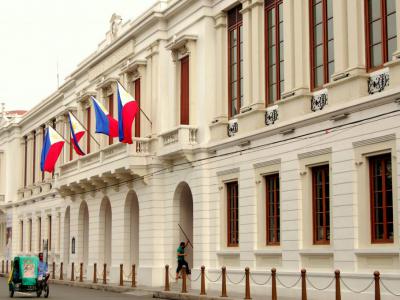


Ayuntamiento Building, Manila
The Ayuntamiento Building, often referred to as the Marble Palace, stands as one of the most distinguished examples of reconstructed Spanish colonial architecture in Intramuros. Originally built between 1599 and 1607 as Manila's city hall, it occupied a prominent position beside Rome Square and Manila Cathedral, serving as the administrative center of the walled city. Although the original building underwent several transformations over the centuries before being destroyed during the Battle of Manila in 1945, the present structure faithfully recreates its historic appearance while preserving an important part of Manila's colonial heritage.
The Ayuntamiento has endured a remarkable history of destruction and renewal. The first building was severely damaged by an earthquake, leading to its reconstruction in 1738 in an ornate Baroque style. That version was itself destroyed by the devastating earthquake of 1863, after which a third Ayuntamiento was completed in 1884. During the Battle of Manila in 1945, the building was reduced to ruins, with only portions of its outer walls remaining. The current reconstruction, carried out between 2009 and 2013, was designed in a refined Neoclassical style, carefully modeled on the appearance of the 19th-century building.
Its elegant façade, symmetrical arcades, long corridors, and spacious central courtyard reflect the practical yet graceful design favored for Spanish colonial government buildings. Today, the Ayuntamiento houses the Bureau of the Treasury, giving the historic landmark an active governmental role while allowing visitors to appreciate its architecture. Public tours of the interior are available by prior arrangement on selected days, while the exterior can be admired freely as part of a walk through Intramuros.
The Ayuntamiento has endured a remarkable history of destruction and renewal. The first building was severely damaged by an earthquake, leading to its reconstruction in 1738 in an ornate Baroque style. That version was itself destroyed by the devastating earthquake of 1863, after which a third Ayuntamiento was completed in 1884. During the Battle of Manila in 1945, the building was reduced to ruins, with only portions of its outer walls remaining. The current reconstruction, carried out between 2009 and 2013, was designed in a refined Neoclassical style, carefully modeled on the appearance of the 19th-century building.
Its elegant façade, symmetrical arcades, long corridors, and spacious central courtyard reflect the practical yet graceful design favored for Spanish colonial government buildings. Today, the Ayuntamiento houses the Bureau of the Treasury, giving the historic landmark an active governmental role while allowing visitors to appreciate its architecture. Public tours of the interior are available by prior arrangement on selected days, while the exterior can be admired freely as part of a walk through Intramuros.
Want to visit this sight? Check out these Self-Guided Walking Tours in Manila. Alternatively, you can download the mobile app "GPSmyCity: Walks in 1K+ Cities" from Apple App Store or Google Play Store. The app turns your mobile device to a personal tour guide and it works offline, so no data plan is needed when traveling abroad.
Download The GPSmyCity App



Ayuntamiento Building on Map
Sight Name: Ayuntamiento Building
Sight Location: Manila, Philippines (See walking tours in Manila)
Sight Type: Attraction/Landmark
Guide(s) Containing This Sight:
Sight Location: Manila, Philippines (See walking tours in Manila)
Sight Type: Attraction/Landmark
Guide(s) Containing This Sight:
Nearby Sights

Walking Tours in Manila, Philippines

Create Your Own Walk in Manila
Creating your own self-guided walk in Manila is easy and fun. Choose the city attractions that you want to see and a walk route map will be created just for you. You can even set your hotel as the start point of the walk.
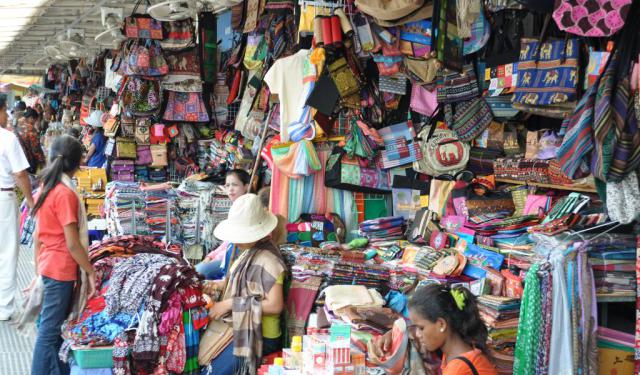
Traditional Markets
Traditional markets showcase a unique aspect of life in any city. The ones featured in this walk offer a glance into the authentic life and habits of Manila’s people and play a vital role in the Philippines' capital's economic and cultural landscape. Traditionally, local markets sell a broader range of products than regular shops can provide: from veggies and fruits to dried fish and... view more
Tour Duration: 1 Hour
Travel Distance: 3 Km or 1.9 Miles
Tour Duration: 1 Hour
Travel Distance: 3 Km or 1.9 Miles
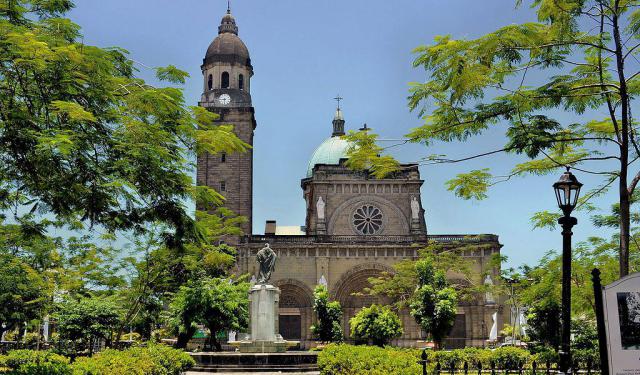
Manila Old Town (Intramuros) Walking Tour
For centuries, travelers arrived here searching for the 'Pearl of the Orient.' Behind these walls lies a city where Asian kingdoms, Spanish conquistadors, American planners, and Filipino revolutionaries all left their mark.
Manila, the capital of the Philippines, is one of Southeast Asia's oldest continuously inhabited cities and has served for centuries as the country's... view more
Tour Duration: 2 Hours
Travel Distance: 2.3 Km or 1.4 Miles
Manila, the capital of the Philippines, is one of Southeast Asia's oldest continuously inhabited cities and has served for centuries as the country's... view more
Tour Duration: 2 Hours
Travel Distance: 2.3 Km or 1.4 Miles
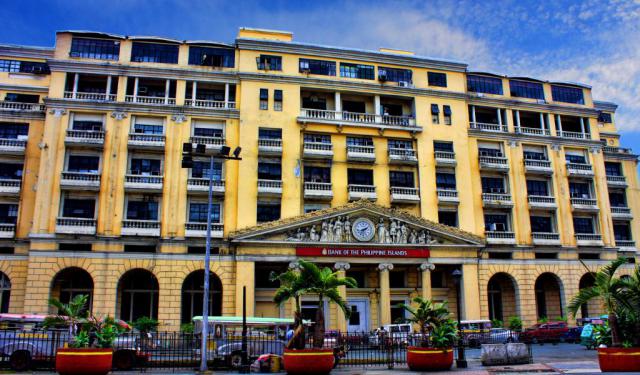
Historical Buildings Walking Tour
Every city tells a story, but few have witnessed as many triumphs and tragedies as Manila. Behind these façades lie the chapters of empire, revolution, war, and rebirth. As José Rizal wisely observed, 'To foretell the destiny of a nation, it is necessary to open the book that tells of her past.'
The historic buildings of Manila tell the story of more than four centuries of... view more
Tour Duration: 2 Hours
Travel Distance: 3.3 Km or 2.1 Miles
The historic buildings of Manila tell the story of more than four centuries of... view more
Tour Duration: 2 Hours
Travel Distance: 3.3 Km or 2.1 Miles
Useful Travel Guides for Planning Your Trip

Manila Shopping: 20 Filipino Goods To Bring Home
An archipelago of 7,000+ islands, The Philippines is a diverse nation populated by different tribes, each having their own culture and traditions. In Manila, one can find a whole lot of things worth keeping as a Filipino memento; it just might take one a little while to figure out what's best...
City Walks Overview
