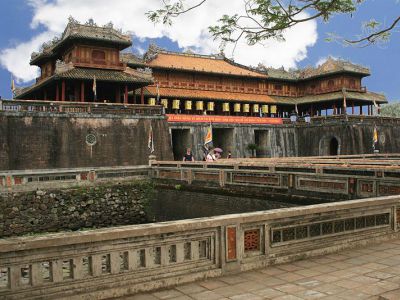


Cửa Ngọ Môn (Meridian Gate), Hue
Meridian Gate is the grand main entrance to the Imperial City of Hue and a defining symbol of Vietnam’s Nguyen dynasty heritage. Constructed in 1833 during the reign of Emperor Minh Mang, the gate served as both a ceremonial entryway and an architectural statement of imperial authority. Its design reflects traditional Vietnamese imperial architecture as well as broader East Asian architectural and planning principles. Carefully positioned along the main axis of the Imperial City, it embodies the principles of order, hierarchy, and symmetry that shaped the Nguyen imperial capital.
The structure consists of a massive U-shaped base made of brick and stone, topped by the elegant Five Phoenix Pavilion. This elaborate wooden structure was closely associated with the emperor and the royal court and provided a setting for important state occasions, including ceremonies, royal proclamations, and military reviews.
Access through Meridian Gate was strictly regulated according to rank. The central passage was reserved for the emperor, while officials and other members of the imperial entourage used the surrounding entrances according to their status. Today, visitors can walk through these historic gateways and admire the structure’s symmetry, decorative motifs, and yellow-glazed roof tiles-features closely associated with Nguyen imperial architecture.
Meridian Gate also witnessed one of the most significant moments in modern Vietnamese history: in 1945, Emperor Bao Dai announced his abdication there, marking the end of the Nguyen dynasty and Vietnam’s imperial era.
Want to visit this sight? Check out these Self-Guided Walking Tours in Hue. Alternatively, you can download the mobile app "GPSmyCity: Walks in 1K+ Cities" from Apple App Store or Google Play Store. The app turns your mobile device to a personal tour guide and it works offline, so no data plan is needed when traveling abroad.
Download The GPSmyCity App



Cửa Ngọ Môn (Meridian Gate) on Map
Sight Name: Cửa Ngọ Môn (Meridian Gate)
Sight Location: Hue, Vietnam (See walking tours in Hue)
Sight Type: Attraction/Landmark
Guide(s) Containing This Sight:
Sight Location: Hue, Vietnam (See walking tours in Hue)
Sight Type: Attraction/Landmark
Guide(s) Containing This Sight:
Nearby Sights
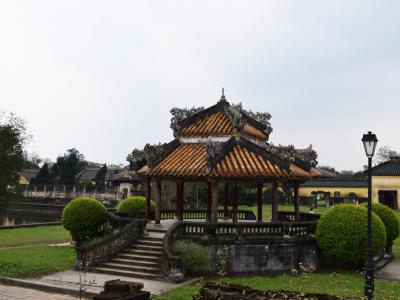
Forbidden Purple City
Image by Mig Gilbert per CC BY-SA, adapted.
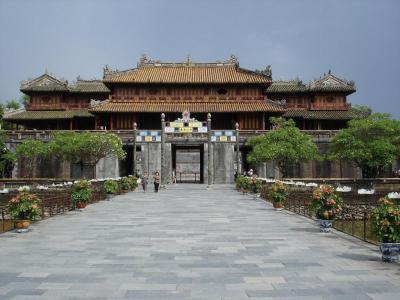
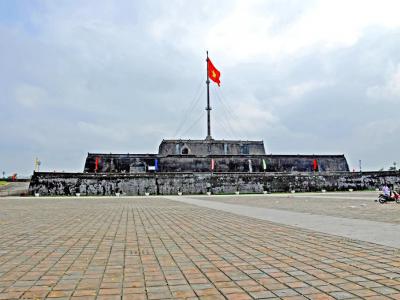
Kỳ đài (Flag Tower)
Image by Dennis Jarvis per CC BY-SA, adapted.
Imperial City of Hue (must see)
Image by Supanut Arunoprayote. per CC BY, adapted.
Cửa Thể Nhân (Ngan Gate)
Image by Christophe95 per CC BY-SA, adapted.
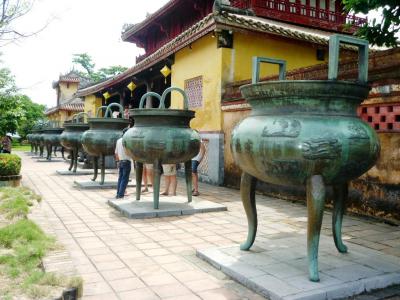
Cửu Đỉnh (The Nine Dynastic Urns)
Image by LÊ TẤN LỘC per CC BY-SA, adapted.
Walking Tours in Hue, Vietnam
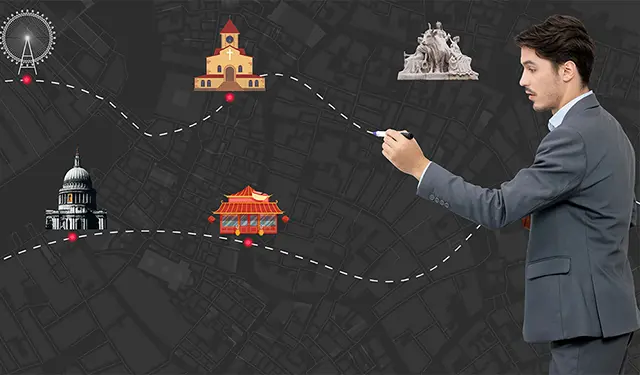
Create Your Own Walk in Hue
Creating your own self-guided walk in Hue is easy and fun. Choose the city attractions that you want to see and a walk route map will be created just for you. You can even set your hotel as the start point of the walk.
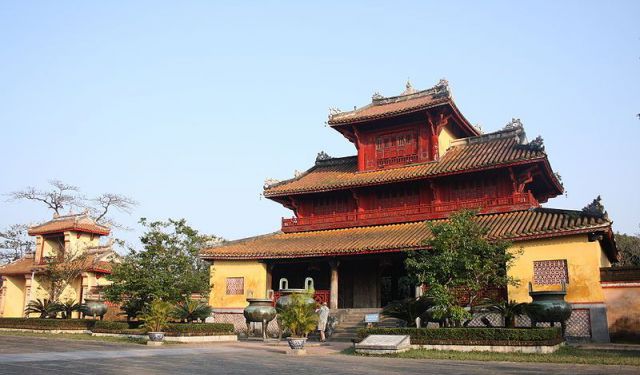
Imperial City Walking Tour
The Kings of the Nguyen Dynasty built their feudal capital along the fertile banks of the Perfume River, whose steady flow, centuries on, still sets up a languid pace that the rest of the city is happy to follow.
Situated within the walls of the Royal Citadel, The Imperial City in Hue is one of, if not the most prominent landmark in Vietnam, renowned for its wonderful collection of oriental... view more
Tour Duration: 2 Hours
Travel Distance: 2.9 Km or 1.8 Miles
Situated within the walls of the Royal Citadel, The Imperial City in Hue is one of, if not the most prominent landmark in Vietnam, renowned for its wonderful collection of oriental... view more
Tour Duration: 2 Hours
Travel Distance: 2.9 Km or 1.8 Miles
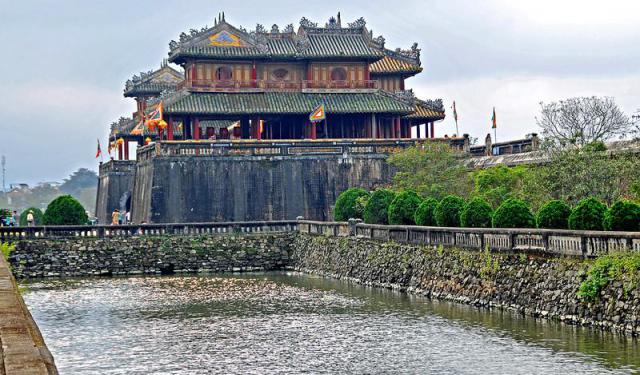
Hue Introduction Walking Tour
Once the seat of the imperial dynasty in the heart of Vietnam, Hue is chock-full of stories. During feudal times, for nearly 150 years - from 1802 to 1945, the city served as the national capital. The royal lifestyle and customs have had a strong impact on the lifestyle of locals, and this impact can still be felt today.
First cited about 200 BCE as the seat of the Chinese military authority in... view more
Tour Duration: 2 Hours
Travel Distance: 3.5 Km or 2.2 Miles
First cited about 200 BCE as the seat of the Chinese military authority in... view more
Tour Duration: 2 Hours
Travel Distance: 3.5 Km or 2.2 Miles
City Walks Overview
