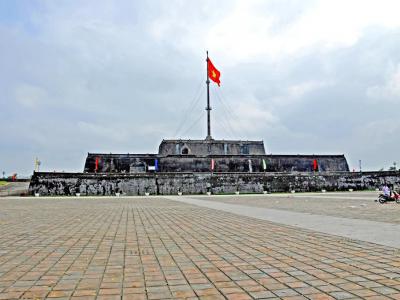


Kỳ đài (Flag Tower), Hue
Standing at the southern edge of Hue’s Imperial City, the Flag Tower (Ky Dai) is one of the most iconic landmarks in Vietnam’s former royal capital. Erected in 1807 under Emperor Gia Long, it served as a strategic observation post and symbol of imperial authority. The three-tiered brick platform, measuring nearly 18 meters in height, supports a towering flagpole that once flew the royal standard of the Nguyen Dynasty. Today, it proudly displays the national flag of Vietnam, visible from much of the city and especially striking at sunrise and sunset.
Located directly in front of the Ngo Mon (Noon Gate), the tower anchors the southern approach to the Imperial Citadel and has long been associated with state power and public events. During the 19th century, royal proclamations, military drills, and ceremonial processions often unfolded on the surrounding esplanade. Though damaged during 20th-century conflicts, the tower has been carefully restored and remains a powerful emblem of Hue’s resilience and heritage.
Visitors to the site can appreciate not only the tower’s historical significance but also its commanding presence in the urban landscape. The three platforms, each surrounded by sloped parapets, create a stepped, geometric form that blends military utility with architectural grandeur. The structure’s orientation and symmetry align with traditional feng shui principles, reinforcing the spiritual and political symbolism embedded in Hue’s city planning.
Whether explored as a standalone monument or as part of a wider visit to the Citadel, the Flag Tower offers a striking introduction to the imperial legacy of Hue and its ongoing cultural relevance.
Located directly in front of the Ngo Mon (Noon Gate), the tower anchors the southern approach to the Imperial Citadel and has long been associated with state power and public events. During the 19th century, royal proclamations, military drills, and ceremonial processions often unfolded on the surrounding esplanade. Though damaged during 20th-century conflicts, the tower has been carefully restored and remains a powerful emblem of Hue’s resilience and heritage.
Visitors to the site can appreciate not only the tower’s historical significance but also its commanding presence in the urban landscape. The three platforms, each surrounded by sloped parapets, create a stepped, geometric form that blends military utility with architectural grandeur. The structure’s orientation and symmetry align with traditional feng shui principles, reinforcing the spiritual and political symbolism embedded in Hue’s city planning.
Whether explored as a standalone monument or as part of a wider visit to the Citadel, the Flag Tower offers a striking introduction to the imperial legacy of Hue and its ongoing cultural relevance.
Want to visit this sight? Check out these Self-Guided Walking Tours in Hue. Alternatively, you can download the mobile app "GPSmyCity: Walks in 1K+ Cities" from Apple App Store or Google Play Store. The app turns your mobile device to a personal tour guide and it works offline, so no data plan is needed when traveling abroad.
Download The GPSmyCity App



Kỳ đài (Flag Tower) on Map
Sight Name: Kỳ đài (Flag Tower)
Sight Location: Hue, Vietnam (See walking tours in Hue)
Sight Type: Attraction/Landmark
Sight Location: Hue, Vietnam (See walking tours in Hue)
Sight Type: Attraction/Landmark
Nearby Sights
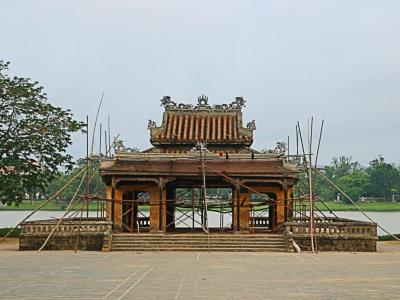
Walking Tours in Hue, Vietnam

Create Your Own Walk in Hue
Creating your own self-guided walk in Hue is easy and fun. Choose the city attractions that you want to see and a walk route map will be created just for you. You can even set your hotel as the start point of the walk.
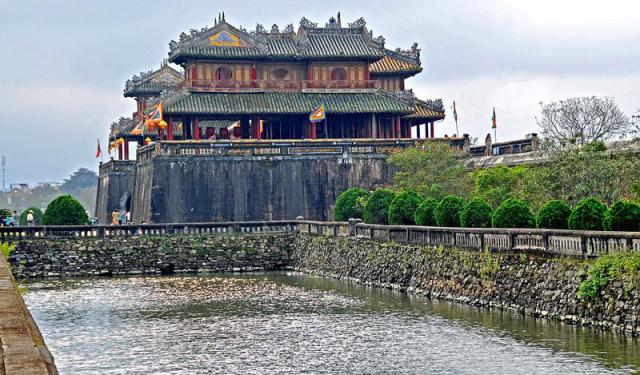
Hue Introduction Walking Tour
Once the seat of the imperial dynasty in the heart of Vietnam, Hue is chock-full of stories. During feudal times, for nearly 150 years - from 1802 to 1945, the city served as the national capital. The royal lifestyle and customs have had a strong impact on the lifestyle of locals, and this impact can still be felt today.
First cited about 200 BCE as the seat of the Chinese military authority in... view more
Tour Duration: 2 Hours
Travel Distance: 3.5 Km or 2.2 Miles
First cited about 200 BCE as the seat of the Chinese military authority in... view more
Tour Duration: 2 Hours
Travel Distance: 3.5 Km or 2.2 Miles
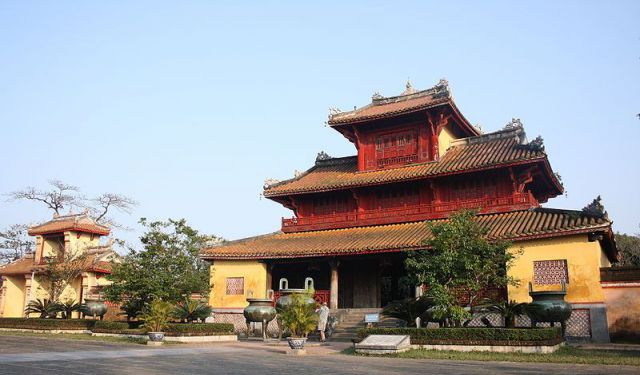
Imperial City Walking Tour
The Kings of the Nguyen Dynasty built their feudal capital along the fertile banks of the Perfume River, whose steady flow, centuries on, still sets up a languid pace that the rest of the city is happy to follow.
Situated within the walls of the Royal Citadel, The Imperial City in Hue is one of, if not the most prominent landmark in Vietnam, renowned for its wonderful collection of oriental... view more
Tour Duration: 2 Hours
Travel Distance: 2.9 Km or 1.8 Miles
Situated within the walls of the Royal Citadel, The Imperial City in Hue is one of, if not the most prominent landmark in Vietnam, renowned for its wonderful collection of oriental... view more
Tour Duration: 2 Hours
Travel Distance: 2.9 Km or 1.8 Miles