


Gourgion House, Mdina
Gourgion House is a captivating architectural gem overlooking Mdina’s main square. Unlike the surrounding buildings, many of which display Baroque influences, Gourgion House stands out for its distinctive Gothic Revival architecture, making it a relative rarity in Malta.
Designed by the talented and eclectic Maltese architect Andrea Vassallo, the house reflects the characteristic features of the Gothic Revival style. When it was completed in the early 20th century, the building attracted some criticism for its unconventional appearance, which contrasted sharply with the prevailing architectural character of historic Malta.
Take a moment to admire the ornate façade, embellished with intricate details inspired by medieval Gothic architecture. Particularly striking are the decorative elements along the rooftop, which contribute to the building’s distinctive silhouette. Its pointed arches, another hallmark of the Gothic Revival style, lend the structure a sense of elegance and verticality.
Andrea Vassallo’s architectural legacy extends far beyond Gothic Revival. Throughout his career, he experimented with a variety of styles, leaving a lasting mark on Malta’s architectural landscape. His work incorporated influences ranging from Neoclassicism and Rococo Revival to Art Nouveau and Romanesque Revival, demonstrating his remarkable versatility.
One of Vassallo’s most celebrated works is the Basilica of Our Lady of Ta’ Pinu on Gozo, the second-largest island in the Maltese archipelago. Like Gourgion House, the basilica attracted criticism for its distinctive appearance, which set it apart from Malta’s more traditional architecture.
Designed by the talented and eclectic Maltese architect Andrea Vassallo, the house reflects the characteristic features of the Gothic Revival style. When it was completed in the early 20th century, the building attracted some criticism for its unconventional appearance, which contrasted sharply with the prevailing architectural character of historic Malta.
Take a moment to admire the ornate façade, embellished with intricate details inspired by medieval Gothic architecture. Particularly striking are the decorative elements along the rooftop, which contribute to the building’s distinctive silhouette. Its pointed arches, another hallmark of the Gothic Revival style, lend the structure a sense of elegance and verticality.
Andrea Vassallo’s architectural legacy extends far beyond Gothic Revival. Throughout his career, he experimented with a variety of styles, leaving a lasting mark on Malta’s architectural landscape. His work incorporated influences ranging from Neoclassicism and Rococo Revival to Art Nouveau and Romanesque Revival, demonstrating his remarkable versatility.
One of Vassallo’s most celebrated works is the Basilica of Our Lady of Ta’ Pinu on Gozo, the second-largest island in the Maltese archipelago. Like Gourgion House, the basilica attracted criticism for its distinctive appearance, which set it apart from Malta’s more traditional architecture.
Want to visit this sight? Check out these Self-Guided Walking Tours in Mdina. Alternatively, you can download the mobile app "GPSmyCity: Walks in 1K+ Cities" from Apple App Store or Google Play Store. The app turns your mobile device to a personal tour guide and it works offline, so no data plan is needed when traveling abroad.
Download The GPSmyCity App



Gourgion House on Map
Sight Name: Gourgion House
Sight Location: Mdina, Malta (See walking tours in Mdina)
Sight Type: Attraction/Landmark
Guide(s) Containing This Sight:
Sight Location: Mdina, Malta (See walking tours in Mdina)
Sight Type: Attraction/Landmark
Guide(s) Containing This Sight:
Nearby Sights



Walking Tours in Mdina, Malta

Create Your Own Walk in Mdina
Creating your own self-guided walk in Mdina is easy and fun. Choose the city attractions that you want to see and a walk route map will be created just for you. You can even set your hotel as the start point of the walk.
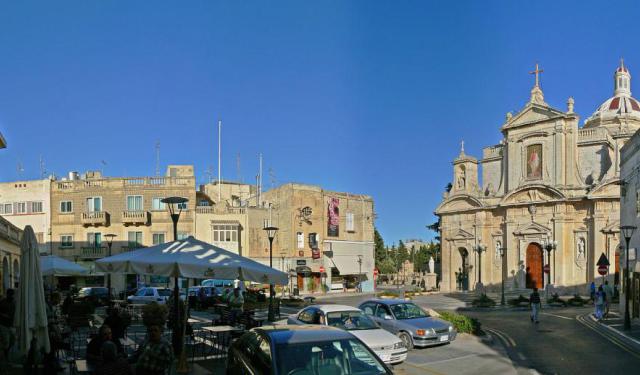
Rabat Walking Tour
In ancient times, the city of Melite, the precursor of present-day Mdina and Rabat, was considerably larger than Mdina is today. During the period of Arab rule in Malta, the settlement was reduced in size and divided into two distinct areas: the fortified city of Mdina and the suburb that developed outside its walls.
Rabat’s name derives directly from the Arabic word for “suburb” or... view more
Tour Duration: 1 Hour
Travel Distance: 0.6 Km or 0.4 Miles
Rabat’s name derives directly from the Arabic word for “suburb” or... view more
Tour Duration: 1 Hour
Travel Distance: 0.6 Km or 0.4 Miles
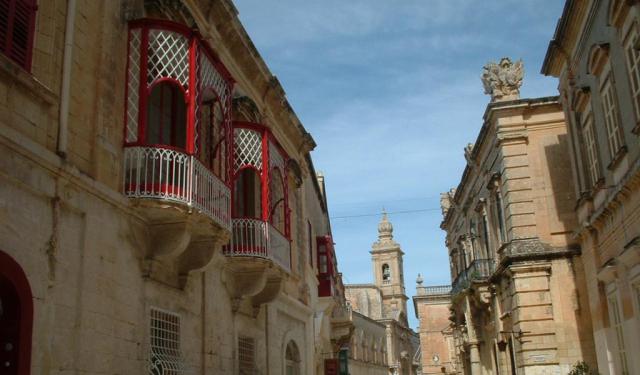
Mdina Introduction Walking Tour
A picturesque walled city in the heart of Malta, Mdina is a true gem of the Mediterranean, perched atop a hill overlooking much of the country.
Mdina’s history spans almost 3,000 years, making it one of Europe’s oldest continuously inhabited cities. Originally settled by the Phoenicians around the 8th century BC, it has been inhabited by various civilisations, including the Romans,... view more
Tour Duration: 2 Hours
Travel Distance: 0.8 Km or 0.5 Miles
Mdina’s history spans almost 3,000 years, making it one of Europe’s oldest continuously inhabited cities. Originally settled by the Phoenicians around the 8th century BC, it has been inhabited by various civilisations, including the Romans,... view more
Tour Duration: 2 Hours
Travel Distance: 0.8 Km or 0.5 Miles