

Hanoi Opera House, Hanoi
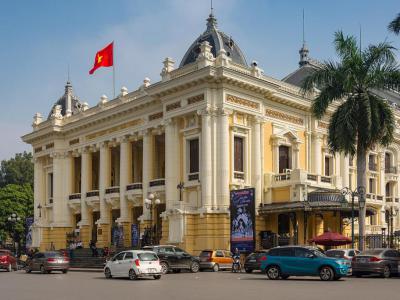
The Hanoi Opera House is one of the Vietnamese capital’s most impressive architectural landmarks and a striking reminder of its French colonial past. Built between 1901 and 1911 on the site of a former pond, it was designed by French architects Harlay and Broyer and modelled partly on the Garnier Palace in Paris. Its elaborate architecture combines elements of Beaux-Arts, classical Greek and Gothic design, featuring imposing columns, ornate decoration and elegant balconies.
Originally intended to entertain French colonial officials and Hanoi’s wealthy elite, the Opera House later became associated with important events in Vietnam’s modern history. In August 1945, it became a focal point for revolutionary gatherings as the Viet Minh consolidated control of Hanoi.
The building underwent extensive restoration in 1997, preserving its historic character while introducing modern technical and acoustic equipment. Its impressive auditorium features a large stage and several tiers of seating, while the backstage areas include dressing and rehearsal rooms.
Today, the Opera House remains an important cultural venue, hosting traditional Vietnamese performances, operas, ballets, theatrical productions and concerts. Visitors can admire its magnificent yellow-and-white façade and grand entrance from outside, while attending a performance offers an opportunity to experience its richly decorated interior.
The steps in front of the Opera House are also a popular spot for photographs and provide an excellent vantage point from which to appreciate one of Hanoi’s finest examples of French colonial architecture.
Originally intended to entertain French colonial officials and Hanoi’s wealthy elite, the Opera House later became associated with important events in Vietnam’s modern history. In August 1945, it became a focal point for revolutionary gatherings as the Viet Minh consolidated control of Hanoi.
The building underwent extensive restoration in 1997, preserving its historic character while introducing modern technical and acoustic equipment. Its impressive auditorium features a large stage and several tiers of seating, while the backstage areas include dressing and rehearsal rooms.
Today, the Opera House remains an important cultural venue, hosting traditional Vietnamese performances, operas, ballets, theatrical productions and concerts. Visitors can admire its magnificent yellow-and-white façade and grand entrance from outside, while attending a performance offers an opportunity to experience its richly decorated interior.
The steps in front of the Opera House are also a popular spot for photographs and provide an excellent vantage point from which to appreciate one of Hanoi’s finest examples of French colonial architecture.
Want to visit this sight? Check out these Self-Guided Walking Tours in Hanoi. Alternatively, you can download the mobile app "GPSmyCity: Walks in 1K+ Cities" from Apple App Store or Google Play Store. The app turns your mobile device to a personal tour guide and it works offline, so no data plan is needed when traveling abroad.
Download The GPSmyCity App



Hanoi Opera House on Map
Sight Name: Hanoi Opera House
Sight Location: Hanoi, Vietnam (See walking tours in Hanoi)
Sight Type: Attraction/Landmark
Guide(s) Containing This Sight:
Sight Location: Hanoi, Vietnam (See walking tours in Hanoi)
Sight Type: Attraction/Landmark
Guide(s) Containing This Sight:
Nearby Sights

Walking Tours in Hanoi, Vietnam

Create Your Own Walk in Hanoi
Creating your own self-guided walk in Hanoi is easy and fun. Choose the city attractions that you want to see and a walk route map will be created just for you. You can even set your hotel as the start point of the walk.
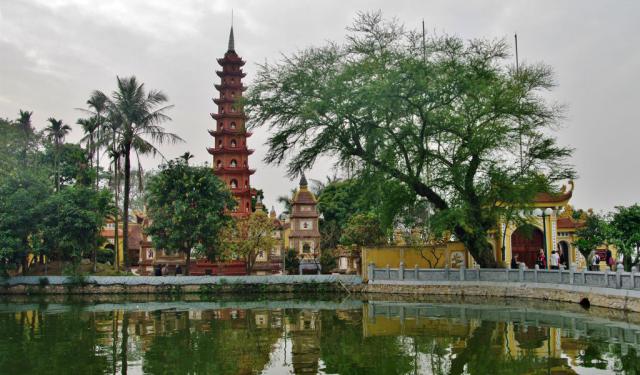
Explore Hanoi's Modern City Center on Foot
Known for its centuries-old architecture and rich culture with Southeast Asian, Chinese and French influences, the capital of Vietnam, Hanoi, traces its origin back to the third century BC. Originally, a portion of modern-day Hanoi served as the capital of the historic Vietnamese nation Âu Lạc. Following the collapse of Âu Lạc, the city was made part of Han China (111 BC-40 AD).
... view more
Tour Duration: 2 Hours
Travel Distance: 4 Km or 2.5 Miles
... view more
Tour Duration: 2 Hours
Travel Distance: 4 Km or 2.5 Miles
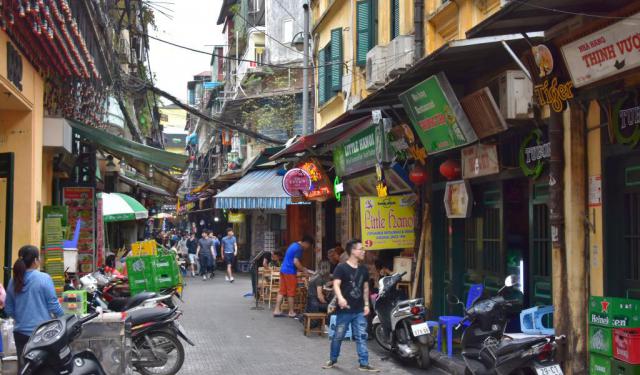
Hanoi's Old Quarter Walking Tour
Vietnamese writer Thach Lam’s book Hanoi’s Thirty-Six Streets celebrates the streets, food and everyday character of the old city. In one memorable passage, he wrote: “We too have Hanoi, a city of many beauties.”
Hanoi, the capital of Vietnam, has a history stretching back more than a thousand years, although settlements existed in the area long before the city became an imperial... view more
Tour Duration: 2 Hours
Travel Distance: 4 Km or 2.5 Miles
Hanoi, the capital of Vietnam, has a history stretching back more than a thousand years, although settlements existed in the area long before the city became an imperial... view more
Tour Duration: 2 Hours
Travel Distance: 4 Km or 2.5 Miles