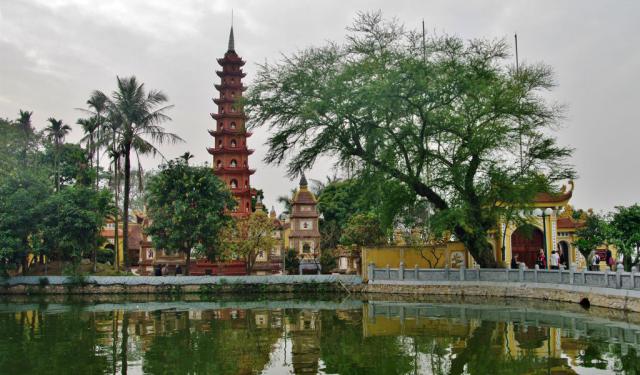


Audio Guide: Hanoi Introduction Walking Tour (Self Guided), Hanoi
Known for its centuries-old architecture and rich culture with Southeast Asian, Chinese and French influences, the capital of Vietnam, Hanoi, traces its origin back to the third century BC. Originally, a portion of modern-day Hanoi served as the capital of the historic Vietnamese nation Âu Lạc. Following the collapse of Âu Lạc, the city was made part of Han China (111 BC-40 AD).
Throughout its history, Hanoi has gone by different names including Long Biên ("Dragon Edge"), Tống Bình ("Song Peace") and Long Đỗ ("Dragon Belly"). The word long ("dragon") here is associated with the Red River which curves around the city, resembling a dragon.
In 866, the town was turned into a citadel named Đại La ("Big Net"). In 1010, Vietnamese emperor Lý Thái Tổ established his capital on the territory of present-day downtown, calling it Thăng Long ("Ascending Dragon"). During the Lê dynasty (1428-1789), the city was known as Đông Kinh ("Eastern Capital"), the name which had eventually transformed to Tonkin. Finally, in 1831, emperor Minh Mạng renamed it Hà Nội (which means "Between the Rivers") which has remained the city's official name ever since.
Hanoi is also sometimes dubbed "Paris of the East" for its French-style tree-fringed boulevards, dozens of lakes and thousands of French colonial-era buildings, all of which make it a popular tourist destination.
The city served as the capital of French Indochina from 1887 until the mid 1940s. During WWII, from 1940 to 1945, it was occupied by the Imperial Japanese forces and then briefly became the seat of the Việt Minh government after Ho Chi Minh declared the independence of Vietnam. The French reoccupied the city again in 1946, and after years of fighting between them and the Viet Minh forces (First Indochina War, 1946–1954) it had finally become the capital of independent North Vietnam, in 1954. Following the end of the Vietnam War (1955–1975) and reunification of North and South Vietnam, Hanoi became the capital of the Socialist Republic of Vietnam, on 2 July 1976.
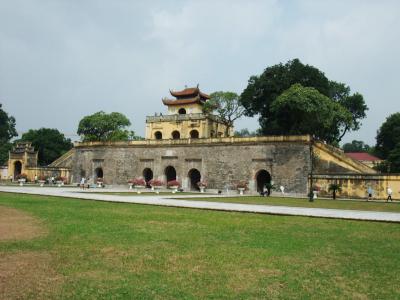
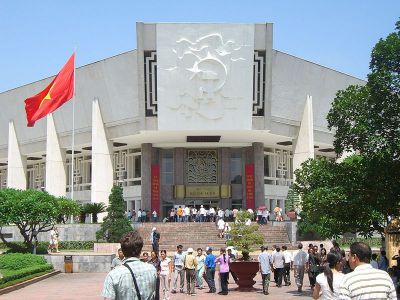
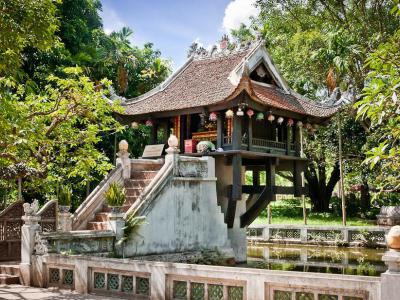
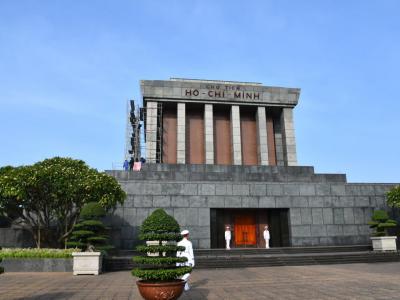
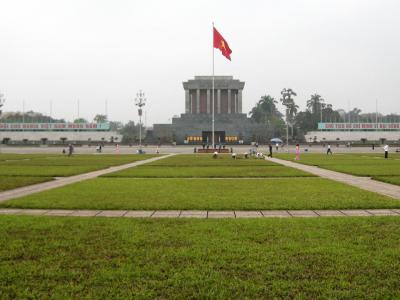
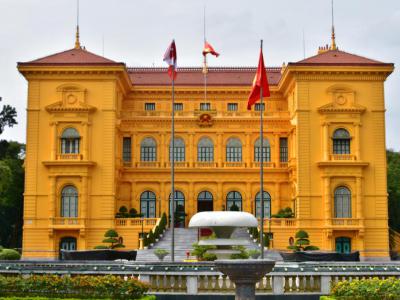
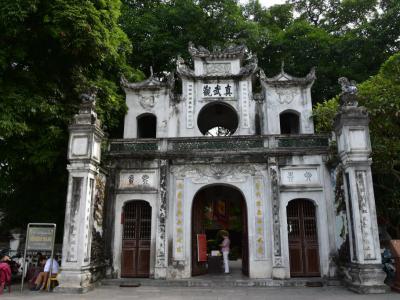
The central Ba Đình district holds a high concentration of government headquarters, including the Presidential Palace, and the monumental Ho Chi Minh Mausoleum. Also here, juxtaposed with French colonial architecture, are a number of prominent imperial sites like the Temple of Literature (1070), the One Pillar Pagoda (1049), and the Flag Tower of Hanoi (1812). In 2004, a massive part of the 900-year-old Imperial Citadel of Thăng Long - currently a UNESCO World Heritage Site - was discovered near Ba Đình Square. Hanoi also hosts a number of cultural venues, such as the National Museum of Fine Arts.
If you wish to learn more about the region that has been continuously inhabited for the past 4,000 years and explore the crowded streets of the Vietnamese capital lined with prominent landmarks and, perhaps, discover some cute hidden gems along the way, too, take this self-guided introductory walk.
Throughout its history, Hanoi has gone by different names including Long Biên ("Dragon Edge"), Tống Bình ("Song Peace") and Long Đỗ ("Dragon Belly"). The word long ("dragon") here is associated with the Red River which curves around the city, resembling a dragon.
In 866, the town was turned into a citadel named Đại La ("Big Net"). In 1010, Vietnamese emperor Lý Thái Tổ established his capital on the territory of present-day downtown, calling it Thăng Long ("Ascending Dragon"). During the Lê dynasty (1428-1789), the city was known as Đông Kinh ("Eastern Capital"), the name which had eventually transformed to Tonkin. Finally, in 1831, emperor Minh Mạng renamed it Hà Nội (which means "Between the Rivers") which has remained the city's official name ever since.
Hanoi is also sometimes dubbed "Paris of the East" for its French-style tree-fringed boulevards, dozens of lakes and thousands of French colonial-era buildings, all of which make it a popular tourist destination.
The city served as the capital of French Indochina from 1887 until the mid 1940s. During WWII, from 1940 to 1945, it was occupied by the Imperial Japanese forces and then briefly became the seat of the Việt Minh government after Ho Chi Minh declared the independence of Vietnam. The French reoccupied the city again in 1946, and after years of fighting between them and the Viet Minh forces (First Indochina War, 1946–1954) it had finally become the capital of independent North Vietnam, in 1954. Following the end of the Vietnam War (1955–1975) and reunification of North and South Vietnam, Hanoi became the capital of the Socialist Republic of Vietnam, on 2 July 1976.
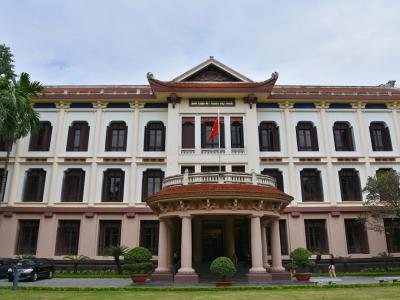
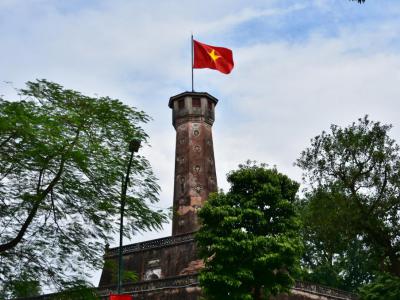
The central Ba Đình district holds a high concentration of government headquarters, including the Presidential Palace, and the monumental Ho Chi Minh Mausoleum. Also here, juxtaposed with French colonial architecture, are a number of prominent imperial sites like the Temple of Literature (1070), the One Pillar Pagoda (1049), and the Flag Tower of Hanoi (1812). In 2004, a massive part of the 900-year-old Imperial Citadel of Thăng Long - currently a UNESCO World Heritage Site - was discovered near Ba Đình Square. Hanoi also hosts a number of cultural venues, such as the National Museum of Fine Arts.
If you wish to learn more about the region that has been continuously inhabited for the past 4,000 years and explore the crowded streets of the Vietnamese capital lined with prominent landmarks and, perhaps, discover some cute hidden gems along the way, too, take this self-guided introductory walk.
How it works: Download the app "GPSmyCity: Walks in 1K+ Cities" from Apple App Store or Google Play Store to your mobile phone or tablet. The app turns your mobile device into a personal tour guide and its built-in GPS navigation functions guide you from one tour stop to next. The app works offline, so no data plan is needed when traveling abroad.
Download The GPSmyCity App



Hanoi Introduction Walking Tour Map
Guide Name: Hanoi Introduction Walking Tour
Guide Location: Vietnam » Hanoi (See other walking tours in Hanoi)
Guide Type: Self-guided Walking Tour (Sightseeing)
Tour Duration: 2 Hour(s)
Travel Distance: 4.0 Km or 2.5 Miles
Guide Location: Vietnam » Hanoi (See other walking tours in Hanoi)
Guide Type: Self-guided Walking Tour (Sightseeing)
Tour Duration: 2 Hour(s)
Travel Distance: 4.0 Km or 2.5 Miles
Sights Featured in This Walk
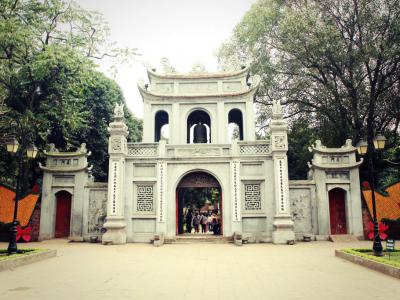
1) Temple of Literature (must see)
Walking Tours in Hanoi, Vietnam

Create Your Own Walk in Hanoi
Creating your own self-guided walk in Hanoi is easy and fun. Choose the city attractions that you want to see and a walk route map will be created just for you. You can even set your hotel as the start point of the walk.
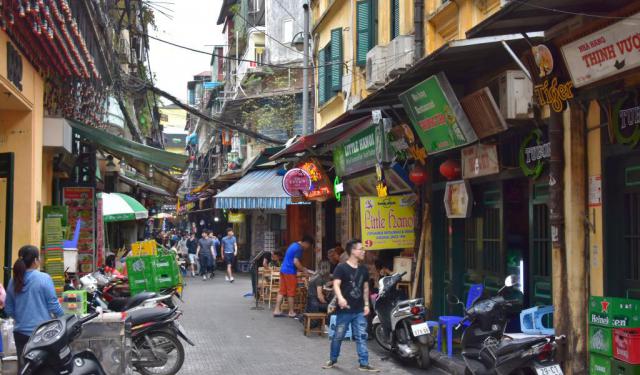
Hanoi's Old Quarter Walking Tour
The Old Quarter (Vietnamese: Phố cổ Hà Nội) is the name commonly given to the historical civic urban core of the city, located outside the Imperial Citadel of Thăng Long in the northern half of Hoàn Kiếm District, renowned for its small street blocks and alleys, and a traditional Vietnamese atmosphere.
During the Lê dynasty (1428-1789), the area included several lakes and wetlands... view more
Tour Duration: 2 Hour(s)
Travel Distance: 4.0 Km or 2.5 Miles
During the Lê dynasty (1428-1789), the area included several lakes and wetlands... view more
Tour Duration: 2 Hour(s)
Travel Distance: 4.0 Km or 2.5 Miles
The Most Popular Cities
/ view all