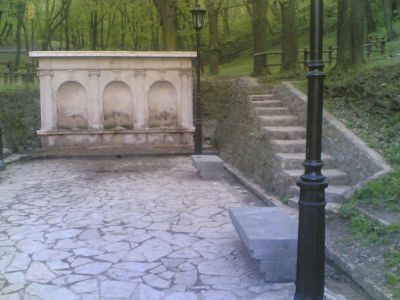


Košutnjak, Belgrade
Košutnjak is a renowned park-forest and urban neighborhood in Belgrade, encompassing parts of the Čukarica and Rakovica municipalities. Together with the adjoining Topčider, it is affectionately known as "Belgrade's oxygen factory" due to its extensive green areas. The 1923 Belgrade plan aimed for a green space from Senjak to Košutnjak. By the 1930s, it became the city's biggest forested area.
The name Košutnjak, first recorded in 1831, originates from medieval times when it was a hunting ground for Serbian nobility, meaning "doe's breeder" in Serbian (košuta meaning doe). Until World War I, does roamed freely in the area.
In the 19th century, Košutnjak was a fenced royal hunting ground and excursion site for the Obrenović dynasty. Atanasije Nikolić, an engineer, urbanist, and professor, was tasked with arranging the forest, and also contributing to the development of Topčider Park and various city avenues. By 1849, the area boasted a rich oak forest and was home to 48 deer. The first railway in Serbia, connecting Belgrade and Niš, was constructed through Košutnjak in 1884. In 1908, Belgian architect Alban Chambon proposed an urban plan that transformed Košutnjak into a public park.
Today, Košutnjak is home to a diverse array of plant and animal species, with 521 plant species including lime tree, pedunculate oak, common hornbeam, and several types of oak, among others. Conifers such as cedar, black pine, and white pine make up about 5% of the forest. The average age of the trees is estimated at 60-70 years, and recent reforestation efforts in 2015 added 4,400 seedlings of common ash and sycamore to the park. Animal inhabitants include squirrels, hedgehogs, woodpeckers, and bats.
As one of Belgrade's most popular recreational areas, Košutnjak offers various amenities. The Sports Center Košutnjak, covering 40 hectares, is one of the largest and most diverse sports centers in the city. The park also includes an auto camp, modern residential areas, numerous popular restaurants, and well-maintained paths throughout the forest.
The name Košutnjak, first recorded in 1831, originates from medieval times when it was a hunting ground for Serbian nobility, meaning "doe's breeder" in Serbian (košuta meaning doe). Until World War I, does roamed freely in the area.
In the 19th century, Košutnjak was a fenced royal hunting ground and excursion site for the Obrenović dynasty. Atanasije Nikolić, an engineer, urbanist, and professor, was tasked with arranging the forest, and also contributing to the development of Topčider Park and various city avenues. By 1849, the area boasted a rich oak forest and was home to 48 deer. The first railway in Serbia, connecting Belgrade and Niš, was constructed through Košutnjak in 1884. In 1908, Belgian architect Alban Chambon proposed an urban plan that transformed Košutnjak into a public park.
Today, Košutnjak is home to a diverse array of plant and animal species, with 521 plant species including lime tree, pedunculate oak, common hornbeam, and several types of oak, among others. Conifers such as cedar, black pine, and white pine make up about 5% of the forest. The average age of the trees is estimated at 60-70 years, and recent reforestation efforts in 2015 added 4,400 seedlings of common ash and sycamore to the park. Animal inhabitants include squirrels, hedgehogs, woodpeckers, and bats.
As one of Belgrade's most popular recreational areas, Košutnjak offers various amenities. The Sports Center Košutnjak, covering 40 hectares, is one of the largest and most diverse sports centers in the city. The park also includes an auto camp, modern residential areas, numerous popular restaurants, and well-maintained paths throughout the forest.
Want to visit this sight? Check out these Self-Guided Walking Tours in Belgrade. Alternatively, you can download the mobile app "GPSmyCity: Walks in 1K+ Cities" from Apple App Store or Google Play Store. The app turns your mobile device to a personal tour guide and it works offline, so no data plan is needed when traveling abroad.
Download The GPSmyCity App



Košutnjak on Map
Sight Name: Košutnjak
Sight Location: Belgrade, Serbia (See walking tours in Belgrade)
Sight Type: Attraction/Landmark
Sight Location: Belgrade, Serbia (See walking tours in Belgrade)
Sight Type: Attraction/Landmark
Nearby Sights


Walking Tours in Belgrade, Serbia

Create Your Own Walk in Belgrade
Creating your own self-guided walk in Belgrade is easy and fun. Choose the city attractions that you want to see and a walk route map will be created just for you. You can even set your hotel as the start point of the walk.
Belgrade's Top Attractions Walking Tour
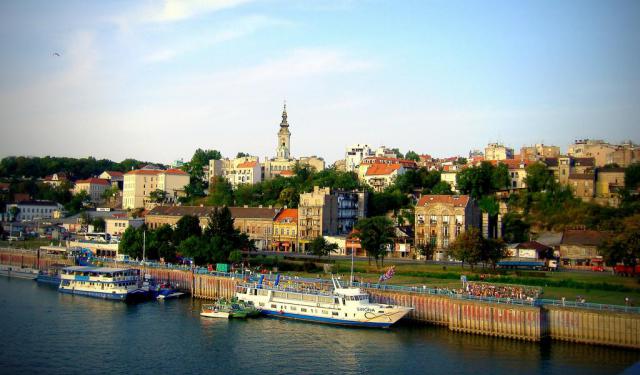
Belgrade has been a city of strategic importance for millennia with its location at the confluence of the Sava and Danube rivers. In fact, it is one of the oldest continually inhabited cities on the planet.
Nomadic tribes inhabited the area as far back as 20,000 to 50,000 years ago. Some of these may have been Neanderthals rather than modern humans. By the sixth century BC, the Vinca culture... view more
Tour Duration: 2 Hours
Travel Distance: 4 Km or 2.5 Miles
Nomadic tribes inhabited the area as far back as 20,000 to 50,000 years ago. Some of these may have been Neanderthals rather than modern humans. By the sixth century BC, the Vinca culture... view more
Tour Duration: 2 Hours
Travel Distance: 4 Km or 2.5 Miles
Zemun Old Town Walking Tour
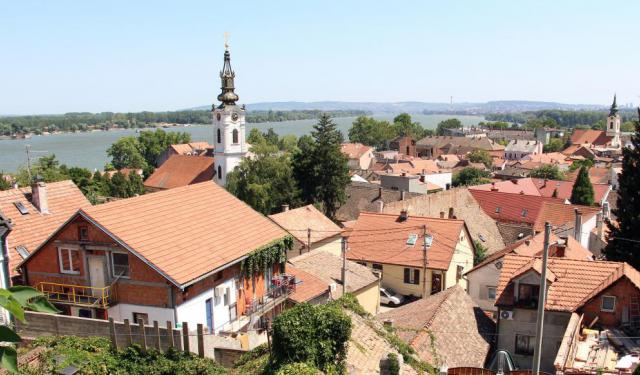
Few neighboring towns can claim to have been built from each other’s ruins. Yet during the Middle Ages, stones were carried back and forth across the rivers as rival powers repeatedly dismantled the fortifications of Zemun and Belgrade, using the remains of one to strengthen the other.
Although today it forms part of Belgrade, Zemun developed for centuries as a separate town, giving its Old... view more
Tour Duration: 2 Hours
Travel Distance: 2.4 Km or 1.5 Miles
Although today it forms part of Belgrade, Zemun developed for centuries as a separate town, giving its Old... view more
Tour Duration: 2 Hours
Travel Distance: 2.4 Km or 1.5 Miles
Kalemegdan Park and Belgrade Fortress Walking Tour
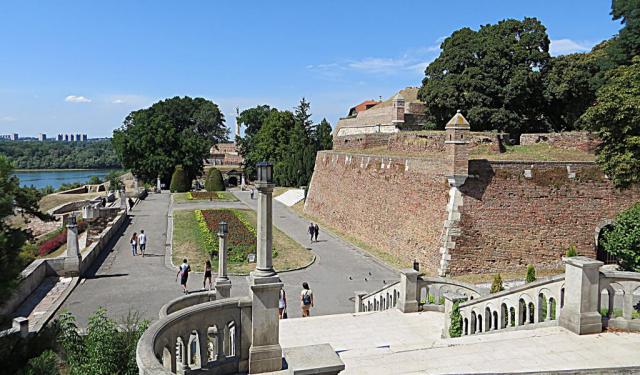
The most beautiful park in Belgrade, Kalemegdan Park, or simply Kalemegdan, is also the largest park and the most important cultural and historical complex in the city. The actual park occupies a smaller portion, in the southern corner, of another, grander monument - the Belgrade Fortress (which is some two millennia older).
The fortress itself, often erroneously referred to, even by the... view more
Tour Duration: 2 Hours
Travel Distance: 2.1 Km or 1.3 Miles
The fortress itself, often erroneously referred to, even by the... view more
Tour Duration: 2 Hours
Travel Distance: 2.1 Km or 1.3 Miles