

Leonhardi Museum, Dresden
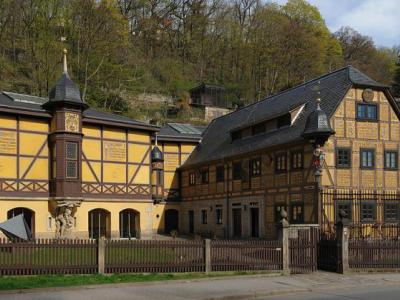
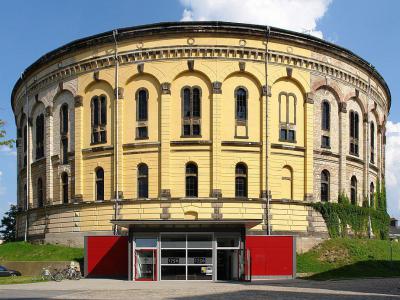
The Leonhardi Museum in Dresden is a cultural landmark deeply rooted in the Romantic artistic tradition. Named after its founder, Eduard Leonhardi (1828-1905), a Romantic landscape painter and pupil of Ludwig Richter, the museum is housed in a historical structure known since 1785 as the Hentschel-Mühle, a former water mill nestled in the picturesque Elbe Valley.
Eduard Leonhardi purchased this then-dilapidated mill in 1879 with the vision of transforming it into a nexus for art. Initially aspiring to establish an artists' colony, Leonhardi converted the mill into a studio and later founded the "Landschaftsmuseum Eduard Leonhardi" in 1885. This marked the inception of one of the oldest artists' houses in Germany, primarily dedicated to showcasing landscapes and fostering artistic creativity.
Throughout its history, the museum has evolved significantly. From 1963 to 1990, it became a vibrant venue for mostly non-conformist art, reflecting the socio-political tensions of the times. It was particularly noted during the 1970s and '80s for hosting progressive and politically daring exhibitions by GDR artists, establishing a reputation that resonated well beyond local boundaries.
Since 1991, the museum has been operated by the state capital Dresden, and is known colloquially as "Leo." It now focuses on contemporary art, hosting changing exhibitions that highlight contemporary Saxon art. Despite this modern orientation, the museum remains true to its roots by maintaining a permanent exhibition of Leonhardi's paintings, ensuring that his legacy continues to inspire visitors.
The museum's architecture and setting contribute significantly to its charm. The original mill building, elaborately painted by Charles Palmié, creates a unique atmosphere that enhances the visitor experience. In addition, the museum's gardens feature a memorial dedicated to Ludwig Richter, acknowledging his influence on Leonhardi and the artistic milieu of the time.
Want to visit this sight? Check out these Self-Guided Walking Tours in Dresden. Alternatively, you can download the mobile app "GPSmyCity: Walks in 1K+ Cities" from Apple App Store or Google Play Store. The app turns your mobile device to a personal tour guide and it works offline, so no data plan is needed when traveling abroad.
Download The GPSmyCity App



Leonhardi Museum on Map
Sight Name: Leonhardi Museum
Sight Location: Dresden, Germany (See walking tours in Dresden)
Sight Type: Museum/Gallery
Sight Location: Dresden, Germany (See walking tours in Dresden)
Sight Type: Museum/Gallery
Nearby Sights
Walking Tours in Dresden, Germany
Create Your Own Walk in Dresden
Creating your own self-guided walk in Dresden is easy and fun. Choose the city attractions that you want to see and a walk route map will be created just for you. You can even set your hotel as the start point of the walk.
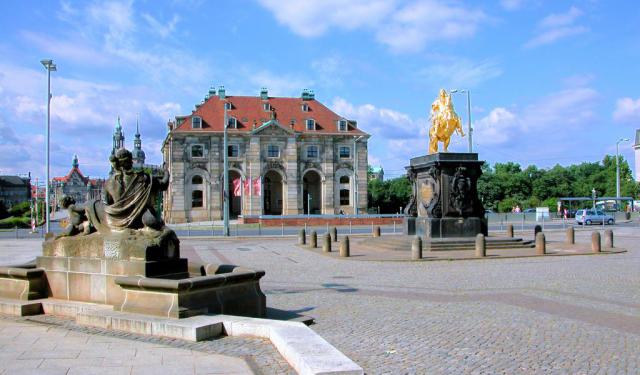
Exploring Dresden New Town on Foot
Dresden’s New Town occupies the northern bank of the Elbe, directly opposite the historic Old Town. Despite its name, it is far from new. The area was settled in the Middle Ages and was historically known as Old Dresden. It was incorporated into Dresden in 1549 under Elector Moritz but remained a relatively modest settlement for centuries compared with the more prestigious city on the opposite... view more
Tour Duration: 1 Hour
Travel Distance: 2.2 Km or 1.4 Miles
Tour Duration: 1 Hour
Travel Distance: 2.2 Km or 1.4 Miles
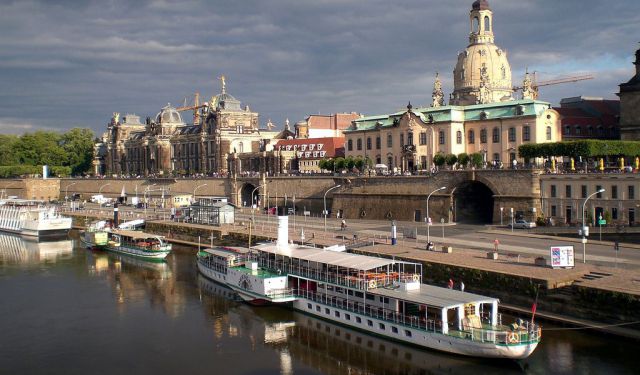
A Walk Through Dresden's Historic Old Town
Dresden’s reputation as a city of art and architecture has earned it the nickname “Florence on the Elbe.”
Dresden, the capital of Saxony, lies on the banks of the River Elbe in eastern Germany. The area may have been settled by Neolithic communities as early as 7500 BC, but Dresden’s documented history begins much later. The city developed within the Margraviate of Meissen, a territory... view more
Tour Duration: 2 Hours
Travel Distance: 2.5 Km or 1.6 Miles
Dresden's Architectural Jewels
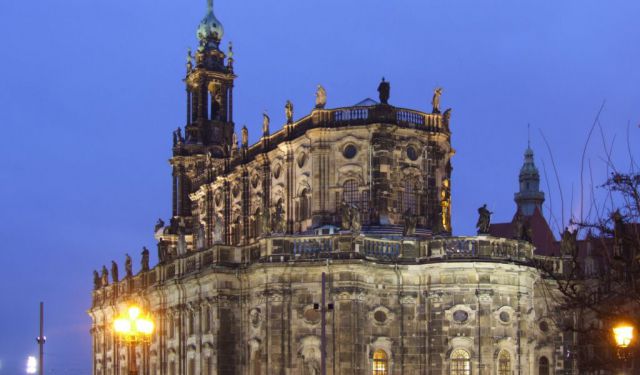
If there is one thing Dresden is particularly famous for, it is the magnificent architecture. Although known primarily for its Baroque buildings, the city has several other architectural styles present too, such as Renaissance, Historicism, Modernism and Post-modernism.
Much of downtown Dresden was destroyed in February 1945 by Allied bombing, which in turn prompted the rebuilding of the... view more
Tour Duration: 1 Hour
Travel Distance: 1.9 Km or 1.2 Miles
Much of downtown Dresden was destroyed in February 1945 by Allied bombing, which in turn prompted the rebuilding of the... view more
Tour Duration: 1 Hour
Travel Distance: 1.9 Km or 1.2 Miles
City Walks Overview
