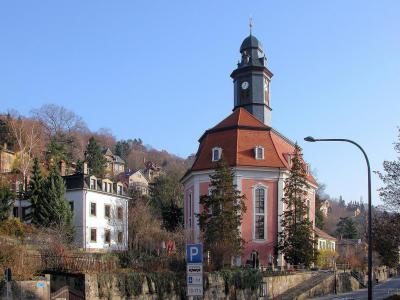


Loschwitzer Church, Dresden
The Loschwitz Church, located in the Loschwitz district of Dresden, is a notable example of Baroque architecture. It holds the distinction of being the first church designed by George Bähr, the renowned architect behind the Dresden Frauenkirche. The church and its cemetery, used until 1907, are protected as monuments. The cemetery, at approximately 400 square meters, is the smallest in Dresden and one of the few 18th-century churchyards in Saxony still in its original state.
In 1704, George Bähr, a carpenter by trade, was tasked with designing the Loschwitz Church. Collaborating with master mason Johann Christian Fehre, Bähr's plans evolved several times. The final design of the church, characterized by its Baroque style, features an octagonal but elongated hall. The church's unique design stands out from the simpler village churches of the period.
Originally, Bähr's design was shorter and wider, adhering more closely to a typical Baroque octagonal central building. However, due to the challenging foundation work on the sloping terrain, the design was modified, resulting in a narrower octagon. The church, including the sacristy, measures 27.7 meters in length and 16.3 meters in width, with a height of 41.5 meters excluding the weather vane.
Loschwitz Church's interior was simple, with women sitting in pews along the central aisle and men in wooden galleries above. Vineyard owners had slightly elevated pews below these galleries. The first gallery featured the patron's box, while the second housed the organ and choir, with a "Sanctus Sanctus Sanctus Dominus Deus Zebaoth" inscription. The church seated up to 820 people. Initially, it had crown windows like those in Saint George's Church, Schwarzenberg, but most were replaced by flat glass starting in 1807. By the late 19th century, only three original windows remained.
Loschwitz Church remains a significant historical and architectural landmark in Dresden, reflecting the Baroque style and the early work of George Bähr. Its enduring structure and preserved churchyard offer a glimpse into the region's ecclesiastical and community history.
In 1704, George Bähr, a carpenter by trade, was tasked with designing the Loschwitz Church. Collaborating with master mason Johann Christian Fehre, Bähr's plans evolved several times. The final design of the church, characterized by its Baroque style, features an octagonal but elongated hall. The church's unique design stands out from the simpler village churches of the period.
Originally, Bähr's design was shorter and wider, adhering more closely to a typical Baroque octagonal central building. However, due to the challenging foundation work on the sloping terrain, the design was modified, resulting in a narrower octagon. The church, including the sacristy, measures 27.7 meters in length and 16.3 meters in width, with a height of 41.5 meters excluding the weather vane.
Loschwitz Church's interior was simple, with women sitting in pews along the central aisle and men in wooden galleries above. Vineyard owners had slightly elevated pews below these galleries. The first gallery featured the patron's box, while the second housed the organ and choir, with a "Sanctus Sanctus Sanctus Dominus Deus Zebaoth" inscription. The church seated up to 820 people. Initially, it had crown windows like those in Saint George's Church, Schwarzenberg, but most were replaced by flat glass starting in 1807. By the late 19th century, only three original windows remained.
Loschwitz Church remains a significant historical and architectural landmark in Dresden, reflecting the Baroque style and the early work of George Bähr. Its enduring structure and preserved churchyard offer a glimpse into the region's ecclesiastical and community history.
Want to visit this sight? Check out these Self-Guided Walking Tours in Dresden. Alternatively, you can download the mobile app "GPSmyCity: Walks in 1K+ Cities" from Apple App Store or Google Play Store. The app turns your mobile device to a personal tour guide and it works offline, so no data plan is needed when traveling abroad.
Download The GPSmyCity App



Loschwitzer Church on Map
Sight Name: Loschwitzer Church
Sight Location: Dresden, Germany (See walking tours in Dresden)
Sight Type: Religious
Sight Location: Dresden, Germany (See walking tours in Dresden)
Sight Type: Religious
Nearby Sights
Walking Tours in Dresden, Germany

Create Your Own Walk in Dresden
Creating your own self-guided walk in Dresden is easy and fun. Choose the city attractions that you want to see and a walk route map will be created just for you. You can even set your hotel as the start point of the walk.
Exploring Dresden New Town on Foot
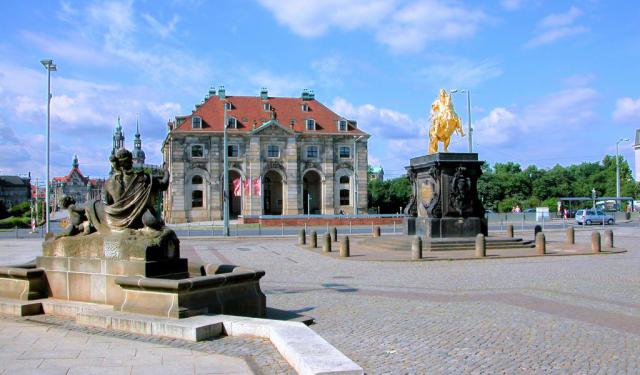
Dresden’s New Town occupies the northern bank of the Elbe, directly opposite the historic Old Town. Despite its name, it is far from new. The area was settled in the Middle Ages and was historically known as Old Dresden. It was incorporated into Dresden in 1549 under Elector Moritz but remained a relatively modest settlement for centuries compared with the more prestigious city on the opposite... view more
Tour Duration: 1 Hour(s)
Travel Distance: 2.2 Km or 1.4 Miles
Tour Duration: 1 Hour(s)
Travel Distance: 2.2 Km or 1.4 Miles
Dresden's Architectural Jewels
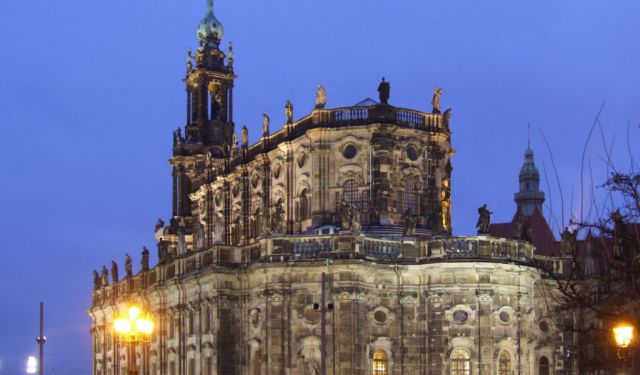
If there is one thing Dresden is particularly famous for, it is the magnificent architecture. Although known primarily for its Baroque buildings, the city has several other architectural styles present too, such as Renaissance, Historicism, Modernism and Post-modernism.
Much of downtown Dresden was destroyed in February 1945 by Allied bombing, which in turn prompted the rebuilding of the... view more
Tour Duration: 1 Hour(s)
Travel Distance: 1.9 Km or 1.2 Miles
Much of downtown Dresden was destroyed in February 1945 by Allied bombing, which in turn prompted the rebuilding of the... view more
Tour Duration: 1 Hour(s)
Travel Distance: 1.9 Km or 1.2 Miles
A Walk Through Dresden's Historic Old Town
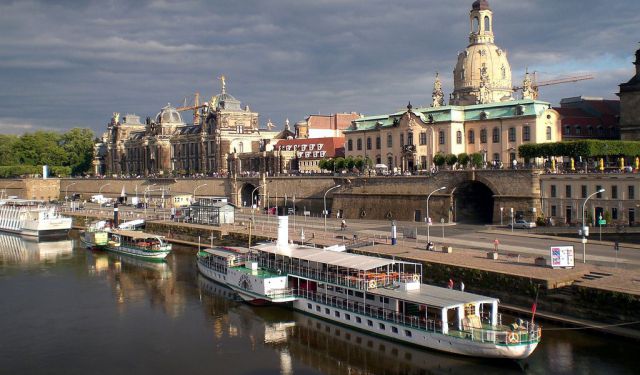
Dresden’s reputation as a city of art and architecture has earned it the nickname “Florence on the Elbe.”
Dresden, the capital of Saxony, lies on the banks of the River Elbe in eastern Germany. The area may have been settled by Neolithic communities as early as 7500 BC, but Dresden’s documented history begins much later. The city developed within the Margraviate of Meissen, a territory... view more
Tour Duration: 2 Hour(s)
Travel Distance: 2.5 Km or 1.6 Miles
Dresden, the capital of Saxony, lies on the banks of the River Elbe in eastern Germany. The area may have been settled by Neolithic communities as early as 7500 BC, but Dresden’s documented history begins much later. The city developed within the Margraviate of Meissen, a territory... view more
Tour Duration: 2 Hour(s)
Travel Distance: 2.5 Km or 1.6 Miles