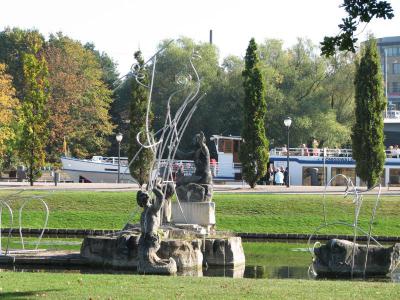


Lustgarten (Pleasure Garden), Potsdam
The Pleasure Garden (Lustgarten) in Potsdam is a historic and serene green space perfect for a relaxing break, especially after exploring the nearby Museum Island or Berlin Cathedral. Established in 1573 by Elector Johann Georg, the Pleasure Garden was created by draining a swamp near his castle to make room for a fruit and herb garden. It holds the distinction of being the site where the first potatoes ("Tartufeln") were planted in the region.
Throughout its history, the Pleasure Garden has undergone several transformations. In the 17th century, it was redesigned by the Great Elector into an ornate garden. Under Friedrich Wilhelm I, it was cleared of grass, filled with sand, and repurposed as a parade ground. Friedrich Wilhelm II later restored the garden at the end of the 18th century. Following the construction of the Altes Museum by Karl Friedrich Schinkel, both Schinkel and landscape architect Peter Joseph Lenné renovated the garden, enhancing its architectural and landscape features.
In the 20th century, the Pleasure Garden became a site for political gatherings and was dramatically altered by the Nazis, who leveled and paved it to accommodate mass marches and rallies. Today, however, the garden has been restored to its green, inviting state, once again offering a tranquil space for sunbathing and leisure.
A central attraction of the Pleasure Garden is the impressive granite bowl, a renowned wonder of the Biedermeier era and a highlight of 19th-century royal Berlin. Weighing 70 tonnes, it was transported to Berlin via the River Spree in 1828. The bowl's grand inauguration in 1834 featured a unique breakfast for around 40 people who sat inside it. Its massive size has earned it the affectionate nickname "Berlin soup bowl" in local slang.
Throughout its history, the Pleasure Garden has undergone several transformations. In the 17th century, it was redesigned by the Great Elector into an ornate garden. Under Friedrich Wilhelm I, it was cleared of grass, filled with sand, and repurposed as a parade ground. Friedrich Wilhelm II later restored the garden at the end of the 18th century. Following the construction of the Altes Museum by Karl Friedrich Schinkel, both Schinkel and landscape architect Peter Joseph Lenné renovated the garden, enhancing its architectural and landscape features.
In the 20th century, the Pleasure Garden became a site for political gatherings and was dramatically altered by the Nazis, who leveled and paved it to accommodate mass marches and rallies. Today, however, the garden has been restored to its green, inviting state, once again offering a tranquil space for sunbathing and leisure.
A central attraction of the Pleasure Garden is the impressive granite bowl, a renowned wonder of the Biedermeier era and a highlight of 19th-century royal Berlin. Weighing 70 tonnes, it was transported to Berlin via the River Spree in 1828. The bowl's grand inauguration in 1834 featured a unique breakfast for around 40 people who sat inside it. Its massive size has earned it the affectionate nickname "Berlin soup bowl" in local slang.
Want to visit this sight? Check out these Self-Guided Walking Tours in Potsdam. Alternatively, you can download the mobile app "GPSmyCity: Walks in 1K+ Cities" from Apple App Store or Google Play Store. The app turns your mobile device to a personal tour guide and it works offline, so no data plan is needed when traveling abroad.
Download The GPSmyCity App



Lustgarten (Pleasure Garden) on Map
Sight Name: Lustgarten (Pleasure Garden)
Sight Location: Potsdam, Germany (See walking tours in Potsdam)
Sight Type: Attraction/Landmark
Sight Location: Potsdam, Germany (See walking tours in Potsdam)
Sight Type: Attraction/Landmark
Nearby Sights
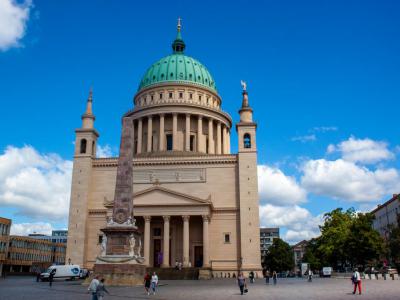
Walking Tours in Potsdam, Germany

Create Your Own Walk in Potsdam
Creating your own self-guided walk in Potsdam is easy and fun. Choose the city attractions that you want to see and a walk route map will be created just for you. You can even set your hotel as the start point of the walk.
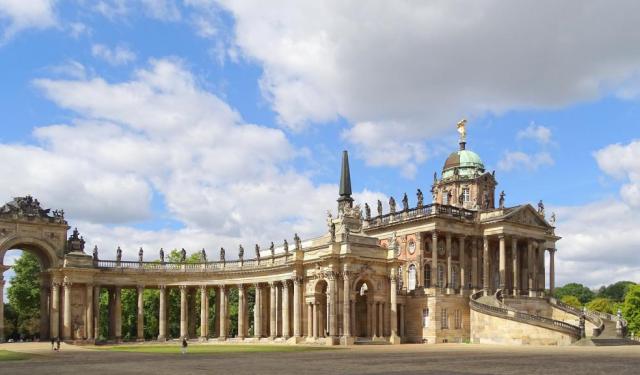
Potsdam City Center and Sanssouci Palace Walking Tour
Potsdam was likely founded during the seventh century by the Hevelli tribe. The town was mentioned by the name of Poztupimi in a document from Emperor Otto III. The name likely came from an old Western Slavonic term roughly meaning "beneath the oaks."
By the early 1300s, a small town had formed with a town charter. By 1573 the town had around 2,000 people living there. Potsdam rose to... view more
Tour Duration: 2 Hour(s)
Travel Distance: 3.8 Km or 2.4 Miles
By the early 1300s, a small town had formed with a town charter. By 1573 the town had around 2,000 people living there. Potsdam rose to... view more
Tour Duration: 2 Hour(s)
Travel Distance: 3.8 Km or 2.4 Miles
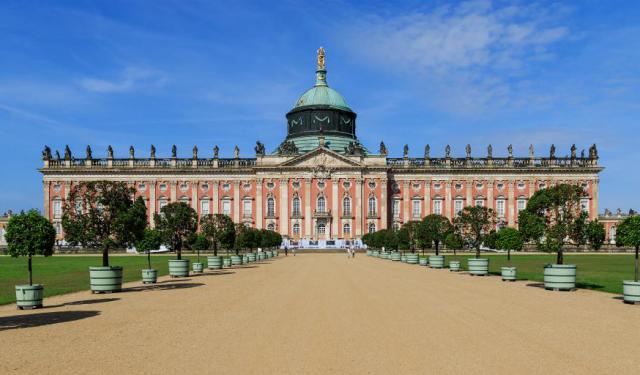
Sanssouci Park Walking Tour
Sanssouci Park is a unique Potsdam landmark that occupies 290 hectares in the heart of the city. The Park is named after the Sanssouci Palace that it surrounds, which in turn takes its name from the French phrase "sans souci", which means carefree, and implies that the palace was designated as a place of fun, rather than a seat of power.
Indeed, the Sanssouci Palace was built in 1747... view more
Tour Duration: 2 Hour(s)
Travel Distance: 3.9 Km or 2.4 Miles
Indeed, the Sanssouci Palace was built in 1747... view more
Tour Duration: 2 Hour(s)
Travel Distance: 3.9 Km or 2.4 Miles
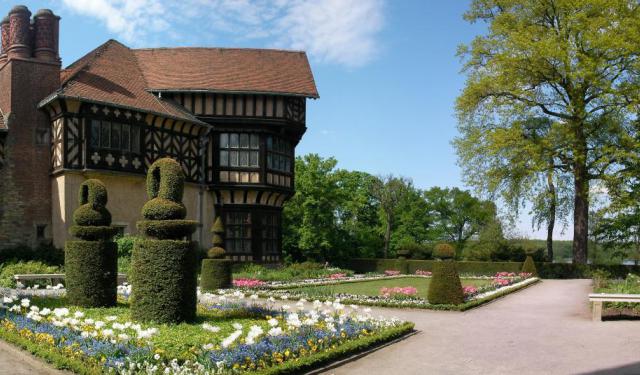
Neuer Garten Walking Tour
Laid out at the behest of Friedrich William II in 1787, Potsdam's Neuer Garten (New Garden) was indeed "new" compared to the already in place Sanssouci Park.
Between 1816 and 1828, the area was modified further as an English-style, open landscape garden, with an aim to reproduce nature – trees and plants were left to grow naturally, unshaped and untrimmed. Rural life was also... view more
Tour Duration: 2 Hour(s)
Travel Distance: 2.8 Km or 1.7 Miles
Between 1816 and 1828, the area was modified further as an English-style, open landscape garden, with an aim to reproduce nature – trees and plants were left to grow naturally, unshaped and untrimmed. Rural life was also... view more
Tour Duration: 2 Hour(s)
Travel Distance: 2.8 Km or 1.7 Miles