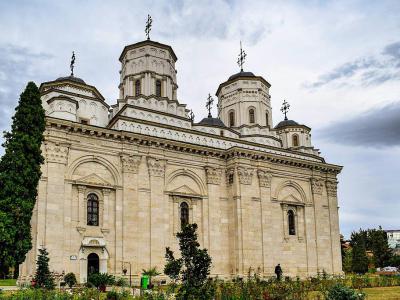


Manastirea Golia (Golia Monastery), Iasi (must see)
Golia Monastery is one of the largest and most historically significant monastic complexes in the region. Its origins date to the sixteenth century, while the present church was rebuilt between 1650 and 1660 through the patronage of Prince Vasile Lupu and his son Ștefăniță. Named after boyar Ioan Golia, the monastery’s high walls and towers show its former role as both a religious site and a fortified refuge.
The main church stands out through its unusual combination of architectural influences. Renaissance, Baroque, Byzantine, and traditional Moldavian elements appear together in a structure that differs from many other local churches. Its carved stone details, solid walls, and spacious interior reflect both careful craftsmanship and Orthodox tradition. The church also preserves memories of princely ceremonies, noble families, and important burials linked to Moldavian history.
One of the most recognizable features of the complex is Golia Tower. The early defensive tower belonged to the fortified monastery, but it was raised and reshaped in the nineteenth century, reaching its present height. Visitors who climb its steps are rewarded with wide views over the historic center. Over time, the tower served several roles, including watchtower, prison, treasury space, and fire lookout.
The monastery is also connected with writer Ion Creangă, who served here as a deacon between 1866 and 1871. The house where he lived still stands in the courtyard and recalls a dramatic period in his life, later surrounded by stories and controversy. The grounds include old residences, gardens, walls, gate towers, and a historic fountain. Today, Golia remains an active worship site and cultural landmark.
The main church stands out through its unusual combination of architectural influences. Renaissance, Baroque, Byzantine, and traditional Moldavian elements appear together in a structure that differs from many other local churches. Its carved stone details, solid walls, and spacious interior reflect both careful craftsmanship and Orthodox tradition. The church also preserves memories of princely ceremonies, noble families, and important burials linked to Moldavian history.
One of the most recognizable features of the complex is Golia Tower. The early defensive tower belonged to the fortified monastery, but it was raised and reshaped in the nineteenth century, reaching its present height. Visitors who climb its steps are rewarded with wide views over the historic center. Over time, the tower served several roles, including watchtower, prison, treasury space, and fire lookout.
The monastery is also connected with writer Ion Creangă, who served here as a deacon between 1866 and 1871. The house where he lived still stands in the courtyard and recalls a dramatic period in his life, later surrounded by stories and controversy. The grounds include old residences, gardens, walls, gate towers, and a historic fountain. Today, Golia remains an active worship site and cultural landmark.
Want to visit this sight? Check out these Self-Guided Walking Tours in Iasi. Alternatively, you can download the mobile app "GPSmyCity: Walks in 1K+ Cities" from Apple App Store or Google Play Store. The app turns your mobile device to a personal tour guide and it works offline, so no data plan is needed when traveling abroad.
Download The GPSmyCity App



Manastirea Golia (Golia Monastery) on Map
Sight Name: Manastirea Golia (Golia Monastery)
Sight Location: Iasi, Romania (See walking tours in Iasi)
Sight Type: Attraction/Landmark
Sight Location: Iasi, Romania (See walking tours in Iasi)
Sight Type: Attraction/Landmark
Nearby Sights

Walking Tours in Iasi, Romania

Create Your Own Walk in Iasi
Creating your own self-guided walk in Iasi is easy and fun. Choose the city attractions that you want to see and a walk route map will be created just for you. You can even set your hotel as the start point of the walk.
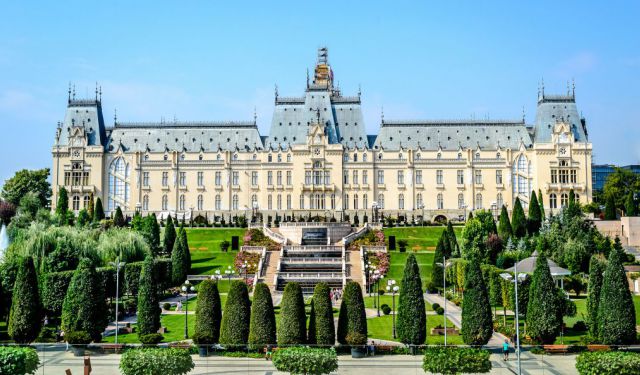
Iasi Introduction Walking Tour
The city of Iasi – second largest in Romania after the national capital Bucharest – is quite often, and deservedly so, referred to as the "cultural capital" of the country. Located in the vast eastern region of Moldova, around which Romania, as a unified kingdom, was formed in the mid 19th century, it was indeed once the capital of it. Renowned for its cultural heritage, Iasi is also... view more
Tour Duration: 2 Hour(s)
Travel Distance: 2.4 Km or 1.5 Miles
Tour Duration: 2 Hour(s)
Travel Distance: 2.4 Km or 1.5 Miles
Useful Travel Guides for Planning Your Trip
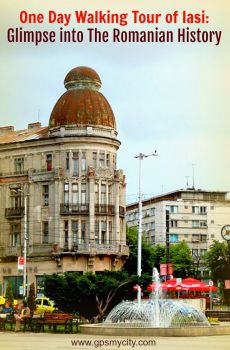
One Day Walking Tour of Iasi: Glimpse into The Romanian History
The university city of Iași is quite often, and deservedly so, referred to as the "cultulral capital" of Romania. Located in the eastern part of the country, it was indeed once capital of the vast Moldavia region around which the unified kingdom of Romania was eventually formed in the mid...