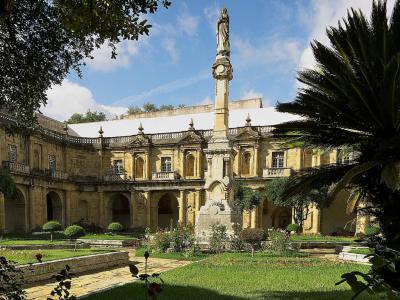


Monastery of Santa Clara a Nova, Coimbra
The Monastery of Santa Clara-a-Nova in Coimbra stands as a monumental testament to religious devotion and architectural evolution. Constructed in the 17th and 18th centuries, it was built to replace the earlier Monastery of Santa Clara-a-Velha, which had suffered repeated flooding due to its proximity to the Mondego River. The newer monastery, located in the Santa Clara parish, was designed to provide a more stable home for the community of nuns.
The Santa Clara Monastery was founded in the early 14th century by Queen Elizabeth of Portugal near the Mondego River. Canonized in the 17th century, her legacy endures in the new monastery, which houses her Gothic tomb and those of other royals. Due to flooding, King John IV ordered its relocation to higher ground in 1649. Designed by Father Joao Turriano and built under Mateus do Couto, the new monastery, consecrated in 1696, follows a Mannerist style with a rectangular layout, a single-aisled nave, high clerestory windows, and no transept.
The monastery houses 14 gilded altarpieces from the late 17th century, with the main one showcasing the silver and crystal tomb of Queen Saint Elizabeth, crafted in 1614. A 19th-century statue by Antonio Teixeira Lopes honors her legacy. The south façade features a portal with the royal coat of arms, while the convent’s grand Baroque entrance gate, designed in 1761, is attributed to Carlos Mardel, who likely also influenced the two-story cloisters, a Baroque architectural masterpiece.
Today, Santa Clara-a-Nova remains an important National Monument, preserving centuries of religious and artistic heritage in the historic city of Coimbra.
The Santa Clara Monastery was founded in the early 14th century by Queen Elizabeth of Portugal near the Mondego River. Canonized in the 17th century, her legacy endures in the new monastery, which houses her Gothic tomb and those of other royals. Due to flooding, King John IV ordered its relocation to higher ground in 1649. Designed by Father Joao Turriano and built under Mateus do Couto, the new monastery, consecrated in 1696, follows a Mannerist style with a rectangular layout, a single-aisled nave, high clerestory windows, and no transept.
The monastery houses 14 gilded altarpieces from the late 17th century, with the main one showcasing the silver and crystal tomb of Queen Saint Elizabeth, crafted in 1614. A 19th-century statue by Antonio Teixeira Lopes honors her legacy. The south façade features a portal with the royal coat of arms, while the convent’s grand Baroque entrance gate, designed in 1761, is attributed to Carlos Mardel, who likely also influenced the two-story cloisters, a Baroque architectural masterpiece.
Today, Santa Clara-a-Nova remains an important National Monument, preserving centuries of religious and artistic heritage in the historic city of Coimbra.
Want to visit this sight? Check out these Self-Guided Walking Tours in Coimbra. Alternatively, you can download the mobile app "GPSmyCity: Walks in 1K+ Cities" from Apple App Store or Google Play Store. The app turns your mobile device to a personal tour guide and it works offline, so no data plan is needed when traveling abroad.
Download The GPSmyCity App



Monastery of Santa Clara a Nova on Map
Sight Name: Monastery of Santa Clara a Nova
Sight Location: Coimbra, Portugal (See walking tours in Coimbra)
Sight Type: Religious
Sight Location: Coimbra, Portugal (See walking tours in Coimbra)
Sight Type: Religious
Nearby Sights


Walking Tours in Coimbra, Portugal

Create Your Own Walk in Coimbra
Creating your own self-guided walk in Coimbra is easy and fun. Choose the city attractions that you want to see and a walk route map will be created just for you. You can even set your hotel as the start point of the walk.
Coimbra's Historic Buildings Walking Tour
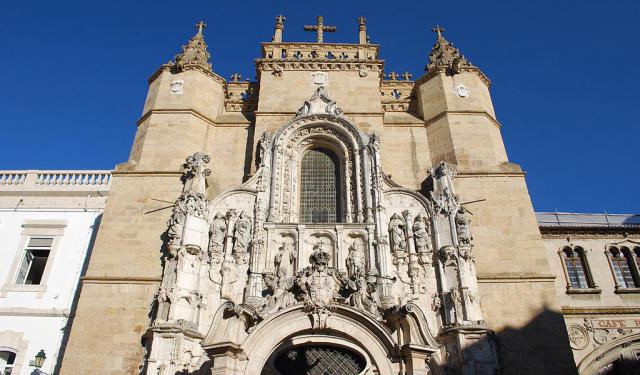
Amid the array of historic buildings narrating the cultural and architectural heritage of Coimbra, Portugal, there are both secular structures and great churches, dating back centuries. Apart from their historical value, these buildings exemplify the resplendent European architecture of the past, featuring Baroque, Renaissance, Rococo, and other styles. Some of them are richly decorated on the... view more
Tour Duration: 1 Hour(s)
Travel Distance: 1.8 Km or 1.1 Miles
Tour Duration: 1 Hour(s)
Travel Distance: 1.8 Km or 1.1 Miles
A Walking Tour of Coimbra's Historic Old Town
The ancient Roman city of Aeminium, by the Mondego River, eventually became the city of Coimbra. The modern Machado de Castro National Museum rests on the remains of a medieval bishop's palace. The palace was supported by an old cryptoporticus and Roman forum. The forum was the seed of the political and religious center of a city always reborn.
For more than 100 years Aeminium was held by... view more
Tour Duration: 2 Hour(s)
Travel Distance: 2.2 Km or 1.4 Miles
For more than 100 years Aeminium was held by... view more
Tour Duration: 2 Hour(s)
Travel Distance: 2.2 Km or 1.4 Miles