

Palace Garden, Riga
The Palace Garden and Park in Riga is a serene space located near the Riga Castle along the banks of the Daugava River. The park, though compact, holds profound historical significance due to two major landmarks that commemorate different aspects of Latvia's past.
The first landmark is the site of the former Victory Column, established to commemorate the Russian victory over Napoleon in the War of 1812. Initially erected in 1817 at Castle Square, the column was a symbol of Russian triumph, designed in Saint Petersburg, possibly by the architect Giacomo Quarenghi. During the tumult of the First World War in 1915, the metallic parts of the column were transported to Russia, and by 1938, the remaining stone structure was dismantled due to the political climate of the time. Recent attempts to restore this monument have been unsuccessful, reflecting ongoing political sensitivities.
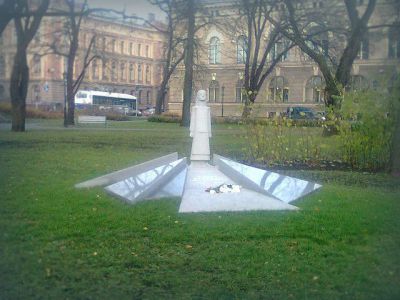
At the northern end of the park, a more somber monument stands as a poignant reminder of the tragic deportation of Latvian children to Siberia during Soviet rule. Specifically, the monument, known as "Orphan Girl," is dedicated to the memory of over 4,000 Latvian children who were deported in 1941 and 1949, of whom only half survived. Unveiled in 2008 and located opposite the president's palace, this grey granite statue captures the somber reality of those dark times. Sculpted by Janis Karlovs, who himself was deported to Siberia at just two years old, the statue serves as a memorial to the innocence lost during these brutal deportations.
Together, these landmarks provide visitors to the Palace Garden with a deep reflection on the complex layers of Latvian history, encapsulating moments of both historical grandeur and profound sorrow.
The first landmark is the site of the former Victory Column, established to commemorate the Russian victory over Napoleon in the War of 1812. Initially erected in 1817 at Castle Square, the column was a symbol of Russian triumph, designed in Saint Petersburg, possibly by the architect Giacomo Quarenghi. During the tumult of the First World War in 1915, the metallic parts of the column were transported to Russia, and by 1938, the remaining stone structure was dismantled due to the political climate of the time. Recent attempts to restore this monument have been unsuccessful, reflecting ongoing political sensitivities.
At the northern end of the park, a more somber monument stands as a poignant reminder of the tragic deportation of Latvian children to Siberia during Soviet rule. Specifically, the monument, known as "Orphan Girl," is dedicated to the memory of over 4,000 Latvian children who were deported in 1941 and 1949, of whom only half survived. Unveiled in 2008 and located opposite the president's palace, this grey granite statue captures the somber reality of those dark times. Sculpted by Janis Karlovs, who himself was deported to Siberia at just two years old, the statue serves as a memorial to the innocence lost during these brutal deportations.
Together, these landmarks provide visitors to the Palace Garden with a deep reflection on the complex layers of Latvian history, encapsulating moments of both historical grandeur and profound sorrow.
Want to visit this sight? Check out these Self-Guided Walking Tours in Riga. Alternatively, you can download the mobile app "GPSmyCity: Walks in 1K+ Cities" from Apple App Store or Google Play Store. The app turns your mobile device to a personal tour guide and it works offline, so no data plan is needed when traveling abroad.
Download The GPSmyCity App



Palace Garden on Map
Sight Name: Palace Garden
Sight Location: Riga, Latvia (See walking tours in Riga)
Sight Type: Attraction/Landmark
Sight Location: Riga, Latvia (See walking tours in Riga)
Sight Type: Attraction/Landmark
Nearby Sights
Walking Tours in Riga, Latvia

Create Your Own Walk in Riga
Creating your own self-guided walk in Riga is easy and fun. Choose the city attractions that you want to see and a walk route map will be created just for you. You can even set your hotel as the start point of the walk.
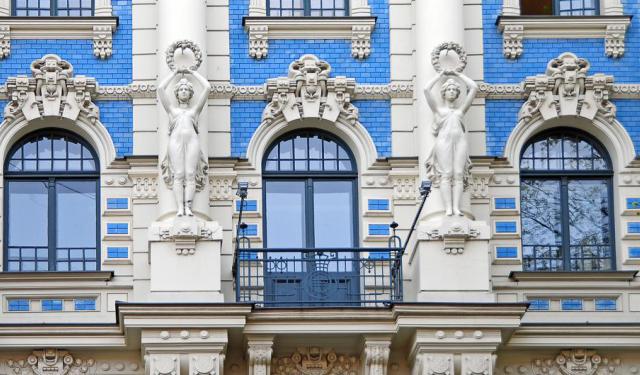
A Walking Guide to Riga's Fairytale Art Nouveau Architecture
An architecture lover in general and that of Art Nouveau in particular will find plenty to look at in the quiet center of Riga. Jūgendstil (Latvian: Art Nouveau) architecture makes up roughly one third of all buildings in the heart of Latvia's capital. In fact, the city boasts the highest concentration of Art Nouveau structures anywhere in the world.
Constructed during a period of rapid... view more
Tour Duration: 1 Hour(s)
Travel Distance: 1.3 Km or 0.8 Miles
Constructed during a period of rapid... view more
Tour Duration: 1 Hour(s)
Travel Distance: 1.3 Km or 0.8 Miles
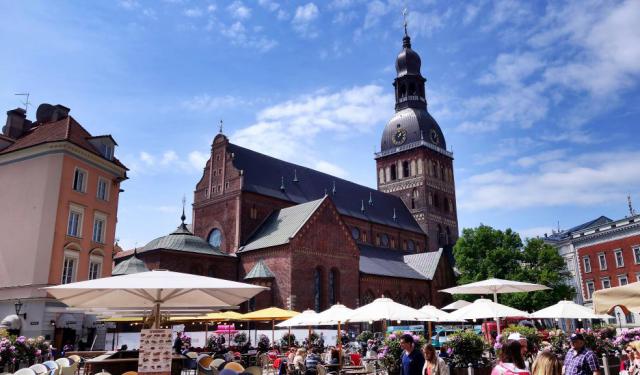
Explore Riga's Historical Churches on Foot
One great thing about Riga is that the majority of its religious sites are concentrated in the historic center. A variety of faiths found in the Latvian capital is fairly broad for such a small country and includes Roman Catholic, Orthodox, and Lutheran, to mention but a few.
The 13th-century Riga Cathedral is perhaps the most significant house of prayer in the city. The imposing mix of... view more
Tour Duration: 2 Hour(s)
Travel Distance: 3.0 Km or 1.9 Miles
The 13th-century Riga Cathedral is perhaps the most significant house of prayer in the city. The imposing mix of... view more
Tour Duration: 2 Hour(s)
Travel Distance: 3.0 Km or 1.9 Miles
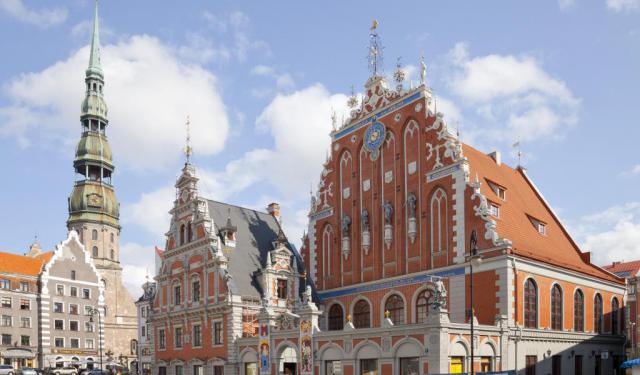
A Walk Through Riga's Charming Old Town
The area that is home to present-day Riga has hosted inhabitants since the days of the Vikings. With a sheltered natural harbor nearby, the River Daugava made Riga a stop on the Vikings' Dvina-Dnieper trade route to Byzantium.
Trade allowed the area to flourish, and the Livs, a Finnic tribe, settled it. In the early Middle Ages, the town's economy revolved around fishing, trading, and... view more
Tour Duration: 2 Hour(s)
Travel Distance: 2.4 Km or 1.5 Miles
Trade allowed the area to flourish, and the Livs, a Finnic tribe, settled it. In the early Middle Ages, the town's economy revolved around fishing, trading, and... view more
Tour Duration: 2 Hour(s)
Travel Distance: 2.4 Km or 1.5 Miles
Useful Travel Guides for Planning Your Trip
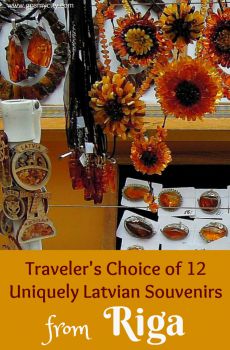
Traveler's Choice of 12 Uniquely Latvian Souvenirs from Riga
Reemerged after regaining independence in the early 1990s, Latvia is anxious to reveal its beauty to the outside world. The country's capital Riga is a good showroom for the country's cultural riches and traditions. Here's the list of the unique Latvian products to look for while in...