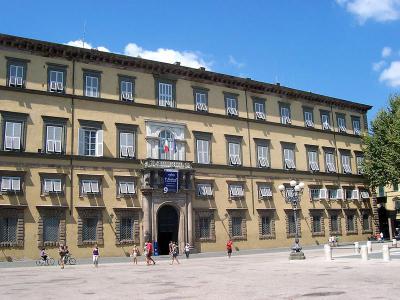


Palazzo Ducale (Palace of the Doges), Lucca
The Ducal Palace (Palazzo Ducale) stands as a testament to Lucca’s layered history, reflecting centuries of political shifts and architectural refinements. Located in the heart of the city, the palace occupies the former site of the Fortezza Augustan, once home to the feared condottiero Castruccio Castracani. His grand residence-perhaps designed by Giotto-was demolished in 1370 following a popular uprising.
The structure was later repurposed as a fortified residence by Paolo Guinigi in 1401, but his fall in 1429 led to another partial dismantling. Eventually, the remains were transformed into the Palazzo Pubblico, serving as Lucca’s governmental headquarters. The palace saw another chapter of aristocratic splendor when Elisa Baciocchi, Napoleon’s sister, took residence here. Following the Unification of Italy in 1861, it passed into the hands of the province of Lucca.
The palace’s present-day grandeur is largely attributed to Bartolomeo Ammannati, who redesigned its façade in 1578. The right-wing, a later addition by Francesco Pini in 1728, reflects the influence of Filippo Juvarra. In the 19th century, Lorenzo Nottolini, the ducal architect, further enriched the interiors, leaving behind a monumental staircase leading to a grand gallery of statues.
Among the palace’s striking features is its central courtyard, which remains unfinished but boasts a double portico and a central statue of the Lucchese lawyer Francesco Carrara, sculpted by Augusto Passaglia. The Cortile degli Svizzeri, another incomplete courtyard, references the Swiss Guard who once served the Republic of Lucca and is distinguished by Ammannati’s rusticated stonework.
Inside, the Hall of the General Council of the Republic preserves a Flemish painting and a fresco symbolizing Lucchese's freedom. The Ammannati Loggia, perched above the Loggia delle Guardie, showcases grotesque decorations and stucco work. The Staffieri Hall dazzles with frescoes by Luigi Ademollo. Until 1977, the palace housed Lucca’s National Gallery now relocated to Villa Guinigi.
Today, the Ducal Palace remains an enduring symbol of Lucca’s political and artistic evolution-a grand space where Renaissance refinement meets the echoes of medieval power struggles.
Want to visit this sight? Check out these Self-Guided Walking Tours in Lucca. Alternatively, you can download the mobile app "GPSmyCity: Walks in 1K+ Cities" from Apple App Store or Google Play Store. The app turns your mobile device to a personal tour guide and it works offline, so no data plan is needed when traveling abroad.
Download The GPSmyCity App



Palazzo Ducale (Palace of the Doges) on Map
Sight Name: Palazzo Ducale (Palace of the Doges)
Sight Location: Lucca, Italy (See walking tours in Lucca)
Sight Type: Attraction/Landmark
Sight Location: Lucca, Italy (See walking tours in Lucca)
Sight Type: Attraction/Landmark
Nearby Sights


Walking Tours in Lucca, Italy
Create Your Own Walk in Lucca
Creating your own self-guided walk in Lucca is easy and fun. Choose the city attractions that you want to see and a walk route map will be created just for you. You can even set your hotel as the start point of the walk.
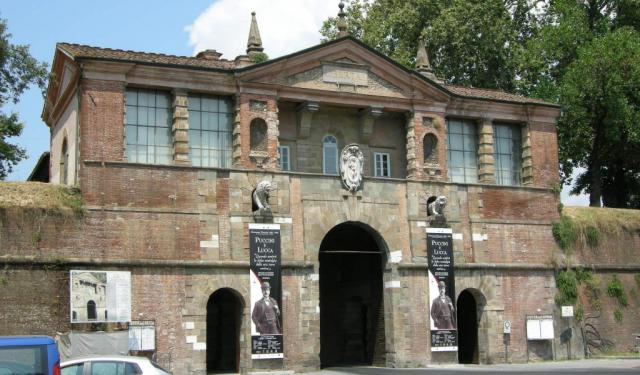
Lucca's City Wall and Gates Walking Tour
Lucca is one of Italy's most celebrated cities of art, renowned for its historic churches, medieval towers, and, above all, its remarkably well-preserved city walls. Encircling the historic center, these impressive fortifications have protected Lucca for centuries and remain one of its most distinctive features.
During the Middle Ages, Lucca's walls stood around 11 to 12 meters high,... view more
Tour Duration: 2 Hours
Travel Distance: 3.7 Km or 2.3 Miles
During the Middle Ages, Lucca's walls stood around 11 to 12 meters high,... view more
Tour Duration: 2 Hours
Travel Distance: 3.7 Km or 2.3 Miles
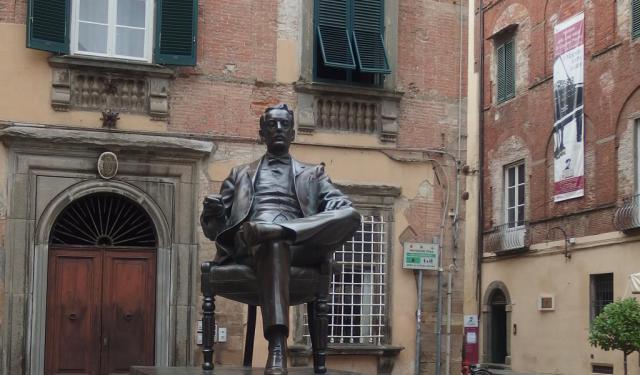
Discover Puccini's Lucca on Foot
One of the greatest musical talents of mankind, Italian composer Giacomo Puccini, was born and spent a substantial part of his life in the Tuscan city of Lucca. Today the legacy of Puccini resonates all over the world and even more so here.
Puccini's ancestors, also musicians, moved to Lucca in 1719. The future maestro was born in a house that had belonged to his family since 1815 - Casa... view more
Tour Duration: 1 Hour
Travel Distance: 1.5 Km or 0.9 Miles
Puccini's ancestors, also musicians, moved to Lucca in 1719. The future maestro was born in a house that had belonged to his family since 1815 - Casa... view more
Tour Duration: 1 Hour
Travel Distance: 1.5 Km or 0.9 Miles
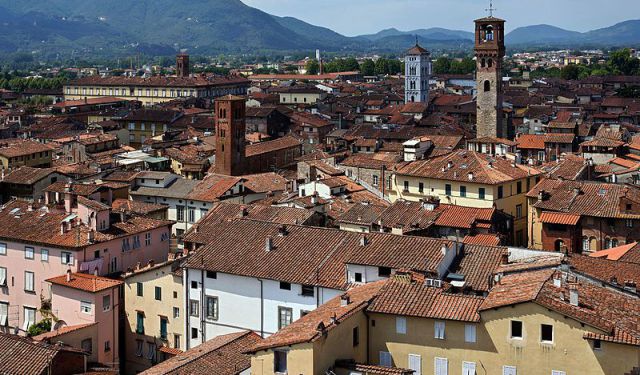
Lucca Old Town Walking Tour
Lucca is known by many names: a city of art, churches, gardens, and towers. But perhaps its most distinctive feature is its remarkable city walls. Fortifications have surrounded Lucca since Roman times, and today, its Renaissance walls remain almost perfectly intact.
Inside the walls, Lucca still follows much of its ancient Roman street plan. Square San Michele occupies the site of the old... view more
Tour Duration: 2 Hours
Travel Distance: 2.9 Km or 1.8 Miles
Inside the walls, Lucca still follows much of its ancient Roman street plan. Square San Michele occupies the site of the old... view more
Tour Duration: 2 Hours
Travel Distance: 2.9 Km or 1.8 Miles
City Walks Overview
