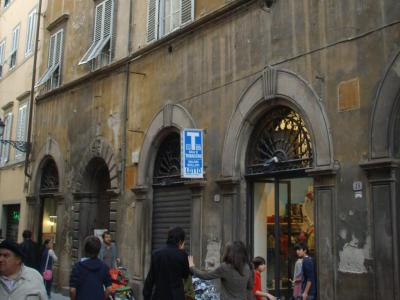


Palazzo Brancoli Pantera (Brancoli Pantera Palace), Lucca
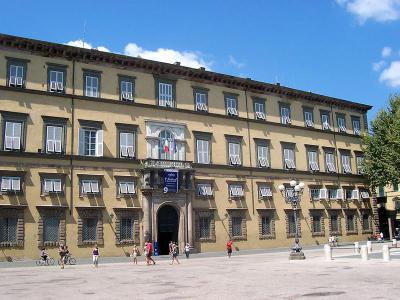
The Brancoli Pantera Palace, also known as Palazzo Massagli, is a historic 17th-century building located on Vittorio Veneto Street in the heart of Lucca. The palace stands as a refined example of the city’s architectural heritage, preserving the elegance of past centuries while undergoing modifications over time.
One of its most notable features is its private garden, which was not originally present in the 17th-century city maps but appears in an 1843 plan, showcasing a meticulously designed layout with rectangular and circular flowerbeds. However, between the late 19th and early 20th century, significant changes altered its original charm when a garage with a terrace covered by a pergola was added, leading to the partial loss of the garden’s historic character.
Despite these modifications, the garden retains a distinctive irregular shape, with its entrance located on the north side. Visitors can still see gravel pathways winding toward a circular fountain, a focal point of the space. The garden is dominated by a large magnolia tree, surrounded by various flowering plants and a small rose garden, which add to its picturesque and serene ambiance.
The Brancoli Pantera Palace continues to be a silent witness to Lucca’s rich history, with its blend of aristocratic refinement and the subtle marks of urban transformation over time. Whether admired from the street or explored within, it remains a testament to the city’s ability to balance historical preservation with the evolving needs of modern life.
One of its most notable features is its private garden, which was not originally present in the 17th-century city maps but appears in an 1843 plan, showcasing a meticulously designed layout with rectangular and circular flowerbeds. However, between the late 19th and early 20th century, significant changes altered its original charm when a garage with a terrace covered by a pergola was added, leading to the partial loss of the garden’s historic character.
Despite these modifications, the garden retains a distinctive irregular shape, with its entrance located on the north side. Visitors can still see gravel pathways winding toward a circular fountain, a focal point of the space. The garden is dominated by a large magnolia tree, surrounded by various flowering plants and a small rose garden, which add to its picturesque and serene ambiance.
The Brancoli Pantera Palace continues to be a silent witness to Lucca’s rich history, with its blend of aristocratic refinement and the subtle marks of urban transformation over time. Whether admired from the street or explored within, it remains a testament to the city’s ability to balance historical preservation with the evolving needs of modern life.
Want to visit this sight? Check out these Self-Guided Walking Tours in Lucca. Alternatively, you can download the mobile app "GPSmyCity: Walks in 1K+ Cities" from Apple App Store or Google Play Store. The app turns your mobile device to a personal tour guide and it works offline, so no data plan is needed when traveling abroad.
Download The GPSmyCity App



Palazzo Brancoli Pantera (Brancoli Pantera Palace) on Map
Sight Name: Palazzo Brancoli Pantera (Brancoli Pantera Palace)
Sight Location: Lucca, Italy (See walking tours in Lucca)
Sight Type: Attraction/Landmark
Sight Location: Lucca, Italy (See walking tours in Lucca)
Sight Type: Attraction/Landmark
Nearby Sights

Walking Tours in Lucca, Italy

Create Your Own Walk in Lucca
Creating your own self-guided walk in Lucca is easy and fun. Choose the city attractions that you want to see and a walk route map will be created just for you. You can even set your hotel as the start point of the walk.
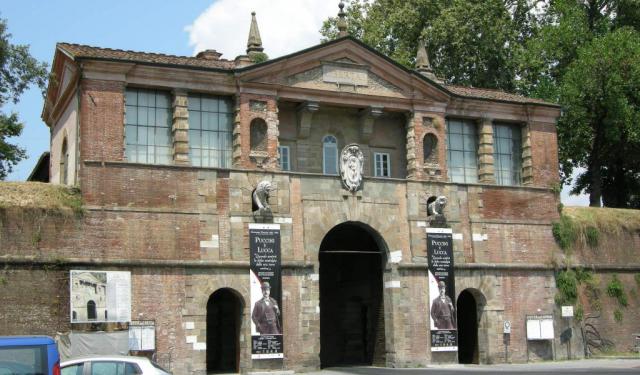
Lucca's City Wall and Gates Walking Tour
As one of Italy's Città d'arte's (arts towns), Lucca is famous, among other things, for its well-preserved ancient walls encircling the historic center. From about 570 AD until 1847 the city had been the center of the Longobard administration and the capital of old Tuscany, and as such required a defense system to render it an impenetrable fortress.
Back in the Middle Ages, the... view more
Tour Duration: 2 Hour(s)
Travel Distance: 3.7 Km or 2.3 Miles
Back in the Middle Ages, the... view more
Tour Duration: 2 Hour(s)
Travel Distance: 3.7 Km or 2.3 Miles
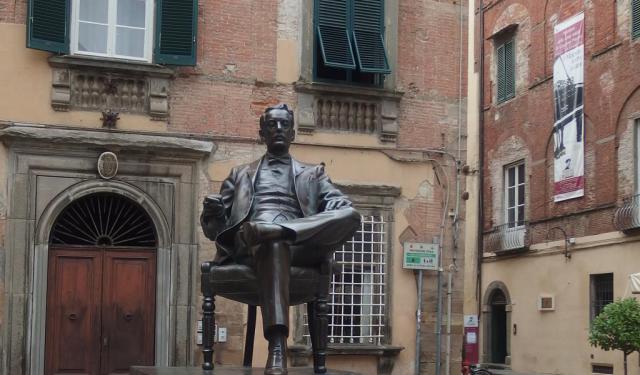
Discover Puccini's Lucca on Foot
One of the greatest musical talents of mankind, Italian composer Giacomo Puccini, was born and spent a substantial part of his life in the Tuscan city of Lucca. Today the legacy of Puccini resonates all over the world and even more so here.
Puccini's ancestors, also musicians, moved to Lucca in 1719. The future maestro was born in a house that had belonged to his family since 1815 – Casa... view more
Tour Duration: 1 Hour(s)
Travel Distance: 1.5 Km or 0.9 Miles
Puccini's ancestors, also musicians, moved to Lucca in 1719. The future maestro was born in a house that had belonged to his family since 1815 – Casa... view more
Tour Duration: 1 Hour(s)
Travel Distance: 1.5 Km or 0.9 Miles
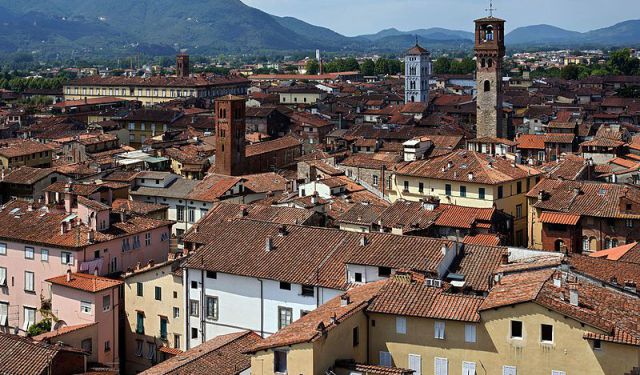
Lucca Old Town Walking Tour
Lucca is called many things: a city of arts, a city of churches, gardens, towers. Most of all it is known for its walls. From Roman times until now the walls have stood. It is the only city in Italy that has kept its walls intact.
The inner walled city is laid out in the ancient Roman grid plan. The Piazza San Michele is the site of the old forum. Bits of the Roman amphitheater can be found in... view more
Tour Duration: 2 Hour(s)
Travel Distance: 2.9 Km or 1.8 Miles
The inner walled city is laid out in the ancient Roman grid plan. The Piazza San Michele is the site of the old forum. Bits of the Roman amphitheater can be found in... view more
Tour Duration: 2 Hour(s)
Travel Distance: 2.9 Km or 1.8 Miles