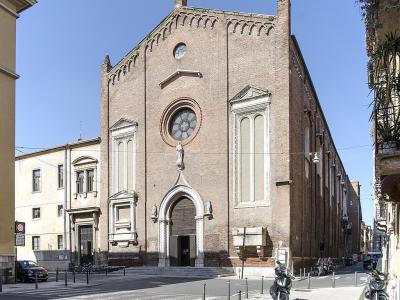


Santa Eufemia, Verona
The Sant'Eufemia Church in Verona's historic center is a notable Catholic place of worship with ancient Roman roots. Possibly from the 6th century, it was established by the Della Scala family in 1262. Augustinian hermit monks were invited and a monastery was built, consecrated in 1331 by Bishop Nicolò.
A significant development occurred in 1340, with Mastino II della Scala granting permission for the construction of the expansive apse that remains a distinguishing feature of the church today. Progress continued into the late 14th century, as various chapels and smaller altars were added.
In the 18th century, the church was modified with a new façade and interior changes. This included adding a vaulted ceiling to hide old trusses and a large arch separating the presbytery from the hall. The monastery's importance declined due to the 1630 plague and reduced population. After this, the church reopened during Austrian rule and offered shelter in Italian independence wars.
In the early 20th century, efforts were made to restore and strengthen the church's walls. However, on April 25, 1945, the nearby Vittoria bridge was blown up by retreating German soldiers, causing significant damage to the church's facade. During the subsequent reconstruction, a large rose window was crafted to replace the previous 18th-century single lancet window.
Within the expansive interior of the church, several valuable works by artists from the Veronese school can be found. These include creations by Giovan Francesco Caroto, Francesco Torbido, Moretto, Dionisio Battaglia, Battista del Moro, Paolo Farinati, Jacopo Ligozzi, Bernardino India, and Domenico and Felice Brusasorzi.
A significant development occurred in 1340, with Mastino II della Scala granting permission for the construction of the expansive apse that remains a distinguishing feature of the church today. Progress continued into the late 14th century, as various chapels and smaller altars were added.
In the 18th century, the church was modified with a new façade and interior changes. This included adding a vaulted ceiling to hide old trusses and a large arch separating the presbytery from the hall. The monastery's importance declined due to the 1630 plague and reduced population. After this, the church reopened during Austrian rule and offered shelter in Italian independence wars.
In the early 20th century, efforts were made to restore and strengthen the church's walls. However, on April 25, 1945, the nearby Vittoria bridge was blown up by retreating German soldiers, causing significant damage to the church's facade. During the subsequent reconstruction, a large rose window was crafted to replace the previous 18th-century single lancet window.
Within the expansive interior of the church, several valuable works by artists from the Veronese school can be found. These include creations by Giovan Francesco Caroto, Francesco Torbido, Moretto, Dionisio Battaglia, Battista del Moro, Paolo Farinati, Jacopo Ligozzi, Bernardino India, and Domenico and Felice Brusasorzi.
Want to visit this sight? Check out these Self-Guided Walking Tours in Verona. Alternatively, you can download the mobile app "GPSmyCity: Walks in 1K+ Cities" from Apple App Store or Google Play Store. The app turns your mobile device to a personal tour guide and it works offline, so no data plan is needed when traveling abroad.
Download The GPSmyCity App



Santa Eufemia on Map
Sight Name: Santa Eufemia
Sight Location: Verona, Italy (See walking tours in Verona)
Sight Type: Religious
Sight Location: Verona, Italy (See walking tours in Verona)
Sight Type: Religious
Nearby Sights
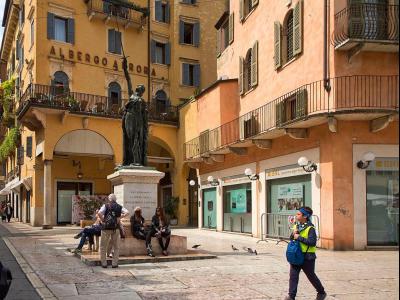
Walking Tours in Verona, Italy

Create Your Own Walk in Verona
Creating your own self-guided walk in Verona is easy and fun. Choose the city attractions that you want to see and a walk route map will be created just for you. You can even set your hotel as the start point of the walk.
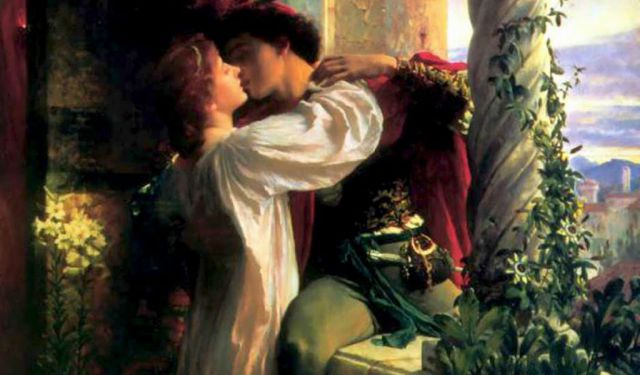
Romeo and Juliet Tour
Few cities in the world capture romance like Verona, the setting that inspired Shakespeare’s Romeo and Juliet. Each year, thousands of visitors stroll the cobbled streets, imagining the star-crossed lovers meeting under moonlight. For romantics, literature enthusiasts, and curious travelers, the Romeo and Juliet Tour offers an unforgettable journey through history, myth, and passion.
Long... view more
Tour Duration: 2 Hours
Travel Distance: 3.9 Km or 2.4 Miles
Long... view more
Tour Duration: 2 Hours
Travel Distance: 3.9 Km or 2.4 Miles
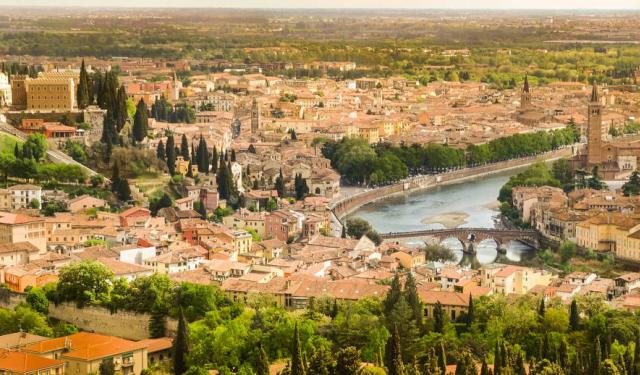
Verona Historic City Center Walking Tour
As William Shakespeare once wrote, “Two households, both alike in dignity, in fair Verona, where we lay our scene…” - a line that has forever entwined the city’s name with timeless romance and drama.
Verona is one of northern Italy’s most storied cities, shaped by ancient tribes, Roman expansion, medieval rivalries, and later cultural prosperity that earned it UNESCO World Heritage... view more
Tour Duration: 3 Hours
Travel Distance: 4 Km or 2.5 Miles
Verona is one of northern Italy’s most storied cities, shaped by ancient tribes, Roman expansion, medieval rivalries, and later cultural prosperity that earned it UNESCO World Heritage... view more
Tour Duration: 3 Hours
Travel Distance: 4 Km or 2.5 Miles
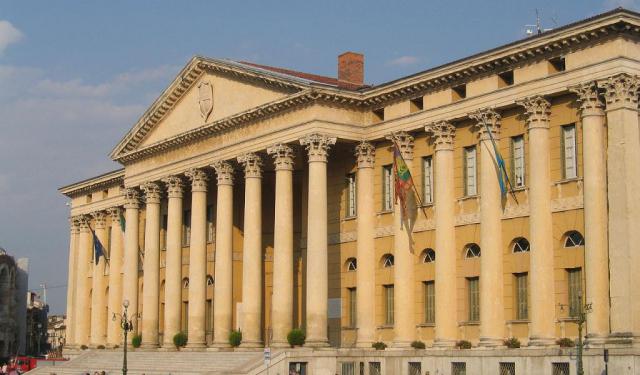
Verona's Palaces
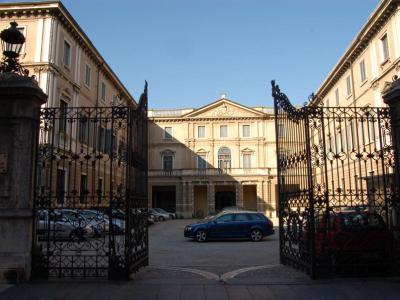
It's no secret that Italy boasts some of the most remarkable palatial architecture in the world. A good portion of it is found in the incredibly charming city of Verona, the long history of which stretches all the way back to ancient Rome and is reflected in an array of Romanesque and Renaissance gates and bridges, but, most notably, the monumental palaces.
Walking the streets of Verona,... view more
Tour Duration: 1 Hour
Travel Distance: 1.6 Km or 1 Miles
Walking the streets of Verona,... view more
Tour Duration: 1 Hour
Travel Distance: 1.6 Km or 1 Miles
Verona's Museums and Galleries
Art and history have been the pillars supporting the elegant city of Verona for centuries. Among other things here, you will find the abundance of grand museums and galleries holding unique collections of art and cultural treasures suiting all tastes.
Whatever your interest - ancient or modern art, archaeology, frescoes, Roman inscriptions, natural history, antique furniture, or wine - be sure... view more
Tour Duration: 1 Hour
Travel Distance: 2.3 Km or 1.4 Miles
Whatever your interest - ancient or modern art, archaeology, frescoes, Roman inscriptions, natural history, antique furniture, or wine - be sure... view more
Tour Duration: 1 Hour
Travel Distance: 2.3 Km or 1.4 Miles