


Day Trip to Hiroshima, Hiroshima, Japan
A day trip to Hiroshima is something many visitors to Japan want to do. It can easily be done from Kyoto, Osaka or Kobe.
This is our itinerary from our day trip to Hiroshima from Kyoto. Please be aware that this itinerary involves a lot of walking, so make sure you wear comfortable shoes and take water with you.
On 6 August 1945, United States airmen dropped a nuclear bomb which they called “Little Boy” on the Japanese city of Hiroshima. Three days later, on 9 August 1945, a second nuclear bomb which they called “Fat Man” was dropped on Nagasaki.
The Little Boy bomb, dropped from the Enola Gay was a uranium fuelled bomb. It exploded about 2,000 feet above Hiroshima. At that time, it released nearly 16 kilotons of explosive force. To give perspective to this, 16 kilotons is equivalent to 16,000 tons of TNT.
The damage from the Little Boy bomb was immense as Hiroshima is located on a plain. As a result, the force to spread further than in Nagasaki, which is located in a valley. However, as the bomb was detonated high up in the atmosphere, the radioactive fireball (or mushroom cloud) did not touch the ground. Rather it travelled up high into the stratosphere. But the damage to Hiroshima was still devastating. The blast flattened buildings within a 2.5 km radius of the bomb’s detonation point. Only 28,000 thousand of the original 90,000 buildings remained after the blast. ...... (follow the instructions below for accessing the rest of this article).
How it works: The full article is featured in the app "GPSmyCity: Walks in 1K+ Cities" on Apple App Store and Google Play Store.
Download the app to your mobile device to read the article offline and create a self-guided walking tour to visit the sights featured in this article. The app's navigation functions guide you from one sight to the next. The app works offline, so no data plan is needed when traveling abroad.
Download The GPSmyCity App



Sights Featured in This Article
Guide Name: Day Trip to Hiroshima
Guide Location: Japan » Hiroshima
Guide Type: Self-guided Walking Tour (Insider Tips)
Author: Lisa Bundesen
Read it on Author's Website: https://themiddleagewanderer.com/day-trip-hiroshima/
Sight(s) Featured in This Guide:
Guide Location: Japan » Hiroshima
Guide Type: Self-guided Walking Tour (Insider Tips)
Author: Lisa Bundesen
Read it on Author's Website: https://themiddleagewanderer.com/day-trip-hiroshima/
Sight(s) Featured in This Guide:
- Hiroshima Station
- Atomic Bomb Dome
- Atomic Bomb Dome park
- Red Bird Monument
- Memorial Tower
- Atomic Bomb Hypocentre
- Children’s Peace Monument
- Hiroshima Victims Memorial Cenotaph
- Hiroshima National Peace Memorial Hall for the Atomic Bomb Victims
- Hiroshima Peace Memorial Museum
- Atomic Bomb Memorial Mound
- Peace Bell
- Peace Clock Tower
- Marunaka Supermarket
- Hiroshima Castle
- Shukkeien Garden
- Shukkeien-Mae Station
- Hatchobori
Insider Tips for Hiroshima, Japan

At Peace in a Park in Hiroshima
Stepping off the tram at the “Peace Park”: in Hiroshima I had no idea what to expect, or even, why I was there. I was immediately struck by the stark reality of the disaster that struck the city on seeing the Atomic Dome (Genbaku Dome) with its shredded dome.

Historic Hiroshima
Hiroshima has been redefining itself over the decades after its tragic place in history and today, is one of Japan’s major urban centres.
Founded as a castle town in the 16th century, it’s fair to say that most people venture to Hiroshima to see the city’s monuments to peace. But also to learn about the devastation caused by the Atomic Bomb (A-Bomb) on 6 August 1945 at 8.17 am, when... view more
Founded as a castle town in the 16th century, it’s fair to say that most people venture to Hiroshima to see the city’s monuments to peace. But also to learn about the devastation caused by the Atomic Bomb (A-Bomb) on 6 August 1945 at 8.17 am, when... view more

What to See in Hiroshima
Hiroshima is one of the modern Japanese cities located on Japan’s Honshu Island. It is a very interesting city to explore for the sake of its tragic history – it was largely destroyed by an American atomic bomb during World War II in 1945.
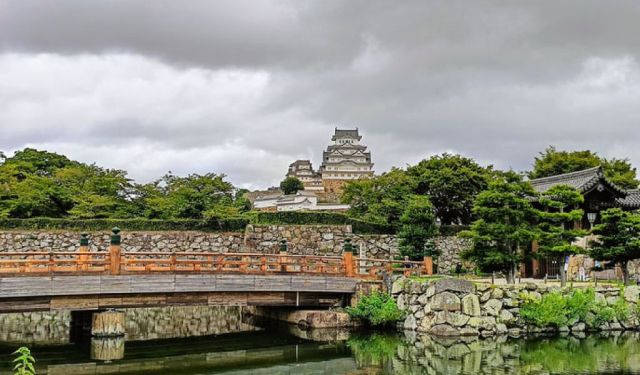
Himeji Castle and Hiroshima from Osaka
Himeji Castle is considered Japan’s most iconic and one of the best day trips from Osaka. Hiroshima stands as one of Japan’s most historically significant cities, known worldwide as the site of the 1945 atomic bombing. Because both cities sit directly on Japan’s Tokaido-Sanyo bullet train line, we thought it would be easy to combine them into a single journey. We were right.

Remembering the Past in Hiroshima
The afternoon of our ninth day in Japan was dedicated to remembering the past by visiting the city of Hiroshima.
Our first stop was the Hiroshima Castle, nicknamed the Carp Castle. The castle stands in an area that used to be called Koi-no-ura, which means Carp (Koi) Sea Shore, hence the nickname.
Our first stop was the Hiroshima Castle, nicknamed the Carp Castle. The castle stands in an area that used to be called Koi-no-ura, which means Carp (Koi) Sea Shore, hence the nickname.
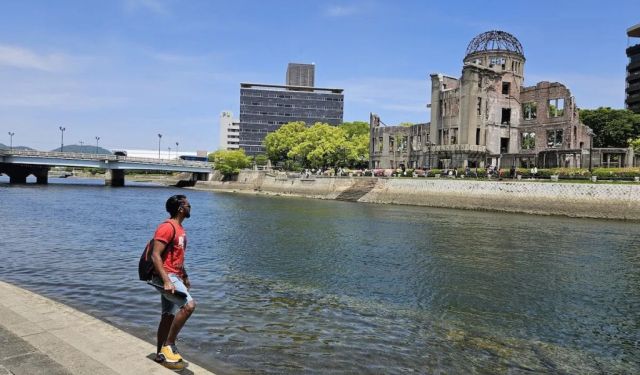
How I Spent 4 Days in Hiroshima Japan!
When I finally stepped off the bullet train, I carried a very specific image in my mind - one painted by history books and documentaries. I expected a quiet, heavy place, frozen in time, carrying the weight of its past. What greeted me instead was a city that had completely reinvented itself. Modern streets, sleek trams, a lively town center, and a transport network that made getting around... view more
Insider Tips Overview
