Custom Walk in Rhodes, Greece by ksadams19897648 created on 2021-10-05
Guide Location: Greece » Rhodes
Guide Type: Custom Walk
# of Sights: 13
Tour Duration: 4 Hour(s)
Travel Distance: 9.5 Km or 5.9 Miles
Share Key: X6RW3
Guide Type: Custom Walk
# of Sights: 13
Tour Duration: 4 Hour(s)
Travel Distance: 9.5 Km or 5.9 Miles
Share Key: X6RW3
How It Works
Please retrieve this walk in the GPSmyCity app. Once done, the app will guide you from one tour stop to the next as if you had a personal tour guide. If you created the walk on this website or come to the page via a link, please follow the instructions below to retrieve the walk in the app.
Retrieve This Walk in App
Step 1. Download the app "GPSmyCity: Walks in 1K+ Cities" on Apple App Store or Google Play Store.



Step 2. In the GPSmyCity app, download(or launch) the guide "Rhodes Map and Walking Tours".
Step 3. Tap the menu button located at upper right corner of the "Walks" screen and select "Retrieve custom walk". Enter the share key: X6RW3
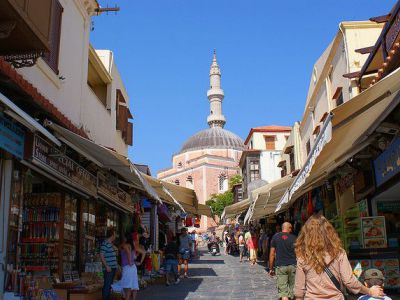
1) Old Town
The Old Town of Rhodes is the oldest medieval town in Europe. There are about 200 streets in the Old Town of Rhodes, and no one has a name. So if you get lost on the streets of Rhodes just ask how you can get to Sokratous. It may be considered as the main street of the Old Town of Rhodes.
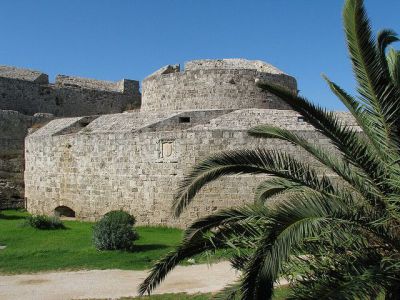
2) Medieval City
Medieval City is just a new mixture of an old town with a new one. The town is assembled with architectural buildings in a Gothic style. There are a lot of mosques, public baths and other buildings that remind us about the reign of the Ottoman Empire.
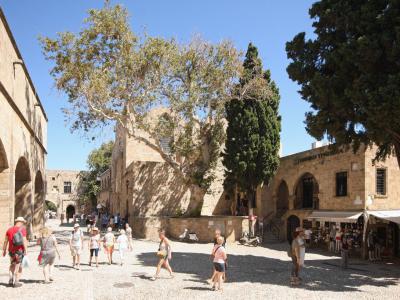
3) Church of Our Lady of the Castle (Museum Square)
Museum Square ("Platía Mousíou") is surrounded by several notable buildings, including the Church of Our Lady of the Castle. Originally constructed by the Byzantines and later completed by the Knights of Saint John, who transformed it into their cathedral, this building is a historical gem. Its somber stone walls still display traces of 14th-century frescoes from its days as a church, although it was converted into a mosque during the Ottoman period. Thankfully, its original architectural design has been preserved, and today, the church houses the Byzantine Museum, which showcases a remarkable collection of icons, primarily from the 14th and 15th centuries, along with post-Byzantine frescoes that have been salvaged from abandoned chapels across Rhodes and the nearby islands.
Also on the church grounds are the remains of a Doric temple dedicated to Athena Polias-a significant archaeological site that visitors should not overlook. Just a short distance away, at the southeastern edge of the square near the Arnáldou Gate, is the Inn of England. Originally built in 1483, this structure was reconstructed by the Italians after its destruction in 1856.
Rich with history, the Museum Square offers a deep dive into the layered past of Rhodes and its diverse cultural influences.
Also on the church grounds are the remains of a Doric temple dedicated to Athena Polias-a significant archaeological site that visitors should not overlook. Just a short distance away, at the southeastern edge of the square near the Arnáldou Gate, is the Inn of England. Originally built in 1483, this structure was reconstructed by the Italians after its destruction in 1856.
Rich with history, the Museum Square offers a deep dive into the layered past of Rhodes and its diverse cultural influences.
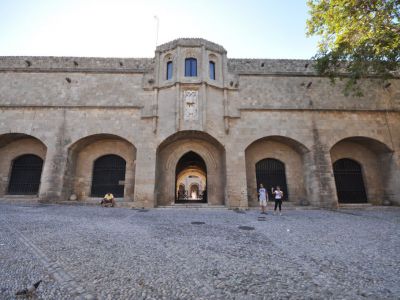
4) Archaeological Museum of Rhodes (must see)
One of the most significant buildings in the Old Town, the Knights' New Hospital, now houses the Archaeological Museum of Rhodes. This structure not only displays artifacts from all the ancient sites on the island but also stands as a testament to the wealth and considerable engineering skills of its medieval builders.
Construction of the hospital began in 1440 and was completed nine years later under the guidance of Grand Master Pierre d’Aubusson. Designed as a state-of-the-art facility for its time, it provided medical care to Christians from across Europe. The building underwent restoration during the Italian occupation and required further repairs after sustaining bomb damage during World War II.
Inside, the museum features a large courtyard lined with arched porticoes, one graced by a lion statue from the Hellenistic period. The courtyard also displays piles of cannonballs from various sieges, including that led by Suleiman the Magnificent. To the left of the courtyard, a stone staircase ascends to the infirmary hall, a vast space with a roof supported by several stone columns, reminiscent of a medieval courtroom. This main ward originally accommodated over 100 beds and had special recessed rooms for the critically ill. Originally featuring minimal comforts, such as a fireplace, it now houses relics from the era of the Knights, including the gravestones of notable members complete with their familial coats-of-arms.
The rooms on the rest of the floor, including the large refectory, have been partitioned into smaller galleries displaying a variety of artifacts, including painted pottery, large storage jars called "pithoi", and grave artifacts from ancient sites like Ialysos and Kameiros, with sections devoted to finds from specific periods. Notably, rooms 6 to 8 focus on artifacts from Ialysos dating from the 9th to the 4th century BC, while rooms 9 to 15 showcase discoveries from Kameiros, all unearthed during the Italian period of excavation.
The atrium area, once the hospital kitchen, now exhibits a remarkable collection of Classical statuary and grave steles, notably one donated by Krito for her mother Timarista around 410 BC, crafted by a local artist in the Athenian style prevalent at that time. Nearby, visitors can also find an Archaic-era "kouros" and a small head of Zeus found near his temple on Mount Atávyros.
Other rooms display exquisite Hellenistic and Roman statues, including two marble representations of Aphrodite: Thalassia or Aidoumene, famously dubbed the 'Marine Venus' by Lawrence Durrell but notable for her sea-dissolved face, and the more accessible "Aphrodite Bathing", a crouched figure arranging her hair, which dates back to the 1st century BC but is thought to be a copy of a 3rd-century BC original. Adjacent to these, a sculpture garden displays a quirky mix of stylized animals both real and mythical, such as dolphin heads, lions, and sea serpents, all set among potted plants.
Construction of the hospital began in 1440 and was completed nine years later under the guidance of Grand Master Pierre d’Aubusson. Designed as a state-of-the-art facility for its time, it provided medical care to Christians from across Europe. The building underwent restoration during the Italian occupation and required further repairs after sustaining bomb damage during World War II.
Inside, the museum features a large courtyard lined with arched porticoes, one graced by a lion statue from the Hellenistic period. The courtyard also displays piles of cannonballs from various sieges, including that led by Suleiman the Magnificent. To the left of the courtyard, a stone staircase ascends to the infirmary hall, a vast space with a roof supported by several stone columns, reminiscent of a medieval courtroom. This main ward originally accommodated over 100 beds and had special recessed rooms for the critically ill. Originally featuring minimal comforts, such as a fireplace, it now houses relics from the era of the Knights, including the gravestones of notable members complete with their familial coats-of-arms.
The rooms on the rest of the floor, including the large refectory, have been partitioned into smaller galleries displaying a variety of artifacts, including painted pottery, large storage jars called "pithoi", and grave artifacts from ancient sites like Ialysos and Kameiros, with sections devoted to finds from specific periods. Notably, rooms 6 to 8 focus on artifacts from Ialysos dating from the 9th to the 4th century BC, while rooms 9 to 15 showcase discoveries from Kameiros, all unearthed during the Italian period of excavation.
The atrium area, once the hospital kitchen, now exhibits a remarkable collection of Classical statuary and grave steles, notably one donated by Krito for her mother Timarista around 410 BC, crafted by a local artist in the Athenian style prevalent at that time. Nearby, visitors can also find an Archaic-era "kouros" and a small head of Zeus found near his temple on Mount Atávyros.
Other rooms display exquisite Hellenistic and Roman statues, including two marble representations of Aphrodite: Thalassia or Aidoumene, famously dubbed the 'Marine Venus' by Lawrence Durrell but notable for her sea-dissolved face, and the more accessible "Aphrodite Bathing", a crouched figure arranging her hair, which dates back to the 1st century BC but is thought to be a copy of a 3rd-century BC original. Adjacent to these, a sculpture garden displays a quirky mix of stylized animals both real and mythical, such as dolphin heads, lions, and sea serpents, all set among potted plants.
5) Palace of the Grand Master of the Knights of Rhodes (must see)
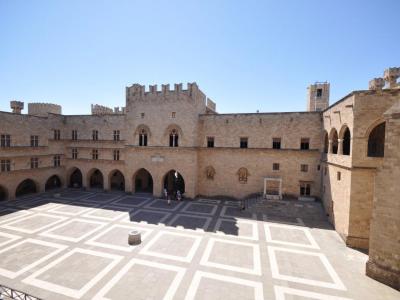
At the top of the Street of the Knights stands the Palace of the Grand Master, which once served as the administrative core of the Order of the Knights of Saint John and the centerpiece of the Knights’ Quarter. Neglected during the Ottoman era and used as a prison before being nearly destroyed by an explosion in 1856, the palace was later restored by the Italians in a renovation that remains contentious. The rebuild did not adhere to the original floor plan and introduced modern elements to the interior, including statues and mosaics from other Dodecanese islands, much to the chagrin of those islands that still mourn their loss.
Despite these controversies, the palace continues to awe visitors with its regal presence at the highest point in Rhodes. The use of columns and capitals from ancient sites throughout the interior, and the exterior's stone cladding, illustrate the architectural grandeur of the Knights’ Quarter at its peak. Notable features include the splendid wooden ceilings and the onyx window panes that cast a soft light inside. Many of the main rooms display magnificent Hellenistic and Roman mosaics, sourced from nearby Kos, and while their presence here raises ethical questions, they are nonetheless well-preserved.
Visitors enter the palace between two grand semicircular towers and are greeted by a large marble staircase that leads to the spacious upper-story rooms, deliberately kept sparsely furnished to highlight the architecture and mosaics. These mosaics include depictions of the Nine Muses, a nymph on a sea-horse, and Medusa's head, with motifs of fish and dolphins also prevalent.
The ground floor, once used as stables or as storage for grain and munitions during sieges, now encloses a courtyard adorned with Classical statues and houses a permanent exhibition that spans the first 2,400 years of Rhodes' history. This includes a medieval gallery up to the time of the Ottoman conquest, along with temporary exhibitions. The collections are exceptionally well-organized and labeled, even more so than those of the Archaeological Museum.
Despite these controversies, the palace continues to awe visitors with its regal presence at the highest point in Rhodes. The use of columns and capitals from ancient sites throughout the interior, and the exterior's stone cladding, illustrate the architectural grandeur of the Knights’ Quarter at its peak. Notable features include the splendid wooden ceilings and the onyx window panes that cast a soft light inside. Many of the main rooms display magnificent Hellenistic and Roman mosaics, sourced from nearby Kos, and while their presence here raises ethical questions, they are nonetheless well-preserved.
Visitors enter the palace between two grand semicircular towers and are greeted by a large marble staircase that leads to the spacious upper-story rooms, deliberately kept sparsely furnished to highlight the architecture and mosaics. These mosaics include depictions of the Nine Muses, a nymph on a sea-horse, and Medusa's head, with motifs of fish and dolphins also prevalent.
The ground floor, once used as stables or as storage for grain and munitions during sieges, now encloses a courtyard adorned with Classical statues and houses a permanent exhibition that spans the first 2,400 years of Rhodes' history. This includes a medieval gallery up to the time of the Ottoman conquest, along with temporary exhibitions. The collections are exceptionally well-organized and labeled, even more so than those of the Archaeological Museum.
6) Socrates Street
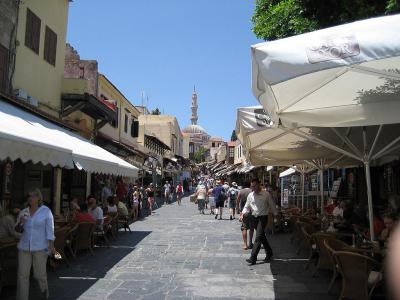
Every resort town has a grand shopping lane for picking up souvenirs and tasting local flavors, and Rhodes, the capital of the island, is no different with its own Socrates Street. Named after the renowned ancient Greek philosopher, this cobblestoned artery is lined with a diverse array of shops, bars, eateries, and entertainment venues, buzzing with activity from evening until the early morning hours.
A stroll down Socrates Street can sometimes turn into a fully-fledged excursion due to the assortment of goods on display. You'll find clothing, fabrics, shoes, all sorts of sweets, numerous figurines that celebrate Ancient Greek themes, and an array of local handicrafts that fill the stalls each day. The sellers here are equally diverse, with many being multilingual, contributing to the vibrant and colorful atmosphere that draws visitors day and night.
Walking along the street, you'll also encounter significant medieval landmarks such as the massive fortified walls of the Old Town complete with ramparts and a defensive moat, Byzantine churches, Ottoman mosques, as well as quaint squares, gardens, and courtyards that invite curiosity. Notable sights along the way include the Archbishop's Palace, which dominates the square of the same name, and the nearby Commercial Tribunal dating back to the turn of the 16th century. The Marine Gate and the charming Seahorse Fountain are also located along this route. Further down, you'll pass the luxurious Suleiman Baths, which boast a richly decorated interior and are still operational today. The Sultan Mustafa Mosque, another remnant of Rhodes' Muslim period, captures the classic oriental aesthetic.
Towards the southern end, a maze of narrow lanes leads to Pythagoras Street, home to the 16th-century Ibrahim Pasha Mosque, and to Fanourios Street, home to the small Orthodox Church of Saint Fanourios, built in 1335 and known for being partially underground.
A stroll down Socrates Street can sometimes turn into a fully-fledged excursion due to the assortment of goods on display. You'll find clothing, fabrics, shoes, all sorts of sweets, numerous figurines that celebrate Ancient Greek themes, and an array of local handicrafts that fill the stalls each day. The sellers here are equally diverse, with many being multilingual, contributing to the vibrant and colorful atmosphere that draws visitors day and night.
Walking along the street, you'll also encounter significant medieval landmarks such as the massive fortified walls of the Old Town complete with ramparts and a defensive moat, Byzantine churches, Ottoman mosques, as well as quaint squares, gardens, and courtyards that invite curiosity. Notable sights along the way include the Archbishop's Palace, which dominates the square of the same name, and the nearby Commercial Tribunal dating back to the turn of the 16th century. The Marine Gate and the charming Seahorse Fountain are also located along this route. Further down, you'll pass the luxurious Suleiman Baths, which boast a richly decorated interior and are still operational today. The Sultan Mustafa Mosque, another remnant of Rhodes' Muslim period, captures the classic oriental aesthetic.
Towards the southern end, a maze of narrow lanes leads to Pythagoras Street, home to the 16th-century Ibrahim Pasha Mosque, and to Fanourios Street, home to the small Orthodox Church of Saint Fanourios, built in 1335 and known for being partially underground.
7) Library
The Library was located near the Gymnasium and the Odeion, according to some writing found at the site. The Rhodians kept their precious works of rhetoric here. The library was well stocked with many significant works. Don’t miss the opportunity to visit this ancient library.
8) Odeon of Rhodes
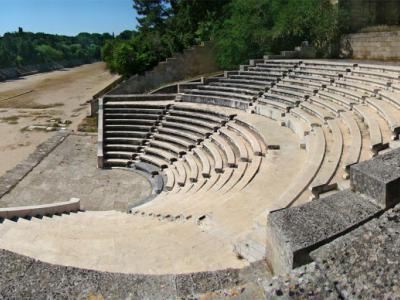
Just north of the ancient stadium, the Italian School of Archaeology uncovered the Odeon, with both monuments having been restructured during the period of Italian rule-only the orchestra and a few front-row seats here are original. Dating from the Classical Greek and Hellenistic periods, between the 3rd and 2nd centuries BC, the marble Odeon is an elegant theatrical structure nestled on the east slope of the Acropolis hill, configured within a rectangular layout. It had a seating capacity of about 800 people and was a key part of the Gymnasium complex, which was dedicated to the education of young people and apparently included a significant library.
The ancient Greeks likely attended singing events, musical performances, and poetry recitals at this venue. As you explore the site, set against a backdrop of lush greenery and naturally integrated into its surroundings, you'll feel as though you've stepped back in time, enveloped in an atmosphere that captures the essence of ancient Greek culture.
The ancient Greeks likely attended singing events, musical performances, and poetry recitals at this venue. As you explore the site, set against a backdrop of lush greenery and naturally integrated into its surroundings, you'll feel as though you've stepped back in time, enveloped in an atmosphere that captures the essence of ancient Greek culture.
9) Colossus of Rhodes
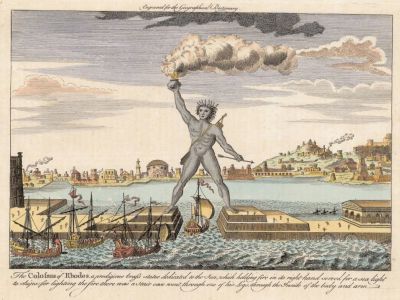
Despite widespread myths, the Colossus of Rhodes did not actually span the entrance to Mandráki Harbour-as many depictions suggest. The reality is that its immense weight, consisting of twenty tonnes of bronze, would have caused it to sink into the soft seabed immediately. More credible theories suggest that this monumental statue of the sun god Helios, erected to memorialize Rhodes' successful defeat of Demetrius Poliorcetes, who attacked Rhodes for a year, was located near the Palace of the Grand Master.
The sculptor Khares of Lindos spent twelve years crafting the 35-meter (114-foot) tall Colossus, with each finger reportedly as large as a man. Tragically, Khares took his own life after discovering a critical design flaw in the statue, and his work was subsequently completed by his disciple, Lakhes. Less than 70 years after its completion, the Colossus suffered a catastrophic failure during an earthquake, snapping at the knees and collapsing, which some say confirmed Khares' fears about its structural integrity.
Following the disaster, the people of Rhodes sought guidance from the Delphic Oracle, which ominously advised them against restoring the statue. Heeding this warning, the ruins of the Colossus remained where they fell for nearly 900 years. It wasn't until AD 653 that Arab pirates pillaged Rhodes, ultimately selling the statue's bronze as scrap to a Jewish merchant from Syria. According to legend, it took 900 camels to transport all the bronze, marking a dramatic end to one of the ancient world's most famous statues.
The sculptor Khares of Lindos spent twelve years crafting the 35-meter (114-foot) tall Colossus, with each finger reportedly as large as a man. Tragically, Khares took his own life after discovering a critical design flaw in the statue, and his work was subsequently completed by his disciple, Lakhes. Less than 70 years after its completion, the Colossus suffered a catastrophic failure during an earthquake, snapping at the knees and collapsing, which some say confirmed Khares' fears about its structural integrity.
Following the disaster, the people of Rhodes sought guidance from the Delphic Oracle, which ominously advised them against restoring the statue. Heeding this warning, the ruins of the Colossus remained where they fell for nearly 900 years. It wasn't until AD 653 that Arab pirates pillaged Rhodes, ultimately selling the statue's bronze as scrap to a Jewish merchant from Syria. According to legend, it took 900 camels to transport all the bronze, marking a dramatic end to one of the ancient world's most famous statues.
10) St. Paul's Gate
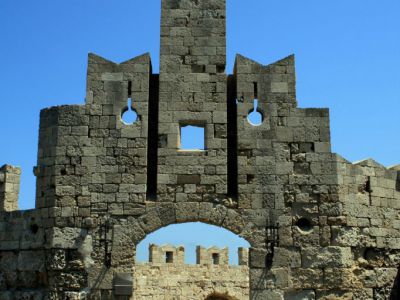
Southeast of Mandráki Harbour, a scenic walk along the waterfront leads you through Saint Paul's Gate, an outer defensive bastion of the Old Town. This gate opens up at the northwest end of Kolóna, the central of Rhodes' three ports, buzzing with activity from colorful fishing boats, ferries arriving from Turkey, cruise ships, and large catamarans.
The bastion at the gate showcases expert construction techniques and serves as a point of reference for fortification experts: it features twelve cannon holes strategically positioned to cover a broad range between the two harbors and the mole of Saint Nicholas ("Agios Nikolaos"). A common element between this gate, the Saint Athanasius Gate, and the D'Amboise Gate is the drawbridge mechanism, believed to have operated through a system of beams and counterweights. Evidence of this system is visible in the vertical slots on the external wall, where the drawbridge beams would have been mounted.
Inside the semi-cylindrical tower on the inner wall, there's a marble sculpture displaying the coat of arms of the House of Grand Master d’Aubusson (1476-1503), adjacent to those of the Hospitallers Order and Pope Sixtus IV. Below these emblems is an effigy of Paul the Apostle and an inscription in Gothic characters reading "Sanctus Paul". These heraldic symbols date the completion of this section of the fortifications to around 1477, during a broader initiative led by Grand Master d’Aubusson to restore the northern walls.
During World War II, Saint Paul's Gate sustained significant damage and nearly collapsed, but was rebuilt in the early 1950s. Today, one of the best spots to appreciate the views is from the foundations of the now-gone Naillac Tower, just east of the gate. This location offers unparalleled views of Mandráki, especially at dawn and dusk, making it a favorite spot for both locals and visitors.
The bastion at the gate showcases expert construction techniques and serves as a point of reference for fortification experts: it features twelve cannon holes strategically positioned to cover a broad range between the two harbors and the mole of Saint Nicholas ("Agios Nikolaos"). A common element between this gate, the Saint Athanasius Gate, and the D'Amboise Gate is the drawbridge mechanism, believed to have operated through a system of beams and counterweights. Evidence of this system is visible in the vertical slots on the external wall, where the drawbridge beams would have been mounted.
Inside the semi-cylindrical tower on the inner wall, there's a marble sculpture displaying the coat of arms of the House of Grand Master d’Aubusson (1476-1503), adjacent to those of the Hospitallers Order and Pope Sixtus IV. Below these emblems is an effigy of Paul the Apostle and an inscription in Gothic characters reading "Sanctus Paul". These heraldic symbols date the completion of this section of the fortifications to around 1477, during a broader initiative led by Grand Master d’Aubusson to restore the northern walls.
During World War II, Saint Paul's Gate sustained significant damage and nearly collapsed, but was rebuilt in the early 1950s. Today, one of the best spots to appreciate the views is from the foundations of the now-gone Naillac Tower, just east of the gate. This location offers unparalleled views of Mandráki, especially at dawn and dusk, making it a favorite spot for both locals and visitors.
11) Marine Gate
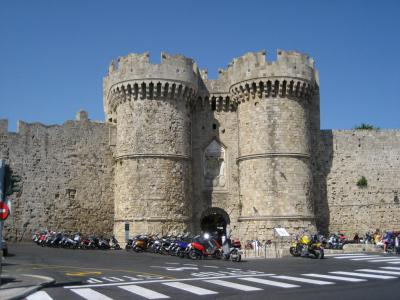
Just south of Kolóna's fishing port, the Marine Gate stands as a dramatic entry point into the walled town of Rhodes, complete with two large round towers. This gate is where visitors arriving by sea enter the city, providing a grand first impression. Built in 1478 during the era of the Knights Hospitaller, it was designed to imitate the Gate to Villeneuve-lès-Avignon in France, which dates back 200 years earlier.
The exterior features several reliefs, including one of the Virgin holding Christ, and others featuring Saint John the Baptist and Saint Peter. One can also spot the coats of arms of France, the Order of Saint John, and the blazon of the House of d'Aubusson. On the interior side, additional relief work includes an effigy of an angel with the coats of arms of the Order of Saint John.
Strategically built close to the water, the gate's positioning and the narrow space between the sea and the walls made it difficult for any army, regardless of size, to gather and launch an attack from this side; moreover, the towers were equipped with devices designed to pour boiling oil on any possible attackers. The gate was last restored in 1951, following repairs to the north tower, which had been damaged during World War II bombings.
The exterior features several reliefs, including one of the Virgin holding Christ, and others featuring Saint John the Baptist and Saint Peter. One can also spot the coats of arms of France, the Order of Saint John, and the blazon of the House of d'Aubusson. On the interior side, additional relief work includes an effigy of an angel with the coats of arms of the Order of Saint John.
Strategically built close to the water, the gate's positioning and the narrow space between the sea and the walls made it difficult for any army, regardless of size, to gather and launch an attack from this side; moreover, the towers were equipped with devices designed to pour boiling oil on any possible attackers. The gate was last restored in 1951, following repairs to the north tower, which had been damaged during World War II bombings.
12) Marco Polo Restaurant
Nestled within the courtyard of the Marco Polo Mansion, this restaurant is renowned for offering the most inventive cuisine in Old Town. The dishes burst with explosive flavors, reflecting the great pride and passion the chefs invest in their creations.
Seasonal menus might feature delicacies such as cuttlefish on a bed of courgette mousse or pork medallions accompanied by soft manoúri cheese, fig, and red peppercorn sauce. Be sure to save space for indulgent desserts like chocolate frozen with strawberries or kaltsoúnia, sweet-cheese turnovers that are a treat for the palate.
Co-proprietor Spyros is passionate about wines, making it worth exploring his carefully curated cellar selections if the house wine doesn’t catch your fancy.
The restaurant itself exudes a cool, vibrant atmosphere with colorful walls, offering a cozy, family-run ambiance.
Seasonal menus might feature delicacies such as cuttlefish on a bed of courgette mousse or pork medallions accompanied by soft manoúri cheese, fig, and red peppercorn sauce. Be sure to save space for indulgent desserts like chocolate frozen with strawberries or kaltsoúnia, sweet-cheese turnovers that are a treat for the palate.
Co-proprietor Spyros is passionate about wines, making it worth exploring his carefully curated cellar selections if the house wine doesn’t catch your fancy.
The restaurant itself exudes a cool, vibrant atmosphere with colorful walls, offering a cozy, family-run ambiance.
13) Aquarium of Rhodes
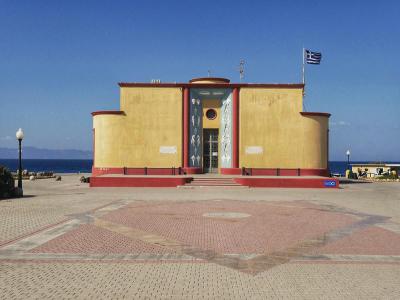
Élli is the main beach of Rhodes, renowned for its atmosphere and significant landmarks. At its eastern end, you’ll find the Italian-built Ronda bathing establishment, with its distinctive dome. The beach's center is dominated by the enormous casino, the largest in Greece, housed in a building that was originally the Italian Albergo delle Rose. On the western end, right at the northernmost tip of the island, stands the Aquarium, constructed in the 1930s under Italian patronage.
Originally set up as a hydrobiological station, the facility has been serving dual purposes since 1963: as a scientific research center and as a museum and educational facility open to the public. Today, it is managed by the National Center for Marine Research, with a focus on oceanography, fisheries, and the study of inland waters around Rhodes and the broader Dodecanese Islands in the Aegean and Mediterranean Seas.
Located in the basement of the hydrobiological station, the aquarium showcases popular marine life such as coral, sea flowers, octopi, turtles, sharks, toothed whales, seals, and many fish native to the Eastern Mediterranean. The resident marine creatures are housed in about 40 tanks, containing tens of thousands of liters of water, providing a fascinating glimpse into the underwater world.
Originally set up as a hydrobiological station, the facility has been serving dual purposes since 1963: as a scientific research center and as a museum and educational facility open to the public. Today, it is managed by the National Center for Marine Research, with a focus on oceanography, fisheries, and the study of inland waters around Rhodes and the broader Dodecanese Islands in the Aegean and Mediterranean Seas.
Located in the basement of the hydrobiological station, the aquarium showcases popular marine life such as coral, sea flowers, octopi, turtles, sharks, toothed whales, seals, and many fish native to the Eastern Mediterranean. The resident marine creatures are housed in about 40 tanks, containing tens of thousands of liters of water, providing a fascinating glimpse into the underwater world.
