Custom Walk in Honolulu, Hawaii by jcorradetti15954 created on 2022-10-29
Guide Location: USA » Honolulu
Guide Type: Custom Walk
# of Sights: 9
Tour Duration: 16 Hour(s)
Travel Distance: 45 Km or 28 Miles
Share Key: JCV29
Guide Type: Custom Walk
# of Sights: 9
Tour Duration: 16 Hour(s)
Travel Distance: 45 Km or 28 Miles
Share Key: JCV29
How It Works
Please retrieve this walk in the GPSmyCity app. Once done, the app will guide you from one tour stop to the next as if you had a personal tour guide. If you created the walk on this website or come to the page via a link, please follow the instructions below to retrieve the walk in the app.
Retrieve This Walk in App
Step 1. Download the app "GPSmyCity: Walks in 1K+ Cities" on Apple App Store or Google Play Store.



Step 2. In the GPSmyCity app, download(or launch) the guide "Honolulu Map and Walking Tours".
Step 3. Tap the menu button located at upper right corner of the "Walks" screen and select "Retrieve custom walk". Enter the share key: JCV29

1) Hale Koa, 2055 Kālia Rd, Honolulu, HI 96815
This custom location is created on gpsmycity.com website.
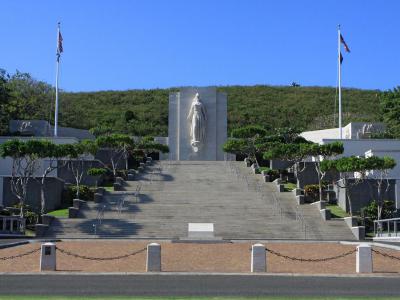
2) National Memorial Cemetery of the Pacific (must see)
The National Memorial Cemetery of the Pacific is a cemetery that is dedicated to the memories of men and women who have given their lives while serving with the United States Armed Forces. The cemetery is located in the Punchbowl Crater, which has given it the nickname "Punchbowl Cemetery."
The cemetery was established in 1949. Since that time, more than 50,000 service members have been laid to rest in the cemetery. The first was on January 4, 1949.
Among the notable interments and tributes at the National Memorial Cemetery of the Pacific are Stanley Armour Dunham, President Barack Obama's grandfather; Daniel Inouye, Hawaii's first congressional member; and Ellison Onizuka, the first astronaut from Hawaii. Onizuka was killed while onboard the Challenger space shuttle.
The tribute to Onizuka lies within The Courts of the Missing. This is an area that is dedicated to those who were not recovered from their missions. The cemetery also includes a number of unknown service people. Those who were lost during the Pearl Harbor attack have symbols representing the USS Arizona.
Visitors are welcome to explore the cemetery from 8 AM to 6 PM each day.
Tip:
Be sure to walk up along the west side – the views of Honolulu & Waikiki are spectacular. You can see all the way from Hawaii Kai, Diamond Head, downtown, and out to Pearl Harbor. Great photo ops! Finally, don't miss the chapel and the rotunda. The full-color mosaics of the WWII campaigns in the Pacific are stunning.
The cemetery was established in 1949. Since that time, more than 50,000 service members have been laid to rest in the cemetery. The first was on January 4, 1949.
Among the notable interments and tributes at the National Memorial Cemetery of the Pacific are Stanley Armour Dunham, President Barack Obama's grandfather; Daniel Inouye, Hawaii's first congressional member; and Ellison Onizuka, the first astronaut from Hawaii. Onizuka was killed while onboard the Challenger space shuttle.
The tribute to Onizuka lies within The Courts of the Missing. This is an area that is dedicated to those who were not recovered from their missions. The cemetery also includes a number of unknown service people. Those who were lost during the Pearl Harbor attack have symbols representing the USS Arizona.
Visitors are welcome to explore the cemetery from 8 AM to 6 PM each day.
Tip:
Be sure to walk up along the west side – the views of Honolulu & Waikiki are spectacular. You can see all the way from Hawaii Kai, Diamond Head, downtown, and out to Pearl Harbor. Great photo ops! Finally, don't miss the chapel and the rotunda. The full-color mosaics of the WWII campaigns in the Pacific are stunning.
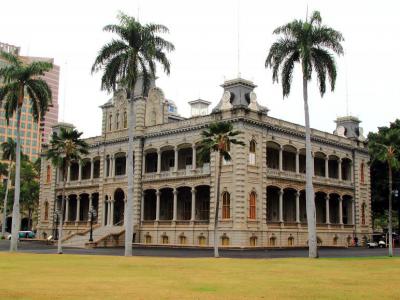
3) Iolani Palace (must see)
When Hawaii was ruled by King Kamehameha III, he resided in the Iolani Palace. The palace was in use by the royalty of the Kingdom of Hawaii through 1893 when the Kalakaua Dynasty was overthrown.
The building was in use as the seat of government in Hawaii until 1969. Soon thereafter it was turned into a museum. It is now on the National Register of Historic Places.
Construction on Iolani Palace began in 1879 in the American Florentine Style. It was designed by architects Thomas J. Baker, Chris J. Wall and Isaac Moore. The palace was completed in 1882. Unlike many homes at the time, even those built for royalty, the palace included electric lights, plumbing and a telephone.
Those who visit the palace today will find historic photos, military memorabilia and many items that once belonged to the palace. The Iolani Palace continues to add to its collection as missing items are recovered. A large number of furnishings were sold in public auction, but identifying royal marks have allowed furniture, tableware, silver and art to be returned to its rightful home.
Visitors can take part in regular lectures and talks that are held at the palace. They can also enjoy classes, like traditional Hawaiian quilting. Royal Hawaiian Band concerts regularly take place at the palace as well.
The palace is open Monday through Saturday. Children under the age of five must remain strapped into a stroller or holding hands with an adult at all times.
Why You Should Visit:
Iolani Palace is the only royal palace in the United States. It is a great place to learn more about the history and culture of Hawaii.
Tips:
Iolani Palace is considered to be a sacred place. Appropriate attire is required for touring the premises. Visitors aren't permitted if they are wearing beachwear or clothing displaying profanity.
The building was in use as the seat of government in Hawaii until 1969. Soon thereafter it was turned into a museum. It is now on the National Register of Historic Places.
Construction on Iolani Palace began in 1879 in the American Florentine Style. It was designed by architects Thomas J. Baker, Chris J. Wall and Isaac Moore. The palace was completed in 1882. Unlike many homes at the time, even those built for royalty, the palace included electric lights, plumbing and a telephone.
Those who visit the palace today will find historic photos, military memorabilia and many items that once belonged to the palace. The Iolani Palace continues to add to its collection as missing items are recovered. A large number of furnishings were sold in public auction, but identifying royal marks have allowed furniture, tableware, silver and art to be returned to its rightful home.
Visitors can take part in regular lectures and talks that are held at the palace. They can also enjoy classes, like traditional Hawaiian quilting. Royal Hawaiian Band concerts regularly take place at the palace as well.
The palace is open Monday through Saturday. Children under the age of five must remain strapped into a stroller or holding hands with an adult at all times.
Why You Should Visit:
Iolani Palace is the only royal palace in the United States. It is a great place to learn more about the history and culture of Hawaii.
Tips:
Iolani Palace is considered to be a sacred place. Appropriate attire is required for touring the premises. Visitors aren't permitted if they are wearing beachwear or clothing displaying profanity.
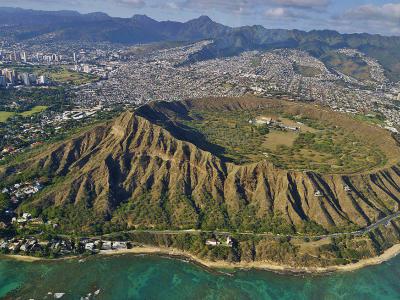
4) Diamond Head State Monument (must see)
Diamond Head State Monument is a volcanic cone known locally as Leahi. The monument is located near Waikiki Beach. It is a must-see for tourists of Honolulu as hiking up the cone offers a beautiful, panoramic view.
The monument was named Diamond Head by British sailors who thought they had found diamonds but were disappointed to learn that the brilliant sparkle came from calcite crystals. The native name means "brow of the tuna."
It is thought that the crater was formed about 300,000 years ago from volcanic activity. It is 761 feet tall and covers a span of 350 acres.
The trail going up the cone can be a challenge, but those who make it to the top know it is worth the effort. There are two sets of stairs that are a total of 175 steps.
Tip:
Go early in the day – before the crowds and sun really kick in – and bring a bottle of water with you to stay hydrated. On the way up, you get to an intersection and you go left or right. Right takes you up stairs; instead, you can take the left, which is a bit more scenic and not as grueling.
The monument was named Diamond Head by British sailors who thought they had found diamonds but were disappointed to learn that the brilliant sparkle came from calcite crystals. The native name means "brow of the tuna."
It is thought that the crater was formed about 300,000 years ago from volcanic activity. It is 761 feet tall and covers a span of 350 acres.
The trail going up the cone can be a challenge, but those who make it to the top know it is worth the effort. There are two sets of stairs that are a total of 175 steps.
Tip:
Go early in the day – before the crowds and sun really kick in – and bring a bottle of water with you to stay hydrated. On the way up, you get to an intersection and you go left or right. Right takes you up stairs; instead, you can take the left, which is a bit more scenic and not as grueling.
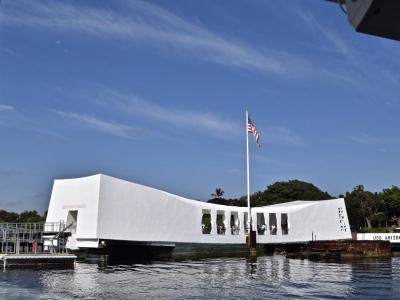
5) Pearl Harbor National Memorial (must see)
The Pearl Harbor National Memorial is dedicated to the lives lost during the Attack on Pearl Harbor on December 7, 1941. This national park site consists of 21.3 acres. Included on the site are the USS Arizona Memorial, the USS Utah Memorial, the USS Oklahoma Memorial, bungalows, mooring quays and a visitor center.
It is not only service members who are honors at the Pearl Harbor National Memorial. Some civilians lost their lives on that fateful day as well. Among those civilians who were wounded and killed were one who worked at an accidentally targeted sugar mill, civilians who worked in the shipyards and a family whose house was struck. Out of the 2,390 people killed at Pearl Harbor, 49 were civilians.
Visitors to Pearl Harbor generally start their tour with an orientation at the Aloha Court. From there, they can decide how to spend their time. Though some tourists will view the monument over the course of a few hours, others should plan a full day to truly appreciate the memorial and the other nearby historic sites.
One of the features at the Pearl Harbor National Memorial is an exhibit gallery that shows photographs and memorabilia from both before and after the attack. Recorded memories from survivor are offered in the kiosks at the exhibit hall.
The USS Arizona Memorial program is 75 minutes, including a 23-minute film and a ferry to and from the USS Arizona Memorial.
Other historic sites that are near the Pearl Harbor National Memorial are the USS Missouri Battleship, the USS Bowfin Submarine Museum and the Pearl Harbor Aviation Museum.
Why You Should Visit:
- To honor the legacy of those who lost their lives during the attack on Pearl Harbor
- To learn about the history of the U.S. involvement during World War II
Tips:
The Pearl Harbor National Memorial is open daily from 7 AM through 5 PM. Cost to visit the memorial is free, though those who book in advance may need to pay a $1 booking fee.
It is not only service members who are honors at the Pearl Harbor National Memorial. Some civilians lost their lives on that fateful day as well. Among those civilians who were wounded and killed were one who worked at an accidentally targeted sugar mill, civilians who worked in the shipyards and a family whose house was struck. Out of the 2,390 people killed at Pearl Harbor, 49 were civilians.
Visitors to Pearl Harbor generally start their tour with an orientation at the Aloha Court. From there, they can decide how to spend their time. Though some tourists will view the monument over the course of a few hours, others should plan a full day to truly appreciate the memorial and the other nearby historic sites.
One of the features at the Pearl Harbor National Memorial is an exhibit gallery that shows photographs and memorabilia from both before and after the attack. Recorded memories from survivor are offered in the kiosks at the exhibit hall.
The USS Arizona Memorial program is 75 minutes, including a 23-minute film and a ferry to and from the USS Arizona Memorial.
Other historic sites that are near the Pearl Harbor National Memorial are the USS Missouri Battleship, the USS Bowfin Submarine Museum and the Pearl Harbor Aviation Museum.
Why You Should Visit:
- To honor the legacy of those who lost their lives during the attack on Pearl Harbor
- To learn about the history of the U.S. involvement during World War II
Tips:
The Pearl Harbor National Memorial is open daily from 7 AM through 5 PM. Cost to visit the memorial is free, though those who book in advance may need to pay a $1 booking fee.
6) USS Bowfin Submarine Museum & Park (must see)
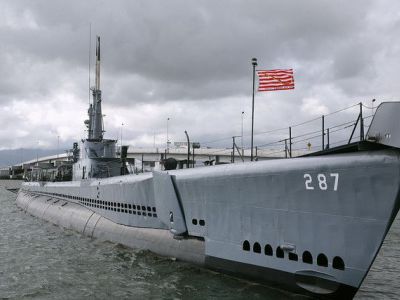
The USS Bowfin was a Balao-class submarine used extensively from 1942 to 1971. It is one of only 15 U.S. World War II-era submarines still in existence. The USS Bowfin went on nine patrols ranging from Japan to Australia before being decommissioned and placed in reserve in 1947. In 1980, the USS Bowfin was moved to her current location beside the USS Arizona Memorial Visitors' Center. Visitors can tour the submarine with an audio narration of life in the vessel during WWII.
The USS Bowfin Museum has several different exhibits, including the Waterfront Memorial. This lists 52 submarines that were lost during wartime, as well as all of the men that were on board. There's also a Japanese human torpedo on display. This weapon was a manned suicide torpedo used exclusively by the Japanese during WWII. It contained nearly 4,000 pounds of TNT and had no escape hatch for the pilot. These torpedoes were called “Kaiten,” a word that means “Return to the sky,” and were meant to be launched from a ship or submarine towards other naval craft. While the Kaiten were in use, eight launching craft and nearly nine hundred human lives were lost. In addition to the Waterfront Memorial and Kaiten display, the USS Bowfin Museum is filled with submarine weapons systems, photos, battle flags, and vintage recruitment posters.
Why You Should Visit:
If you have time while you are at Pearl Harbor, are not claustrophobic, and haven't been on a submarine before, then you should definitely go on this one.
The audio tour they give you with the price of admission is very good and includes several personal accounts from Marines who served on the Bowfin.
Tip:
Remember to watch out and not hit your head on all the low clearance spots (if you are over 6'3", be prepared to duck often).
Make sure you visit the museum before touring the Bowfin for the obligatory history of submarines, or save your ticket and do the museum later.
The USS Bowfin Museum has several different exhibits, including the Waterfront Memorial. This lists 52 submarines that were lost during wartime, as well as all of the men that were on board. There's also a Japanese human torpedo on display. This weapon was a manned suicide torpedo used exclusively by the Japanese during WWII. It contained nearly 4,000 pounds of TNT and had no escape hatch for the pilot. These torpedoes were called “Kaiten,” a word that means “Return to the sky,” and were meant to be launched from a ship or submarine towards other naval craft. While the Kaiten were in use, eight launching craft and nearly nine hundred human lives were lost. In addition to the Waterfront Memorial and Kaiten display, the USS Bowfin Museum is filled with submarine weapons systems, photos, battle flags, and vintage recruitment posters.
Why You Should Visit:
If you have time while you are at Pearl Harbor, are not claustrophobic, and haven't been on a submarine before, then you should definitely go on this one.
The audio tour they give you with the price of admission is very good and includes several personal accounts from Marines who served on the Bowfin.
Tip:
Remember to watch out and not hit your head on all the low clearance spots (if you are over 6'3", be prepared to duck often).
Make sure you visit the museum before touring the Bowfin for the obligatory history of submarines, or save your ticket and do the museum later.
7) USS Arizona Memorial (must see)
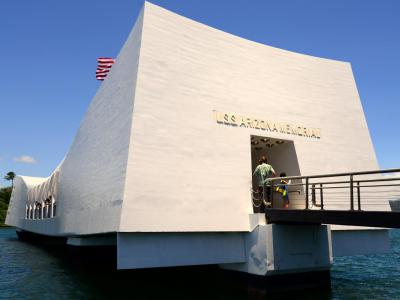
The USS Arizona Memorial is a white marble structure that straddles the wreck of the USS Arizona, sunk during WWII in the Japanese attack on Pearl Harbor. The Memorial was designed to commemorate all of the lives lost in the attack.
The Memorial itself has a sort of saddle shape designed to evoke the spirit of the U.S. before, during, and after WWII. It is tall on one end to represent U.S. pride before the war, sunken in the middle to represent U.S. depression after the attack on Pearl Harbor, and tall on the opposite end to represent U.S. pride after WWII was won.
The USS Arizona lies directly beneath the Memorial. After the ship was sunk, the navy salvaged all that it could from the vessel. The components that weren't able to be salvaged remain there today. These include the ship's fuel tanks. Physical damage and corrosion from salt water cause the tanks to leak small amounts of oil, which rise to the surface to produce visible oil slicks. These are called “black tears” or the “tears of the Arizona.”
The Memorial itself has a sort of saddle shape designed to evoke the spirit of the U.S. before, during, and after WWII. It is tall on one end to represent U.S. pride before the war, sunken in the middle to represent U.S. depression after the attack on Pearl Harbor, and tall on the opposite end to represent U.S. pride after WWII was won.
The USS Arizona lies directly beneath the Memorial. After the ship was sunk, the navy salvaged all that it could from the vessel. The components that weren't able to be salvaged remain there today. These include the ship's fuel tanks. Physical damage and corrosion from salt water cause the tanks to leak small amounts of oil, which rise to the surface to produce visible oil slicks. These are called “black tears” or the “tears of the Arizona.”
8) USS Missouri Memorial (must see)
The USS Missouri is the last battleship built by the U.S. Navy, and was the site of the official end of World War II. It was on this ship Japan officially signed the surrender document on September 2, 1945.
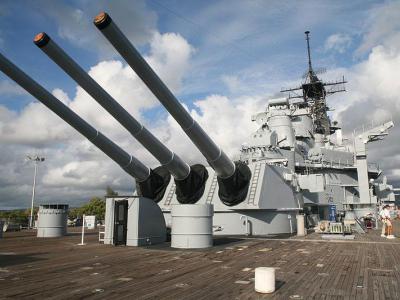
The USS Missouri was commissioned in 1944, and fought in both the battles of Iwo Jima and Okinawa, in the Korean War between the years 1950 and 1953, and then in Operation Desert Storm in 1991. All told, the Missouri received a total of eleven service stars before being decommissioned in 1992. In 1998, the ship was donated to the USS Missouri Memorial Association for use as a museum ship. One of the ship's trademarks is her nine 16-inch guns. The barrel of each one is roughly 67 feet long and weighs over 115 tons.
The USS Missouri Memorial is a museum devoted to the history of the battleship, the wars she was involved in, and the men who worked on her. The collections within the museum consist of anything related to the USS Missouri: artifacts and archives about the ship, things that originated on the ship, or materials related to the history surrounding the ship.
Why You Should Visit:
Symbolism aside, it is quite interesting to see a WWII-era battleship that was modernized in the 1980s. This ship truly has one of the most unique stories in all of the U.S. Navy.
Tip:
If you purchase tickets online, make sure you go to the Visitor Center before entering. You need to show the receipt that you can only get from the Visitor Center when you board.
Shuttle to Ford Island and the site is free and takes about 10 mins. Shuttles arrive every 10-15 mins, so there's no need to panic if you miss one.
The USS Missouri was commissioned in 1944, and fought in both the battles of Iwo Jima and Okinawa, in the Korean War between the years 1950 and 1953, and then in Operation Desert Storm in 1991. All told, the Missouri received a total of eleven service stars before being decommissioned in 1992. In 1998, the ship was donated to the USS Missouri Memorial Association for use as a museum ship. One of the ship's trademarks is her nine 16-inch guns. The barrel of each one is roughly 67 feet long and weighs over 115 tons.
The USS Missouri Memorial is a museum devoted to the history of the battleship, the wars she was involved in, and the men who worked on her. The collections within the museum consist of anything related to the USS Missouri: artifacts and archives about the ship, things that originated on the ship, or materials related to the history surrounding the ship.
Why You Should Visit:
Symbolism aside, it is quite interesting to see a WWII-era battleship that was modernized in the 1980s. This ship truly has one of the most unique stories in all of the U.S. Navy.
Tip:
If you purchase tickets online, make sure you go to the Visitor Center before entering. You need to show the receipt that you can only get from the Visitor Center when you board.
Shuttle to Ford Island and the site is free and takes about 10 mins. Shuttles arrive every 10-15 mins, so there's no need to panic if you miss one.
9) Pearl Harbor Aviation Museum (must see)
The Pearl Harbor Aviation Museum is located on Ford Island, in the middle of Pearl Harbor. The island used to be accessible solely to military personnel, their guests, and their families, but, with the construction of the Admiral Clarey Bridge in 1998, it is now open to visitors.
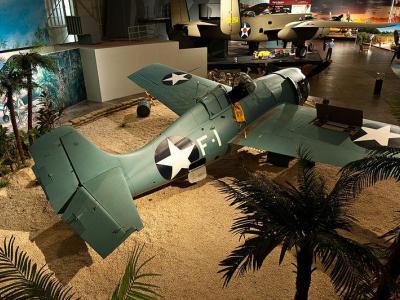
The Museum itself is housed in the seaplane hangars that survived the bombing of Pearl Harbor. The displays present a collection of WWII-era military aircraft, including Japanese Zero aircraft, American bombers, some planes used in the Korean war, and a set of vintage Japanese torpedoes similar to those used during the bombing of Pearl Harbor. The museum also has a 200-seat theater, gift shop, and restaurant. Visitors can additionally experience a combat flight simulator, which offers simulated dogfights with enemy planes over the Pacific. If visitors look closely, they can still see some of the bullet holes from the attack on Pearl Harbor that on the windows of Hangar 37.
Adjacent to Hangar 37 is Hangar 79, a former aircraft maintenance workshop. In this area, vintage aircrafts are fixed up and readied for display, and visitors can view part of the aircraft maintenance process.
Tips:
The planes have descriptive plaques, but for a complete experience, try and catch a docent tour using the Aviator's Tour option.
Eat at the museum rather than at the USS Arizona or USS Missouri memorials – food choices are better here.
The Museum itself is housed in the seaplane hangars that survived the bombing of Pearl Harbor. The displays present a collection of WWII-era military aircraft, including Japanese Zero aircraft, American bombers, some planes used in the Korean war, and a set of vintage Japanese torpedoes similar to those used during the bombing of Pearl Harbor. The museum also has a 200-seat theater, gift shop, and restaurant. Visitors can additionally experience a combat flight simulator, which offers simulated dogfights with enemy planes over the Pacific. If visitors look closely, they can still see some of the bullet holes from the attack on Pearl Harbor that on the windows of Hangar 37.
Adjacent to Hangar 37 is Hangar 79, a former aircraft maintenance workshop. In this area, vintage aircrafts are fixed up and readied for display, and visitors can view part of the aircraft maintenance process.
Tips:
The planes have descriptive plaques, but for a complete experience, try and catch a docent tour using the Aviator's Tour option.
Eat at the museum rather than at the USS Arizona or USS Missouri memorials – food choices are better here.
