Custom Walk in Marseille, France by terri_miller3832 created on 2023-02-07
Guide Location: France » Marseille
Guide Type: Custom Walk
# of Sights: 11
Tour Duration: 9 Hour(s)
Travel Distance: 23.7 Km or 14.7 Miles
Share Key: EPWBJ
Guide Type: Custom Walk
# of Sights: 11
Tour Duration: 9 Hour(s)
Travel Distance: 23.7 Km or 14.7 Miles
Share Key: EPWBJ
How It Works
Please retrieve this walk in the GPSmyCity app. Once done, the app will guide you from one tour stop to the next as if you had a personal tour guide. If you created the walk on this website or come to the page via a link, please follow the instructions below to retrieve the walk in the app.
Retrieve This Walk in App
Step 1. Download the app "GPSmyCity: Walks in 1K+ Cities" on Apple App Store or Google Play Store.



Step 2. In the GPSmyCity app, download(or launch) the guide "Marseille Map and Walking Tours".
Step 3. Tap the menu button located at upper right corner of the "Walks" screen and select "Retrieve custom walk". Enter the share key: EPWBJ

1) 42 Rue de l
This custom location is created on gpsmycity.com website.
2) Cathédrale de la Major (Marseille Cathedral) (must see)
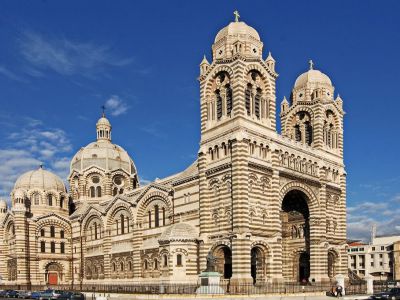
The Marseille Cathedral, also known as the Cathedral of Saint Mary Major, unites two eras of faith and architecture. The site includes both the Old Marseille Cathedral, dating to the 12th century, and the New Marseille Cathedral, constructed under Emperor Napoleon III in the late 19th century. Napoleon ordered the older Provençal Romanesque building replaced but preserved part of it-the choir and one bay of the nave-after public protests over its demolition.
The New Marseille Cathedral dominates the waterfront with its vast Romanesque-Byzantine Revival design. Stretching 469 feet in length, with a main dome reaching 231 feet in height, it can hold about 3,000 worshippers. Its façade alternates bands of white and dark stone, a combination of Florentine limestone and Ligurian green porphyry, producing a striped pattern affectionately nicknamed “the Pajamas” by locals. Inside, the cathedral reveals a rich blend of imported materials: white Carrara marble from Italy, onyx from Tunisia, and dazzling Venetian mosaics that illuminate its chapels and domes.
Beside this grand 19th-century structure lie the remains of the Old Cathedral, a humble yet evocative remnant of Marseille’s medieval heritage. The surviving chancel and apse feature smaller side chapels and a cylindrical vault crowned with octagonal and heptagonal domes. Archaeological traces beneath the site even reveal earlier Christian structures dating to the 5th century, showing that this location has been a place of worship for over fifteen centuries.
A visit to Marseille Cathedral offers not just architectural splendor but also some of the best panoramic views of the port and the Mediterranean. Rising between sea and city, the cathedral stands as both a symbol of continuity and a beacon of faith-undeniably one of Marseille’s must-see attractions.
The New Marseille Cathedral dominates the waterfront with its vast Romanesque-Byzantine Revival design. Stretching 469 feet in length, with a main dome reaching 231 feet in height, it can hold about 3,000 worshippers. Its façade alternates bands of white and dark stone, a combination of Florentine limestone and Ligurian green porphyry, producing a striped pattern affectionately nicknamed “the Pajamas” by locals. Inside, the cathedral reveals a rich blend of imported materials: white Carrara marble from Italy, onyx from Tunisia, and dazzling Venetian mosaics that illuminate its chapels and domes.
Beside this grand 19th-century structure lie the remains of the Old Cathedral, a humble yet evocative remnant of Marseille’s medieval heritage. The surviving chancel and apse feature smaller side chapels and a cylindrical vault crowned with octagonal and heptagonal domes. Archaeological traces beneath the site even reveal earlier Christian structures dating to the 5th century, showing that this location has been a place of worship for over fifteen centuries.
A visit to Marseille Cathedral offers not just architectural splendor but also some of the best panoramic views of the port and the Mediterranean. Rising between sea and city, the cathedral stands as both a symbol of continuity and a beacon of faith-undeniably one of Marseille’s must-see attractions.
3) Museum of European and Mediterranean Civilisations (MuCEM) (must see)
The Museum of European and Mediterranean Civilisations (Musée des Civilisations de l'Europe et de la Méditerranée) is a national institution situated in Marseille. Its inauguration took place on 7th June 2013, coinciding with Marseille's designation as the European Capital of Culture during the Marseille-Provence 2013 celebration. This museum was recognized for its excellence and awarded the prestigious Council of Europe Museum Prize in 2015.
Dedicated to the exploration of European and Mediterranean civilizations, the museum showcases a permanent collection that delves into the historical and cultural interactions within the Mediterranean basin. Adopting an interdisciplinary approach, it covers various aspects of society throughout different eras, right up to modern times.
The museum's strategic location lies on reclaimed land at the harbor's entrance, adjacent to the 17th-century Fort Saint-Jean and the former port terminal, J4. A channel separates the contemporary building from the Fort Saint-Jean, which has been renovated as part of the overall project. These two areas are connected via a 130-meter-long high footbridge. Additionally, another footbridge links Fort Saint-Jean to the Esplanade de la Tourette, close to the church of Saint Laurent in the Panier quarter.
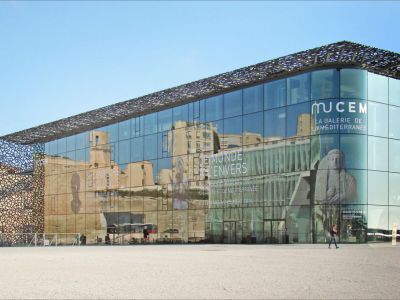
Designed by architects Rudy Ricciotti and Roland Carta, the museum embodies the concept of "stone, water, and wind." It features a striking cube-shaped structure spanning 15,000 square meters, enclosed by a latticework shell made of fiber-reinforced concrete. Inside, visitors can explore exhibits on two levels, while an underground auditorium with a seating capacity of 400 enriches the experience. The ground floor houses the permanent collection and a bookshop, while the top terrace hosts a restaurant that offers breathtaking panoramic views of Marseille's bay, the Corniche, and the Prado area.
In addition to its regular exhibitions, the museum presented a special exhibition in 2022 dedicated to Emir Abdelkader. This unique showcase provided an opportunity to delve into significant historical and memorial aspects related to this eminent figure within the Mediterranean context.
Dedicated to the exploration of European and Mediterranean civilizations, the museum showcases a permanent collection that delves into the historical and cultural interactions within the Mediterranean basin. Adopting an interdisciplinary approach, it covers various aspects of society throughout different eras, right up to modern times.
The museum's strategic location lies on reclaimed land at the harbor's entrance, adjacent to the 17th-century Fort Saint-Jean and the former port terminal, J4. A channel separates the contemporary building from the Fort Saint-Jean, which has been renovated as part of the overall project. These two areas are connected via a 130-meter-long high footbridge. Additionally, another footbridge links Fort Saint-Jean to the Esplanade de la Tourette, close to the church of Saint Laurent in the Panier quarter.
Designed by architects Rudy Ricciotti and Roland Carta, the museum embodies the concept of "stone, water, and wind." It features a striking cube-shaped structure spanning 15,000 square meters, enclosed by a latticework shell made of fiber-reinforced concrete. Inside, visitors can explore exhibits on two levels, while an underground auditorium with a seating capacity of 400 enriches the experience. The ground floor houses the permanent collection and a bookshop, while the top terrace hosts a restaurant that offers breathtaking panoramic views of Marseille's bay, the Corniche, and the Prado area.
In addition to its regular exhibitions, the museum presented a special exhibition in 2022 dedicated to Emir Abdelkader. This unique showcase provided an opportunity to delve into significant historical and memorial aspects related to this eminent figure within the Mediterranean context.
4) Palais Longchamp (must see)
The Longchamp Palace (Palais Longchamp) stands as a prominent monument in the 4th arrondissement of Marseille. It serves as the home for the Museum of Fine Arts and the Natural History Museum of Marseille. The exquisite Longchamp Park that surrounds the palace has garnered recognition as one of the Notable Gardens of France, as designated by the French Ministry of Culture.
The genesis of the Longchamp Palace traces back to the celebration of the construction of the Canal de Marseille, an engineering marvel designed to supply water from the river Durance to the city. Laid down on 15th November 1839 by the Duke of Orleans, the palace's construction endured numerous challenges and took three decades to complete, primarily due to its substantial costs and complications arising from local regulations. The mastermind behind its architectural brilliance was Henri-Jacques Espérandieu, who centered the design around an impressive fountain, often referred to as the château d'eau or "water tower."
Subsequently, Longchamp Park opened its gates to the public in 1869, simultaneously accommodating the art and natural-history collections that were formerly housed elsewhere. For a significant period, the park also housed a zoo, managed by the city from 1898 until 1987. Due to public discontent with traditional zoos, it was eventually closed.
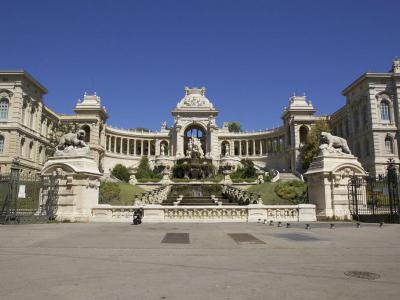
The palace's majestic fountain features four grand bulls and three women with a central Durance symbol. It represents fertility with grape and wheat motifs. Inside, a beautifully crafted stone grotto adorned with stalactites and nymphs sits behind the women. Water flows from beneath them and the bulls into a secondary basin, cascading into an artificial pond. It eventually drains into underground pipes, forming a graceful waterfall-like structure with twelve ornate bronze fountains leading to a larger pond.
Beyond the palace's grandeur lies the Jardin du Plateau, a classic garden à la française, beautifully adorning the garden's core. Additionally, the garden comprises an English landscape garden with meandering pathways and an array of remarkable trees, including a 150-year-old plane tree, a 120-year-old oak, and a Siberian elm.
The genesis of the Longchamp Palace traces back to the celebration of the construction of the Canal de Marseille, an engineering marvel designed to supply water from the river Durance to the city. Laid down on 15th November 1839 by the Duke of Orleans, the palace's construction endured numerous challenges and took three decades to complete, primarily due to its substantial costs and complications arising from local regulations. The mastermind behind its architectural brilliance was Henri-Jacques Espérandieu, who centered the design around an impressive fountain, often referred to as the château d'eau or "water tower."
Subsequently, Longchamp Park opened its gates to the public in 1869, simultaneously accommodating the art and natural-history collections that were formerly housed elsewhere. For a significant period, the park also housed a zoo, managed by the city from 1898 until 1987. Due to public discontent with traditional zoos, it was eventually closed.
The palace's majestic fountain features four grand bulls and three women with a central Durance symbol. It represents fertility with grape and wheat motifs. Inside, a beautifully crafted stone grotto adorned with stalactites and nymphs sits behind the women. Water flows from beneath them and the bulls into a secondary basin, cascading into an artificial pond. It eventually drains into underground pipes, forming a graceful waterfall-like structure with twelve ornate bronze fountains leading to a larger pond.
Beyond the palace's grandeur lies the Jardin du Plateau, a classic garden à la française, beautifully adorning the garden's core. Additionally, the garden comprises an English landscape garden with meandering pathways and an array of remarkable trees, including a 150-year-old plane tree, a 120-year-old oak, and a Siberian elm.
5) Vieux-Port (Old Port) (must see)
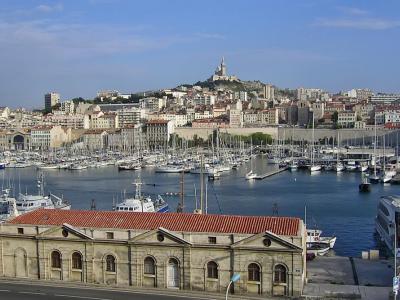
The Old Port is the city’s historic heart and one of the most evocative harbours in Europe, being a centre of maritime life for over 2,600 years. The site was first used as a trading post by the Phoenicians, long before the Greek settlers from Phocaea officially established it in 600 BCE as the port of Massalia, making it the birthplace of the city itself.
Through the centuries, the Old Port became a hub of Mediterranean commerce and naval activity. Kings Louis XII and Louis XIII expanded the shipyards in the 15th and 16th centuries, while King Louis XIV added the imposing Fort Saint John and Fort Saint Nicholas to defend the entrance of the harbour. The port reached its commercial peak in the 19th century, when up to 18,000 merchant vessels docked here annually, rivaling the activity of major ports such as Liverpool and Le Havre. However, with the arrival of large steamships that required deeper waters, Marseille shifted much of its industrial trade to the Port of La Joliette, located farther north.
The Old Port suffered immense damage during World War II, when German forces, assisted by French police, demolished much of the area to block access to Allied troops. Postwar reconstruction reshaped the district, and by the late 20th century, major urban renewal projects restored the port’s vitality. Architect Norman Foster’s redesign, featuring the The Shade Pavilion, a mirrored canopy that reflects the harbour below, marked a new era of pedestrian-friendly space and modern elegance.
Today, the Port serves as a marina for yachts, ferries, and fishing boats, as well as the site of a daily fish market that preserves centuries-old local tradition. Lined with cafés, restaurants, and open-air terraces, it remains a favourite gathering place for both locals and visitors.
Through the centuries, the Old Port became a hub of Mediterranean commerce and naval activity. Kings Louis XII and Louis XIII expanded the shipyards in the 15th and 16th centuries, while King Louis XIV added the imposing Fort Saint John and Fort Saint Nicholas to defend the entrance of the harbour. The port reached its commercial peak in the 19th century, when up to 18,000 merchant vessels docked here annually, rivaling the activity of major ports such as Liverpool and Le Havre. However, with the arrival of large steamships that required deeper waters, Marseille shifted much of its industrial trade to the Port of La Joliette, located farther north.
The Old Port suffered immense damage during World War II, when German forces, assisted by French police, demolished much of the area to block access to Allied troops. Postwar reconstruction reshaped the district, and by the late 20th century, major urban renewal projects restored the port’s vitality. Architect Norman Foster’s redesign, featuring the The Shade Pavilion, a mirrored canopy that reflects the harbour below, marked a new era of pedestrian-friendly space and modern elegance.
Today, the Port serves as a marina for yachts, ferries, and fishing boats, as well as the site of a daily fish market that preserves centuries-old local tradition. Lined with cafés, restaurants, and open-air terraces, it remains a favourite gathering place for both locals and visitors.
6) Château d'If (must see)
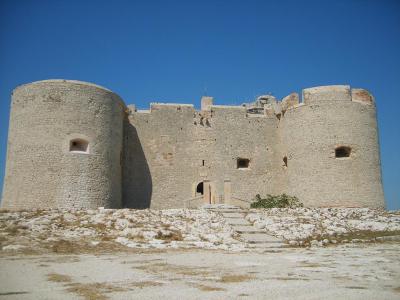
Perched on the Île d'If, the smallest island in the Frioul archipelago just 1.5 kilometers off the coast of Marseille, stands the Château d'If-a formidable fortress with a rich history. Constructed in the 16th century, this stronghold once served as a prison, confining inmates until the late 19th century. In 1890, it underwent demilitarization and welcomed the public, swiftly becoming one of Marseille's most frequented attractions.
The architecture of the Château d'If showcases a square structure with three stories, each side measuring 28 meters (92 feet) in length, flanked by three towers that housed imposing gun embrasures. The brainchild of King Francis I, this fortress was conceived during a visit in 1516 when the island's strategic significance for coastal defense against sea attacks became apparent.
Given its remote location and treacherous offshore currents, the Château d'If was deemed an inescapable prison. Over time, it gained infamy as a place where political and religious detainees were banished, instilling fear throughout France.
In the 19th century, the fortress gained fame due to Alexandre Dumas' novel "The Count of Monte Cristo" (1844). The protagonist, Edmond Dantès, and his mentor, Abbé Faria, were imprisoned there. The gripping tale depicts Dantès' daring escape after fourteen years, but the real history of such an escape is unknown.
As the 19th century came to a close, the Château d'If retired from its role as a prison and opened its gates to the public on September 23, 1890. Accessible by boat from Marseille's old port, it quickly garnered popularity as the famed setting for Dumas' literary masterpiece.
In July 1867, the famous writer Mark Twain visited the captivating fortress during a leisurely journey. In his book, "The Innocents Abroad," he recalls his guided exploration of the prison, which was not yet open to the public. Inside, he saw cells, with one believed to have held the mysterious "Iron Mask." However, this remains a mere legend, as history has no records of the "Man in the Iron Mask" being held at Château d'If.
Today, the Château d'If holds the distinction of being designated a "Historical Monument" by the French Ministry of Culture.
Why You Should Visit:
Terrific boat ride from the Old Port, peaceful grounds, and great fun walking through all the prison cells, especially related to the story of Monte Cristo.
If you have time then you can even have a beer, coffee or meal at the bar with outdoor seating. Toilets are clean and easily accessible off the boat ride.
Tip:
While you get great views of Marseille from the upper levels, take the time to also walk around the base of the Château.
You may use the Marseille City Pass for the trip, but note that the island remains closed in bad weather or rough sea conditions.
The architecture of the Château d'If showcases a square structure with three stories, each side measuring 28 meters (92 feet) in length, flanked by three towers that housed imposing gun embrasures. The brainchild of King Francis I, this fortress was conceived during a visit in 1516 when the island's strategic significance for coastal defense against sea attacks became apparent.
Given its remote location and treacherous offshore currents, the Château d'If was deemed an inescapable prison. Over time, it gained infamy as a place where political and religious detainees were banished, instilling fear throughout France.
In the 19th century, the fortress gained fame due to Alexandre Dumas' novel "The Count of Monte Cristo" (1844). The protagonist, Edmond Dantès, and his mentor, Abbé Faria, were imprisoned there. The gripping tale depicts Dantès' daring escape after fourteen years, but the real history of such an escape is unknown.
As the 19th century came to a close, the Château d'If retired from its role as a prison and opened its gates to the public on September 23, 1890. Accessible by boat from Marseille's old port, it quickly garnered popularity as the famed setting for Dumas' literary masterpiece.
In July 1867, the famous writer Mark Twain visited the captivating fortress during a leisurely journey. In his book, "The Innocents Abroad," he recalls his guided exploration of the prison, which was not yet open to the public. Inside, he saw cells, with one believed to have held the mysterious "Iron Mask." However, this remains a mere legend, as history has no records of the "Man in the Iron Mask" being held at Château d'If.
Today, the Château d'If holds the distinction of being designated a "Historical Monument" by the French Ministry of Culture.
Why You Should Visit:
Terrific boat ride from the Old Port, peaceful grounds, and great fun walking through all the prison cells, especially related to the story of Monte Cristo.
If you have time then you can even have a beer, coffee or meal at the bar with outdoor seating. Toilets are clean and easily accessible off the boat ride.
Tip:
While you get great views of Marseille from the upper levels, take the time to also walk around the base of the Château.
You may use the Marseille City Pass for the trip, but note that the island remains closed in bad weather or rough sea conditions.
7) Le Four des Navettes
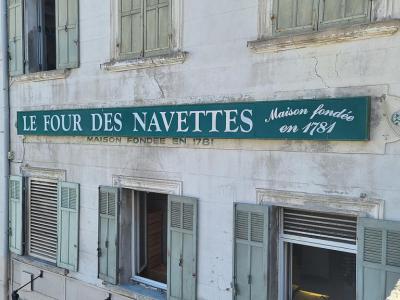
Le Four des Navettes stands proudly as Marseille's oldest bakery, nestled along the sacred path leading to the revered Saint Victor Abbey. Owned by Master Artisan Baker Jean-Claude Imbert and his son Nicolas, this bakery has preserved the cherished Navette recipe for over two centuries. Throughout its history since its establishment in 1781, the exclusive know-how has been passed down by its three owners.
The legacy of the vaulted oven, constructed in the late 18th century, endures to this day, ensuring the unmatched quality of these shuttle-shaped delights. Solely dedicated to their creation, this oven is an essential part of the local cultural heritage, boasting both historical and gastronomical significance.
Yet, behind its unassuming appearance, the Four des Navettes conceals a remarkable and unparalleled recipe. The scent of orange blossom delicately infuses the shuttles, making them a delightful treat in various forms: naturally crisp, gently warmed, or straight out of the oven. The remarkable expertise of the bakers allows these shuttles to maintain their exceptional qualities for an entire year without any deterioration.
For some, the origins of this delectable biscuit are intertwined with the Candlemas celebrations held at the Abbey of Saint-Victor, adding a touch of tradition and mystique to these beloved pastries.
The legacy of the vaulted oven, constructed in the late 18th century, endures to this day, ensuring the unmatched quality of these shuttle-shaped delights. Solely dedicated to their creation, this oven is an essential part of the local cultural heritage, boasting both historical and gastronomical significance.
Yet, behind its unassuming appearance, the Four des Navettes conceals a remarkable and unparalleled recipe. The scent of orange blossom delicately infuses the shuttles, making them a delightful treat in various forms: naturally crisp, gently warmed, or straight out of the oven. The remarkable expertise of the bakers allows these shuttles to maintain their exceptional qualities for an entire year without any deterioration.
For some, the origins of this delectable biscuit are intertwined with the Candlemas celebrations held at the Abbey of Saint-Victor, adding a touch of tradition and mystique to these beloved pastries.
8) Abbaye Saint-Victor (Saint-Victor Abbey) (must see)
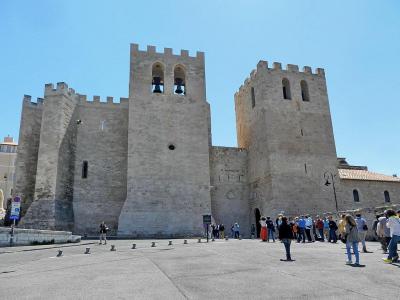
Overlooking the sea stands the Saint-Victor Abbey, a historic monastery that has occupied this site since around 415 CE, being among the first Christian sanctuaries established in Provence. Tradition holds that it was founded by the monk John Cassian, and some believe the crypt contains relics of Saint Victor himself-or even traces of an ancient Greek quarry.
Cassian originally established two monasteries here, one for men and one for women, on opposite sides of the old harbor. Both were destroyed by Saracen raiders in the 8th or 9th centuries, but monastic life resumed in 977. The abbey flourished for several centuries before being stripped of its treasures during the French Revolution in 1794. At various times it served as a warehouse, prison, and barracks, before being restored under Napoleon. In 1934, Pope Pius XI elevated it to the rank of minor basilica following extensive renovation.
Visitors find tombs of saints and bishops, alongside pagan sarcophagi from the early Christian period. Above, the abbey’s crenelated towers offer panoramic views over the harbor and the Mediterranean. Its elevated position near Fort Saint Nicholas once allowed monks to watch for approaching Saracen or Viking ships. Each year on Candlemas, a traditional pilgrimage takes place from the Old Port to the abbey. The Black Madonna, normally kept in the crypt, is wrapped in a green cloak and carried to the square before the church, where she receives a blessing from the bishop.
Tip: It’s worth paying the small entrance fee to visit the crypt-it truly feels like entering another world.
Cassian originally established two monasteries here, one for men and one for women, on opposite sides of the old harbor. Both were destroyed by Saracen raiders in the 8th or 9th centuries, but monastic life resumed in 977. The abbey flourished for several centuries before being stripped of its treasures during the French Revolution in 1794. At various times it served as a warehouse, prison, and barracks, before being restored under Napoleon. In 1934, Pope Pius XI elevated it to the rank of minor basilica following extensive renovation.
Visitors find tombs of saints and bishops, alongside pagan sarcophagi from the early Christian period. Above, the abbey’s crenelated towers offer panoramic views over the harbor and the Mediterranean. Its elevated position near Fort Saint Nicholas once allowed monks to watch for approaching Saracen or Viking ships. Each year on Candlemas, a traditional pilgrimage takes place from the Old Port to the abbey. The Black Madonna, normally kept in the crypt, is wrapped in a green cloak and carried to the square before the church, where she receives a blessing from the bishop.
Tip: It’s worth paying the small entrance fee to visit the crypt-it truly feels like entering another world.
9) Vallon des Auffes (must see)
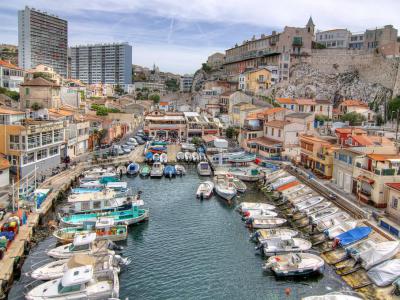
The Vallon des Auffes, located in the 7th arrondissement of Marseille, is a charming traditional fishing haven. Situated approximately 2.5 kilometers southwest of the Old Port, it lies between the Catalans Beach and Malmousque Bay, accessible via the Corniche Kennedy.
This quaint valley houses around fifty fishermen's cabins and small traditional fishing boats, including the iconic pointu boats. The fishermen's catch is primarily reserved for local restaurants, adding to the authentic experience of the place. The name "Vallon des Auffes" originates from "l'auffe" or "alfa" in the Provençal dialect, referring to a type of grass used in the production of ropes, braids, and fishing nets.
A striking feature of the area is the reinforced concrete arched bridge, constructed with stone masonry, which spans the port with three semicircular arches, each towering 17 meters (56 feet) high. The bridge stretches a total length of 60 meters (200 feet) and was built as part of the Corniche of President John F. Kennedy.
In 1927, the monument to the fallen soldiers of the East Army and distant lands was inaugurated by President of France, Gaston Doumergue. This monument features a 5-meter-tall bronze statue of a woman with her arms raised to the sky, gazing towards the Mediterranean Sea. It was later designated as a Historic Monument on July 23, 2009.
Over the years, the Vallon des Auffes has witnessed various murals adorning its landscape. From 1998 to 2006, a large painted mural of the renowned Marseille footballer, Zinedine Zidane, was displayed by Adidas, boasting the phrase "Made in Marseille." This was later replaced by a Coca-Cola advertisement.
In 2013, during Marseille's stint as the European capital of culture, the artist JR unveiled a poster featuring an unidentified woman from Marseille, Annick Perrot-Bishop, as a tribute to the famous footballer, symbolizing Marseille's connection to the world. Subsequently, this portrait made way for an advertisement showcasing a well-known brand of sunglasses.
This quaint valley houses around fifty fishermen's cabins and small traditional fishing boats, including the iconic pointu boats. The fishermen's catch is primarily reserved for local restaurants, adding to the authentic experience of the place. The name "Vallon des Auffes" originates from "l'auffe" or "alfa" in the Provençal dialect, referring to a type of grass used in the production of ropes, braids, and fishing nets.
A striking feature of the area is the reinforced concrete arched bridge, constructed with stone masonry, which spans the port with three semicircular arches, each towering 17 meters (56 feet) high. The bridge stretches a total length of 60 meters (200 feet) and was built as part of the Corniche of President John F. Kennedy.
In 1927, the monument to the fallen soldiers of the East Army and distant lands was inaugurated by President of France, Gaston Doumergue. This monument features a 5-meter-tall bronze statue of a woman with her arms raised to the sky, gazing towards the Mediterranean Sea. It was later designated as a Historic Monument on July 23, 2009.
Over the years, the Vallon des Auffes has witnessed various murals adorning its landscape. From 1998 to 2006, a large painted mural of the renowned Marseille footballer, Zinedine Zidane, was displayed by Adidas, boasting the phrase "Made in Marseille." This was later replaced by a Coca-Cola advertisement.
In 2013, during Marseille's stint as the European capital of culture, the artist JR unveiled a poster featuring an unidentified woman from Marseille, Annick Perrot-Bishop, as a tribute to the famous footballer, symbolizing Marseille's connection to the world. Subsequently, this portrait made way for an advertisement showcasing a well-known brand of sunglasses.
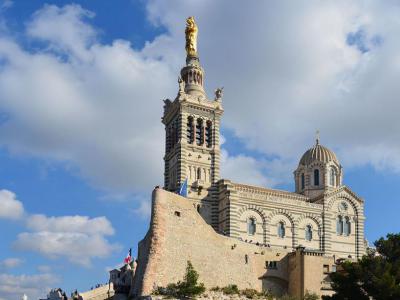
10) Notre-Dame de la Garde (must see)
Notre-Dame de la Garde stands proudly as an opulent Neo-Byzantine church situated atop the highest natural point in Marseille, perched upon a 532 feet limestone outcrop on the south side of the Old Port. This majestic site has become a cherished destination for an annual pilgrimage on Assumption Day.
Conceived by the talented architect Henri-Jacques Espérandieu, the basilica received its consecration on the 5th of June in 1864. Its origins trace back to a church with the same name, first erected in 1214 and later reconstructed during the 15th century. Remarkably, the basilica's foundations rest upon a 16th-century fortress built by Francis I of France to fend off Emperor Charles V's siege of the city in 1536.
The basilica comprises two distinct sections: a lower church or crypt, artistically carved into the rock in the Romanesque style, and an upper church boasting Neo-Byzantine elegance adorned with breathtaking mosaics. Towering above is a square bell-tower, reaching a height of 135 feet, crowned with a belfry standing at 42 feet. At its peak, a monumental statue of the Madonna and Child, crafted from copper gilded with gold leaf, soars to an impressive 27 feet.
During its history, the basilica encountered challenges, particularly regarding the stone used in its construction, which proved susceptible to atmospheric corrosion. In response, extensive restoration work took place from 2001 to 2008. This effort encompassed the meticulous repair of the mosaics, damaged by candle smoke over the years, as well as by bullets during the Liberation of France at the end of World War II.
Conceived by the talented architect Henri-Jacques Espérandieu, the basilica received its consecration on the 5th of June in 1864. Its origins trace back to a church with the same name, first erected in 1214 and later reconstructed during the 15th century. Remarkably, the basilica's foundations rest upon a 16th-century fortress built by Francis I of France to fend off Emperor Charles V's siege of the city in 1536.
The basilica comprises two distinct sections: a lower church or crypt, artistically carved into the rock in the Romanesque style, and an upper church boasting Neo-Byzantine elegance adorned with breathtaking mosaics. Towering above is a square bell-tower, reaching a height of 135 feet, crowned with a belfry standing at 42 feet. At its peak, a monumental statue of the Madonna and Child, crafted from copper gilded with gold leaf, soars to an impressive 27 feet.
During its history, the basilica encountered challenges, particularly regarding the stone used in its construction, which proved susceptible to atmospheric corrosion. In response, extensive restoration work took place from 2001 to 2008. This effort encompassed the meticulous repair of the mosaics, damaged by candle smoke over the years, as well as by bullets during the Liberation of France at the end of World War II.
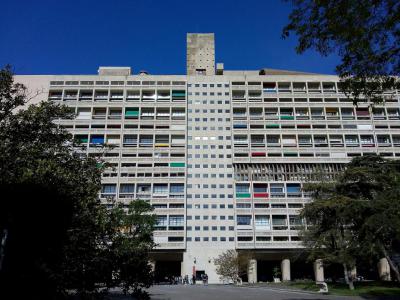
11) La Cité Radieuse (must see)
The first and most renowned among the Housing Unit (Unités d'Habitation) buildings is situated in Marseille. Commonly known as The Radiant City (La Cité Radieuse) and informally referred to as La Maison du Fada (French – Provençal, "The Madman's House"), it was constructed from 1947 to 1952.
This iconic work by Le Corbusier has had a profound impact on architecture, often considered the initial inspiration for the Brutalist style and philosophy. The building's construction primarily utilizes béton brut (rough-cast concrete) due to the post-war steel shortage, as the intended steel frame turned out to be too expensive.
Le Corbusier collaborated with designers Shadrach Woods and George Candilis to develop the Marseille building. It boasts 337 apartments with 23 diverse layouts, spread across twelve stories, all supported by large pilotis. In addition to housing, the building includes various amenities such as shops, an architectural bookshop, a rooftop gallery, educational facilities, a public hotel, and the restaurant "Le Ventre de l'Architecte" ("The Belly of the Architect").
Inside the building, wide corridors are designed as "streets in the sky" running along the central long axis of every third floor. Each apartment spans two levels, with rooms on one side of the corridor belonging to the apartment below it, and those on the opposite side to the apartment above. Apartments on floors without corridors stretch from one side of the building to the other, each featuring a balcony on the western side.
The flat roof of the building is ingeniously designed as a communal terrace, featuring sculptural ventilation stacks, a running track, and a shallow paddling pool for children. Moreover, an atelier hosts a children's art school. Renovated in 2010, the roof has become a venue for various theatrical performances and, since 2013, has served as an exhibition center called the MaMo. Its unobstructed views of the Mediterranean and Marseille make it a remarkable space.
In recognition of its architectural significance, the Housing Unit in Marseille, along with other works by Le Corbusier, was designated as a UNESCO World Heritage Site in July 2016.
This iconic work by Le Corbusier has had a profound impact on architecture, often considered the initial inspiration for the Brutalist style and philosophy. The building's construction primarily utilizes béton brut (rough-cast concrete) due to the post-war steel shortage, as the intended steel frame turned out to be too expensive.
Le Corbusier collaborated with designers Shadrach Woods and George Candilis to develop the Marseille building. It boasts 337 apartments with 23 diverse layouts, spread across twelve stories, all supported by large pilotis. In addition to housing, the building includes various amenities such as shops, an architectural bookshop, a rooftop gallery, educational facilities, a public hotel, and the restaurant "Le Ventre de l'Architecte" ("The Belly of the Architect").
Inside the building, wide corridors are designed as "streets in the sky" running along the central long axis of every third floor. Each apartment spans two levels, with rooms on one side of the corridor belonging to the apartment below it, and those on the opposite side to the apartment above. Apartments on floors without corridors stretch from one side of the building to the other, each featuring a balcony on the western side.
The flat roof of the building is ingeniously designed as a communal terrace, featuring sculptural ventilation stacks, a running track, and a shallow paddling pool for children. Moreover, an atelier hosts a children's art school. Renovated in 2010, the roof has become a venue for various theatrical performances and, since 2013, has served as an exhibition center called the MaMo. Its unobstructed views of the Mediterranean and Marseille make it a remarkable space.
In recognition of its architectural significance, the Housing Unit in Marseille, along with other works by Le Corbusier, was designated as a UNESCO World Heritage Site in July 2016.
