Custom Walk in London, England by maria_duaso_7cba4 created on 2023-07-10
Guide Location: England » London
Guide Type: Custom Walk
# of Sights: 12
Tour Duration: 2 Hour(s)
Travel Distance: 4.2 Km or 2.6 Miles
Share Key: 3W6T9
Guide Type: Custom Walk
# of Sights: 12
Tour Duration: 2 Hour(s)
Travel Distance: 4.2 Km or 2.6 Miles
Share Key: 3W6T9
How It Works
Please retrieve this walk in the GPSmyCity app. Once done, the app will guide you from one tour stop to the next as if you had a personal tour guide. If you created the walk on this website or come to the page via a link, please follow the instructions below to retrieve the walk in the app.
Retrieve This Walk in App
Step 1. Download the app "GPSmyCity: Walks in 1K+ Cities" on Apple App Store or Google Play Store.



Step 2. In the GPSmyCity app, download(or launch) the guide "London Map and Walking Tours".
Step 3. Tap the menu button located at upper right corner of the "Walks" screen and select "Retrieve custom walk". Enter the share key: 3W6T9
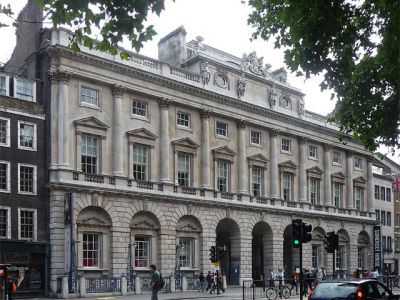
1) Courtauld Gallery
While many art museums in London can be overwhelming in size and scope, the Courtauld Museum offers a refreshingly concise experience. Established in 1931 by Samuel Courtauld, a prominent textile magnate, the museum was created to showcase his exceptional private art collection. It stands out as one of the world's premier galleries for impressionist and post-impressionist art, featuring works by a wide range of artists, from Bonnard to van Gogh. Each wall in the museum seems to offer a sense of déjà-vu, adorned with masterpieces by Cézanne, Degas, Seurat, Monet, and more.
Additionally, the museum boasts a remarkable selection of works by artists like Botticelli, Bruegel, Tiepolo, and Rubens, thanks to the generous bequest from Count Antoine Seilern's Princes Gate collection. The German Renaissance paintings section includes the awe-inspiring "Adam and Eve" by Lucas Cranach the Elder. For those seeking a more experimental and thought-provoking experience, the second floor features masterpieces like Modigliani's renowned "Female Nude".
Visitors should keep an eye out for the museum's regularly changing program of special exhibitions, which often feature blockbuster displays. And don't forget to visit the charming café downstairs for a delightful tea break or explore the nearby riverside eateries and courtyard, complete with a playful fountain.
Additionally, the museum boasts a remarkable selection of works by artists like Botticelli, Bruegel, Tiepolo, and Rubens, thanks to the generous bequest from Count Antoine Seilern's Princes Gate collection. The German Renaissance paintings section includes the awe-inspiring "Adam and Eve" by Lucas Cranach the Elder. For those seeking a more experimental and thought-provoking experience, the second floor features masterpieces like Modigliani's renowned "Female Nude".
Visitors should keep an eye out for the museum's regularly changing program of special exhibitions, which often feature blockbuster displays. And don't forget to visit the charming café downstairs for a delightful tea break or explore the nearby riverside eateries and courtyard, complete with a playful fountain.

2) Bush House
Bush House is a Grade II listed building at the southern end of Kingsway between Aldwych and the Strand in London. It was conceived as a major new trade centre by American industrialist Irving T. Bush, and commissioned, designed, funded, and constructed under his direction. The design was approved in 1919, work began in 1925, and was completed in 1935. Erected in stages, by 1929 Bush House was already declared the "most expensive building in the world".
Now mainly part of the Strand Campus of King's College London, Bush House previously served as the headquarters of the BBC World Service. Broadcasting from Bush House lasted for 70 years, from winter 1941 to summer 2012. The final BBC broadcast from Bush House was the 12noon BST news bulletin on 12 July 2012. The BBC World Service is now housed in Broadcasting House in Portland Place. King's College London has taken over the premises since acquiring the lease in 2015.
The longtime occupation of part of Bush House by HM Revenue and Customs (and its predecessor department the Inland Revenue) ended in March 2021 when it vacated the South-West Wing. This wing will also become a part of King's College London's Strand Campus, ensuring all wings of the building are now occupied by the University.
Now mainly part of the Strand Campus of King's College London, Bush House previously served as the headquarters of the BBC World Service. Broadcasting from Bush House lasted for 70 years, from winter 1941 to summer 2012. The final BBC broadcast from Bush House was the 12noon BST news bulletin on 12 July 2012. The BBC World Service is now housed in Broadcasting House in Portland Place. King's College London has taken over the premises since acquiring the lease in 2015.
The longtime occupation of part of Bush House by HM Revenue and Customs (and its predecessor department the Inland Revenue) ended in March 2021 when it vacated the South-West Wing. This wing will also become a part of King's College London's Strand Campus, ensuring all wings of the building are now occupied by the University.
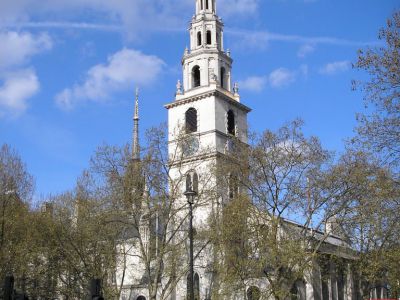
3) St. Clement Danes Church
Perched proudly in splendid isolation on a traffic island, this magnificent church was crafted by Christopher Wren in 1680. Its appellation harks back to an earlier church constructed on this spot by the descendants of Danish invaders permitted by Alfred the Great to settle in London during the 9th century. From the 17th to the 19th centuries, it served as the final resting place for numerous individuals, and their commemorative plaques now reside in the underground crypt.
Although the church suffered severe damage during World War II, it underwent reconstruction and emerged as the central place of worship for the Royal Air Force (RAF). Inside, the RAF's symbols, memorials, and monuments dominate the space. The nave and aisles are adorned with more than eight hundred squadron and unit emblems, while weighty volumes encased in ornate glass cabinets bear the names of over 150,000 men and women who lost their lives while serving in the RAF. Occasionally, RAF bands hold concerts here.
The bells outside chime to a variety of melodies, including the tune from the classic nursery rhyme "Oranges and Lemons". which mentions the church in its lyrics. Meanwhile, right in front, a statue of Gladstone is flanked by four allegorical female figures, with two air chiefs on either side: Lord Dowding, the overseer of the Battle of Britain, and "Bomber" Harris, the mastermind behind the intense bombing campaign on Germany that resulted in the deaths of 500,000 civilians (as well as over 55,000 Allied airmen, whose names are commemorated on the plinth). While Churchill held ultimate responsibility, Harris bore the brunt of the criticism.
Although the church suffered severe damage during World War II, it underwent reconstruction and emerged as the central place of worship for the Royal Air Force (RAF). Inside, the RAF's symbols, memorials, and monuments dominate the space. The nave and aisles are adorned with more than eight hundred squadron and unit emblems, while weighty volumes encased in ornate glass cabinets bear the names of over 150,000 men and women who lost their lives while serving in the RAF. Occasionally, RAF bands hold concerts here.
The bells outside chime to a variety of melodies, including the tune from the classic nursery rhyme "Oranges and Lemons". which mentions the church in its lyrics. Meanwhile, right in front, a statue of Gladstone is flanked by four allegorical female figures, with two air chiefs on either side: Lord Dowding, the overseer of the Battle of Britain, and "Bomber" Harris, the mastermind behind the intense bombing campaign on Germany that resulted in the deaths of 500,000 civilians (as well as over 55,000 Allied airmen, whose names are commemorated on the plinth). While Churchill held ultimate responsibility, Harris bore the brunt of the criticism.
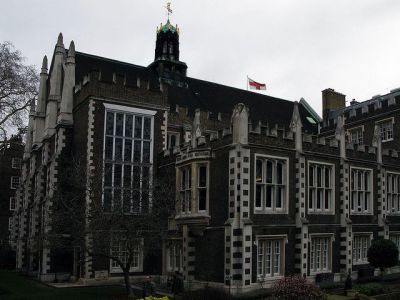
4) Middle Temple
Welcome to Temple, where London's legal elite rub shoulders with medieval ghosts and the spirit of Dickens still loiters by the fountain.
Temple is home to two of the legendary Inns of Court: Middle Temple and Inner Temple. But before the barristers moved in with their powdered wigs and legal jargon, this was sacred turf for the Knights Templar. Yep, the original warrior-monks. Their headquarters were right here, and rumor has it, their initiation rites went down in the crypt of Temple Church. Built in the 12th century and maintained by the Inns since 1608, this church still boasts a mighty Elizabethan organ and 13th-century stone knights lying eternally in its iconic round chapel-forever on break from crusading.
Step into Middle Temple, and it’s like time travel-Victorian fog not included. Charles Dickens himself described the place as having gates that whisper: “Who enters here leaves noise behind.” Over the years, its roll call has included heavyweights like Sir Walter Raleigh (a 17th-century English statesman, soldier, writer and explorer), novelist William Makepeace Thackeray (author of Vanity Fair), and, yes, Dickens himself-because, of course, he couldn't resist a good atmospheric setting.
Also, don’t miss Middle Temple Hall-a Tudor dream with timber for days. Over 100 feet long, 40 feet wide, and topped with a hammer-beam roof that would make any medieval carpenter proud. The walls are dressed in coats of arms and oil paintings that give serious “Game of Thrones meets courtroom drama” energy. These days, it’s mostly reserved for members, fancy receptions, and the occasional concert-so consider it the velvet rope of legal London.
Wander a little and you'll find Fountain Court-a peaceful courtyard where law students dine and Dickens once eavesdropped for inspiration. He even featured the bubbling fountain in Martin Chuzzlewit. And just nearby is Garden Court-a lush square overlooking the Thames, straight out of Great Expectations. This was Pip’s pad, where a stormy night and an ominous message-“Don’t go home”-set the stage for one of literature’s great reveals.
So go ahead, get lost in Temple's winding paths. Just don’t be surprised if you bump into a barrister… or a ghost.
Temple is home to two of the legendary Inns of Court: Middle Temple and Inner Temple. But before the barristers moved in with their powdered wigs and legal jargon, this was sacred turf for the Knights Templar. Yep, the original warrior-monks. Their headquarters were right here, and rumor has it, their initiation rites went down in the crypt of Temple Church. Built in the 12th century and maintained by the Inns since 1608, this church still boasts a mighty Elizabethan organ and 13th-century stone knights lying eternally in its iconic round chapel-forever on break from crusading.
Step into Middle Temple, and it’s like time travel-Victorian fog not included. Charles Dickens himself described the place as having gates that whisper: “Who enters here leaves noise behind.” Over the years, its roll call has included heavyweights like Sir Walter Raleigh (a 17th-century English statesman, soldier, writer and explorer), novelist William Makepeace Thackeray (author of Vanity Fair), and, yes, Dickens himself-because, of course, he couldn't resist a good atmospheric setting.
Also, don’t miss Middle Temple Hall-a Tudor dream with timber for days. Over 100 feet long, 40 feet wide, and topped with a hammer-beam roof that would make any medieval carpenter proud. The walls are dressed in coats of arms and oil paintings that give serious “Game of Thrones meets courtroom drama” energy. These days, it’s mostly reserved for members, fancy receptions, and the occasional concert-so consider it the velvet rope of legal London.
Wander a little and you'll find Fountain Court-a peaceful courtyard where law students dine and Dickens once eavesdropped for inspiration. He even featured the bubbling fountain in Martin Chuzzlewit. And just nearby is Garden Court-a lush square overlooking the Thames, straight out of Great Expectations. This was Pip’s pad, where a stormy night and an ominous message-“Don’t go home”-set the stage for one of literature’s great reveals.
So go ahead, get lost in Temple's winding paths. Just don’t be surprised if you bump into a barrister… or a ghost.
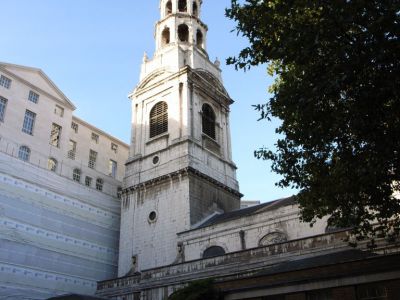
5) St. Bride's
Situated just off Fleet Street in what was once the heart of English print and newspaper publishing, Saint Bride's is famously known as "the journalists' church". Within its walls, a small altar in the north aisle serves as a memorial to honor the growing number of reporters, photographers, and crew members who tragically lost their lives while covering conflicts in the 21st century.
The church is another magnificent example of English Baroque architecture designed by Sir Christopher Wren, completed nine years after the devastating Great Fire of 1666. It is particularly cherished for its distinctively tiered steeple, which happens to be Wren's tallest creation. Interestingly, Benjamin Franklin contributed to its design by introducing a lightning rod. Legend has it that this tiered steeple inspired a baker who was also a parishioner to craft a wedding cake with a similar tiered structure, giving rise to the modern wedding cake design.
Historically, Saint Bride's has undergone multiple reconstructions, and this is believed to be the eighth church on this site, with the first one dating back to the 7th century. Evidence supporting this historical legacy, including a portion of a Roman mosaic sidewalk, has been unearthed in the crypt. Visitors can now explore the crypt, which houses numerous archaeological discoveries, including artifacts from thousands of coffins.
For those interested in delving deeper into the church's history and architecture, guided tours lasting ninety minutes are available on Tuesday afternoons, commencing at 2:15 pm. Additionally, Saint Bride's hosts regular lunchtime concert recitals that are open to the public at no charge.
The church is another magnificent example of English Baroque architecture designed by Sir Christopher Wren, completed nine years after the devastating Great Fire of 1666. It is particularly cherished for its distinctively tiered steeple, which happens to be Wren's tallest creation. Interestingly, Benjamin Franklin contributed to its design by introducing a lightning rod. Legend has it that this tiered steeple inspired a baker who was also a parishioner to craft a wedding cake with a similar tiered structure, giving rise to the modern wedding cake design.
Historically, Saint Bride's has undergone multiple reconstructions, and this is believed to be the eighth church on this site, with the first one dating back to the 7th century. Evidence supporting this historical legacy, including a portion of a Roman mosaic sidewalk, has been unearthed in the crypt. Visitors can now explore the crypt, which houses numerous archaeological discoveries, including artifacts from thousands of coffins.
For those interested in delving deeper into the church's history and architecture, guided tours lasting ninety minutes are available on Tuesday afternoons, commencing at 2:15 pm. Additionally, Saint Bride's hosts regular lunchtime concert recitals that are open to the public at no charge.
6) St. Paul's Cathedral (must see)
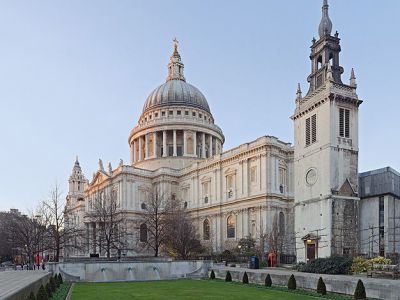
For centuries, Saint Paul's Cathedral has stood tall, quite literally, as London’s ultimate comeback story in stone form. After the Great Fire of 1666 turned the medieval cathedral (originally founded in 1087) into a smoldering memory, Sir Christopher Wren got the challenge of designing the masterpiece we see today.
Construction began in 1675 and took 35 years. Wren’s first design was too modern. The second-too modern again and too Catholic-looking. He eventually struck a deal with the Anglican clergy: throw in a classic English spire, but sneak in a magnificent triple-stacked dome instead. Now it’s the second-largest cathedral dome in the world after St. Peter’s in Rome. Subtle flex.
During WWII and the Blitz, flames again came for the cathedral, and again, it stood its ground. Brave volunteers fought fires on the dome, saving it from complete destruction. Saint Paul’s became a beacon of hope in the rubble. Fittingly, above the south entrance, you’ll spot the Latin word "Resurgam," meaning “I shall rise again.” Very on brand.
Inside, the cathedral is pure English Baroque drama. Climb 257 steps to the Whispering Gallery, where even your gossip echoes in style. Add another 119 steps for the Stone Gallery and 152 more for the Golden Gallery-because apparently, stairs build character. But the panoramic views of London are worth every calf cramp.
Down below in the crypt, you’ll find the final resting places of national legends: the Duke of Wellington, Admiral Nelson, and of course, Wren himself. His epitaph reads: “If you seek his monument, look around you.”
Saint Paul’s was basically Dickens' favorite rooftop. In Master Humphrey’s Clock, he climbs to the top for a bird’s eye view of life’s contradictions, which, come to think of it, London is full of. In David Copperfield, Peggotty enjoys the view too. Dickens knew this neighborhood well and even attended the Duke of Wellington’s funeral here in 1852.
Back in Shakespeare’s day, the area around Saint Paul’s was bustling with booksellers. This was the epicenter of the English publishing world- the Bard’s plays were printed and sold right here. Odds are he browsed the stalls himself, possibly muttering, “To plagiarize, or not to plagiarize...”
And for the modern-day wizarding crowd: yes, that staircase you recognize from Harry Potter and the Prisoner of Azkaban is real. The magical-looking Geometric Staircase-aka the Dean’s Stair-floats elegantly in the cathedral’s South West Bell Tower. You might remember it from Professor Trelawney’s Divination class or The Goblet of Fire. You’ll need a ticket to see it, but for Potterheads, it’s practically a rite of passage.
Tip:
Book online to skip the queue. And maybe spring for the audio tour-unless you’ve got me in your ear, of course.
Construction began in 1675 and took 35 years. Wren’s first design was too modern. The second-too modern again and too Catholic-looking. He eventually struck a deal with the Anglican clergy: throw in a classic English spire, but sneak in a magnificent triple-stacked dome instead. Now it’s the second-largest cathedral dome in the world after St. Peter’s in Rome. Subtle flex.
During WWII and the Blitz, flames again came for the cathedral, and again, it stood its ground. Brave volunteers fought fires on the dome, saving it from complete destruction. Saint Paul’s became a beacon of hope in the rubble. Fittingly, above the south entrance, you’ll spot the Latin word "Resurgam," meaning “I shall rise again.” Very on brand.
Inside, the cathedral is pure English Baroque drama. Climb 257 steps to the Whispering Gallery, where even your gossip echoes in style. Add another 119 steps for the Stone Gallery and 152 more for the Golden Gallery-because apparently, stairs build character. But the panoramic views of London are worth every calf cramp.
Down below in the crypt, you’ll find the final resting places of national legends: the Duke of Wellington, Admiral Nelson, and of course, Wren himself. His epitaph reads: “If you seek his monument, look around you.”
Saint Paul’s was basically Dickens' favorite rooftop. In Master Humphrey’s Clock, he climbs to the top for a bird’s eye view of life’s contradictions, which, come to think of it, London is full of. In David Copperfield, Peggotty enjoys the view too. Dickens knew this neighborhood well and even attended the Duke of Wellington’s funeral here in 1852.
Back in Shakespeare’s day, the area around Saint Paul’s was bustling with booksellers. This was the epicenter of the English publishing world- the Bard’s plays were printed and sold right here. Odds are he browsed the stalls himself, possibly muttering, “To plagiarize, or not to plagiarize...”
And for the modern-day wizarding crowd: yes, that staircase you recognize from Harry Potter and the Prisoner of Azkaban is real. The magical-looking Geometric Staircase-aka the Dean’s Stair-floats elegantly in the cathedral’s South West Bell Tower. You might remember it from Professor Trelawney’s Divination class or The Goblet of Fire. You’ll need a ticket to see it, but for Potterheads, it’s practically a rite of passage.
Tip:
Book online to skip the queue. And maybe spring for the audio tour-unless you’ve got me in your ear, of course.
7) Millennium Bridge
The Millennium Bridge-London’s bold leap into the 21st century, and quite literally, a wobbly one.
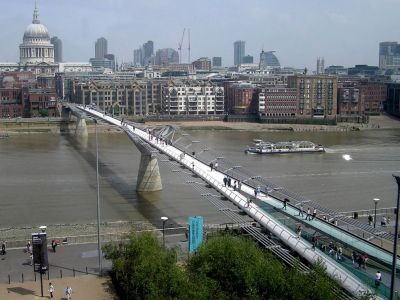
This sleek steel span holds not one, not two, but three distinctions. First, it’s the youngest of the Thames crossings. Second, it’s the only bridge in London where cars are banished-only pedestrians, photographers, and the occasional rollerblader. And third? It set a record for the fastest closure in UK bridge history. Opened with great fanfare... then swiftly shut down just two days later because, well, it couldn’t handle people's excitement. Or their footsteps...
Designed to mark the year 2000, the bridge was formally inaugurated by Queen Elizabeth II as the winning brainchild of Foster & Partners and Ove Arup & Partners-those clever folks you call when you want something to be both futuristic and structurally sound. Stretching 325 meters (or 1060+ feet), it tiptoes across the Thames with eight low-slung suspension cables (tensioned to exert a formidable 2000-ton force against the sturdy piers rooted on each bank) that don’t dare obstruct your Insta-worthy shot of St. Paul’s Cathedral.
Indeed, as a pedestrian-only portal between the Tate Modern and Shakespeare’s Globe on one end, and the mighty dome of St. Paul’s on the other, the views it affords are truly a chef’s kiss.
Of course, its opening-day wobble-thanks to 90,000 enthusiastic pedestrians striding in unintentional unison-earned it the affectionate moniker “The Wobbly Bridge.” But fear not: engineers came to the rescue with over 50 high-tech dampers and stabilizers galore, and by 2002, the bridge was back in action, shimmy-free.
Speaking of dramatic comebacks-yes, that was the very bridge you saw disintegrating in Harry Potter and the Half-Blood Prince. Death Eaters swoop in, chaos erupts, and the Millennium Bridge bends like a paperclip. Don’t worry, though-it was all movie magic. The real bridge stood firm and survived the scene unscathed, unlike its fictional counterpart.
Tip:
Wear good walking shoes, bring a raincoat (because it's London), and don’t forget to glance down-sometimes there are funky little art stickers underfoot. Because, again, this is London, and even the pavement might be making a statement.
This sleek steel span holds not one, not two, but three distinctions. First, it’s the youngest of the Thames crossings. Second, it’s the only bridge in London where cars are banished-only pedestrians, photographers, and the occasional rollerblader. And third? It set a record for the fastest closure in UK bridge history. Opened with great fanfare... then swiftly shut down just two days later because, well, it couldn’t handle people's excitement. Or their footsteps...
Designed to mark the year 2000, the bridge was formally inaugurated by Queen Elizabeth II as the winning brainchild of Foster & Partners and Ove Arup & Partners-those clever folks you call when you want something to be both futuristic and structurally sound. Stretching 325 meters (or 1060+ feet), it tiptoes across the Thames with eight low-slung suspension cables (tensioned to exert a formidable 2000-ton force against the sturdy piers rooted on each bank) that don’t dare obstruct your Insta-worthy shot of St. Paul’s Cathedral.
Indeed, as a pedestrian-only portal between the Tate Modern and Shakespeare’s Globe on one end, and the mighty dome of St. Paul’s on the other, the views it affords are truly a chef’s kiss.
Of course, its opening-day wobble-thanks to 90,000 enthusiastic pedestrians striding in unintentional unison-earned it the affectionate moniker “The Wobbly Bridge.” But fear not: engineers came to the rescue with over 50 high-tech dampers and stabilizers galore, and by 2002, the bridge was back in action, shimmy-free.
Speaking of dramatic comebacks-yes, that was the very bridge you saw disintegrating in Harry Potter and the Half-Blood Prince. Death Eaters swoop in, chaos erupts, and the Millennium Bridge bends like a paperclip. Don’t worry, though-it was all movie magic. The real bridge stood firm and survived the scene unscathed, unlike its fictional counterpart.
Tip:
Wear good walking shoes, bring a raincoat (because it's London), and don’t forget to glance down-sometimes there are funky little art stickers underfoot. Because, again, this is London, and even the pavement might be making a statement.
8) Tate Modern (must see)
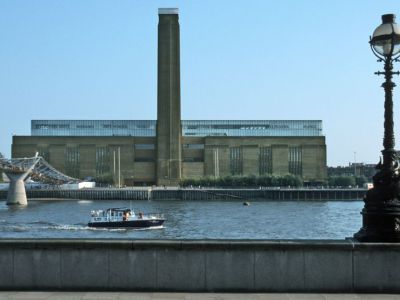
Once upon a smokestack, this mid-20th-century power station went from fueling machines to fueling imaginations - and today, this is one of the most-visited modern art museums on the planet: the Tate Modern.
Inside, the art doesn’t march along a tidy timeline. Instead, it sprawls across eight thematically curated zones, mixing heavy-hitters like Matisse with up-to-the-minute works by contemporary rebels. The temporary exhibitions here also feature big names and bold ideas. Think Gauguin, Modigliani, Picasso, O’Keeffe… and entire showcases exploring Soviet art between the Revolution and Stalin’s iron curtain call.
Step into the Turbine Hall - Tate’s dramatic entrance that could probably house a small airport - and you’ll be greeted by gravity-defying installations like Olafur Eliasson’s indoor sun, Ai Weiwei’s sea of porcelain sunflower seeds, or Carsten Höller’s towering steel slides that turn art appreciation into a full-body experience.
Dive underground and you’ll hit The Tanks: not for oil anymore, but for experimental art. We're talking performance pieces, soundscapes, and moving images that make your brain do backflips. Climb skyward to the rooftop terrace for a killer panoramic view of London’s skyline (and if you’re lucky, some weather to match).
In between, there are three expansive exhibition levels featuring everything from global contemporary art to interactive displays and full-room installations. Level 2 is home to the Start Display, where color takes center stage in a global conversation between cultures and eras.
Tip:
If your feet get tired or your brain starts spinning, grab a seat and a snack. There’s a restaurant with skyline views on Level 9, a relaxed café on Level 1, and a cozy espresso bar on Level 3. Don’t miss the balcony on Level 3 either - the view of St. Paul’s from there is pure poetry. Oh, and don’t leave without trying the Tate Draw. Sketch, swipe, and project your masterpiece onto the wall like the digital da Vinci you are.
Inside, the art doesn’t march along a tidy timeline. Instead, it sprawls across eight thematically curated zones, mixing heavy-hitters like Matisse with up-to-the-minute works by contemporary rebels. The temporary exhibitions here also feature big names and bold ideas. Think Gauguin, Modigliani, Picasso, O’Keeffe… and entire showcases exploring Soviet art between the Revolution and Stalin’s iron curtain call.
Step into the Turbine Hall - Tate’s dramatic entrance that could probably house a small airport - and you’ll be greeted by gravity-defying installations like Olafur Eliasson’s indoor sun, Ai Weiwei’s sea of porcelain sunflower seeds, or Carsten Höller’s towering steel slides that turn art appreciation into a full-body experience.
Dive underground and you’ll hit The Tanks: not for oil anymore, but for experimental art. We're talking performance pieces, soundscapes, and moving images that make your brain do backflips. Climb skyward to the rooftop terrace for a killer panoramic view of London’s skyline (and if you’re lucky, some weather to match).
In between, there are three expansive exhibition levels featuring everything from global contemporary art to interactive displays and full-room installations. Level 2 is home to the Start Display, where color takes center stage in a global conversation between cultures and eras.
Tip:
If your feet get tired or your brain starts spinning, grab a seat and a snack. There’s a restaurant with skyline views on Level 9, a relaxed café on Level 1, and a cozy espresso bar on Level 3. Don’t miss the balcony on Level 3 either - the view of St. Paul’s from there is pure poetry. Oh, and don’t leave without trying the Tate Draw. Sketch, swipe, and project your masterpiece onto the wall like the digital da Vinci you are.
9) OXO Tower
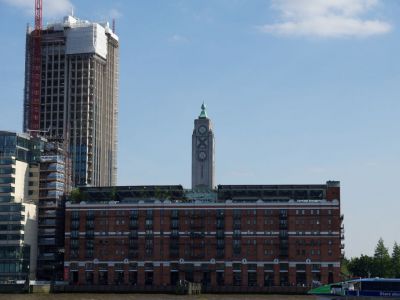
To the east of Gabriel’s Wharf, you'll find the iconic OXO Tower, originally an old power station converted into a meat-packing factory in the late 1920s by the Liebig Extract of Meat Company, renowned in Britain for producing OXO stock cubes. To circumvent the local council's prohibition on illuminated advertisements, the company ingeniously integrated the letters into the tower's windows, illuminating them from within.
Today, thanks to CSCB, the building houses an exhibition gallery on the ground floor, while the 1st and 2nd floors host a series of retail workshops where designers craft fashion, jewelry, home accessories, textiles, prints, photographs, furniture, and various design items. At the pinnacle of the tower, there's a stylish restaurant and bar that offers a compelling reason to ascend for a drink, offering a fantastic panoramic view of London. However, you can relish the view without dining or imbibing here by simply taking the elevator to the 8th-floor public viewing gallery, accessible through the bar (although it's not prominently signposted).
Today, thanks to CSCB, the building houses an exhibition gallery on the ground floor, while the 1st and 2nd floors host a series of retail workshops where designers craft fashion, jewelry, home accessories, textiles, prints, photographs, furniture, and various design items. At the pinnacle of the tower, there's a stylish restaurant and bar that offers a compelling reason to ascend for a drink, offering a fantastic panoramic view of London. However, you can relish the view without dining or imbibing here by simply taking the elevator to the 8th-floor public viewing gallery, accessible through the bar (although it's not prominently signposted).
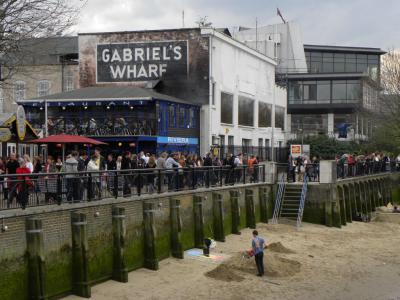
10) Gabriel's Wharf
Once just an empty patch by the Thames, Gabriel’s Wharf has pulled off the ultimate glow-up. Today, it’s a lively riverside hotspot where you can shop, eat, sip coffee, and soak in stunning views - all without leaving London’s South Bank. Proof (if you ever needed it) that a neglected waterfront can turn into pure gold for local businesses, artists, and hungry wanderers.
Gabriel’s Wharf serves up a mix of the unexpected: designer boutiques, quirky art galleries, fair-trade shops, and more cafés, bars, and restaurants than your stomach can probably handle in one visit. Every storefront has its own vibe - literally, because local artists helped design them. It's like a pop-up village where no two corners look the same.
Fun fact: Gabriel’s Wharf isn’t just any market - it holds the proud title of London’s oldest pop-up spot. And here’s the kicker: the whole place was built in just three months, on a shoestring budget of £78,000. Take that, overpriced city developers...
Locals like to call it a waterfront town square, and honestly, they're not wrong. It’s the kind of place where you can find a hand-painted scarf, a sculpture of a penguin wearing sunglasses, and the best fish and chips of your life - all before lunch.
Gabriel’s Wharf serves up a mix of the unexpected: designer boutiques, quirky art galleries, fair-trade shops, and more cafés, bars, and restaurants than your stomach can probably handle in one visit. Every storefront has its own vibe - literally, because local artists helped design them. It's like a pop-up village where no two corners look the same.
Fun fact: Gabriel’s Wharf isn’t just any market - it holds the proud title of London’s oldest pop-up spot. And here’s the kicker: the whole place was built in just three months, on a shoestring budget of £78,000. Take that, overpriced city developers...
Locals like to call it a waterfront town square, and honestly, they're not wrong. It’s the kind of place where you can find a hand-painted scarf, a sculpture of a penguin wearing sunglasses, and the best fish and chips of your life - all before lunch.
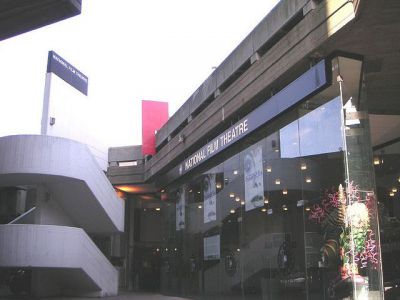
11) BFI Southbank (fka National Film Theatre)
These four cinemas, managed by the British Film Institute, boast the finest selection of programming in London and effectively serve as a national film hub. They showcase over 1,000 films annually, featuring art-house and foreign-language premieres, restored classics and silent films, experimental and niche-interest works, as well as short films, all prioritized over recent Hollywood blockbusters.
Additionally, this center houses a gallery, a bookshop, hosts various events, and offers a "mediatheque" where visitors can freely access films and television content from the National Archive (closed on Mondays). For dining options, the Riverfront Bar and Kitchen provides a scenic setting, while the BFI Bar offers a casual and lively atmosphere.
Situated beneath the southern end of Waterloo Bridge, this establishment is an integral part of the cultural complex along the South Bank of the River Thames. It serves as one of the venues for the renowned BFI London Film Festival and hosts a variety of minifestivals, seminars, and guest speaker events throughout the year.
Additionally, this center houses a gallery, a bookshop, hosts various events, and offers a "mediatheque" where visitors can freely access films and television content from the National Archive (closed on Mondays). For dining options, the Riverfront Bar and Kitchen provides a scenic setting, while the BFI Bar offers a casual and lively atmosphere.
Situated beneath the southern end of Waterloo Bridge, this establishment is an integral part of the cultural complex along the South Bank of the River Thames. It serves as one of the venues for the renowned BFI London Film Festival and hosts a variety of minifestivals, seminars, and guest speaker events throughout the year.
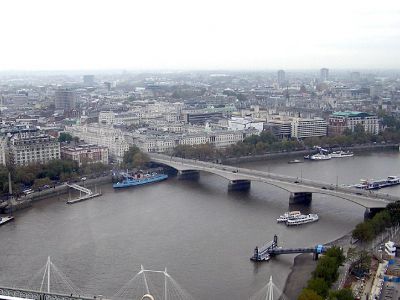
12) Waterloo Bridge
Waterloo Bridge, named in commemoration of the British triumph at the Battle of Waterloo in 1815, marks the eastern boundary of the Southbank Centre and is renowned for more than just its stunning sunsets. During the Second World War, it was predominantly constructed by women, and in 1978, it gained notoriety as the site of the assassination of Bulgarian dissident Georgi Markov, who fell victim to a ricin-loaded umbrella. On clear evenings, it's a common sight to encounter a lineup of both professional and amateur photographers along its length. This vantage point offers a 360-degree vista of the London skyline, providing fantastic photographic opportunities in both daylight and nighttime settings.
For a particularly romantic perspective of London, stand at the midpoint between the north and south banks of the Thames on the bridge. Facing east, you'll behold the magnificent Saint Paul's Cathedral and the graceful neoclassical facades of Somerset House, along with contemporary landmarks such as the distinctive "Gherkin" skyscraper on the north side and the towering Shard pyramid to the south. Gazing westward, you'll spot the iconic Victorian Gothic towers of the Palace of Westminster (Houses of Parliament) and Big Ben on the north bank, as well as the Edwardian elegance of The Savoy hotel and the National Liberal Club. You'll also catch a glimpse of Westminster Abbey. Turning your attention to the south bank, your eyes will be drawn to the London Eye's wheel and the striking Southbank Centre with its Brutalist architecture. If timed right, you may witness the sunset that inspired the Kinks' famous song.
Tip:
Should you find yourself in London during a full moonlit night, take the opportunity to spend an hour on this bridge after sunset and indulge in the awe-inspiring vistas!
For a particularly romantic perspective of London, stand at the midpoint between the north and south banks of the Thames on the bridge. Facing east, you'll behold the magnificent Saint Paul's Cathedral and the graceful neoclassical facades of Somerset House, along with contemporary landmarks such as the distinctive "Gherkin" skyscraper on the north side and the towering Shard pyramid to the south. Gazing westward, you'll spot the iconic Victorian Gothic towers of the Palace of Westminster (Houses of Parliament) and Big Ben on the north bank, as well as the Edwardian elegance of The Savoy hotel and the National Liberal Club. You'll also catch a glimpse of Westminster Abbey. Turning your attention to the south bank, your eyes will be drawn to the London Eye's wheel and the striking Southbank Centre with its Brutalist architecture. If timed right, you may witness the sunset that inspired the Kinks' famous song.
Tip:
Should you find yourself in London during a full moonlit night, take the opportunity to spend an hour on this bridge after sunset and indulge in the awe-inspiring vistas!
