Custom Walk in Cluj-Napoca, Romania by alejandro_rodriguez_san_jose_b28c4 created on 2024-08-20
Guide Location: Romania » Cluj-Napoca
Guide Type: Custom Walk
# of Sights: 16
Tour Duration: 3 Hour(s)
Travel Distance: 5 Km or 3.1 Miles
Share Key: HJS55
Guide Type: Custom Walk
# of Sights: 16
Tour Duration: 3 Hour(s)
Travel Distance: 5 Km or 3.1 Miles
Share Key: HJS55
How It Works
Please retrieve this walk in the GPSmyCity app. Once done, the app will guide you from one tour stop to the next as if you had a personal tour guide. If you created the walk on this website or come to the page via a link, please follow the instructions below to retrieve the walk in the app.
Retrieve This Walk in App
Step 1. Download the app "GPSmyCity: Walks in 1K+ Cities" on Apple App Store or Google Play Store.



Step 2. In the GPSmyCity app, download(or launch) the guide "Cluj-Napoca Map and Walking Tours".
Step 3. Tap the menu button located at upper right corner of the "Walks" screen and select "Retrieve custom walk". Enter the share key: HJS55

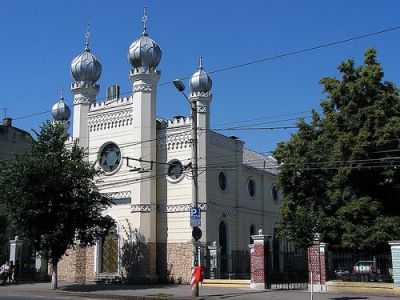
2) Reformed Synagogue
The Reformed Synagogue of Cluj-Napoca, often referred to as the Neolog Synagogue, is one of the city’s most important Jewish landmarks and a striking reminder of its multicultural past. Built between 1886 and 1887, it was designed by Hungarian architect Izidor Hegner in a Moorish Revival style, blending ornamental arches and decorative motifs that set it apart from the surrounding urban landscape. Originally serving the Neolog Jewish community, a modern branch of Judaism in Central Europe, the synagogue reflects both religious devotion and the cultural aspirations of Cluj’s once-thriving Jewish population.
The building has endured significant challenges over the years. In 1927, it was attacked by members of the Iron Guard, a far-right nationalist group, and later suffered damage during World War II. Despite these hardships, it was carefully restored, ensuring that it continued to stand as a symbol of resilience and continuity. Today, its red-and-white façade, intricate windows, and elegant interior testify to the craftsmanship and dedication of its creators.
For visitors, the synagogue offers more than architectural beauty-it also holds historical weight. The structure commemorates the memory of Holocaust victims from the region, serving as both a place of worship and a site of remembrance. Exhibits and plaques inside highlight the Jewish heritage of Cluj-Napoca and the tragic losses the community endured during the 20th century.
Tourists exploring the synagogue will find a space that combines solemnity with cultural significance. While services are occasionally held, the site mainly functions as a memorial and educational landmark, offering insight into the layered history of the city and its diverse communities. It stands as a reminder of endurance, coexistence, and the lasting contributions of Jewish life in Transylvania.
The building has endured significant challenges over the years. In 1927, it was attacked by members of the Iron Guard, a far-right nationalist group, and later suffered damage during World War II. Despite these hardships, it was carefully restored, ensuring that it continued to stand as a symbol of resilience and continuity. Today, its red-and-white façade, intricate windows, and elegant interior testify to the craftsmanship and dedication of its creators.
For visitors, the synagogue offers more than architectural beauty-it also holds historical weight. The structure commemorates the memory of Holocaust victims from the region, serving as both a place of worship and a site of remembrance. Exhibits and plaques inside highlight the Jewish heritage of Cluj-Napoca and the tragic losses the community endured during the 20th century.
Tourists exploring the synagogue will find a space that combines solemnity with cultural significance. While services are occasionally held, the site mainly functions as a memorial and educational landmark, offering insight into the layered history of the city and its diverse communities. It stands as a reminder of endurance, coexistence, and the lasting contributions of Jewish life in Transylvania.
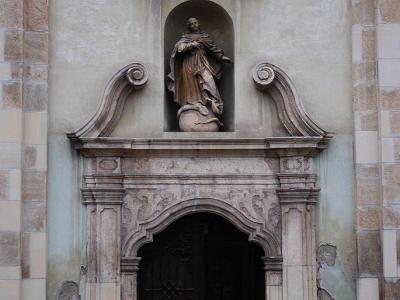
3) Franciscan Church
The Franciscan Church is one of the oldest and most significant landmarks in the city, carrying with it a layered history that reflects centuries of cultural and religious development. The first Franciscan monks arrived in Cluj in the 13th century, and by 1290, they had begun building a monastery and church. Though the original structure was destroyed during the Tatar invasion of 1241, the current Gothic-style church was completed in the late 15th century, later undergoing Baroque renovations that added richness to its character. Its location in Union Square makes it a key part of Cluj’s historic core, standing alongside other important monuments.
Architecturally, the Franciscan Church combines elements of Gothic and Baroque design. The exterior, relatively modest, contrasts with the richly decorated interior, which features an ornate Baroque altar crafted in the 18th century and an intricately carved pulpit. The tall, vaulted ceilings and stained-glass windows contribute to the sense of grandeur, while the organ, dating from the 18th century, remains a highlight for visitors with an interest in historic instruments. These features give the church a distinctive atmosphere, merging solemnity with artistic detail.
Over the centuries, the Franciscan Church has served various religious communities and survived periods of conflict and reform, including temporary conversions during the Reformation. Today, it functions as both a place of worship and a cultural monument, attracting visitors interested in history, art, and spirituality alike. Masses are still held regularly, making it an active site where tradition continues.
For tourists, the Franciscan Church offers not only an architectural experience but also an entry point into the layered religious history of Transylvania. It is an accessible stop during a walk through the city’s old center, where the calm of its interior contrasts with the bustle of Union Square outside.
Architecturally, the Franciscan Church combines elements of Gothic and Baroque design. The exterior, relatively modest, contrasts with the richly decorated interior, which features an ornate Baroque altar crafted in the 18th century and an intricately carved pulpit. The tall, vaulted ceilings and stained-glass windows contribute to the sense of grandeur, while the organ, dating from the 18th century, remains a highlight for visitors with an interest in historic instruments. These features give the church a distinctive atmosphere, merging solemnity with artistic detail.
Over the centuries, the Franciscan Church has served various religious communities and survived periods of conflict and reform, including temporary conversions during the Reformation. Today, it functions as both a place of worship and a cultural monument, attracting visitors interested in history, art, and spirituality alike. Masses are still held regularly, making it an active site where tradition continues.
For tourists, the Franciscan Church offers not only an architectural experience but also an entry point into the layered religious history of Transylvania. It is an accessible stop during a walk through the city’s old center, where the calm of its interior contrasts with the bustle of Union Square outside.
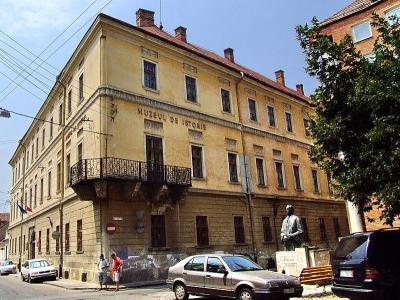
4) National Museum of Transylvanian History
The National Museum of Transylvanian History is one of the city’s most important cultural institutions, offering visitors a fascinating journey through centuries of regional history. Housed in the 19th-century building known as the Kemeny Palace, the museum presents a broad collection that spans prehistoric times to the modern era. Its central location in Union Square makes it an accessible stop for anyone exploring the historic heart of Cluj-Napoca.
The museum is particularly renowned for its archaeological holdings, which include treasures from the Dacian and Roman periods, as well as artifacts from medieval Transylvania. Highlights range from ancient coins and ceramics to tools and weapons that help paint a vivid picture of life in the region over millennia. One of its most celebrated pieces is the Roman votive altar dedicated to the god Jupiter, a testament to the deep historical roots of the area.
Beyond archaeology, the museum also explores Transylvania’s cultural, social, and artistic evolution. Exhibitions touch on medieval craftsmanship, urban development, and the influences of different ethnic and religious communities that have shaped the region’s identity. Temporary exhibitions often add variety, showcasing specialized themes or new archaeological discoveries.
For visitors, the museum is not just a collection of artifacts but a window into the layered history of Transylvania. Walking through its halls, you encounter the continuity of civilizations and the blending of cultures that define this part of Romania. Whether you are drawn by an interest in ancient history or curious about the roots of Cluj-Napoca itself, the museum provides a rewarding and thought-provoking experience.
The museum is particularly renowned for its archaeological holdings, which include treasures from the Dacian and Roman periods, as well as artifacts from medieval Transylvania. Highlights range from ancient coins and ceramics to tools and weapons that help paint a vivid picture of life in the region over millennia. One of its most celebrated pieces is the Roman votive altar dedicated to the god Jupiter, a testament to the deep historical roots of the area.
Beyond archaeology, the museum also explores Transylvania’s cultural, social, and artistic evolution. Exhibitions touch on medieval craftsmanship, urban development, and the influences of different ethnic and religious communities that have shaped the region’s identity. Temporary exhibitions often add variety, showcasing specialized themes or new archaeological discoveries.
For visitors, the museum is not just a collection of artifacts but a window into the layered history of Transylvania. Walking through its halls, you encounter the continuity of civilizations and the blending of cultures that define this part of Romania. Whether you are drawn by an interest in ancient history or curious about the roots of Cluj-Napoca itself, the museum provides a rewarding and thought-provoking experience.
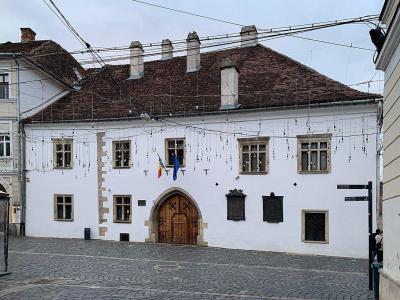
5) Matthias Corvinus House
The Matthias Corvinus House is one of Cluj-Napoca's most historically significant buildings, dating back to the 15th century. Originally constructed as a small guesthouse, this Gothic structure has played various roles throughout its long history, serving as a jail, hospital, and museum. Today, it houses a visual arts institute, continuing its tradition of being a place of importance in the city's cultural life.
This building is particularly renowned as the birthplace of Matthias Corvinus, the son of John Hunyadi, a legendary Transylvanian warrior. Matthias Corvinus, the Voivode of Transylvania, who would later rise to become one of Hungary's most celebrated kings, was born in this building on February 23, 1443. At that time, the house belonged to Jakab (James) Méhffi, a prosperous wine-grower and merchant in the city. On September 28, 1467, King Matthias granted a tax and duty exemption privilege to all descendants of the Méhffi family, who owned the building.
Over the centuries, the Matthias Corvinus House has undergone several transformations, reflecting the evolving architectural styles and needs of the times. It has been a college and has housed ethnographic collections of the Transylvanian Carpathian Society. Despite these changes, the building retains its Gothic roots, serving as a physical reminder of the city's rich past and its connection to significant historical figures.
This building is particularly renowned as the birthplace of Matthias Corvinus, the son of John Hunyadi, a legendary Transylvanian warrior. Matthias Corvinus, the Voivode of Transylvania, who would later rise to become one of Hungary's most celebrated kings, was born in this building on February 23, 1443. At that time, the house belonged to Jakab (James) Méhffi, a prosperous wine-grower and merchant in the city. On September 28, 1467, King Matthias granted a tax and duty exemption privilege to all descendants of the Méhffi family, who owned the building.
Over the centuries, the Matthias Corvinus House has undergone several transformations, reflecting the evolving architectural styles and needs of the times. It has been a college and has housed ethnographic collections of the Transylvanian Carpathian Society. Despite these changes, the building retains its Gothic roots, serving as a physical reminder of the city's rich past and its connection to significant historical figures.
6) Ethnographic Museum of Transylvania
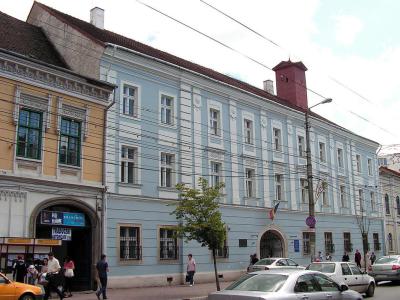
The Ethnographic Museum of Transylvania is a cultural gem that offers a deep dive into the rural traditions and lifestyle of the Transylvanian region. Established over 80 years ago, it is one of the oldest and most significant ethnographic museums in Romania. The museum is divided into two main exhibition sections: one housed in the historic Reduta Palace in downtown Cluj-Napoca, and the other in the open-air Romulus Vuia Park, situated in the Hoia Forest on the city's north-western side. This dual setup allows visitors to experience both the indoor collections and the immersive outdoor exhibits that bring the region's rural heritage to life.
The museum's vast collection includes more than 50,000 objects that showcase the daily lives, occupations, and traditions of Transylvania's rural population. The Reduta Palace section presents a carefully curated selection of these artifacts, offering insight into the tools, clothing, and household items that were integral to village life. The open-air section in Romulus Vuia Park, on the other hand, provides a more hands-on experience, with traditional houses, barns, and other structures reconstructed to reflect the authentic rural environment. This combination of indoor and outdoor exhibits makes the museum a comprehensive resource for understanding the cultural history of Transylvania.
In addition to its extensive collection of artifacts, the Ethnographic Museum of Transylvania also boasts a rich archive of visual documentation. The museum's collection includes around 50,000 photographs and 5,000 diapositives, providing a visual record of the region's history and traditions. These images, along with the museum's library of approximately 12,000 scholarly journals and specialized magazines, serve as valuable resources for researchers and enthusiasts alike. The library's extensive holdings underscore the museum's role as a center for the study and preservation of Transylvanian ethnography.
The museum's vast collection includes more than 50,000 objects that showcase the daily lives, occupations, and traditions of Transylvania's rural population. The Reduta Palace section presents a carefully curated selection of these artifacts, offering insight into the tools, clothing, and household items that were integral to village life. The open-air section in Romulus Vuia Park, on the other hand, provides a more hands-on experience, with traditional houses, barns, and other structures reconstructed to reflect the authentic rural environment. This combination of indoor and outdoor exhibits makes the museum a comprehensive resource for understanding the cultural history of Transylvania.
In addition to its extensive collection of artifacts, the Ethnographic Museum of Transylvania also boasts a rich archive of visual documentation. The museum's collection includes around 50,000 photographs and 5,000 diapositives, providing a visual record of the region's history and traditions. These images, along with the museum's library of approximately 12,000 scholarly journals and specialized magazines, serve as valuable resources for researchers and enthusiasts alike. The library's extensive holdings underscore the museum's role as a center for the study and preservation of Transylvanian ethnography.
7) St. Michael's Church (must see)
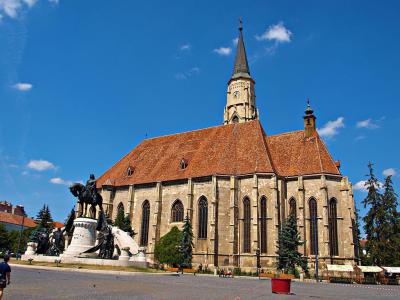
Saint Michael's Church is one of the most iconic landmarks in Transylvania, renowned for its Gothic architecture and historical significance. As the second-largest church in the region, it is an impressive structure, with a nave that stretches 50 meters long and 24 meters wide, and an apse measuring 20 by 10 meters. The church's most striking feature is its 76-meter-high tower, which holds the distinction of being the tallest in Transylvania. This towering spire, visible from many parts of the city, is a testament to the church's architectural grandeur and its prominence in the skyline of Cluj-Napoca.
The origins of Saint Michael's Church date back to 1316 when construction began, likely on the site of the former Saint James Chapel. The oldest part of the church, the altar, was inaugurated in 1390, and the main structure was completed by 1447. However, the church has undergone several changes over the centuries, including the construction of its original tower between 1511 and 1545. The current tower, built in the Gothic Revival style, was erected in 1862, replacing the older structure and adding to the church's majestic appearance.
Throughout its history, Saint Michael's Church has served various Christian denominations, including Roman Catholics, Lutheran Protestants, Calvinists, and Unitarians. This diverse religious heritage highlights the church's central role in the spiritual life of the city and its adaptability to the changing religious landscape of Transylvania. The western portal of the church is adorned with the coats of arms of Sigismund, reflecting his roles as King of Hungary, King of the Czech Kingdom, and Holy Roman Emperor, further emphasizing the church's historical significance.
Saint Michael's Church has also been the site of many important historical events, making it not just a place of worship but also a symbol of the city's rich history. Its towering presence and storied past continue to attract visitors and worshippers alike, offering a glimpse into the architectural and cultural heritage of Cluj-Napoca.
The origins of Saint Michael's Church date back to 1316 when construction began, likely on the site of the former Saint James Chapel. The oldest part of the church, the altar, was inaugurated in 1390, and the main structure was completed by 1447. However, the church has undergone several changes over the centuries, including the construction of its original tower between 1511 and 1545. The current tower, built in the Gothic Revival style, was erected in 1862, replacing the older structure and adding to the church's majestic appearance.
Throughout its history, Saint Michael's Church has served various Christian denominations, including Roman Catholics, Lutheran Protestants, Calvinists, and Unitarians. This diverse religious heritage highlights the church's central role in the spiritual life of the city and its adaptability to the changing religious landscape of Transylvania. The western portal of the church is adorned with the coats of arms of Sigismund, reflecting his roles as King of Hungary, King of the Czech Kingdom, and Holy Roman Emperor, further emphasizing the church's historical significance.
Saint Michael's Church has also been the site of many important historical events, making it not just a place of worship but also a symbol of the city's rich history. Its towering presence and storied past continue to attract visitors and worshippers alike, offering a glimpse into the architectural and cultural heritage of Cluj-Napoca.
8) Banffy Palace and National Museum of Art
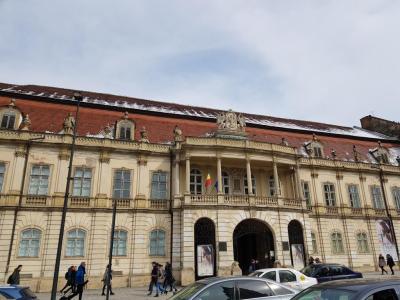
Bánffy Palace, an exquisite example of 18th-century Baroque architecture, is one of Cluj-Napoca's most significant historical buildings. Designed by the German architect Johann Eberhard Blaumann and constructed between 1774 and 1775, the palace stands as a testament to the opulence and grandeur of the period. The palace was initially commissioned by György Bánffy, a Hungarian duke and the governor of Transylvania, who sought to create a residence that reflected his stature and influence. The result was a stunning architectural masterpiece that continues to be regarded as the most representative Baroque building in Transylvania.
The structure of Bánffy Palace is impressive in both scale and design. The building covers a floor area of 66 by 48 meters, with an inner courtyard measuring 26 by 26 meters. The palace is arranged with wings on either side, each containing a row of rooms, while the front and back wings include two rows. The inner courtyard, surrounded by a portico on the second floor, adds to the palace's majestic atmosphere. The façade is richly adorned with statues of classical figures, including Mars, Minerva, Apollo, Diana, Hercules, and Perseus, as well as the Bánffy family coat of arms, flanked by gryphons. A prominent feature of the palace is its central gate, which is topped by a loggia with seven pillars, adding to the building's regal appearance.
In February 1951, the city council decided to repurpose Bánffy Palace, transforming it into an art museum. After extensive renovations, the museum was officially opened on December 30, 1965. The conversion of the palace into a cultural institution marked a new chapter in its history, allowing the public to appreciate both its architectural beauty and the rich collection of art housed within its walls. The cinema that once occupied the inner courtyard was demolished in 1974, further restoring the palace's original grandeur.
Since 1951, the Banffy Palace has been the home of the National Museum of Art in Cluj-Napoca. This is a picture, graphic and decorative art patrimony. The permanent exhibits present works of such artists as Theodor Pallady, Camil Ressu, Vasile Popescu, and others. The National Museum of Art was awarded the European Museum of the Year award by the EMYA in 1997.
The structure of Bánffy Palace is impressive in both scale and design. The building covers a floor area of 66 by 48 meters, with an inner courtyard measuring 26 by 26 meters. The palace is arranged with wings on either side, each containing a row of rooms, while the front and back wings include two rows. The inner courtyard, surrounded by a portico on the second floor, adds to the palace's majestic atmosphere. The façade is richly adorned with statues of classical figures, including Mars, Minerva, Apollo, Diana, Hercules, and Perseus, as well as the Bánffy family coat of arms, flanked by gryphons. A prominent feature of the palace is its central gate, which is topped by a loggia with seven pillars, adding to the building's regal appearance.
In February 1951, the city council decided to repurpose Bánffy Palace, transforming it into an art museum. After extensive renovations, the museum was officially opened on December 30, 1965. The conversion of the palace into a cultural institution marked a new chapter in its history, allowing the public to appreciate both its architectural beauty and the rich collection of art housed within its walls. The cinema that once occupied the inner courtyard was demolished in 1974, further restoring the palace's original grandeur.
Since 1951, the Banffy Palace has been the home of the National Museum of Art in Cluj-Napoca. This is a picture, graphic and decorative art patrimony. The permanent exhibits present works of such artists as Theodor Pallady, Camil Ressu, Vasile Popescu, and others. The National Museum of Art was awarded the European Museum of the Year award by the EMYA in 1997.
9) Matthias Corvinus Monument (must see)
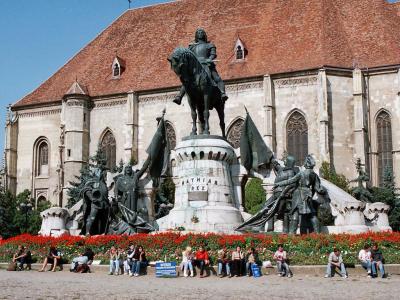
The Matthias Corvinus Monument, located in Union Square, is one of the city's most iconic landmarks. The monument features a grand equestrian statue of Matthias Corvinus, a revered historical figure who was born in Cluj-Napoca in 1443 and later became the King of Hungary and Croatia. His reign from 1458 to 1490 was marked by significant achievements, including the centralization of state power, which helped to fortify his kingdom against the Ottoman Empire. To support his military campaigns, Matthias Corvinus increased taxes and expanded his territories, ultimately creating the first permanent professional army in Europe, known as the Black Army.
The monument, crafted by the renowned sculptor János Fadrusz, was unveiled to the public on October 12, 1902, amidst grand festivities. The bronze statues, including the main figure of Matthias Corvinus and four of his most trusted generals, were transported to Cluj-Napoca by train and then carefully moved to Union Square on the tracks of an old horse tram line. The monument’s placement in the heart of the city emphasizes its significance in Cluj-Napoca’s cultural and historical landscape.
One of the unique features of the equestrian statue is that all four of the horse’s hooves are firmly on the ground. This detail is traditionally interpreted to signify that Matthias Corvinus, depicted on the horse, died a natural death rather than in battle. Surrounding the statue of Matthias Corvinus are his four generals, each holding flags representing the military battalions they led to victory. These generals include Blasius Magyar, the leader of the Black Army; Pál Kinizsi, Count of Timiș; Stephen Zápolya, Palatine of Hungary; and Stephen Báthory, Prince of Transylvania.
The Matthias Corvinus Monument not only serves as a tribute to one of Cluj-Napoca's most illustrious sons but also as a symbol of the city's rich historical legacy.
The monument, crafted by the renowned sculptor János Fadrusz, was unveiled to the public on October 12, 1902, amidst grand festivities. The bronze statues, including the main figure of Matthias Corvinus and four of his most trusted generals, were transported to Cluj-Napoca by train and then carefully moved to Union Square on the tracks of an old horse tram line. The monument’s placement in the heart of the city emphasizes its significance in Cluj-Napoca’s cultural and historical landscape.
One of the unique features of the equestrian statue is that all four of the horse’s hooves are firmly on the ground. This detail is traditionally interpreted to signify that Matthias Corvinus, depicted on the horse, died a natural death rather than in battle. Surrounding the statue of Matthias Corvinus are his four generals, each holding flags representing the military battalions they led to victory. These generals include Blasius Magyar, the leader of the Black Army; Pál Kinizsi, Count of Timiș; Stephen Zápolya, Palatine of Hungary; and Stephen Báthory, Prince of Transylvania.
The Matthias Corvinus Monument not only serves as a tribute to one of Cluj-Napoca's most illustrious sons but also as a symbol of the city's rich historical legacy.
10) Iuliu Maniu Street
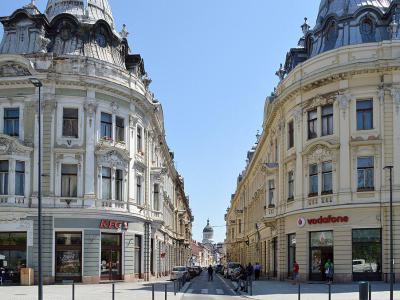
Iuliu Maniu Street in Cluj-Napoca is one of the city’s most recognizable thoroughfares, often admired for its harmonious design and architectural elegance. The street was laid out in the late 19th century, during a period of urban modernization under Austro-Hungarian influence, and it remains a fine example of urban planning from that era. It was originally known as King Ferdinand Street (Strada Regele Ferdinand), but later took the name of Iuliu Maniu, a key Romanian statesman and advocate for Transylvania’s union with Romania in 1918. Its design follows a distinctive symmetrical plan, with two parallel rows of buildings that mirror each other, creating a strong sense of balance and rhythm in the streetscape.
The buildings that line Iuliu Maniu Street reflect the eclectic architectural style of the late 19th and early 20th centuries, with ornate façades featuring classical and baroque revival elements. Walking along the street, visitors can appreciate the details in the balconies, pilasters, and decorative motifs that give the area its refined atmosphere. This urban uniformity makes it unique within Cluj-Napoca, as few other streets preserve such a coordinated style.
Today, Iuliu Maniu Street is not just a historical showcase but also a lively part of the city center. It connects important landmarks, linking Union Square (Piața Unirii) with Avram Iancu Square, where the Romanian National Opera and the Dormition of the Theotokos Cathedral are located. The street serves both as a practical route for pedestrians and as a cultural promenade, offering a sense of continuity between past and present.
For tourists, Iuliu Maniu Street is an inviting place to pause and take in the city’s layered history. It is especially rewarding for photography enthusiasts and those who appreciate architecture, as its symmetry and ornate details are best experienced up close. Standing here, one can sense the city’s evolution-from its Austro-Hungarian legacy to its Romanian identity-making it a memorable stop on any walk through Cluj-Napoca.
The buildings that line Iuliu Maniu Street reflect the eclectic architectural style of the late 19th and early 20th centuries, with ornate façades featuring classical and baroque revival elements. Walking along the street, visitors can appreciate the details in the balconies, pilasters, and decorative motifs that give the area its refined atmosphere. This urban uniformity makes it unique within Cluj-Napoca, as few other streets preserve such a coordinated style.
Today, Iuliu Maniu Street is not just a historical showcase but also a lively part of the city center. It connects important landmarks, linking Union Square (Piața Unirii) with Avram Iancu Square, where the Romanian National Opera and the Dormition of the Theotokos Cathedral are located. The street serves both as a practical route for pedestrians and as a cultural promenade, offering a sense of continuity between past and present.
For tourists, Iuliu Maniu Street is an inviting place to pause and take in the city’s layered history. It is especially rewarding for photography enthusiasts and those who appreciate architecture, as its symmetry and ornate details are best experienced up close. Standing here, one can sense the city’s evolution-from its Austro-Hungarian legacy to its Romanian identity-making it a memorable stop on any walk through Cluj-Napoca.
11) Dormition of the Theotokos Cathedral (must see)
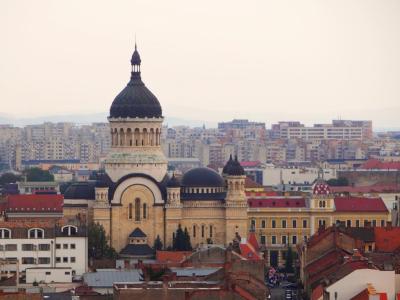
The Dormition of the Theotokos Cathedral is a prominent Romanian Orthodox church. Known for its stunning Romanian Brâncovenesc architectural style, the cathedral is a beautiful synthesis of Renaissance and Byzantine elements. It stands as a significant landmark in Avram Iancu Square, sharing the space with other important structures like the Cluj-Napoca National Theatre and the Avram Iancu Statue.
The cathedral is the seat of the Metropolitan of Cluj, Alba, Crișana, and Maramureș, making it a central figure in the religious life of the region. It is dedicated to the Dormition of the Theotokos, a significant event in Orthodox Christianity commemorating the "falling asleep" or death of the Virgin Mary. The construction of this majestic building began on 10 September 1923, shortly after the Union of Transylvania with the Romanian Old Kingdom, and was completed a decade later, in 1933.
Nicolae Ivan, who served as the Bishop of Cluj during this period, played a crucial role in the establishment of the cathedral. His efforts were instrumental in choosing the location and securing the necessary funds for its construction. The cathedral not only serves as a place of worship but also stands as a symbol of the unity and cultural identity of the Romanian people in Transylvania.
The cathedral is the seat of the Metropolitan of Cluj, Alba, Crișana, and Maramureș, making it a central figure in the religious life of the region. It is dedicated to the Dormition of the Theotokos, a significant event in Orthodox Christianity commemorating the "falling asleep" or death of the Virgin Mary. The construction of this majestic building began on 10 September 1923, shortly after the Union of Transylvania with the Romanian Old Kingdom, and was completed a decade later, in 1933.
Nicolae Ivan, who served as the Bishop of Cluj during this period, played a crucial role in the establishment of the cathedral. His efforts were instrumental in choosing the location and securing the necessary funds for its construction. The cathedral not only serves as a place of worship but also stands as a symbol of the unity and cultural identity of the Romanian people in Transylvania.
12) Teatrul National (National Theatre)
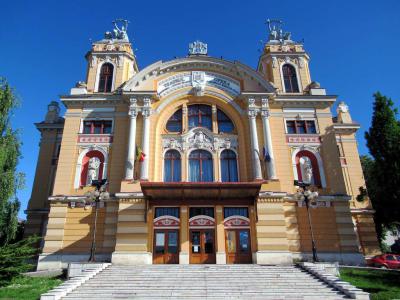
The Lucian Blaga National Theatre is a cornerstone of Romanian cultural life, renowned as one of the most prestigious theatrical institutions in the country. Sharing its impressive building with the Romanian Opera, the theatre has been a hub of artistic expression and performance since its establishment in the early 20th century. Built between 1904 and 1906, the theatre was the brainchild of the celebrated Austrian architects Ferdinand Fellner and Hermann Helmer, who were known for designing numerous theatres and palaces across Europe during that period. The building's construction was entirely financed through private funds, reflecting the strong cultural and civic commitment of the local community.
The theatre's design is a splendid example of Neo-Baroque architecture, featuring a grand hall that originally accommodated 928 seats. The architectural style is characterized by ornate details, with some influences of Secessionism visible in the decoration of the foyer. This blend of styles gives the building a distinctive and elegant appearance, making it a significant architectural landmark in Cluj-Napoca.
Over the years, the theatre has undergone several renovations and expansions to meet the growing demands of its audience. Between 1950 and 1956, the stage house was extended, increasing the seating capacity to 1,200. This expansion allowed the theatre to host larger productions and accommodate more visitors, further solidifying its status as a leading cultural institution.
The Lucian Blaga National Theatre continues to play a vital role in Romania's artistic scene, offering a diverse range of performances that attract both local residents and visitors from around the world. Its rich history, architectural beauty, and ongoing contributions to the arts make it a true gem in the heart of Cluj-Napoca.
The theatre's design is a splendid example of Neo-Baroque architecture, featuring a grand hall that originally accommodated 928 seats. The architectural style is characterized by ornate details, with some influences of Secessionism visible in the decoration of the foyer. This blend of styles gives the building a distinctive and elegant appearance, making it a significant architectural landmark in Cluj-Napoca.
Over the years, the theatre has undergone several renovations and expansions to meet the growing demands of its audience. Between 1950 and 1956, the stage house was extended, increasing the seating capacity to 1,200. This expansion allowed the theatre to host larger productions and accommodate more visitors, further solidifying its status as a leading cultural institution.
The Lucian Blaga National Theatre continues to play a vital role in Romania's artistic scene, offering a diverse range of performances that attract both local residents and visitors from around the world. Its rich history, architectural beauty, and ongoing contributions to the arts make it a true gem in the heart of Cluj-Napoca.
13) Turnul Croitorilor (Tailors' Bastion)
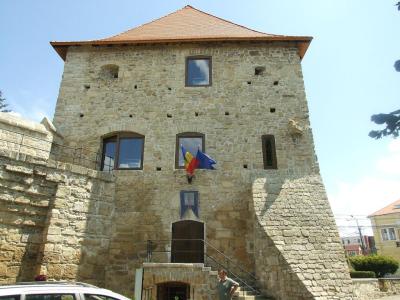
The Tailors’ Bastion (Turnul Croitorilor) is one of the few remaining medieval defense towers that once protected the city. Built in the late 15th century, it was part of the fortified wall system that surrounded Cluj, serving as a stronghold for the tailors’ guild, which was responsible for its upkeep and defense. The tower’s name comes directly from this guild, reflecting the important role that craftspeople played not only in the city’s economy but also in its protection during times of conflict. Its robust walls and strategic location highlight the practical military architecture of the period.
Over the centuries, the bastion witnessed significant historical events, including Ottoman raids and local conflicts. Despite changes in warfare that eventually rendered the city walls obsolete, the Tailors’ Bastion remained a powerful reminder of Cluj-Napoca’s medieval past. Today, its restored structure allows visitors to better appreciate the craftsmanship and resilience that went into its construction. The tower’s distinct design, with thick stone walls and narrow windows, still conveys the sense of strength it once offered the city’s defenders.
In modern times, the bastion has taken on a cultural role, transformed into a small exhibition and events space. Visitors can explore displays on the history of the tower, the guild system, and Cluj’s urban development across centuries. It also occasionally hosts cultural programs, lectures, and art exhibitions, linking its medieval roots with contemporary life. For tourists, the Tailors’ Bastion offers not only a glimpse into Cluj’s fortified history but also an engaging experience that bridges the old and the new.
Over the centuries, the bastion witnessed significant historical events, including Ottoman raids and local conflicts. Despite changes in warfare that eventually rendered the city walls obsolete, the Tailors’ Bastion remained a powerful reminder of Cluj-Napoca’s medieval past. Today, its restored structure allows visitors to better appreciate the craftsmanship and resilience that went into its construction. The tower’s distinct design, with thick stone walls and narrow windows, still conveys the sense of strength it once offered the city’s defenders.
In modern times, the bastion has taken on a cultural role, transformed into a small exhibition and events space. Visitors can explore displays on the history of the tower, the guild system, and Cluj’s urban development across centuries. It also occasionally hosts cultural programs, lectures, and art exhibitions, linking its medieval roots with contemporary life. For tourists, the Tailors’ Bastion offers not only a glimpse into Cluj’s fortified history but also an engaging experience that bridges the old and the new.
14) Saint George Monument
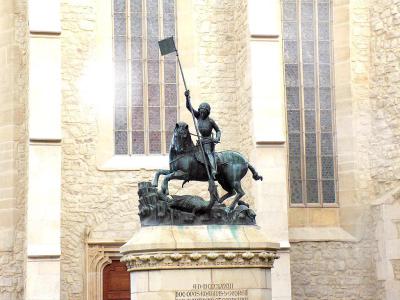
The Saint George Monument in Cluj-Napoca is a striking copy of the famous 14th-century statue depicting Saint George slaying the dragon. The original work, crafted in 1373 by local artists Martinus and Georgius, is preserved today in the National Gallery of Prague. Recognizing the artistic and cultural value of the piece, the Cluj City Council, along with Emperor Francis Joseph, decided in the early 20th century to commission replicas. One copy was placed in Cluj-Napoca, while the other was installed in the third courtyard of Prague’s Royal Castle, ensuring that this medieval masterpiece could continue to inspire new generations.
The Cluj monument rests on a solid pedestal designed by architect Kálmán Lux, featuring a Gothic-inspired setting that enhances the medieval character of the statue. The dramatic composition captures Saint George on horseback, frozen in the decisive moment of battle as the dragon writhes below. Every detail, from the taut muscles of the rearing horse to the focused expression of the saint, reflects the mastery of form and drama achieved by the original medieval sculptors. This intensity gives the monument a sense of timelessness, making it more than just a decorative piece-it embodies courage, faith, and the enduring power of myth.
Located in Union Square, the statue finds itself in one of Cluj-Napoca’s most vibrant historic spaces. Surrounded by landmarks such as Saint Michael’s Church and the old town hall, it seamlessly fits into the city’s architectural fabric. Tourists can appreciate it both as a centerpiece of the square and as a cultural symbol linking Cluj to broader Central European traditions. Whether admired up close for its craftsmanship or viewed as part of the square’s ensemble, the Saint George Monument remains one of the city’s most memorable and photo-worthy attractions.
The Cluj monument rests on a solid pedestal designed by architect Kálmán Lux, featuring a Gothic-inspired setting that enhances the medieval character of the statue. The dramatic composition captures Saint George on horseback, frozen in the decisive moment of battle as the dragon writhes below. Every detail, from the taut muscles of the rearing horse to the focused expression of the saint, reflects the mastery of form and drama achieved by the original medieval sculptors. This intensity gives the monument a sense of timelessness, making it more than just a decorative piece-it embodies courage, faith, and the enduring power of myth.
Located in Union Square, the statue finds itself in one of Cluj-Napoca’s most vibrant historic spaces. Surrounded by landmarks such as Saint Michael’s Church and the old town hall, it seamlessly fits into the city’s architectural fabric. Tourists can appreciate it both as a centerpiece of the square and as a cultural symbol linking Cluj to broader Central European traditions. Whether admired up close for its craftsmanship or viewed as part of the square’s ensemble, the Saint George Monument remains one of the city’s most memorable and photo-worthy attractions.
15) Piarists' Church
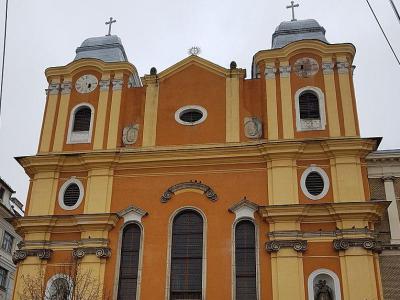
The Piarists’ Church, also known as the Jesuit Church, is one of the most striking landmarks in Cluj-Napoca and a prime example of early Baroque architecture in Transylvania. Built between 1718 and 1724 by Jesuit monks, it was the first Baroque-style church in the region and set the tone for many later religious buildings in the area. Its imposing façade and elegant symmetry reflect the grandeur of Central European design of the 18th century, and its historical importance makes it a key stop for visitors exploring the city’s religious and architectural heritage.
The church is dedicated to the Holy Trinity, and its interior offers a sense of solemn beauty, highlighted by richly decorated altars, impressive sculptures, and religious paintings. The main altar, with its ornate carvings and artwork, draws visitors’ attention, while the tall vaulted ceilings and large windows create an atmosphere of both majesty and tranquility. The church also holds a remarkable organ, installed in the late 18th century, which remains a centerpiece for concerts and liturgical music.
After the suppression of the Jesuit order in the late 18th century, the church was entrusted to the Piarist order, giving it the name it is known by today. Over the centuries, it has remained an active place of worship, blending its spiritual role with its cultural significance in the city. The surrounding square, home to the famous statue of Saint Mary, adds to the site’s appeal, making it not only a religious destination but also a central gathering place for residents and tourists alike.
Today, the Piarists’ Church continues to stand as both a monument of faith and a showcase of artistic achievement. Its combination of history, art, and living tradition makes it one of Cluj-Napoca’s must-see landmarks, offering visitors a chance to connect with the city’s layered past and experience the enduring power of Baroque architecture in Transylvania.
The church is dedicated to the Holy Trinity, and its interior offers a sense of solemn beauty, highlighted by richly decorated altars, impressive sculptures, and religious paintings. The main altar, with its ornate carvings and artwork, draws visitors’ attention, while the tall vaulted ceilings and large windows create an atmosphere of both majesty and tranquility. The church also holds a remarkable organ, installed in the late 18th century, which remains a centerpiece for concerts and liturgical music.
After the suppression of the Jesuit order in the late 18th century, the church was entrusted to the Piarist order, giving it the name it is known by today. Over the centuries, it has remained an active place of worship, blending its spiritual role with its cultural significance in the city. The surrounding square, home to the famous statue of Saint Mary, adds to the site’s appeal, making it not only a religious destination but also a central gathering place for residents and tourists alike.
Today, the Piarists’ Church continues to stand as both a monument of faith and a showcase of artistic achievement. Its combination of history, art, and living tradition makes it one of Cluj-Napoca’s must-see landmarks, offering visitors a chance to connect with the city’s layered past and experience the enduring power of Baroque architecture in Transylvania.

16) Botanical Museum
The Botanical Museum is part of the city’s renowned Alexandru Borza Botanical Garden, one of Romania’s largest and most diverse green spaces. Founded in the early 20th century, the museum complements the garden’s living collections by housing preserved specimens, scientific displays, and educational materials that trace the history of botany and plant research in Transylvania. Its setting within the garden makes it a natural stop for visitors eager to deepen their understanding of the region’s rich plant heritage.
Inside the museum, visitors will find a carefully curated collection of dried plants, seeds, and herbarium sheets documenting species from Romania and beyond. These specimens are essential to the study of biodiversity and plant classification, offering a scientific counterpart to the living plants outdoors. Alongside the collections are displays that introduce key themes in botany, from plant morphology and taxonomy to the ecological roles of different species. This makes the museum both an educational resource and a cultural attraction.
Another highlight is its role in showcasing rare or endangered plants, including species native to the Carpathian Mountains and the Transylvanian Plateau. Exhibits often highlight how these plants have been studied and preserved, linking scientific research with broader concerns about conservation and sustainability. For anyone interested in natural history, the museum offers a valuable perspective on how human understanding of plants has evolved over centuries.
A visit to the Botanical Museum pairs well with time spent exploring the surrounding gardens, where greenhouses, ornamental sections, and themed areas such as the Japanese garden provide a living counterpart to the museum’s preserved specimens. Together, they create a well-rounded experience that blends science, culture, and leisure, making this site a rewarding stop for both casual visitors and those with a deeper interest in natural sciences.
Inside the museum, visitors will find a carefully curated collection of dried plants, seeds, and herbarium sheets documenting species from Romania and beyond. These specimens are essential to the study of biodiversity and plant classification, offering a scientific counterpart to the living plants outdoors. Alongside the collections are displays that introduce key themes in botany, from plant morphology and taxonomy to the ecological roles of different species. This makes the museum both an educational resource and a cultural attraction.
Another highlight is its role in showcasing rare or endangered plants, including species native to the Carpathian Mountains and the Transylvanian Plateau. Exhibits often highlight how these plants have been studied and preserved, linking scientific research with broader concerns about conservation and sustainability. For anyone interested in natural history, the museum offers a valuable perspective on how human understanding of plants has evolved over centuries.
A visit to the Botanical Museum pairs well with time spent exploring the surrounding gardens, where greenhouses, ornamental sections, and themed areas such as the Japanese garden provide a living counterpart to the museum’s preserved specimens. Together, they create a well-rounded experience that blends science, culture, and leisure, making this site a rewarding stop for both casual visitors and those with a deeper interest in natural sciences.
