Custom Walk in Rome, Italy by loralab_242c3 created on 2026-04-23
Guide Location: Italy » Rome
Guide Type: Custom Walk
# of Sights: 15
Tour Duration: 6 Hour(s)
Travel Distance: 14.8 Km or 9.2 Miles
Share Key: GVQRE
Guide Type: Custom Walk
# of Sights: 15
Tour Duration: 6 Hour(s)
Travel Distance: 14.8 Km or 9.2 Miles
Share Key: GVQRE
How It Works
Please retrieve this walk in the GPSmyCity app. Once done, the app will guide you from one tour stop to the next as if you had a personal tour guide. If you created the walk on this website or come to the page via a link, please follow the instructions below to retrieve the walk in the app.
Retrieve This Walk in App
Step 1. Download the app "GPSmyCity: Walks in 1K+ Cities" on Apple App Store or Google Play Store.



Step 2. In the GPSmyCity app, download(or launch) the guide "Rome Map and Walking Tours".
Step 3. Tap the menu button located at upper right corner of the "Walks" screen and select "Retrieve custom walk". Enter the share key: GVQRE
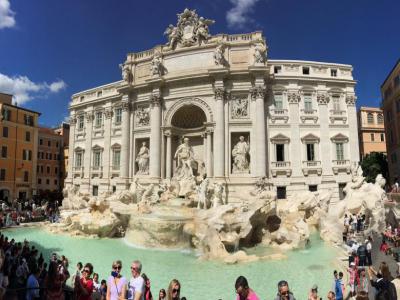
1) Piazza di Trevi & Fontana di Trevi (Trevi Square & Trevi Fountain) (must see)
The Trevi Fountain is one of Rome’s most iconic landmarks, drawing visitors to the eponymous Trevi Square all day long. Surprisingly, the fountain was not initially built in the heart of the city; instead, the city grew around it. Its name derives from the Latin word "trivium," which means “three streets,” as it sits at the junction of three streets: De Crocicchi, Poli, and Delle Muratte.
The fountain’s history dates back to 1629 when Pope Urban VIII commissioned Gian Lorenzo Bernini to redesign it, though his plans were never realized. Later, Pope Clement XII organized a competition in 1730, leading to Nicola Salvi's selection for the project, who incorporated the fountain into the rear of the Poli Palace. Salvi passed away before its completion. Giuseppe Pannini and other artists finalized the work in 1762.
Measuring over 26 meters in height and 49 meters in width, it is the largest Baroque fountain in Rome.
The Trevi Fountain features a Corinthian façade and bas-reliefs depicting the origins of the Acqua Vergine aqueduct, constructed in 19 BC. According to legend, a virgin guided Roman engineers to the aqueduct’s source, an event depicted in the fountain’s bas-reliefs. The aqueduct, which survived the Gothic invasions and was restored during the Middle Ages, still supplies water to the fountain today.
At the heart of the fountain is Oceanus, depicted riding a shell-shaped chariot drawn by two horses and guided by Tritons. The horses symbolize the sea’s contrasting moods-calm and turbulent. Flanking Oceanus are the statues of Abundance and Salubrity, representing prosperity and health. The symmetrical Rococo design combines dynamic artistry with Baroque grandeur, reflecting 18th-century European trends.
The Trevi Fountain is also known for the tradition of tossing coins, which promises a return to Rome. Popularized by the 1954 Hollywood film "Three Coins in the Fountain," visitors toss coins over their left shoulder with their right hand, generating daily about €3,000. This money, collected by municipal authorities, is donated to charity.
Celebrated in films like Roman Holiday and La Dolce Vita, the Trevi Fountain’s global fame is further evidenced by replicas worldwide. Access to the fountain is now limited to 400 visitors at a time, ensuring a more enjoyable visit to this timeless masterpiece. Surrounding the fountain are charming shops, restaurants, and gelaterias, making it a delightful spot to soak in Rome’s vibrant atmosphere.
Tip:
The fountain holds particular allure at night, especially after 10 pm when it is beautifully illuminated and the crowds dissipate, allowing you to enjoy the site almost exclusively.
The fountain’s history dates back to 1629 when Pope Urban VIII commissioned Gian Lorenzo Bernini to redesign it, though his plans were never realized. Later, Pope Clement XII organized a competition in 1730, leading to Nicola Salvi's selection for the project, who incorporated the fountain into the rear of the Poli Palace. Salvi passed away before its completion. Giuseppe Pannini and other artists finalized the work in 1762.
Measuring over 26 meters in height and 49 meters in width, it is the largest Baroque fountain in Rome.
The Trevi Fountain features a Corinthian façade and bas-reliefs depicting the origins of the Acqua Vergine aqueduct, constructed in 19 BC. According to legend, a virgin guided Roman engineers to the aqueduct’s source, an event depicted in the fountain’s bas-reliefs. The aqueduct, which survived the Gothic invasions and was restored during the Middle Ages, still supplies water to the fountain today.
At the heart of the fountain is Oceanus, depicted riding a shell-shaped chariot drawn by two horses and guided by Tritons. The horses symbolize the sea’s contrasting moods-calm and turbulent. Flanking Oceanus are the statues of Abundance and Salubrity, representing prosperity and health. The symmetrical Rococo design combines dynamic artistry with Baroque grandeur, reflecting 18th-century European trends.
The Trevi Fountain is also known for the tradition of tossing coins, which promises a return to Rome. Popularized by the 1954 Hollywood film "Three Coins in the Fountain," visitors toss coins over their left shoulder with their right hand, generating daily about €3,000. This money, collected by municipal authorities, is donated to charity.
Celebrated in films like Roman Holiday and La Dolce Vita, the Trevi Fountain’s global fame is further evidenced by replicas worldwide. Access to the fountain is now limited to 400 visitors at a time, ensuring a more enjoyable visit to this timeless masterpiece. Surrounding the fountain are charming shops, restaurants, and gelaterias, making it a delightful spot to soak in Rome’s vibrant atmosphere.
Tip:
The fountain holds particular allure at night, especially after 10 pm when it is beautifully illuminated and the crowds dissipate, allowing you to enjoy the site almost exclusively.
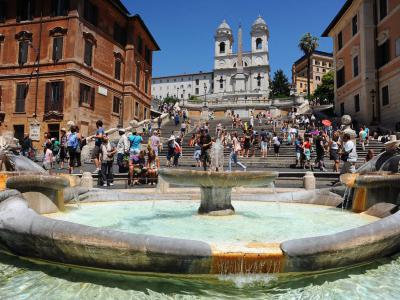
2) Scalinata di Trinita dei Monti (Spanish Steps) (must see)
The Spanish Steps, a monumental stairway of 135 steps, holds the distinction of being the longest and widest in Europe. The steps link Spanish Square, at the base, with the Trinity of the Mountains Square at the top.
The stairway was completed under Pope Clement XI in 1717, deriving its name from the nearby Spanish Embassy to the Holy See. Financed in part by a French diplomat, it features Baroque elements, inspired by garden stairs, and incorporates symbolic decorations such as the Bourbon heraldic lily flowers and papal eagles.
As a cultural and seasonal hub hosting public events such as Christmas cribs, spring azalea displays, and a flower market, the Spanish Steps have captivated artists and people of letters since the 18th century. Among them was the renowned English poet, John Keats, who lived and died practically next door. His house, at the base of the steps (located to the right, if you face the stairs), is now a museum.
Other nearby landmarks include the Ferrari di Valbona Palace, redesigned in 1936, and Babington's tea room, a resilient establishment that has withstood two world wars and numerous adversities, ultimately becoming a beloved tourist attraction.
The steps' cinematic appeal also made them a backdrop for numerous films, including the Hollywood blockbuster “Roman Holiday” made in 1953, starring Audrey Hepburn and Gregory Peck. In the scene where Joe Bradley, played by Peck, meets Princess Ann, played by Hepburn, she sits on the steps, enjoying the view and eating ice cream. Fresh after the haircut, the princess takes compliments for her new look and makes up a story that she has run away from school. She accepts his proposal to spend the day together before she returns, and thus the Roman Holiday story begins!
Other filmmakers also made a mark on the steps, such as “The Talented Mr. Ripley” movie with Matt Damon, shot in 1999, and “Mission: Impossible – Dead Reckoning Part One,” featuring Tom Cruise, which premiered at the steps on June 19, 2023.
Consequently, the Spanish Steps became a magnet for aspiring models, affluent Romans, international travelers, and people from all walks of life. The tradition of gathering here is deeply ingrained in the locals and visitors alike. Today, the steps are protected by strict regulations against loitering, eating, or damaging, with heavy fines introduced to maintain decorum.
Tip:
The staircase offers picturesque views of Rome from its pinnacle, particularly at sunset-a truly unbeatable sight!
The afternoon and late hours are the best for visiting, so to avoid the heat of the day.
Alongside tourist activities such as carriage rides, you'll find nearby an array of shops and bars worth exploring.
The stairway was completed under Pope Clement XI in 1717, deriving its name from the nearby Spanish Embassy to the Holy See. Financed in part by a French diplomat, it features Baroque elements, inspired by garden stairs, and incorporates symbolic decorations such as the Bourbon heraldic lily flowers and papal eagles.
As a cultural and seasonal hub hosting public events such as Christmas cribs, spring azalea displays, and a flower market, the Spanish Steps have captivated artists and people of letters since the 18th century. Among them was the renowned English poet, John Keats, who lived and died practically next door. His house, at the base of the steps (located to the right, if you face the stairs), is now a museum.
Other nearby landmarks include the Ferrari di Valbona Palace, redesigned in 1936, and Babington's tea room, a resilient establishment that has withstood two world wars and numerous adversities, ultimately becoming a beloved tourist attraction.
The steps' cinematic appeal also made them a backdrop for numerous films, including the Hollywood blockbuster “Roman Holiday” made in 1953, starring Audrey Hepburn and Gregory Peck. In the scene where Joe Bradley, played by Peck, meets Princess Ann, played by Hepburn, she sits on the steps, enjoying the view and eating ice cream. Fresh after the haircut, the princess takes compliments for her new look and makes up a story that she has run away from school. She accepts his proposal to spend the day together before she returns, and thus the Roman Holiday story begins!
Other filmmakers also made a mark on the steps, such as “The Talented Mr. Ripley” movie with Matt Damon, shot in 1999, and “Mission: Impossible – Dead Reckoning Part One,” featuring Tom Cruise, which premiered at the steps on June 19, 2023.
Consequently, the Spanish Steps became a magnet for aspiring models, affluent Romans, international travelers, and people from all walks of life. The tradition of gathering here is deeply ingrained in the locals and visitors alike. Today, the steps are protected by strict regulations against loitering, eating, or damaging, with heavy fines introduced to maintain decorum.
Tip:
The staircase offers picturesque views of Rome from its pinnacle, particularly at sunset-a truly unbeatable sight!
The afternoon and late hours are the best for visiting, so to avoid the heat of the day.
Alongside tourist activities such as carriage rides, you'll find nearby an array of shops and bars worth exploring.
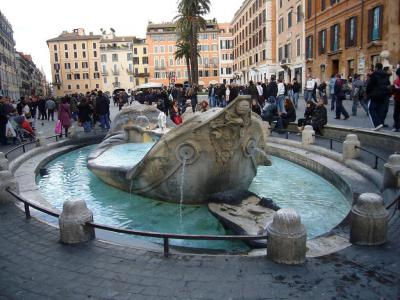
3) Piazza di Spagna & Fontana della Barcaccia (Spanish Square & Fountain of the Longboat)
The Spanish Square is one of Rome's most popular destinations, known for its blend of historical and cultural significance. Dominated by the iconic Spanish Steps next to it, the square also serves as a hub for high fashion, with designer boutiques lining the surrounding streets.
At the base of the Spanish Steps lies the "Fountain of the Longboat," an Early Baroque masterpiece created between 1627 and 1629. Commissioned by Pope Urban VIII as part of a project to install fountains in Rome’s major squares, it was designed by Pietro Bernini, possibly with assistance from his son, Gian Lorenzo. The fountain’s design, a half-sunken boat overflowing with water, was inspired by a local legend. During a devastating flood of the River Tiber in 1598, a small boat was reportedly carried to the square and left there as the waters receded. The fountain’s water flows gently due to the low pressure of the Acqua Vergine aqueduct, adding a soothing charm.
The fountain also features symbolic details, such as the Barberini family's papal coat of arms, honoring Pope Urban VIII’s ancestry. Its intricate design includes water flowing from seven points, with streams emerging from central balusters, human-faced suns inside the boat, and external spouts. This harmonious blend of engineering and artistry reflects the Baroque era's grandeur.
The Spanish Square is steeped in literary history as well. Adjacent to the fountain is the former residence of English poet John Keats, who died there in 1821. Now a museum, the house preserves memorabilia of the Romantic generation. Keats found solace in the sound of the fountain’s water, which inspired the epitaph on his tombstone: "Here lies one whose name was writ in water."
On the right side of the square stands the Ferrari di Valbona Palace, once home to Cardinal Lorenzo Cybo de Mari. The building, remodeled in 1936 under Fascist-era designs, showcases modern terraces that complement the surrounding Baroque architecture.
Spanish Square invites visitors to relax, bask in the sun, and enjoy its timeless beauty. The gentle gurgle of the Longboat Fountain and its rich history make it a serene yet captivating centerpiece of Rome.
At the base of the Spanish Steps lies the "Fountain of the Longboat," an Early Baroque masterpiece created between 1627 and 1629. Commissioned by Pope Urban VIII as part of a project to install fountains in Rome’s major squares, it was designed by Pietro Bernini, possibly with assistance from his son, Gian Lorenzo. The fountain’s design, a half-sunken boat overflowing with water, was inspired by a local legend. During a devastating flood of the River Tiber in 1598, a small boat was reportedly carried to the square and left there as the waters receded. The fountain’s water flows gently due to the low pressure of the Acqua Vergine aqueduct, adding a soothing charm.
The fountain also features symbolic details, such as the Barberini family's papal coat of arms, honoring Pope Urban VIII’s ancestry. Its intricate design includes water flowing from seven points, with streams emerging from central balusters, human-faced suns inside the boat, and external spouts. This harmonious blend of engineering and artistry reflects the Baroque era's grandeur.
The Spanish Square is steeped in literary history as well. Adjacent to the fountain is the former residence of English poet John Keats, who died there in 1821. Now a museum, the house preserves memorabilia of the Romantic generation. Keats found solace in the sound of the fountain’s water, which inspired the epitaph on his tombstone: "Here lies one whose name was writ in water."
On the right side of the square stands the Ferrari di Valbona Palace, once home to Cardinal Lorenzo Cybo de Mari. The building, remodeled in 1936 under Fascist-era designs, showcases modern terraces that complement the surrounding Baroque architecture.
Spanish Square invites visitors to relax, bask in the sun, and enjoy its timeless beauty. The gentle gurgle of the Longboat Fountain and its rich history make it a serene yet captivating centerpiece of Rome.
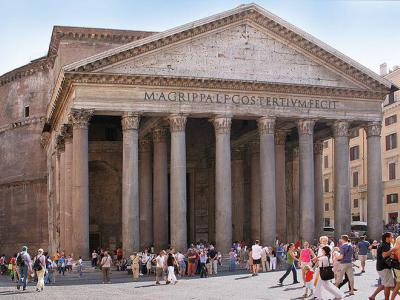
4) Pantheon (must see)
The Pantheon is one of Rome’s most iconic landmarks, renowned for its architectural brilliance. Originally a Roman temple, its name comes from the Ancient Greek "pan theos," which means dedication to all gods. Built on the site of a temple commissioned by consul Marcus Agrippa during Augustus’ reign, the current structure was completed under Emperor Hadrian around 126 AD. It was transformed into a Catholic Church of Saint Mary and the Martyrs in 609 AD, ensuring its preservation through centuries.
The Pantheon’s unique design combines a classical portico supported by Corinthian granite columns with a domed cylindrical structure (called a rotunda). The unsupported concrete dome, still the largest of its kind in the world, features a central oculus that provides natural light, ventilation, and symbolic celestial connections. The rotunda's harmonious dimensions-43 meters in both height and diameter-epitomize Roman engineering excellence, while its original massive bronze doors, each weighing over 20 tons, and intricate drainage system (allowing to effectively divert rainwater) highlight the ingenuity of its creators.
Throughout its history, the Pantheon has been a vibrant part of Roman life. It served as a burial site during the Renaissance, housing notable figures like painter Raphael and Italian kings Victor Emmanuel II and Umberto I. Its materials, such as bronze, have been repurposed for other projects like Bernini’s baldachin above the high altar of Saint Peter's Basilica. However, its core structure remains remarkably intact. Today, the church still host religious ceremonies, including masses, weddings, and Pentecost celebrations.
The Pantheon’s influence extends far beyond Rome. Its dome inspired architectural marvels like the Florence Cathedral and Rotunda of the U.S. Capital in Washington D.C., while its combination of classical and modern elements shaped countless government and academic buildings worldwide.
With over six million annual visitors, the Pantheon remains a symbol of Roman ingenuity and artistic achievement. Tourists can enjoy free entry to this historic site or soak in its splendor from Rotonda Square, savoring gelato while marveling at its timeless beauty.
Tip:
Incredible at night (from the outside), it is especially so if you enjoy musicians with talent and engagement... but beware of pickpockets.
The Pantheon’s unique design combines a classical portico supported by Corinthian granite columns with a domed cylindrical structure (called a rotunda). The unsupported concrete dome, still the largest of its kind in the world, features a central oculus that provides natural light, ventilation, and symbolic celestial connections. The rotunda's harmonious dimensions-43 meters in both height and diameter-epitomize Roman engineering excellence, while its original massive bronze doors, each weighing over 20 tons, and intricate drainage system (allowing to effectively divert rainwater) highlight the ingenuity of its creators.
Throughout its history, the Pantheon has been a vibrant part of Roman life. It served as a burial site during the Renaissance, housing notable figures like painter Raphael and Italian kings Victor Emmanuel II and Umberto I. Its materials, such as bronze, have been repurposed for other projects like Bernini’s baldachin above the high altar of Saint Peter's Basilica. However, its core structure remains remarkably intact. Today, the church still host religious ceremonies, including masses, weddings, and Pentecost celebrations.
The Pantheon’s influence extends far beyond Rome. Its dome inspired architectural marvels like the Florence Cathedral and Rotunda of the U.S. Capital in Washington D.C., while its combination of classical and modern elements shaped countless government and academic buildings worldwide.
With over six million annual visitors, the Pantheon remains a symbol of Roman ingenuity and artistic achievement. Tourists can enjoy free entry to this historic site or soak in its splendor from Rotonda Square, savoring gelato while marveling at its timeless beauty.
Tip:
Incredible at night (from the outside), it is especially so if you enjoy musicians with talent and engagement... but beware of pickpockets.
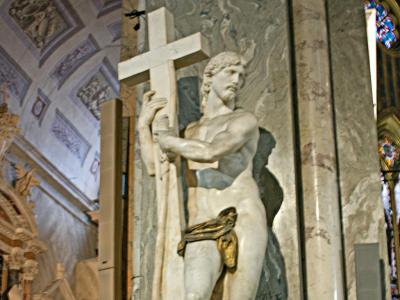
5) Basilica di Santa Maria sopra Minerva (Basilica of Saint Mary above Minerva) (must see)
Tucked away just behind the Pantheon in Minerva Square, Santa Maria above Minerva is a Dominican church and a hidden gem of both religious and architectural importance. This is the only surviving example of original Gothic religious architecture in Rome, as most medieval churches were modified with Baroque designs.
Despite its somewhat unassuming facade, the Santa Maria above Minerva – formerly the Dominican order's headquarters – also boasts an intriguing history and some truly magnificent artistic treasures. Chief among them are Michelangelo’s Christ the Redeemer sculpture and the Carafa Chapel's frescoes.
The former is found to the left of the main altar. The sculpture's first version, begun in 1515, was abandoned due to a flaw in the marble. The one we see today, completed in 1521, received acclaim for its artistry, particularly its lifelike knees. Originally, Michelangelo depicted Christ unclothed to symbolize his triumph over sin, however, a bronze loincloth was added in 1546.
The Carafa Chapel, commissioned by Cardinal Oliviero Carafa in honor of Saint Thomas Aquinas, was inaugurated in 1493. Lavishly adorned with frescoes by Florentine painter Filippino Lippi, it shows the scenes of Saint Thomas's life, including him debating with heretics, as well as some allegorical ones like him presenting Cardinal Carafa to the Virgin Mary. These frescoes are widely recognized as the best Renaissance painting in Rome outside the Sistine Chapel.
Looking up, you can't fail to notice the stunning deep blue painted ceiling and the round stained glass windows, rightfully regarded as the finest in the city.
The basilica also holds the remains of the Saint Catherine of Siena and early Renaissance painter Fra Angelico.
In 1628, the Convent of Minerva became the seat of the Congregation of the Holy Office, where the Roman Inquisition held trials, including that of Galileo Galilei. In 1633, Galileo was tried for heresy for supporting the theory that the Earth revolves around the Sun. Facing interrogation under threat of torture, he was found "vehemently suspect of heresy" and forced to recant. Galileo was sentenced to house arrest for life, and his works were banned. His trial marked a defining moment in the conflict between science and religion. Legend claims that, after his abjuration, Galileo allegedly muttered the rebellious phrase: "and yet it moves..."
Despite its somewhat unassuming facade, the Santa Maria above Minerva – formerly the Dominican order's headquarters – also boasts an intriguing history and some truly magnificent artistic treasures. Chief among them are Michelangelo’s Christ the Redeemer sculpture and the Carafa Chapel's frescoes.
The former is found to the left of the main altar. The sculpture's first version, begun in 1515, was abandoned due to a flaw in the marble. The one we see today, completed in 1521, received acclaim for its artistry, particularly its lifelike knees. Originally, Michelangelo depicted Christ unclothed to symbolize his triumph over sin, however, a bronze loincloth was added in 1546.
The Carafa Chapel, commissioned by Cardinal Oliviero Carafa in honor of Saint Thomas Aquinas, was inaugurated in 1493. Lavishly adorned with frescoes by Florentine painter Filippino Lippi, it shows the scenes of Saint Thomas's life, including him debating with heretics, as well as some allegorical ones like him presenting Cardinal Carafa to the Virgin Mary. These frescoes are widely recognized as the best Renaissance painting in Rome outside the Sistine Chapel.
Looking up, you can't fail to notice the stunning deep blue painted ceiling and the round stained glass windows, rightfully regarded as the finest in the city.
The basilica also holds the remains of the Saint Catherine of Siena and early Renaissance painter Fra Angelico.
In 1628, the Convent of Minerva became the seat of the Congregation of the Holy Office, where the Roman Inquisition held trials, including that of Galileo Galilei. In 1633, Galileo was tried for heresy for supporting the theory that the Earth revolves around the Sun. Facing interrogation under threat of torture, he was found "vehemently suspect of heresy" and forced to recant. Galileo was sentenced to house arrest for life, and his works were banned. His trial marked a defining moment in the conflict between science and religion. Legend claims that, after his abjuration, Galileo allegedly muttered the rebellious phrase: "and yet it moves..."
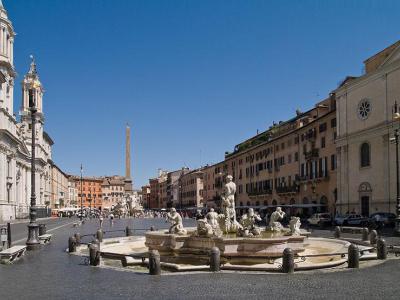
6) Piazza Navona (Navona Square) (must see)
Navona Square, one of Rome’s most iconic places, is built on the site of the ancient (1st-century AD) Stadium of Domitian. The stadium’s elongated oval shape defines the square’s layout, which was originally designed for Roman games (or agones). Over time, the name evolved from Circus Agonalis (which means “competition arena”) to Navona. After the fall of the Roman Empire, the stadium fell into ruin and was quarried for materials, leaving few remnants today.
In the late 15th century, Navona Square was designated a public space when the city market moved there from Capitoline Hill. It became a celebrated example of Baroque architecture and art during the mid-17th century under Pope Innocent X, whose family property, the Pamphili Palace, overlooks the square. The latter also features several masterpieces, including Gian Lorenzo Bernini’s Fountain of the Four Rivers at its center, crowned by the Obelisk of Domitian. The renowned Church of Saint Agnes in Agone with its impressive dome further highlights the area's artistic significance. Also noteworthy are the Braschi Palace, presently home to the Museum of Rome, and the Cupis Palace, which now offers pre-booked accommodations.
Navona Square is also home to two additional fountains. The Fountain of the Moor, at the southern end, was originally sculpted by Giacomo della Porta in 1575, with Bernini adding a statue of a Moor wrestling a dolphin in 1673. At the northern end, the Fountain of Neptune, also by della Porta (created in 1574), gained its central Neptune statue in 1878.
The square has a rich cultural history, hosting theatrical performances and festivals, including a popular annual Christmas market, from December to January.
Navona Square made an appearance in several movies, including “Angels & Demons” (of 2008, starring Tom Hanks), “Yesterday, Today and Tomorrow” (with Sophie Loren, made in 1964), and “The Talented Mr. Ripley” (directed in 1999 by Anthony Minghella, featuring Matt Damon). The atmosphere in Navona Square exudes a cool and relaxed vibe which, complete with its cinematic and architectural appeal, makes it an ideal spot for photography.
Tip:
In the evenings, when the central fountain is illuminated, the square becomes particularly scenic.
If looking for more intimate and more value-for-money meals and refreshments, consider venturing onto one of the side streets adjacent to the square, filled with multiple eateries and cafes.
In the late 15th century, Navona Square was designated a public space when the city market moved there from Capitoline Hill. It became a celebrated example of Baroque architecture and art during the mid-17th century under Pope Innocent X, whose family property, the Pamphili Palace, overlooks the square. The latter also features several masterpieces, including Gian Lorenzo Bernini’s Fountain of the Four Rivers at its center, crowned by the Obelisk of Domitian. The renowned Church of Saint Agnes in Agone with its impressive dome further highlights the area's artistic significance. Also noteworthy are the Braschi Palace, presently home to the Museum of Rome, and the Cupis Palace, which now offers pre-booked accommodations.
Navona Square is also home to two additional fountains. The Fountain of the Moor, at the southern end, was originally sculpted by Giacomo della Porta in 1575, with Bernini adding a statue of a Moor wrestling a dolphin in 1673. At the northern end, the Fountain of Neptune, also by della Porta (created in 1574), gained its central Neptune statue in 1878.
The square has a rich cultural history, hosting theatrical performances and festivals, including a popular annual Christmas market, from December to January.
Navona Square made an appearance in several movies, including “Angels & Demons” (of 2008, starring Tom Hanks), “Yesterday, Today and Tomorrow” (with Sophie Loren, made in 1964), and “The Talented Mr. Ripley” (directed in 1999 by Anthony Minghella, featuring Matt Damon). The atmosphere in Navona Square exudes a cool and relaxed vibe which, complete with its cinematic and architectural appeal, makes it an ideal spot for photography.
Tip:
In the evenings, when the central fountain is illuminated, the square becomes particularly scenic.
If looking for more intimate and more value-for-money meals and refreshments, consider venturing onto one of the side streets adjacent to the square, filled with multiple eateries and cafes.
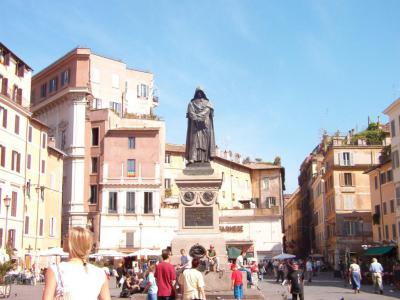
7) Campo de' Fiori (Field of Flowers)
Campo de' Fiori, or the "field of flowers", derived its name during the Middle Ages when this area in present-day Rome was nothing more than a meadow. In the late 15th century, the meadow was paved and gradually transformed into a square that became notorious for public executions. It was here, in the year 1600, that one of the most brutal executions in history took place-philosopher Giordano Bruno was burned at the stake for heresy. A harsh critic of bigotry and opponent to some religious theories like that of Trinity and geocentric model, he believed that the universe could be infinite and filled with countless worlds. Such ideas surpassed the tolerance of the Catholic Church at that time. As a result, Bruno lost his life and his works were banned by the Holy Office.
In 1889, a statue of Giordano Bruno was erected at the center of Campo de' Fiori, precisely where he faced his final moments. The statue defiantly confronts the Vatican, portraying Bruno as a martyr for freedom of thought. The inscription at the statue's base reads: "To Bruno - From the Age He Predicted - Here Where the Fire Burned."
Around the same time in the late 19th century, the square began hosting a daily market for vegetables and fish. This vibrant market opens early in the morning and operates until around 1-2pm, offering a wide array of fresh produce, cheeses, seasonings, and pasta, with the opportunity to sample various items before making a purchase. As night falls, Campo de' Fiori transforms into a popular gathering spot, buzzing with outdoor cafes, restaurants, and entertainment options that cater to different tastes and budgets.
Opening Hours (Market):
Daily: 7am-3pm
In 1889, a statue of Giordano Bruno was erected at the center of Campo de' Fiori, precisely where he faced his final moments. The statue defiantly confronts the Vatican, portraying Bruno as a martyr for freedom of thought. The inscription at the statue's base reads: "To Bruno - From the Age He Predicted - Here Where the Fire Burned."
Around the same time in the late 19th century, the square began hosting a daily market for vegetables and fish. This vibrant market opens early in the morning and operates until around 1-2pm, offering a wide array of fresh produce, cheeses, seasonings, and pasta, with the opportunity to sample various items before making a purchase. As night falls, Campo de' Fiori transforms into a popular gathering spot, buzzing with outdoor cafes, restaurants, and entertainment options that cater to different tastes and budgets.
Opening Hours (Market):
Daily: 7am-3pm
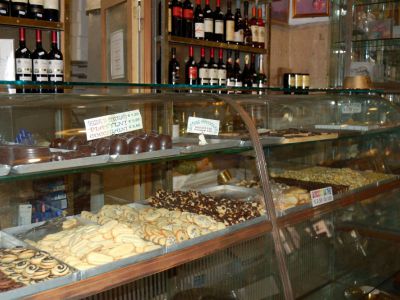
8) Pasticceria Valzani (Valzani Pastry Shop)
When it comes to desserts, Roman sweets may not enjoy the same level of fame as their Parisian counterparts, but they possess a unique charm all their own. One delectable delight to try is the amaretti or brutti ma buoni cookies, which may not win any beauty contests but are incredibly delicious. However, if you're looking for the perfect treat to bring back home, you must visit a traditional chocolate shop and indulge in some handmade chocolates.
Pasticceria Valzani in Trastevere is a true gem, transporting you back in time with its unchanged atmosphere since its opening in the 1920s. Overflowing with calorie-laden delights, Valzani is renowned for its sublime chocolates; yet, it's hard to resist the allure of traditional treats like mostaccioli and pangiallo. The beautifully packaged goodies make wonderful gifts, and the mouthwatering displays during Easter and Christmas are particularly enticing.
Treat yourself to the nostalgic ambiance and heavenly delights of Pasticceria Valzani for a truly indulgent experience.
Operation Hours
Tue-Sun: 10am-7:30pm
Pasticceria Valzani in Trastevere is a true gem, transporting you back in time with its unchanged atmosphere since its opening in the 1920s. Overflowing with calorie-laden delights, Valzani is renowned for its sublime chocolates; yet, it's hard to resist the allure of traditional treats like mostaccioli and pangiallo. The beautifully packaged goodies make wonderful gifts, and the mouthwatering displays during Easter and Christmas are particularly enticing.
Treat yourself to the nostalgic ambiance and heavenly delights of Pasticceria Valzani for a truly indulgent experience.
Operation Hours
Tue-Sun: 10am-7:30pm
9) Campidoglio (Capitoline Hill)
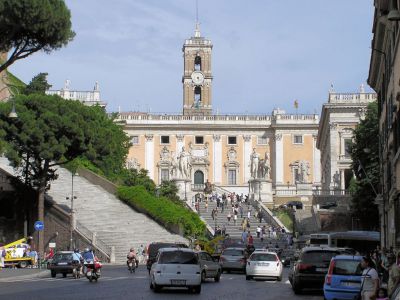
The Capitoline Hill, one of Rome’s Seven Hills, holds a storied past rooted in both mythology and history. Originally called Mount Saturn and dedicated to the Roman god Saturn, the hill later gained the name “Capitolium,” initially referring to the Temple of Jupiter Optimus Maximus. A myth ties its name to caput ("head") after a human skull was unearthed during the temple’s construction. The hill, symbolizing indestructibility and eternity, inspired the term “capitol,” eventually influencing sites like Capitol Hill in Washington, D.C.
Historically, the Capitoline served as a sacred and civic center. It withstood the Gaulish invasion of 390 BC and witnessed key events such as Julius Caesar’s penance and the destructive fire during the Year of Four Emperors (69 AD). By the Middle Ages, the hill evolved into a governance hub under papal authority. Its transformation was completed in the Renaissance when Michelangelo redesigned it into a civic landmark.
Michelangelo’s Capitol Square, commissioned by Pope Paul III between 1536 and 1546, reoriented the hill from the Roman Forum toward Saint Peter’s Basilica, reflecting a shift to Christian symbolism. Central to the square is the equestrian statue of Marcus Aurelius, believed to represent Emperor Constantine. The square features intricate paving with cosmic motifs, though this element was added in 1940.
The square is surrounded by three palaces. The Conservators' Palace, renovated by Michelangelo in the 16th century, incorporates colossal Corinthian pilasters, while the New Palace, built in the 17th century, mirrors its design. The 14th-century Senatorial Palace, atop the ancient Tabularium, serves as city hall, with Michelangelo’s double staircase integrating it seamlessly into the plaza. Accessed by the cordonata, a wide gradual ramp flanked by the statues of Castor and Pollux (the twin half-brothers in Greek and Roman mythology), the hill exemplifies Renaissance grandeur.
Tips:
For a memorable experience, be sure to enjoy the amazing views of the city and the Roman Forum from both the museums' plaza and the Vittorio Emanuele II Monument, particularly from its top accessible via the elevator. Keep in mind that dedicating at least half a day is recommended, as there are numerous magnificent buildings and squares located behind the rear of the main building.
Historically, the Capitoline served as a sacred and civic center. It withstood the Gaulish invasion of 390 BC and witnessed key events such as Julius Caesar’s penance and the destructive fire during the Year of Four Emperors (69 AD). By the Middle Ages, the hill evolved into a governance hub under papal authority. Its transformation was completed in the Renaissance when Michelangelo redesigned it into a civic landmark.
Michelangelo’s Capitol Square, commissioned by Pope Paul III between 1536 and 1546, reoriented the hill from the Roman Forum toward Saint Peter’s Basilica, reflecting a shift to Christian symbolism. Central to the square is the equestrian statue of Marcus Aurelius, believed to represent Emperor Constantine. The square features intricate paving with cosmic motifs, though this element was added in 1940.
The square is surrounded by three palaces. The Conservators' Palace, renovated by Michelangelo in the 16th century, incorporates colossal Corinthian pilasters, while the New Palace, built in the 17th century, mirrors its design. The 14th-century Senatorial Palace, atop the ancient Tabularium, serves as city hall, with Michelangelo’s double staircase integrating it seamlessly into the plaza. Accessed by the cordonata, a wide gradual ramp flanked by the statues of Castor and Pollux (the twin half-brothers in Greek and Roman mythology), the hill exemplifies Renaissance grandeur.
Tips:
For a memorable experience, be sure to enjoy the amazing views of the city and the Roman Forum from both the museums' plaza and the Vittorio Emanuele II Monument, particularly from its top accessible via the elevator. Keep in mind that dedicating at least half a day is recommended, as there are numerous magnificent buildings and squares located behind the rear of the main building.
10) Terrazza Belvedere del Palatino (Palatine Hill Viewing Platform)
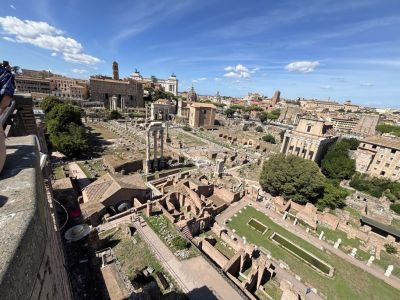
Seize the opportunity to stand exactly where ancient emperors once admired their real-estate empire - rooftops made of temples, basilicas, and political drama. That’s the essence of the Palatine Hill Viewing Platform. From this lofty terrace, the Roman Forum sprawls beneath you like a 2,000-year-old news feed: “Senate argues again,” “emperor builds giant stadium,” “gods demand new temple.” The Colosseum pops into frame, the Arch of Titus shows off, and the skyline does its timeless, postcard-perfect thing!
The terrace is a favorite stop for photographers and history enthusiasts alike. The former particularly adore this spot because Rome refuses to have a bad angle. Mornings arrive dipped in gold; sunsets turn the ruins into a theatrical stage set; and every hour in between reminds you that Rome invented the concept of atmospheric lighting long before Hollywood. Meanwhile, you get a rare moment of calm - high above the crowds, in the midst of ancient stones and legends… or perhaps just listening to your audio guide gasping for breath after that uphill stroll.
And yes, there is a bit of climbing involved - ancient power came with great elevation. But with the terrace included in the same ticket that gets you into the Colosseum and Forum, you’d be missing out on the most cinematic view in the Eternal City if you skip it. So take a deep breath, channel your inner emperor, and prepare to survey Rome in all its monumental glory!
The terrace is a favorite stop for photographers and history enthusiasts alike. The former particularly adore this spot because Rome refuses to have a bad angle. Mornings arrive dipped in gold; sunsets turn the ruins into a theatrical stage set; and every hour in between reminds you that Rome invented the concept of atmospheric lighting long before Hollywood. Meanwhile, you get a rare moment of calm - high above the crowds, in the midst of ancient stones and legends… or perhaps just listening to your audio guide gasping for breath after that uphill stroll.
And yes, there is a bit of climbing involved - ancient power came with great elevation. But with the terrace included in the same ticket that gets you into the Colosseum and Forum, you’d be missing out on the most cinematic view in the Eternal City if you skip it. So take a deep breath, channel your inner emperor, and prepare to survey Rome in all its monumental glory!
11) Circo Massimo (Circus Maximus)
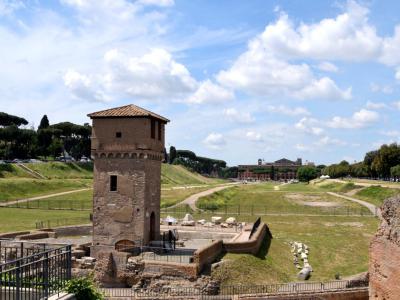
Set in the valley between the Palatine and Aventine hills, the Circus Maximus is the oldest and largest racetrack in ancient Rome. This colossal space, once capable of accommodating over 300,000 spectators, witnessed thrilling chariot races while the emperor looked on. From the 4th century BC until AD 549, the Circus Maximus underwent continuous embellishment and expansion, culminating in its final races.
The oval course spans approximately 650 yards from end to end. On certain occasions, as many as 24 chariot races were held in a single day, and competitions could extend for up to 15 days. Much like modern sports stars, charioteers could accumulate vast fortunes. Diocles, a renowned Portuguese charioteer, reportedly won an astounding 35 million sestertii. The atmosphere within the Circus Maximus must have been electrifying as charioteers competed in teams, each representing their own colors such as the Reds, the Blues, and others. Betting on the races also provided a potentially lucrative occupation for the majority of unemployed citizens in Rome.
The Circus Maximus featured a central dividing barrier known as the spina, adorned with seven large egg-shaped objects used to count laps during a race. In 33 BC, seven bronze dolphins were added to the spina for the same purpose. In 10 BC, Augustus constructed the Imperial box beneath the Palatine Hill and adorned the spina with an obelisk, which now stands at the center of Piazza del Popolo. Another obelisk, added in the 4th century by Constantine II, now stands in Piazza di San Giovanni in Laterano.
Today, the long grassy expanse of the Circus Maximus still retains hints of its original purpose and occasionally serves as a venue for festivals and concerts. However, during the recent remake of "Ben Hur", archaeological authorities denied permission to film chariot-racing scenes in this historical location.
The oval course spans approximately 650 yards from end to end. On certain occasions, as many as 24 chariot races were held in a single day, and competitions could extend for up to 15 days. Much like modern sports stars, charioteers could accumulate vast fortunes. Diocles, a renowned Portuguese charioteer, reportedly won an astounding 35 million sestertii. The atmosphere within the Circus Maximus must have been electrifying as charioteers competed in teams, each representing their own colors such as the Reds, the Blues, and others. Betting on the races also provided a potentially lucrative occupation for the majority of unemployed citizens in Rome.
The Circus Maximus featured a central dividing barrier known as the spina, adorned with seven large egg-shaped objects used to count laps during a race. In 33 BC, seven bronze dolphins were added to the spina for the same purpose. In 10 BC, Augustus constructed the Imperial box beneath the Palatine Hill and adorned the spina with an obelisk, which now stands at the center of Piazza del Popolo. Another obelisk, added in the 4th century by Constantine II, now stands in Piazza di San Giovanni in Laterano.
Today, the long grassy expanse of the Circus Maximus still retains hints of its original purpose and occasionally serves as a venue for festivals and concerts. However, during the recent remake of "Ben Hur", archaeological authorities denied permission to film chariot-racing scenes in this historical location.
12) Basilica di San Clemente al Laterano (Basilica of Saint Clement) (must see)
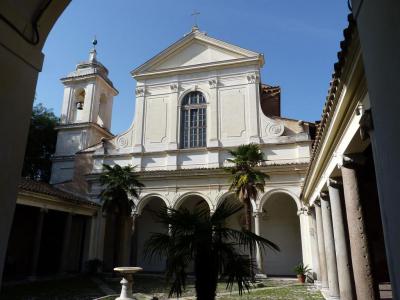
San Clemente is a most impressive archaeological site in Rome, renowned for its unique triple-decker structure. At its pinnacle sits the present-day basilica, erected in the 12th century. Below it lies a 4th-century church, built upon the remnants of a 2nd-century pagan temple dedicated to the god Mithras and ancient Roman apartments dating back to the 1st century. In 1857, Friar Joseph Mullooly initiated excavations beneath the basilica, unveiling these fascinating layers of history. Today, visitors can descend through time and explore all three levels, immersing themselves in the rich heritage preserved within.
The upper church, located at street level, exudes charm and splendor. Its apse features a radiant 12th-century mosaic depicting Jesus on the cross, transforming into a vibrant tree. Delicate green acanthus leaves dance across the mosaic, adorned with intricate scenes of daily life. The 4th-century marble choir screens showcase early Christian symbols, including doves, vines, and fish. Within the left nave, the Castiglioni chapel reveals frescoes created around 1400 by the Florentine artist Masolino da Panicale, renowned for his contributions to realism and perspective in Renaissance painting. Notable frescoes within the chapel depict the Crucifixion, scenes from the lives of Saints Catherine, Ambrose, and Christopher, and the Annunciation above the entrance.
Descending the stairs to the right of the sacristy and bookshop, visitors are transported to the 4th-century church, which remained in use until 1084 when it suffered irreparable damage during a siege led by Norman prince Robert Guiscard. Despite the passage of time, vibrant 11th-century frescoes depicting stories from the life of Saint Clement have endured. Of particular interest is the final fresco on the left, once part of the central nave. It showcases a captivating quote, including the unexpected phrase "Go on, you sons of harlots, pull!"-a rare and intriguing inclusion in a religious painting and an early example of written vernacular Italian.
Descending further down a set of stairs unveils the Mithraeum, a sacred shrine dedicated to the god Mithras. The cult of Mithras originated in Persia and gained popularity in Rome during the 2nd and 3rd centuries AD. These underground chambers served as a place of worship, mirroring the belief that Mithras was born in a cave. Stone couches, visible within the Mithraeum, served as seats for initiates who would gather to share meals. It is worth noting that many pagan shrines in Rome were dismantled by Christians, who often repurposed the sites by constructing churches atop them.
Why You Should Visit:
A very interesting glimpse into the ancient past – below street level!
Tip:
Bring a small flashlight for a closer inspection of the frescoes and wall paintings.
The upper church, located at street level, exudes charm and splendor. Its apse features a radiant 12th-century mosaic depicting Jesus on the cross, transforming into a vibrant tree. Delicate green acanthus leaves dance across the mosaic, adorned with intricate scenes of daily life. The 4th-century marble choir screens showcase early Christian symbols, including doves, vines, and fish. Within the left nave, the Castiglioni chapel reveals frescoes created around 1400 by the Florentine artist Masolino da Panicale, renowned for his contributions to realism and perspective in Renaissance painting. Notable frescoes within the chapel depict the Crucifixion, scenes from the lives of Saints Catherine, Ambrose, and Christopher, and the Annunciation above the entrance.
Descending the stairs to the right of the sacristy and bookshop, visitors are transported to the 4th-century church, which remained in use until 1084 when it suffered irreparable damage during a siege led by Norman prince Robert Guiscard. Despite the passage of time, vibrant 11th-century frescoes depicting stories from the life of Saint Clement have endured. Of particular interest is the final fresco on the left, once part of the central nave. It showcases a captivating quote, including the unexpected phrase "Go on, you sons of harlots, pull!"-a rare and intriguing inclusion in a religious painting and an early example of written vernacular Italian.
Descending further down a set of stairs unveils the Mithraeum, a sacred shrine dedicated to the god Mithras. The cult of Mithras originated in Persia and gained popularity in Rome during the 2nd and 3rd centuries AD. These underground chambers served as a place of worship, mirroring the belief that Mithras was born in a cave. Stone couches, visible within the Mithraeum, served as seats for initiates who would gather to share meals. It is worth noting that many pagan shrines in Rome were dismantled by Christians, who often repurposed the sites by constructing churches atop them.
Why You Should Visit:
A very interesting glimpse into the ancient past – below street level!
Tip:
Bring a small flashlight for a closer inspection of the frescoes and wall paintings.
13) Basilica di San Pietro in Vincoli (Basilica of St. Peter in Chains)
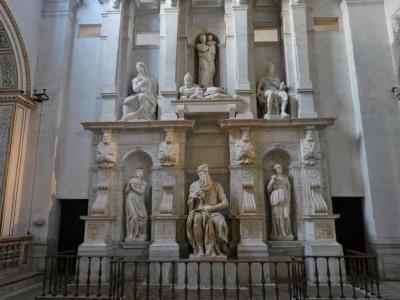
This basilica gained significant recognition thanks to Michelangelo's "Moses", a masterpiece sculpted in the early 16th century for Pope Julius II's unfinished tomb. Originally intended to be a grand structure featuring numerous statues and towering nearly 40 feet tall in Saint Peter's Basilica, only three statues were completed-Moses and the flanking figures of Leah and Rachel-before Julius passed away. The subsequent pope, a member of the rival Medici family, had different plans for Michelangelo, leading to the abandonment of the unfinished tomb. Despite this, the intense power of the remarkable Moses sculpture remains unparalleled in its setting. Legend has it that Michelangelo's profile, as well as that of the pope, can be discerned in the intricate details, such as the lock of Moses's beard beneath his lip.
In the church itself, Saint Peter takes a secondary role to the commanding presence of Moses. Under the main altar, an urn made of bronze and crystal houses the reputed chains that once bound Saint Peter during his imprisonment in Jerusalem and Rome. Other notable treasures include a 7th-century mosaic depicting Saint Sebastian, situated in front of the second altar to the left of the main altar, and the tomb of the Pollaiuolo brothers, two Florentine artists from the 15th century, located near the entrance.
Why You Should Visit:
Understated exterior, incredible interior; a Michelangelo must-see.
In the church itself, Saint Peter takes a secondary role to the commanding presence of Moses. Under the main altar, an urn made of bronze and crystal houses the reputed chains that once bound Saint Peter during his imprisonment in Jerusalem and Rome. Other notable treasures include a 7th-century mosaic depicting Saint Sebastian, situated in front of the second altar to the left of the main altar, and the tomb of the Pollaiuolo brothers, two Florentine artists from the 15th century, located near the entrance.
Why You Should Visit:
Understated exterior, incredible interior; a Michelangelo must-see.
14) Basilica di Santa Maria Maggiore (Basilica of Saint Mary Major) (must see)
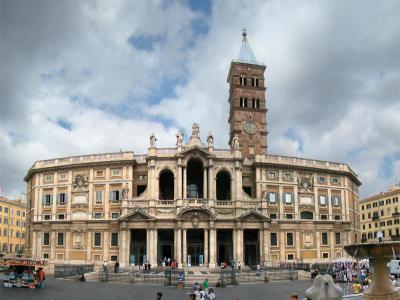
As the largest among the 26 churches in Rome dedicated to the Virgin Mary, the Basilica of Saint Mary Major holds a significant place in history. Originally constructed by Pope Liberius in the 4th century, the grandiose church has undergone renovations and enhancements by successive popes while still retaining its early medieval structure. The colonnaded nave, an integral part of the original 5th-century building, offers a glimpse into its ancient origins. The medieval era contributed the captivating Cosmatesque marble floor and the delightful Romanesque bell tower adorned with intricate blue ceramic roundels. During the Renaissance, a new coffered ceiling was introduced, while the Baroque period left its imprint with twin domes and grand facades at the front and rear. All in all, it’s a most successful blend of different architectural styles.
However, the true splendor of Saint Mary Major lies in its mosaics, which are among the oldest in Rome. The biblical scenes adorning the aisles date back to the 5th century, captivating visitors with their artistic depiction. The mosaics on the triumphal arch are particularly breathtaking, showcasing the skill and craftsmanship of the time. Among other medieval highlights is a magnificent 13th-century mosaic featuring an enthroned Christ in the loggia, adding to the artistic treasures within.
In 2001, Pope John Paul II inaugurated the Basilica Museum, dedicated to the church's history and the spread of Catholicism throughout the world. Here you will see ecclesiastical paintings, ritual vestments, scores from the choir and various manuscripts.
Tips: When visiting, be sure to take advantage of the small tours available to explore the church's hidden treasures. Additionally, don't miss the opportunity to visit the balcony loggia, which offers a unique perspective and allows you to admire more of the church's architecture. As evening sets in, find a serene spot by the fountain and marvel at the illuminated beauty of the building.
However, the true splendor of Saint Mary Major lies in its mosaics, which are among the oldest in Rome. The biblical scenes adorning the aisles date back to the 5th century, captivating visitors with their artistic depiction. The mosaics on the triumphal arch are particularly breathtaking, showcasing the skill and craftsmanship of the time. Among other medieval highlights is a magnificent 13th-century mosaic featuring an enthroned Christ in the loggia, adding to the artistic treasures within.
In 2001, Pope John Paul II inaugurated the Basilica Museum, dedicated to the church's history and the spread of Catholicism throughout the world. Here you will see ecclesiastical paintings, ritual vestments, scores from the choir and various manuscripts.
Tips: When visiting, be sure to take advantage of the small tours available to explore the church's hidden treasures. Additionally, don't miss the opportunity to visit the balcony loggia, which offers a unique perspective and allows you to admire more of the church's architecture. As evening sets in, find a serene spot by the fountain and marvel at the illuminated beauty of the building.
15) Galleria Borghese (Borghese Gallery and Museum) (must see)
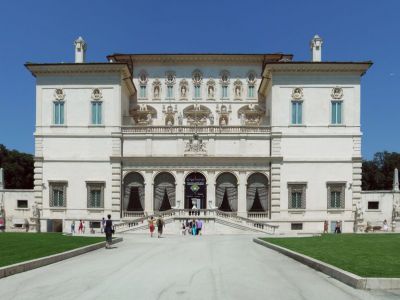
If you find yourself with a couple of free hours during your stay in Rome, it is highly recommended that you make a reservation to visit the Galleria Borghese, with its remarkable gallery that showcases a stunning collection of ancient artifacts, paintings, and sculptures.
The gallery is located within the Villa Borghese, which was constructed between 1609 and 1618 based on designs created by Cardinal Scipione Borghese. As the nephew of Pope Paul V and holding the esteemed position of Cardinal Nephew, the cardinal enjoyed considerable wealth and the authority to "confiscate" various artworks in the name of the Church. Many of these seized treasures ended up in his private collection. Despite the cardinal's unconventional methods, he possessed a genuine passion for art and antiquities, and he served as a patron to Caravaggio, marking the beginning of his collection.
Presently, the gallery comprises 20 rooms spread across two floors. There, you can marvel at notable works such as Titian's "Sacred and Profane Love," as well as two magnificent paintings of the "Disposition" by Rubens and Raphael, among other masterpieces. The ground floor primarily features antiquities, including a splendid mosaic of gladiators from the 3rd century, Canova's "Venus Victrix," and a captivating trompe-l'oeil fresco on the ceiling. Additionally, you'll encounter several sculptures by Bernini, another favored artist of the cardinal. These include "Apollo and Daphne," "David," and the awe-inspiring "Rape of Proserpina." The intricately crafted marble sculpture brings the scene to life, with Pluto's fingers seemingly sinking into the flesh of Proserpina's thigh, and one side of his face distorted as she attempts to push him away.
Why You Should Visit:
Probably one of the best museums not only in Italy but the world.
Its manageable size allows to explore and appreciate the majority of exhibits within the allotted 2-hour timeframe.
The surrounding park offers a plethora of attractions, such as biking, a zoo, walking paths, and bike carts for families, ensuring a well-rounded experience.
Tip:
It is absolutely essential to make a reservation in advance, either online or by phone, as this is the only way to gain entrance.
Arriving early is advisable to collect tickets, check bags, and potentially rent an audio guide.
The gallery is located within the Villa Borghese, which was constructed between 1609 and 1618 based on designs created by Cardinal Scipione Borghese. As the nephew of Pope Paul V and holding the esteemed position of Cardinal Nephew, the cardinal enjoyed considerable wealth and the authority to "confiscate" various artworks in the name of the Church. Many of these seized treasures ended up in his private collection. Despite the cardinal's unconventional methods, he possessed a genuine passion for art and antiquities, and he served as a patron to Caravaggio, marking the beginning of his collection.
Presently, the gallery comprises 20 rooms spread across two floors. There, you can marvel at notable works such as Titian's "Sacred and Profane Love," as well as two magnificent paintings of the "Disposition" by Rubens and Raphael, among other masterpieces. The ground floor primarily features antiquities, including a splendid mosaic of gladiators from the 3rd century, Canova's "Venus Victrix," and a captivating trompe-l'oeil fresco on the ceiling. Additionally, you'll encounter several sculptures by Bernini, another favored artist of the cardinal. These include "Apollo and Daphne," "David," and the awe-inspiring "Rape of Proserpina." The intricately crafted marble sculpture brings the scene to life, with Pluto's fingers seemingly sinking into the flesh of Proserpina's thigh, and one side of his face distorted as she attempts to push him away.
Why You Should Visit:
Probably one of the best museums not only in Italy but the world.
Its manageable size allows to explore and appreciate the majority of exhibits within the allotted 2-hour timeframe.
The surrounding park offers a plethora of attractions, such as biking, a zoo, walking paths, and bike carts for families, ensuring a well-rounded experience.
Tip:
It is absolutely essential to make a reservation in advance, either online or by phone, as this is the only way to gain entrance.
Arriving early is advisable to collect tickets, check bags, and potentially rent an audio guide.
