Custom Walk in Bergen, Norway by rohan_c_walker_d6c97 created on 2025-07-31
Guide Location: Norway » Bergen
Guide Type: Custom Walk
# of Sights: 7
Tour Duration: 1 Hour(s)
Travel Distance: 1.8 Km or 1.1 Miles
Share Key: 2ZMTW
Guide Type: Custom Walk
# of Sights: 7
Tour Duration: 1 Hour(s)
Travel Distance: 1.8 Km or 1.1 Miles
Share Key: 2ZMTW
How It Works
Please retrieve this walk in the GPSmyCity app. Once done, the app will guide you from one tour stop to the next as if you had a personal tour guide. If you created the walk on this website or come to the page via a link, please follow the instructions below to retrieve the walk in the app.
Retrieve This Walk in App
Step 1. Download the app "GPSmyCity: Walks in 1K+ Cities" on Apple App Store or Google Play Store.



Step 2. In the GPSmyCity app, download(or launch) the guide "Bergen Map and Walking Tours".
Step 3. Tap the menu button located at upper right corner of the "Walks" screen and select "Retrieve custom walk". Enter the share key: 2ZMTW
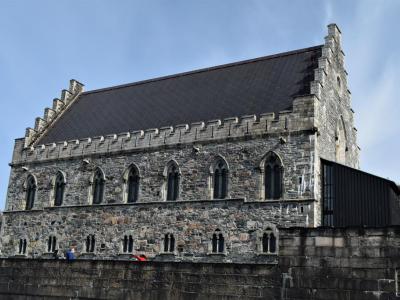
1) Haakon's Hall
Haakon's Hall, located within the Bergenhus Fortress in Bergen, is a medieval stone hall built in the mid-13th century during the reign of King Håkon Håkonsson (1217-1263). As the largest secular medieval building in Norway, it stands as a significant monument of Gothic architecture. Constructed to replace earlier wooden structures, the hall showcases the influence of English design, likely due to the friendly relations between King Håkon and King Henry III of England, and possibly designed by English architects.
The hall, built between 1247 and 1261, served as a royal residence and feasting hall. It played a central role in major national events, such as the marriage of King Håkon's son, Magnus Håkonsson Lagabøte, to the Danish princess Ingeborg in 1261, an event which hosted 2000 guests across three buildings. During medieval times, Bergen was the largest and most important city in Norway, and Haakon's Hall was the venue for significant state affairs, including the proclamation of Norway's first complete set of laws.
Haakon's Hall comprises three floors: a large festive room on the top floor, a middle floor originally used for administration and the King's council, and a cellar likely used for storage. Despite its initial prominence, the hall's role diminished after the royal family left Norway in the late Middle Ages. It then served various utilitarian purposes, including as a storeroom and an ammunition depot, and even lost its roof at one point.
In 1916, Haakon's Hall underwent its first restoration and interior decoration. However, in 1944, it was heavily damaged by an explosion from the Dutch ammunition ship Voorbode in Bergen harbor. The hall was left with only its walls standing and underwent significant restoration in the 1950s to achieve its current form.
Today, Haakon's Hall is a cultural heritage site and museum. It continues to be used for royal dinners, official occasions, and concerts, preserving its historical significance and continuing its legacy as a centerpiece of Norwegian medieval architecture and history.
The hall, built between 1247 and 1261, served as a royal residence and feasting hall. It played a central role in major national events, such as the marriage of King Håkon's son, Magnus Håkonsson Lagabøte, to the Danish princess Ingeborg in 1261, an event which hosted 2000 guests across three buildings. During medieval times, Bergen was the largest and most important city in Norway, and Haakon's Hall was the venue for significant state affairs, including the proclamation of Norway's first complete set of laws.
Haakon's Hall comprises three floors: a large festive room on the top floor, a middle floor originally used for administration and the King's council, and a cellar likely used for storage. Despite its initial prominence, the hall's role diminished after the royal family left Norway in the late Middle Ages. It then served various utilitarian purposes, including as a storeroom and an ammunition depot, and even lost its roof at one point.
In 1916, Haakon's Hall underwent its first restoration and interior decoration. However, in 1944, it was heavily damaged by an explosion from the Dutch ammunition ship Voorbode in Bergen harbor. The hall was left with only its walls standing and underwent significant restoration in the 1950s to achieve its current form.
Today, Haakon's Hall is a cultural heritage site and museum. It continues to be used for royal dinners, official occasions, and concerts, preserving its historical significance and continuing its legacy as a centerpiece of Norwegian medieval architecture and history.
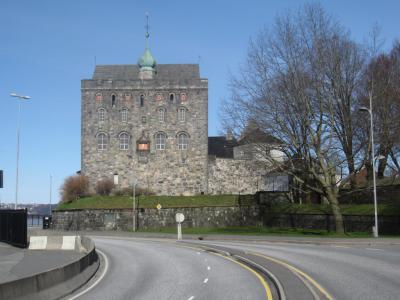
2) Bergenhus Fortress and Rosenkrantz Tower (must see)
The tower and the Fortress must be thought of as one establishment. The Fortress has been a royal seat and residence, episcopal see and a military power base. The grounds within the walls of the island fortress are Holmen, Koengen and Sverresborg. The Fortress was built in the early 1500s. It was considered complete in 1700.
The Fortress was under siege only once during the second Dutch-English War. In August, 1665, a squadron of Dutch vessels took shelter in neutral Bergen Harbor. The neutrality was not respected. The English warships fired on the Dutch ships and the Fortress. Fire was returned. The battle was a short one. It came to be known as The Battle of Vagen.
The English were attacking vessels of the Dutch East India Company. The attack failed. No ships were sunk. In the Second World War Bergenhus was once again in service. This time however it was a German occupying force that used the fort as their western headquarters.
Begenhus has been a military facility without interruption since 1628. Presently 220 military and civilian personnel are stationed at the fort.
The Rosenkrantz Tower is the dominant building of the fort complex. It was named for governor Erik Rosenkrantz. The tower got its present form during Rosenkrantz's reign, 1559-1568. There is a yet older part of the tower. It is a medieval tower called the "keep by the Sea." It was built by King Magnus the Lawmaker in 1270.
Rosenkrantz's building held dungeons on the first floor and cannons on the roof. With residential rooms in between it must have been insufferably loud in a battle. Not a good place for meditation.
The other medieval structure to remain is Haakon's Hall, built about 1270. It was incorporated in Rosenkrantz's Tower. Several Churches, including Bergen's Christ Church were included in the premises. The churches were demolished by 1531 and the isle of Holmen became strictly military.
The Fortress was under siege only once during the second Dutch-English War. In August, 1665, a squadron of Dutch vessels took shelter in neutral Bergen Harbor. The neutrality was not respected. The English warships fired on the Dutch ships and the Fortress. Fire was returned. The battle was a short one. It came to be known as The Battle of Vagen.
The English were attacking vessels of the Dutch East India Company. The attack failed. No ships were sunk. In the Second World War Bergenhus was once again in service. This time however it was a German occupying force that used the fort as their western headquarters.
Begenhus has been a military facility without interruption since 1628. Presently 220 military and civilian personnel are stationed at the fort.
The Rosenkrantz Tower is the dominant building of the fort complex. It was named for governor Erik Rosenkrantz. The tower got its present form during Rosenkrantz's reign, 1559-1568. There is a yet older part of the tower. It is a medieval tower called the "keep by the Sea." It was built by King Magnus the Lawmaker in 1270.
Rosenkrantz's building held dungeons on the first floor and cannons on the roof. With residential rooms in between it must have been insufferably loud in a battle. Not a good place for meditation.
The other medieval structure to remain is Haakon's Hall, built about 1270. It was incorporated in Rosenkrantz's Tower. Several Churches, including Bergen's Christ Church were included in the premises. The churches were demolished by 1531 and the isle of Holmen became strictly military.
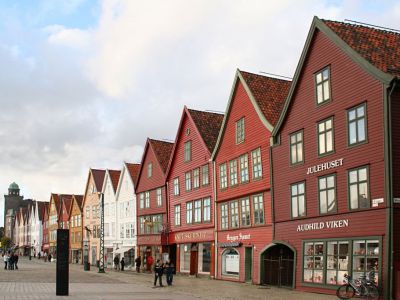
3) Bryggen (The Wharf) (must see)
The Bryggen area originally covered all buildings between the sea and the Ovregaten road. The earliest pier is dated to about 1100 AD. The city of Bergen itself dates from before 1070. The existing buildings of Bryggen date no earlier than 1702. This is not surprising in a city so well acquainted with disastrous fires.
The Hanseatic League established itself in Bergen in 1350. They traded mostly cereal grains for stockfish. The town grew into an important center for international trade, and the buildings of Bryggen near the waterfront were, piece by piece, brought under the control of the Hanseatic merchants. The stockfish and the grains had found a home.
From 1702 until 1754 the Hanseatic league buildings were on fire, rebuilt, on fire, demolished, and on fire again. Finally the Hanseatic businesses in Bergen ended and the property at Bryggen was transferred to Norwegian citizens.
Bryggen suffered a fire again in 1955. In an archeological dig that followed, 670 ancient runic inscriptions were discovered carved mostly on pine chips or sticks. For a long time runes were thought to be used only for grave pronouncements or prayers.
These runes however, were concerned with more mundane day-to-day business. Such as: "Ast min, kyss mik." "My darling, kiss me." It is not known if the wish was granted. The inscriptions are at present held in Bryggens Museum in Bergen.
Hiding behind the classic Bryggen facades is a little world of alleyways, shops, galleries and studios. Local artists and designers have taken over the storage spaces for stockfish and grain. The rooms hold art, designs, jewelry, books and, wait for it, a cafe. Artists and designers are hiding in the narrow passeges among the houses.
The local artists want people to think of Bryggen not as some kind of museum where nothing happens, but a living thriving space for art.
Buildings at Bryggen that should be mentioned are Bellgarden (300 years old), Svensgarden, Ehnjorningsgarden, Bredsgarden, Bugarden, and Engelgarden. The tallest and oldest structure is Saint Mary's Church. Museums are Bryggen's Museum and Hanseatic Museum and Hanseatic Assembly Rooms.
Why You Should Visit:
To get a feeling of the Hanseatic influence on the city.
The Hanseatic League established itself in Bergen in 1350. They traded mostly cereal grains for stockfish. The town grew into an important center for international trade, and the buildings of Bryggen near the waterfront were, piece by piece, brought under the control of the Hanseatic merchants. The stockfish and the grains had found a home.
From 1702 until 1754 the Hanseatic league buildings were on fire, rebuilt, on fire, demolished, and on fire again. Finally the Hanseatic businesses in Bergen ended and the property at Bryggen was transferred to Norwegian citizens.
Bryggen suffered a fire again in 1955. In an archeological dig that followed, 670 ancient runic inscriptions were discovered carved mostly on pine chips or sticks. For a long time runes were thought to be used only for grave pronouncements or prayers.
These runes however, were concerned with more mundane day-to-day business. Such as: "Ast min, kyss mik." "My darling, kiss me." It is not known if the wish was granted. The inscriptions are at present held in Bryggens Museum in Bergen.
Hiding behind the classic Bryggen facades is a little world of alleyways, shops, galleries and studios. Local artists and designers have taken over the storage spaces for stockfish and grain. The rooms hold art, designs, jewelry, books and, wait for it, a cafe. Artists and designers are hiding in the narrow passeges among the houses.
The local artists want people to think of Bryggen not as some kind of museum where nothing happens, but a living thriving space for art.
Buildings at Bryggen that should be mentioned are Bellgarden (300 years old), Svensgarden, Ehnjorningsgarden, Bredsgarden, Bugarden, and Engelgarden. The tallest and oldest structure is Saint Mary's Church. Museums are Bryggen's Museum and Hanseatic Museum and Hanseatic Assembly Rooms.
Why You Should Visit:
To get a feeling of the Hanseatic influence on the city.
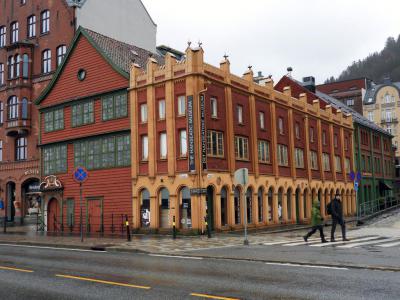
4) Hanseatic Museum (must see)
In the 14th century the Hanseatic League reached Norway, They sailed to Bergen to open up a trade in grain for stockfish. Bergen soon became one of Northern Europe's trading centers. The Hanseatic Museum today belongs on UNESCO's World Heritage List.
The museum gives us a picture of how the Hanseatic merchant lived and influenced life in the Wharf. Walk through Bryggen today in the narrow alleyways and travel through time. See the men speaking Plattdeutsch and pushing barrels of stockfish to the quay. A group of 62 buildings from the Hanseatic era has been preserved.
The Hanseatic Assembly Rooms were originally single houses behind each Building on the wharf. The houses have names. Jakobsfjorden and Bellgaarden cover the period before 1702. Svensgaarden is from 1708. A third room, Bredsgaarden is from 1709 but it was rebuilt in 1761.
Hanseatic Assembly Rooms were part of the tenements. They were assembly rooms for company personnel in the winter. Only the assembly rooms were heated. Fire was forbidden in all other houses. Bergen was Fires-R-Us for centuries. An assembly room was a classroom for apprentices, church services, and funerals. Even punishments were meted out here.
The Hanseatic Assembly Rooms are next to the Hanseatic merchants' church, Saint Mary's Church.
The museum gives us a picture of how the Hanseatic merchant lived and influenced life in the Wharf. Walk through Bryggen today in the narrow alleyways and travel through time. See the men speaking Plattdeutsch and pushing barrels of stockfish to the quay. A group of 62 buildings from the Hanseatic era has been preserved.
The Hanseatic Assembly Rooms were originally single houses behind each Building on the wharf. The houses have names. Jakobsfjorden and Bellgaarden cover the period before 1702. Svensgaarden is from 1708. A third room, Bredsgaarden is from 1709 but it was rebuilt in 1761.
Hanseatic Assembly Rooms were part of the tenements. They were assembly rooms for company personnel in the winter. Only the assembly rooms were heated. Fire was forbidden in all other houses. Bergen was Fires-R-Us for centuries. An assembly room was a classroom for apprentices, church services, and funerals. Even punishments were meted out here.
The Hanseatic Assembly Rooms are next to the Hanseatic merchants' church, Saint Mary's Church.
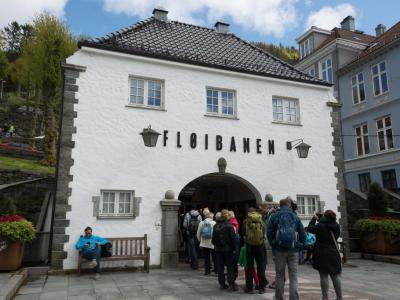
5) Floibanen Funicular (must see)
The 100-year old carriages of the Floibanen funicular will take one from Bergen center to the top of Mount Floyen. It's a six minute ride to a fabulous panoramic view over the city, mountains and fjord.
Norway is a land of hiking and climbing. A ride in the funicular allows a visit to a place of uncountable opportunities for walks and hikes. Arriving visitors on Mount Floyen discover miles of gravel roads and paths. The paths lead to stunning overlooks of the fjord, the mountains and the city spread out below.
A trail called Vidden will take a hiker from Mount Floyen to Mount Ulriken. This popular hike takes about five hours. Most people prefer to hike from Ulriken to Mount Floyen. This is a path for more serious hikers. Mount Floyen has both short and long hikes. The trails are accessible to wheelchairs, strollers, young, and old.
Hungry pioneers need not suffer on the trail. On arriving at Floyen a visitor finds the Floisten shop offering pastry, ice cream and hot and cold drinks to the fasting voyageur. A short walk to Floien Folkerestaurant can get one a fuller meal and a spectacular view of things below.
A ten minute walk from the station find Lake Skomakerdiket and the cafe Skomakerstuen. Sit by the water and have a drink with your Norwegian "Svele", a griddle cake with sour cream.
There is an obstacle course and a large playground for children. For the adventurous, take a stroll though the Mysterious Troll Forest. Rent a motorbike or a canoe, not everything must involve hiking.
Why You Should Visit:
For the excitement. And yes, the views.
Tips:
With the Bergen Card round trips are free. Ask about discounts.
Norway is a land of hiking and climbing. A ride in the funicular allows a visit to a place of uncountable opportunities for walks and hikes. Arriving visitors on Mount Floyen discover miles of gravel roads and paths. The paths lead to stunning overlooks of the fjord, the mountains and the city spread out below.
A trail called Vidden will take a hiker from Mount Floyen to Mount Ulriken. This popular hike takes about five hours. Most people prefer to hike from Ulriken to Mount Floyen. This is a path for more serious hikers. Mount Floyen has both short and long hikes. The trails are accessible to wheelchairs, strollers, young, and old.
Hungry pioneers need not suffer on the trail. On arriving at Floyen a visitor finds the Floisten shop offering pastry, ice cream and hot and cold drinks to the fasting voyageur. A short walk to Floien Folkerestaurant can get one a fuller meal and a spectacular view of things below.
A ten minute walk from the station find Lake Skomakerdiket and the cafe Skomakerstuen. Sit by the water and have a drink with your Norwegian "Svele", a griddle cake with sour cream.
There is an obstacle course and a large playground for children. For the adventurous, take a stroll though the Mysterious Troll Forest. Rent a motorbike or a canoe, not everything must involve hiking.
Why You Should Visit:
For the excitement. And yes, the views.
Tips:
With the Bergen Card round trips are free. Ask about discounts.
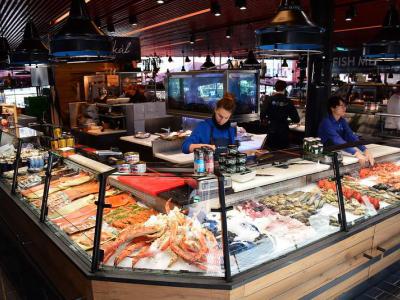
6) Fish Market (must see)
Nestling between the fjords and the seven mountains of Bergen, is the city's Fish Market. Besides fish and seafood, the market offers local farm products and fruit and vegetables. The restaurants, no surprise, sell a plentiful amount of seafood. The indoor market is open all year. The outdoor market opens in May for the summer.
The Fish Market has been in operation since 1200. It has always been a vital meeting place for fishermen, farmers, merchants and citizens. Fish are sold not only from shops in the Market, but also directly from boats at the quay.
The Fish Market was not always at the same location. The original market was next to Bryggen in the Nikolaikirkeallmanning. With the arrival of the Hanseatic League in the 14th century, the city became distinctly Germanic. In 1541 it was proposed strongly to move the market to keep the market free of Hanseatic influence.
Finally, in 1556 the Market was successfully moved to Vagen. The Market was then the central trading area of Bergen. In 2012 the indoor Fish Market was opened. The shops inside became permanent and business proceeded all year. The Market is now located at the inner harbor of Bergen, in the center of the city, easy to find.
Norway has a long convoluted coastline, stretching all the way to the Arctic. The fishing industry is extremely important to the local economy. Bergen is the the most active harbor in Norway with a busy and colorful fish market. It should not be missed.
Why You Should Visit:
"Why the fish alone are with the trip!"
The Fish Market has been in operation since 1200. It has always been a vital meeting place for fishermen, farmers, merchants and citizens. Fish are sold not only from shops in the Market, but also directly from boats at the quay.
The Fish Market was not always at the same location. The original market was next to Bryggen in the Nikolaikirkeallmanning. With the arrival of the Hanseatic League in the 14th century, the city became distinctly Germanic. In 1541 it was proposed strongly to move the market to keep the market free of Hanseatic influence.
Finally, in 1556 the Market was successfully moved to Vagen. The Market was then the central trading area of Bergen. In 2012 the indoor Fish Market was opened. The shops inside became permanent and business proceeded all year. The Market is now located at the inner harbor of Bergen, in the center of the city, easy to find.
Norway has a long convoluted coastline, stretching all the way to the Arctic. The fishing industry is extremely important to the local economy. Bergen is the the most active harbor in Norway with a busy and colorful fish market. It should not be missed.
Why You Should Visit:
"Why the fish alone are with the trip!"
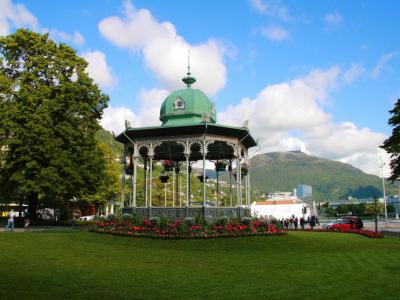
7) Byparken (City Park) (must see)
Byparken ("The City Park"), located in the very center of Bergen, is the city's first park. New municipal anti-fire regulations were put into effect in 1855. Following one more devastating fire, the city could not simply rebuild. A wide open space was needed to be a vast "fire break" in the middle of the city. Byparken was the answer.
The park is split in two. One side of the park has a light rail stop and the Music Pavilion, donated to the city. On the other side is the ever popular Festplassen ("party place"), an open-air venue for celebrations and events. Norwegian Constitution Day, on May 17, is observed here and The Festival of Light at Christmas.
Two large ponds are maintained in the park. They were once one pond but the middle part was filled in. The ponds remain connected however by an underground tunnel. Lungegardsvannet "Large lung" is the name for the larger pond. The smaller pond is Smalungeren "Small Lung." No surprise there.
The park is split in two. One side of the park has a light rail stop and the Music Pavilion, donated to the city. On the other side is the ever popular Festplassen ("party place"), an open-air venue for celebrations and events. Norwegian Constitution Day, on May 17, is observed here and The Festival of Light at Christmas.
Two large ponds are maintained in the park. They were once one pond but the middle part was filled in. The ponds remain connected however by an underground tunnel. Lungegardsvannet "Large lung" is the name for the larger pond. The smaller pond is Smalungeren "Small Lung." No surprise there.
