Custom Walk in Seoul, South Korea by sruzol_6f439 created on 2025-04-07
Guide Location: South Korea » Seoul
Guide Type: Custom Walk
# of Sights: 14
Tour Duration: 23 Hour(s)
Travel Distance: 64.7 Km or 40.2 Miles
Share Key: LJJVK
Guide Type: Custom Walk
# of Sights: 14
Tour Duration: 23 Hour(s)
Travel Distance: 64.7 Km or 40.2 Miles
Share Key: LJJVK
How It Works
Please retrieve this walk in the GPSmyCity app. Once done, the app will guide you from one tour stop to the next as if you had a personal tour guide. If you created the walk on this website or come to the page via a link, please follow the instructions below to retrieve the walk in the app.
Retrieve This Walk in App
Step 1. Download the app "GPSmyCity: Walks in 1K+ Cities" on Apple App Store or Google Play Store.



Step 2. In the GPSmyCity app, download(or launch) the guide "Seoul Map and Walking Tours".
Step 3. Tap the menu button located at upper right corner of the "Walks" screen and select "Retrieve custom walk". Enter the share key: LJJVK
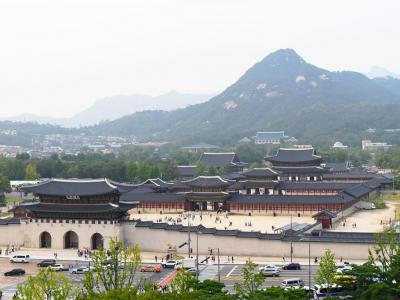
1) Gyeongbokgung Palace (must see)
Gyeongbokgung Palace was built in 1395 by the Joseon Dynasty. This impressive complex served as the Joseon Dynasty's main palace and is the largest of the Five Grand Palaces.
It was destroyed by fire during the Imjin War in 1592 and sat abandoned for over two centuries. In 1867, the palace was reconstructed with 330 buildings and 5,792 rooms. In 1895, Japanese agents assassinated Empress Myeongseong. Emperor Gojong, her husband, left the palace and never returned.
In the early 20th century, Japan's colonial government destroyed palace buildings and constructed the enormous Japanese General Government Building outside the throne hall.
Only a few 19th-century buildings survived the Japanese government and the Korean War. These buildings include Geunjeongjeon (the Imperial Throne Hall), Hyangwonjeong Pavilion, Gyeonghoeru Pavilion, Sujeongjeon Hall, Jagyeongjeon Hall, Sajeongjeon Hall, and Jibokjae Hall.
In 1989, reconstruction began to restore the palace to its former glory. About 40 percent of the building have since been reconstructed or restored.
Geunjeongjeon, the Imperial Throne Hall, is truly impressive. Its constructed mainly of wood and sits in a courtyard lined with stones. Known as rank stones, they indicated where officials of different ranks could stand during ceremonies. The entire courtyard is cloistered.
Gyeongbokgung Palace features dozens of architecturally interesting buildings. Hyangwonjeong, a beautiful hexagonal pavilion, sits attractively on an island.
Why You Should Visit:
Gyeongbokgung Palace is the largest and grandest of the Five Grand Palaces. Visit the National Folk Museum of Korea on the palace grounds to learn about the history of the Korean people. The National Palace Museum of Korea is also located on the palace grounds and houses priceless 14th century Joseon dynasty treasures.
Tips:
You can rent traditional costumes to immerse yourself in 14th-century royal Korea.
For a memorable experience, sign up for a night tour and see the palace lit up. Gyeonghoeru looks spectacular as its warm lights are reflected in the pond.
For a once in a lifetime experience, take part in a Gyeongbokgung Royal Dining event. Sample royal food and watch a traditional performance.
It was destroyed by fire during the Imjin War in 1592 and sat abandoned for over two centuries. In 1867, the palace was reconstructed with 330 buildings and 5,792 rooms. In 1895, Japanese agents assassinated Empress Myeongseong. Emperor Gojong, her husband, left the palace and never returned.
In the early 20th century, Japan's colonial government destroyed palace buildings and constructed the enormous Japanese General Government Building outside the throne hall.
Only a few 19th-century buildings survived the Japanese government and the Korean War. These buildings include Geunjeongjeon (the Imperial Throne Hall), Hyangwonjeong Pavilion, Gyeonghoeru Pavilion, Sujeongjeon Hall, Jagyeongjeon Hall, Sajeongjeon Hall, and Jibokjae Hall.
In 1989, reconstruction began to restore the palace to its former glory. About 40 percent of the building have since been reconstructed or restored.
Geunjeongjeon, the Imperial Throne Hall, is truly impressive. Its constructed mainly of wood and sits in a courtyard lined with stones. Known as rank stones, they indicated where officials of different ranks could stand during ceremonies. The entire courtyard is cloistered.
Gyeongbokgung Palace features dozens of architecturally interesting buildings. Hyangwonjeong, a beautiful hexagonal pavilion, sits attractively on an island.
Why You Should Visit:
Gyeongbokgung Palace is the largest and grandest of the Five Grand Palaces. Visit the National Folk Museum of Korea on the palace grounds to learn about the history of the Korean people. The National Palace Museum of Korea is also located on the palace grounds and houses priceless 14th century Joseon dynasty treasures.
Tips:
You can rent traditional costumes to immerse yourself in 14th-century royal Korea.
For a memorable experience, sign up for a night tour and see the palace lit up. Gyeonghoeru looks spectacular as its warm lights are reflected in the pond.
For a once in a lifetime experience, take part in a Gyeongbokgung Royal Dining event. Sample royal food and watch a traditional performance.
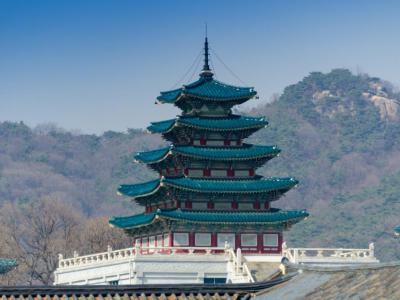
2) National Folk Museum of Korea
Within the grounds of Gyeongbokgung Palace, the National Folk Museum of Korea offers an immersive journey through Korean daily life-from prehistoric times up to the Joseon Dynasty. Established initially in 1924, it evolved through various relocations before opening at its current location in 1993. The building itself is a modern construction, designed in a traditional style and crowned with a multi-tiered pagoda.
Inside you’ll find three permanent exhibitions and two special rotating displays-plus an outdoor folk village and a dedicated Children’s Museum. Exhibition Hall I, "History of Korean People", presents artifacts and dioramas tracing Korea’s evolution from ancient to imperial times. Exhibition Hall II, "Korean Way of Life", explores agricultural practices, tools, and rural community rhythms, while Hall III, "Life Cycle of Koreans", follows milestones like births, education, marriage, and funerals rooted in Confucian tradition.
This hosts traditional folk performances, seminars, and interactive learning sessions. Guided tours are available free of charge-including in English, Japanese, and Chinese-at scheduled times throughout the day.
Inside you’ll find three permanent exhibitions and two special rotating displays-plus an outdoor folk village and a dedicated Children’s Museum. Exhibition Hall I, "History of Korean People", presents artifacts and dioramas tracing Korea’s evolution from ancient to imperial times. Exhibition Hall II, "Korean Way of Life", explores agricultural practices, tools, and rural community rhythms, while Hall III, "Life Cycle of Koreans", follows milestones like births, education, marriage, and funerals rooted in Confucian tradition.
This hosts traditional folk performances, seminars, and interactive learning sessions. Guided tours are available free of charge-including in English, Japanese, and Chinese-at scheduled times throughout the day.
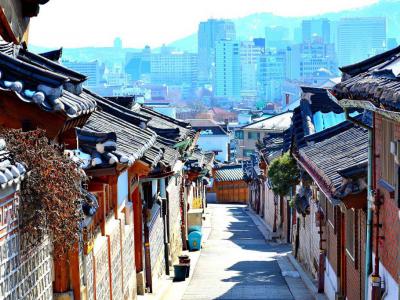
3) Bukchon Hanok Village (must see)
The Bukchon Hanbok Village represents construction methods over 600 years old. The location is on a hilltop, with Changdeok Palace Gyeongbok Palace, and the Jongmyo Royal Shrine surrounding the site. In addition to the hanok-style houses, the village also boasts a network of alleys.
One of the attractions in the village is the Baek In-je's House Museum. This house museum allows you to easily see how these hanok houses are designed and appreciate the traditional features. The museum is easy to tour in 15 to 20 minutes, leaving you with plenty of time to enjoy the rest of the village, filled with exciting photo opportunities.
These houses feature an architectural style not seen in modern homes. Many of these buildings house businesses that are important to the cultural life of the village. Some of these buildings serve as restaurants where you can sample traditional foods, including dishes with ingredients fresh from nearby farms.
Tea houses are also an essential part of local life that you will not want to miss. When you visit a tea house, you can witness tea served in a traditional style. These locations are an essential part of local social life and provide another exciting glimpse into local culture.
Why You Should Visit:
See the centuries-old, unique architecture and take part in unique cultural experiences, a definition of a living history exhibit.
Tips:
Remember that Bukchon Hanok Village is an inhabited residential area today and that not all of the buildings are open to the public. But since many hanoks have been converted to restaurants and tea houses, you can pop-in to order a tea or a meal while enjoy the traditional architecture.
One of the attractions in the village is the Baek In-je's House Museum. This house museum allows you to easily see how these hanok houses are designed and appreciate the traditional features. The museum is easy to tour in 15 to 20 minutes, leaving you with plenty of time to enjoy the rest of the village, filled with exciting photo opportunities.
These houses feature an architectural style not seen in modern homes. Many of these buildings house businesses that are important to the cultural life of the village. Some of these buildings serve as restaurants where you can sample traditional foods, including dishes with ingredients fresh from nearby farms.
Tea houses are also an essential part of local life that you will not want to miss. When you visit a tea house, you can witness tea served in a traditional style. These locations are an essential part of local social life and provide another exciting glimpse into local culture.
Why You Should Visit:
See the centuries-old, unique architecture and take part in unique cultural experiences, a definition of a living history exhibit.
Tips:
Remember that Bukchon Hanok Village is an inhabited residential area today and that not all of the buildings are open to the public. But since many hanoks have been converted to restaurants and tea houses, you can pop-in to order a tea or a meal while enjoy the traditional architecture.
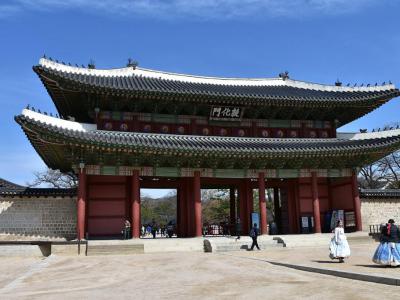
4) Changdeokgung Palace (must see)
Changdeokgung Palace, also known as Prospering Virtue Palace, has a beautiful setting in one of Seoul's parks. The palace enjoys status as one of the Joseon Dynasty's Five Grand Palaces. One of the noteworthy things about this 15th-century palace is that it blends into the natural topography in a way not commonly seen in other buildings.
The Donhwamun Gate and Geumcheongyo Bridge are two of the oldest structures on the property built in the 15th century. Injeongjeon Hall served as an area for coronations, as well as the reception of envoys. Seonjeongjeon Hall was the location for daily meetings with the king and government ministers, while Juhamnu Pavilion was once the royal library.
Huijeongdang Hall, a residence for the king, and Daejojeon Hall, the queen's residence, are also noteworthy. Yeon-gyeongdang Residence is an 1827 audience hall. Huwon is a garden consisting of 78 acres in the back of the palace.
Changdeokgung Palace is a UNESCO World Heritage Site.
Why You Should Visit:
Although sometimes referred as a 'backup' palace to Gyeongbokgung, the interior is actually more complete. As such, you will be able to have a better understanding of how life in a palace is like. The "Secret Garden" is a must-see.
Tip:
Those wearing 'hanbok' can enter the palace free. You can also buy the Royal Palace Pass that gives you free entrance to 5 palaces (including the 'Secret Garden', which is a highlight of this palace visit).
The Donhwamun Gate and Geumcheongyo Bridge are two of the oldest structures on the property built in the 15th century. Injeongjeon Hall served as an area for coronations, as well as the reception of envoys. Seonjeongjeon Hall was the location for daily meetings with the king and government ministers, while Juhamnu Pavilion was once the royal library.
Huijeongdang Hall, a residence for the king, and Daejojeon Hall, the queen's residence, are also noteworthy. Yeon-gyeongdang Residence is an 1827 audience hall. Huwon is a garden consisting of 78 acres in the back of the palace.
Changdeokgung Palace is a UNESCO World Heritage Site.
Why You Should Visit:
Although sometimes referred as a 'backup' palace to Gyeongbokgung, the interior is actually more complete. As such, you will be able to have a better understanding of how life in a palace is like. The "Secret Garden" is a must-see.
Tip:
Those wearing 'hanbok' can enter the palace free. You can also buy the Royal Palace Pass that gives you free entrance to 5 palaces (including the 'Secret Garden', which is a highlight of this palace visit).
5) Bosingak Pavilion
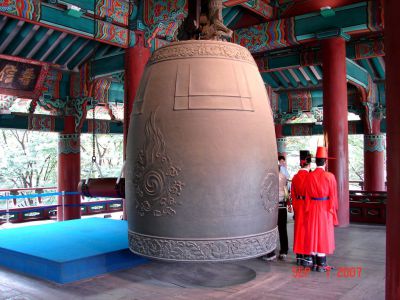
Bosingak Pavilion is a historic bell pavilion that gave its name to the surrounding district of Jongno, which translates to “Bell Street” in reference to the pavilion’s original function. Originally constructed in 1396 during the Joseon Dynasty, Bosingak has been rebuilt multiple times across centuries, most recently in 1979. The original 1468 bronze bell is now housed at the National Museum of Korea, while a faithful modern replica takes its place today.
This pavilion once served as Seoul’s public clock: during the Joseon era, the bell was struck to signal the opening of the city gates at 4 am and closing at 10 pm, with 33 tolls marking each event. It also functioned as a fire and danger alarm for residents. Today, the bell is rung only on special occasions, most notably at midnight on New Year’s Eve, when crowds gather to hear its powerful 33 strikes ushering in the next year in a cherished city-wide tradition.
Beyond New Year’s Eve, visitors can occasionally experience a bell ringing at noon-an echo of its former role in keeping time for the entire city. While entry into the pavilion interior is generally restricted, the ornate two-tiered wooden structure-with elegant dancheong painted patterns and a raised platform-offers a contrast set against modern high-rises.
This pavilion once served as Seoul’s public clock: during the Joseon era, the bell was struck to signal the opening of the city gates at 4 am and closing at 10 pm, with 33 tolls marking each event. It also functioned as a fire and danger alarm for residents. Today, the bell is rung only on special occasions, most notably at midnight on New Year’s Eve, when crowds gather to hear its powerful 33 strikes ushering in the next year in a cherished city-wide tradition.
Beyond New Year’s Eve, visitors can occasionally experience a bell ringing at noon-an echo of its former role in keeping time for the entire city. While entry into the pavilion interior is generally restricted, the ornate two-tiered wooden structure-with elegant dancheong painted patterns and a raised platform-offers a contrast set against modern high-rises.
6) Gyeonghuigung Palace
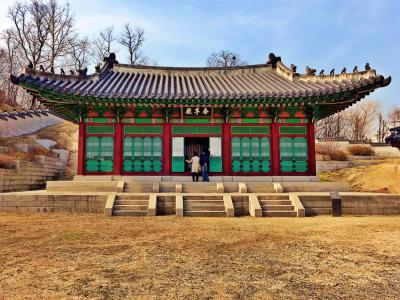
Gyeonghuigung Palace-whose name translates as the “Palace of Serene Harmony”-is one of Seoul’s five grand Joseon Dynasty palaces, but it often stands apart for its peaceful atmosphere and compact size. Built between 1617 and 1623 by order of King Gwanghaegun, it served as a secondary royal residence and occasional shelter during times of political unrest. Over its long history, around ten Joseon kings utilized it, making it a notable location in Korea’s royal narrative.
Today, the palace retains a calm charm that contrasts with more crowded palaces. Located on the western edge of downtown Seoul-hence its alternate name “Seogwol” or “West Palace”-it features a carefully restored Heunghwamun Gate and the stately Sungjeongjeon Hall in traditional architectural style.
Visitors can enjoy easily accessible walking courses through the palace grounds, offering quiet contemplation and opportunities for photography without the usual crowds. Some original halls-including royal audience hall and administrative office-have been reconstructed following archaeological surveys, inviting exploration of Joseon-era design.
Today, the palace retains a calm charm that contrasts with more crowded palaces. Located on the western edge of downtown Seoul-hence its alternate name “Seogwol” or “West Palace”-it features a carefully restored Heunghwamun Gate and the stately Sungjeongjeon Hall in traditional architectural style.
Visitors can enjoy easily accessible walking courses through the palace grounds, offering quiet contemplation and opportunities for photography without the usual crowds. Some original halls-including royal audience hall and administrative office-have been reconstructed following archaeological surveys, inviting exploration of Joseon-era design.
7) Myong-dong Shopping Street (must see)
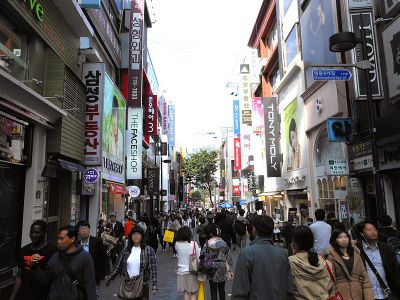
Myeongdong is Korea's best-known shopping district. You will find mid-priced malls, high-end flagship stores, Korean brands, and international designer brands. Add in a smorgasbord of street food, cafes, restaurants, and night-life, and you have an exciting destination that will leave you dazzled.
During the Joseon Dynasty, this was a residential area. It became more commercial during the Japanese era. As the economy boomed after the Korean War, this area became the extensive shopping center that it is today. It's consistently named as one of the most expensive shopping districts in the world.
Myeongdong Shopping Street has every brand and item you could want. Shop international brands such as Polo Ralph Lauren and Louis Vuitton. Popular Korean cosmetic brands include Missha and The Face Shop. There are hotels, restaurants, cinemas, and theaters to keep you entertained.
Lotte Department Store, a Korean brand, is an impressive 14 stories tall. It features western styles as well as traditional Korean goods and has a food court.
If the weather is getting you down, keep going down to the Myeongdong Underground Shopping Center. The prices go down too--you'll find discount brands, cosmetics, and salons.
The Myeongdong Festival is held twice a year, in spring and autumn. Parades, live music, dance performances, and fashion shows are sure to impress.
Myeongdong Cathedral is a Catholic church that was dedicated in 1898. This beautiful church features a 45-meter steeple and ornate stained-glass windows.
Why You Should Visit:
Myeongdong is the shopping mecca of Seoul. Come during the day for retail therapy. At night, enjoy the city night-life and street food.
Tips:
Visit in the evening and try as much street food as you can devour. You'll find savory chicken, spicy options, and an array of desserts.
During the Joseon Dynasty, this was a residential area. It became more commercial during the Japanese era. As the economy boomed after the Korean War, this area became the extensive shopping center that it is today. It's consistently named as one of the most expensive shopping districts in the world.
Myeongdong Shopping Street has every brand and item you could want. Shop international brands such as Polo Ralph Lauren and Louis Vuitton. Popular Korean cosmetic brands include Missha and The Face Shop. There are hotels, restaurants, cinemas, and theaters to keep you entertained.
Lotte Department Store, a Korean brand, is an impressive 14 stories tall. It features western styles as well as traditional Korean goods and has a food court.
If the weather is getting you down, keep going down to the Myeongdong Underground Shopping Center. The prices go down too--you'll find discount brands, cosmetics, and salons.
The Myeongdong Festival is held twice a year, in spring and autumn. Parades, live music, dance performances, and fashion shows are sure to impress.
Myeongdong Cathedral is a Catholic church that was dedicated in 1898. This beautiful church features a 45-meter steeple and ornate stained-glass windows.
Why You Should Visit:
Myeongdong is the shopping mecca of Seoul. Come during the day for retail therapy. At night, enjoy the city night-life and street food.
Tips:
Visit in the evening and try as much street food as you can devour. You'll find savory chicken, spicy options, and an array of desserts.
8) Myeongdong Cathedral
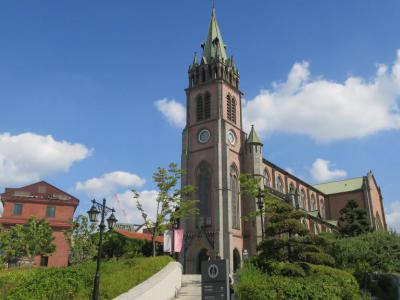
Myeongdong Cathedral was established on a site where Korean Catholics first gathered in 1784. The present Gothic brick structure began construction in 1892, with King Gojong laying the cornerstone. Built under the guidance of French missionaries, the cathedral was completed in 1898, making it the first brick Gothic-style church in Korea and the official seat of the Archbishop of Seoul.
The cathedral’s architecture features stained-glass windows, ribbed vault ceilings, and a 45-meter‑tall bell tower, contrasting beautifully with the red and grey brick facade. Its Latin cross‑plan design reflects Western ecclesiastical influence while blending seamlessly into the modern urban fabric of Myeongdong. Inside, the crypte houses relics and the remains of early Korean Catholic martyrs-a moving tribute to those persecuted during the Joseon era religious suppressions.
Beyond its religious function, Myeongdong Cathedral has played a potent role in Korea’s modern social history. During the 1970s and 1980s, it served as a sanctuary for pro-democracy activists and a stage for human rights protests against authoritarian rule-earning it the nickname "Mecca of democracy" in Seoul. In recent years, it also attracted attention as the site of the landmark 1995 migrant labor protest, which helped spark Korea’s labor rights movement.
The cathedral’s architecture features stained-glass windows, ribbed vault ceilings, and a 45-meter‑tall bell tower, contrasting beautifully with the red and grey brick facade. Its Latin cross‑plan design reflects Western ecclesiastical influence while blending seamlessly into the modern urban fabric of Myeongdong. Inside, the crypte houses relics and the remains of early Korean Catholic martyrs-a moving tribute to those persecuted during the Joseon era religious suppressions.
Beyond its religious function, Myeongdong Cathedral has played a potent role in Korea’s modern social history. During the 1970s and 1980s, it served as a sanctuary for pro-democracy activists and a stage for human rights protests against authoritarian rule-earning it the nickname "Mecca of democracy" in Seoul. In recent years, it also attracted attention as the site of the landmark 1995 migrant labor protest, which helped spark Korea’s labor rights movement.
9) Namsan Tower (N Seoul Tower) (must see)
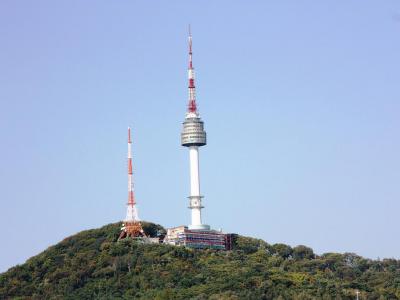
Namsan Tower, officially known as N Seoul Tower, was completed in 1971 as South Korea’s first general broadcast tower. It initially served to transmit television and radio across the capital. Since opening to the public in 1980, it has transformed into a cherished landmark symbolizing Seoul’s blend of history, romance, and modernity.
At 236.7 m tall, and with the summit of Namsan Mountain itself at approximately 243 m above sea level, the tower offers sweeping views rising to nearly 480 m above sea level. Multiple observation decks provide 360° vistas of the skyline-from historic palaces and ancient city walls to modern skyscrapers and the Han River. The upper floors even feature distance markers pointing out cities and landmarks across the world.
Beyond the views, N Seoul Tower is known for its cultural touches and romantic atmosphere. Visitors can walk past the famous Locks of Love, where couples leave padlocks on the fences as a symbol of everlasting affection-though these locks are sometimes cleared to maintain the tower’s function. Inside, the building comprises multiple levels: the N Lobby hosts a museum, café, and theatre for children; N Plaza includes souvenir shops, media art experiences, and the love‑lock terrace; while N Tower encompasses observation decks, restaurants like Hancook, and a revolving French restaurant, N Grill, offering gourmet meals and panoramic views as it completes a full turn every ~48 minutes.
At night, the tower is illuminated in changing LED colors that reflect air quality-shifting from serene blue to green, yellow, and red-adding a modern eco‑awareness twist to its aesthetic appeal. With around 8 to 12 million annual visitors, it remains one of South Korea’s most beloved and enduring tourist attractions.
At 236.7 m tall, and with the summit of Namsan Mountain itself at approximately 243 m above sea level, the tower offers sweeping views rising to nearly 480 m above sea level. Multiple observation decks provide 360° vistas of the skyline-from historic palaces and ancient city walls to modern skyscrapers and the Han River. The upper floors even feature distance markers pointing out cities and landmarks across the world.
Beyond the views, N Seoul Tower is known for its cultural touches and romantic atmosphere. Visitors can walk past the famous Locks of Love, where couples leave padlocks on the fences as a symbol of everlasting affection-though these locks are sometimes cleared to maintain the tower’s function. Inside, the building comprises multiple levels: the N Lobby hosts a museum, café, and theatre for children; N Plaza includes souvenir shops, media art experiences, and the love‑lock terrace; while N Tower encompasses observation decks, restaurants like Hancook, and a revolving French restaurant, N Grill, offering gourmet meals and panoramic views as it completes a full turn every ~48 minutes.
At night, the tower is illuminated in changing LED colors that reflect air quality-shifting from serene blue to green, yellow, and red-adding a modern eco‑awareness twist to its aesthetic appeal. With around 8 to 12 million annual visitors, it remains one of South Korea’s most beloved and enduring tourist attractions.
10) War Memorial of Korea (must see)
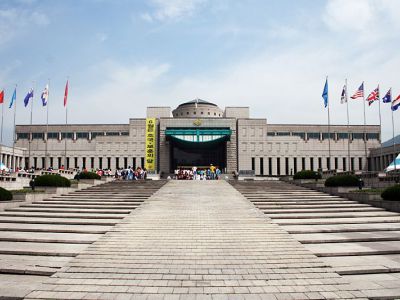
The War Memorial of Korea is a profound museum and memorial dedicated to the nation’s military history, particularly the Korean War. Officially opened on June 10, 1994, it stands on the grounds that once served as the South Korean Army headquarters. The memorial was built as both a site of remembrance and education, aiming to use the lessons of warfare to foster peace and the hope for reunification.
Within the expansive museum, visitors will find six major indoor exhibition halls, including themed areas such as the Korean War Room, Expeditionary Forces Room, Memorial Hall, War History Room, and a Large Equipment display area. Collectively, the museum houses tens of thousands of artifacts-ranging from personal medals and historic documents to an impressive array of over 100 military vehicles, aircraft, and weaponry featured in the open-air exhibition zone. Outdoor displays include tanks, aircraft, artillery, memorial statues, and even a replica turtle ship.
One of the museum’s most poignant features is the “Statue of Brothers,” prominently located in the southwest outdoor section. This bronze sculpture portrays an elder South Korean officer embracing his younger brother-a North Korean soldier-symbolizing reconciliation, forgiveness, and the enduring desire for national unity. The plaza itself is peaceful and thoughtfully designed, complete with an artificial waterfall, landscaped gardens, and shaded rest areas.
Within the expansive museum, visitors will find six major indoor exhibition halls, including themed areas such as the Korean War Room, Expeditionary Forces Room, Memorial Hall, War History Room, and a Large Equipment display area. Collectively, the museum houses tens of thousands of artifacts-ranging from personal medals and historic documents to an impressive array of over 100 military vehicles, aircraft, and weaponry featured in the open-air exhibition zone. Outdoor displays include tanks, aircraft, artillery, memorial statues, and even a replica turtle ship.
One of the museum’s most poignant features is the “Statue of Brothers,” prominently located in the southwest outdoor section. This bronze sculpture portrays an elder South Korean officer embracing his younger brother-a North Korean soldier-symbolizing reconciliation, forgiveness, and the enduring desire for national unity. The plaza itself is peaceful and thoughtfully designed, complete with an artificial waterfall, landscaped gardens, and shaded rest areas.
11) National Museum of Korea (must see)
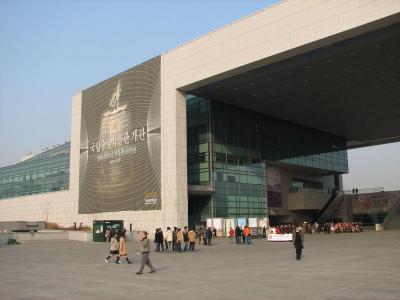
The National Museum of Korea is Korea’s flagship institution showcasing over 5,000 years of history, art, and culture-from prehistoric times to the modern era. Opened in its current state in 2005, the museum spans an impressive footprint of over 300,000 m², making it one of the largest museums in the world and the centerpiece of Korea’s cultural preservation efforts. Serving as both a research hub and a public space, the Museum welcomes nearly 3.5 million visitors annually.
Inside, visitors will find six major permanent galleries: Prehistoric & Ancient History, Medieval & Early Modern History, Donated Works, Calligraphy & Painting, Sculpture & Crafts, and World Art. These galleries feature national treasures such as the magnificent Ten‑Story Pagoda from Gyeongcheonsa Temple, a 7th‑century Pensive Bodhisattva, Goryeo celadon works, and an ornate Silla gold crown.
Beyond viewing priceless relics, the museum offers enriching cultural activities. The Children’s Museum is ideal for families, providing hands‑on programs and interactive exhibits, while its Immersive Digital Gallery offers VR and multimedia experiences. In addition, the Museum hosts walking‑tour commentary in multiple languages and offers garden paths, scenic ponds, and photo spots with views of Namsan and N Seoul Tower.
Inside, visitors will find six major permanent galleries: Prehistoric & Ancient History, Medieval & Early Modern History, Donated Works, Calligraphy & Painting, Sculpture & Crafts, and World Art. These galleries feature national treasures such as the magnificent Ten‑Story Pagoda from Gyeongcheonsa Temple, a 7th‑century Pensive Bodhisattva, Goryeo celadon works, and an ornate Silla gold crown.
Beyond viewing priceless relics, the museum offers enriching cultural activities. The Children’s Museum is ideal for families, providing hands‑on programs and interactive exhibits, while its Immersive Digital Gallery offers VR and multimedia experiences. In addition, the Museum hosts walking‑tour commentary in multiple languages and offers garden paths, scenic ponds, and photo spots with views of Namsan and N Seoul Tower.
12) Hangang Park (must see)
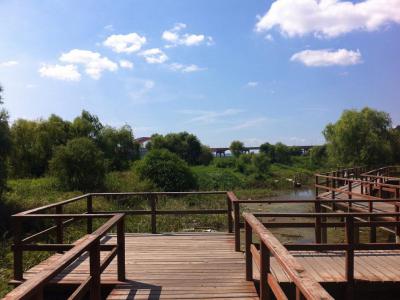
Hangang Park, a ribbon of greenery stretching along the banks of the Han River, consists of twelve distinct sections dotted throughout Seoul-from Yeouido to Ttukseom and Banpo-each offering its own character and recreational focus. Originally developed in the 1980s as part of the Han River Development Project and later enhanced by the Hangang Renaissance initiative, the park system transformed over 39 km² of riverside into environmentally-friendly public space.
Visitors can enjoy a wide variety of outdoor activities across its different sections. Well-maintained cycling and walking trails span the shoreline, with easy bicycle rental options in areas like Yeouido and Ttukseom. Water sports such as kayaking, paddleboarding, motorboat riding, and even water-skiing are supported in many parks, while select areas offer seasonal swimming pools and family-friendly amenities including rock-climbing zones, sports courts, and inline skating parks.
Several Hangang Park sites host lively events throughout the year. Yeouido Park, becomes a highlight each spring with the Yeouido Cherry Blossom Festival and bursts into color again in autumn during the International Fireworks Festival, drawing large crowds for spectacular displays. Meanwhile, Banpo Park is well-known for the Moonlight Rainbow Fountain show beneath Banpo Bridge-an illuminated water spectacle running multiple times nightly from spring through early fall.
Visitors can enjoy a wide variety of outdoor activities across its different sections. Well-maintained cycling and walking trails span the shoreline, with easy bicycle rental options in areas like Yeouido and Ttukseom. Water sports such as kayaking, paddleboarding, motorboat riding, and even water-skiing are supported in many parks, while select areas offer seasonal swimming pools and family-friendly amenities including rock-climbing zones, sports courts, and inline skating parks.
Several Hangang Park sites host lively events throughout the year. Yeouido Park, becomes a highlight each spring with the Yeouido Cherry Blossom Festival and bursts into color again in autumn during the International Fireworks Festival, drawing large crowds for spectacular displays. Meanwhile, Banpo Park is well-known for the Moonlight Rainbow Fountain show beneath Banpo Bridge-an illuminated water spectacle running multiple times nightly from spring through early fall.
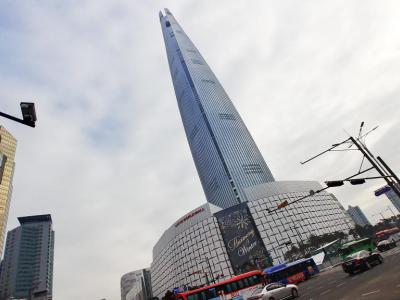
13) Lotte World Tower and Mall
Soaring beside Seokchon Lake in Jamsil, Lotte World Tower & Mall is an awe-inspiring destination for visitors to Seoul. At a staggering 555 m tall with 123 stories, it's the tallest building in South Korea and currently ranks as the sixth‑tallest in the world. Completed in 2017, this sleek, tapered tower designed by Kohn Pedersen Fox draws design inspiration from Korean pottery and traditional brush strokes, blending high-tech engineering with cultural aesthetics.
The crown jewel of the tower is the Seoul Sky Observatory, located on floors 117–123. It features a 360° deck, thrill-inducing glass floor sections, and even an open-air Sky Terrace-offering panoramic views of Seoul and the Han River 500 m above the city. Visitors can also experience the Sky Shuttle, one of the world’s fastest double-deck high-speed elevators, whisking guests skyward in under a minute.
Connected seamlessly to the tower is the expansive Lotte World Mall, which opened in 2014. It offers a mix of international and Korean brands across multiple shopping zones, including Avenuel, Duty-Free, and Lotte Mart. Entertainment options are abundant: the Lotte World Aquarium, the Lotte Cinema, largest multiplex in Korea, a contemporary Art Museum, and the Lotte Concert Hall complete this multi-faceted complex.
The crown jewel of the tower is the Seoul Sky Observatory, located on floors 117–123. It features a 360° deck, thrill-inducing glass floor sections, and even an open-air Sky Terrace-offering panoramic views of Seoul and the Han River 500 m above the city. Visitors can also experience the Sky Shuttle, one of the world’s fastest double-deck high-speed elevators, whisking guests skyward in under a minute.
Connected seamlessly to the tower is the expansive Lotte World Mall, which opened in 2014. It offers a mix of international and Korean brands across multiple shopping zones, including Avenuel, Duty-Free, and Lotte Mart. Entertainment options are abundant: the Lotte World Aquarium, the Lotte Cinema, largest multiplex in Korea, a contemporary Art Museum, and the Lotte Concert Hall complete this multi-faceted complex.
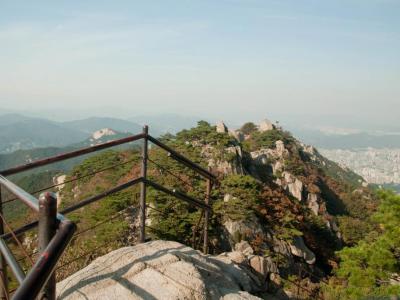
14) Bukhansan National Park (must see)
Bukhansan National Park, founded in 1983, spans nearly 80 km² along the northern fringe of Seoul and into Gyeonggi Province. Its name translates to "mountains north of the Han River" and reflects its position as a natural boundary for the city. With around five million visitors annually, it holds a Guinness World Record as the most visited national park per unit area.
The park’s most prominent features are its three major peaks: Baegundae, the tallest at 836.5 meters; Insubong, reaching 810.5 meters and popular with rock climbers for its steep granite cliffs; and Mangyeongdae, around 799 meters high. Each summit provides expansive views across Seoul.
Bukhansan National Park features a wide variety of hiking trails, from easy woodland walks to challenging ridge routes. Among the most well-traveled paths are the Bukhansanseong trail, the Uiryeong-gil circuit, and the picturesque Dulle-gil trails, which meander through forested valleys and pass by historic royal tombs and observation points.
Nature lovers will delight in the park’s remarkable biodiversity: more than 1,300 species of plants and animals thrive there, including deer, wild boar, Korean goral, squirrels, and abundant birdlife with woodpeckers, jays, and songbirds. Seasonal blooms and autumn foliage transform the landscape, making each visit uniquely picturesque.
Moreover, visitors can explore remnants of Bukhansanseong Fortress, a 12.7 km long Joseon‑era defensive wall built in 1711, which includes gates, sentry posts, and a 120‑room royal retreat. Scattered among the wooded slopes are more than 100 Buddhist temples and hermitages, offering peaceful rest spots and insight into Korea’s mountain‑spirit traditions.
The park’s most prominent features are its three major peaks: Baegundae, the tallest at 836.5 meters; Insubong, reaching 810.5 meters and popular with rock climbers for its steep granite cliffs; and Mangyeongdae, around 799 meters high. Each summit provides expansive views across Seoul.
Bukhansan National Park features a wide variety of hiking trails, from easy woodland walks to challenging ridge routes. Among the most well-traveled paths are the Bukhansanseong trail, the Uiryeong-gil circuit, and the picturesque Dulle-gil trails, which meander through forested valleys and pass by historic royal tombs and observation points.
Nature lovers will delight in the park’s remarkable biodiversity: more than 1,300 species of plants and animals thrive there, including deer, wild boar, Korean goral, squirrels, and abundant birdlife with woodpeckers, jays, and songbirds. Seasonal blooms and autumn foliage transform the landscape, making each visit uniquely picturesque.
Moreover, visitors can explore remnants of Bukhansanseong Fortress, a 12.7 km long Joseon‑era defensive wall built in 1711, which includes gates, sentry posts, and a 120‑room royal retreat. Scattered among the wooded slopes are more than 100 Buddhist temples and hermitages, offering peaceful rest spots and insight into Korea’s mountain‑spirit traditions.
