Custom Walk in Saint Louis, Missouri by kinga_whiteley_kw_b8a43 created on 2025-04-15
Guide Location: USA » Saint Louis
Guide Type: Custom Walk
# of Sights: 9
Tour Duration: 2 Hour(s)
Travel Distance: 4.9 Km or 3 Miles
Share Key: F7GGQ
Guide Type: Custom Walk
# of Sights: 9
Tour Duration: 2 Hour(s)
Travel Distance: 4.9 Km or 3 Miles
Share Key: F7GGQ
How It Works
Please retrieve this walk in the GPSmyCity app. Once done, the app will guide you from one tour stop to the next as if you had a personal tour guide. If you created the walk on this website or come to the page via a link, please follow the instructions below to retrieve the walk in the app.
Retrieve This Walk in App
Step 1. Download the app "GPSmyCity: Walks in 1K+ Cities" on Apple App Store or Google Play Store.



Step 2. In the GPSmyCity app, download(or launch) the guide "Saint Louis Map and Walking Tours".
Step 3. Tap the menu button located at upper right corner of the "Walks" screen and select "Retrieve custom walk". Enter the share key: F7GGQ
1) Gateway Arch (must see)
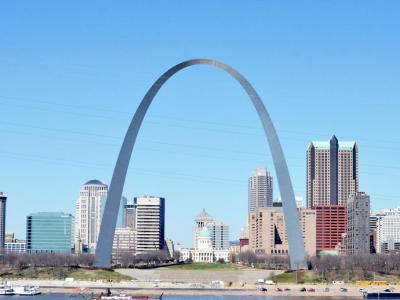
Commonly known as the "Gateway to the West," the Gateway Arch is a memorial commemorating the westward expansion of the United States. Clad in stainless steel and shaped as a weighted catenary arch, the structure is an iconic symbol of Saint Louis, visited annually by more than four million people.
At 630 feet (or 192 meters), it is the tallest accessible building in Missouri and the tallest man-made monument in the United States. Some sources even claim it is the tallest human-made monument in the entire Western Hemisphere. Meanwhile, the Gateway Arch National Park is the smallest national park in the United States.
The Arch was designed by Finnish-American architect Eero Saarinen and German-American structural engineer Hannskarl Bandel in 1947. It opened to the public on June 10, 1967. The surrounding grounds were initially designated as the Jefferson National Expansion Memorial, created on the site of the earliest buildings, which were deliberately demolished in 1942 to make way for the monument.
The Arch is hollow and houses a unique tram system in each leg – a chain of eight cylindrical, five-seat compartments that can carry up to 40 visitors at a time to the observation deck at the top. Near the top, passengers climb a slight incline to reach the observation area, which accommodates up to 160 people and has 16 windows on each side.
While in motion, the trams swing like Ferris-wheel cars, giving rise to their description as "half Ferris wheel, half elevator." The trip to the top takes four minutes, with a three-minute descent. In addition to the trams, there are two emergency staircases (one per leg) and a 12-passenger elevator.
In 1965, the Federal Aviation Administration warned that pilots flying beneath the Arch would be fined and could have their licenses revoked. To date, at least ten daredevils have defied this order.
Visiting the Arch is a quintessential Saint Louis experience. The lift mechanism may seem quirky, but the panoramic views of the city and its historic waterfront make it well worth the ride.
Tip: Go early to explore the small (free) museum before taking the tram to the top.
At 630 feet (or 192 meters), it is the tallest accessible building in Missouri and the tallest man-made monument in the United States. Some sources even claim it is the tallest human-made monument in the entire Western Hemisphere. Meanwhile, the Gateway Arch National Park is the smallest national park in the United States.
The Arch was designed by Finnish-American architect Eero Saarinen and German-American structural engineer Hannskarl Bandel in 1947. It opened to the public on June 10, 1967. The surrounding grounds were initially designated as the Jefferson National Expansion Memorial, created on the site of the earliest buildings, which were deliberately demolished in 1942 to make way for the monument.
The Arch is hollow and houses a unique tram system in each leg – a chain of eight cylindrical, five-seat compartments that can carry up to 40 visitors at a time to the observation deck at the top. Near the top, passengers climb a slight incline to reach the observation area, which accommodates up to 160 people and has 16 windows on each side.
While in motion, the trams swing like Ferris-wheel cars, giving rise to their description as "half Ferris wheel, half elevator." The trip to the top takes four minutes, with a three-minute descent. In addition to the trams, there are two emergency staircases (one per leg) and a 12-passenger elevator.
In 1965, the Federal Aviation Administration warned that pilots flying beneath the Arch would be fined and could have their licenses revoked. To date, at least ten daredevils have defied this order.
Visiting the Arch is a quintessential Saint Louis experience. The lift mechanism may seem quirky, but the panoramic views of the city and its historic waterfront make it well worth the ride.
Tip: Go early to explore the small (free) museum before taking the tram to the top.
2) Busch Stadium (must see)
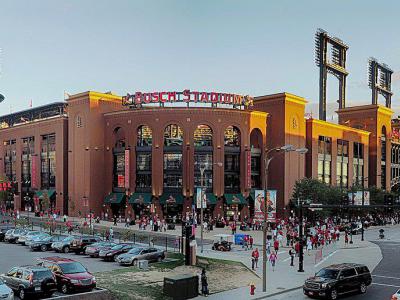
Busch Stadium is a state-of-the-art baseball park that is the home of the St. Louis Cardinals, the city's Major League Baseball (MLB) franchise. The stadium opened in 2006 and replaced Busch Memorial Stadium, also known as Busch Stadium II. The stadium has a seating capacity of 44,494 and is known for its excellent sightlines and amenities.
One of the unique features of Busch Stadium is its proximity to Ballpark Village, a commercial area built adjacent to the stadium that occupies the remainder of the former stadium's footprint. This area features a wide variety of restaurants, bars, and entertainment options, making it a popular destination for fans before and after games.
The stadium has hosted a number of major events, including the highest attendance for a sports event other than baseball when 48,263 people watched a friendly match between Chelsea Football Club and Manchester City Football Club in 2013. The largest attendance for a baseball game at the stadium occurred on Mother's Day in 2019, when 48,556 people watched a game between the Cardinals and the Pittsburgh Pirates.
Busch Stadium is the third stadium in St. Louis to carry the name Busch Stadium. The first stadium, Sportsman's Park, was renamed Busch Stadium in 1953 by team owner August Busch Jr. He had originally planned to name it Budweiser Stadium, but league rules prohibited naming a venue after an alcoholic beverage. Busch named the stadium after himself and later created Busch Beer. The first Busch Stadium closed in 1966, and both the baseball Cardinals and the NFL's team of the same name (now the Arizona Cardinals) moved to a new multi-purpose stadium, named Busch Memorial Stadium.
One of the unique features of Busch Stadium is its proximity to Ballpark Village, a commercial area built adjacent to the stadium that occupies the remainder of the former stadium's footprint. This area features a wide variety of restaurants, bars, and entertainment options, making it a popular destination for fans before and after games.
The stadium has hosted a number of major events, including the highest attendance for a sports event other than baseball when 48,263 people watched a friendly match between Chelsea Football Club and Manchester City Football Club in 2013. The largest attendance for a baseball game at the stadium occurred on Mother's Day in 2019, when 48,556 people watched a game between the Cardinals and the Pittsburgh Pirates.
Busch Stadium is the third stadium in St. Louis to carry the name Busch Stadium. The first stadium, Sportsman's Park, was renamed Busch Stadium in 1953 by team owner August Busch Jr. He had originally planned to name it Budweiser Stadium, but league rules prohibited naming a venue after an alcoholic beverage. Busch named the stadium after himself and later created Busch Beer. The first Busch Stadium closed in 1966, and both the baseball Cardinals and the NFL's team of the same name (now the Arizona Cardinals) moved to a new multi-purpose stadium, named Busch Memorial Stadium.
3) St. Louis City Hall
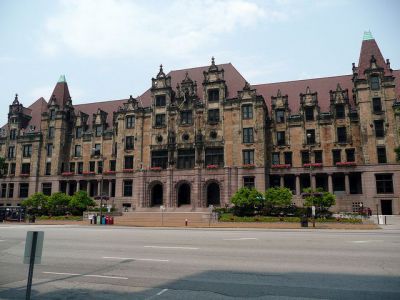
St. Louis City Hall is a historic building that has served as the center of local government for over a century. Designed by architects Eckel and Mann, the building draws inspiration from the French Renaissance City Hall in Paris and features ornamental dormer windows and towers reminiscent of the Chambord castle.
The interior of the City Hall is just as ornate as the exterior, with marble and gold trim adorning the walls and ceilings. The building also boasts interesting murals on the Market Street and Clark Avenue entrances.
Construction on the City Hall began in 1890 and was completed in 1904. Although the building was never fully finished, lacking carved decorations on the ornamental dormers due to a lack of funds, it has still been praised for its splendid architectural composition.
Today, the City Hall houses the offices of the Mayor of St. Louis, the Board of Aldermen, and the St. Louis Department of Public Safety. It is also the venue for the majority of local government meetings, many of which are open to the public.
In recognition of its historical and architectural significance, the City Hall was designated a St. Louis City Landmark in 1971. It remains an impressive period piece of craftsmanship and an important symbol of the city's government and history.
The interior of the City Hall is just as ornate as the exterior, with marble and gold trim adorning the walls and ceilings. The building also boasts interesting murals on the Market Street and Clark Avenue entrances.
Construction on the City Hall began in 1890 and was completed in 1904. Although the building was never fully finished, lacking carved decorations on the ornamental dormers due to a lack of funds, it has still been praised for its splendid architectural composition.
Today, the City Hall houses the offices of the Mayor of St. Louis, the Board of Aldermen, and the St. Louis Department of Public Safety. It is also the venue for the majority of local government meetings, many of which are open to the public.
In recognition of its historical and architectural significance, the City Hall was designated a St. Louis City Landmark in 1971. It remains an impressive period piece of craftsmanship and an important symbol of the city's government and history.
4) Meeting of the Waters Fountain
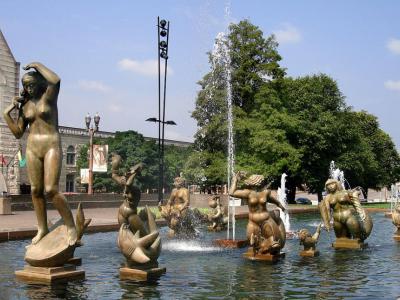
The Meeting of the Waters Fountain is a stunning piece of public art located in Aloe Plaza. This fountain commemorates the confluence of the Mississippi River and Missouri River, which are the two longest rivers in North America. The fountain is the work of Carl Milles, a Swedish-born sculptor who drew inspiration from the work of the French Romantic Auguste Rodin.
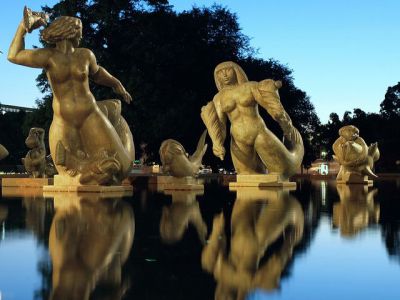
As you approach the fountain, you'll be greeted by a group of bronze mythical creatures and allegorical characters that seem to be floating on a large pool. Take your time to peruse the intricate details of each sculpture. Notice the lifelike male and female figures that represent the Mississippi and Missouri rivers respectively. Behind them, you'll see water sprites, fish, and mermaids that symbolize the 17 principal tributaries of the two great rivers.
Milles' creativity is evident in every aspect of the fountain's construction. He not only created the bronze sculptures, but also designed the positioning of the jets, water pressure, and timing intervals. The result is a mesmerizing display of water shooting up from the pool and out of the mouths of fish, with the sculptures seeming to cavort playfully in the water.
If you're lucky enough to visit the fountain on a sunny day, you may even spot rainbows arching through the spray cloud. The Meeting of the Waters Fountain is the centerpiece of Aloe Plaza, and the grassy lawns surrounding the fountain are perfect for taking a break in this serene downtown corner.
Overlooking the southern side of the plaza is the grand Romanesque Revival-style Union Station, which used to be a passenger railway terminal but now houses shopping, dining, and entertainment attractions such as the St. Louis Aquarium. Be sure to include time in your schedule to enjoy these sites as well.
As you approach the fountain, you'll be greeted by a group of bronze mythical creatures and allegorical characters that seem to be floating on a large pool. Take your time to peruse the intricate details of each sculpture. Notice the lifelike male and female figures that represent the Mississippi and Missouri rivers respectively. Behind them, you'll see water sprites, fish, and mermaids that symbolize the 17 principal tributaries of the two great rivers.
Milles' creativity is evident in every aspect of the fountain's construction. He not only created the bronze sculptures, but also designed the positioning of the jets, water pressure, and timing intervals. The result is a mesmerizing display of water shooting up from the pool and out of the mouths of fish, with the sculptures seeming to cavort playfully in the water.
If you're lucky enough to visit the fountain on a sunny day, you may even spot rainbows arching through the spray cloud. The Meeting of the Waters Fountain is the centerpiece of Aloe Plaza, and the grassy lawns surrounding the fountain are perfect for taking a break in this serene downtown corner.
Overlooking the southern side of the plaza is the grand Romanesque Revival-style Union Station, which used to be a passenger railway terminal but now houses shopping, dining, and entertainment attractions such as the St. Louis Aquarium. Be sure to include time in your schedule to enjoy these sites as well.
5) Aloe Plaza
Aloe Plaza is a charming and historic park and plaza, situated directly in front of the iconic Union Station. The plaza was created as part of Harland Bartholomew’s 1919 plan, which utilized City Beautiful principles to redevelop the area. The plan required clearing several blocks between Market and Chestnut Streets, which was made possible by a bond issue approved in 1923.
The plaza was constructed using funds from the bond issue and opened to the public in 1932. The rectilinear space is surrounded by an alleé of canopy trees along the perimeter, with symmetrical north-south oriented paths that meet at the center and encircle a garden.
In the 1930s, the plaza's original plan was modified to incorporate a fountain commissioned by Edith Aloe. The fountain, called The Meeting of the Waters, was created by Carl Milles and was dedicated in 1940. The plaza was subsequently named after Edith Aloe's late husband, Louis Aloe, who was the former president of the Board of Alderman.
The centerpiece of Aloe Plaza is The Meeting of the Waters fountain, which features two facing human figures that symbolize the confluence of the Mississippi and Missouri Rivers. The fountain is surrounded by a symmetrical arrangement of real and mythical creatures that seem to dance and leap out of the water. The fountain's design includes axial jets located behind each human figure that propel water straight up into the air. Angled spouts located on the creatures themselves project water in various directions.
Aloe Plaza is a balanced and symmetrical space that offers views of the historic Romanesque Revival Union Station across Market Street. It is juxtaposed by the asymmetrical Memorial Plaza to the east. The plaza's elegant design, including the striking fountain, make it a popular destination for locals and visitors alike.
The plaza was constructed using funds from the bond issue and opened to the public in 1932. The rectilinear space is surrounded by an alleé of canopy trees along the perimeter, with symmetrical north-south oriented paths that meet at the center and encircle a garden.
In the 1930s, the plaza's original plan was modified to incorporate a fountain commissioned by Edith Aloe. The fountain, called The Meeting of the Waters, was created by Carl Milles and was dedicated in 1940. The plaza was subsequently named after Edith Aloe's late husband, Louis Aloe, who was the former president of the Board of Alderman.
The centerpiece of Aloe Plaza is The Meeting of the Waters fountain, which features two facing human figures that symbolize the confluence of the Mississippi and Missouri Rivers. The fountain is surrounded by a symmetrical arrangement of real and mythical creatures that seem to dance and leap out of the water. The fountain's design includes axial jets located behind each human figure that propel water straight up into the air. Angled spouts located on the creatures themselves project water in various directions.
Aloe Plaza is a balanced and symmetrical space that offers views of the historic Romanesque Revival Union Station across Market Street. It is juxtaposed by the asymmetrical Memorial Plaza to the east. The plaza's elegant design, including the striking fountain, make it a popular destination for locals and visitors alike.
6) Saint Louis Union Station
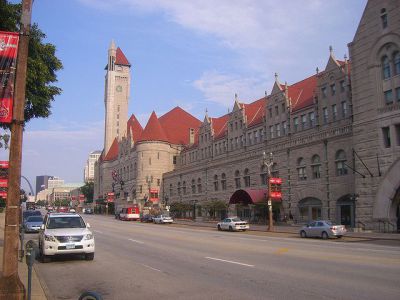
St. Louis Union Station, designed by Theodore Link and opened in 1894, was once the world’s largest and busiest train terminal, with all tracks and passenger areas on one level. Expanded in 1903 for the 1904 St. Louis World’s Fair, it became a powerful symbol of the city’s prosperity. At its peak in the 1940s, the station served 100,000 passengers daily and united 22 railroads—more than any other terminal in the world. A mural by Louis Grell, added during this period, depicted iconic scenes from St. Louis’s history, reflecting the grandeur and spirit of the city’s golden age of rail travel.
However, as air travel became dominant in the 1950s and 1960s, passenger rail declined, and the enormous station grew too costly to maintain. By 1961, some of the once-busy train tracks had been converted into parking spaces. In 1970, St. Louis Union Station was designated a National Historic Landmark, but by 1978, the last Amtrak train had departed, marking the end of an era.
A major renovation in the 1980s gave St. Louis Union Station a new life as a hotel, shopping, and entertainment complex. The former headhouse and parts of the vast train shed were transformed into the elegant St. Louis Union Station Hotel, now operated by Marriott. Around the hotel, restaurants, boutique shops, and family-friendly attractions line a scenic lake.
On the upper level, the Memories Museum showcases artifacts and exhibits celebrating the station’s railroading history. The Grand Hall, with its 65-foot barrel-vaulted ceiling, stained glass, and gilded details, remains the station’s most breathtaking feature. Its “whispering arches” still delight visitors, while the evening light show across the ceiling adds a magical touch to this architectural gem.
Tip:
A light show happens every hour, from 5-11pm. It is on the ceiling of the historic Grand Hall. There are comfortable seats and a full-service bar.
However, as air travel became dominant in the 1950s and 1960s, passenger rail declined, and the enormous station grew too costly to maintain. By 1961, some of the once-busy train tracks had been converted into parking spaces. In 1970, St. Louis Union Station was designated a National Historic Landmark, but by 1978, the last Amtrak train had departed, marking the end of an era.
A major renovation in the 1980s gave St. Louis Union Station a new life as a hotel, shopping, and entertainment complex. The former headhouse and parts of the vast train shed were transformed into the elegant St. Louis Union Station Hotel, now operated by Marriott. Around the hotel, restaurants, boutique shops, and family-friendly attractions line a scenic lake.
On the upper level, the Memories Museum showcases artifacts and exhibits celebrating the station’s railroading history. The Grand Hall, with its 65-foot barrel-vaulted ceiling, stained glass, and gilded details, remains the station’s most breathtaking feature. Its “whispering arches” still delight visitors, while the evening light show across the ceiling adds a magical touch to this architectural gem.
Tip:
A light show happens every hour, from 5-11pm. It is on the ceiling of the historic Grand Hall. There are comfortable seats and a full-service bar.

7) Citygarden Sculpture Park (must see)
Since its opening in 2009, Citygarden has drawn countless visitors to downtown Saint Louis. Beyond boosting the city’s economy, its popularity has also sparked renewed interest in revitalizing the 16-block Gateway Mall.
It’s hard to believe that before becoming a vibrant urban park and sculpture garden, this site was nothing more than two empty blocks of grass. The vision was to create open lawns for large-scale artworks while reserving smaller spaces for more intimate experiences—a concept that has proven highly successful.
Today, Citygarden showcases 24 sculptures valued at over $12 million. Highlights include a massive bronze head lying on its side by Igor Mitoraj, digital screens of walking figures by Julian Opie, and Erwin Wurm’s whimsical Big Suit, a bodiless pink suit. Visitors are encouraged to touch, walk through, and even interact with the works, though this means some require frequent maintenance, such as re-waxing. Materials range from bronze, stainless steel, and cast aluminum to fiberglass and polyester.
Guests can enhance their visit with an audio tour narrated by more than 20 prominent locals, among them former St. Louis Cardinals star Ozzie Smith, St. Louis Symphony Orchestra director David Robertson, Olympic champion Jackie Joyner-Kersee, and actors Jenna Fischer and Kurt Warner.
Nature plays just as important a role here as art. The garden features ginkgo trees, native plants, and broad walkways, divided into three sections that echo the natural landscapes of the Saint Louis region. A northern limestone wall represents the Mississippi River bluffs, while a southern meandering wall mirrors the region’s waterways. Between them lies a floodplain-inspired zone with rain gardens, large trees, and major sculptures.
Citygarden also delights with water features, a welcome escape on hot summer days. Unlike many sculpture parks, it invites visitors to fully immerse themselves—free of charge.
Tip: Visit at night to enjoy a beautifully lit stroll, then stop by the café with patio seating or grab a bite from a nearby food truck.
It’s hard to believe that before becoming a vibrant urban park and sculpture garden, this site was nothing more than two empty blocks of grass. The vision was to create open lawns for large-scale artworks while reserving smaller spaces for more intimate experiences—a concept that has proven highly successful.
Today, Citygarden showcases 24 sculptures valued at over $12 million. Highlights include a massive bronze head lying on its side by Igor Mitoraj, digital screens of walking figures by Julian Opie, and Erwin Wurm’s whimsical Big Suit, a bodiless pink suit. Visitors are encouraged to touch, walk through, and even interact with the works, though this means some require frequent maintenance, such as re-waxing. Materials range from bronze, stainless steel, and cast aluminum to fiberglass and polyester.
Guests can enhance their visit with an audio tour narrated by more than 20 prominent locals, among them former St. Louis Cardinals star Ozzie Smith, St. Louis Symphony Orchestra director David Robertson, Olympic champion Jackie Joyner-Kersee, and actors Jenna Fischer and Kurt Warner.
Nature plays just as important a role here as art. The garden features ginkgo trees, native plants, and broad walkways, divided into three sections that echo the natural landscapes of the Saint Louis region. A northern limestone wall represents the Mississippi River bluffs, while a southern meandering wall mirrors the region’s waterways. Between them lies a floodplain-inspired zone with rain gardens, large trees, and major sculptures.
Citygarden also delights with water features, a welcome escape on hot summer days. Unlike many sculpture parks, it invites visitors to fully immerse themselves—free of charge.
Tip: Visit at night to enjoy a beautifully lit stroll, then stop by the café with patio seating or grab a bite from a nearby food truck.
8) Kiener Plaza Park
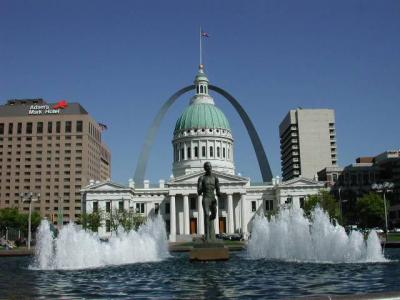
Kiener Plaza, a popular gathering spot in downtown Saint Louis, offers one of the best views of the Old Courthouse and the Gateway Arch. Thanks to its central location, the plaza often hosts public events, including outdoor free movies and a winter festival. It is also regularly used as a rallying point for demonstrations and protest marches.
In the 1800s, the area was home to a jail that held prisoners awaiting trial at the Old Courthouse, including enslaved people who sued for their freedom.
Originally developed in 1962, the plaza is named for Harry Kiener, a local philanthropist, steel company executive, and former member of the USA Track & Field team, who competed at the 1904 Olympics in Saint Louis.
Kiener Plaza features a wide stone-paved plaza, a network of walking paths, and a grassy lawn suitable for a variety of events. Amenities include bicycle parking, a shade garden with café tables and chairs, marble circular benches, organic wooden benches, and a fenced creative children’s playground with an engaging play surface.
In his will, Kiener left a bequest to the city to build a fountain and athletic statue. Today, the center of the plaza features a fountain with a splash pad and the statue “The Olympic Runner” by William Zorach.
The park is an ideal spot for parents to relax while their children burn off energy. Its diverse elements are complemented by a bistro area, perfect for a family brunch, lunch, or dinner outing.
In the 1800s, the area was home to a jail that held prisoners awaiting trial at the Old Courthouse, including enslaved people who sued for their freedom.
Originally developed in 1962, the plaza is named for Harry Kiener, a local philanthropist, steel company executive, and former member of the USA Track & Field team, who competed at the 1904 Olympics in Saint Louis.
Kiener Plaza features a wide stone-paved plaza, a network of walking paths, and a grassy lawn suitable for a variety of events. Amenities include bicycle parking, a shade garden with café tables and chairs, marble circular benches, organic wooden benches, and a fenced creative children’s playground with an engaging play surface.
In his will, Kiener left a bequest to the city to build a fountain and athletic statue. Today, the center of the plaza features a fountain with a splash pad and the statue “The Olympic Runner” by William Zorach.
The park is an ideal spot for parents to relax while their children burn off energy. Its diverse elements are complemented by a bistro area, perfect for a family brunch, lunch, or dinner outing.
9) Old Courthouse (must see)
Now part of the Jefferson National Expansion Memorial, the Old Courthouse sits on land originally donated in 1816 by Saint Louis founder Auguste Chouteau. His stipulation was that the land be “used forever as the site on which the courthouse of the County of Saint Louis should be erected.”
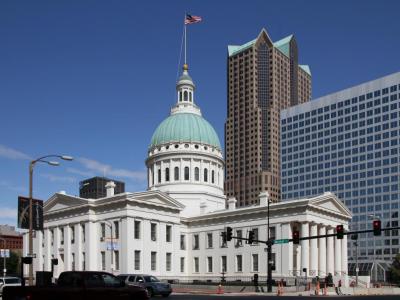
Built as a combined federal and state courthouse, the original Federal-style building was completed in 1828, designed by the same firm, Lavielle and Morton, that created the Old Cathedral. It was extensively rebuilt between 1839 and 1862, with its cupola replaced by an Italian Renaissance cast-iron dome modeled after St. Peter’s Basilica in Vatican City.
The interiors of the Old Courthouse are adorned with elegant plasterwork, ornate wood carvings, and richly detailed moldings, while sweeping spiral staircases connect the floors with graceful curves. Period paintings, decorative columns, and intricately designed balustrades complete the refined atmosphere.
Over the years, the Old Courthouse has held many titles: Missouri’s tallest habitable building from 1864 to 1894, the tallest building in Missouri and Saint Louis until 1896, when Union Station was built, and the largest structure within the monument area (created in 1940) until the Gateway Arch was erected in 1965. Today, the courthouse sits directly beneath the Arch, marking the spot over which the monument soars.
The courthouse also played a pivotal role in American history. In 1857, Dred and Harriet Scott sued for their freedom here, followed by more than 300 other enslaved African Americans over the years. In 1875, women’s suffrage activist Virginia Minor fought for her right to vote in this building, and the last slave auction at the courthouse took place in 1861.
Tip:
Visit the courtroom where the first Dred Scott decision was rendered, then climb the stairs to the top for panoramic views of the Gateway Arch and downtown Saint Louis.
Built as a combined federal and state courthouse, the original Federal-style building was completed in 1828, designed by the same firm, Lavielle and Morton, that created the Old Cathedral. It was extensively rebuilt between 1839 and 1862, with its cupola replaced by an Italian Renaissance cast-iron dome modeled after St. Peter’s Basilica in Vatican City.
The interiors of the Old Courthouse are adorned with elegant plasterwork, ornate wood carvings, and richly detailed moldings, while sweeping spiral staircases connect the floors with graceful curves. Period paintings, decorative columns, and intricately designed balustrades complete the refined atmosphere.
Over the years, the Old Courthouse has held many titles: Missouri’s tallest habitable building from 1864 to 1894, the tallest building in Missouri and Saint Louis until 1896, when Union Station was built, and the largest structure within the monument area (created in 1940) until the Gateway Arch was erected in 1965. Today, the courthouse sits directly beneath the Arch, marking the spot over which the monument soars.
The courthouse also played a pivotal role in American history. In 1857, Dred and Harriet Scott sued for their freedom here, followed by more than 300 other enslaved African Americans over the years. In 1875, women’s suffrage activist Virginia Minor fought for her right to vote in this building, and the last slave auction at the courthouse took place in 1861.
Tip:
Visit the courtroom where the first Dred Scott decision was rendered, then climb the stairs to the top for panoramic views of the Gateway Arch and downtown Saint Louis.
