Custom Walk in Tel Aviv, Israel by deborah_2f6e5 created on 2025-04-24
Guide Location: Israel » Tel Aviv
Guide Type: Custom Walk
# of Sights: 11
Tour Duration: 7 Hour(s)
Travel Distance: 17.9 Km or 11.1 Miles
Share Key: RC2XD
Guide Type: Custom Walk
# of Sights: 11
Tour Duration: 7 Hour(s)
Travel Distance: 17.9 Km or 11.1 Miles
Share Key: RC2XD
How It Works
Please retrieve this walk in the GPSmyCity app. Once done, the app will guide you from one tour stop to the next as if you had a personal tour guide. If you created the walk on this website or come to the page via a link, please follow the instructions below to retrieve the walk in the app.
Retrieve This Walk in App
Step 1. Download the app "GPSmyCity: Walks in 1K+ Cities" on Apple App Store or Google Play Store.



Step 2. In the GPSmyCity app, download(or launch) the guide "Tel Aviv Map and Walking Tours".
Step 3. Tap the menu button located at upper right corner of the "Walks" screen and select "Retrieve custom walk". Enter the share key: RC2XD
1) Carmel Market (must see)
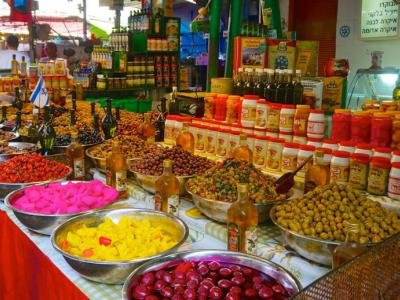
Amid an array of exciting activities a tourist can engage in in Tel Aviv, there is a great choice of shopping opportunities as well. Visiting Tel Aviv's markets is one of the best ways to find great bargains much as to have a great time. The Carmel Market, otherwise known as the “Shuk Ha’Carmel”, found at Sheinkin Street and the intersection of King George and Allenby Street, is one such place.
Featuring a line of colorful stalls stretched along the sides of a narrow alley, it offers a wide variety of exotic spices, dry fruits, olives, pastry and bread proudly presented by vendors. Citizens of Tel Aviv frequent this market to purchase fresh produce like fish, poultry, vegetables, fruits, flowers, and cheese. Apart from that, there is also footwear and clothing to be found and, if you shop hard enough, you may get a very attractive bargain.
Why You Should Visit:
You can hardly find a more authentic Middle Eastern atmosphere than here anywhere else in Tel Aviv.
Excellent fresh food is in rich supply throughout the market, as well as the nearby streets.
Tip:
Ideal time to come is early morning. Avoid Friday noon when the market is packed beyond belief.
Make sure you don't overspend at the food vendors, as they tend to overcharge.
Featuring a line of colorful stalls stretched along the sides of a narrow alley, it offers a wide variety of exotic spices, dry fruits, olives, pastry and bread proudly presented by vendors. Citizens of Tel Aviv frequent this market to purchase fresh produce like fish, poultry, vegetables, fruits, flowers, and cheese. Apart from that, there is also footwear and clothing to be found and, if you shop hard enough, you may get a very attractive bargain.
Why You Should Visit:
You can hardly find a more authentic Middle Eastern atmosphere than here anywhere else in Tel Aviv.
Excellent fresh food is in rich supply throughout the market, as well as the nearby streets.
Tip:
Ideal time to come is early morning. Avoid Friday noon when the market is packed beyond belief.
Make sure you don't overspend at the food vendors, as they tend to overcharge.
2) Eretz Israel Museum
Eretz Israel Museum (also known as MUZA) in Tel Aviv is a diverse museum dedicated to the material culture of its region, both historically and in contemporary times. Renowned for its extensive and varied exhibits, MUZA ranks among Israel's top museums. It stands out as a cultural hub, drawing a wide range of visitors from across Israel and globally.
The museum houses significant collections in archaeology, ethnography, photography, folklore, and local history, making it a pivotal resource in Israel. MUZA actively bridges past and present and intertwines various creative and academic disciplines. A notable aspect is its focus on crafts, exploring the relationship between art and craftmanship, thereby fostering a dialogue about the intrinsic link between materiality and the human spirit.
Situated near the Ramat Aviv area in Tel Aviv, with the Yarkon river to its south and picturesque views of the harbor and city skyline, MUZA spans a considerable area. Its grounds feature pavilions displaying its vast collections, including rare and exclusive items. These pavilions host both permanent and temporary exhibitions, the latter often interacting with the museum's broader cultural mission. Renowned events like the "Biennale for Crafts and Design," "Photomenta," and the "Local Testimony" photojournalism exhibition have become iconic, attracting diverse audiences.
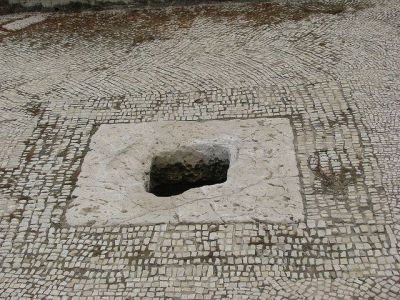
The museum's design integrates open spaces, encouraging visitors to enjoy nature within the urban setting. A highlight is Tell Qasile at the center, an archaeological site dating back over 3,000 years. The surrounding gardens display a rich array of archaeological finds, including ancient mosaics and wine presses, alongside a crafts arcade, olive oil press, and a reconstructed flour mill.
Why You Should Visit:
Not a museum in the usual sense, but a huge park complex with many different buildings, each showcasing a different aspect of life in the area during previous millenniums.
The grounds are attractive and well maintained; in addition, there's a planetarium on site and an exhibition room for more up-to-date exhibits.
To round off the experience, there is a nice café restaurant on site and a beautiful gift shop.
Tip:
Make sure to check out each of the pavilions, and don't forget to see the 'Man and His Work' wing to experience some demonstrations of ancient working life.
Also, don't miss the museum shop which closes an hour earlier than the museum itself and is one of the best in the country.
If you want to enjoy a full "culture" day – the Palmach Museum and the Yitzhak Rabin Center are both about 150 meters up the street.
The museum houses significant collections in archaeology, ethnography, photography, folklore, and local history, making it a pivotal resource in Israel. MUZA actively bridges past and present and intertwines various creative and academic disciplines. A notable aspect is its focus on crafts, exploring the relationship between art and craftmanship, thereby fostering a dialogue about the intrinsic link between materiality and the human spirit.
Situated near the Ramat Aviv area in Tel Aviv, with the Yarkon river to its south and picturesque views of the harbor and city skyline, MUZA spans a considerable area. Its grounds feature pavilions displaying its vast collections, including rare and exclusive items. These pavilions host both permanent and temporary exhibitions, the latter often interacting with the museum's broader cultural mission. Renowned events like the "Biennale for Crafts and Design," "Photomenta," and the "Local Testimony" photojournalism exhibition have become iconic, attracting diverse audiences.
The museum's design integrates open spaces, encouraging visitors to enjoy nature within the urban setting. A highlight is Tell Qasile at the center, an archaeological site dating back over 3,000 years. The surrounding gardens display a rich array of archaeological finds, including ancient mosaics and wine presses, alongside a crafts arcade, olive oil press, and a reconstructed flour mill.
Why You Should Visit:
Not a museum in the usual sense, but a huge park complex with many different buildings, each showcasing a different aspect of life in the area during previous millenniums.
The grounds are attractive and well maintained; in addition, there's a planetarium on site and an exhibition room for more up-to-date exhibits.
To round off the experience, there is a nice café restaurant on site and a beautiful gift shop.
Tip:
Make sure to check out each of the pavilions, and don't forget to see the 'Man and His Work' wing to experience some demonstrations of ancient working life.
Also, don't miss the museum shop which closes an hour earlier than the museum itself and is one of the best in the country.
If you want to enjoy a full "culture" day – the Palmach Museum and the Yitzhak Rabin Center are both about 150 meters up the street.
3) Palmach Museum (must see)
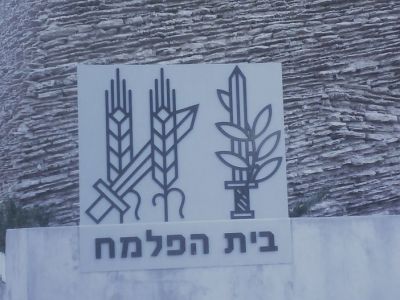
The Palmach Museum takes visitors underground while they explore the lives and experiences of the Palmach. Tourists go on a journey where they hear stories from the Palmach, envision what it was like to be recruited and trained in this literal underground army.
Tours at the Palmach Museum are conducted in groups of 25. These groups are led through the series of underground chambers. The 90-minute tour must be booked in advance by calling or emailing the museum.
This museum opened in 2000. The building was designed by architects Rafi Segal and Zvi Hecker. It is part of the Palmach House that, along with the Palmach Museum, includes the Archive and Library, the Palmach Photo Gallery and the Memorial Room. The Memorial Room honors fallen Palmach through a series of 1,193 drawers. Each of these drawers contain a personal file of an individual.
The Palmach Museum is located in the Ramat Aviv neighborhood along Chaim Levanon Street. It is an easy walk from other tourist-friendly sites in Tel Aviv like the Yitzak Rabin center, the Eretz Israel Museum and the Tell Qasile archaeological site.
Tip:
Go to the photo library to look through albums of actual photos/memorabilia the museum has collected, as this is arguably the most powerful part of the visit.
Tours at the Palmach Museum are conducted in groups of 25. These groups are led through the series of underground chambers. The 90-minute tour must be booked in advance by calling or emailing the museum.
This museum opened in 2000. The building was designed by architects Rafi Segal and Zvi Hecker. It is part of the Palmach House that, along with the Palmach Museum, includes the Archive and Library, the Palmach Photo Gallery and the Memorial Room. The Memorial Room honors fallen Palmach through a series of 1,193 drawers. Each of these drawers contain a personal file of an individual.
The Palmach Museum is located in the Ramat Aviv neighborhood along Chaim Levanon Street. It is an easy walk from other tourist-friendly sites in Tel Aviv like the Yitzak Rabin center, the Eretz Israel Museum and the Tell Qasile archaeological site.
Tip:
Go to the photo library to look through albums of actual photos/memorabilia the museum has collected, as this is arguably the most powerful part of the visit.
4) Rothschild Boulevard (must see)
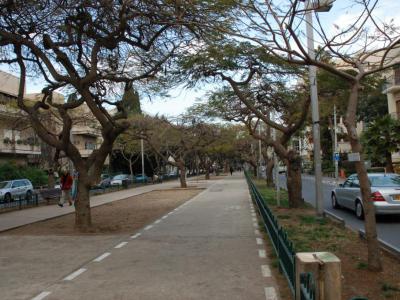
Strolling along the wide Rothschild Boulevard, you'll see lots of people of all kinds, a small pool, historical sites like the “Independence Hall” from which the 1948 Proclamation of Independence was originally read (with statues on the balcony to simulate that), and, of course, many Bauhaus buildings – some better preserved than others. Almost like all the boulevards in Tel Aviv, it has become a sort of urban park with blankets spread out on the grass and many coffee shops in the middle as well as along it.
Adjacent to the famous Engel House, one of the most visually pleasing buildings on the boulevard is the state-of-the-art Braun-Rabinsky building, which stands out for its razor-sharp lines and a thermometer-like stairwell window that's dramatically illuminated at night. At number 71, you may spot the recently renovated Krieger House, its distinctive sunken balconies forming a strikingly attractive contrast with the façade's white surface, while at the intersection of Allenby St, you may even see a public expression of cultural/religious affinity: the large ceramic murals depict scenes of biblical agricultural activities, forming an integral part of the architecture.
Adjacent to the famous Engel House, one of the most visually pleasing buildings on the boulevard is the state-of-the-art Braun-Rabinsky building, which stands out for its razor-sharp lines and a thermometer-like stairwell window that's dramatically illuminated at night. At number 71, you may spot the recently renovated Krieger House, its distinctive sunken balconies forming a strikingly attractive contrast with the façade's white surface, while at the intersection of Allenby St, you may even see a public expression of cultural/religious affinity: the large ceramic murals depict scenes of biblical agricultural activities, forming an integral part of the architecture.
5) Nachum Gutman Museum of Art
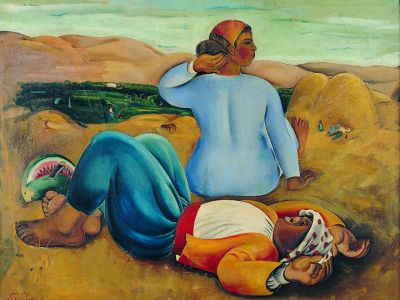
It was in May 1998 that the Gutman Museum of Art was opened to the public by Ezer Weizman, Israeli President. This museum is located in Neve Zedek at the reconstructed Writer’s House. Most of the collections at this museum were donated by Prof. Menachem Gutman, son of a noted artist Nahum Gutman.
The museum features interesting works of art including gouache, oil and watercolor. You can also find thousands of illustrations and drawings. There are two floors in this building and all artworks are displayed on both the floors.
Gutman Museum of Art skillfully portrays Gutman as an illustrator, painter, children’s author, and sculptor. The historical building that houses the museum was constructed in 1887 by the Schulman family.
The building was reconstructed in 1992 by the Tel Aviv Foundation and the Doron Foundation. The Southern wing is renovated in contemporary style by Ronny Zeibert who kept all historical aspects intact in the Northern wing.
This museum stands as an ideal meeting platform between young, aspiring Israeli artists and Gutman. Here you can enjoy the artistic splendor that reflects the essence of Israeli art and culture. This cross-cultural meeting place is a must-visit spot on your vacation to Tel Aviv.
Why You Should Visit:
Definitely worth an hour to discover Gutman's fantastical whimsy in his drawings, paintings and stories. In addition to the permanent exhibition, there are also contemporary exhibits on view.
The museum features interesting works of art including gouache, oil and watercolor. You can also find thousands of illustrations and drawings. There are two floors in this building and all artworks are displayed on both the floors.
Gutman Museum of Art skillfully portrays Gutman as an illustrator, painter, children’s author, and sculptor. The historical building that houses the museum was constructed in 1887 by the Schulman family.
The building was reconstructed in 1992 by the Tel Aviv Foundation and the Doron Foundation. The Southern wing is renovated in contemporary style by Ronny Zeibert who kept all historical aspects intact in the Northern wing.
This museum stands as an ideal meeting platform between young, aspiring Israeli artists and Gutman. Here you can enjoy the artistic splendor that reflects the essence of Israeli art and culture. This cross-cultural meeting place is a must-visit spot on your vacation to Tel Aviv.
Why You Should Visit:
Definitely worth an hour to discover Gutman's fantastical whimsy in his drawings, paintings and stories. In addition to the permanent exhibition, there are also contemporary exhibits on view.
6) Jaffa Clock Tower (must see)
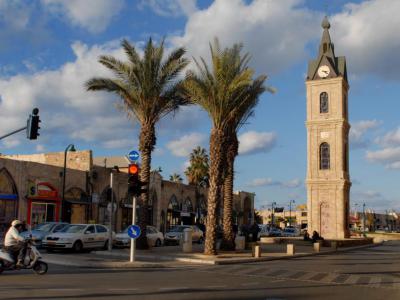
One of the most fascinating tourist attractions in Tel Aviv, this clock tower anchors a busy square that practically any visitor to Jaffa will walk through. Since 1903, it marks the central point of Jaffa, surrounded by historical buildings, a beautiful beach, the flea market and many cool shops, galleries, restaurants and more – a great area to explore.
While not itself a most impressive monument, the clock tower is very prominent, having kickstarted the construction of more than a hundred similar structures throughout the Ottoman Empire. It has a total of four clocks, two of which show time in Israel and the other two in Europe. In the year 2001, as part of the renovation plan of the entire square, the tower was also renovated, and a small Russian-style turret now adorns its top.
Why You Should Visit:
It stands in a vibrant, busy area. It is ancient and authentic. It tells you the time.
Not very impressive compared to Big Ben, but not bad compared to other towers.
While not itself a most impressive monument, the clock tower is very prominent, having kickstarted the construction of more than a hundred similar structures throughout the Ottoman Empire. It has a total of four clocks, two of which show time in Israel and the other two in Europe. In the year 2001, as part of the renovation plan of the entire square, the tower was also renovated, and a small Russian-style turret now adorns its top.
Why You Should Visit:
It stands in a vibrant, busy area. It is ancient and authentic. It tells you the time.
Not very impressive compared to Big Ben, but not bad compared to other towers.
7) Jaffa Flea Market (must see)
At Jaffa Flea Market, the early bird gets the greatest deals. Particularly on Sundays, if you happen to be the first customer, you will get goods at affordable prices from sellers who wish to start a sale that will bring luck through the week.
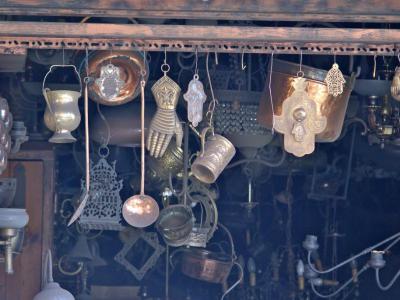
At this market, you can find an array of mixed treasures and trinkets. You can browse through interesting collections of brass, copper, jewelry, Persian tiles, old family albums, Judaica items and even used clothes.
Jaffa Flea Market is all about bargaining, so hone up your bargaining skills or at least bring along someone who knows how to haggle with merchants. If you do not master the language, use your wonderful two hands to get understood.
Located close to the Clock Tower, the market is named after old clothes crawling with fleas, previously sold here. After the area was renovated a few years back, there has been a complete transformation in terms of ambience and atmosphere. Today you can find a range of great quaint/trendy restaurants, coffee shops and art galleries that attract younger crowds, and you may even attend some cultural events for no charge. The vibrant and lively narrow lanes of this market have always been popular with tourists and on the afternoon hours, the whole area is packed full of bars!
Why You Should Visit:
A combination of trendy coffee shops, antique shops and open-air second-hand stores that attract a variety of people – young hipsters, couples, families, and odd people.
At this market, you can find an array of mixed treasures and trinkets. You can browse through interesting collections of brass, copper, jewelry, Persian tiles, old family albums, Judaica items and even used clothes.
Jaffa Flea Market is all about bargaining, so hone up your bargaining skills or at least bring along someone who knows how to haggle with merchants. If you do not master the language, use your wonderful two hands to get understood.
Located close to the Clock Tower, the market is named after old clothes crawling with fleas, previously sold here. After the area was renovated a few years back, there has been a complete transformation in terms of ambience and atmosphere. Today you can find a range of great quaint/trendy restaurants, coffee shops and art galleries that attract younger crowds, and you may even attend some cultural events for no charge. The vibrant and lively narrow lanes of this market have always been popular with tourists and on the afternoon hours, the whole area is packed full of bars!
Why You Should Visit:
A combination of trendy coffee shops, antique shops and open-air second-hand stores that attract a variety of people – young hipsters, couples, families, and odd people.
8) Ilana Goor Museum (must see)
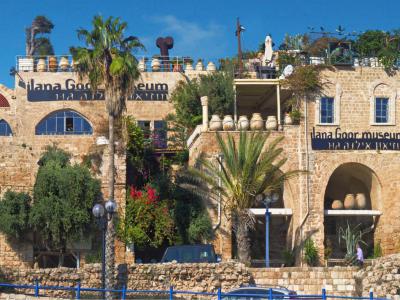
If you're planning on a visit to Jaffa Port, do not miss a tour of the famous Ilana Goor Museum. This establishment has the character and warmth of a home – and rightly so, as nearly three centuries ago it was used as an inn for Jewish pilgrims on their journey to Jerusalem or, rather, a shelter to protect the pilgrims from robbers.
In a bid to restore the building to its former glory and to bring in that calming atmosphere, Ilana Goor spent years working on the graceful arches and the huge golden rock walls; one look at them and you'll know that she has indeed succeeded. An embodiment of refined splendor, the house has many rooms to explore and everything you'll be looking at only adds to the whole; besides, the windows and outdoor terraces offer unique views of the sea and there are comfortable seats to relax in.
Once referred to as an "artistic jungle", the collection is eclectic with things both old and new; focus is on sculpture, wood carving, and metalware. There are more than 500 works of art, either created by Ilana Goor or collected by her over a period of 50 years, either in Israel or during her travels around the world. This includes paintings, some 300 sculptures, video art, Ethnic Art from Africa and Latin America, antiques, as well as drawings and design objects.
Tip:
On Fridays at noon, the museum offers a guided tour for all visitors, included in the entrance fee.
In a bid to restore the building to its former glory and to bring in that calming atmosphere, Ilana Goor spent years working on the graceful arches and the huge golden rock walls; one look at them and you'll know that she has indeed succeeded. An embodiment of refined splendor, the house has many rooms to explore and everything you'll be looking at only adds to the whole; besides, the windows and outdoor terraces offer unique views of the sea and there are comfortable seats to relax in.
Once referred to as an "artistic jungle", the collection is eclectic with things both old and new; focus is on sculpture, wood carving, and metalware. There are more than 500 works of art, either created by Ilana Goor or collected by her over a period of 50 years, either in Israel or during her travels around the world. This includes paintings, some 300 sculptures, video art, Ethnic Art from Africa and Latin America, antiques, as well as drawings and design objects.
Tip:
On Fridays at noon, the museum offers a guided tour for all visitors, included in the entrance fee.
9) Old Jaffa Port (must see)
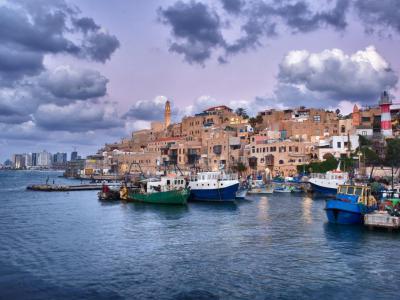
Old Jaffa Port in Tel Aviv, is a site of immense historical and cultural significance, with a rich history that dates back over 7,000 years. As one of the oldest known ports in the world, it has been a pivotal location in the Eastern Mediterranean, playing a crucial role in various historical events and narratives.
The port is deeply intertwined with the origins of the city of Tel Aviv itself. Throughout history, it has been mentioned in several ancient works, including the Hebrew Bible. Notably, it is cited as the departure point for Jonah, a figure in Jewish history. The port also features in accounts of the First Jewish Revolt against Rome, underscoring its significance in Jewish heritage.
Jaffa Port's strategic importance is highlighted by its usage by a diverse range of cultures and empires. It has seen the presence of Egyptians, Ethiopians (with legends such as Andromeda being chained to a rock here), Philistines, and the Jewish nation, including notable figures like King Solomon and Jonah. Additionally, it has been under the control of various empires such as Babylon, Alexander the Great, and in more recent history, the Ottoman, French, and British empires, before becoming part of Modern Israel.
Despite being smaller than the ports of Haifa and Akko, Jaffa Port retains its iconic status and continues to be a major cultural attraction. Its enduring appeal draws tourists globally, offering a blend of historical insight and modern amenities. The port remains operational, serving local fishermen and salesmen, and also houses modern facilities like art and photography exhibitions. The surrounding cultural centers provide visitors with a deeper understanding of this fascinating location.
The area around Jaffa Port is also known for its culinary and shopping experiences. It boasts several renowned restaurants, beautifully decorated warehouses, and a selection of shops. The port's promenade is particularly appealing, offering a refreshing sea breeze that is especially enchanting at sunset. During this time, the area is bathed in a beautiful orange glow, creating a picturesque scene cherished by both locals and tourists.
Tip:
Use the promenades – extending both north and south – for nice walks and for views over the old town walls and shoreline (the better views are probably from the top looking down).
The port is deeply intertwined with the origins of the city of Tel Aviv itself. Throughout history, it has been mentioned in several ancient works, including the Hebrew Bible. Notably, it is cited as the departure point for Jonah, a figure in Jewish history. The port also features in accounts of the First Jewish Revolt against Rome, underscoring its significance in Jewish heritage.
Jaffa Port's strategic importance is highlighted by its usage by a diverse range of cultures and empires. It has seen the presence of Egyptians, Ethiopians (with legends such as Andromeda being chained to a rock here), Philistines, and the Jewish nation, including notable figures like King Solomon and Jonah. Additionally, it has been under the control of various empires such as Babylon, Alexander the Great, and in more recent history, the Ottoman, French, and British empires, before becoming part of Modern Israel.
Despite being smaller than the ports of Haifa and Akko, Jaffa Port retains its iconic status and continues to be a major cultural attraction. Its enduring appeal draws tourists globally, offering a blend of historical insight and modern amenities. The port remains operational, serving local fishermen and salesmen, and also houses modern facilities like art and photography exhibitions. The surrounding cultural centers provide visitors with a deeper understanding of this fascinating location.
The area around Jaffa Port is also known for its culinary and shopping experiences. It boasts several renowned restaurants, beautifully decorated warehouses, and a selection of shops. The port's promenade is particularly appealing, offering a refreshing sea breeze that is especially enchanting at sunset. During this time, the area is bathed in a beautiful orange glow, creating a picturesque scene cherished by both locals and tourists.
Tip:
Use the promenades – extending both north and south – for nice walks and for views over the old town walls and shoreline (the better views are probably from the top looking down).
10) Neve Tzedek (must see)
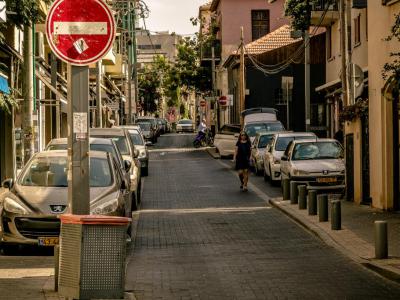
Neve Tzedek lies outside the Jaffa walls. This neighborhood was a habitat for writers, artists and businessmen in the early years. Since those immensely prosperous days, Neve Tzedek was neglected for a long time.
Recently, realizing the value of this place, it has been completely transformed and is now one of the most luxurious and fashionable districts in Tel Aviv. The architecture of apartments and homes in this area reflects its ancient, rich history.
The intricately woven, small lanes take you on a nostalgic trip back to those good old days. Founded by Elazar Rokah, head of the Ezrat Israel Company, one of the first structures erected in this area was a hospital. Neve Tzedek is what it is today due to the combined efforts of Elazar Rokah and another investor, Aharon Chalouch.
All homes in this area reflect the heritage of people who first lived here. It was in the 1900s that many writers and artists came to Neve Tzedek and settled down. Some of the noted personalities who lived here include Hebrew artist Nahum Gutman and Nobel Prize winner Shmuel Yosef Agnon.
Tourists who come to Tel Aviv visit this luxurious and popular spot to enjoy the unique ambience that includes the actively bustling streets, charming shops that sell handmade goods, and the trendy bars and cafes.
Why You Should Visit:
Quaint & cozy district where you can buy amazing bijoux and jewelry.
Good for a walk (no disturbing traffic), shopping, having coffee or enjoying some delicious frozen yogurt.
Tip:
If you have a full day and are not afraid of walking: start at the east corner of Neve Tzedek (64 Shabazi st.), walk all the way down at Shabazi st. to the Ha'Tachana (Old Station Railway) and from there to Jaffa Port or to the Jaffa flea market.
Recently, realizing the value of this place, it has been completely transformed and is now one of the most luxurious and fashionable districts in Tel Aviv. The architecture of apartments and homes in this area reflects its ancient, rich history.
The intricately woven, small lanes take you on a nostalgic trip back to those good old days. Founded by Elazar Rokah, head of the Ezrat Israel Company, one of the first structures erected in this area was a hospital. Neve Tzedek is what it is today due to the combined efforts of Elazar Rokah and another investor, Aharon Chalouch.
All homes in this area reflect the heritage of people who first lived here. It was in the 1900s that many writers and artists came to Neve Tzedek and settled down. Some of the noted personalities who lived here include Hebrew artist Nahum Gutman and Nobel Prize winner Shmuel Yosef Agnon.
Tourists who come to Tel Aviv visit this luxurious and popular spot to enjoy the unique ambience that includes the actively bustling streets, charming shops that sell handmade goods, and the trendy bars and cafes.
Why You Should Visit:
Quaint & cozy district where you can buy amazing bijoux and jewelry.
Good for a walk (no disturbing traffic), shopping, having coffee or enjoying some delicious frozen yogurt.
Tip:
If you have a full day and are not afraid of walking: start at the east corner of Neve Tzedek (64 Shabazi st.), walk all the way down at Shabazi st. to the Ha'Tachana (Old Station Railway) and from there to Jaffa Port or to the Jaffa flea market.
11) Nachalat Binyamin Pedestrian Mall (must see)
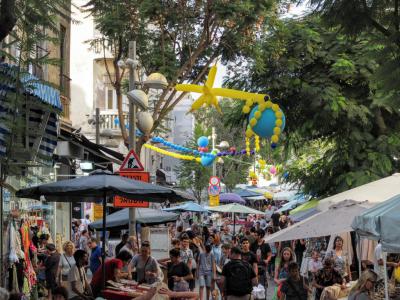
A visit to the Nachalat Binyamin Pedestrian Mall on a trip to Tel Aviv is a must. This vibrant and lively open air market is located in one of the city’s oldest neighborhoods. Here you can shop to your heart’s content for attractive handicrafts, souvenirs and trinkets, whilst simultaneously enjoying the pantomime, music shows and other street performances.
The mall abounds in trendy cafes, where visitors can relax and soak up the unique atmosphere, and it also plays a regular host to the annual arts and crafts fairs in addition to housing, twice a week, the display of ceramics, jewelry and home decor. The mall's annual fair is world famous and attracts thousands of tourists with its vibrant variety of craftsmen, artists, materials, colors and enticing fragrances.
With its Bohemian setting, the Nachalat Binyamin Pedestrian Mall reflects the very essence of Tel Aviv's culture. Other than finding exquisite handmade items crafted to perfection, here you can also spice up your vacation by having insight into your future, written in the lines of your hand or hidden in the coffee grounds sunk to the bottom of the Turkish brew cup, with the help of a palm or coffee ground reader.
This treasure trove of trinkets, arts and crafts is open on Tuesdays at 10 am - 5 pm, or Fridays at 10 am - 4:30 pm.
The mall abounds in trendy cafes, where visitors can relax and soak up the unique atmosphere, and it also plays a regular host to the annual arts and crafts fairs in addition to housing, twice a week, the display of ceramics, jewelry and home decor. The mall's annual fair is world famous and attracts thousands of tourists with its vibrant variety of craftsmen, artists, materials, colors and enticing fragrances.
With its Bohemian setting, the Nachalat Binyamin Pedestrian Mall reflects the very essence of Tel Aviv's culture. Other than finding exquisite handmade items crafted to perfection, here you can also spice up your vacation by having insight into your future, written in the lines of your hand or hidden in the coffee grounds sunk to the bottom of the Turkish brew cup, with the help of a palm or coffee ground reader.
This treasure trove of trinkets, arts and crafts is open on Tuesdays at 10 am - 5 pm, or Fridays at 10 am - 4:30 pm.
