Custom Walk in Basel, Switzerland by jimraymond_e7f3f created on 2025-04-27
Guide Location: Switzerland » Basel
Guide Type: Custom Walk
# of Sights: 9
Tour Duration: 2 Hour(s)
Travel Distance: 2.5 Km or 1.6 Miles
Share Key: L6TE7
Guide Type: Custom Walk
# of Sights: 9
Tour Duration: 2 Hour(s)
Travel Distance: 2.5 Km or 1.6 Miles
Share Key: L6TE7
How It Works
Please retrieve this walk in the GPSmyCity app. Once done, the app will guide you from one tour stop to the next as if you had a personal tour guide. If you created the walk on this website or come to the page via a link, please follow the instructions below to retrieve the walk in the app.
Retrieve This Walk in App
Step 1. Download the app "GPSmyCity: Walks in 1K+ Cities" on Apple App Store or Google Play Store.



Step 2. In the GPSmyCity app, download(or launch) the guide "Basel Map and Walking Tours".
Step 3. Tap the menu button located at upper right corner of the "Walks" screen and select "Retrieve custom walk". Enter the share key: L6TE7
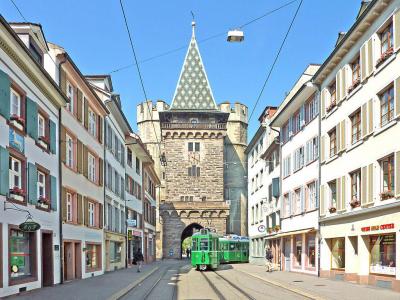
1) Spalentor (Gate of Spalen)
The Gate of Spalen (Spalentor), often regarded as one of the most beautiful gates in Switzerland, is a prominent remnant of Basel's medieval fortifications. Built in 1356, this imposing structure originally served as a protective barrier, part of a defensive ring wall constructed after Basel's expansion. The gate is one of three surviving entries from the city's once-extensive fortifications, which included over 40 towers and six gates.
Spalentor’s architecture features a square central tower flanked by two cylindrical round towers. Its impressive outward-facing façade, visible from afar, is adorned with 15th-century figures: a Madonna and two prophets. This decorative detail highlights its dual role as both a defensive structure and a symbol of the city’s importance.
The gate played a vital role in Basel’s history, serving as a key entry point for supplies and provisions arriving from Alsace. From this vantage point, visitors today can enjoy panoramic views of Basel's old town rooftops, the Jura Hills, the Black Forest, and the Vosges Mountains.
While the original city walls were largely demolished in the 19th century, Spalentor stands as a well-preserved testament to Basel’s medieval past, celebrated as one of Switzerland’s most magnificent city gates.
Spalentor’s architecture features a square central tower flanked by two cylindrical round towers. Its impressive outward-facing façade, visible from afar, is adorned with 15th-century figures: a Madonna and two prophets. This decorative detail highlights its dual role as both a defensive structure and a symbol of the city’s importance.
The gate played a vital role in Basel’s history, serving as a key entry point for supplies and provisions arriving from Alsace. From this vantage point, visitors today can enjoy panoramic views of Basel's old town rooftops, the Jura Hills, the Black Forest, and the Vosges Mountains.
While the original city walls were largely demolished in the 19th century, Spalentor stands as a well-preserved testament to Basel’s medieval past, celebrated as one of Switzerland’s most magnificent city gates.
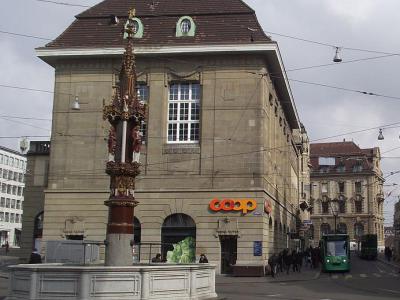
2) Fishmarket Fountain
The Fishmarket Fountain (Fischmarktbrunnen) is a remarkable Gothic masterpiece located on Fish Market Square in Basel. Originally constructed in the latter half of the 14th century, this fountain quickly became celebrated as one of the most beautiful in Northern Europe, reflecting the self-assured spirit of the flourishing civic community of Basel during the Middle Ages. The fountain is a dodecagonal structure adorned with intricate sculptures and architectural details inspired by the Parler family's style of stone masonry, a hallmark of southwest German Gothic art.
Central to the fountain's design is a pinnacled column, rising over 10 meters, adorned with figures of the Madonna, Saint Peter, and Saint John the Baptist. These prominent figures are complemented by smaller depictions of saints, such as Saint Agnes, Saint Barbara, and Saint Catherine, as well as angels playing musical instruments and prophets. The column transitions from a round base to a square and finally to interlocking triangles, crowned by Gothic tracery canopies over the main figures. Above the sturdy gargoyles that serve as water spouts, the entire structure exudes a sense of grandeur and intricate craftsmanship.
In 1468, stonemason Jakob Sarbach was tasked with rebuilding parts of the fountain, but later research by Dr. Annie Kaufmann-Hagenbach in 1952 clarified that much of the original structure predates Sarbach’s contributions. In 1910, the original column and figures were relocated to the Historical Museum Basel for preservation, and a faithful replica now stands in their place on Fish Market Square.
While modern traffic around the square may distract from the serene beauty of the fountain, visiting on quieter days, such as Sundays, allows for a better appreciation of this iconic piece of Gothic artistry and its historical significance.
Central to the fountain's design is a pinnacled column, rising over 10 meters, adorned with figures of the Madonna, Saint Peter, and Saint John the Baptist. These prominent figures are complemented by smaller depictions of saints, such as Saint Agnes, Saint Barbara, and Saint Catherine, as well as angels playing musical instruments and prophets. The column transitions from a round base to a square and finally to interlocking triangles, crowned by Gothic tracery canopies over the main figures. Above the sturdy gargoyles that serve as water spouts, the entire structure exudes a sense of grandeur and intricate craftsmanship.
In 1468, stonemason Jakob Sarbach was tasked with rebuilding parts of the fountain, but later research by Dr. Annie Kaufmann-Hagenbach in 1952 clarified that much of the original structure predates Sarbach’s contributions. In 1910, the original column and figures were relocated to the Historical Museum Basel for preservation, and a faithful replica now stands in their place on Fish Market Square.
While modern traffic around the square may distract from the serene beauty of the fountain, visiting on quieter days, such as Sundays, allows for a better appreciation of this iconic piece of Gothic artistry and its historical significance.
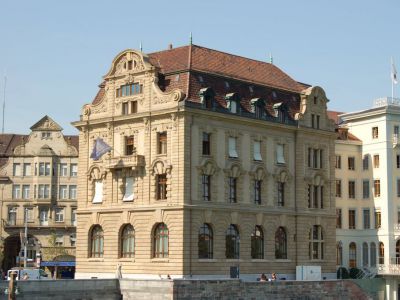
3) Les Trois Rois Hotel (Three Kings Hotel)
The Three Kings Hotel is one of Switzerland's oldest hotels and has welcomed visitors and merchants since the 13th century. In the middle age, the hotel was a popular place to stay among salt traders due to its location right next to the salt tower where ships were docked in order to transport the sought-after commodity down the Rhine River and out into the rest of Europe.
The current luxurious hotel was originally built in 1844. Johann Jakob Senn was a master tailor who foresaw that the railway and river steamer revolution would expand leisure travel and gambled on building this luxury hotel. Basel architect Amadeus Merian designed the Belle Epoque-style hotel.
Many grand hotels are named after the Biblical "Three Kings," who brought gifts to the baby Jesus. As a destination for travelers and merchants, "The Three Kings" represents a tradition of welcoming traders and travelers.
Part of the hotel was sold and used as a bank in the early 20th century. Next, this portion was used at the City Tourist Information Office. Finally, in 2004, Thomas Straumann purchased the hotel and the re-purposed block. Over two years, Straumann renovated and rebuilt the hotel. His goal was to keep the beauty and allure of the 1844 property while updating it to meet modern luxury standards.
The hotel has attracted a variety of celebrities. Notable visitors include Helmut Schmidt, the Dalai Lama, King Faroul of Egypt, and Queen Elizabeth II. In 1798, Napoleon Bonaparte met Basel officials here to discuss the French-Swiss relationship.
Famous artists and writers have also frequented the hotel. Charles Dickens, Voltaire, Jean-Paul Sartre, Picasso, and Duke Ellington are among the celebrities who have enjoyed The Three Kings Hotel's hospitality.
The current luxurious hotel was originally built in 1844. Johann Jakob Senn was a master tailor who foresaw that the railway and river steamer revolution would expand leisure travel and gambled on building this luxury hotel. Basel architect Amadeus Merian designed the Belle Epoque-style hotel.
Many grand hotels are named after the Biblical "Three Kings," who brought gifts to the baby Jesus. As a destination for travelers and merchants, "The Three Kings" represents a tradition of welcoming traders and travelers.
Part of the hotel was sold and used as a bank in the early 20th century. Next, this portion was used at the City Tourist Information Office. Finally, in 2004, Thomas Straumann purchased the hotel and the re-purposed block. Over two years, Straumann renovated and rebuilt the hotel. His goal was to keep the beauty and allure of the 1844 property while updating it to meet modern luxury standards.
The hotel has attracted a variety of celebrities. Notable visitors include Helmut Schmidt, the Dalai Lama, King Faroul of Egypt, and Queen Elizabeth II. In 1798, Napoleon Bonaparte met Basel officials here to discuss the French-Swiss relationship.
Famous artists and writers have also frequented the hotel. Charles Dickens, Voltaire, Jean-Paul Sartre, Picasso, and Duke Ellington are among the celebrities who have enjoyed The Three Kings Hotel's hospitality.
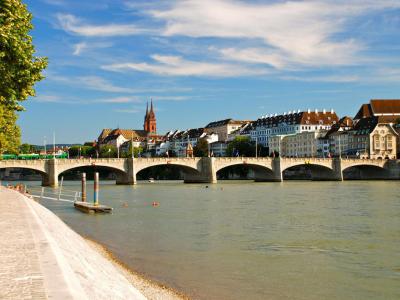
4) Middle Bridge
The Middle Bridge was originally built sometime in the 13th century. This bridge played an essential part in Basel's success as it allowed easy access for merchants and locals. Originally, money lenders charged those crossing with mules, horses, and goods a toll of 30 silver marks until the construction was paid off.
The Middle Bridge was rebuilt from stone between 1903 and 1905. The rebuilt bridge is 192 meters (630 feet) long and has seven arches. Six arches stretch over the Rhine River, and one covers the riverside footpath.
Today, private motor vehicles are prohibited in order to keep the city center car-free.
Visitors will find several sculptures on the bridge. Carl Burckhardt's last sculpture, The Amazon, is located on the bridgehead. The bronze sculpture shows an Amazon leading a horse. Burckhardt completed the plaster model but died before the sculpture was cast. Burckhardt's workshop completed the sculpture after his death.
Bettina Eichin's sculpture Hevetia auf der Reise sits on the bridgehead wall. The sculpture depicts a woman looking across the Rhine with her suitcase beside her.
The artist Ludwig Stocker donated the Lagerstätte sculpture to celebrate Basel's 600 year unification celebration in 1992. The sculpture represents the emblems of the three local guilds. This sculpture is partially submerged in the Rhine and is sometimes completely covered by water.
The Middle Bridge was rebuilt from stone between 1903 and 1905. The rebuilt bridge is 192 meters (630 feet) long and has seven arches. Six arches stretch over the Rhine River, and one covers the riverside footpath.
Today, private motor vehicles are prohibited in order to keep the city center car-free.
Visitors will find several sculptures on the bridge. Carl Burckhardt's last sculpture, The Amazon, is located on the bridgehead. The bronze sculpture shows an Amazon leading a horse. Burckhardt completed the plaster model but died before the sculpture was cast. Burckhardt's workshop completed the sculpture after his death.
Bettina Eichin's sculpture Hevetia auf der Reise sits on the bridgehead wall. The sculpture depicts a woman looking across the Rhine with her suitcase beside her.
The artist Ludwig Stocker donated the Lagerstätte sculpture to celebrate Basel's 600 year unification celebration in 1992. The sculpture represents the emblems of the three local guilds. This sculpture is partially submerged in the Rhine and is sometimes completely covered by water.
5) Basel Münster (Basel Minster) (must see)
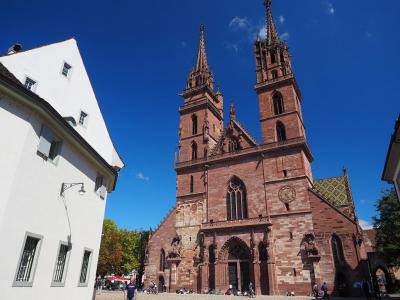
Basel Minster, one of Basel's most prominent landmarks, boasts striking red sandstone walls and vibrant roof tiles that have stood as a testament to the city's architectural heritage since the 11th century. This cathedral, completed and modified over nearly five centuries between 1019 and 1500, remains among the oldest structures in Basel, with roots that stretch back even further. Beneath the current cathedral, excavations have uncovered remnants from the Celtic period, including ancient walls, gates, and streets, revealing the hill’s long-standing significance.
The first cathedral in Basel was built in the ninth century by Bishop Haito, with a more substantial building consecrated in 1019 in the presence of Henry II, the Holy Roman Emperor, lending the church its nickname, the Heinrich Munster. This Romanesque structure, however, did not remain untouched by time or disaster. In the 13th century, the Minster underwent reconstruction, only to suffer extensive damage in the 1356 earthquake. Rebuilt in the Gothic style, the church was re-consecrated in 1363, marking a new chapter in its architectural evolution.
Two impressive towers define the Minster's skyline: the Georgsturm, built in 1429, and the Martinsturm, completed in 1500. These towers, named after the knightly saints George and Martin, feature notable medieval artwork, including a 1372 depiction of Saint George confronting a small dragon. Visitors who ascend the 242 steps of either tower are rewarded with sweeping views of Basel’s historic cityscape.
Basel Minster also played a unique role in history when, in 1440, it hosted the election of Felix V, recognized as an antipope, during a period of religious schism. Later, during the Reformation in the 1500s, Basel saw significant change, as the bishop was expelled, the monastery dissolved, and many religious artworks were destroyed. One such casualty was a statue of the Virgin Mary, which once adorned the central porch, now left empty. However, the scenes of prophets and kings on the main porch remain intact, as do statues of Emperor Henry II and Empress Kunigunde, preserving a glimpse of the Minster’s storied past.
Why You Should Visit:
The Basel Minster is an architecturally stunning cathedral with a long and storied history. The stained glass windows, arched ceiling, and organ are beautiful.
Tips:
Don't miss climbing one of the towers and enjoying dramatic views over Basel.
The first cathedral in Basel was built in the ninth century by Bishop Haito, with a more substantial building consecrated in 1019 in the presence of Henry II, the Holy Roman Emperor, lending the church its nickname, the Heinrich Munster. This Romanesque structure, however, did not remain untouched by time or disaster. In the 13th century, the Minster underwent reconstruction, only to suffer extensive damage in the 1356 earthquake. Rebuilt in the Gothic style, the church was re-consecrated in 1363, marking a new chapter in its architectural evolution.
Two impressive towers define the Minster's skyline: the Georgsturm, built in 1429, and the Martinsturm, completed in 1500. These towers, named after the knightly saints George and Martin, feature notable medieval artwork, including a 1372 depiction of Saint George confronting a small dragon. Visitors who ascend the 242 steps of either tower are rewarded with sweeping views of Basel’s historic cityscape.
Basel Minster also played a unique role in history when, in 1440, it hosted the election of Felix V, recognized as an antipope, during a period of religious schism. Later, during the Reformation in the 1500s, Basel saw significant change, as the bishop was expelled, the monastery dissolved, and many religious artworks were destroyed. One such casualty was a statue of the Virgin Mary, which once adorned the central porch, now left empty. However, the scenes of prophets and kings on the main porch remain intact, as do statues of Emperor Henry II and Empress Kunigunde, preserving a glimpse of the Minster’s storied past.
Why You Should Visit:
The Basel Minster is an architecturally stunning cathedral with a long and storied history. The stained glass windows, arched ceiling, and organ are beautiful.
Tips:
Don't miss climbing one of the towers and enjoying dramatic views over Basel.
6) Müensterplatz (Munster Square)
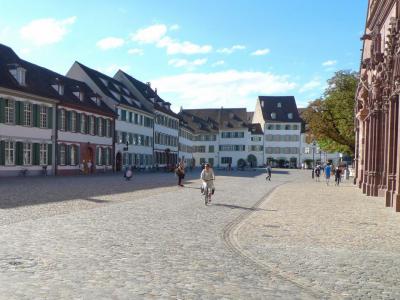
Munster Square is one of Basel's oldest squares and home to the magnificent Basel Minster. In addition to the cathedral, many restored medieval homes line the historic square.
Munster Square's land has been settled for millennia. Rauraci, a Gaelic tribe, lived in the area during the Iron Age. Remnants of their fortifications can still be seen on the corner of Munster Square and Rittergasse.
Munster Square developed over several centuries. The Basel Minster was a vital part of the square's development in the Middle Ages. The square's paving dates to the 14th and 15th centuries. During the 1798 Helvetic Revolution, the French and the citizens of Basel gathered to plant a freedom tree in Munster Square.
Throughout history, the square has played an important part in the city's daily life. Basel has held a unique Carnival celebration since the 14th century. It is the only protestant Carnival in the world, and Carnival lanterns are displayed in Munster Square during the festivities.
Munster Square is also home to the annual Museum Night and Allianz Cinema. In addition, it hosts the Basel Autumn Fair and the Basel City Run.
Architect Paolo Antonion Pisoni created the Pisoni fountain in 1784. This fountain is located in the southwest corner of the square and replaces an ancient fountain that had been in the square since the 14th century.
Munster Square has several townhouses with baroque and classical facades. In addition, the square is home to several medieval half-timbered houses.
Munster Square has several celebrity and historical connections. Celebrated philosopher Friedrich Nietzche taught in the square's high school. The General Reading Center is housed in a historic 1528 building. Musical history fans will enjoy visiting the Paul Sacher Foundation, which features the world's largest private collection of original musical scores.
The square features a popular vantage point with picture-perfect views of the Rhine River.
Munster Square's land has been settled for millennia. Rauraci, a Gaelic tribe, lived in the area during the Iron Age. Remnants of their fortifications can still be seen on the corner of Munster Square and Rittergasse.
Munster Square developed over several centuries. The Basel Minster was a vital part of the square's development in the Middle Ages. The square's paving dates to the 14th and 15th centuries. During the 1798 Helvetic Revolution, the French and the citizens of Basel gathered to plant a freedom tree in Munster Square.
Throughout history, the square has played an important part in the city's daily life. Basel has held a unique Carnival celebration since the 14th century. It is the only protestant Carnival in the world, and Carnival lanterns are displayed in Munster Square during the festivities.
Munster Square is also home to the annual Museum Night and Allianz Cinema. In addition, it hosts the Basel Autumn Fair and the Basel City Run.
Architect Paolo Antonion Pisoni created the Pisoni fountain in 1784. This fountain is located in the southwest corner of the square and replaces an ancient fountain that had been in the square since the 14th century.
Munster Square has several townhouses with baroque and classical facades. In addition, the square is home to several medieval half-timbered houses.
Munster Square has several celebrity and historical connections. Celebrated philosopher Friedrich Nietzche taught in the square's high school. The General Reading Center is housed in a historic 1528 building. Musical history fans will enjoy visiting the Paul Sacher Foundation, which features the world's largest private collection of original musical scores.
The square features a popular vantage point with picture-perfect views of the Rhine River.
7) Rathaus (Town Hall) (must see)
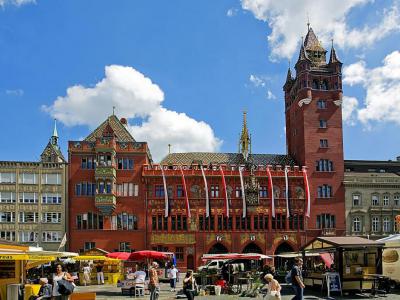
Town Hall is home to the Basel government and parliament. This dramatic red brick building with its imposing tower is one of Basel's most attractive landmarks.
The current Town Hall was built between 1504 and 1513 to celebrate Basel's joining the Swiss Confederation. It replaced an older, less grand structure. While the building has undergone many renovations over the centuries, the three iconic arched entrances are from the initial construction.
Artist Hans Holbein decorated the Town Hall's Assembly Hall in 1521. Hans Holbein would later rise to fame as King Henry VIII's court painter.
The Gothic-style Front Chambers were added in the 1600s. The tower was added in the 1800s. At the time, its imposing height was controversial, and a public vote was called before construction was approved.
The exterior facade features depictions of historical and legendary figures. On the balcony, an inscription reminds visitors Here begins Swiss land. The crenellations are decorated with Basel's coats of arms.
The interior is richly decorated. The courtyard features a Roman statue representing Julius Caesar's contemporary Lucius Munatuis Plancus. Plancus founded Augusta Raurica, the nearby Roman city.
Many paintings depict a law and order theme. For example, the Roman goddess of Justice, Justitia, is depicted in a scene over the Front Chambers.
The Cantonal Parliament debates twice a month in the assembly hall. The Cantonal Government meets in Town Hall every Tuesday. The Chancellery and the Department of Presidental Affairs are also located in the Town Hall.
Guided tours in English are available every Saturday at 4:30 p.m.
The current Town Hall was built between 1504 and 1513 to celebrate Basel's joining the Swiss Confederation. It replaced an older, less grand structure. While the building has undergone many renovations over the centuries, the three iconic arched entrances are from the initial construction.
Artist Hans Holbein decorated the Town Hall's Assembly Hall in 1521. Hans Holbein would later rise to fame as King Henry VIII's court painter.
The Gothic-style Front Chambers were added in the 1600s. The tower was added in the 1800s. At the time, its imposing height was controversial, and a public vote was called before construction was approved.
The exterior facade features depictions of historical and legendary figures. On the balcony, an inscription reminds visitors Here begins Swiss land. The crenellations are decorated with Basel's coats of arms.
The interior is richly decorated. The courtyard features a Roman statue representing Julius Caesar's contemporary Lucius Munatuis Plancus. Plancus founded Augusta Raurica, the nearby Roman city.
Many paintings depict a law and order theme. For example, the Roman goddess of Justice, Justitia, is depicted in a scene over the Front Chambers.
The Cantonal Parliament debates twice a month in the assembly hall. The Cantonal Government meets in Town Hall every Tuesday. The Chancellery and the Department of Presidental Affairs are also located in the Town Hall.
Guided tours in English are available every Saturday at 4:30 p.m.
8) Basel Market
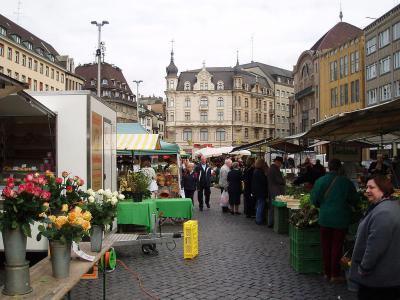
Nestled in the heart of Basel, the Basel Market is the city's largest and most traditional fresh produce market. Situated right in front of the historic City Hall (Rathaus), it serves as a bustling hub for locals and tourists alike, offering a vibrant array of fresh fruits, vegetables, flowers, sausages, cheeses, and even sweet treats. Almost 90% of the fruits and vegetables sold here are sourced from the surrounding Basel region, ensuring that goods are not only fresh and seasonal but also sustainably transported over short distances.
For those passionate about healthy and organic living, Basel Market champions these values by promoting organic produce. The market also offers a selection of unique regional delicacies and gourmet items, accompanied by personal advice from friendly marketeers. Shoppers can relax with a cup of coffee or enjoy a delicious meal in cozy seating areas, making it more than just a place to shop-it's an experience.
During the festive season, the Basel Market transforms into the enchanting Basel Christmas Market, a magical winter attraction renowned as one of Switzerland's most beautiful. Rustic wooden chalets, adorned with delightful decorations, line the streets, creating an idyllic scene that perfectly complements the charm of Advent in Basel.
The Christmas market offers an irresistible array of seasonal delights: raclette, Swiss fondue, grilled sausages, mulled wine, and gingerbread, all embodying the flavors of Swiss holiday traditions. Shoppers will find a variety of Christmas-themed gifts, decorations, and unique items, making it an ideal spot to pick up holiday treasures.
Basel Market, with its lively atmosphere and commitment to quality, stands as a testament to the city's rich traditions and dedication to regional craftsmanship-whether you're visiting in the vibrant summer months or during the magical Christmas season.
For those passionate about healthy and organic living, Basel Market champions these values by promoting organic produce. The market also offers a selection of unique regional delicacies and gourmet items, accompanied by personal advice from friendly marketeers. Shoppers can relax with a cup of coffee or enjoy a delicious meal in cozy seating areas, making it more than just a place to shop-it's an experience.
During the festive season, the Basel Market transforms into the enchanting Basel Christmas Market, a magical winter attraction renowned as one of Switzerland's most beautiful. Rustic wooden chalets, adorned with delightful decorations, line the streets, creating an idyllic scene that perfectly complements the charm of Advent in Basel.
The Christmas market offers an irresistible array of seasonal delights: raclette, Swiss fondue, grilled sausages, mulled wine, and gingerbread, all embodying the flavors of Swiss holiday traditions. Shoppers will find a variety of Christmas-themed gifts, decorations, and unique items, making it an ideal spot to pick up holiday treasures.
Basel Market, with its lively atmosphere and commitment to quality, stands as a testament to the city's rich traditions and dedication to regional craftsmanship-whether you're visiting in the vibrant summer months or during the magical Christmas season.
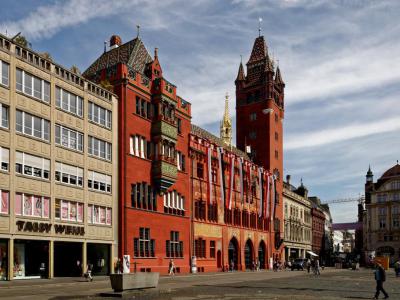
9) Marktplatz (Market Square)
The vibrant red town hall dominates Market Square. Market Square hosts a daily market that features local produce and regional and Swiss specialties. In addition, visitors can stock up on flowers, coffee, honey, crafts, and wine.
The square dates back to at least the year 1091. Back then, the square was bisected by Birsig Creek. There was a grain market where the citizens met and handled business. In 1290, the first town hall was built and that became the center of the town's political life.
In addition to the town hall, the square was home to the court. In front of the courthouse was a flat stone used for executions and public announcements. The accused often were brought here to face the ridicule of the population.
In the early days, the square was surrounded by wooden shops and houses with fold-down shutters. Through the open windows, owners would sell their goods that included meats, sausages, tripe, herring, birds, and gingerbread.
The houses were destroyed in 1891 to expand Market Square. Over the years, large commercial buildings have taken over. The square was further modified in 1908 when it was leveled out. Today, it is one of the most important tram junctions in the city, with seven lines passing through this one spot.
Market Square is delightful over the Christmas holidays. Visitors can do holiday shopping while enjoying hot chocolate and festive holiday lights. But any time of year is a great time to visit, thanks to the many charming cafes, restaurants, shops, and boutiques.
The square dates back to at least the year 1091. Back then, the square was bisected by Birsig Creek. There was a grain market where the citizens met and handled business. In 1290, the first town hall was built and that became the center of the town's political life.
In addition to the town hall, the square was home to the court. In front of the courthouse was a flat stone used for executions and public announcements. The accused often were brought here to face the ridicule of the population.
In the early days, the square was surrounded by wooden shops and houses with fold-down shutters. Through the open windows, owners would sell their goods that included meats, sausages, tripe, herring, birds, and gingerbread.
The houses were destroyed in 1891 to expand Market Square. Over the years, large commercial buildings have taken over. The square was further modified in 1908 when it was leveled out. Today, it is one of the most important tram junctions in the city, with seven lines passing through this one spot.
Market Square is delightful over the Christmas holidays. Visitors can do holiday shopping while enjoying hot chocolate and festive holiday lights. But any time of year is a great time to visit, thanks to the many charming cafes, restaurants, shops, and boutiques.
