Custom Walk in Moscow, Russia by nalau_nobel_746a7 created on 2025-05-01
Guide Location: Russia » Moscow
Guide Type: Custom Walk
# of Sights: 15
Tour Duration: 16 Hour(s)
Travel Distance: 44.1 Km or 27.4 Miles
Share Key: ZMQGX
Guide Type: Custom Walk
# of Sights: 15
Tour Duration: 16 Hour(s)
Travel Distance: 44.1 Km or 27.4 Miles
Share Key: ZMQGX
How It Works
Please retrieve this walk in the GPSmyCity app. Once done, the app will guide you from one tour stop to the next as if you had a personal tour guide. If you created the walk on this website or come to the page via a link, please follow the instructions below to retrieve the walk in the app.
Retrieve This Walk in App
Step 1. Download the app "GPSmyCity: Walks in 1K+ Cities" on Apple App Store or Google Play Store.



Step 2. In the GPSmyCity app, download(or launch) the guide "Moscow Map and Walking Tours".
Step 3. Tap the menu button located at upper right corner of the "Walks" screen and select "Retrieve custom walk". Enter the share key: ZMQGX
1) Ostankino Tower
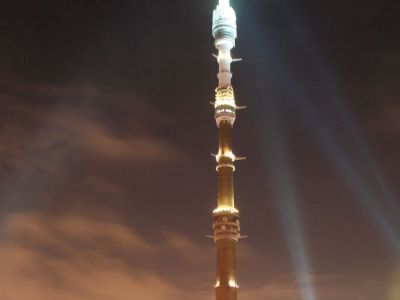
Ostankino Tower is currently the tallest free-standing structure in Europe and 11th tallest in the world. Standing 540.1 metres (1,772 ft) tall, Ostankino was designed by Nikolai Nikitin and was built to mark the 50th anniversary of the October Revolution. Construction began on the tower in 1963 and was completed in 1967.
The tower has 3,544 stairs, an elevator that can take 13 people to the top of the tower in less than a minute, and weighs 55,000 tons. An average 0.2 million people visit the tower observatory each year.
A fire in 2000 almost caused the demise of the tower and resulted in its restaurant, the rotating and glass-walled Seventh Heaven, to remain permanently closed. In addition, three people died in the fire. A fire in 2007 resulted in less damage and no casualties.
Fearless visitors will enjoy the glass floor. What makes a trip to the tower worth the wait is being able to see Moscow in its entirety. It is also one of the favorite locations for base jumpers. The tower is breathtaking when viewed in the nighttime light.
Why You Should Visit:
You won't get any higher in Moscow unless you're in an airplane.
Tip:
Be prepared for airport-level security, including a check of your original passport(s).
Children are allowed starting 7 years and they also do need identity documents.
As with all tall structures, check the weather forecast first: bad weather means bad views.
For an even more interesting visit, take the technical tour (additional cost) where you can go inside the interior of the tower structure to see how it is constructed.
The tower has 3,544 stairs, an elevator that can take 13 people to the top of the tower in less than a minute, and weighs 55,000 tons. An average 0.2 million people visit the tower observatory each year.
A fire in 2000 almost caused the demise of the tower and resulted in its restaurant, the rotating and glass-walled Seventh Heaven, to remain permanently closed. In addition, three people died in the fire. A fire in 2007 resulted in less damage and no casualties.
Fearless visitors will enjoy the glass floor. What makes a trip to the tower worth the wait is being able to see Moscow in its entirety. It is also one of the favorite locations for base jumpers. The tower is breathtaking when viewed in the nighttime light.
Why You Should Visit:
You won't get any higher in Moscow unless you're in an airplane.
Tip:
Be prepared for airport-level security, including a check of your original passport(s).
Children are allowed starting 7 years and they also do need identity documents.
As with all tall structures, check the weather forecast first: bad weather means bad views.
For an even more interesting visit, take the technical tour (additional cost) where you can go inside the interior of the tower structure to see how it is constructed.
2) Ostankino Palace
Editor's Note: The museum is under restoration.
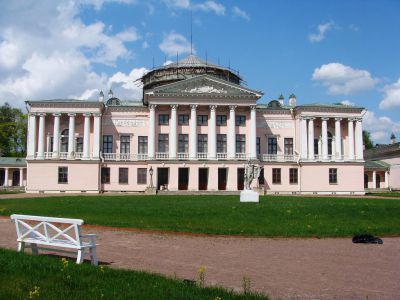
Ostankino Palace is a neo-classical wooden building that was constructed from 1792 to 1798. The palace grounds include many architectural treats: a picturesque park, stunning gardens, a splendid theater hall, a pond, and a beautiful church. It is the third largest wooden building in the world. Ostankino Palace is the former summer residence and entertainment site of the wealthy Count Nikolai Sheremetv. In 1918, it became property of the state.
Visitors will enjoy viewing the palace’s many treasures. The Church of the Trinity features well-maintained icons. Gorgeous fabric lines the walls of the palace and attractive woodcarvings fill the rooms. Vivid colors fill the walls. Beautiful chandeliers hang from the ceiling. The adjacent Ostankino Park reveals reproductions of famous statues and an assortment of pavilions. Chinese ceramics, sculptures, and other artwork fills the regal structure.
In addition, the lush gardens that surround the palace are immaculately landscaped. Sites to not miss include the Italian Pavilion, the Egyptian Hall, and the oval theatre-ballroom. The theater is host to classical musical concerts. The palace is open Wednesday through Sunday from 11 am to 6 pm, until September. Be aware that the palace is unheated and is closed if it is raining or humid.
Ostankino Palace is a neo-classical wooden building that was constructed from 1792 to 1798. The palace grounds include many architectural treats: a picturesque park, stunning gardens, a splendid theater hall, a pond, and a beautiful church. It is the third largest wooden building in the world. Ostankino Palace is the former summer residence and entertainment site of the wealthy Count Nikolai Sheremetv. In 1918, it became property of the state.
Visitors will enjoy viewing the palace’s many treasures. The Church of the Trinity features well-maintained icons. Gorgeous fabric lines the walls of the palace and attractive woodcarvings fill the rooms. Vivid colors fill the walls. Beautiful chandeliers hang from the ceiling. The adjacent Ostankino Park reveals reproductions of famous statues and an assortment of pavilions. Chinese ceramics, sculptures, and other artwork fills the regal structure.
In addition, the lush gardens that surround the palace are immaculately landscaped. Sites to not miss include the Italian Pavilion, the Egyptian Hall, and the oval theatre-ballroom. The theater is host to classical musical concerts. The palace is open Wednesday through Sunday from 11 am to 6 pm, until September. Be aware that the palace is unheated and is closed if it is raining or humid.

3) Aerospace Pavilion
The Aerospace Pavilion, originally called the Mechanization pavilion, is an impressive building with a giant arch. This arch has an embrasure made of mirror glass. The pavilion is famed for its dome with metallic framework.
4) Friendship of Nations Fountain
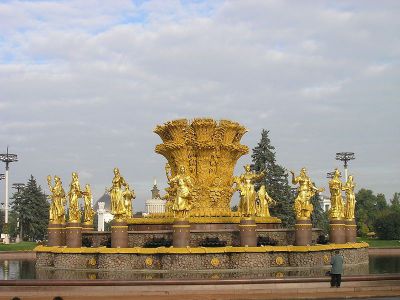
One of the most stunning discoveries for those who visit Russia is the extraordinary Friendship of Nations Fountain, a display of 16 statutes that represent the former member nations of the of former Soviet Union: Russia, Armenia, Ukraine, Belarus, Uzbekistan, Lithuania, Latvia, Tajikistan, Estonia, Turkmenistan, Moldavia, Georgia, Kirghizstan, Azerbaijan and Kazakhstan. The 16th country, Karelo-Finnish SSR, was incorporated back into Russia in 1956. The main objective of the fountain was to present the idea of national identity to the Soviet people and the world.
Also known as the People's Friendship Fountain, it is located in the plaza near the Russia Exhibition Centre. The fountain was constructed in 1950s by sculptors Z. Bazhenova, L. Bazhenova, Z. Ryleeva, I. Tchaikova, and A. Teneta. Each bronze and gold-plated maiden features a female wearing the national dress of their country.
The figures majestically form a circle around a wheat sheaf made of gold-plated copper sheet. The bowl that encircles the monument is made of red granite and is powered by eight pumps that process thousands of liters of water. Eight hundred jets that spray water ensure stunning and ever-changing displays of beauty. Nonetheless stunning, this statue evokes memories of an era long gone, but not forgotten.
Also known as the People's Friendship Fountain, it is located in the plaza near the Russia Exhibition Centre. The fountain was constructed in 1950s by sculptors Z. Bazhenova, L. Bazhenova, Z. Ryleeva, I. Tchaikova, and A. Teneta. Each bronze and gold-plated maiden features a female wearing the national dress of their country.
The figures majestically form a circle around a wheat sheaf made of gold-plated copper sheet. The bowl that encircles the monument is made of red granite and is powered by eight pumps that process thousands of liters of water. Eight hundred jets that spray water ensure stunning and ever-changing displays of beauty. Nonetheless stunning, this statue evokes memories of an era long gone, but not forgotten.
5) VDNKh Central Pavilion (must see)
Exhibition of Achievements of National Economy, abbreviated as VDNKh or VDNH, Russian: ВДНХ, pronounced [vɛ dɛ ɛn xa]) is a permanent general purpose trade show and amusement park in Moscow, Russia. Between 1991 and 2014 it was also called the All-Russia Exhibition Centre.
VDNKh is located in Ostankinsky District of Moscow, less than a kilometer from Ostankino Tower. Cosmonauts Alley and the Worker and Kolkhoz Woman statue are situated just outside the main entrance to VDNKh. It also borders Moscow Botanical Garden and a smaller Ostankino Park, and in recent years the three parks served as a united park complex.
During winter, VDNKh converts into a main Skating Rink with a total area of 60,000 square metres.
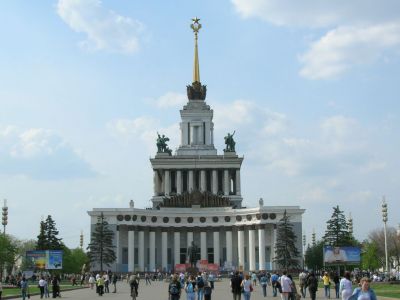
The Central Pavilion, also known as Pavilion №1, was designed by Yu.V. Shuko and E.A. Stolyarov in wedding-cake style. It is a 97-meter high tower (including the spire) crowned with a gold-plated sculpture. The Pavilion is an excellent representative of Russian classical architecture. Before the fall of the Soviet Union, a statue of Vladimir Lenin used to stand in the front of the pavilion. The monumental building has undergone renovation and was unveiled on June 1st, 2018, as the Main Alley leading to it reopened to the public.
VDNKh is located in Ostankinsky District of Moscow, less than a kilometer from Ostankino Tower. Cosmonauts Alley and the Worker and Kolkhoz Woman statue are situated just outside the main entrance to VDNKh. It also borders Moscow Botanical Garden and a smaller Ostankino Park, and in recent years the three parks served as a united park complex.
During winter, VDNKh converts into a main Skating Rink with a total area of 60,000 square metres.
The Central Pavilion, also known as Pavilion №1, was designed by Yu.V. Shuko and E.A. Stolyarov in wedding-cake style. It is a 97-meter high tower (including the spire) crowned with a gold-plated sculpture. The Pavilion is an excellent representative of Russian classical architecture. Before the fall of the Soviet Union, a statue of Vladimir Lenin used to stand in the front of the pavilion. The monumental building has undergone renovation and was unveiled on June 1st, 2018, as the Main Alley leading to it reopened to the public.
6) Bolshoi Theatre (must see)
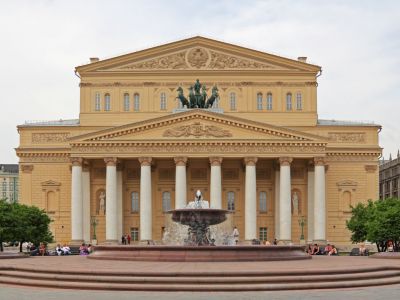
Bolshoi Theatre (Russian: Bolshoy Teatr) is the leading theatre company for ballet and opera in Russia, and one of the most renowned in the world. It has by far the world's biggest ballet troupe of more than 200 dancers, attesting to the name "Bolshoi" (Russian for “grand”).
The theatre's history dates back to 1776. The current building was constructed in 1856 after two of its predecessors had burned down.
As of the late 19th century, Bolshoi has been a major influence on the opera and ballet scene throughout the Western world. Perhaps this had helped it survive the Russian Revolution of 1917. At some point, the Bolsheviks considered demolishing the theatre as the relic of the tsarist regime.
During its history the theatre has successfully survived two world wars, as well as the collapse of the Soviet Union in the early 1990s. The landmark edifice has been renovated several times, with the latest rebuild taking place in 2005-2011. Upon its completion, the Bolshoi regained its pre-Soviet times acoustics along with the imperial décor, seeing, among other things, the replacement of the Soviet hammer & sickle emblem with the two-headed eagle coat of arms on the façade.
Why You Should Visit:
To enjoy ballet and/or opera in this world-famous venue – a once-in-a-lifetime experience you'll never forget. Tickets are expensive, but you have to get there at least once!
Even if you don't get in, the external architecture is really powerful in both daytime light and night illumination. The theatre is part of the Circle of Light festival, a unique light show, playing on the architectural form of the building.
Tip:
Be sure to check on their website what's on and book long in advance because the famous shows sell out quickly.
Be attentive choosing your seats – on the website, there is a seating plan with visibility limitations.
If you're not so interested in seats for the 'historic' stage and just want to see a great performance, you can always choose the 'new' (cheaper) stage next door.
Note: no cards are accepted in bars (cash only), but there is an ATM inside the theatre.
The theatre's history dates back to 1776. The current building was constructed in 1856 after two of its predecessors had burned down.
As of the late 19th century, Bolshoi has been a major influence on the opera and ballet scene throughout the Western world. Perhaps this had helped it survive the Russian Revolution of 1917. At some point, the Bolsheviks considered demolishing the theatre as the relic of the tsarist regime.
During its history the theatre has successfully survived two world wars, as well as the collapse of the Soviet Union in the early 1990s. The landmark edifice has been renovated several times, with the latest rebuild taking place in 2005-2011. Upon its completion, the Bolshoi regained its pre-Soviet times acoustics along with the imperial décor, seeing, among other things, the replacement of the Soviet hammer & sickle emblem with the two-headed eagle coat of arms on the façade.
Why You Should Visit:
To enjoy ballet and/or opera in this world-famous venue – a once-in-a-lifetime experience you'll never forget. Tickets are expensive, but you have to get there at least once!
Even if you don't get in, the external architecture is really powerful in both daytime light and night illumination. The theatre is part of the Circle of Light festival, a unique light show, playing on the architectural form of the building.
Tip:
Be sure to check on their website what's on and book long in advance because the famous shows sell out quickly.
Be attentive choosing your seats – on the website, there is a seating plan with visibility limitations.
If you're not so interested in seats for the 'historic' stage and just want to see a great performance, you can always choose the 'new' (cheaper) stage next door.
Note: no cards are accepted in bars (cash only), but there is an ATM inside the theatre.
Sight description based on Wikipedia.
7) Revolution Square
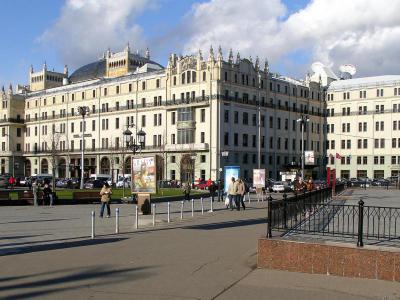
Shaped as an arc extended from the southwest to the north, Revolution Square (Russian: 'Ploshchad Revolyutsii') is a historic place in downtown Moscow. Its current name reflects the role that the square once played as a gathering spot during the Socialist Revolution of 1917.
Fully pedestrian nowadays, it is surrounded with monumental architecture dominated by the vast, red-brick building of Moscow City Hall. The latter was constructed in 1890, featuring Russian Revivalist style, and originally housed the ruling Duma disbanded by Bolsheviks after the Revolution. For many years after WWII, the edifice was home to the Lenin Museum.
Another notable façade overlooking the square is indeed that of the majestic Hotel Metropol, one of the finest Art Nouveau creations adorning the city, completed in 1907.
On the north side, the square is curbed by the Hotel Moskva, originally built between 1932 and 1938 by Alexey Shchusev. Despite being regarded as an architectural monument, the hotel was demolished in 2004 and then replicated ten years later, accurately as possible to the original, fitted with underground parking and few other features not available in the 1930s. The new hotel, re-branded as Four Seasons, retains the appearance of its iconic predecessor.
Why You Should Visit:
Impressive historical architecture plus other curious sites, such as the Karl Marx monument and the Vitali Fountain.
Also, check out the zero mile marker from which all the distances to/from Moscow are measured.
Perhaps not a prime destination, but still worth a visit if you're in the area.
Fully pedestrian nowadays, it is surrounded with monumental architecture dominated by the vast, red-brick building of Moscow City Hall. The latter was constructed in 1890, featuring Russian Revivalist style, and originally housed the ruling Duma disbanded by Bolsheviks after the Revolution. For many years after WWII, the edifice was home to the Lenin Museum.
Another notable façade overlooking the square is indeed that of the majestic Hotel Metropol, one of the finest Art Nouveau creations adorning the city, completed in 1907.
On the north side, the square is curbed by the Hotel Moskva, originally built between 1932 and 1938 by Alexey Shchusev. Despite being regarded as an architectural monument, the hotel was demolished in 2004 and then replicated ten years later, accurately as possible to the original, fitted with underground parking and few other features not available in the 1930s. The new hotel, re-branded as Four Seasons, retains the appearance of its iconic predecessor.
Why You Should Visit:
Impressive historical architecture plus other curious sites, such as the Karl Marx monument and the Vitali Fountain.
Also, check out the zero mile marker from which all the distances to/from Moscow are measured.
Perhaps not a prime destination, but still worth a visit if you're in the area.
8) Arbatskaya Square
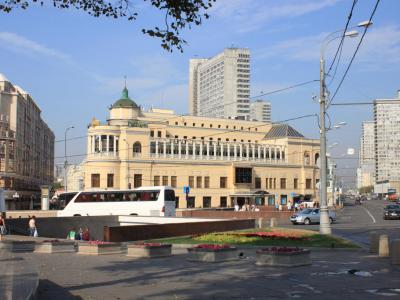
Some 800 metres west of the Kremlin walls, in the historic center of Moscow, lies Arbatskaya Square (Russian: Arbatskaya Ploshchad), one of the oldest squares in the city. Home to the Arbatskaya metro station, this square is a busy transport hub and the meeting point of several vital arteries of Moscow: New Arbat, Gogolevsky Boulevard, Znamenka and Vozdvizhenka Streets, as well as the Boulevard Ring.
A few steps away you will find yourself on the picturesque “Old” Arbat street. Part of the square adjacent to it is called the Arbat Gate (Russian: Arbatskie Vorota), and is the former site of one of the ten gates of the old city wall, known as the White City (Russian: Belyi Gorod). Back in the 16th-18th centuries the wall followed the path of today's Boulevard Ring, and was demolished in the 1750s-1770s.
Presently, Arbat Square is dominated by the vast New Arbat avenue. Back in the 1960s, before the major reconstruction, the square was sitting slightly to the south of its current location, on the line of old Arbat Street and the vestibule of the Arbatskaya metro station.
In the early 19th century, the area was home to the Arbatsky Theater, which perished in the Fire of Moscow of 1812. Another notable landmark of the past, situated in the south part of the square, was the Arbat Fountain. Originally a fire reservoir (1840s), it would later become purely decorative, refitted in 1945 with sculptures and granite slabs in Stalinist style, only to be destroyed in the 1960s.
A few steps away you will find yourself on the picturesque “Old” Arbat street. Part of the square adjacent to it is called the Arbat Gate (Russian: Arbatskie Vorota), and is the former site of one of the ten gates of the old city wall, known as the White City (Russian: Belyi Gorod). Back in the 16th-18th centuries the wall followed the path of today's Boulevard Ring, and was demolished in the 1750s-1770s.
Presently, Arbat Square is dominated by the vast New Arbat avenue. Back in the 1960s, before the major reconstruction, the square was sitting slightly to the south of its current location, on the line of old Arbat Street and the vestibule of the Arbatskaya metro station.
In the early 19th century, the area was home to the Arbatsky Theater, which perished in the Fire of Moscow of 1812. Another notable landmark of the past, situated in the south part of the square, was the Arbat Fountain. Originally a fire reservoir (1840s), it would later become purely decorative, refitted in 1945 with sculptures and granite slabs in Stalinist style, only to be destroyed in the 1960s.
Sight description based on Wikipedia.
9) Ministry of Foreign Affairs Main Building
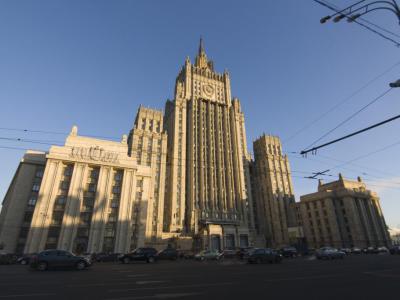
The main building of Russia's Foreign Affairs Ministry is one of the seven skyscrapers in Moscow designed in Stalinist style. At the time of construction, between 1947 and 1953, the so-called Seven Sisters were the tallest buildings in Europe, and have long dominated the skyline of Moscow ever since.
The MFA edifice stands on the site previously intended for the House of Foreign Tourism, whose construction began in 1931, which was then remodeled as a wing of the People's Commissariat of the Meat and Dairy Industry also unfinished because of the war.
The Foreign Ministry project kicked off in 1948 and was completed in 1953, led by architects Vladimir Gelfreykh and Adolf Minkus, based on the dimensions and outline of the previous construction and some other pre-war buildings nearby incorporated into the ensemble. Apparent is the visual similarity with Woolworth Building in Manhattan whose architectural appearance reflects English Gothic style characterized by rigid ribs, height and upward tendency.
The skyscraper stands 172 meters (564 ft) tall and has 27 floors served by 28 elevators, including 18 high-speed ones. On the main facade, 114 meters high, is the coat of arms of the former USSR. Similarly to all its sister towers, the MFA's top is crowned by a metal spire accentuating the silhouette. The spire was hastily added to the design at the insistence of Joseph Stalin in 1952, a year after the project was completed. The objecting Vladimir Gelfreykh was politely advised that if he refused to comply, another architect would take his place...
Adding a spire represented a bit of a problem as the lightened top of the building couldn't hold a heavy stone installation, so they decided to put a decorative one instead, made of painted ocher-steel sheets, thus reducing the total weight of the 56-meter spire to 350 tons. Its fragility became the reason that the Foreign Ministry building is the only Stalinist skyscraper not crowned with a five-pointed star. Legend has it that after Stalin's death, the architect Minkus wrote to Nikita Khrushchev asking to dismantle the spire, to which he replied: "Let the spire remain a monument to Stalin's stupidity." In 2017, because of the corrosion, the old spire was dismantled and cut into souvenirs, while a new exact copy was installed later the same year.
The MFA edifice stands on the site previously intended for the House of Foreign Tourism, whose construction began in 1931, which was then remodeled as a wing of the People's Commissariat of the Meat and Dairy Industry also unfinished because of the war.
The Foreign Ministry project kicked off in 1948 and was completed in 1953, led by architects Vladimir Gelfreykh and Adolf Minkus, based on the dimensions and outline of the previous construction and some other pre-war buildings nearby incorporated into the ensemble. Apparent is the visual similarity with Woolworth Building in Manhattan whose architectural appearance reflects English Gothic style characterized by rigid ribs, height and upward tendency.
The skyscraper stands 172 meters (564 ft) tall and has 27 floors served by 28 elevators, including 18 high-speed ones. On the main facade, 114 meters high, is the coat of arms of the former USSR. Similarly to all its sister towers, the MFA's top is crowned by a metal spire accentuating the silhouette. The spire was hastily added to the design at the insistence of Joseph Stalin in 1952, a year after the project was completed. The objecting Vladimir Gelfreykh was politely advised that if he refused to comply, another architect would take his place...
Adding a spire represented a bit of a problem as the lightened top of the building couldn't hold a heavy stone installation, so they decided to put a decorative one instead, made of painted ocher-steel sheets, thus reducing the total weight of the 56-meter spire to 350 tons. Its fragility became the reason that the Foreign Ministry building is the only Stalinist skyscraper not crowned with a five-pointed star. Legend has it that after Stalin's death, the architect Minkus wrote to Nikita Khrushchev asking to dismantle the spire, to which he replied: "Let the spire remain a monument to Stalin's stupidity." In 2017, because of the corrosion, the old spire was dismantled and cut into souvenirs, while a new exact copy was installed later the same year.
Sight description based on Wikipedia.
10) Victory Memorial Park
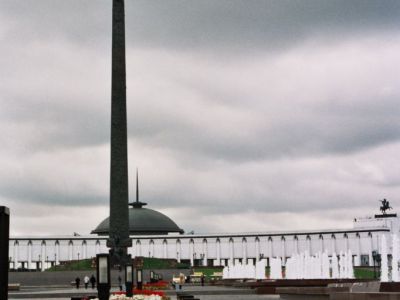
Situated on Poklonnaya Hill, Victory Park opened in 1995 to celebrate the 50th anniversary of the victory over Nazis in the Great Patriotic War. The main monument of the park is an obelisk with a bronze statue of Nika, the goddess of victory. The monument has a weight of 1000 tons and a height of 140 meters, every 10 centimeters representing a day of the war. The obelisk is covered in different bronze bas-reliefs and has a 25 tons assembled bronze statue at the 122th meter. On 9 may, Victory Day in Russia, the park becomes the center of Moscow's celebrations.
The 15 fountains of the Victory Park, each with 15 jets, are a symbol of the Great Patriotic War. The number of the fountains multiplied with the number of their 15 jets, equals the number of weeks of the Great Patriotic War, which is 225. The fountains have an impressive red lightning which symbolizes the blood of the war's victims.
The 15 fountains of the Victory Park, each with 15 jets, are a symbol of the Great Patriotic War. The number of the fountains multiplied with the number of their 15 jets, equals the number of weeks of the Great Patriotic War, which is 225. The fountains have an impressive red lightning which symbolizes the blood of the war's victims.
11) Novodevichy Convent (must see)
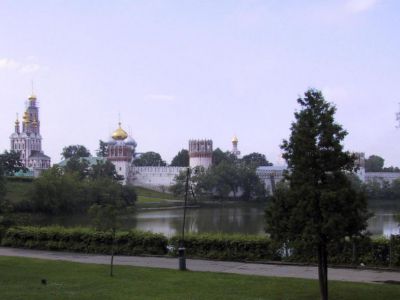
Novodevichy Convent is probably the best-known cloister of Moscow. Its name, sometimes translated as the New Maidens' Monastery, was devised to differ from an ancient maidens' convent within the Moscow Kremlin. Unlike other Moscow cloisters, it has remained virtually intact since the 17th century. In 2004, it was proclaimed a UNESCO World Heritage Site.
The Convent is situated in the south-western part of the historic town of Moscow. The Convent territory is enclosed within walls and surrounded by a park, which forms the buffer zone. The oldest structure in the convent is the six-pillared five-domed Smolensky Cathedral, dedicated to the icon Our Lady of Smolensk. It is situated in the centre of the axes between the two entrance gates. Its frescos are among the finest in Moscow.
The cathedral may be a focal point of the convent, but there are many other churches. Most date from the 1680s, when the convent was thoroughly renovated at the behest of the regent Sofia Alexeyevna, who was later incarcerated there. The blood-red walls and crown-towers, two lofty over-the-gates churches, a refectory, and residential quarters were all designed in the Muscovite Baroque style, supposedly by a certain Peter Potapov.
An arresting slender belltower, also commissioned by tsarevna Sofia, was built in six tiers to a height of 72 metres (236 ft), making it the tallest structure in 18th-century Moscow (after the Ivan the Great Bell Tower in the Kremlin). This light octagonal column seems to unite all major elements of the ensemble into one harmonious whole.
Tip:
Don't miss the adjacent cemetery, filled with tombs belonging to eminent Russian and Soviet personalities e.g. artists, politicians, scientists. Here lie Khrushchev, Yeltsin, Gogol, Bulgakov, Mayakovsky, Chekhov, Prokofiev, Eisenstein, but also Turkish poet Hikmet. Make sure that you go to the cemetery's far end (through an archway in a wall) into Sections 10 and 11. This is where the most splendid and famous graves are and it is not to be missed.
The Convent is situated in the south-western part of the historic town of Moscow. The Convent territory is enclosed within walls and surrounded by a park, which forms the buffer zone. The oldest structure in the convent is the six-pillared five-domed Smolensky Cathedral, dedicated to the icon Our Lady of Smolensk. It is situated in the centre of the axes between the two entrance gates. Its frescos are among the finest in Moscow.
The cathedral may be a focal point of the convent, but there are many other churches. Most date from the 1680s, when the convent was thoroughly renovated at the behest of the regent Sofia Alexeyevna, who was later incarcerated there. The blood-red walls and crown-towers, two lofty over-the-gates churches, a refectory, and residential quarters were all designed in the Muscovite Baroque style, supposedly by a certain Peter Potapov.
An arresting slender belltower, also commissioned by tsarevna Sofia, was built in six tiers to a height of 72 metres (236 ft), making it the tallest structure in 18th-century Moscow (after the Ivan the Great Bell Tower in the Kremlin). This light octagonal column seems to unite all major elements of the ensemble into one harmonious whole.
Tip:
Don't miss the adjacent cemetery, filled with tombs belonging to eminent Russian and Soviet personalities e.g. artists, politicians, scientists. Here lie Khrushchev, Yeltsin, Gogol, Bulgakov, Mayakovsky, Chekhov, Prokofiev, Eisenstein, but also Turkish poet Hikmet. Make sure that you go to the cemetery's far end (through an archway in a wall) into Sections 10 and 11. This is where the most splendid and famous graves are and it is not to be missed.
12) Gorky Park (must see)
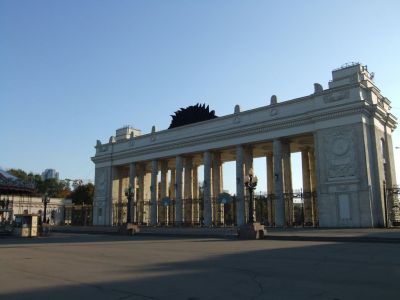
Situated across the Moscow River, Gorky Park is an amusement park called in honor to Maxim Gorky. The Park covers an area of 300 acres of land where children's playgrounds, carousels and old buildings from the late 18th and early 19th centuries are dislocated. The Park has a so called Graveyard of Fallen Monuments which represents a collection of old Soviet statues.
13) Monument to Peter the Great
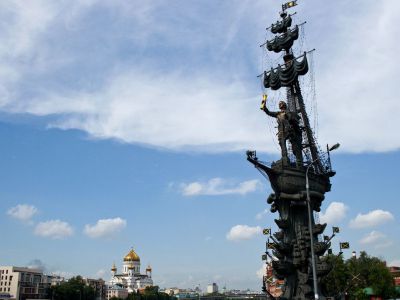
Designed by the Georgian designer Zurab Tsereteli, Peter the Great Statue commemorates 300 years of the Russian Navy's start by Peter I. The statue has a height of 94 meters and is famous by being the seventh tallest statue in the world. The Statue of Peter the Great is made of a mix of materials which were prepared especially for the statue to maintain its impressive vision.
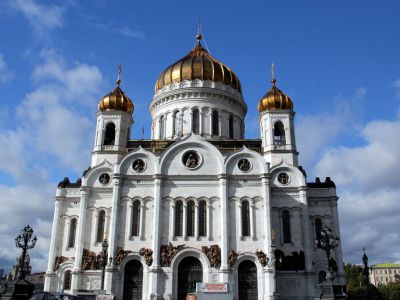
14) Cathedral of Christ the Savior (must see)
The Cathedral of Christ the Savior is considered to be the tallest Eastern Orthodox Church. Located a few blocks west of the Kremlin, the cathedral is built in a Neo-Byzantine design, which was approved in 1937 by the Tsar. The Cathedral of Christ the Savior is the largest and one of the most important representatives of Russian architecture.
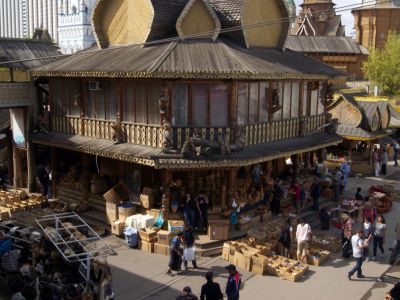
15) Izmailovo Flea Market
Izmailovo Flea Market, also known as the Izmailovo Vernissage, is one of the largest Moscow fairs that features a variety of decorative and applied art, folk handicrafts, traditional Russian souvenirs and antiques. Located by the "Kremlin in Izmaylovo" complex, in a residential area at Moscow's outskirts, this place used to be Peter the Great's royal estate. Nowadays, Izmailovo Market became a top tourist destination for its superb choice of crafts, souvenirs and antiques, as well as for the sights. Operation Hours daily: 10 am - 6 pm
