Custom Walk in Amsterdam, Netherlands by marion_souveton_b9439 created on 2025-05-11
Guide Location: Netherlands » Amsterdam
Guide Type: Custom Walk
# of Sights: 16
Tour Duration: 4 Hour(s)
Travel Distance: 7.5 Km or 4.7 Miles
Share Key: RMQEK
Guide Type: Custom Walk
# of Sights: 16
Tour Duration: 4 Hour(s)
Travel Distance: 7.5 Km or 4.7 Miles
Share Key: RMQEK
How It Works
Please retrieve this walk in the GPSmyCity app. Once done, the app will guide you from one tour stop to the next as if you had a personal tour guide. If you created the walk on this website or come to the page via a link, please follow the instructions below to retrieve the walk in the app.
Retrieve This Walk in App
Step 1. Download the app "GPSmyCity: Walks in 1K+ Cities" on Apple App Store or Google Play Store.



Step 2. In the GPSmyCity app, download(or launch) the guide "Amsterdam Map and Walking Tours".
Step 3. Tap the menu button located at upper right corner of the "Walks" screen and select "Retrieve custom walk". Enter the share key: RMQEK
1) Dam Square (must see)
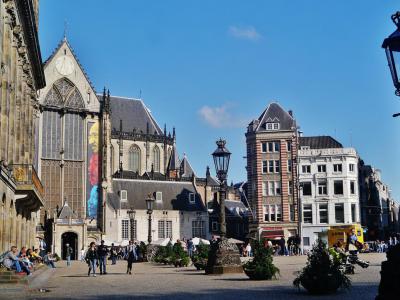
Dam Square, or the Dam, is a central town square in Amsterdam, known for its significant buildings and frequent events. Positioned in the historical heart of Amsterdam, it sits on the site of the original dam on the Amstel River. The square extends some 200 meters from west to east and 100 meters from north to south, connecting Damrak and Rokin streets that trace the Amstel's original course.
The square is also the termination point for other notable streets like New Dike, Calf Street, and Dam Street, with the main red-light district, De Wallen, just beyond its northeast corner. Prominent features on Dam Square include the neoclassical Royal Palace, the 15th-century Gothic New Church, the Madame Tussauds Wax Museum, and the National Monument which honors World War II victims, all of which collectively turn the Dam into a major tourist hub.
The name "Amsterdam" originates from a dam built on the Amstel River around 1270. This dam, integral to the city's development, included a discharge sluice and later locks to facilitate navigation and control water levels. By 1275, the settlement was significant enough to be recorded in connection with a road toll granted by the count of Holland, Floris V. Over time, the dam expanded to accommodate a town square, now known as Dam Square. Eventually, the area became a hub for commercial and governmental activities, featuring a large fish market and a town hall.
Significant changes occurred over the centuries, including the demolition of a weigh house in 1808 to clear the view for Louis Bonaparte’s Royal Palace and the infilling of Damrak Avenue in the 19th century. The square also hosted the Beurs van Zocher stock exchange until 1903. Today, the De Bijenkorf department store has been in its place since 1914. Dam Square has also been a site for national events – such as the National Memorial Day commemorations at the National Monument unveiled in 1956, and public demonstrations, – maintaining its status as a national and cultural gathering spot for the Dutch.
Tip:
For those in need of a restroom, free and well-maintained toilets are available at the De Bijenkorf shop on the 5th floor.
The square is also the termination point for other notable streets like New Dike, Calf Street, and Dam Street, with the main red-light district, De Wallen, just beyond its northeast corner. Prominent features on Dam Square include the neoclassical Royal Palace, the 15th-century Gothic New Church, the Madame Tussauds Wax Museum, and the National Monument which honors World War II victims, all of which collectively turn the Dam into a major tourist hub.
The name "Amsterdam" originates from a dam built on the Amstel River around 1270. This dam, integral to the city's development, included a discharge sluice and later locks to facilitate navigation and control water levels. By 1275, the settlement was significant enough to be recorded in connection with a road toll granted by the count of Holland, Floris V. Over time, the dam expanded to accommodate a town square, now known as Dam Square. Eventually, the area became a hub for commercial and governmental activities, featuring a large fish market and a town hall.
Significant changes occurred over the centuries, including the demolition of a weigh house in 1808 to clear the view for Louis Bonaparte’s Royal Palace and the infilling of Damrak Avenue in the 19th century. The square also hosted the Beurs van Zocher stock exchange until 1903. Today, the De Bijenkorf department store has been in its place since 1914. Dam Square has also been a site for national events – such as the National Memorial Day commemorations at the National Monument unveiled in 1956, and public demonstrations, – maintaining its status as a national and cultural gathering spot for the Dutch.
Tip:
For those in need of a restroom, free and well-maintained toilets are available at the De Bijenkorf shop on the 5th floor.
2) Beurs van Berlage (Old Stock Exchange)
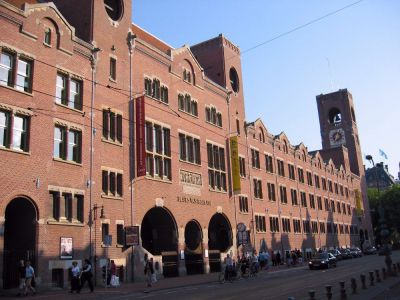
The grandeur of the Beurs, the historic Stock Exchange, famously known as the "Beurs van Berlage," designed by the prominent figure in Dutch Modern architecture, Hendrik Petrus Berlage at the turn of the 20th century, holds great fascination for those interested in city architecture. Berlage's creation marked a significant departure from the 19th-century historicism championed by Cuypers, opting instead for a style characterized by cleaner, more substantial lines influenced by Romanesque and Renaissance elements, while minimizing ornate details. This visionary approach foreshadowed the Expressionist movement that swept through northern Europe from 1905 to 1925, leaving a lasting impact. Considered ahead of its time, Berlage's designs stand out distinctly in Amsterdam's skyline.
Although the Beurs no longer serves its original commercial purpose, it has evolved into a venue for concerts, conferences, and exhibitions showcasing modern art and design. Nevertheless, the building itself remains the star attraction, notably featuring graceful shallow-arched arcades and intricate brickwork in the main hall.
Tip:
For those not inclined to opt for a guided tour, Berlage's architectural contributions can still be admired in the welcoming Bistro Berlage at the southern end of the building, adjacent to Beursplein, or at the Tony's Chocolonely Super Store (Oudebrugsteeg 15), where excellent dark chocolates are also on offer.
Although the Beurs no longer serves its original commercial purpose, it has evolved into a venue for concerts, conferences, and exhibitions showcasing modern art and design. Nevertheless, the building itself remains the star attraction, notably featuring graceful shallow-arched arcades and intricate brickwork in the main hall.
Tip:
For those not inclined to opt for a guided tour, Berlage's architectural contributions can still be admired in the welcoming Bistro Berlage at the southern end of the building, adjacent to Beursplein, or at the Tony's Chocolonely Super Store (Oudebrugsteeg 15), where excellent dark chocolates are also on offer.
3) Oude Kerk (Old Church)
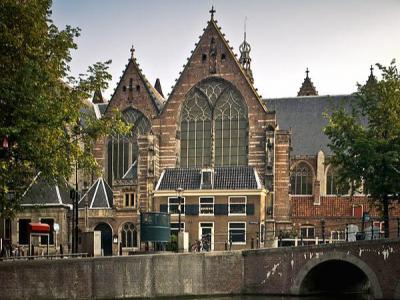
Amsterdam’s oldest building, the Old Church, boasts the largest medieval wooden vault in Europe. The initial wooden chapel on this site was built around 1213. Eventually replaced by a stone structure, in 1306, the church was dedicated to Saint Nicolas. To ensure its stability in a marshy area, the foundations were set on an artificial mound.
Throughout the centuries, the church has undergone numerous transformations. The most significant, in the 15th century, included the addition of north and south transepts, forming a cross shape, and the expansion of the aisles prompted by the necessity to recover from the destruction caused by fires in the early 1400s. Originally Roman Catholic, the church transitioned to its present Calvinist denomination in 1578, after the Dutch Revolt against Spanish rule. This transition led to the Iconoclastic Fury, with rioters destroying much of the church's art.
The Old Church boasts significant artistic and personal histories. It has ties to Rembrandt, who was a frequent visitor here for his children’s christenings. Today, this connection is honored by the annual celebration of Rembrandt’s wife, Saskia, who is buried inside. Each spring, on March 9, her tomb is illuminated by a unique play of sunlight in the morning.
The entire floor of the church is covered in gravestones. This is because it's built over a cemetery. Locals continued to be buried here until 1865. There are in total 2,500 graves, holding the remains of some 10,000 parishioners. Among them are the famed organist and composer Jan Pieterszoon Sweelinck; the revered naval hero Jacob van Heemskerck; and Frans Banning Cocq, the central character in Rembrandt's painting "The Night Watch".
Also, the interior – surprisingly spacious – contains a collection of exquisite stained glass, rare ceiling frescoes, and four pipe organs, including the renowned Vater-Müller organ built in 1724 and recognized as one of the finest Baroque organs in Europe.
As of 2012, the Old Church has been home to an art institute, the newest in town, featuring specific installations and a permanent exhibit on the history of Amsterdam.
Each year in mid-March, Catholics arrive at the Old Church to celebrate the so-called "Miracle of Amsterdam" which occurred in 1345. Legend has it that after taking communion, a dying man vomited the Sacramental bread – known as the Host – which is used in the Christian ritual of the Eucharist. When the bread was thrown into a fire, as prescribed by the tradition, it did not burn and was proclaimed a miracle. The Host was then put in a chest and displayed at the church. However, it disappeared during the Reformation period.
Tip:
Wonderful views from the tower (note the fee payable with credit/debit cards only); coffee and snacks are available in a charming garden.
Throughout the centuries, the church has undergone numerous transformations. The most significant, in the 15th century, included the addition of north and south transepts, forming a cross shape, and the expansion of the aisles prompted by the necessity to recover from the destruction caused by fires in the early 1400s. Originally Roman Catholic, the church transitioned to its present Calvinist denomination in 1578, after the Dutch Revolt against Spanish rule. This transition led to the Iconoclastic Fury, with rioters destroying much of the church's art.
The Old Church boasts significant artistic and personal histories. It has ties to Rembrandt, who was a frequent visitor here for his children’s christenings. Today, this connection is honored by the annual celebration of Rembrandt’s wife, Saskia, who is buried inside. Each spring, on March 9, her tomb is illuminated by a unique play of sunlight in the morning.
The entire floor of the church is covered in gravestones. This is because it's built over a cemetery. Locals continued to be buried here until 1865. There are in total 2,500 graves, holding the remains of some 10,000 parishioners. Among them are the famed organist and composer Jan Pieterszoon Sweelinck; the revered naval hero Jacob van Heemskerck; and Frans Banning Cocq, the central character in Rembrandt's painting "The Night Watch".
Also, the interior – surprisingly spacious – contains a collection of exquisite stained glass, rare ceiling frescoes, and four pipe organs, including the renowned Vater-Müller organ built in 1724 and recognized as one of the finest Baroque organs in Europe.
As of 2012, the Old Church has been home to an art institute, the newest in town, featuring specific installations and a permanent exhibit on the history of Amsterdam.
Each year in mid-March, Catholics arrive at the Old Church to celebrate the so-called "Miracle of Amsterdam" which occurred in 1345. Legend has it that after taking communion, a dying man vomited the Sacramental bread – known as the Host – which is used in the Christian ritual of the Eucharist. When the bread was thrown into a fire, as prescribed by the tradition, it did not burn and was proclaimed a miracle. The Host was then put in a chest and displayed at the church. However, it disappeared during the Reformation period.
Tip:
Wonderful views from the tower (note the fee payable with credit/debit cards only); coffee and snacks are available in a charming garden.
4) Centraal Station (must see)
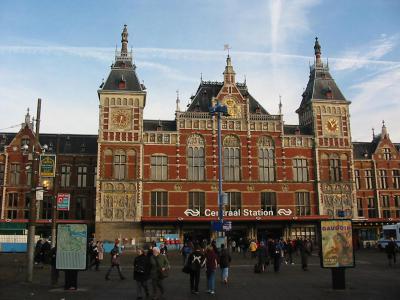
When in Amsterdam, a visit to the Central Station is practically inevitable. Nearly every traveler to the city encounters it at least once.
Amsterdam Centraal is the largest railway station in the city and has the second longest railway platform in the country, with a length of 695 meters, and a cast-iron platform roof spanning approximately 40 meters. A major international railway hub, it is used daily by almost 200,000 passengers, making it the Netherlands' most visited national heritage object.
Amsterdam Centraal was designed by Dutch architect Pierre Cuypers, featuring a blend of Gothic and Renaissance Revival elements.
The station was constructed on three artificial islands, between 1882 and 1889. Controversially located at the city's waterfront, it took a precise total of 8,687 wooden piles to anchor such a monumental structure on the marshy ground. The station spurred significant urban redevelopment and shifted Amsterdam’s focus from a waterfront to an inland city, influencing both transportation and city planning.
Its design celebrates Dutch economic and colonial prowess through various decorative elements. Initially, the entire project seemed like a huge blunder and was swiftly criticized by numerous experts. However, the architects persevered and ultimately vindicated themselves, defying skeptics.
Through the decades, Amsterdam Centraal has undergone multiple renovations and expansions to meet modern demands. Significant developments included the creation of a pedestrian tunnel in the 1950s, expansion of metro facilities in the late 1970s, and a major overhaul in the 1980s and 1990s that introduced new signaling systems, expanded tracks, and additional roofing. Recent upgrades focus on enhancing capacity and accessibility, including extended platforms for international trains, a new bus station, and upgraded retail spaces, marking it as a central hub in Amsterdam’s urban landscape.
Tip:
Take advantage of the several free ferry trips navigating the canals, departing every 5 to 15 minutes from this location; they offer a rewarding experience. You can even cruise back to the station via boat if you wish, rounding out your visit with a picturesque waterborne journey.
Amsterdam Centraal is the largest railway station in the city and has the second longest railway platform in the country, with a length of 695 meters, and a cast-iron platform roof spanning approximately 40 meters. A major international railway hub, it is used daily by almost 200,000 passengers, making it the Netherlands' most visited national heritage object.
Amsterdam Centraal was designed by Dutch architect Pierre Cuypers, featuring a blend of Gothic and Renaissance Revival elements.
The station was constructed on three artificial islands, between 1882 and 1889. Controversially located at the city's waterfront, it took a precise total of 8,687 wooden piles to anchor such a monumental structure on the marshy ground. The station spurred significant urban redevelopment and shifted Amsterdam’s focus from a waterfront to an inland city, influencing both transportation and city planning.
Its design celebrates Dutch economic and colonial prowess through various decorative elements. Initially, the entire project seemed like a huge blunder and was swiftly criticized by numerous experts. However, the architects persevered and ultimately vindicated themselves, defying skeptics.
Through the decades, Amsterdam Centraal has undergone multiple renovations and expansions to meet modern demands. Significant developments included the creation of a pedestrian tunnel in the 1950s, expansion of metro facilities in the late 1970s, and a major overhaul in the 1980s and 1990s that introduced new signaling systems, expanded tracks, and additional roofing. Recent upgrades focus on enhancing capacity and accessibility, including extended platforms for international trains, a new bus station, and upgraded retail spaces, marking it as a central hub in Amsterdam’s urban landscape.
Tip:
Take advantage of the several free ferry trips navigating the canals, departing every 5 to 15 minutes from this location; they offer a rewarding experience. You can even cruise back to the station via boat if you wish, rounding out your visit with a picturesque waterborne journey.
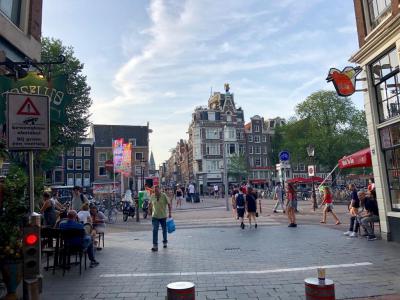
5) Haarlemmerstraat
Haarlemmerstraat, one of Amsterdam's newest and trendiest shopping streets, is a prime destination for boutique enthusiasts, high-end specialty stores, charming cafes, restaurants, unique gadgets, and personalized service. In essence, it's an excellent street for both shopping and leisurely strolls.
This vibrant street boasts a diverse range of shops, offering something for everyone. For instance, you can explore Jolanta Izabela's at #100, a quaint art boutique where you can purchase one-of-a-kind handmade jewelry, clothing, and sculptures. Then there's the atmospheric IBERICUS at #93, known for its high-quality Spanish cured hams suspended from the ceiling. If you're in the mood for coffee, you'll find coffee shops, as well as supermarkets, vintage clothing stores, and interior decorating boutiques.
Also make sure to visit the historic Posthoornkerk at #124, which represents architect Pierre Cuypers' inaugural creation in Amsterdam. Further down the street lies the West-Indisch Huis at #75, once the residence of the Dutch West India Company.
If you're looking for a hearty meal, Harlem Soul Food at #77 is the place to be, offering nourishing "soul food", along with hearty sandwiches and fruit shakes.
In summary, if you're seeking an authentic Amsterdam shopping experience, Haarlemmerstraat is a must-visit destination.
Bonus Tip:
Haarlemmerstraat seamlessly transitions into Haarlemmerdijk, where you'll discover the finest chocolate, delectable gelato, Spanish ham, Portuguese pastries, and the city's best hummus.
This vibrant street boasts a diverse range of shops, offering something for everyone. For instance, you can explore Jolanta Izabela's at #100, a quaint art boutique where you can purchase one-of-a-kind handmade jewelry, clothing, and sculptures. Then there's the atmospheric IBERICUS at #93, known for its high-quality Spanish cured hams suspended from the ceiling. If you're in the mood for coffee, you'll find coffee shops, as well as supermarkets, vintage clothing stores, and interior decorating boutiques.
Also make sure to visit the historic Posthoornkerk at #124, which represents architect Pierre Cuypers' inaugural creation in Amsterdam. Further down the street lies the West-Indisch Huis at #75, once the residence of the Dutch West India Company.
If you're looking for a hearty meal, Harlem Soul Food at #77 is the place to be, offering nourishing "soul food", along with hearty sandwiches and fruit shakes.
In summary, if you're seeking an authentic Amsterdam shopping experience, Haarlemmerstraat is a must-visit destination.
Bonus Tip:
Haarlemmerstraat seamlessly transitions into Haarlemmerdijk, where you'll discover the finest chocolate, delectable gelato, Spanish ham, Portuguese pastries, and the city's best hummus.
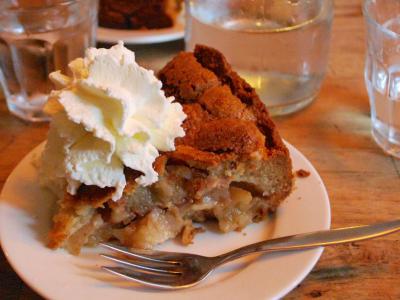
6) Winkel 43
Winkel 43 is a favorite hangout in the heart of the Jordaan for a drink or a bite to eat. The "appeltaart" (apple pie) is particularly tasty here; many consider it to be the best in Amsterdam, but you be the judge! This delectable Dutch specialty, whose secret is in the moist, cakey dough that also manages to be crispy on the edges, is served in large portions and topped with a generous dollop of (not too sweet) house-made fresh cream if you'd like. And the perfect pairing? A steaming mug of fresh mint tea. You can savor all of this on their spacious patio overlooking the Prinsengracht canal – especially inviting on sunny days!
But hey, if you're not just in the mood for sweets, they've got you covered with tasty sandwiches, salads, soups, and something called "bitterballen" – all priced very reasonably for the quality. The bitterballen, in particular, is another long-time favorite with the Dutch, who just can't get enough of it. Similar to "appeltaarts", these (deep-fried) meatballs have a crispy coating but soft center, and some amazing creamy flavors inside. You've got to give them a try!
Tip:
The place is rather small, so you might have to line up (especially on Saturdays), or try to choose an off-peak time if you want to linger for longer. And if you're in a rush, you can totally enjoy your appeltaart right from the tray while standing up – it's a fun twist!
But hey, if you're not just in the mood for sweets, they've got you covered with tasty sandwiches, salads, soups, and something called "bitterballen" – all priced very reasonably for the quality. The bitterballen, in particular, is another long-time favorite with the Dutch, who just can't get enough of it. Similar to "appeltaarts", these (deep-fried) meatballs have a crispy coating but soft center, and some amazing creamy flavors inside. You've got to give them a try!
Tip:
The place is rather small, so you might have to line up (especially on Saturdays), or try to choose an off-peak time if you want to linger for longer. And if you're in a rush, you can totally enjoy your appeltaart right from the tray while standing up – it's a fun twist!
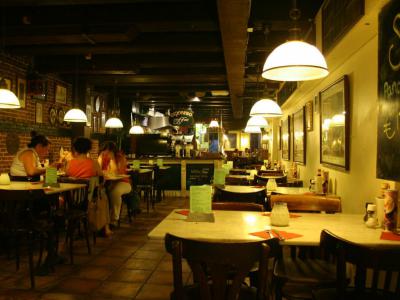
7) Pancake Bakery
Located in the atmospheric basement of an old canal house that used to belong to the Dutch East India Company, this spot serves up some fantastic outsize pancakes, both sweet and savory, with a mind-boggling, near-infinite range of fillings. The menu includes French, Greek, Hungarian, Mexican, Masai, Indonesian, and even Greenlandic pancakes!
And if you're into something smaller but just as tasty, they've got these fluffy, buttery puffs called "poffertjes", topped with all sorts of goodies like chocolate sauce, mandarin and honey, and more. The servings are big and will fill you up, but keep in mind that poffertjes are best enjoyed warm.
Now, here's the deal: this place is pretty popular with tourists, so sometimes you might find yourself waiting in line for a table. If you want to skip the lines and/or minimize your wait, aim for weekdays and go early in the morning. But on weekends and during the busy meal times (lunch and dinner), you are almost guaranteed to have to wait.
And if you're into something smaller but just as tasty, they've got these fluffy, buttery puffs called "poffertjes", topped with all sorts of goodies like chocolate sauce, mandarin and honey, and more. The servings are big and will fill you up, but keep in mind that poffertjes are best enjoyed warm.
Now, here's the deal: this place is pretty popular with tourists, so sometimes you might find yourself waiting in line for a table. If you want to skip the lines and/or minimize your wait, aim for weekdays and go early in the morning. But on weekends and during the busy meal times (lunch and dinner), you are almost guaranteed to have to wait.
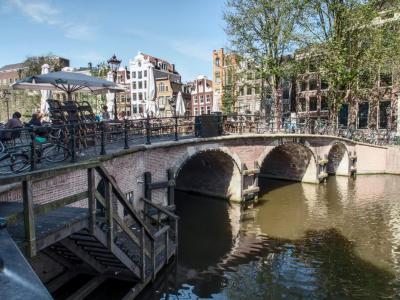
8) Torensluis (Torensluis Bridge)
If bridges had egos, the Torensluis would be the show-off of Amsterdam. Spanning a hefty 42 meters, it proudly holds the title of the widest bridge in the city-and one of its oldest. Built in the mid-17th century, it owes its name (which means “tower lock”) to the rather dramatic tower that once stood here, before it was unceremoniously demolished in the 19th century. But history leaves its fingerprints-traces of the old tower linger in the bridge’s pavement and, more intriguingly, in the dungeon lurking beneath. Yes, you heard that right. Beneath your feet, actual prison cells remain, complete with barred windows and an arched entrance. Today, they’re less about captives and more about culture, hosting exhibitions and events.
The surrounding area has barely aged a day since the Dutch Golden Age of the 1600s. Back when Amsterdam’s merchants were busy conquering the seas and establishing far-flung trading posts, they also had another pressing priority: outshining their neighbors with lavish homes. The result is a skyline that is as much a victory lap as it is a work of art. Take a slow spin; you’ll find yourself immersed in centuries of architectural bravado.
But the bridge itself isn’t just about old stones and bygone towers. It also has a statue of Multatuli, the outspoken writer and anti-colonialist who ruffled more than a few feathers in his time. And for those who prefer their history with a side of Dutch hospitality, you’re in luck! The sun-drenched terraces of Café van Zuylen is known for its impressive beer selection.
The surrounding area has barely aged a day since the Dutch Golden Age of the 1600s. Back when Amsterdam’s merchants were busy conquering the seas and establishing far-flung trading posts, they also had another pressing priority: outshining their neighbors with lavish homes. The result is a skyline that is as much a victory lap as it is a work of art. Take a slow spin; you’ll find yourself immersed in centuries of architectural bravado.
But the bridge itself isn’t just about old stones and bygone towers. It also has a statue of Multatuli, the outspoken writer and anti-colonialist who ruffled more than a few feathers in his time. And for those who prefer their history with a side of Dutch hospitality, you’re in luck! The sun-drenched terraces of Café van Zuylen is known for its impressive beer selection.
9) Magna Plaza
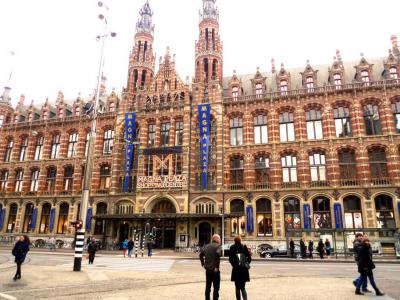
Magna Plaza is a grand 19th-century edifice located behind the Royal Palace on Dam Square. Constructed between 1895 and 1899, it showcases a blend of Neo-Gothic and Neo-Renaissance architectural styles. The building was designed by Cornelis Hendrik Peters and has been listed as a national heritage site of the Netherlands since 1974.
The structure is notable for its elaborate brick exterior adorned with polychromatic brickwork and dressed stone around windows and doors. The roof is distinguished by several dormers, each topped with crow-stepped gables, contributing to its nickname "Perenburg" (or “pear-castle”) due to the pear-shaped crowns atop its towers.
Originally serving as Amsterdam's central post office, the building symbolized the city’s economic resurgence in the late 19th century, a period marked by significant developments like the opening of the North Sea Canal and the hosting of a World's Fair in 1883.
In 1987, plans to transform this historic post office into a luxurious shopping mall were announced by Larmag, a Swedish real estate developer. The renovations, which began in 1991, involved meticulous exterior restorations and a complete rebuild of the interior while preserving the structural and decorative elements. Named after Larmag's CEO, Lars-Erik Magnusson, Magna Plaza opened on August 17, 1992, as a shopping center.
Today, Magna Plaza offers a shopping experience across four floors, complemented by several cafes and a variety of stores. Despite its commercial function, the building remains an architectural gem worth visiting for its aesthetic and historical significance alone.
The structure is notable for its elaborate brick exterior adorned with polychromatic brickwork and dressed stone around windows and doors. The roof is distinguished by several dormers, each topped with crow-stepped gables, contributing to its nickname "Perenburg" (or “pear-castle”) due to the pear-shaped crowns atop its towers.
Originally serving as Amsterdam's central post office, the building symbolized the city’s economic resurgence in the late 19th century, a period marked by significant developments like the opening of the North Sea Canal and the hosting of a World's Fair in 1883.
In 1987, plans to transform this historic post office into a luxurious shopping mall were announced by Larmag, a Swedish real estate developer. The renovations, which began in 1991, involved meticulous exterior restorations and a complete rebuild of the interior while preserving the structural and decorative elements. Named after Larmag's CEO, Lars-Erik Magnusson, Magna Plaza opened on August 17, 1992, as a shopping center.
Today, Magna Plaza offers a shopping experience across four floors, complemented by several cafes and a variety of stores. Despite its commercial function, the building remains an architectural gem worth visiting for its aesthetic and historical significance alone.
10) Koninklijk Paleis (Royal Palace of Amsterdam) (must see)
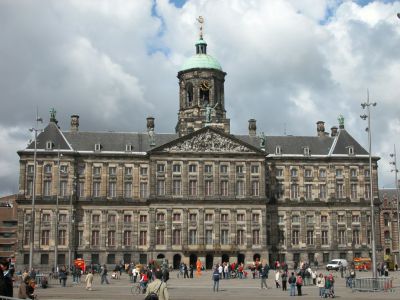
The Royal Palace of Amsterdam is a historic monument on Dam Square and is one of the four palaces in the Netherlands still left at the disposal of the Dutch Royal Family.
Its inception dates back to 1655. Back then, the city had recently thwarted William of Orange's attempts to subdue it and the city council sought a residence that would symbolize Amsterdam's municipal authority and pride. This led to a remarkably forward-thinking design-the Dutch interpretation of the classical principles revived during the Italian Renaissance. The architectural project led by Jacob van Campen implied over 13,500 wooden piles to support the building.
Initially designed as the town hall overlooking the bustling Damrak wharves, it was converted into a royal palace by King Louis I of Holland, brother of Napoleon Bonaparte, in 1806.
In 1936, the building was designated a property of the Kingdom of the Netherlands. Today, it serves a ceremonial role for the monarchy, hosting state visits, official functions, and award ceremonies. The palace also played a pivotal role during the investiture of Queen Beatrix in 1980.
The building's distinctive sandstone façade has darkened over time. Astride the rear of it is a 6-meter statue of Atlas carrying the globe.
The interior is equally opulent, notably in the Citizens' Hall, featuring an arcaded marble chamber where the enthroned figure of Amsterdam presides over the earthly and celestial realms. Three circular, inlaid marble maps, depicting the eastern and western hemispheres, as well as the northern sky, lie at her feet. Other allegorical figures include Wisdom and Strength, flanking "Amsterdam" on her left and right, while the reliefs on either side of the central group portray the principles of good governance. On the left, the god Amphion plays his lyre, persuading stones to form a wall; and on the right, Mercury seeks to lull Argos to sleep, thus emphasizing the importance of vigilance.
Tip:
Before your visit, be sure to check online for opening hours, as the palace may occasionally be closed due to royal events.
Free entry for those under 18 and discounts for seniors and students are available.
Its inception dates back to 1655. Back then, the city had recently thwarted William of Orange's attempts to subdue it and the city council sought a residence that would symbolize Amsterdam's municipal authority and pride. This led to a remarkably forward-thinking design-the Dutch interpretation of the classical principles revived during the Italian Renaissance. The architectural project led by Jacob van Campen implied over 13,500 wooden piles to support the building.
Initially designed as the town hall overlooking the bustling Damrak wharves, it was converted into a royal palace by King Louis I of Holland, brother of Napoleon Bonaparte, in 1806.
In 1936, the building was designated a property of the Kingdom of the Netherlands. Today, it serves a ceremonial role for the monarchy, hosting state visits, official functions, and award ceremonies. The palace also played a pivotal role during the investiture of Queen Beatrix in 1980.
The building's distinctive sandstone façade has darkened over time. Astride the rear of it is a 6-meter statue of Atlas carrying the globe.
The interior is equally opulent, notably in the Citizens' Hall, featuring an arcaded marble chamber where the enthroned figure of Amsterdam presides over the earthly and celestial realms. Three circular, inlaid marble maps, depicting the eastern and western hemispheres, as well as the northern sky, lie at her feet. Other allegorical figures include Wisdom and Strength, flanking "Amsterdam" on her left and right, while the reliefs on either side of the central group portray the principles of good governance. On the left, the god Amphion plays his lyre, persuading stones to form a wall; and on the right, Mercury seeks to lull Argos to sleep, thus emphasizing the importance of vigilance.
Tip:
Before your visit, be sure to check online for opening hours, as the palace may occasionally be closed due to royal events.
Free entry for those under 18 and discounts for seniors and students are available.
11) Kalverstraat (Calf Street)
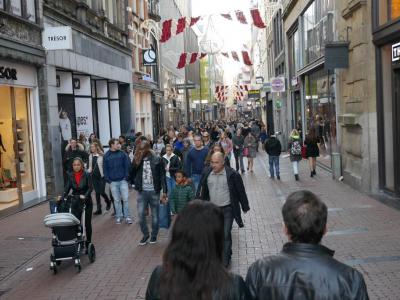
Calf Street is a pedestrian zone and a major shopping street, running for about 750 meters from Dam Square to Muntplein Square. Alongside are a number of notable locations such as the former Orphanage building (now housing the Amsterdam Museum), the Saints Peter and Paul church, and the Orphanage Gate.
The street traces its roots back to the 14th century when it was known as The Lane and served as the western dike of the Amstel River. Later, it came to be known as Calf Street after the cattle market that existed there from 1486 until 1629.
On 16 March 1345, a Eucharistic miracle (known as the Miracle of Amsterdam or the Miracle of the Host) occurred in the area. Upon receiving the Holy Sacrament and last rites, a dying man vomited The Host (or the Sacramental bread used in the Christian ritual of the Eucharist). According to liturgical regulations, The Host was then put into fire but miraculously “survived” and was retrieved from the ashes intact the following day. This miracle was quickly acknowledged and, eventually, a large pilgrim chapel, called the "Holy Site", was built on the spot where it occurred. Presently, this miracle is commemorated annually with a Silent Procession through Calf Street.
By the late 19th century, Calf Street was the first street in Amsterdam to be paved, fitted with electricity, and hosted the first public film screening by the Lumière brothers (in 1896). The V&D branch on Calf Street, opened in 1912, was the Netherlands' first real department store and the first to feature elevators and escalators.
Today, Calf Street is the most expensive shopping street in the Netherlands, with rent prices reaching up to 3,000 euros per square meter. It has approximately 150 shops including several department stores, such as Bijenkorf (Amsterdam's premier option), Peek & Cloppenburg, and Maison de Bonneterie. The five-story Kalvertoren shopping center adds about 40+ stores to the area. At Number 212, you'll encounter the ever-present and budget-friendly HEMA, established in 1926, offering affordable designer goods, practical clothing, stationery, kitchenware, and food items.
Calf Street also features a branch of the Waterstone's bookshop chain, at Number 152. On Rokin, is one of the standout shops – the PGC Hajenius tobacconist, at Number 96. If you have a penchant for Havanas from a well-maintained humidor or seek a traditional clay pipe as a souvenir, this establishment is sure to delight you.
Introduced in 1995, the Shopping Sunday regulation, allowing local shops to work on Sundays, has been drawing additional crowds to the area ever since.
The street traces its roots back to the 14th century when it was known as The Lane and served as the western dike of the Amstel River. Later, it came to be known as Calf Street after the cattle market that existed there from 1486 until 1629.
On 16 March 1345, a Eucharistic miracle (known as the Miracle of Amsterdam or the Miracle of the Host) occurred in the area. Upon receiving the Holy Sacrament and last rites, a dying man vomited The Host (or the Sacramental bread used in the Christian ritual of the Eucharist). According to liturgical regulations, The Host was then put into fire but miraculously “survived” and was retrieved from the ashes intact the following day. This miracle was quickly acknowledged and, eventually, a large pilgrim chapel, called the "Holy Site", was built on the spot where it occurred. Presently, this miracle is commemorated annually with a Silent Procession through Calf Street.
By the late 19th century, Calf Street was the first street in Amsterdam to be paved, fitted with electricity, and hosted the first public film screening by the Lumière brothers (in 1896). The V&D branch on Calf Street, opened in 1912, was the Netherlands' first real department store and the first to feature elevators and escalators.
Today, Calf Street is the most expensive shopping street in the Netherlands, with rent prices reaching up to 3,000 euros per square meter. It has approximately 150 shops including several department stores, such as Bijenkorf (Amsterdam's premier option), Peek & Cloppenburg, and Maison de Bonneterie. The five-story Kalvertoren shopping center adds about 40+ stores to the area. At Number 212, you'll encounter the ever-present and budget-friendly HEMA, established in 1926, offering affordable designer goods, practical clothing, stationery, kitchenware, and food items.
Calf Street also features a branch of the Waterstone's bookshop chain, at Number 152. On Rokin, is one of the standout shops – the PGC Hajenius tobacconist, at Number 96. If you have a penchant for Havanas from a well-maintained humidor or seek a traditional clay pipe as a souvenir, this establishment is sure to delight you.
Introduced in 1995, the Shopping Sunday regulation, allowing local shops to work on Sundays, has been drawing additional crowds to the area ever since.
12) Begijnhof – Beguine Courtyard
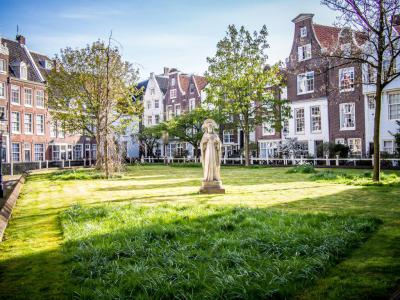
The Beguine Courtyard of the Begijnhof Chapel, one of Amsterdam's most ancient hidden courtyards, holds the distinction of being the sole inner court in the city founded during the Middle Ages and situated within the Singel-the innermost canal of Amsterdam's circular canal system. Adorned with manicured gardens, this courtyard sits at medieval street level, which places it a meter lower than the rest of the old city center. As the name suggests, it originally belonged to a community of Beguines-laywomen leading a semi-monastic life dedicated to prayer and charitable endeavors.
A cluster of historical edifices, predominantly private residences, surrounds the courtyard. These are tall townhouses, characterized by the distinctive Amsterdam architectural style, accentuating the court's relatively secluded ambiance. Unlike most courtyards, the buildings here are not arranged in rows connecting one dwelling to another; instead, there are 47 traditional townhouses, many adorned with facades dating back to the 17th and 18th centuries. However, the structures themselves often have origins predating this period, with eighteen of them retaining their original Gothic wooden framework.
During medieval times, the courtyard was entirely encircled by canals, offering only one entrance accessible via a bridge. Today, remnants of this entrance, known as the Begijnesloot, are still visible, thanks to a restoration effort in 1907. The stone doorway prominently displays the figure of Saint Ursula, the patron saint of Amsterdam's Beguines. Meanwhile, the entrance on Spuistraat, which was constructed at a later date, underwent significant changes in the 19th century.
A cluster of historical edifices, predominantly private residences, surrounds the courtyard. These are tall townhouses, characterized by the distinctive Amsterdam architectural style, accentuating the court's relatively secluded ambiance. Unlike most courtyards, the buildings here are not arranged in rows connecting one dwelling to another; instead, there are 47 traditional townhouses, many adorned with facades dating back to the 17th and 18th centuries. However, the structures themselves often have origins predating this period, with eighteen of them retaining their original Gothic wooden framework.
During medieval times, the courtyard was entirely encircled by canals, offering only one entrance accessible via a bridge. Today, remnants of this entrance, known as the Begijnesloot, are still visible, thanks to a restoration effort in 1907. The stone doorway prominently displays the figure of Saint Ursula, the patron saint of Amsterdam's Beguines. Meanwhile, the entrance on Spuistraat, which was constructed at a later date, underwent significant changes in the 19th century.
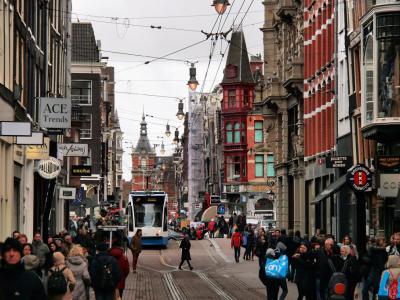
13) Leidsestraat
This busy main shopping thoroughfare is always packed because it connects one of the city's biggest and liveliest squares, Leidseplein, to the central area. Think of it as the fancier version of Kalverstraat, offering a diverse range of reasonably priced designer clothing and shoe boutiques. Plus, there are tons of cool canal-side cafés and restaurants from all over the world (such as Maoz Vegan, La Place Express, or Villa Maria Steakhouse, to name just a few), some of which are so popular that you better make a reservation.
At the corner of Keizersgracht, you can't miss the Abercrombie & Fitch store at #32 housed within a magnificent stone building dating back to 1891, with fancy columns ("caryatids") on the front and a distinctive corner dome. Notably, during its construction, this was the tallest commercial structure in town, which is why they convinced the famous architect Gerrit Rietveld (1888–1964), a leading figure in the De Stijl artistic movement, to add a glass-and-metal showroom on the roof in 1933 (you can still spot it from the street today).
It's worth noting that the street was planned way back in the 17th century, and the old houses still carry the grandeur of their past glory. So, even if shopping isn't your thing, you'll discover plenty to pique your curiosity. And if you wander nearby, you'll stumble upon the Spiegelkwartier, which is basically a super famous spot in Europe for antiques.
At the corner of Keizersgracht, you can't miss the Abercrombie & Fitch store at #32 housed within a magnificent stone building dating back to 1891, with fancy columns ("caryatids") on the front and a distinctive corner dome. Notably, during its construction, this was the tallest commercial structure in town, which is why they convinced the famous architect Gerrit Rietveld (1888–1964), a leading figure in the De Stijl artistic movement, to add a glass-and-metal showroom on the roof in 1933 (you can still spot it from the street today).
It's worth noting that the street was planned way back in the 17th century, and the old houses still carry the grandeur of their past glory. So, even if shopping isn't your thing, you'll discover plenty to pique your curiosity. And if you wander nearby, you'll stumble upon the Spiegelkwartier, which is basically a super famous spot in Europe for antiques.
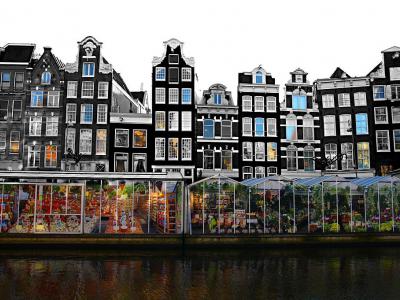
14) Bloemenmarkt (Floating Flower Market)
When you visit Amsterdam, especially during the springtime, you won't want to miss out on seeing some beautiful tulips. Even if they haven't fully bloomed or are past their prime, fear not – Bloemenmarkt has got you covered. This place has been around since the 1860s and is arguably the best, and still the most atmospheric, spot to discover (and buy) fresh flowers and bulbs.
As soon as you enter this little botanical wonderland situated along the canal, you'll be surrounded by all things floral (and sometimes more) – there's a dazzling array of souvenirs, and surprisingly, they're priced pretty much the same across various vendors. You can find a wide variety of bulbs for sale, including daffodils, amaryllis, crocus, narcissus, tulips, peony roots, and more. They even have some cacti and potted plants and herbs available for purchase.
Tip:
It you decide to buy tulip bulbs to take back home, be sure to get a "customs-cleared" stamp to avoid any issues with customs when upon arrival in your home country.
As soon as you enter this little botanical wonderland situated along the canal, you'll be surrounded by all things floral (and sometimes more) – there's a dazzling array of souvenirs, and surprisingly, they're priced pretty much the same across various vendors. You can find a wide variety of bulbs for sale, including daffodils, amaryllis, crocus, narcissus, tulips, peony roots, and more. They even have some cacti and potted plants and herbs available for purchase.
Tip:
It you decide to buy tulip bulbs to take back home, be sure to get a "customs-cleared" stamp to avoid any issues with customs when upon arrival in your home country.
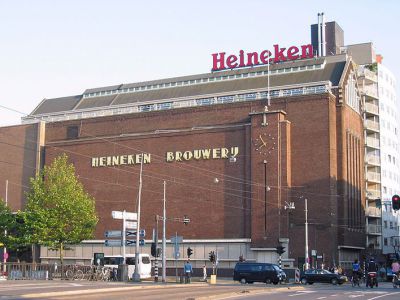
15) Heineken Experience (must see)
The Heineken Experience stands out as one of Amsterdam's most sought-after attractions, where the distinct flavor of Heineken is undoubtedly at its finest when savored at its source. Housed within the original Heineken brewery, this immersive experience imparts the rich history of Heineken and the world of beer, spanning back over a century and a half. Delve into this history, meander through the brewhouse, and venture to the stables where Shire horses, though primarily for ceremonial purposes, still make beer deliveries.
Following your informative tour, you'll have the delightful opportunity to savor a chilled Heineken, which you pour yourself. For enthusiasts of the brand, it's a delightful and enjoyable stop. However, if your primary aim is to indulge in beverages, you may wish to consider enjoying a beer at a nearby café, often available at a more budget-friendly price point.
Following your informative tour, you'll have the delightful opportunity to savor a chilled Heineken, which you pour yourself. For enthusiasts of the brand, it's a delightful and enjoyable stop. However, if your primary aim is to indulge in beverages, you may wish to consider enjoying a beer at a nearby café, often available at a more budget-friendly price point.
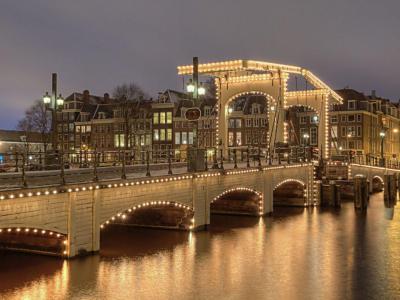
16) Magere Brug (Skinny Bridge)
Amsterdam's most renowned and adorable of swing bridges is undoubtedly the Magere Brug, or the "Skinny Bridge." Initially constructed in the 1600s, this bridge has spawned numerous urban legends in Amsterdam, including one about two sisters who resided on opposite sides of the River Amstel and grew tired of the long trek to visit each other. However, the more likely tale is that a narrow bridge over the Amstel made more economic sense than a stone one. Over the years, the bridge has undergone multiple reconstructions, with the current iteration dating back to 1969. It is now exclusively for pedestrians, offering a picturesque view of Amsterdam's skyline.
The Magere Brug is a beloved spot among couples and has also made appearances in films, including the James Bond movie "Diamonds Are Forever." According to local lore, sharing a kiss with someone on the bridge or beneath it on a boat guarantees eternal love. At night, the bridge is adorned with thousands of twinkling lights, making it a delightful destination for a romantic evening stroll.
The Magere Brug is a beloved spot among couples and has also made appearances in films, including the James Bond movie "Diamonds Are Forever." According to local lore, sharing a kiss with someone on the bridge or beneath it on a boat guarantees eternal love. At night, the bridge is adorned with thousands of twinkling lights, making it a delightful destination for a romantic evening stroll.
