Custom Walk in Lisbon, Portugal by allaire_sebastien_3523f created on 2025-05-17
Guide Location: Portugal » Lisbon
Guide Type: Custom Walk
# of Sights: 15
Tour Duration: 3 Hour(s)
Travel Distance: 4.6 Km or 2.9 Miles
Share Key: YHDZS
Guide Type: Custom Walk
# of Sights: 15
Tour Duration: 3 Hour(s)
Travel Distance: 4.6 Km or 2.9 Miles
Share Key: YHDZS
How It Works
Please retrieve this walk in the GPSmyCity app. Once done, the app will guide you from one tour stop to the next as if you had a personal tour guide. If you created the walk on this website or come to the page via a link, please follow the instructions below to retrieve the walk in the app.
Retrieve This Walk in App
Step 1. Download the app "GPSmyCity: Walks in 1K+ Cities" on Apple App Store or Google Play Store.



Step 2. In the GPSmyCity app, download(or launch) the guide "Lisbon Map and Walking Tours".
Step 3. Tap the menu button located at upper right corner of the "Walks" screen and select "Retrieve custom walk". Enter the share key: YHDZS
1) Praca do Comercio (Commerce Square) (must see)
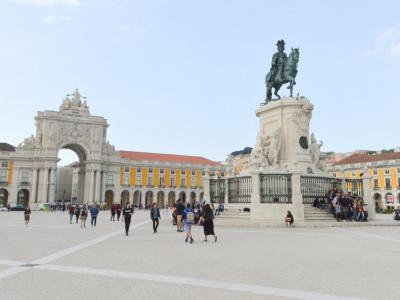
Commerce Square in Lisbon is a landmark of historical and architectural significance. Spanning 30,600 square meters, this plaza is situated along the Tagus River and was once the site of the Royal Palace of Ribeira, which was destroyed in the 1755 Lisbon earthquake. This catastrophe also obliterated the royal archive, containing over 200,000 books and centuries of records.
The area's reconstruction was spearheaded by the Marquis of Pombal as part of his revitalization of the Baixa district. The result was a U-shaped layout with symmetrical government buildings flanking the square and opening towards the river. Its new occupants, customs and port authorities, gave rise to the square's new name – "Commerce." The design included ground-floor arcades and two towers inspired by the former Ribeira Palace.
At the center of the square stands an equestrian statue of King José I, unveiled in 1775. The statue honors the King’s role in rebuilding Lisbon and features motifs such as an elephant, symbolizing Portugal's colonial empire.
The plaza’s northern side is marked by the triumphal Augusta Street Arch. Completed in the 19th century, this arch celebrates Lisbon's resilience with sculptures of historical figures such as Vasco da Gama and the Marquis of Pombal.
Adjacent to the square is the Columns Pier. Its marble steps once served as a ceremonial entrance to the city during Portugal’s maritime era.
Tragedy touched the square in 1908 when King Carlos I and his heir Luís Filipe were assassinated here. This event presaged the fall of the Portuguese monarchy and the establishment of the Republic in 1910. Today, a plaque commemorates this pivotal moment in Portuguese history.
The western tower of Commerce Square contains a branch of the Museum of Lisbon.
The square itself is a vibrant hub of activity. Its arcades house souvenir shops, cafes, and Lisbon’s oldest café, Martinho da Arcada. Commerce Square hosts annual events like Portugal Day celebrations and offers visitors a chance to enjoy views of the Tagus River, the 25th of April Bridge, and passing ships. Accessible via trams and ferries, the plaza is both a historic site and a bustling meeting point for locals and tourists.
Tip:
For a glimpse of what the square looked like before the 1755 earthquake, you can find reproductions of contemporary engravings from the 17th and 18th centuries and a modern ceramic tile mural at the Santa Luzia Viewpoint in Alfama.
The area's reconstruction was spearheaded by the Marquis of Pombal as part of his revitalization of the Baixa district. The result was a U-shaped layout with symmetrical government buildings flanking the square and opening towards the river. Its new occupants, customs and port authorities, gave rise to the square's new name – "Commerce." The design included ground-floor arcades and two towers inspired by the former Ribeira Palace.
At the center of the square stands an equestrian statue of King José I, unveiled in 1775. The statue honors the King’s role in rebuilding Lisbon and features motifs such as an elephant, symbolizing Portugal's colonial empire.
The plaza’s northern side is marked by the triumphal Augusta Street Arch. Completed in the 19th century, this arch celebrates Lisbon's resilience with sculptures of historical figures such as Vasco da Gama and the Marquis of Pombal.
Adjacent to the square is the Columns Pier. Its marble steps once served as a ceremonial entrance to the city during Portugal’s maritime era.
Tragedy touched the square in 1908 when King Carlos I and his heir Luís Filipe were assassinated here. This event presaged the fall of the Portuguese monarchy and the establishment of the Republic in 1910. Today, a plaque commemorates this pivotal moment in Portuguese history.
The western tower of Commerce Square contains a branch of the Museum of Lisbon.
The square itself is a vibrant hub of activity. Its arcades house souvenir shops, cafes, and Lisbon’s oldest café, Martinho da Arcada. Commerce Square hosts annual events like Portugal Day celebrations and offers visitors a chance to enjoy views of the Tagus River, the 25th of April Bridge, and passing ships. Accessible via trams and ferries, the plaza is both a historic site and a bustling meeting point for locals and tourists.
Tip:
For a glimpse of what the square looked like before the 1755 earthquake, you can find reproductions of contemporary engravings from the 17th and 18th centuries and a modern ceramic tile mural at the Santa Luzia Viewpoint in Alfama.
2) Casa dos Bicos (House of Spikes)
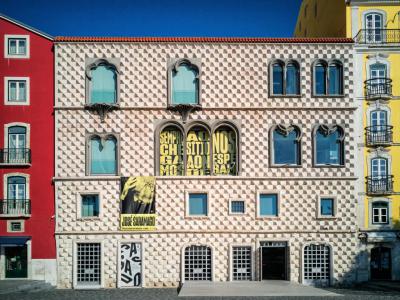
Standing out among the buildings in Lisbon's Alfama area, the House of Spikes catches the eye with its diamond-shaped stones (known as "bicos"), offering a glimpse into the opulence of pre-1755 Lisbon. Constructed in 1523 for Brás de Albuquerque, the illegitimate son of Afonso, the Viceroy of India and ruler of Goa and Malacca, the façade reflects the popular architectural style of the 16th century across Europe.
Following the devastating earthquake of 1755, the top two floors of the building fell into ruin; however, in the 1980s, meticulous efforts were undertaken to restore these levels, recreating the original appearance based on old views of Lisbon depicted in tile panels and engravings. Interestingly, in the interim period, the building served as a location for salting fish, as evidenced by the name of the street it stands on-Rua dos Bacalhoeiros, meaning "street of the cod fishermen".
Today, following a comprehensive renovation in the 20th century, the House of Spikes houses the headquarters of the José Saramago Foundation. Within its walls, visitors can explore a permanent exhibition dedicated to the life and literary works of José Saramago, the acclaimed Portuguese author and Nobel Prize laureate who passed away in 2010. As a testament to the writer's wishes, his ashes find their final resting place beneath the shade of an ancient olive tree, creating a poignant and fitting tribute to his memory.
The building also serves as a vibrant cultural hub, hosting a wide array of events such as concerts, plays, book releases, seminars, debates, and engaging talks. Meanwhile, the ground floor has been thoughtfully preserved as an archaeological area where visitors can marvel at sections of a third-century Roman wall and a fish-processing plant that were excavated from beneath. A must-see in this corner of Lisbon, especially since there is lots of information in English.
Tip:
Be sure to observe the elephant footprint, a tribute to one of José Saramago's renowned literary works, "The Elephant's Journey." Additionally, pay attention to the subtle distinctions in the exterior design between the original lower two floors and the newer upper two floors.
Following the devastating earthquake of 1755, the top two floors of the building fell into ruin; however, in the 1980s, meticulous efforts were undertaken to restore these levels, recreating the original appearance based on old views of Lisbon depicted in tile panels and engravings. Interestingly, in the interim period, the building served as a location for salting fish, as evidenced by the name of the street it stands on-Rua dos Bacalhoeiros, meaning "street of the cod fishermen".
Today, following a comprehensive renovation in the 20th century, the House of Spikes houses the headquarters of the José Saramago Foundation. Within its walls, visitors can explore a permanent exhibition dedicated to the life and literary works of José Saramago, the acclaimed Portuguese author and Nobel Prize laureate who passed away in 2010. As a testament to the writer's wishes, his ashes find their final resting place beneath the shade of an ancient olive tree, creating a poignant and fitting tribute to his memory.
The building also serves as a vibrant cultural hub, hosting a wide array of events such as concerts, plays, book releases, seminars, debates, and engaging talks. Meanwhile, the ground floor has been thoughtfully preserved as an archaeological area where visitors can marvel at sections of a third-century Roman wall and a fish-processing plant that were excavated from beneath. A must-see in this corner of Lisbon, especially since there is lots of information in English.
Tip:
Be sure to observe the elephant footprint, a tribute to one of José Saramago's renowned literary works, "The Elephant's Journey." Additionally, pay attention to the subtle distinctions in the exterior design between the original lower two floors and the newer upper two floors.
3) Santa Maria Maior (Cathedral of St. Mary Major)
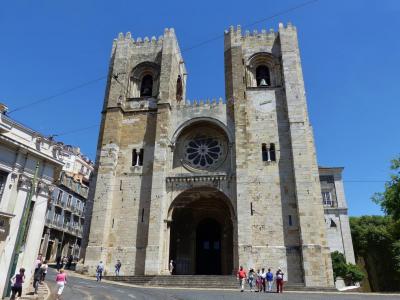
The Cathedral of Saint Mary Major, often called Lisbon Cathedral or simply the Sé, is a Roman Catholic cathedral and the oldest church in the city. Built in 1147, it has survived many earthquakes and been modified, renovated, and restored numerous times, resulting in a mix of different architectural styles. The seat of the Patriarchate of Lisbon, it has been classified as a National Monument since 1910.
The first cathedral in Lisbon was constructed on the site of the former Moorish mosque shortly after the Second Crusade led by King Afonso Henriquez in the mid-1100s. During this pivotal period, the relics of Saint Vincent of Saragossa, the city's patron saint, were transported from Southern Portugal and enshrined here, remaining undisturbed ever since. Recent excavations in the cathedral's cloister have uncovered Roman, Visigothic, and medieval remains, emphasizing the site's historical layers.
Lisbon Cathedral, a fortress-like structure with a Latin cross layout, maintains its Romanesque roots from the 12th century. The cathedral's robust façade features two towers and crenellations, a design typical of Portuguese cathedrals from the Reconquista era, indicating its historical military significance. The interior preserves the original west façade with a rose window, Romanesque portals, and barrel vaulting.
Transitioning to Gothic architecture in the late 13th century under King Dinis, the cathedral saw the addition of a Gothic cloister, although much of it was later damaged by the 1755 earthquake. Noteworthy Gothic elements include the ambulatory with its radiating chapels and ribbed vaulting, enhancing the structure with ample light and housing significant tombs from the mid-14th century.
The cathedral also hosted the Saint Vincent Panels until the 17th century. The 18th century brought neoclassical and Rococo refurbishments post-earthquake, with significant contributions from the renowned local sculptor Machado de Castro.
Efforts in the 20th century aimed to restore the cathedral's medieval character by removing neoclassical elements. This renovation imbued the structure with a predominantly medieval aesthetic, characterized by robust stone walls and fortress-like towers.
Notable among its chapels is the Chapel of Saint Ildefonso, housing a carved sculpture of one of the first Portuguese Ambassadors, Lopo Pacheco, depicted with a loyal dog at his side. Additionally, the Cathedral includes a chapel dedicated to Saint Anthony of Padua, a celebrated figure born in Lisbon.
Tip:
Admission to the Cathedral is free. For a modest fee, between 10 am and 5 pm, you can also ascend partway up the tower to the Treasury. Please note that it is closed on Sundays.
The first cathedral in Lisbon was constructed on the site of the former Moorish mosque shortly after the Second Crusade led by King Afonso Henriquez in the mid-1100s. During this pivotal period, the relics of Saint Vincent of Saragossa, the city's patron saint, were transported from Southern Portugal and enshrined here, remaining undisturbed ever since. Recent excavations in the cathedral's cloister have uncovered Roman, Visigothic, and medieval remains, emphasizing the site's historical layers.
Lisbon Cathedral, a fortress-like structure with a Latin cross layout, maintains its Romanesque roots from the 12th century. The cathedral's robust façade features two towers and crenellations, a design typical of Portuguese cathedrals from the Reconquista era, indicating its historical military significance. The interior preserves the original west façade with a rose window, Romanesque portals, and barrel vaulting.
Transitioning to Gothic architecture in the late 13th century under King Dinis, the cathedral saw the addition of a Gothic cloister, although much of it was later damaged by the 1755 earthquake. Noteworthy Gothic elements include the ambulatory with its radiating chapels and ribbed vaulting, enhancing the structure with ample light and housing significant tombs from the mid-14th century.
The cathedral also hosted the Saint Vincent Panels until the 17th century. The 18th century brought neoclassical and Rococo refurbishments post-earthquake, with significant contributions from the renowned local sculptor Machado de Castro.
Efforts in the 20th century aimed to restore the cathedral's medieval character by removing neoclassical elements. This renovation imbued the structure with a predominantly medieval aesthetic, characterized by robust stone walls and fortress-like towers.
Notable among its chapels is the Chapel of Saint Ildefonso, housing a carved sculpture of one of the first Portuguese Ambassadors, Lopo Pacheco, depicted with a loyal dog at his side. Additionally, the Cathedral includes a chapel dedicated to Saint Anthony of Padua, a celebrated figure born in Lisbon.
Tip:
Admission to the Cathedral is free. For a modest fee, between 10 am and 5 pm, you can also ascend partway up the tower to the Treasury. Please note that it is closed on Sundays.
4) Miradouro das Portas do Sol (Gates of the Sun Viewpoint)
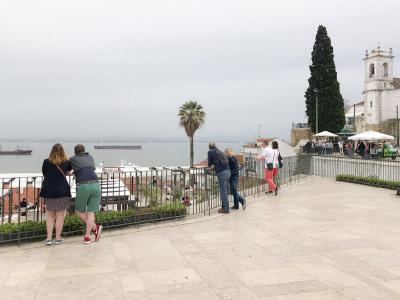
The Gates of the Sun viewpoint, akin to a home’s balcony, sits above the ancient neighborhood Alfama. Just steps away from the Santa Luzia viewpoint, it offers stunning views across Alfama and the Tagus River. The layout of Alfama unfolds below in a picturesque maze of streets, stairways, and alleys, all visible from this panoramic balcony.
Visitors to the Gates of the Sun viewpoint can indulge in authentic Portuguese coffee at the local kiosk, watch the iconic #28 electric tram pass by, and view the statue of Saint Vincent, the patron saint of Lisbon, symbolically holding a boat flanked by two ravens, representing the city. Additionally, from this point, one can see the Church of Saint Vincent and the expanse of the Alfama neighborhood stretching to the Tagus River.
Installed in 1949, a statue of Saint Vincent enhances the cultural significance of the viewpoint. The location is also prime for photographers, who find the backdrop of the Decorative Arts Museum and the panoramic view from Saint Vincent de Fora Monastery to the waterfront irresistibly photogenic.
Tip:
For a unique and enjoyable experience, seek out a flight of stairs and follow the WC (restroom) sign. Descend the stairs and pass under an arch to discover a mural depicting Lisbon's history in a comic-book style.
The view surprises at dusk, when the sun goes down and the colors of Lisbon’s architecture turn another shade.
Visitors to the Gates of the Sun viewpoint can indulge in authentic Portuguese coffee at the local kiosk, watch the iconic #28 electric tram pass by, and view the statue of Saint Vincent, the patron saint of Lisbon, symbolically holding a boat flanked by two ravens, representing the city. Additionally, from this point, one can see the Church of Saint Vincent and the expanse of the Alfama neighborhood stretching to the Tagus River.
Installed in 1949, a statue of Saint Vincent enhances the cultural significance of the viewpoint. The location is also prime for photographers, who find the backdrop of the Decorative Arts Museum and the panoramic view from Saint Vincent de Fora Monastery to the waterfront irresistibly photogenic.
Tip:
For a unique and enjoyable experience, seek out a flight of stairs and follow the WC (restroom) sign. Descend the stairs and pass under an arch to discover a mural depicting Lisbon's history in a comic-book style.
The view surprises at dusk, when the sun goes down and the colors of Lisbon’s architecture turn another shade.
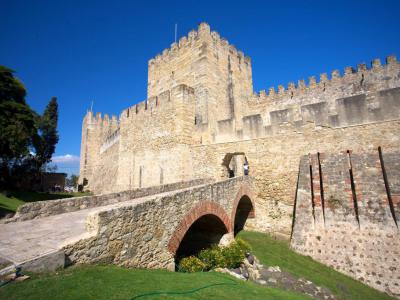
5) Castelo de Sao Jorge (Saint George's Castle) (must see)
Saint George’s Castle is a historic fortress in Lisbon’s Santa Maria Maior district. Its hilltop location has been occupied since the 8th century BC, with fortifications dating back to the 2nd century BC. Over time, the site reflected influences from the Celts, Phoenicians, Greeks, Carthaginians, Romans, Suebi, Visigoths, and Moors. The Berbers added the so-called “Moorish Encirclement” walls in the 10th century, and the Moors held the castle until the Christian Reconquista.
The castle played a pivotal role during the 1147 Siege of Lisbon when it was captured in a major Second Crusade victory. This fortified stronghold became a royal residence in 1255 and was named after Saint George in the 14th century by King John I to symbolize ties with England. In the later period, it served as a military barracks and home to Portugal’s National Archive. Although damaged in the 1755 earthquake, the 20th-century restorations regained its prominence as a national monument and cultural site.
Within this castle complex, you'll find medieval architecture with ten towers, a dry moat, and steep hillsides for natural defense. Highlights include the terraced Arms Square with cannons and a statue of Afonso Henriques, the first king of Portugal, and the Tower of Ulysses, which houses a camera obscura offering shows (every 20 minutes) in various languages, including English, Portuguese, and Spanish. The citadel's primary entrance features a 19th-century gate adorned with Portugal's coat of arms, Queen Maria II's name, and the date 1846.
Inside, visitors can enjoy a range of amenities, including restaurants, cafes, a wine bar, an ice cream stand, and public restrooms. Peacocks roam freely throughout the grounds, particularly in one of the primary dining areas. While dining within the castle walls may be slightly pricier than in the surrounding areas, it is not excessively so. Alternatively, you have the option of bringing your own food and beverages. Admission is reasonably priced and children enter for free.
Saint George’s Castle also includes the ruins of a royal palace, such as the Casa Ogival, which is now home to the Olissipónia multimedia exhibit detailing Lisbon’s history. Gardens and historical artifacts enhance the experience, making the castle a symbol of Lisbon’s rich past and an essential cultural landmark.
Tip:
Although the journey to the castle involves a steep uphill climb, it provides a delightful stroll through the narrow streets of historic Lisbon, with numerous opportunities to stop and savor local cuisine. Alternatively, you can take cable car #28 to admire the neighborhood's charming and diverse architecture, providing excellent photo opportunities.
The castle played a pivotal role during the 1147 Siege of Lisbon when it was captured in a major Second Crusade victory. This fortified stronghold became a royal residence in 1255 and was named after Saint George in the 14th century by King John I to symbolize ties with England. In the later period, it served as a military barracks and home to Portugal’s National Archive. Although damaged in the 1755 earthquake, the 20th-century restorations regained its prominence as a national monument and cultural site.
Within this castle complex, you'll find medieval architecture with ten towers, a dry moat, and steep hillsides for natural defense. Highlights include the terraced Arms Square with cannons and a statue of Afonso Henriques, the first king of Portugal, and the Tower of Ulysses, which houses a camera obscura offering shows (every 20 minutes) in various languages, including English, Portuguese, and Spanish. The citadel's primary entrance features a 19th-century gate adorned with Portugal's coat of arms, Queen Maria II's name, and the date 1846.
Inside, visitors can enjoy a range of amenities, including restaurants, cafes, a wine bar, an ice cream stand, and public restrooms. Peacocks roam freely throughout the grounds, particularly in one of the primary dining areas. While dining within the castle walls may be slightly pricier than in the surrounding areas, it is not excessively so. Alternatively, you have the option of bringing your own food and beverages. Admission is reasonably priced and children enter for free.
Saint George’s Castle also includes the ruins of a royal palace, such as the Casa Ogival, which is now home to the Olissipónia multimedia exhibit detailing Lisbon’s history. Gardens and historical artifacts enhance the experience, making the castle a symbol of Lisbon’s rich past and an essential cultural landmark.
Tip:
Although the journey to the castle involves a steep uphill climb, it provides a delightful stroll through the narrow streets of historic Lisbon, with numerous opportunities to stop and savor local cuisine. Alternatively, you can take cable car #28 to admire the neighborhood's charming and diverse architecture, providing excellent photo opportunities.
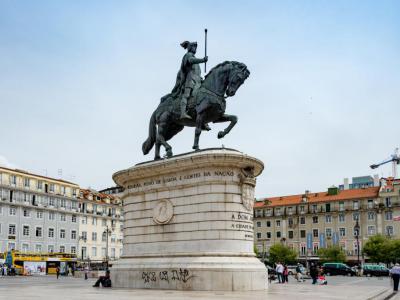
6) Praca da Figueira (Fig Tree Square)
Fig Tree Square in Lisbon's Baixa district embodies the city’s transformation since the catastrophic 1755 earthquake. Once the site of Lisbon’s main hospital, the area was reimagined by the Marquis of Pombal as an open-air market after the hospital's demolition. Known initially as Herb Square and later New Square, it developed into a vibrant trade hub, gradually enhanced with trees, lighting, and iron railings. By 1885, it featured an impressive 8,000-square-meter iron-covered market that became the heart of city life for over six decades until its demolition in 1949.
Modern renovations brought significant changes to the area, including the construction of uniform Pombaline-style four-story buildings that now house hotels, shops, and bustling cafés. Notable establishments like FIGUS and BASTARDO are known for their exceptional service, high-quality dishes, and innovative cocktails, attracting both locals and visitors. The introduction of the metro in the 1960s further enhanced the square’s accessibility.
In 1971, a bronze equestrian statue of King João I was installed here, celebrating the monarch's long reign (48 years-the longest in Portuguese monarch history) and pivotal role in Portugal's global expansion. Medallions on the statue honor key figures of the 1385 Revolution. During renovations in 1999-2000, the statue was moved to improve its visibility from Commerce Square.
Today, Fig Tree Square remains a lively hub with its smaller open-air Baixa Market, offering Portuguese culinary delights, beverages, and authentic merchandise. Its cafés, shops, and historical charm make it an ideal spot for a break, whether to enjoy refreshing sangria or explore the square’s enduring connection to Lisbon’s vibrant past.
Modern renovations brought significant changes to the area, including the construction of uniform Pombaline-style four-story buildings that now house hotels, shops, and bustling cafés. Notable establishments like FIGUS and BASTARDO are known for their exceptional service, high-quality dishes, and innovative cocktails, attracting both locals and visitors. The introduction of the metro in the 1960s further enhanced the square’s accessibility.
In 1971, a bronze equestrian statue of King João I was installed here, celebrating the monarch's long reign (48 years-the longest in Portuguese monarch history) and pivotal role in Portugal's global expansion. Medallions on the statue honor key figures of the 1385 Revolution. During renovations in 1999-2000, the statue was moved to improve its visibility from Commerce Square.
Today, Fig Tree Square remains a lively hub with its smaller open-air Baixa Market, offering Portuguese culinary delights, beverages, and authentic merchandise. Its cafés, shops, and historical charm make it an ideal spot for a break, whether to enjoy refreshing sangria or explore the square’s enduring connection to Lisbon’s vibrant past.
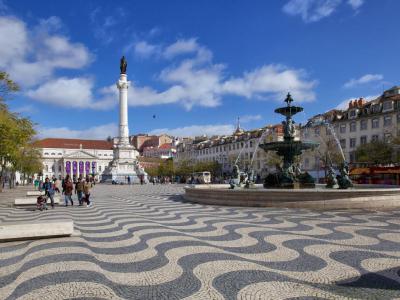
7) Praca do Rossio (Rossio Square)
The King Pedro IV Square, commonly known as Rossio, is a historic square in Lisbon’s Pombaline Downtown. Dating back to the Middle Ages, it has been a central site for public life, hosting events, from celebrations and revolts to bullfights and executions. The square’s centerpiece, the Column of Pedro IV, honors the Portuguese king for whom it is named.
Rossio became prominent in the 13th and 14th centuries as Lisbon expanded. Its colloquial name derives from the Portuguese term for "commons," reflecting its origins as communal land. In the 15th century, the Palace of Estaus was built on its northern side to house visiting dignitaries. Later, it became the headquarters of the Inquisition, and the square hosted public executions, including the first ritual of public penance, known as the “act of faith,” in 1540. On its eastern side, the All Saints Royal Hospital was constructed in 1504 but was destroyed in the 1755 earthquake, which devastated most of Lisbon. The earthquake spared only the Palace of Independence near the northeast corner, where Portuguese noblemen plotted against Spanish rule in 1640.
The post-earthquake reconstruction of Rossio defined its Pombaline architectural style. The Bandeira Arch, on the south side, connects Rossio to nearby streets like Rua Augusta and Commerce Square. The 19th century brought further transformation, with the Queen Maria II National Theatre replacing the infamous Inquisition Palace demolished in 1836. Designed in a neoclassical style, the theater features a statue of playwright Gil Vicente, a figure once censored by the Inquisition.
In the 19th century, Rossio gained its famous Portuguese wavelike mosaic pavement and two baroque bronze fountains situated at its southern and northern perimeters. The Rossio Train Station, built in 1887 with a neo-Manueline façade and striking horseshoe entry arches, added a grand feature to the northwest side. Cafés like Café Nicola and shops such as Ginjinha (selling the local sweet cherry liqueur) have made the square a popular social hub, attracting both locals and tourists.
Other noteworthy attractions nearby include the historic Santo Domingo Square, featuring a church, a memorial commemorating the Jewish victims of the 1506 massacre, and the neighboring Fig Tree Square. To the left of the theater, you'll find the Hotel Avenida Palace and Carmo Street, among other prominent landmarks. Finally, just behind the theater, the Gates of Santo Antão Street awaits, renowned as a famous "food street" replete with numerous cafes and restaurants.
Rossio became prominent in the 13th and 14th centuries as Lisbon expanded. Its colloquial name derives from the Portuguese term for "commons," reflecting its origins as communal land. In the 15th century, the Palace of Estaus was built on its northern side to house visiting dignitaries. Later, it became the headquarters of the Inquisition, and the square hosted public executions, including the first ritual of public penance, known as the “act of faith,” in 1540. On its eastern side, the All Saints Royal Hospital was constructed in 1504 but was destroyed in the 1755 earthquake, which devastated most of Lisbon. The earthquake spared only the Palace of Independence near the northeast corner, where Portuguese noblemen plotted against Spanish rule in 1640.
The post-earthquake reconstruction of Rossio defined its Pombaline architectural style. The Bandeira Arch, on the south side, connects Rossio to nearby streets like Rua Augusta and Commerce Square. The 19th century brought further transformation, with the Queen Maria II National Theatre replacing the infamous Inquisition Palace demolished in 1836. Designed in a neoclassical style, the theater features a statue of playwright Gil Vicente, a figure once censored by the Inquisition.
In the 19th century, Rossio gained its famous Portuguese wavelike mosaic pavement and two baroque bronze fountains situated at its southern and northern perimeters. The Rossio Train Station, built in 1887 with a neo-Manueline façade and striking horseshoe entry arches, added a grand feature to the northwest side. Cafés like Café Nicola and shops such as Ginjinha (selling the local sweet cherry liqueur) have made the square a popular social hub, attracting both locals and tourists.
Other noteworthy attractions nearby include the historic Santo Domingo Square, featuring a church, a memorial commemorating the Jewish victims of the 1506 massacre, and the neighboring Fig Tree Square. To the left of the theater, you'll find the Hotel Avenida Palace and Carmo Street, among other prominent landmarks. Finally, just behind the theater, the Gates of Santo Antão Street awaits, renowned as a famous "food street" replete with numerous cafes and restaurants.
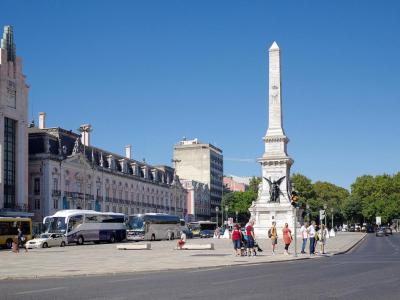
8) Praca dos Restauradores (Restorers Square)
The elongated Restorers Square, situated at the southeastern terminus of Liberty Avenue, derives its name from the momentous reinstatement of Portugal's independence in 1640, following 60 years of Spanish rule. Inaugurated in 1886, a prominent obelisk at its center commemorates the battles waged during the Portuguese Restoration War, with statues symbolizing Independence and Victory.
Distinguished by the iconic patterned tiles characteristic of Lisbon, this square is encircled by architectural gems from the 19th and early 20th centuries. Among these, Foz Palace stands out, a pink mansion that once served as the Ministry of Propaganda during the Salazar regime (from 1932 to 1974). Today, it houses the Portuguese Tourist Office, where you can conveniently purchase your Lisboa Card. Additionally, the palace's Hall of Mirrors hosts free public concerts.
Other noteworthy landmarks include the former Éden Cinema, now transformed into a hotel, adorned with a splendid Art Deco façade dating to the 1930s. The former Condes Cinema, built in a Modernist style in 1950, now hosts Lisbon's Hard Rock Cafe. Beyond that, don't miss the splendid fountain, which provides an excellent backdrop for photography and is particularly selfie-friendly.
Tip:
North of the square, the Glória Funicular offers convenient access to the Bairro Alto neighborhood.
Distinguished by the iconic patterned tiles characteristic of Lisbon, this square is encircled by architectural gems from the 19th and early 20th centuries. Among these, Foz Palace stands out, a pink mansion that once served as the Ministry of Propaganda during the Salazar regime (from 1932 to 1974). Today, it houses the Portuguese Tourist Office, where you can conveniently purchase your Lisboa Card. Additionally, the palace's Hall of Mirrors hosts free public concerts.
Other noteworthy landmarks include the former Éden Cinema, now transformed into a hotel, adorned with a splendid Art Deco façade dating to the 1930s. The former Condes Cinema, built in a Modernist style in 1950, now hosts Lisbon's Hard Rock Cafe. Beyond that, don't miss the splendid fountain, which provides an excellent backdrop for photography and is particularly selfie-friendly.
Tip:
North of the square, the Glória Funicular offers convenient access to the Bairro Alto neighborhood.
9) Rossio Railway Station
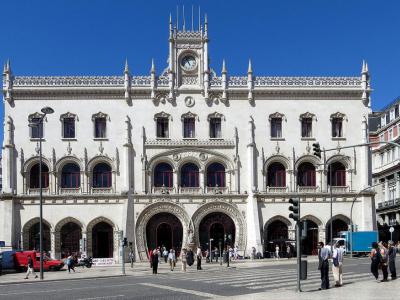
The Rossio Railway Station, situated in the square bearing the same name, was formerly identified as the Central Station ("Estação Central"), a nomenclature that still adorns its façade. This architectural gem was commissioned by the Portuguese Royal Railway Company and conceived between 1886-87 under the guidance of Portuguese architect, José Luís Monteiro.
One of the remarkable engineering marvels of 19th-century Portugal resides beneath the city – a tunnel of considerable significance. This tunnel stands as a testament to ingenuity and is celebrated for its contributions to the nation's infrastructure.
For several decades, the station held the distinction of being Lisbon's primary passenger terminus until the year 1957. Its Neo-Manueline façade continues to command attention, gracing the northwest quadrant of the square. A romantic homage to the extravagant Manueline style, characteristic of early 16th-century Portugal, the façade features several interesting elements. Noteworthy among them are the intertwined horseshoe portals at the entrance, an ornate clock nestled within a petite turret, and an abundance of intricate sculptural embellishments.
Upon venturing inside, one encounters platforms seamlessly connected to the façade level via gently sloping ramps. Overhead, an intricate cast-iron structure, crafted by a Belgian firm, provides both architectural elegance and functional utility. The station stands as a noteworthy exemplar of Romantic architecture in its façade and cast-iron architecture in its platform cover, underscoring its historical significance within Portugal's architectural heritage.
Notably, adorning the western wall of the train shed are a series of tiled murals, which artfully intermingle classical religious motifs with modern interpretations of Lisbon's urban landscape, creating a captivating tableau for visitors to behold.
Why You Should Visit:
This area in Lisbon stands as a bustling epicenter, painstakingly reconstructed following the devastating earthquake of 1755. It represents one of Europe's pioneering instances of urban planning.
Tip:
As you leisurely traverse the surrounding boulevards, take in the grandeur of the imposing Neo-Classical structures that grace the thoroughfares. Afterwards, immerse yourself further in the vibrant ambiance and the captivating surroundings by patronizing one of the lively sidewalk cafes.
One of the remarkable engineering marvels of 19th-century Portugal resides beneath the city – a tunnel of considerable significance. This tunnel stands as a testament to ingenuity and is celebrated for its contributions to the nation's infrastructure.
For several decades, the station held the distinction of being Lisbon's primary passenger terminus until the year 1957. Its Neo-Manueline façade continues to command attention, gracing the northwest quadrant of the square. A romantic homage to the extravagant Manueline style, characteristic of early 16th-century Portugal, the façade features several interesting elements. Noteworthy among them are the intertwined horseshoe portals at the entrance, an ornate clock nestled within a petite turret, and an abundance of intricate sculptural embellishments.
Upon venturing inside, one encounters platforms seamlessly connected to the façade level via gently sloping ramps. Overhead, an intricate cast-iron structure, crafted by a Belgian firm, provides both architectural elegance and functional utility. The station stands as a noteworthy exemplar of Romantic architecture in its façade and cast-iron architecture in its platform cover, underscoring its historical significance within Portugal's architectural heritage.
Notably, adorning the western wall of the train shed are a series of tiled murals, which artfully intermingle classical religious motifs with modern interpretations of Lisbon's urban landscape, creating a captivating tableau for visitors to behold.
Why You Should Visit:
This area in Lisbon stands as a bustling epicenter, painstakingly reconstructed following the devastating earthquake of 1755. It represents one of Europe's pioneering instances of urban planning.
Tip:
As you leisurely traverse the surrounding boulevards, take in the grandeur of the imposing Neo-Classical structures that grace the thoroughfares. Afterwards, immerse yourself further in the vibrant ambiance and the captivating surroundings by patronizing one of the lively sidewalk cafes.
10) Avenida da Liberdade (Liberty Avenue)
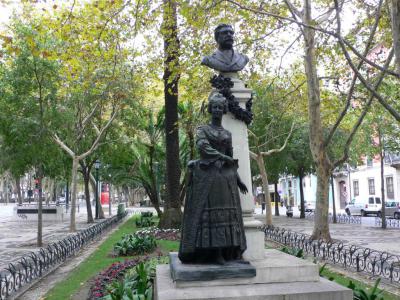
Liberty Avenue, a central boulevard in Lisbon, is renowned as one of Europe's most prestigious and expensive streets. Its history dates back to the 18th century, originating as a park for Portuguese nobility. Transformed into a boulevard between 1879 and 1886, the avenue marked Lisbon's northward expansion, modeled after the grand boulevards of Paris. It connects the Marquis of Pombal Square, also known as the Rotunda, in the north to Restorers Square, which is the gateway to Lisbon's Baixa district.
The avenue retains elements of its original park, including statues representing the Tagus and Douro rivers, fountains, and a waterfall from the 1830s. Following this, you'll encounter landscaped garden areas enclosed by four marble statues symbolizing Europe, Africa, Asia, and Oceania.
In recent decades, many historic buildings in the area were replaced by modern offices and hotels. Despite this, the avenue is still adorned with multiple monuments, including tributes to the Portuguese poet and politician Almeida Garrett, novelist and historian Alexandre Herculano, and a 1931 World War I memorial.
Today, Liberty Avenue is a hub of luxury. Towards its upper stretch, housing some of Lisbon's most upscale real estate, you'll find a concentration of international high-end brands such as Louis Vuitton, Prada, Dior, Chanel, and Gucci. Its central location places it near prominent landmarks like Eduardo VII Park, Queen Maria II National Theatre, and the Avenidas Novas district.
The avenue is also a destination for luxury hotels, including those from Sofitel, Tivoli Hotels & Resorts, and Dom Pedro Hotels. Additionally, it is home to several cinemas and numerous cafes and patisseries. During the summer months, some of these establishments extend their services into the well-lit central gardens, creating a lively evening atmosphere enriched with music.
As a prestigious address in Lisbon, Liberty Avenue blends historical significance with modern elegance, serving as a symbol of the city's cultural and economic vitality.
The avenue retains elements of its original park, including statues representing the Tagus and Douro rivers, fountains, and a waterfall from the 1830s. Following this, you'll encounter landscaped garden areas enclosed by four marble statues symbolizing Europe, Africa, Asia, and Oceania.
In recent decades, many historic buildings in the area were replaced by modern offices and hotels. Despite this, the avenue is still adorned with multiple monuments, including tributes to the Portuguese poet and politician Almeida Garrett, novelist and historian Alexandre Herculano, and a 1931 World War I memorial.
Today, Liberty Avenue is a hub of luxury. Towards its upper stretch, housing some of Lisbon's most upscale real estate, you'll find a concentration of international high-end brands such as Louis Vuitton, Prada, Dior, Chanel, and Gucci. Its central location places it near prominent landmarks like Eduardo VII Park, Queen Maria II National Theatre, and the Avenidas Novas district.
The avenue is also a destination for luxury hotels, including those from Sofitel, Tivoli Hotels & Resorts, and Dom Pedro Hotels. Additionally, it is home to several cinemas and numerous cafes and patisseries. During the summer months, some of these establishments extend their services into the well-lit central gardens, creating a lively evening atmosphere enriched with music.
As a prestigious address in Lisbon, Liberty Avenue blends historical significance with modern elegance, serving as a symbol of the city's cultural and economic vitality.
11) Ascensor da Gloria (Gloria Funicular)
The Glória Funicular, also known as the Glória Lift, is a historic funicular railway in Lisbon's Santo António parish. Instead of viewing this as merely a tourist attraction, consider it an extraordinary engineering achievement!
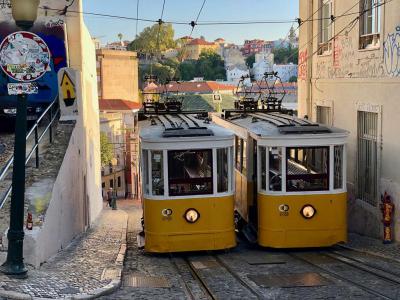
The funicular connects Restorers Square in the downtown Pombaline district to the Bairro Alto neighborhood, specifically the Saint Peter of Alcântara Garden and Viewpoint. Operating on a counterweight principle, the system features two partially wooden streetcars linked by a cable, enabling simultaneous ascent and descent. Uniquely, electric motors on the cars, powered by overhead wires, provide traction.
The funicular's history dates back to 1875 when the New Lisbon Mechanical Lift Company received a concession to build it. Construction began in 1882, and the lift opened on 24 October 1885. Initially water-powered, it switched to steam by 1886 and then to electricity in 1915. The original design included two-tiered cars with seating arranged back-to-back on the upper floor and inward-facing benches on the lower.
In 1995, the line's operator proposed its heritage classification, leading to its designation as a National Monument two years later.
The funicular operates on a 17.7% slope of about 900 feet (or 270 meters). The inclined trams are designed for passenger comfort, with longitudinally arranged seats to maintain a level perspective. The tram journey typically lasts about 2-3 minutes, while an on-foot descent along the track takes anywhere between 5 and 8 minutes, depending on one's age and physical stamina.
Whatever you choose, the route will pass through one of Lisbon's finest showcases of neighborhood graffiti, predominantly on the right side (when going uphill), as this built-up 19th-century area is officially dedicated to sanctioned street art. Additionally, it features landmarks like the Foz Palace and the Misericórdia district.
Today, the Glória Funicular remains a cherished piece of Lisbon's history and an entertaining mode of public transportation, particularly for those unfamiliar with the charm of funicular trams. There are excellent photo opportunities from the summit, making it an excellent point for exploring the Bairro Alto neighborhood.
The funicular connects Restorers Square in the downtown Pombaline district to the Bairro Alto neighborhood, specifically the Saint Peter of Alcântara Garden and Viewpoint. Operating on a counterweight principle, the system features two partially wooden streetcars linked by a cable, enabling simultaneous ascent and descent. Uniquely, electric motors on the cars, powered by overhead wires, provide traction.
The funicular's history dates back to 1875 when the New Lisbon Mechanical Lift Company received a concession to build it. Construction began in 1882, and the lift opened on 24 October 1885. Initially water-powered, it switched to steam by 1886 and then to electricity in 1915. The original design included two-tiered cars with seating arranged back-to-back on the upper floor and inward-facing benches on the lower.
In 1995, the line's operator proposed its heritage classification, leading to its designation as a National Monument two years later.
The funicular operates on a 17.7% slope of about 900 feet (or 270 meters). The inclined trams are designed for passenger comfort, with longitudinally arranged seats to maintain a level perspective. The tram journey typically lasts about 2-3 minutes, while an on-foot descent along the track takes anywhere between 5 and 8 minutes, depending on one's age and physical stamina.
Whatever you choose, the route will pass through one of Lisbon's finest showcases of neighborhood graffiti, predominantly on the right side (when going uphill), as this built-up 19th-century area is officially dedicated to sanctioned street art. Additionally, it features landmarks like the Foz Palace and the Misericórdia district.
Today, the Glória Funicular remains a cherished piece of Lisbon's history and an entertaining mode of public transportation, particularly for those unfamiliar with the charm of funicular trams. There are excellent photo opportunities from the summit, making it an excellent point for exploring the Bairro Alto neighborhood.
12) Miradouro de Sao Pedro de Alcantara (Saint Peter's Viewpoint) (must see)
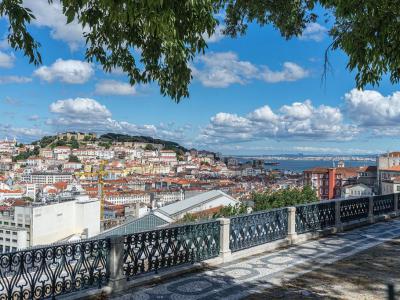
The Garden of Saint Peter of Alcantara is a picturesque viewpoint in central Lisbon, offering panoramic views of the Baixa and Mouraria neighborhoods, with the iconic Saint George's Castle prominently in sight.
Divided into two terraces, the garden caters to diverse experiences. The upper terrace features a lively atmosphere with musicians, pop-up bars, and a charming fountain alongside a monument to Eduardo Coelho, founder of the local Daily News paper, and a statue of a newsboy, reflecting Bairro Alto’s printing heritage. In contrast, the lower terrace offers a serene retreat, adorned with flower beds, sculptures of Greek and Roman figures like Minerva and Ulysses, and a small waterfall.
Historically, the garden traces its roots to a 17th-century aqueduct project, later interrupted by the 1755 earthquake. The centerpiece Baroque fountain, relocated from Bemposta Palace, adds to its historical charm. The garden acts as a crossroads, linking the historic Baixa district, the upscale Príncipe Real and the lively Bairro Alto neighborhoods, blending elements of history, class, and social vibrancy.
Visitors can relax on benches, enjoy local music, or indulge in food and drinks from nearby stalls. Across the street, the Port Wine Institute offers over 300 varieties of Port wine, perfect for a cozy tasting or a waterside picnic. Dynamic street art at the Urban Art Gallery adds a contemporary flair.
Accessibility is enhanced by the Glória Lift, a vintage funicular connecting the garden to Restorers Square, bypassing a steep hill. The traditional Miradouro bar and the nearby Lumi Rooftop offer further refreshment and dining options. A unique 1952 tile map in the garden helps visitors identify Lisbon’s landmarks, enhancing their exploration of the city.
With its blend of history, culture, and scenic beauty, the Garden of Saint Peter of Alcantara is a must-visit spot for anyone exploring Lisbon.
Divided into two terraces, the garden caters to diverse experiences. The upper terrace features a lively atmosphere with musicians, pop-up bars, and a charming fountain alongside a monument to Eduardo Coelho, founder of the local Daily News paper, and a statue of a newsboy, reflecting Bairro Alto’s printing heritage. In contrast, the lower terrace offers a serene retreat, adorned with flower beds, sculptures of Greek and Roman figures like Minerva and Ulysses, and a small waterfall.
Historically, the garden traces its roots to a 17th-century aqueduct project, later interrupted by the 1755 earthquake. The centerpiece Baroque fountain, relocated from Bemposta Palace, adds to its historical charm. The garden acts as a crossroads, linking the historic Baixa district, the upscale Príncipe Real and the lively Bairro Alto neighborhoods, blending elements of history, class, and social vibrancy.
Visitors can relax on benches, enjoy local music, or indulge in food and drinks from nearby stalls. Across the street, the Port Wine Institute offers over 300 varieties of Port wine, perfect for a cozy tasting or a waterside picnic. Dynamic street art at the Urban Art Gallery adds a contemporary flair.
Accessibility is enhanced by the Glória Lift, a vintage funicular connecting the garden to Restorers Square, bypassing a steep hill. The traditional Miradouro bar and the nearby Lumi Rooftop offer further refreshment and dining options. A unique 1952 tile map in the garden helps visitors identify Lisbon’s landmarks, enhancing their exploration of the city.
With its blend of history, culture, and scenic beauty, the Garden of Saint Peter of Alcantara is a must-visit spot for anyone exploring Lisbon.
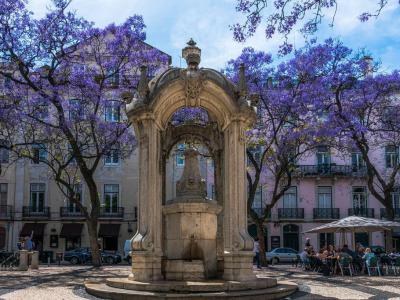
13) Chafariz do Carmo & Largo do Carmo (Carmo Fountain and Square)
The serene and historically rich Carmo Square in Lisbon is celebrated for its tranquil atmosphere and shaded jacaranda trees. Unlike Lisbon’s grander squares, it offers a peaceful escape from the bustling tourist paths, complemented by notable monuments and inviting open-air restaurants.
The plaza is anchored by the striking ruins of the Church of Our Lady of Mount Carmel, remnants of a once-magnificent Gothic temple devastated by the 1755 earthquake. The skeletal arches stand as a poignant reminder of the disaster, contrasting sharply with the vibrant surroundings. Within the church’s ruins lies the Carmo Archaeological Museum, one of Portugal's first archaeology museums, established to safeguard valuable artifacts.
Adjacent to the convent, the Carmo Barracks holds significant historical importance as the site where Portugal's last dictator, Marcello Caetano, officially relinquished power during the 1974 Carnation Revolution. A commemorative plaque marks this pivotal event in Portuguese history. The convent itself now serves as the headquarters of the National Republican Guard and houses a small museum detailing the history of Portugal’s paramilitary security forces.
The Carmo Fountain, now purely decorative, was originally built atop an aqueduct that supplied water to the area. Today, it adds a great deal of charm to the plaza, making it a favored spot for alfresco dining. This late Baroque fountain is one of the many public fountains constructed in Lisbon during the 15th through 18th centuries. It is characterized by a structure enclosed within an elegant porch supported by four grand pillars.
Nearby, the Santa Justa Lift connects the plaza to the Baixa district, offering panoramic views of the city.
The plaza also features the Valadares Palace and inviting esplanades perfect for a leisurely stroll. Its cinematic beauty, enhanced by blooming jacaranda trees, has made it a popular setting for films and documentaries.
Additionally, Carmo Square boasts some of the city's finest restaurants with outdoor seating, creating an excellent dining experience. Visitors can also enjoy the cozy, circular kiosk café, where musicians often provide entertainment. On Sundays, there's even a small market to explore.
The plaza is anchored by the striking ruins of the Church of Our Lady of Mount Carmel, remnants of a once-magnificent Gothic temple devastated by the 1755 earthquake. The skeletal arches stand as a poignant reminder of the disaster, contrasting sharply with the vibrant surroundings. Within the church’s ruins lies the Carmo Archaeological Museum, one of Portugal's first archaeology museums, established to safeguard valuable artifacts.
Adjacent to the convent, the Carmo Barracks holds significant historical importance as the site where Portugal's last dictator, Marcello Caetano, officially relinquished power during the 1974 Carnation Revolution. A commemorative plaque marks this pivotal event in Portuguese history. The convent itself now serves as the headquarters of the National Republican Guard and houses a small museum detailing the history of Portugal’s paramilitary security forces.
The Carmo Fountain, now purely decorative, was originally built atop an aqueduct that supplied water to the area. Today, it adds a great deal of charm to the plaza, making it a favored spot for alfresco dining. This late Baroque fountain is one of the many public fountains constructed in Lisbon during the 15th through 18th centuries. It is characterized by a structure enclosed within an elegant porch supported by four grand pillars.
Nearby, the Santa Justa Lift connects the plaza to the Baixa district, offering panoramic views of the city.
The plaza also features the Valadares Palace and inviting esplanades perfect for a leisurely stroll. Its cinematic beauty, enhanced by blooming jacaranda trees, has made it a popular setting for films and documentaries.
Additionally, Carmo Square boasts some of the city's finest restaurants with outdoor seating, creating an excellent dining experience. Visitors can also enjoy the cozy, circular kiosk café, where musicians often provide entertainment. On Sundays, there's even a small market to explore.
14) Elevador de Santa Justa (Santa Justa Lift) (must see)
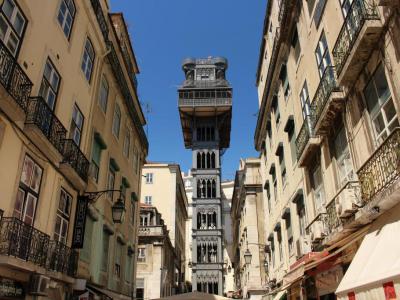
The Santa Justa Lift, also known as the Carmo Lift, is a distinctive attraction in Lisbon. This historic elevator, built in the early 20th century, is the only remaining vertical lift in the capital. Others, such as the Glória and Bica lifts, are funicular railways. This lift was designed to address the city's challenging terrain, linking the lower Baixa district to the elevated Carmo Square. Construction began in 1900, and the lift was inaugurated in 1901, initially operating on steam power before transitioning to electricity in 1907.
The Neo-Gothic iron structure, 45 meters tall, features intricate metalwork, a double-lattice design, and two wood-paneled cabins that transport passengers across seven stories. Originally accommodating 24 people, the cabins were later upgraded to hold 29 passengers. A spiral staircase and walkway connect the lift to nearby attractions, offering panoramic views of landmarks, such as Saint George's Castle, the Tagus River, Rossio Square, and the Baixa district, from its observation deck.
Designated a National Monument in 2002, the Santa Justa Lift underwent renovations to preserve its historical significance and was reopened to the public in 2006. It remains a vital link and a tourist attraction, embodying innovative engineering from its era. Visitors also use the lift to access key sites like Carmo Square, Saint Roch Church, and the Bairro Alto neighborhood.
Tip:
It's important to note that ascending the iron spiral staircase requires a head for heights. However, if you can conquer any nervousness, the views are truly spectacular and well worth the effort. Additionally, keep in mind that the top platform is quite exposed, so it's advisable to check the weather conditions before planning your visit.
If you find the queue too long, consider entering the cork store on Rua do Carmo, ascending the stairs, and then crossing the street via the walkway. Although this option requires physical effort to climb the stairs, it saves time and money while allowing for more opportunities to savor the views along the way.
The Neo-Gothic iron structure, 45 meters tall, features intricate metalwork, a double-lattice design, and two wood-paneled cabins that transport passengers across seven stories. Originally accommodating 24 people, the cabins were later upgraded to hold 29 passengers. A spiral staircase and walkway connect the lift to nearby attractions, offering panoramic views of landmarks, such as Saint George's Castle, the Tagus River, Rossio Square, and the Baixa district, from its observation deck.
Designated a National Monument in 2002, the Santa Justa Lift underwent renovations to preserve its historical significance and was reopened to the public in 2006. It remains a vital link and a tourist attraction, embodying innovative engineering from its era. Visitors also use the lift to access key sites like Carmo Square, Saint Roch Church, and the Bairro Alto neighborhood.
Tip:
It's important to note that ascending the iron spiral staircase requires a head for heights. However, if you can conquer any nervousness, the views are truly spectacular and well worth the effort. Additionally, keep in mind that the top platform is quite exposed, so it's advisable to check the weather conditions before planning your visit.
If you find the queue too long, consider entering the cork store on Rua do Carmo, ascending the stairs, and then crossing the street via the walkway. Although this option requires physical effort to climb the stairs, it saves time and money while allowing for more opportunities to savor the views along the way.
15) Arco da Rua Augusta (Augusta Street Arch)
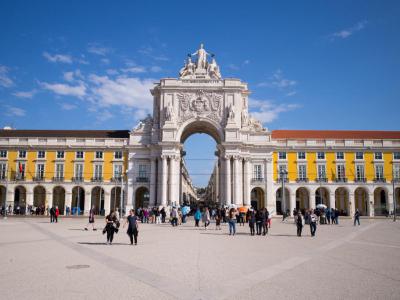
The Augusta Street Arch, located in Lisbon’s Commerce Plaza, is a historical landmark symbolizing the city’s reconstruction after the devastating 1755 earthquake. Originally envisioned as a bell tower, its design evolved into a grand triumphal arch over more than a century. The structure boasts six 11-meter-tall columns and a rich display of Portuguese historical and cultural motifs.
Atop the arch, a sculptural group symbolizes Glory bestowing laurel leaves upon Valor and Genius, alongside a bell that can be rung. The centerpiece, Glory, stands 7 meters tall, dressed in classical peplos, holding two crowns. Valor is personified by an Amazon figure with dragon-emblazoned armor, representing the Portuguese Royal House of Braganza. Genius, accompanied by a statue of Jupiter and symbols of writing and art, completes the trio. The arch’s height necessitated colossal proportions for these statues, enhancing their visual impact.
Four additional statues stand over the columns, honoring key figures in Portuguese history: the 14th-century general Nuno Álvares Pereira, 18th-century statesman Marquis of Pombal, Medieval Portuguese navigator and explorer Vasco da Gama, and Viriatus, a Lusitanian leader who fought against the Romans in the 2nd century BC. Reclining figures below symbolize the rivers Tagus and Douro, while inscriptions celebrate the Portuguese Empire's grandeur and achievements, including the phrase “To the Virtues of the Greatest, so that it may serve as a lesson to all. Dedicated at public expense.”
Since 2013, visitors can ascend the arch to enjoy panoramic views of Lisbon. A lift takes visitors most of the way, with additional steep stairs and stop-and-go traffic lights managing congestion. Informative displays on landings detail the arch’s history and the development of the area, including the story of an old clock.
Tip:
If you have the Lisbon Card, admission is free, and credit cards are accepted.
It's advisable to go early to avoid both the scorching heat and the crowds.
Atop the arch, a sculptural group symbolizes Glory bestowing laurel leaves upon Valor and Genius, alongside a bell that can be rung. The centerpiece, Glory, stands 7 meters tall, dressed in classical peplos, holding two crowns. Valor is personified by an Amazon figure with dragon-emblazoned armor, representing the Portuguese Royal House of Braganza. Genius, accompanied by a statue of Jupiter and symbols of writing and art, completes the trio. The arch’s height necessitated colossal proportions for these statues, enhancing their visual impact.
Four additional statues stand over the columns, honoring key figures in Portuguese history: the 14th-century general Nuno Álvares Pereira, 18th-century statesman Marquis of Pombal, Medieval Portuguese navigator and explorer Vasco da Gama, and Viriatus, a Lusitanian leader who fought against the Romans in the 2nd century BC. Reclining figures below symbolize the rivers Tagus and Douro, while inscriptions celebrate the Portuguese Empire's grandeur and achievements, including the phrase “To the Virtues of the Greatest, so that it may serve as a lesson to all. Dedicated at public expense.”
Since 2013, visitors can ascend the arch to enjoy panoramic views of Lisbon. A lift takes visitors most of the way, with additional steep stairs and stop-and-go traffic lights managing congestion. Informative displays on landings detail the arch’s history and the development of the area, including the story of an old clock.
Tip:
If you have the Lisbon Card, admission is free, and credit cards are accepted.
It's advisable to go early to avoid both the scorching heat and the crowds.
