Custom Walk in Bratislava, Slovakia by vikasdhupar_575e7 created on 2025-05-20
Guide Location: Slovakia » Bratislava
Guide Type: Custom Walk
# of Sights: 6
Tour Duration: 2 Hour(s)
Travel Distance: 4.1 Km or 2.5 Miles
Share Key: ZRDB7
Guide Type: Custom Walk
# of Sights: 6
Tour Duration: 2 Hour(s)
Travel Distance: 4.1 Km or 2.5 Miles
Share Key: ZRDB7
How It Works
Please retrieve this walk in the GPSmyCity app. Once done, the app will guide you from one tour stop to the next as if you had a personal tour guide. If you created the walk on this website or come to the page via a link, please follow the instructions below to retrieve the walk in the app.
Retrieve This Walk in App
Step 1. Download the app "GPSmyCity: Walks in 1K+ Cities" on Apple App Store or Google Play Store.



Step 2. In the GPSmyCity app, download(or launch) the guide "Bratislava Map and Walking Tours".
Step 3. Tap the menu button located at upper right corner of the "Walks" screen and select "Retrieve custom walk". Enter the share key: ZRDB7
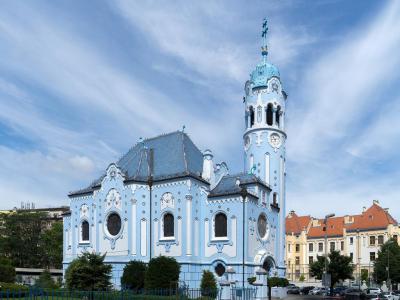
1) Blue Church (must see)
The Hungarian Secessionist Catholic Church, known as the Church of Saint Elisabeth or the Blue Church, is located in Old Town Bratislava. The construction was consecrated to Elisabeth of Hungary, who was a princess and, later, became a Roman Catholic saint. She was widowed young and surrendered her wealth for a life devoted to the poor and indigent. After her death at the age of 24, many miracles of healing were accredited to her. She was canonized by Pope Gregory IX in 1235.
Built in 1908, the structure was designed by Odon Lechner, a recognized Hungarian architect. He was known to embellish his constructions with Zsolnay tile patterns. Zsolnay tiles were manufactured by a Hungarian company known for its intricate porcelain, tiles, stoneware and pottery. The tiles on the church’s roof were generated using the pyrogranite process, which involves firing ceramic under exceptionally high temperatures, producing resilient materials which are resistant to acid and frost. The structure has attained its name because of the blue color of the mosaics, which decorate its roof and walls.
The building features a cylindrical tower and bell dome common to the Hungarian Art Nouveau and the Romanesque movement in art and architecture. The single nave church contains vaulted ceilings along with hints of barrel vaults. Romanesque double pillars encompass the entrances and the windows.
Built in 1908, the structure was designed by Odon Lechner, a recognized Hungarian architect. He was known to embellish his constructions with Zsolnay tile patterns. Zsolnay tiles were manufactured by a Hungarian company known for its intricate porcelain, tiles, stoneware and pottery. The tiles on the church’s roof were generated using the pyrogranite process, which involves firing ceramic under exceptionally high temperatures, producing resilient materials which are resistant to acid and frost. The structure has attained its name because of the blue color of the mosaics, which decorate its roof and walls.
The building features a cylindrical tower and bell dome common to the Hungarian Art Nouveau and the Romanesque movement in art and architecture. The single nave church contains vaulted ceilings along with hints of barrel vaults. Romanesque double pillars encompass the entrances and the windows.
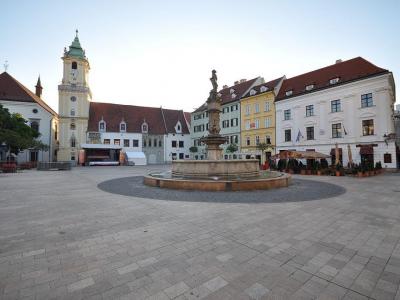
2) Hlavne Namestie (Main Square) (must see)
The central point in old town Bratislava, the Main Square, has been the hub of the town for centuries. It is surrounded by landmarks, including Kutscherfeldov Palace, Pawera House, Ungerov Dom, and the Maximillian Fountain. Additionally, tons of restaurants, cafes, and bars in the area keep it bustling.
During the winter months, the Main Square is home to Bratislava's Christmas fair. The entire area is decorated, and vendors set up stalls throughout the square. You'll find souvenirs, boiled wine, beer, and many different Slovak foods.
Over the years, the square has changed names several times. During World War II, it was named to honor Hilter. From 1948 to 1989, it was named for the day Bratislava was liberated by the Red Army - 4 April Square.
The square is home to the Old Town Hall building and several other landmark buildings. Old Town Hall was built in 1599 and is the oldest in the country. Today, it houses a museum all about the town's history.
The Japanese and French Embassy are also located here.
During the winter months, the Main Square is home to Bratislava's Christmas fair. The entire area is decorated, and vendors set up stalls throughout the square. You'll find souvenirs, boiled wine, beer, and many different Slovak foods.
Over the years, the square has changed names several times. During World War II, it was named to honor Hilter. From 1948 to 1989, it was named for the day Bratislava was liberated by the Red Army - 4 April Square.
The square is home to the Old Town Hall building and several other landmark buildings. Old Town Hall was built in 1599 and is the oldest in the country. Today, it houses a museum all about the town's history.
The Japanese and French Embassy are also located here.
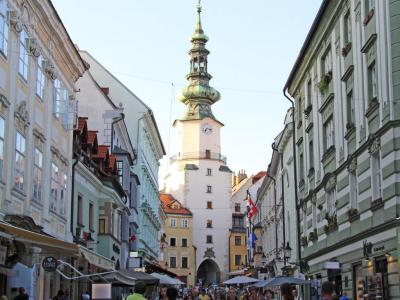
3) Michael's Tower and Street (must see)
The only surviving gate from the city's medieval walls lies at the end of Michael's Street. Michael's Gate (Michalska Brana) was built around 1300 and once stood with three others leading into town. It is one of the oldest buildings in town.
The tower's baroque exterior is a result of reconstruction works carried out in the 1750s. The statue of Saint Michael and the Dragon was placed at the top during this time.
The gate got its name as the Church of Saint Michael stood just outside the city walls here.
At one point, the city was surrounded by medieval fortifications. Entrance to town was only possible through the four gates, all of which were guarded and fortified. The other gates, now demolished, were the Laurens Gate, Fisherman's Gate on the river Danube, and Vydrica Gate.
At its height, the gate was part of a much larger system of fortifications. They included two rings of city walls, two bastions, a barbican, and a bridge over a moat. The barbican is still present and today has been built into houses. The original bridge over the moat was replaced by a stone one in 1727. Some of the moat is also still visible.
The view from the top of the seven-floor, 51-meter tall tower is spectacular. There is no better place from which to view the old town of Bratislava. To get in the tower, enter through the Museum of Arms. The museum contains excellent exhibits about the fortifications and the history of the city.
The street leading from the Michael's Gate, Michael's Street, is lined with shops and attractions. In addition to the Arms Museum, you'll also find the Pharmacy Museum nearby in a very old shop building. There are also bars, cafes, and restaurants lining the street.
The tower's baroque exterior is a result of reconstruction works carried out in the 1750s. The statue of Saint Michael and the Dragon was placed at the top during this time.
The gate got its name as the Church of Saint Michael stood just outside the city walls here.
At one point, the city was surrounded by medieval fortifications. Entrance to town was only possible through the four gates, all of which were guarded and fortified. The other gates, now demolished, were the Laurens Gate, Fisherman's Gate on the river Danube, and Vydrica Gate.
At its height, the gate was part of a much larger system of fortifications. They included two rings of city walls, two bastions, a barbican, and a bridge over a moat. The barbican is still present and today has been built into houses. The original bridge over the moat was replaced by a stone one in 1727. Some of the moat is also still visible.
The view from the top of the seven-floor, 51-meter tall tower is spectacular. There is no better place from which to view the old town of Bratislava. To get in the tower, enter through the Museum of Arms. The museum contains excellent exhibits about the fortifications and the history of the city.
The street leading from the Michael's Gate, Michael's Street, is lined with shops and attractions. In addition to the Arms Museum, you'll also find the Pharmacy Museum nearby in a very old shop building. There are also bars, cafes, and restaurants lining the street.
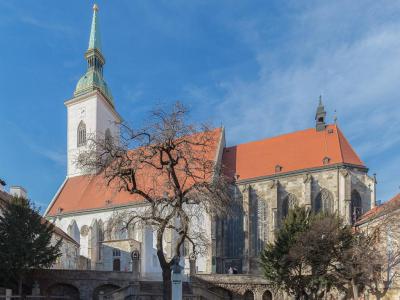
4) St. Martin's Cathedral (must see)
In the town's early history, worshipping was done at the Bratislava Castle. But in the early 13th century, the King of Hungary requested that the pope allow him to relocate the church. So, as the town grew, the construction of a Gothic cathedral began in 1311.
It wasn't completed until 1452 due to financial difficulties and the Hussite Wars. Additions were made in the 18th and 19th centuries, including the Baroque Chapel of Saint John the Merciful.
The present appearance of the building has been steady since 1877 when significant restoration efforts were completed after earthquakes, fires, and war had damaged the cathedral.
The cathedral is most famous as the coronation church for the Kingdom of Hungary from 1563 onward. Eleven kings and queens and eight of their consorts were coronated in the building.
In recognition of this honor, the cathedral tower is topped with a replica of the Crown of Saint Stephen. This replica of the Holy Crown of Hungary weighs 330 pounds (150 kilograms) and is gold-plated.
The cathedral was built over a cemetery and lay atop an unknown amount of catacombs and crypts. The building is designated a national cultural monument, but it is, unfortunately, decaying due to vibrations from the traffic passing on the Novy Most bridge.
It wasn't completed until 1452 due to financial difficulties and the Hussite Wars. Additions were made in the 18th and 19th centuries, including the Baroque Chapel of Saint John the Merciful.
The present appearance of the building has been steady since 1877 when significant restoration efforts were completed after earthquakes, fires, and war had damaged the cathedral.
The cathedral is most famous as the coronation church for the Kingdom of Hungary from 1563 onward. Eleven kings and queens and eight of their consorts were coronated in the building.
In recognition of this honor, the cathedral tower is topped with a replica of the Crown of Saint Stephen. This replica of the Holy Crown of Hungary weighs 330 pounds (150 kilograms) and is gold-plated.
The cathedral was built over a cemetery and lay atop an unknown amount of catacombs and crypts. The building is designated a national cultural monument, but it is, unfortunately, decaying due to vibrations from the traffic passing on the Novy Most bridge.
5) Bratislava Castle (must see)
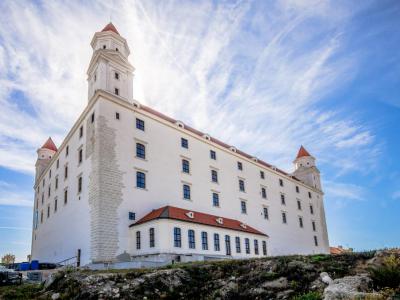
The imposing Bratislava Castle is the most conspicuous landmark in the town of Bratislava. It stands on an isolated rocky hill above the town, and had been built and rebuilt continuously throughout the 9th-18th centuries.
The site of the castle has been of strategic importance for most of the area's history. It is located roughly in the center of Europe. Still, more importantly, it is along the route between the Carpathians and the Alps at a convenient crossing point of the river Danube.
The hill and surrounding area have hosted settlements since before the early Iron Age. Evidence suggests that the first settlements here started around 3,500 BC. In those early centuries, the hill was used as an acropolis for the surrounding town.
Archeological evidence shows a history of Celt and Roman occupation through 500 AD. The current structure was begun in the 10th century but worked lagged over the years. As the need for defense increased for the Kingdom of Hungary, the castle was added on to.
The Kingdom was abolished in 1781, and the castle was more or less dismantled and abandoned. The structures were used as a seminary and military barracks for some time during the 19th century. By the middle part of the 20th century, the castle was in ruins.
A massive restoration effort was begun in 1957 and completed in 1968. The 1968 Federation Law, which formed the Czech Socialist Republic and the Slovak Socialist Republic, was signed in the castle. Many years later, the constitution of now independent Slovakia was also signed in the castle's Knights Hall.
The castle is beautifully restored and houses exhibitions from the Slovak National Museum. Even if you choose not to visit the museum and interior rooms, walking around the castle grounds and enjoying the views of the city and the Danube is not to be missed.
The site of the castle has been of strategic importance for most of the area's history. It is located roughly in the center of Europe. Still, more importantly, it is along the route between the Carpathians and the Alps at a convenient crossing point of the river Danube.
The hill and surrounding area have hosted settlements since before the early Iron Age. Evidence suggests that the first settlements here started around 3,500 BC. In those early centuries, the hill was used as an acropolis for the surrounding town.
Archeological evidence shows a history of Celt and Roman occupation through 500 AD. The current structure was begun in the 10th century but worked lagged over the years. As the need for defense increased for the Kingdom of Hungary, the castle was added on to.
The Kingdom was abolished in 1781, and the castle was more or less dismantled and abandoned. The structures were used as a seminary and military barracks for some time during the 19th century. By the middle part of the 20th century, the castle was in ruins.
A massive restoration effort was begun in 1957 and completed in 1968. The 1968 Federation Law, which formed the Czech Socialist Republic and the Slovak Socialist Republic, was signed in the castle. Many years later, the constitution of now independent Slovakia was also signed in the castle's Knights Hall.
The castle is beautifully restored and houses exhibitions from the Slovak National Museum. Even if you choose not to visit the museum and interior rooms, walking around the castle grounds and enjoying the views of the city and the Danube is not to be missed.
6) Cumil Statue (must see)
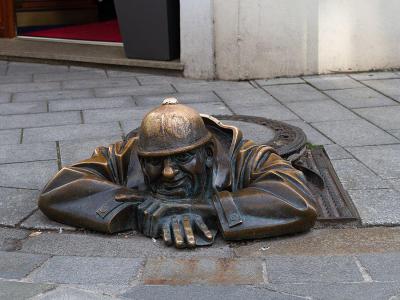
The Čumil Statue in Bratislava is a quirky bronze sculpture crafted by Viktor Hulík. Located at the crossroads of Panská and Rybárska Brána streets near the Main Square, this statue doesn’t depict any real person but comes from Hulík’s creative vision. It shows Čumil, a figure taking a break and peeking out from a manhole, watching people go by and seemingly enjoying the view of young women.
Kids particularly love this statue because they get to touch Čumil’s head and sit on the statue, making it more engaging. Yet, its placement has caused several accidents with passing vehicles bumping into it. To address this, a sign reading "Man at Work" has been placed beside the statue to alert drivers and add a touch of humor for tourists taking pictures.
Čumil is a popular spot for photos in Bratislava, drawing many tourists. Locals have come up with various fun and symbolic stories about why Čumil is there, ranging from jokes about him being nosy to deeper meanings depicting him as a typical Slovak worker. These stories and the statue’s playful nature spark lively conversations among visitors and locals alike.
Even though Čumil is now protected from traffic by a sign, he still faces the wear and tear of being a beloved interactive landmark. There’s even a light-hearted warning for women about mythical risks involving storks. More than just a piece of art, Čumil helps weave the rich cultural stories and legends of Bratislava.
Kids particularly love this statue because they get to touch Čumil’s head and sit on the statue, making it more engaging. Yet, its placement has caused several accidents with passing vehicles bumping into it. To address this, a sign reading "Man at Work" has been placed beside the statue to alert drivers and add a touch of humor for tourists taking pictures.
Čumil is a popular spot for photos in Bratislava, drawing many tourists. Locals have come up with various fun and symbolic stories about why Čumil is there, ranging from jokes about him being nosy to deeper meanings depicting him as a typical Slovak worker. These stories and the statue’s playful nature spark lively conversations among visitors and locals alike.
Even though Čumil is now protected from traffic by a sign, he still faces the wear and tear of being a beloved interactive landmark. There’s even a light-hearted warning for women about mythical risks involving storks. More than just a piece of art, Čumil helps weave the rich cultural stories and legends of Bratislava.
