Custom Walk in Valletta, Malta by mariogalteri6362 created on 2025-05-25
Guide Location: Malta » Valletta
Guide Type: Custom Walk
# of Sights: 11
Tour Duration: 3 Hour(s)
Travel Distance: 5.3 Km or 3.3 Miles
Share Key: F8LYS
Guide Type: Custom Walk
# of Sights: 11
Tour Duration: 3 Hour(s)
Travel Distance: 5.3 Km or 3.3 Miles
Share Key: F8LYS
How It Works
Please retrieve this walk in the GPSmyCity app. Once done, the app will guide you from one tour stop to the next as if you had a personal tour guide. If you created the walk on this website or come to the page via a link, please follow the instructions below to retrieve the walk in the app.
Retrieve This Walk in App
Step 1. Download the app "GPSmyCity: Walks in 1K+ Cities" on Apple App Store or Google Play Store.



Step 2. In the GPSmyCity app, download(or launch) the guide "Valletta Map and Walking Tours".
Step 3. Tap the menu button located at upper right corner of the "Walks" screen and select "Retrieve custom walk". Enter the share key: F8LYS
1) Valletta Waterfront (must see)
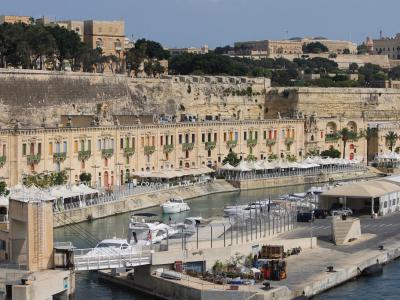
The Valletta Waterfront, located in Floriana, is a picturesque promenade distinguished by three notable buildings: a centrally positioned Church of the Flight into Egypt, the Pinto Stores (also known as the Pinto Wharf) to the left, and the Forni Stores (or Forni Shopping Complex) to the right.
Originally established in July 1727 by Grand Master Anton Manuel de Vilhena, the Valletta Marina underwent subsequent development in 1752 under the direction of Grandmaster Manuel Pinto de Fonseca. This expansion saw the addition of 19 impressive stores and a church, all designed in the Baroque style attributed to Andrea Belli.
During World War II, the area suffered significant damage from aerial bombardment due to its proximity to the Malta Dockyard and British naval forces in Grand Harbour. However, extensive restoration efforts were undertaken post-war to revive and enhance the waterfront.
Today, management of the Valletta Waterfront falls under a private consortium, overseeing Malta's cruise liner operations. The waterfront boasts approximately twelve restaurants, several bars, and retail outlets. It serves as a venue for various events, including the Malta Jazz Festival and the Malta Fireworks Festival.
The Church of the Flight into Egypt, constructed in 1752 alongside the stores, endured bombing during World War II. However, damaged portions were faithfully reconstructed to match the original design, with restored original elements. Mass is conducted at the church every Saturday evening. Additionally, a bronze image of Jesus's face, originally affixed to the church, now adorns the facade of the Co-Cathedral of Saint John in Valletta.
Recognized for their historical significance, the Pinto Stores were designated as a grade 1 national monument and listed on the National Inventory of the Cultural Property of the Maltese Islands (NICPMI), having been included on the Antiquities List of 1925.
Originally established in July 1727 by Grand Master Anton Manuel de Vilhena, the Valletta Marina underwent subsequent development in 1752 under the direction of Grandmaster Manuel Pinto de Fonseca. This expansion saw the addition of 19 impressive stores and a church, all designed in the Baroque style attributed to Andrea Belli.
During World War II, the area suffered significant damage from aerial bombardment due to its proximity to the Malta Dockyard and British naval forces in Grand Harbour. However, extensive restoration efforts were undertaken post-war to revive and enhance the waterfront.
Today, management of the Valletta Waterfront falls under a private consortium, overseeing Malta's cruise liner operations. The waterfront boasts approximately twelve restaurants, several bars, and retail outlets. It serves as a venue for various events, including the Malta Jazz Festival and the Malta Fireworks Festival.
The Church of the Flight into Egypt, constructed in 1752 alongside the stores, endured bombing during World War II. However, damaged portions were faithfully reconstructed to match the original design, with restored original elements. Mass is conducted at the church every Saturday evening. Additionally, a bronze image of Jesus's face, originally affixed to the church, now adorns the facade of the Co-Cathedral of Saint John in Valletta.
Recognized for their historical significance, the Pinto Stores were designated as a grade 1 national monument and listed on the National Inventory of the Cultural Property of the Maltese Islands (NICPMI), having been included on the Antiquities List of 1925.
2) Triton Fountain (must see)
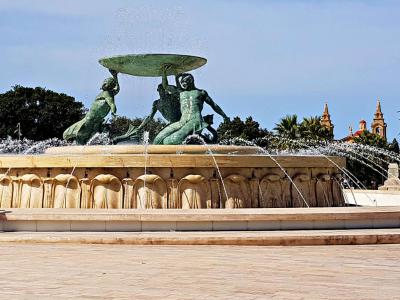
Just outside Valletta’s City Gate stands the Triton Fountain, a familiar sight for anyone arriving in Malta’s capital. Completed in the late 1950s and inaugurated in 1959, it was created by sculptor Chevalier Vincent Apap with draftsman Victor Anastasi. Today it serves not only as a monument but also as a kind of entry point, giving visitors their first impression of Valletta’s blend of Mediterranean heritage and modern life.
The fountain is composed of three bronze Tritons, figures from Greek mythology known for their ties to the sea. They raise a broad circular basin above their heads, supported by a round platform finished in travertine. Each figure carries the weight differently: two Tritons balance on one knee, while the third kneels fully. Viewed from City Gate, their faces all come into view, giving the composition a sense of unity and rhythm. The arrangement was influenced by Rome’s Fontana delle Tartarughe, a fountain admired for the interaction among its sculptures.
Here, the Tritons are portrayed with strong, expressive bodies, their muscles defined as if caught mid-motion. Their poses create a sense of cooperation, as though they are working together to lift the basin above them. The travertine platform beneath them adds texture and warmth, especially under Malta’s bright sunlight, which brings out the greenish tones of the bronze. The water that spills from the basin softens the monumental forms, adding movement and sound to the open square.
The fountain is composed of three bronze Tritons, figures from Greek mythology known for their ties to the sea. They raise a broad circular basin above their heads, supported by a round platform finished in travertine. Each figure carries the weight differently: two Tritons balance on one knee, while the third kneels fully. Viewed from City Gate, their faces all come into view, giving the composition a sense of unity and rhythm. The arrangement was influenced by Rome’s Fontana delle Tartarughe, a fountain admired for the interaction among its sculptures.
Here, the Tritons are portrayed with strong, expressive bodies, their muscles defined as if caught mid-motion. Their poses create a sense of cooperation, as though they are working together to lift the basin above them. The travertine platform beneath them adds texture and warmth, especially under Malta’s bright sunlight, which brings out the greenish tones of the bronze. The water that spills from the basin softens the monumental forms, adding movement and sound to the open square.
3) City Gate
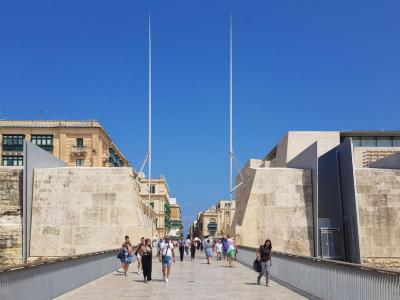
City Gate serves as the main entrance to Valletta. Often referred to as the “Door to the City,” it marks the point where visitors step from the modern world into the historic grid of streets planned in the 16th century.
The first gate on this site, known as San Giorgio Gate, was built between 1566 and 1569 by military engineer Francesco Laparelli, following the Great Siege. It was a fortified opening in the city walls, designed very much with defense in mind. In 1632, it was replaced by a more decorative gate by Maltese architect Tommaso Dingli, reflecting the city’s growing confidence and stability.
Under British rule, a new gate was built in 1853, designed by Colonel Thompson of the Royal Engineers. Featuring two large central arches and two smaller side arches, it became known as the Reale Gate and stood throughout the colonial period. In 1964, a fourth gate was inaugurated as part of a redevelopment plan for the entrance and the nearby Royal Opera House, although the full project was never completed.
As you approach today, you will see the fifth and current City Gate, completed in 2014 and designed by Italian architect Renzo Piano. Walking through it, you will find a clean, modern opening that intentionally contrasts with the historic stone walls. Don’t miss the way the gate frames Republic Street-the city’s main axis-drawing your eye straight into Valletta’s orderly layout.
The first gate on this site, known as San Giorgio Gate, was built between 1566 and 1569 by military engineer Francesco Laparelli, following the Great Siege. It was a fortified opening in the city walls, designed very much with defense in mind. In 1632, it was replaced by a more decorative gate by Maltese architect Tommaso Dingli, reflecting the city’s growing confidence and stability.
Under British rule, a new gate was built in 1853, designed by Colonel Thompson of the Royal Engineers. Featuring two large central arches and two smaller side arches, it became known as the Reale Gate and stood throughout the colonial period. In 1964, a fourth gate was inaugurated as part of a redevelopment plan for the entrance and the nearby Royal Opera House, although the full project was never completed.
As you approach today, you will see the fifth and current City Gate, completed in 2014 and designed by Italian architect Renzo Piano. Walking through it, you will find a clean, modern opening that intentionally contrasts with the historic stone walls. Don’t miss the way the gate frames Republic Street-the city’s main axis-drawing your eye straight into Valletta’s orderly layout.
4) St. John's Co-Cathedral (must see)
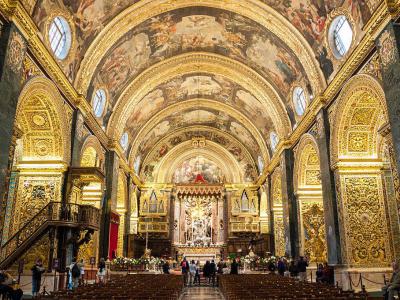
Saint John's Co-Cathedral in Valletta represents the rich heritage of the Knights of Malta. Commissioned in 1572 by Grand Master Jean de la Cassière and completed just a few years later, it served as the conventual church of the Order of Saint John. The design was entrusted to Glormu Cassar, the Maltese architect responsible for many of Valletta’s early buildings.
From the outside, the cathedral has a plain, fortress-like appearance-a reminder that it was built shortly after the Great Siege of 1565, during a time when defense shaped every corner of the new capital. The simplicity of the façade prepares visitors for the dramatic contrast they will encounter inside.
Once inside, you enter a very different world. Richly decorated walls are carved directly into the stone, and painted scenes from the life of Saint John by 17th-century Italian Baroque artist Mattia Preti cover the interior. Don’t miss the ceiling: Preti’s use of light and shadow makes some figures appear almost to lift off the surface. One of the most remarkable features is that the elaborate carvings were created directly on the walls, rather than being added later.
Make your way to the Oratory, located just beyond the right-hand side chapels. Here you’ll find Caravaggio’s The Beheading of Saint John the Baptist, the cathedral’s best-known masterpiece and the only painting he ever signed. The vast canvas fills nearly an entire wall and is a striking example of his dramatic use of light and shadow. In the same space, look for his smaller work, Saint Jerome Writing, which is equally compelling.
Before leaving, pause in the Nave, where about 400 inlaid marble tombstones form a colorful, detailed floor. Each tombstone marks the final resting place of a knight of the Order of St. John and is decorated with heraldic symbols, coats of arms, and carvings highlighting the knight’s rank, achievements, and virtues. Many include allegorical figures, religious motifs, and inscriptions about their lives. The vibrant marbles, ranging from deep reds to soft whites and greens, create a mosaic-like effect across the cathedral’s nave and chapels.
Tip:
Get there early! This is a very popular attraction and the groups and cruise ship passengers descend by 10:30 or so.
From the outside, the cathedral has a plain, fortress-like appearance-a reminder that it was built shortly after the Great Siege of 1565, during a time when defense shaped every corner of the new capital. The simplicity of the façade prepares visitors for the dramatic contrast they will encounter inside.
Once inside, you enter a very different world. Richly decorated walls are carved directly into the stone, and painted scenes from the life of Saint John by 17th-century Italian Baroque artist Mattia Preti cover the interior. Don’t miss the ceiling: Preti’s use of light and shadow makes some figures appear almost to lift off the surface. One of the most remarkable features is that the elaborate carvings were created directly on the walls, rather than being added later.
Make your way to the Oratory, located just beyond the right-hand side chapels. Here you’ll find Caravaggio’s The Beheading of Saint John the Baptist, the cathedral’s best-known masterpiece and the only painting he ever signed. The vast canvas fills nearly an entire wall and is a striking example of his dramatic use of light and shadow. In the same space, look for his smaller work, Saint Jerome Writing, which is equally compelling.
Before leaving, pause in the Nave, where about 400 inlaid marble tombstones form a colorful, detailed floor. Each tombstone marks the final resting place of a knight of the Order of St. John and is decorated with heraldic symbols, coats of arms, and carvings highlighting the knight’s rank, achievements, and virtues. Many include allegorical figures, religious motifs, and inscriptions about their lives. The vibrant marbles, ranging from deep reds to soft whites and greens, create a mosaic-like effect across the cathedral’s nave and chapels.
Tip:
Get there early! This is a very popular attraction and the groups and cruise ship passengers descend by 10:30 or so.

5) Caffe Cordina
Caffe Cordina, located in the center of Valletta, serves as a symbol of the lasting charm of classic cafes. Established in 1837, it began as a modest sweet shop in Bormla. However, under the direction of Cesare Cordina, it evolved into the esteemed cafe it is now after moving to Valletta in 1944. This relocation, driven by vision and resolve, elevated Caffe Cordina to a level of unmatched sophistication and historical importance.
Occupying a stunning historic palazzo, Caffe Cordina captivates visitors with its exquisite interior, featuring vaulted ceilings and affreschi. Over the years, Cesare Cordina expanded the cafe to include a diverse array of offerings, such as a restaurant, tea room, pasticceria, coffee bar, and gelateria, catering to a wide range of tastes and preferences.
Renowned for its handmade, traditional sweets and pastries produced in-house, Caffe Cordina also offers a line of gourmet products, maintaining the high standards of quality, service, and innovation set by its founder. The Cordina family, now in its third generation, continues to uphold these values, ensuring that the cafe remains a beloved institution in the city.
Located on Republic Square, Caffe Cordina offers outdoor seating with picturesque views, making it a prime spot for enjoying an authentic Italian coffee and snack under the gaze of Queen Victoria’s monument. It's not just a cafe; it's a social landmark where locals and visitors alike can immerse themselves in the vibrant square vibe, making it a prime location for people-watching and soaking up the local culture.
Occupying a stunning historic palazzo, Caffe Cordina captivates visitors with its exquisite interior, featuring vaulted ceilings and affreschi. Over the years, Cesare Cordina expanded the cafe to include a diverse array of offerings, such as a restaurant, tea room, pasticceria, coffee bar, and gelateria, catering to a wide range of tastes and preferences.
Renowned for its handmade, traditional sweets and pastries produced in-house, Caffe Cordina also offers a line of gourmet products, maintaining the high standards of quality, service, and innovation set by its founder. The Cordina family, now in its third generation, continues to uphold these values, ensuring that the cafe remains a beloved institution in the city.
Located on Republic Square, Caffe Cordina offers outdoor seating with picturesque views, making it a prime spot for enjoying an authentic Italian coffee and snack under the gaze of Queen Victoria’s monument. It's not just a cafe; it's a social landmark where locals and visitors alike can immerse themselves in the vibrant square vibe, making it a prime location for people-watching and soaking up the local culture.
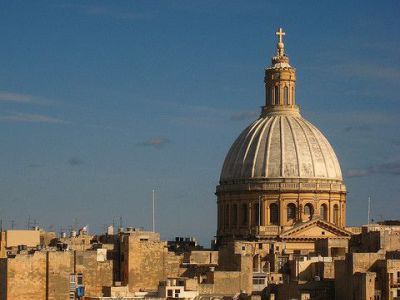
6) Basilica of Our Lady of Mount Carmel
The Basilica of Our Lady of Mount Carmel, located in Valletta, is a significant symbol of the island's religious and architectural legacy. This Catholic basilica, belonging to the Carmelite order, honors Our Lady of Mount Carmel and occupies a prominent position within Valletta's UNESCO World Heritage Site, emphasizing its importance among the city's numerous churches.
Built on the site of a 16th-century church destroyed during World War II, the present-day basilica was constructed between 1958 and 1981, following the design of Maltese architect Joseph Damato. The church's dome, intended to surpass the height of the nearby Anglican Saint Paul's Pro-Cathedral bell tower, reflects a competitive aspect in its architectural ambition, contributing to Valletta's recognizable skyline.
Originally, the 16th-century church had a wide nave, lateral chapels, a modest dome, and a bell tower adorned with frescoes. The 20th-century reconstruction adopts Neoclassical architecture, featuring an impressive oval dome that dominates the skyline. Inside, red marble columns add to the grandeur and solemnity of the space.
Externally, a niche houses a statue of Our Lady of Mount Carmel sculpted by Salvatore Dimech in 1855. The church's altarpiece, depicting the Virgin Mary with baby Jesus and saints Simon Stock and Agatha of Sicily, is attributed to Filippo Paladini and dates back to the late 16th or early 17th centuries.
Inside the basilica, a wooden statue of Our Lady of Mount Carmel, created in Naples in 1781, stands on a silver pedestal designed by Abram Gatt. The church also contains "Beato Franco" by Maria de Dominici from the 1670s, adding to its artistic and spiritual treasures.
Why You Should Visit:
You can't really grasp the size of the place until you get inside. Even for the non-religious, it's a good quiet spot to come and rest in between travels and enjoy some cool air.
Tip:
While at it you can also visit the Anglican cathedral across the road – a quite simple but also lovely church.
Built on the site of a 16th-century church destroyed during World War II, the present-day basilica was constructed between 1958 and 1981, following the design of Maltese architect Joseph Damato. The church's dome, intended to surpass the height of the nearby Anglican Saint Paul's Pro-Cathedral bell tower, reflects a competitive aspect in its architectural ambition, contributing to Valletta's recognizable skyline.
Originally, the 16th-century church had a wide nave, lateral chapels, a modest dome, and a bell tower adorned with frescoes. The 20th-century reconstruction adopts Neoclassical architecture, featuring an impressive oval dome that dominates the skyline. Inside, red marble columns add to the grandeur and solemnity of the space.
Externally, a niche houses a statue of Our Lady of Mount Carmel sculpted by Salvatore Dimech in 1855. The church's altarpiece, depicting the Virgin Mary with baby Jesus and saints Simon Stock and Agatha of Sicily, is attributed to Filippo Paladini and dates back to the late 16th or early 17th centuries.
Inside the basilica, a wooden statue of Our Lady of Mount Carmel, created in Naples in 1781, stands on a silver pedestal designed by Abram Gatt. The church also contains "Beato Franco" by Maria de Dominici from the 1670s, adding to its artistic and spiritual treasures.
Why You Should Visit:
You can't really grasp the size of the place until you get inside. Even for the non-religious, it's a good quiet spot to come and rest in between travels and enjoy some cool air.
Tip:
While at it you can also visit the Anglican cathedral across the road – a quite simple but also lovely church.
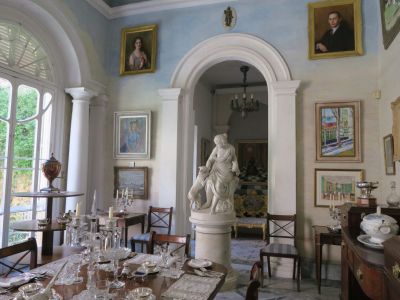
7) Casa Rocca Piccola (must see)
Casa Rocca Piccola in Valletta is a 16th-century palace that has been the home of a Maltese noble family for generations and is now open to the public through guided tours. Visitors can explore more than fifty rooms, which combine formal reception areas with relaxed family spaces, offering a unique glimpse into the daily life of Malta’s aristocracy.
One of the highlights is the Antique Costume Collection, displayed in several drawing rooms and galleries. This is Malta’s largest private collection of clothing, ranging from formal gowns and military uniforms to casual attire, spanning the 18th to 20th centuries. The Maltese Lace Collection is also on display in selected rooms, including dining and drawing areas, showing lace used for religious ceremonies and domestic purposes.
The palace includes libraries and drawing rooms furnished with period pieces, family portraits, and heirlooms, reflecting the lifestyle of a noble household. The private chapel offers a quieter space, filled with religious artwork and decorative details that illustrate the family’s spiritual practices.
Don’t miss the underground bomb shelter, carved out during World War II. It offers a brief but atmospheric step into Malta’s wartime experience. Conclude with a visit to the walled garden, a rare feature for a Valletta residence. The garden contains orange trees and a fountain with terrapins, providing a peaceful spot.
Tip:
Conducted tours are on the hour (last tour starts at 4pm) but get there early to beat the crowds.
One of the highlights is the Antique Costume Collection, displayed in several drawing rooms and galleries. This is Malta’s largest private collection of clothing, ranging from formal gowns and military uniforms to casual attire, spanning the 18th to 20th centuries. The Maltese Lace Collection is also on display in selected rooms, including dining and drawing areas, showing lace used for religious ceremonies and domestic purposes.
The palace includes libraries and drawing rooms furnished with period pieces, family portraits, and heirlooms, reflecting the lifestyle of a noble household. The private chapel offers a quieter space, filled with religious artwork and decorative details that illustrate the family’s spiritual practices.
Don’t miss the underground bomb shelter, carved out during World War II. It offers a brief but atmospheric step into Malta’s wartime experience. Conclude with a visit to the walled garden, a rare feature for a Valletta residence. The garden contains orange trees and a fountain with terrapins, providing a peaceful spot.
Tip:
Conducted tours are on the hour (last tour starts at 4pm) but get there early to beat the crowds.
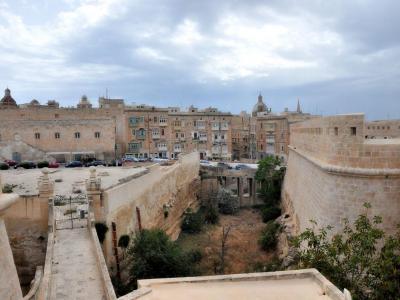
8) Fort Saint Elmo - National War Museum (must see)
Fort Saint Elmo is one of the most recognizable landmarks in Malta, positioned at the far end of Republic Street. It commands the tip of the Sciberras Peninsula, looking out over both the Grand Harbour to the south and Marsamxett Harbour to the north. These two natural harbors made the site crucial for defense, and each entrance is guarded by its own set of fortifications, with Fort Saint Elmo anchoring the central point.
The site’s military use dates back to the 1400s, when local militias built simple watchtowers to observe incoming vessels. After the Ottoman fleet entered Marsamxett Harbour without resistance in 1551, the Knights of Saint John understood the need for stronger defenses. The watchtower was expanded into a star-shaped fort, designed by the Spanish military engineer Pietro Pardo, creating a more resilient structure capable of withstanding heavier attacks.
Fort Saint Elmo became the focal point of the Great Siege of Malta in 1565. For 28 days, the Knights and local defenders held out against the Ottomans before the fort finally fell. Their resistance bought the rest of Malta valuable time to strengthen other fortifications, shaping the outcome of the siege and the island’s history.
Among the highlights is the National War Museum, housed in the Old Drill Hall of Lower Saint Elmo. Originally focused on the two World Wars, the museum was expanded in 2015 to present Malta’s military story from the Bronze Age to the present.
Inside, you will find several key artifacts. From earlier conflicts, there are armors used by Ottoman forces and by the Knights of Saint John. From World War II, look for the Gloster Sea Gladiator aircraft-famous for its role in Malta’s defense-and the Jeep used by U.S. Presidents Dwight D. Eisenhower and Franklin D. Roosevelt during their wartime visits.
Tips:
When touring the fort, the views are spectacular. But it does require quite a bit of time outside. So if the weather is less than ideal, remember to bring appropriate clothing. The winds in the winter can be brutal!
The site’s military use dates back to the 1400s, when local militias built simple watchtowers to observe incoming vessels. After the Ottoman fleet entered Marsamxett Harbour without resistance in 1551, the Knights of Saint John understood the need for stronger defenses. The watchtower was expanded into a star-shaped fort, designed by the Spanish military engineer Pietro Pardo, creating a more resilient structure capable of withstanding heavier attacks.
Fort Saint Elmo became the focal point of the Great Siege of Malta in 1565. For 28 days, the Knights and local defenders held out against the Ottomans before the fort finally fell. Their resistance bought the rest of Malta valuable time to strengthen other fortifications, shaping the outcome of the siege and the island’s history.
Among the highlights is the National War Museum, housed in the Old Drill Hall of Lower Saint Elmo. Originally focused on the two World Wars, the museum was expanded in 2015 to present Malta’s military story from the Bronze Age to the present.
Inside, you will find several key artifacts. From earlier conflicts, there are armors used by Ottoman forces and by the Knights of Saint John. From World War II, look for the Gloster Sea Gladiator aircraft-famous for its role in Malta’s defense-and the Jeep used by U.S. Presidents Dwight D. Eisenhower and Franklin D. Roosevelt during their wartime visits.
Tips:
When touring the fort, the views are spectacular. But it does require quite a bit of time outside. So if the weather is less than ideal, remember to bring appropriate clothing. The winds in the winter can be brutal!
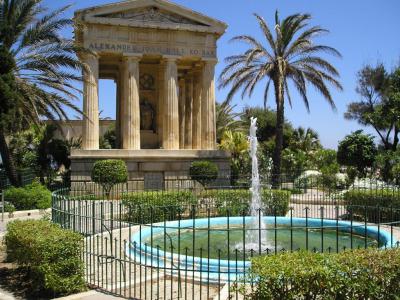
9) Lower Barrakka Gardens (must see)
Lower Barrakka Gardens is a public garden located on the waterfront of the Grand Harbour, offering a calm spot to enjoy the views and explore several monuments and statues. It’s an easy place to stop while wandering through Valletta, and the combination of open space, greenery, and historic features makes it well worth a visit.
The most notable feature here is the Neo-classical temple dedicated to Sir Alexander Ball, built in 1810. Ball was a British admiral and the first Civil Commissioner of Malta. Architect Giorgio Pullicino designed the monument in the style of an ancient Greek temple, taking inspiration from the Temple of Hephaestus in Athens. Impossible to miss, it stands right in the middle of the gardens. Notice how the terrace’s elevated position overlooks the harbor-a fitting location for a monument to a naval officer who played a key role in Malta’s history.
As you walk through the gardens, look for the various commemorative plaques scattered around the terrace. You will find tributes to the 50th anniversary of the European Union, the 1956 Hungarian Revolution, the Prague Spring, and other notable events and individuals. The combination of history and quiet green space creates a reflective atmosphere amid the city’s bustle.
Across Quarry Wharf, don’t miss the Siege Bell War Memorial, which honors those who lost their lives defending Malta during World War II. For a break, there is a small café kiosk where you can enjoy coffee, drinks, or a quick snack.
For an even wider view of Valletta and the Grand Harbour, consider heading to the Upper Barrakka Gardens, located on the upper level of the Saint Peter & Paul Bastion. From here, you can enjoy an extended perspective of the city and harbor, complementing your visit to Lower Barrakka Gardens and giving a fuller sense of Valletta’s waterfront and historical importance.
The most notable feature here is the Neo-classical temple dedicated to Sir Alexander Ball, built in 1810. Ball was a British admiral and the first Civil Commissioner of Malta. Architect Giorgio Pullicino designed the monument in the style of an ancient Greek temple, taking inspiration from the Temple of Hephaestus in Athens. Impossible to miss, it stands right in the middle of the gardens. Notice how the terrace’s elevated position overlooks the harbor-a fitting location for a monument to a naval officer who played a key role in Malta’s history.
As you walk through the gardens, look for the various commemorative plaques scattered around the terrace. You will find tributes to the 50th anniversary of the European Union, the 1956 Hungarian Revolution, the Prague Spring, and other notable events and individuals. The combination of history and quiet green space creates a reflective atmosphere amid the city’s bustle.
Across Quarry Wharf, don’t miss the Siege Bell War Memorial, which honors those who lost their lives defending Malta during World War II. For a break, there is a small café kiosk where you can enjoy coffee, drinks, or a quick snack.
For an even wider view of Valletta and the Grand Harbour, consider heading to the Upper Barrakka Gardens, located on the upper level of the Saint Peter & Paul Bastion. From here, you can enjoy an extended perspective of the city and harbor, complementing your visit to Lower Barrakka Gardens and giving a fuller sense of Valletta’s waterfront and historical importance.
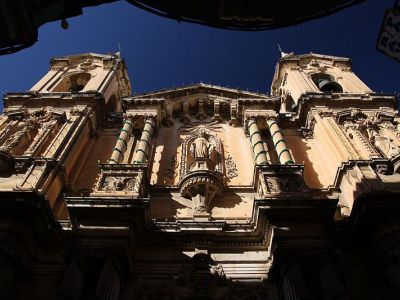
10) Church of St. Paul's Shipwreck (must see)
One of Valletta’s oldest churches is the Collegiate Parish Church of Saint Paul’s Shipwreck, dedicated to the Apostle Paul, who is regarded as the father of the Maltese. According to the New Testament, Paul was being taken to Rome as a prisoner in 60 AD when his ship encountered a severe storm in the Mediterranean. After days of drifting, the vessel was wrecked on Malta. During his three-month stay, he healed the father of the island and later many other sick people. The church was built to commemorate this event.
Designed by Girolamo Cassar, the church was completed in 1582. As you step inside, you will encounter artworks spanning several centuries.
The main highlights of the church are the relics connected to Saint Paul. To see them, head to the right-hand side chapels along the nave. The first side chapel on your right typically houses the reliquary containing a piece of Saint Paul’s right wrist bone, displayed in a small glass case with a descriptive plaque. Return to the nave and continue toward the rear of the church. In another side chapel on the opposite side, you will find a fragment of the column from the Three Fountains in Rome, where Saint Paul was martyred, also presented in a labeled reliquary.
After visiting both relics, circle back to the main altar to admire the high altar and the altarpiece by Matteo Pérez d’Aleccio, an Italian painter known for his large-scale altarpieces and frescoes. The church also houses paintings by Attilio Palmobi and Giuseppe Calì, two important Maltese artists of the late 19th and early 20th centuries.
The Feast of the Shipwreck of St. Paul, held on February 10th, is one of Malta’s major religious celebrations. Throughout the day, the church hosts special Masses, and the 1659 statue of St. Paul by Melchiorre Cafà is carried in a procession through the streets of Valletta. As bells ring, the area around the church fills with activity, drawing both locals and visitors into the festivities.
Designed by Girolamo Cassar, the church was completed in 1582. As you step inside, you will encounter artworks spanning several centuries.
The main highlights of the church are the relics connected to Saint Paul. To see them, head to the right-hand side chapels along the nave. The first side chapel on your right typically houses the reliquary containing a piece of Saint Paul’s right wrist bone, displayed in a small glass case with a descriptive plaque. Return to the nave and continue toward the rear of the church. In another side chapel on the opposite side, you will find a fragment of the column from the Three Fountains in Rome, where Saint Paul was martyred, also presented in a labeled reliquary.
After visiting both relics, circle back to the main altar to admire the high altar and the altarpiece by Matteo Pérez d’Aleccio, an Italian painter known for his large-scale altarpieces and frescoes. The church also houses paintings by Attilio Palmobi and Giuseppe Calì, two important Maltese artists of the late 19th and early 20th centuries.
The Feast of the Shipwreck of St. Paul, held on February 10th, is one of Malta’s major religious celebrations. Throughout the day, the church hosts special Masses, and the 1659 statue of St. Paul by Melchiorre Cafà is carried in a procession through the streets of Valletta. As bells ring, the area around the church fills with activity, drawing both locals and visitors into the festivities.
11) Upper Barrakka Gardens (must see)
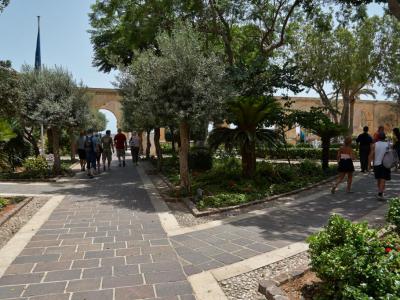
Built on the upper level of the Saint Peter & Paul Bastion, the Upper Barrakka Gardens offer stunning views of the Grand Harbour and a wonderful respite from the humming city. The gardens are built on the highest point of the city walls, meaning that the terrace has one of the best views of anywhere in town.
The bastion was built in 1560, and the terraced arches of the garden were added in 1661. The original purpose of the garden was as entertainment for the knights from the Order of Saint John who were stationed in the bastion. After the French occupation, the gardens were opened to the public in the year 1800.
Around the gardens, you'll see various monuments and dedications. For example, there are memorials to Sir Winston Churchill, Thomas Maitland, and Gerald Strickland. To get to the gardens from the ditch, you can opt to take the Barrakka Lift.
The bastion was built in 1560, and the terraced arches of the garden were added in 1661. The original purpose of the garden was as entertainment for the knights from the Order of Saint John who were stationed in the bastion. After the French occupation, the gardens were opened to the public in the year 1800.
Around the gardens, you'll see various monuments and dedications. For example, there are memorials to Sir Winston Churchill, Thomas Maitland, and Gerald Strickland. To get to the gardens from the ditch, you can opt to take the Barrakka Lift.
