Custom Walk in Manila, Philippines by stefaniegariando_85cec created on 2025-05-26
Guide Location: Philippines » Manila
Guide Type: Custom Walk
# of Sights: 14
Tour Duration: 4 Hour(s)
Travel Distance: 7.6 Km or 4.7 Miles
Share Key: 786Y5
Guide Type: Custom Walk
# of Sights: 14
Tour Duration: 4 Hour(s)
Travel Distance: 7.6 Km or 4.7 Miles
Share Key: 786Y5
How It Works
Please retrieve this walk in the GPSmyCity app. Once done, the app will guide you from one tour stop to the next as if you had a personal tour guide. If you created the walk on this website or come to the page via a link, please follow the instructions below to retrieve the walk in the app.
Retrieve This Walk in App
Step 1. Download the app "GPSmyCity: Walks in 1K+ Cities" on Apple App Store or Google Play Store.



Step 2. In the GPSmyCity app, download(or launch) the guide "Manila Map and Walking Tours".
Step 3. Tap the menu button located at upper right corner of the "Walks" screen and select "Retrieve custom walk". Enter the share key: 786Y5
1) Binondo (Chinatown) (must see)
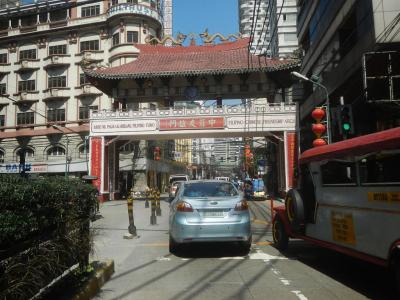
Binondo, established in 1594, is the oldest Chinatown in the world. It was established for Chinese residents during Spanish rule. The goal was both to have a space for the Spanish to confine Chinese immigrants and also to facilitate converting Chinese to Catholicism.
Binondo offers a number of unique and fascinating sites for visitors to the Philippines. Among these sites are the Plaza San Lorenzo Ruiz, Binondo Church, the Chinatown Arch and Jones Bridge.
Visitors hoping to find unique souvenirs while in the Philippines should visit Ongpin Street. There are numerous drugstores and shopping malls. Cafes that are largely geared toward tourists also line the street.
Escolta Street, just beyond the New Binondo Chinatown Arch (not to be confused with the Filipino-Chinese Friendship Arch), is an excellent spot to find authentic food. Escolta is also one of the oldest streets in Manila. Visitors can look for the First United Building, which is one of the few art deco style buildings in Manila. Other buildings to look for are the beaux arts-style Calvo and Natividad Buildings as well as the 1930's Capitol Theatre.
Binondo offers a number of unique and fascinating sites for visitors to the Philippines. Among these sites are the Plaza San Lorenzo Ruiz, Binondo Church, the Chinatown Arch and Jones Bridge.
Visitors hoping to find unique souvenirs while in the Philippines should visit Ongpin Street. There are numerous drugstores and shopping malls. Cafes that are largely geared toward tourists also line the street.
Escolta Street, just beyond the New Binondo Chinatown Arch (not to be confused with the Filipino-Chinese Friendship Arch), is an excellent spot to find authentic food. Escolta is also one of the oldest streets in Manila. Visitors can look for the First United Building, which is one of the few art deco style buildings in Manila. Other buildings to look for are the beaux arts-style Calvo and Natividad Buildings as well as the 1930's Capitol Theatre.
2) Fort Santiago (must see)
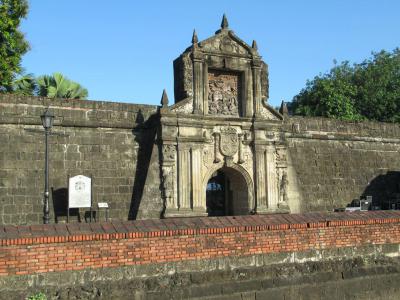
Fort Santiago is an important, historic structure in the walled city of Manila, Intramuros. Five flags have flown over the fort since its construction in 1593.
Fort Santiago was named for the patron saint of Spain, Saint James. Its purpose was to defend the Spanish government while it ruled the Philippines. In particular, Fort Santiago served as defense for the spice trading ships that traveled between Manila and Acapulco, Mexico.
Briefly, during the Battle of Manila, British occupying forces took over Fort Santiago. The fort served as the base of operations for the British Royal Navy from 1762 through 1764. When a ceasefire was declared, the fort reverted into Spanish control.
The Philippine-American War took place from February 1899 through July 1902. The United States overtook the fort, which then served as the headquarters of the U.S. Army in the Philippines.
The fort was captured by Japanese forces during World War II. It was used to house prisoners of war, hundreds of whom died in the dungeons as they succumbed to suffocation and hunger.
Fort Santiago has been under Philippine control since the country gained its independence in 1946. It was declared a shrine of freedom in 1950 and was restored shortly thereafter. It is now part of a historic park that recognizes the rich and sometimes tragic history of the country.
Visitors are welcome to explore the interior and exterior of the fort. The dungeon is a particularly somber experience where visitors can honor those who perished. A marble cross in the dungeon signifies the mass grave where 600 prisoners of war were buried.
Fort Santiago is located near many other important landmarks in Manila. Visitors can easily add this must-see spot to their walking tour of the city.
Why You Should Visit:
- To witness one of the most important sites in the Philippines
- To pay honor to those who died in the dungeons of the fort
Tips:
Fort Santiago is open daily from 8 AM through 6 PM. The dungeon is open from 2 PM through 10 PM.
Fort Santiago was named for the patron saint of Spain, Saint James. Its purpose was to defend the Spanish government while it ruled the Philippines. In particular, Fort Santiago served as defense for the spice trading ships that traveled between Manila and Acapulco, Mexico.
Briefly, during the Battle of Manila, British occupying forces took over Fort Santiago. The fort served as the base of operations for the British Royal Navy from 1762 through 1764. When a ceasefire was declared, the fort reverted into Spanish control.
The Philippine-American War took place from February 1899 through July 1902. The United States overtook the fort, which then served as the headquarters of the U.S. Army in the Philippines.
The fort was captured by Japanese forces during World War II. It was used to house prisoners of war, hundreds of whom died in the dungeons as they succumbed to suffocation and hunger.
Fort Santiago has been under Philippine control since the country gained its independence in 1946. It was declared a shrine of freedom in 1950 and was restored shortly thereafter. It is now part of a historic park that recognizes the rich and sometimes tragic history of the country.
Visitors are welcome to explore the interior and exterior of the fort. The dungeon is a particularly somber experience where visitors can honor those who perished. A marble cross in the dungeon signifies the mass grave where 600 prisoners of war were buried.
Fort Santiago is located near many other important landmarks in Manila. Visitors can easily add this must-see spot to their walking tour of the city.
Why You Should Visit:
- To witness one of the most important sites in the Philippines
- To pay honor to those who died in the dungeons of the fort
Tips:
Fort Santiago is open daily from 8 AM through 6 PM. The dungeon is open from 2 PM through 10 PM.
3) Cathedral-Basilica (must see)
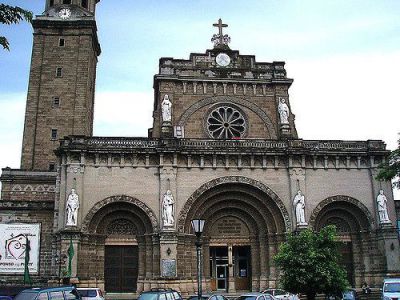
The Cathedral Basilica of the Immaculate Conception or the Manila Metropolitan Cathedral Basilica is one of the most important churches in Manila. Standing poignantly in the Intramuros district of Manila, the Cathedral has looked over the city for over 5 centuries. With its solid Neo-Romanesque architecture, one cannot ignore the almost over powering effect it has on its visitors and passersby. This is one of the many reasons that the Cathedral is one of the most famous venues for many locals as well as foreigners to share nuptials vows.
Despite its reputation and opulence, the Cathedral has had a very turbulent past. Although the Church has been on site since the early 16th century, the structure has changed several times over the years. The present, being the eighth reincarnated version of the original structure! The Cathedral was destroyed by earthquakes and terrible fires, but despite that, it has always managed to maintain that special possession not only in the city’s skyline, but also the hearts of the denizens.
With the Cathedral and the city having the same patroness, the Virgin Mary, the Metropolitan Cathedral Basilica is also the highest seat for the Archbishop of the country.
Despite its reputation and opulence, the Cathedral has had a very turbulent past. Although the Church has been on site since the early 16th century, the structure has changed several times over the years. The present, being the eighth reincarnated version of the original structure! The Cathedral was destroyed by earthquakes and terrible fires, but despite that, it has always managed to maintain that special possession not only in the city’s skyline, but also the hearts of the denizens.
With the Cathedral and the city having the same patroness, the Virgin Mary, the Metropolitan Cathedral Basilica is also the highest seat for the Archbishop of the country.
4) Intramuros
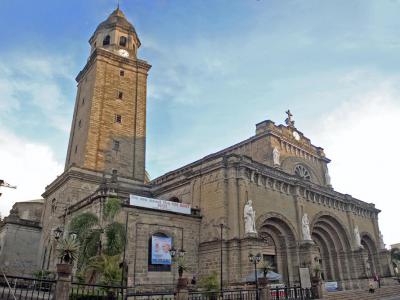
Once a fortified city in the European medieval style, Intramuros is now a distinctive landmark in Asia. Covering an area of 64 hectares, its imposing walls enclose a heritage site that is open to public visits, with unguided tours permitted.
Today, Intramuros consists of a historic district dating back centuries, entirely encompassed by fortifications. During the Spanish Empire, this area was considered the entirety of the City of Manila. Surrounding towns and suburbs beyond the walls, now districts of Manila, were known as extramuros, meaning "outside the walls" in Latin. These were independent towns that became part of Manila only in the early 20th century.
Intramuros served as the administrative center of the Captaincy General of the Philippines, a constituent realm of the Spanish Empire, hosting the governor-general from its establishment in 1571 until 1865, and the Real Audiencia of Manila until the end of Spanish rule during the Philippine Revolution of 1898.
The walled city was also the religious and educational hub of the Spanish East Indies. The original campuses of the University of Santo Tomas, Asia's oldest university, and the Ateneo de Manila were located within Intramuros before relocating in 1927 and 1932 respectively. Today, the area still houses the main campuses of the University of the City of Manila, Colegio de San Juan de Letran, Mapúa University, Philippine Nautical Training Colleges, Colegio de Santa Rosa, and Manila High School. Intramuros was also an economic hub; its port, now Plaza Mexico, was the Asian center of the Manila galleon trade, facilitating the exchange of goods between Manila and Acapulco in present-day Mexico.
Construction of the Spanish walled city began in the late 16th century under orders from the Spanish imperial government. Its purpose was to safeguard the city from foreign invasions, replacing the pre-Hispanic settlement of Maynila along the shores of Manila Bay, near the entrance to the Pasig River.
Today, Intramuros consists of a historic district dating back centuries, entirely encompassed by fortifications. During the Spanish Empire, this area was considered the entirety of the City of Manila. Surrounding towns and suburbs beyond the walls, now districts of Manila, were known as extramuros, meaning "outside the walls" in Latin. These were independent towns that became part of Manila only in the early 20th century.
Intramuros served as the administrative center of the Captaincy General of the Philippines, a constituent realm of the Spanish Empire, hosting the governor-general from its establishment in 1571 until 1865, and the Real Audiencia of Manila until the end of Spanish rule during the Philippine Revolution of 1898.
The walled city was also the religious and educational hub of the Spanish East Indies. The original campuses of the University of Santo Tomas, Asia's oldest university, and the Ateneo de Manila were located within Intramuros before relocating in 1927 and 1932 respectively. Today, the area still houses the main campuses of the University of the City of Manila, Colegio de San Juan de Letran, Mapúa University, Philippine Nautical Training Colleges, Colegio de Santa Rosa, and Manila High School. Intramuros was also an economic hub; its port, now Plaza Mexico, was the Asian center of the Manila galleon trade, facilitating the exchange of goods between Manila and Acapulco in present-day Mexico.
Construction of the Spanish walled city began in the late 16th century under orders from the Spanish imperial government. Its purpose was to safeguard the city from foreign invasions, replacing the pre-Hispanic settlement of Maynila along the shores of Manila Bay, near the entrance to the Pasig River.
5) San Agustin Museum - Intramuros (must see)
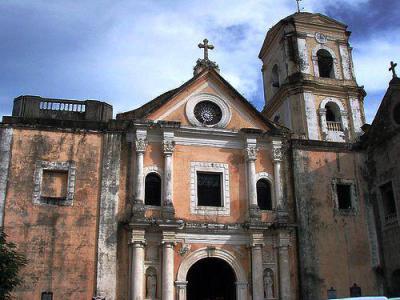
One of the most fascinating sites in Manila is the Intramuros or the walled city, which is the oldest district of the region. Built by the Spanish in the 16th century, the Intramuros survived right up until the mid 1900s after which it was reduced to ruins during the Second World War.
Although much of the ancient city was destroyed by the war, the San Agustin Museum offers its visitors an opportunity to appreciate the glory and legacy of the region. Adjacent to the San Agustin Church, one of the oldest surviving churches in the area, the Museum boasts a proud collection of artifacts, statues, sculptures and monuments that can transport you to the medieval years. Not only is the collection of the Museum worth the while, but the architecture of the building itself and the ambiance mesmerize the visitors.
The history of the structure is nothing short of a tale itself. Formerly a monastery, the building is of a great historical significance and offers a perfect enclave for the artifacts that it so proudly displays. The Museum is open from 8 am till noon and reopens after an hour right through to 6 o'clock in the evening. It has a strict no photography rule, which is quite disappointing considering the brilliant treasures the museum possesses.
Although much of the ancient city was destroyed by the war, the San Agustin Museum offers its visitors an opportunity to appreciate the glory and legacy of the region. Adjacent to the San Agustin Church, one of the oldest surviving churches in the area, the Museum boasts a proud collection of artifacts, statues, sculptures and monuments that can transport you to the medieval years. Not only is the collection of the Museum worth the while, but the architecture of the building itself and the ambiance mesmerize the visitors.
The history of the structure is nothing short of a tale itself. Formerly a monastery, the building is of a great historical significance and offers a perfect enclave for the artifacts that it so proudly displays. The Museum is open from 8 am till noon and reopens after an hour right through to 6 o'clock in the evening. It has a strict no photography rule, which is quite disappointing considering the brilliant treasures the museum possesses.
6) Casa Manila (must see)
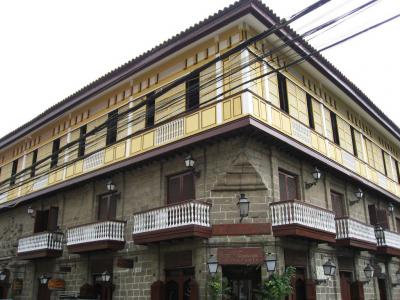
Manila House (Casa Manila) is an example of the opulence and elegance of Filipino life during the late Spanish colonial era. This living museum is meticulously designed to mirror the lifestyle of a wealthy Filipino family of the 19th century, with a façade inspired by an actual residence that once graced Jaboneros Street in Binondo's Chinese district in the 1850s. The interior of Manila House is a lavish display of late 19th-century taste, adorned with European and Chinese furniture, painted walls, crystal chandeliers, carved traceries, Chinese ceramics, and gilded furnishings, all contributing to the grandeur and luxury that characterized Manila houses of that period.
Spanning three floors, Manila House offers visitors a comprehensive glimpse into its historical past. The ground floor introduces the Main Gate (Puerta Principal), a heavy wooden gate leading to a corridor, designed for carriages, to pass through to the patio where passengers were dropped off. This patio, paved in granite and adorned with vibrant flowers, features a large fountain and windows that bathe the space in natural light. The presence of a stable, where the owner’s carriages were kept, signifies the wealth and social status of the family, with the size of one's carriage directly correlating to their societal standing.
The first floor houses the office, library, and a safe for storing valuables, alongside bedrooms designated for siesta use. Ascending to the third floor, visitors find the anteroom, a casual space for snacks, games, and smoking. Adjacent is the living room, crafted from hardwood with ample space for relaxation and social gatherings, its windows strategically placed to optimize sunlight blockage and ventilation. Additionally, this floor includes a prayer room for the Catholic family and bedrooms for family members, rounding off the immersive experience of 19th-century Manila living.
Manila House not only serves as a bridge to the past, offering insights into the rich cultural heritage of the Philippines during the Spanish colonial period but also stands as a symbol of the architectural and social intricacies that defined the era's affluent lifestyle.
Spanning three floors, Manila House offers visitors a comprehensive glimpse into its historical past. The ground floor introduces the Main Gate (Puerta Principal), a heavy wooden gate leading to a corridor, designed for carriages, to pass through to the patio where passengers were dropped off. This patio, paved in granite and adorned with vibrant flowers, features a large fountain and windows that bathe the space in natural light. The presence of a stable, where the owner’s carriages were kept, signifies the wealth and social status of the family, with the size of one's carriage directly correlating to their societal standing.
The first floor houses the office, library, and a safe for storing valuables, alongside bedrooms designated for siesta use. Ascending to the third floor, visitors find the anteroom, a casual space for snacks, games, and smoking. Adjacent is the living room, crafted from hardwood with ample space for relaxation and social gatherings, its windows strategically placed to optimize sunlight blockage and ventilation. Additionally, this floor includes a prayer room for the Catholic family and bedrooms for family members, rounding off the immersive experience of 19th-century Manila living.
Manila House not only serves as a bridge to the past, offering insights into the rich cultural heritage of the Philippines during the Spanish colonial period but also stands as a symbol of the architectural and social intricacies that defined the era's affluent lifestyle.
7) San Agustin Church - Intramuros (must see)
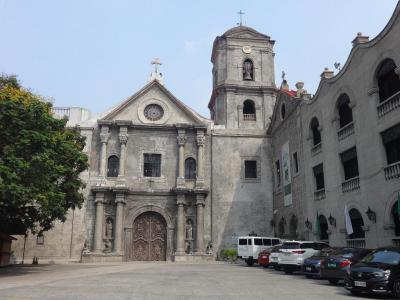
Behind the wall of the Intramuros, the oldest walled city within Manila is one of the oldest surviving churches of the country. The San Agustin Church, built by the Spanish during their colonial reign, represents the city’s rich and vibrant past.
The San Agustin Church has come a long way since its inception in 1607. Initially built with bamboo and wood in the early 16th century, the structure was razed due to a fire and was reconstructed with wood, which also failed to survive. It was then that the Augustinians decided to build a solid structure made out of stone, with an adjacent monastery. Based on the design by architect, Juan Macías, construction started off in 1586. Although, the project started with zeal and enthusiasm, the same spirit was not seen with the inflow of funds. Construction took more than 2 decades and by the time it was completed, the Church lost its chief designer Macias.
Despite having a shaky start, the San Agustin Church had a very eventful history. Plundered by the British forces in the 18th century, the Church miraculously survived many devastating earthquakes that had left the city of Manila in shambles. As a matter of fact, the San Agustin Church was the only public building to survive the massive earthquake of 1863.
The San Agustin Church has come a long way since its inception in 1607. Initially built with bamboo and wood in the early 16th century, the structure was razed due to a fire and was reconstructed with wood, which also failed to survive. It was then that the Augustinians decided to build a solid structure made out of stone, with an adjacent monastery. Based on the design by architect, Juan Macías, construction started off in 1586. Although, the project started with zeal and enthusiasm, the same spirit was not seen with the inflow of funds. Construction took more than 2 decades and by the time it was completed, the Church lost its chief designer Macias.
Despite having a shaky start, the San Agustin Church had a very eventful history. Plundered by the British forces in the 18th century, the Church miraculously survived many devastating earthquakes that had left the city of Manila in shambles. As a matter of fact, the San Agustin Church was the only public building to survive the massive earthquake of 1863.
8) Baluarte de San Diego
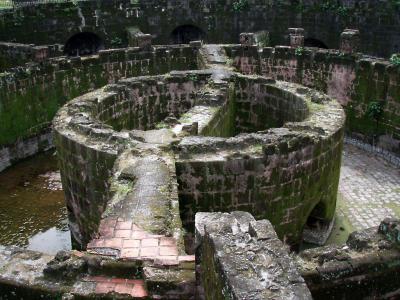
Baluarte de San Diego is a bastion that was built on the southwestern corner of Intramuros, the walled city of the Philippines. The structure dates to the 16th century.
The bastion was meant to be part of a much larger fort, which was not completed. The bastion itself includes an outward projecting face and flanks that would have connected the bastion's face to the curtain wall.
Though it was built in 1587, the structure was altered many times over the years. These changes were documented in writings by Antonio de Morga. They were also evidenced by the archaeological excavation that uncovered the Baluarte de San Diego. That excavation began in 1979 and was completed in 1982.
The small park containing the Baluarte de San Diego includes gardens, landmarks, monuments and fountains.
The bastion was meant to be part of a much larger fort, which was not completed. The bastion itself includes an outward projecting face and flanks that would have connected the bastion's face to the curtain wall.
Though it was built in 1587, the structure was altered many times over the years. These changes were documented in writings by Antonio de Morga. They were also evidenced by the archaeological excavation that uncovered the Baluarte de San Diego. That excavation began in 1979 and was completed in 1982.
The small park containing the Baluarte de San Diego includes gardens, landmarks, monuments and fountains.

9) National Museum of Natural History (must see)
The National Museum of Natural History in Manila is dedicated to showcasing the rich natural heritage of the country. Established under the auspices of the National Museum Act of 1998, it forms a part of a grand initiative to repurpose three significant civic buildings within Rizal Park into cultural repositories. The initiative saw the Finance Building being the first to transform the National Museum of Anthropology in 1998, followed by the Legislative Building's conversion into the National Museum of Fine Arts in 2000. The Tourism Building's metamorphosis into the National Museum of Natural History marked the culmination of this visionary project.
Preparations for the National Museum of Natural History building began in 2013, led by the National Museum of the Philippines. Five architects were invited to submit proposals for its retrofitting. Dominic Galicia Architects, with interior design by Tina Periquet, were chosen for the project. Their design meticulously preserved the building's historical facade while incorporating an innovative glass dome supported by a double helix structure. The museum opened its doors to the public on May 18, 2018.
The National Museum of Natural History features 12 permanent exhibition spaces showcasing the diverse biology and geology of the Philippines. These galleries display carefully arranged collections of plants, animals, and geological samples, illustrating the country's distinct natural heritage. At the heart of the museum stands a "Tree of Life" sculpture symbolizing the interconnectedness of the Philippines' various ecosystems, from its majestic mountains to its vibrant marine reefs.
Preparations for the National Museum of Natural History building began in 2013, led by the National Museum of the Philippines. Five architects were invited to submit proposals for its retrofitting. Dominic Galicia Architects, with interior design by Tina Periquet, were chosen for the project. Their design meticulously preserved the building's historical facade while incorporating an innovative glass dome supported by a double helix structure. The museum opened its doors to the public on May 18, 2018.
The National Museum of Natural History features 12 permanent exhibition spaces showcasing the diverse biology and geology of the Philippines. These galleries display carefully arranged collections of plants, animals, and geological samples, illustrating the country's distinct natural heritage. At the heart of the museum stands a "Tree of Life" sculpture symbolizing the interconnectedness of the Philippines' various ecosystems, from its majestic mountains to its vibrant marine reefs.
10) National Museum of the Filipino People
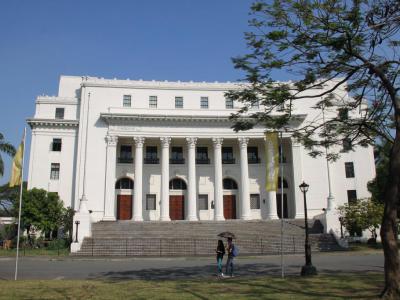
No trip to a city is complete without having visited its most prominent museum. The National Museum of the Filipino People which is a branch of the National Museum of the Philippines is the place to visit if you want to learn more about the Filipino history, culture and art. Located in the Agrifina Circle at the Rizal Park, the museum is a perfect place to attend after a long lazy walk in the park.
The Museum houses many archeological, historical exhibits along with displays of art by prominent Filipino as well as international artists. Apart from the artifacts pertaining to history, there are also scientific and anthropological exhibits that are worth your visit. Among the most worthy artifacts the museum has in its possession objects that date back several centuries. In addition, the museum also contains some archeological relics that are believed to belong to the earliest inhabitants of the land, around 24,000 BC.
A large section of the museum is dedicated to pottery, porcelain, coins and jewelry from the yester years. Also within the museum is the stunning Spoliarium, which was painted by Filipino master Juan Luna and bagged a gold medal at the Exposición Nacional de Bellas Artes in 1884. It is the first piece of art that welcomes visitors to the museum.
The Museum houses many archeological, historical exhibits along with displays of art by prominent Filipino as well as international artists. Apart from the artifacts pertaining to history, there are also scientific and anthropological exhibits that are worth your visit. Among the most worthy artifacts the museum has in its possession objects that date back several centuries. In addition, the museum also contains some archeological relics that are believed to belong to the earliest inhabitants of the land, around 24,000 BC.
A large section of the museum is dedicated to pottery, porcelain, coins and jewelry from the yester years. Also within the museum is the stunning Spoliarium, which was painted by Filipino master Juan Luna and bagged a gold medal at the Exposición Nacional de Bellas Artes in 1884. It is the first piece of art that welcomes visitors to the museum.
11) National Museum of Anthropology
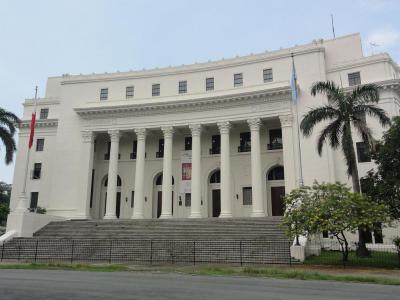
The National Museum of Anthropology in Manila showcases the diverse cultural heritage and archaeological history of the Philippines. It was previously named the Museum of the Filipino People and is an integral part of the National Museum of the Philippines, focusing on Ethnological and Archaeological displays. Situated in the center of Manila within Rizal Park's Agrifina Circle, it neighbors the National Museum of Fine Arts, forming a cultural center in the capital.
The museum's main goal is to tell the Philippines' story through its vast collections of ethnographic and archaeological artifacts, offering visitors a journey through time to understand the origins and development of Filipino culture. As a government trust, it is committed to educating the public and enriching their understanding of Filipino cultural heritage and the country's natural history.
Built between 1916 and 1918, the museum's Neoclassical design was created by Canadian-American architect Ralph Harrington Doane. Originally housing the Department of Finance, the building suffered damage during the Battle of Manila in World War II but was reconstructed in 1949, maintaining its original structure and five-story height. Architecturally, it features a unique trapezoidal plan with distinctive Corinthian columns, decorative entablatures, and ornate fenestration.
Key architectural features include giant Corinthian columns framing a two-story arched window at the building's corners and a modest pediment highlighting the entrance. The museum has expanded with new sections added to the east and west, providing additional space. A grand staircase leads to a columned portico on the second floor, offering splendid views of Luneta and the surrounding architecture.
Today, the National Museum of Anthropology remains a vital center of cultural and historical exploration, inviting visitors to delve into the Philippines' rich past through its extensive collections and exhibitions.
The museum's main goal is to tell the Philippines' story through its vast collections of ethnographic and archaeological artifacts, offering visitors a journey through time to understand the origins and development of Filipino culture. As a government trust, it is committed to educating the public and enriching their understanding of Filipino cultural heritage and the country's natural history.
Built between 1916 and 1918, the museum's Neoclassical design was created by Canadian-American architect Ralph Harrington Doane. Originally housing the Department of Finance, the building suffered damage during the Battle of Manila in World War II but was reconstructed in 1949, maintaining its original structure and five-story height. Architecturally, it features a unique trapezoidal plan with distinctive Corinthian columns, decorative entablatures, and ornate fenestration.
Key architectural features include giant Corinthian columns framing a two-story arched window at the building's corners and a modest pediment highlighting the entrance. The museum has expanded with new sections added to the east and west, providing additional space. A grand staircase leads to a columned portico on the second floor, offering splendid views of Luneta and the surrounding architecture.
Today, the National Museum of Anthropology remains a vital center of cultural and historical exploration, inviting visitors to delve into the Philippines' rich past through its extensive collections and exhibitions.
12) National Museum of the Philippines (must see)
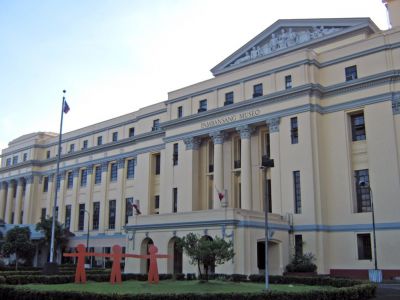
The National Museum of the Philippines is a conglomerate of museums located near Rizal Park. The National Museum of Fine Arts, the National Museum of Anthropology and the National Museum of Natural History all fall under the umbrella of the National Museum of the Philippines.
The National Museum of Fine Arts is located in the former Legislative Building. The original building was completed in 1926 but destroyed by Japanese forces during World war II. The building was rebuilt in 1950 in a Neoclassical style. The museum holds paintings and sculptures from prominent Filipino artists like Guillermo Tolentino and Juan Luna.
The National Museum of Anthropology is adjacent to the National Museum of Fine Arts. It is in the building that formerly housed the Department of Finance. Built in 1918, the National Museum of Anthropology building was constructed in a Neoclassical style. This museum offers a history of the Filipino people. Visitors will find maps, archaeological treasures and art through the ages, among other items.
The National Museum of Natural History contains botanical and zoological specimens. It is held in the former Agriculture and Commerce building, which was erected in 1941.
The National Museum of the Philippines is open Tuesday through Sunday from 10 AM through 5 PM. It is free to all visitors.
The National Museum of Fine Arts is located in the former Legislative Building. The original building was completed in 1926 but destroyed by Japanese forces during World war II. The building was rebuilt in 1950 in a Neoclassical style. The museum holds paintings and sculptures from prominent Filipino artists like Guillermo Tolentino and Juan Luna.
The National Museum of Anthropology is adjacent to the National Museum of Fine Arts. It is in the building that formerly housed the Department of Finance. Built in 1918, the National Museum of Anthropology building was constructed in a Neoclassical style. This museum offers a history of the Filipino people. Visitors will find maps, archaeological treasures and art through the ages, among other items.
The National Museum of Natural History contains botanical and zoological specimens. It is held in the former Agriculture and Commerce building, which was erected in 1941.
The National Museum of the Philippines is open Tuesday through Sunday from 10 AM through 5 PM. It is free to all visitors.
13) Ongpin Street
No city is complete without its own little suburb that is cramped up with buildings, has restaurants that don’t necessarily level up to the health and safety measures but sell excellent Chinese food and traditional apothecary stores. And like any other city in the world, Manila has its own little China Town to boast about.
Established in 1890s, the Street was named after Don Roman Ongpin, a wealthy Chinese business man whose undying support for the freedom of his country and the Philippine Revolution earned him tremendous respect and immortality in the hearts of his countrymen.
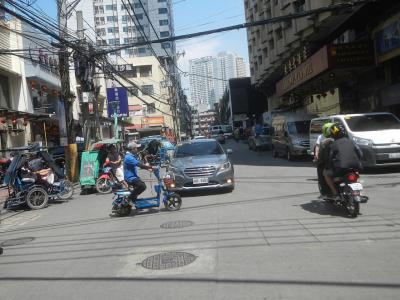
Packed with restaurants and herb stores, the Ongpin Street in Manila is the city’s very own Chinese hide out. The streets are small and the traffic annoying but yet the Ongpin Street manages to attract a fair share of foreigners as well as locals. Here, visitors can get anything from pirated CD’s, clothes and purses, to mouthwatering food, medicinal herbs and other knickknacks. Surely, the area appeases its visitors every appetite.
What looks like a cramped hot place with unusual sights in the day, the glitz and bling of the gold shops manage to transform the area altogether at night. The Ongpin Street is definitely a must visit when you are in Manila.
Established in 1890s, the Street was named after Don Roman Ongpin, a wealthy Chinese business man whose undying support for the freedom of his country and the Philippine Revolution earned him tremendous respect and immortality in the hearts of his countrymen.
Packed with restaurants and herb stores, the Ongpin Street in Manila is the city’s very own Chinese hide out. The streets are small and the traffic annoying but yet the Ongpin Street manages to attract a fair share of foreigners as well as locals. Here, visitors can get anything from pirated CD’s, clothes and purses, to mouthwatering food, medicinal herbs and other knickknacks. Surely, the area appeases its visitors every appetite.
What looks like a cramped hot place with unusual sights in the day, the glitz and bling of the gold shops manage to transform the area altogether at night. The Ongpin Street is definitely a must visit when you are in Manila.
14) Salazar Street
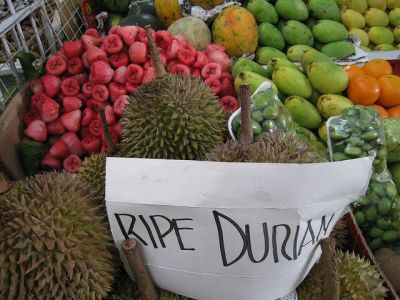
Salazar Street in Manila is a hidden gem in the heart of Chinatown, known for its exceptional fruit offerings that surpass those found in more well-known markets. This street runs parallel to Ongpin Street, approximately directly across from the renowned President Restaurant, nestled within a bustling area that pulses with cultural heritage and culinary treasures.
The street is relatively short, extending for about 150 meters, yet it is packed with fruit vendors who line one side of the street. These vendors set up shop under the protective cover of building eaves or beneath portable umbrellas, creating a vibrant and welcoming atmosphere. What sets Salazar Street apart is not just the quality of its fruits but also the personal touch provided by the vendors. Many of the fruits sold here come directly from the vendors' gardens, and they are often more than willing to share stories and insights about their produce, visiting Salazar Street both an educational and delightful experience.
Salazar Street's significance is further enriched by its historical backdrop. Named after Domingo de Salazar, the first bishop of Manila who arrived in the Philippines in September 1581, the street, along with nearby Benavides Street, honors the legacy of two 16th-century Spanish priests who were pioneers in the Christianization of the early Chinese population in the Philippines. This historical layer adds a profound depth to the experience of visiting Salazar Street, connecting visitors not just to the flavors of the Philippines but also to its rich cultural and religious history.
The street is relatively short, extending for about 150 meters, yet it is packed with fruit vendors who line one side of the street. These vendors set up shop under the protective cover of building eaves or beneath portable umbrellas, creating a vibrant and welcoming atmosphere. What sets Salazar Street apart is not just the quality of its fruits but also the personal touch provided by the vendors. Many of the fruits sold here come directly from the vendors' gardens, and they are often more than willing to share stories and insights about their produce, visiting Salazar Street both an educational and delightful experience.
Salazar Street's significance is further enriched by its historical backdrop. Named after Domingo de Salazar, the first bishop of Manila who arrived in the Philippines in September 1581, the street, along with nearby Benavides Street, honors the legacy of two 16th-century Spanish priests who were pioneers in the Christianization of the early Chinese population in the Philippines. This historical layer adds a profound depth to the experience of visiting Salazar Street, connecting visitors not just to the flavors of the Philippines but also to its rich cultural and religious history.
