Custom Walk in Austin, Texas by jenniferlcoram_32f34 created on 2025-05-31
Guide Location: USA » Austin
Guide Type: Custom Walk
# of Sights: 7
Tour Duration: 2 Hour(s)
Travel Distance: 4.5 Km or 2.8 Miles
Share Key: VM5NM
Guide Type: Custom Walk
# of Sights: 7
Tour Duration: 2 Hour(s)
Travel Distance: 4.5 Km or 2.8 Miles
Share Key: VM5NM
How It Works
Please retrieve this walk in the GPSmyCity app. Once done, the app will guide you from one tour stop to the next as if you had a personal tour guide. If you created the walk on this website or come to the page via a link, please follow the instructions below to retrieve the walk in the app.
Retrieve This Walk in App
Step 1. Download the app "GPSmyCity: Walks in 1K+ Cities" on Apple App Store or Google Play Store.



Step 2. In the GPSmyCity app, download(or launch) the guide "Austin Map and Walking Tours".
Step 3. Tap the menu button located at upper right corner of the "Walks" screen and select "Retrieve custom walk". Enter the share key: VM5NM
1) Butler Park and Stevie Ray Vaughan Memorial
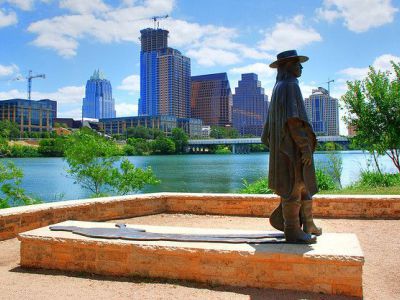
Butler Park in Austin, is a picturesque recreational area with a rich history and a significant memorial that celebrates the life of a legendary musician. The land for this park was generously donated to the city in 1941 by the heirs of Michael Butler, a 19th-century businessman. Situated on the south bank of Lady Bird Lake, Butler Park offers stunning views of downtown Austin and its towering skyscrapers, creating a beautiful juxtaposition of natural beauty and urban development.
One of the most notable features of Butler Park is the Stevie Ray Vaughan Memorial Statue. This realistic statue honors the legendary guitarist Stevie Ray Vaughan, a native Texan whose musical prowess left an indelible mark on the blues genre. The statue, a popular tourist attraction, was erected in 1993 at Auditorium Shores on Lady Bird Lake, a location that holds historical significance as it hosted numerous concerts by Vaughan.
The bronze statue, crafted by American sculptor Ralph Helmick, was unveiled in 1994, four years after Vaughan's untimely death. The tragic helicopter crash in 1990 that claimed his life occurred shortly after a concert in Wisconsin as he was traveling to Chicago.
The statue captures Vaughan's iconic image, featuring him in his customary poncho, straight-brimmed hat, western-cut boots, and holding one of his signature electric guitars, often initialed with "SRV." A unique aspect of the statue is its metal shadow, which casts a different image of Vaughan playing his guitar, adding depth and dimension to the memorial.
The statue, often adorned with flowers and gifts from admirers, stands as a poignant reminder of Vaughan's contributions to music and his deep connection with the city of Austin.
One of the most notable features of Butler Park is the Stevie Ray Vaughan Memorial Statue. This realistic statue honors the legendary guitarist Stevie Ray Vaughan, a native Texan whose musical prowess left an indelible mark on the blues genre. The statue, a popular tourist attraction, was erected in 1993 at Auditorium Shores on Lady Bird Lake, a location that holds historical significance as it hosted numerous concerts by Vaughan.
The bronze statue, crafted by American sculptor Ralph Helmick, was unveiled in 1994, four years after Vaughan's untimely death. The tragic helicopter crash in 1990 that claimed his life occurred shortly after a concert in Wisconsin as he was traveling to Chicago.
The statue captures Vaughan's iconic image, featuring him in his customary poncho, straight-brimmed hat, western-cut boots, and holding one of his signature electric guitars, often initialed with "SRV." A unique aspect of the statue is its metal shadow, which casts a different image of Vaughan playing his guitar, adding depth and dimension to the memorial.
The statue, often adorned with flowers and gifts from admirers, stands as a poignant reminder of Vaughan's contributions to music and his deep connection with the city of Austin.
2) Congress Avenue Bridge /Austin Bats (must see)
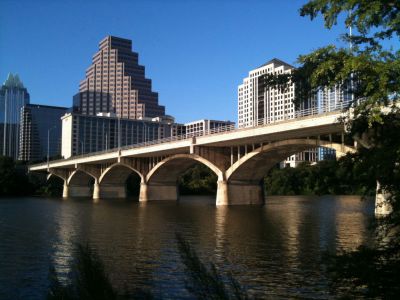
The Ann W. Richards Congress Avenue Bridge, previously known as the Congress Avenue Bridge, is situated over Lady Bird Lake in Austin. Prior to the completion of the Longhorn Dam in 1960, this bridge spanned the Colorado River, which is now impounded as Lady Bird Lake. It had been named the Congress Avenue Bridge since its initial construction in the late 19th century until November 16, 2006, when the Austin City Council decided to rename it in honor of Ann W. Richards. She served as the 45th Governor of Texas and was a long-time resident of Austin.
This bridge is made of concrete and features three southbound and three northbound vehicle lanes, with sidewalks on both sides. The Ann W. Richards Congress Avenue Bridge is renowned for housing the world's largest urban bat colony, consisting of Mexican free-tailed bats. These bats live beneath the road deck in gaps between the concrete components. They are migratory, spending their summers in Austin and their winters in Mexico.
Every evening at dusk, the bats emerge from beneath the bridge and fly across Lady Bird Lake, primarily to the east, in search of food. This spectacle attracts up to 100,000 tourists annually. Visitors can observe the bats from the bridge itself, from the riverbanks, and even from boats. Interestingly, the Austin Ice Bats, a minor-league hockey team, took its name from the bridge's famous bat colony. Additionally, the song "Bats" by Kimya Dawson and rapper Aesop Rock was inspired by the immense number of bats residing under this bridge.
This bridge is made of concrete and features three southbound and three northbound vehicle lanes, with sidewalks on both sides. The Ann W. Richards Congress Avenue Bridge is renowned for housing the world's largest urban bat colony, consisting of Mexican free-tailed bats. These bats live beneath the road deck in gaps between the concrete components. They are migratory, spending their summers in Austin and their winters in Mexico.
Every evening at dusk, the bats emerge from beneath the bridge and fly across Lady Bird Lake, primarily to the east, in search of food. This spectacle attracts up to 100,000 tourists annually. Visitors can observe the bats from the bridge itself, from the riverbanks, and even from boats. Interestingly, the Austin Ice Bats, a minor-league hockey team, took its name from the bridge's famous bat colony. Additionally, the song "Bats" by Kimya Dawson and rapper Aesop Rock was inspired by the immense number of bats residing under this bridge.
3) Congress Avenue (must see)
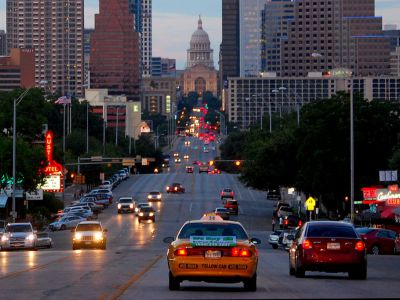
Congress Avenue is a major thoroughfare in Austin. It consists of six lanes lined with trees and stretches from southern outskirts of the city, extending over Lady Bird Lake and ultimately leading to the heart of Downtown, where the Texas State Capitol is situated. Edwin Waller, the inaugural mayor of Austin, played a pivotal role in the avenue's design.
During its early history, Congress Avenue featured a variety of structures, including government buildings, hotels, saloons, retail shops, and restaurants. By the late 1840s, it had evolved into a thriving business hub. In the mid-1870s, advancements such as gaslight illumination and mule-drawn streetcars were introduced, alongside the construction of a new courthouse for Travis County at Eleventh Street. The present-day Texas Capitol, located at the northern end of Congress Avenue, was constructed in 1888, and the original dirt road was paved with bricks in 1910. Streetcar operations continued on the avenue until 1940.
Before the completion of Interstate 35 in the 1960s, Congress Avenue played a crucial role as the main route to access Austin from the south. Notable landmarks like the Austin Motel underscored its significance as a major route for travelers throughout the mid-20th century.
South of Lady Bird Lake, Congress Avenue is known as South Congress, often abbreviated as SoCo, and has gained popularity as a bustling shopping and rental district. It traverses the historic Travis Heights neighborhood, passes by the Texas School for the Deaf, and leads to Saint Edward's University as it extends southward out of the city.
Recognizing its architectural and historical importance, Congress Avenue from Cesar Chavez Street (formerly First Street) to the Capitol was designated as a National Historic Place in 1979. The Texas Capitol at the northern end of Congress creates a visually striking focal point, and this view is safeguarded by state and local regulations known as the Capitol View Corridors, enacted in 1983, which prohibit the obstruction of the view by tall buildings.
Why You Should Visit:
A must-stroll for visitors and a popular hangout for locals. South Congress oozes homespun character and boasts the story of Austin’s yesteryear in its boutiques, eateries, galleries and music venues.
During its early history, Congress Avenue featured a variety of structures, including government buildings, hotels, saloons, retail shops, and restaurants. By the late 1840s, it had evolved into a thriving business hub. In the mid-1870s, advancements such as gaslight illumination and mule-drawn streetcars were introduced, alongside the construction of a new courthouse for Travis County at Eleventh Street. The present-day Texas Capitol, located at the northern end of Congress Avenue, was constructed in 1888, and the original dirt road was paved with bricks in 1910. Streetcar operations continued on the avenue until 1940.
Before the completion of Interstate 35 in the 1960s, Congress Avenue played a crucial role as the main route to access Austin from the south. Notable landmarks like the Austin Motel underscored its significance as a major route for travelers throughout the mid-20th century.
South of Lady Bird Lake, Congress Avenue is known as South Congress, often abbreviated as SoCo, and has gained popularity as a bustling shopping and rental district. It traverses the historic Travis Heights neighborhood, passes by the Texas School for the Deaf, and leads to Saint Edward's University as it extends southward out of the city.
Recognizing its architectural and historical importance, Congress Avenue from Cesar Chavez Street (formerly First Street) to the Capitol was designated as a National Historic Place in 1979. The Texas Capitol at the northern end of Congress creates a visually striking focal point, and this view is safeguarded by state and local regulations known as the Capitol View Corridors, enacted in 1983, which prohibit the obstruction of the view by tall buildings.
Why You Should Visit:
A must-stroll for visitors and a popular hangout for locals. South Congress oozes homespun character and boasts the story of Austin’s yesteryear in its boutiques, eateries, galleries and music venues.
4) Texas State Capitol (must see)
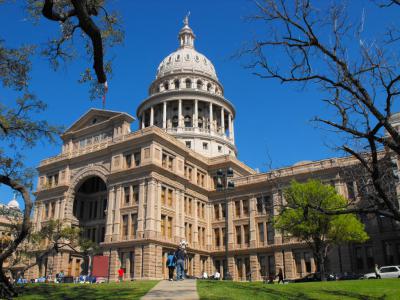
The Texas State Capitol, located in downtown Austin, is a significant historical and architectural landmark. It serves as the seat of government for the state of Texas, housing the offices and chambers of the Texas Legislature and the Governor of Texas. The Capitol was designed by architect Elijah E. Myers and constructed between 1882 and 1888 under the supervision of civil engineer Reuben Lindsay Walker. In 1970, it was added to the National Register of Historic Places, and in 1986, it was designated as a National Historic Landmark.
Architecturally, the Capitol is an exemplar of the Italian Renaissance Revival style. It is constructed primarily from limestone sourced from Pecan Point quarries and sandstone from nearby Barton Creek. Remarkably, the Texas State Capitol is 302.64 feet (92.24 meters) tall, making it the sixth-tallest state capitol and one of several taller than the United States Capitol in Washington, D.C.
The Texas State Capitol proudly stands on a hill, providing a picturesque view over downtown Austin. The building has undergone several modifications over the years, incorporating various additions, including a prominent dome that crowns a rotunda. This dome, designed by architect Elijah Ealy Clark, is a notable feature of the Capitol.
The rotunda showcases portraits of all individuals who have held the position of President in the Republic of Texas or served as Governor of the State of Texas. In the southern foyer, you can find sculptures of Sam Houston and Stephen F. Austin, which were created by Elisabeth Ney. Interestingly, the rotunda also functions as a whispering gallery.
The Capitol itself is quite spacious, spanning 360,000 square feet (33,000 square meters), which is more extensive than any other state capitol building in the country. It sits on a land area of 2.25 acres and boasts nearly 400 rooms along with over 900 windows.
Strategically positioned, the Texas State Capitol demarcates the State Capitol Mall from downtown Austin. Open to the public, it stands as a testament to the state's history, especially its construction during an economic downturn caused by an agricultural depression. The Capitol's construction was funded through state bonds instead of taxes.
Architecturally, the Capitol is an exemplar of the Italian Renaissance Revival style. It is constructed primarily from limestone sourced from Pecan Point quarries and sandstone from nearby Barton Creek. Remarkably, the Texas State Capitol is 302.64 feet (92.24 meters) tall, making it the sixth-tallest state capitol and one of several taller than the United States Capitol in Washington, D.C.
The Texas State Capitol proudly stands on a hill, providing a picturesque view over downtown Austin. The building has undergone several modifications over the years, incorporating various additions, including a prominent dome that crowns a rotunda. This dome, designed by architect Elijah Ealy Clark, is a notable feature of the Capitol.
The rotunda showcases portraits of all individuals who have held the position of President in the Republic of Texas or served as Governor of the State of Texas. In the southern foyer, you can find sculptures of Sam Houston and Stephen F. Austin, which were created by Elisabeth Ney. Interestingly, the rotunda also functions as a whispering gallery.
The Capitol itself is quite spacious, spanning 360,000 square feet (33,000 square meters), which is more extensive than any other state capitol building in the country. It sits on a land area of 2.25 acres and boasts nearly 400 rooms along with over 900 windows.
Strategically positioned, the Texas State Capitol demarcates the State Capitol Mall from downtown Austin. Open to the public, it stands as a testament to the state's history, especially its construction during an economic downturn caused by an agricultural depression. The Capitol's construction was funded through state bonds instead of taxes.
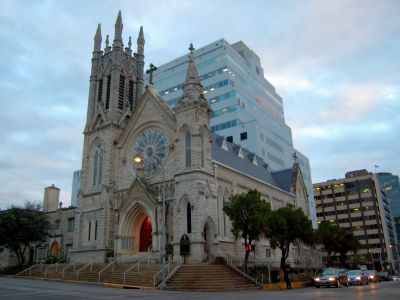
5) Cathedral of Saint Mary in Austin (must see)
Saint Mary's serves as the main cathedral for the Roman Catholic Diocese of Austin. Its history dates back to the 1850s, when the Catholic community in Austin constructed a small stone church called Saint Patrick's at the intersection of 9th and Brazos streets. In 1866, the church was renamed Saint Mary's, and the parish decided to build a new church using masonry construction. In 1872, after Austin was designated as the permanent capital of Texas, the parish laid the cornerstone for a new church one block north of the original location.
The parish had already established the foundation in the shape of a basilica and had started erecting the walls, which were 5 feet (1.5 meters) high when architect Nicholas J. Clayton began designing their new church.
In 1948, when the Diocese of Austin was established, this church became the cathedral for the newly formed diocese. During that time, the church underwent renovations, including the removal of many neo-Gothic decorations. The neo-Gothic altars and altar rail were replaced with marble fixtures from the 20th century, and the baldachino was adorned with cactus and bluebonnet motifs, reminiscent of central Texas.
Why You Should Visit:
If you're an architecture buff, this comfortably welcoming and beautiful classic Cathedral boasts a great deal of historic artwork to observe in detail: gorgeous stained glass windows dedicated to saints from old Europe, and woodwork.
And if you're a devoted Catholic, they do Latin Rite masses here, too.
Tip:
If you attend a Sunday mass, you'll feel like you are at a prayerful and inspiring concert.
The parish had already established the foundation in the shape of a basilica and had started erecting the walls, which were 5 feet (1.5 meters) high when architect Nicholas J. Clayton began designing their new church.
In 1948, when the Diocese of Austin was established, this church became the cathedral for the newly formed diocese. During that time, the church underwent renovations, including the removal of many neo-Gothic decorations. The neo-Gothic altars and altar rail were replaced with marble fixtures from the 20th century, and the baldachino was adorned with cactus and bluebonnet motifs, reminiscent of central Texas.
Why You Should Visit:
If you're an architecture buff, this comfortably welcoming and beautiful classic Cathedral boasts a great deal of historic artwork to observe in detail: gorgeous stained glass windows dedicated to saints from old Europe, and woodwork.
And if you're a devoted Catholic, they do Latin Rite masses here, too.
Tip:
If you attend a Sunday mass, you'll feel like you are at a prayerful and inspiring concert.
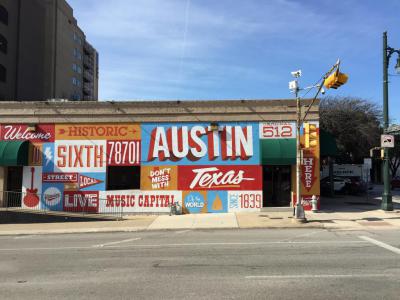
6) Historic 6th Street Mural
The Historic 6th Street Mural in downtown Austin is a vibrant and captivating piece of art that truly embodies the city's spirit as the “Live Music Capital of the World.” Located off the Southbound Interstate 35 access road, this mural is an unmissable landmark for anyone visiting 6th Street in Austin.
Created in 2012 by Sanctuary Printshop, the mural is a rich tapestry of Austin's unique characteristics. It celebrates the city's rich history and its renowned music scene, effectively capturing the essence of what makes Austin so special. The use of vivid colors and engaging designs in the mural reflects the city's lively and dynamic atmosphere.
Not only is the Historic 6th Street Mural a tribute to Austin's cultural heritage, but it has also become a popular spot for tourists and locals alike. It's a perfect backdrop for those seeking an "Insta-worthy" photo, adding a touch of Austin's vibrant culture to any social media feed.
However, visitors should exercise caution when attempting to take photos of the mural. Its location near a busy intersection from a highway feeder requires careful crossing of the street. Despite this, the effort is well worth it, as the mural provides a visual feast and a deeper understanding of Austin's lively spirit.
Created in 2012 by Sanctuary Printshop, the mural is a rich tapestry of Austin's unique characteristics. It celebrates the city's rich history and its renowned music scene, effectively capturing the essence of what makes Austin so special. The use of vivid colors and engaging designs in the mural reflects the city's lively and dynamic atmosphere.
Not only is the Historic 6th Street Mural a tribute to Austin's cultural heritage, but it has also become a popular spot for tourists and locals alike. It's a perfect backdrop for those seeking an "Insta-worthy" photo, adding a touch of Austin's vibrant culture to any social media feed.
However, visitors should exercise caution when attempting to take photos of the mural. Its location near a busy intersection from a highway feeder requires careful crossing of the street. Despite this, the effort is well worth it, as the mural provides a visual feast and a deeper understanding of Austin's lively spirit.
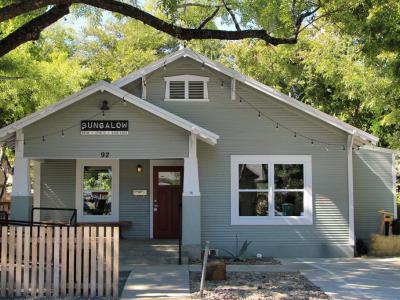
7) Rainey Street (must see)
The Rainey Street Historic District is a collection of old houses, mostly built in the bungalow style, located close to Lady Bird Lake and Interstate 35 in the southeast part of Downtown. While there are officially 21 buildings recognized as part of this historic district, the section of Rainey Street between River and Driskill Streets actually has 31 buildings constructed before 1934, which gives the neighborhood a historical vibe compared to other parts of the city.
Back in 1884, the Rainey Street neighborhood was established by Jesse Driskill, a wealthy cattle owner, and Frank Rainey. They divided up 16 acres of land between the Colorado River and Water Street (now Cesar Chavez Blvd). In the beginning, the neighborhood was mainly inhabited by middle-class white craftsmen. However, as the 1920s rolled around, more working-class families and people from diverse ethnic backgrounds started moving in. Unfortunately, a flood in 1935 wiped out many of the original homes in the area. Furthermore, when Interstate 35 was built, it effectively cut off Rainey Street from the rest of Austin's residential areas. By 1978, a report indicated that over half of the buildings on Rainey Street were in bad shape. To prevent high-density commercial and residential development, the neighborhood was added to the National Register of Historic Places in 1985.
Fast forward to the early 2010s, and this once quiet and hidden residential street has transformed into a popular nightlife hub. Most of the old bungalows in the area have been refurbished and turned into bars and restaurants, many of which have spacious porches and outdoor areas for customers.
Why You Should Visit:
Austin's diverse culture is not just contained in a museum but sprinkled throughout the entire city.
This residential-turned-commercial row offers a good chance to appreciate the city's lively scene manifested in the wealth of upscale bars, eateries and food trucks galore.
Staying true to Austin's roots, this strip of bars often features live, local bands.
Back in 1884, the Rainey Street neighborhood was established by Jesse Driskill, a wealthy cattle owner, and Frank Rainey. They divided up 16 acres of land between the Colorado River and Water Street (now Cesar Chavez Blvd). In the beginning, the neighborhood was mainly inhabited by middle-class white craftsmen. However, as the 1920s rolled around, more working-class families and people from diverse ethnic backgrounds started moving in. Unfortunately, a flood in 1935 wiped out many of the original homes in the area. Furthermore, when Interstate 35 was built, it effectively cut off Rainey Street from the rest of Austin's residential areas. By 1978, a report indicated that over half of the buildings on Rainey Street were in bad shape. To prevent high-density commercial and residential development, the neighborhood was added to the National Register of Historic Places in 1985.
Fast forward to the early 2010s, and this once quiet and hidden residential street has transformed into a popular nightlife hub. Most of the old bungalows in the area have been refurbished and turned into bars and restaurants, many of which have spacious porches and outdoor areas for customers.
Why You Should Visit:
Austin's diverse culture is not just contained in a museum but sprinkled throughout the entire city.
This residential-turned-commercial row offers a good chance to appreciate the city's lively scene manifested in the wealth of upscale bars, eateries and food trucks galore.
Staying true to Austin's roots, this strip of bars often features live, local bands.
