Custom Walk in Cordoba, Spain by nick_varsha_4c7e8 created on 2025-06-04
Guide Location: Spain » Cordoba
Guide Type: Custom Walk
# of Sights: 14
Tour Duration: 3 Hour(s)
Travel Distance: 4.1 Km or 2.5 Miles
Share Key: L7VLY
Guide Type: Custom Walk
# of Sights: 14
Tour Duration: 3 Hour(s)
Travel Distance: 4.1 Km or 2.5 Miles
Share Key: L7VLY
How It Works
Please retrieve this walk in the GPSmyCity app. Once done, the app will guide you from one tour stop to the next as if you had a personal tour guide. If you created the walk on this website or come to the page via a link, please follow the instructions below to retrieve the walk in the app.
Retrieve This Walk in App
Step 1. Download the app "GPSmyCity: Walks in 1K+ Cities" on Apple App Store or Google Play Store.



Step 2. In the GPSmyCity app, download(or launch) the guide "Cordoba Map and Walking Tours".
Step 3. Tap the menu button located at upper right corner of the "Walks" screen and select "Retrieve custom walk". Enter the share key: L7VLY
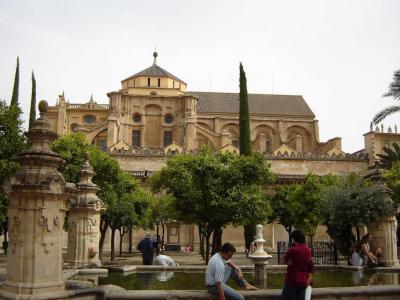
1) Mezquita Catedral de Cordoba (Mosque-Cathedral of Cordoba) (must see)
Back in 755, Abd al-Rahman I had one priority: staying alive. The last prince of the Umayyad dynasty, he was on the run from the Abbasids, who had toppled his family in Syria with a finality that left little room for second chances. He crossed into Iberia with more nerve than backup-and found just enough political tension among the local Muslim rulers to make a comeback. By 785, he wasn’t just surviving. He was laying the foundations of the Great Mosque of Córdoba.
What started as one man’s foothold became, over the next two centuries, the largest mosque in the Islamic world. At its peak in the 10th century, the complex covered a footprint rivaling Saint Peter’s in Rome-though the style couldn’t have been more different. No domes-on-domes here. Instead, the mosque stretched out low and wide, echoing the vast courtyards of desert prayer grounds. A third of the space is open air-now the Courtyard of the Orange Trees, once used for ritual ablutions. Nearby, the Gate of Forgiveness still leads toward the massive bell tower, which began life as a 10th-century minaret.
Inside, it’s a grid of visual rhythm-856 columns of jasper, onyx, marble, and granite supporting a ceiling painted in gold and rich geometric designs. Furthermore, the famous red-and-white arches are not just decorative-they hold the roof up while holding your gaze. The prayer hall remains one of the most atmospheric interiors in Europe, with light shifting across shadowy stone like a silent procession.
Then came the Reconquest in 1236, and with it, King Ferdinand III. Córdoba changed hands, and so did the mosque. Chapels were added. The first was the Villaviciosa Chapel. Later on, Renaissance builders dropped a full cathedral right into the middle of the mosque’s open hall-arches and all. They didn’t hold back, adding a cross-shaped layout, a grand central chapel, and side wings. The result? A style mix that sounds like it should clash, but doesn’t: bits of Gothic height, Baroque flair, elegant Renaissance shapes, and the delicate touch of the original Islamic design still visible beneath it all.
There’s even an elliptical dome adorned with prophets and evangelists, just in case the architectural layering wasn’t obvious enough. Today, the Mosque-Cathedral of Córdoba is a UNESCO World Heritage Site and a headline act in Spain’s architectural repertoire-part sanctuary, part time capsule, and entirely unforgettable.
What started as one man’s foothold became, over the next two centuries, the largest mosque in the Islamic world. At its peak in the 10th century, the complex covered a footprint rivaling Saint Peter’s in Rome-though the style couldn’t have been more different. No domes-on-domes here. Instead, the mosque stretched out low and wide, echoing the vast courtyards of desert prayer grounds. A third of the space is open air-now the Courtyard of the Orange Trees, once used for ritual ablutions. Nearby, the Gate of Forgiveness still leads toward the massive bell tower, which began life as a 10th-century minaret.
Inside, it’s a grid of visual rhythm-856 columns of jasper, onyx, marble, and granite supporting a ceiling painted in gold and rich geometric designs. Furthermore, the famous red-and-white arches are not just decorative-they hold the roof up while holding your gaze. The prayer hall remains one of the most atmospheric interiors in Europe, with light shifting across shadowy stone like a silent procession.
Then came the Reconquest in 1236, and with it, King Ferdinand III. Córdoba changed hands, and so did the mosque. Chapels were added. The first was the Villaviciosa Chapel. Later on, Renaissance builders dropped a full cathedral right into the middle of the mosque’s open hall-arches and all. They didn’t hold back, adding a cross-shaped layout, a grand central chapel, and side wings. The result? A style mix that sounds like it should clash, but doesn’t: bits of Gothic height, Baroque flair, elegant Renaissance shapes, and the delicate touch of the original Islamic design still visible beneath it all.
There’s even an elliptical dome adorned with prophets and evangelists, just in case the architectural layering wasn’t obvious enough. Today, the Mosque-Cathedral of Córdoba is a UNESCO World Heritage Site and a headline act in Spain’s architectural repertoire-part sanctuary, part time capsule, and entirely unforgettable.
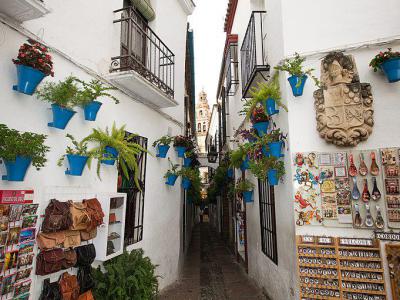
2) Calleja de las Flores (Alley of the Flowers)
Just off the main artery of Córdoba’s historic centre-close enough to the Mosque-Cathedral to hear its bells stretch-there’s a street with a long name and a short introduction. It’s called Ricardo Velázquez Bosco, and if you spot a fading Arabesque carving near the curb, congratulations: you’ve found the entrance to the Alley of the Flowers. This narrow, cobbled alleyway is famous for its picturesque beauty, with whitewashed walls adorned with vibrant flower pots overflowing with seasonal blooms.
Walls on both sides are whitewashed so bright they could double as light reflectors, and every window grid competes in a silent showdown of vines, reds, and ivy-green. The path snakes to a tiny courtyard, where the Mosque-Cathedral’s bell tower politely photobombs every frame. There’s a fountain tucked in a corner, modest in size but serious in pedigree-its column once belonged to a Roman structure, now still trickling away as it has for decades.
Architect Victor Ucelay gave the whole scene a tune-up in the 20th century. He swapped in local river stones for paving, threw in some granite slabs for good measure, and arched a few doorways to complete the look. The red geraniums and green pots weren’t part of the instructions, but the neighborhood made sure they showed up anyway.
Come early May, when Córdoba’s flowers are busy taking over the city, this narrow alley hums with restraint. Birds handle the melody, the Cathedral chimes in occasionally, and the fountain-always on time-keeps rhythm in the square.
Walls on both sides are whitewashed so bright they could double as light reflectors, and every window grid competes in a silent showdown of vines, reds, and ivy-green. The path snakes to a tiny courtyard, where the Mosque-Cathedral’s bell tower politely photobombs every frame. There’s a fountain tucked in a corner, modest in size but serious in pedigree-its column once belonged to a Roman structure, now still trickling away as it has for decades.
Architect Victor Ucelay gave the whole scene a tune-up in the 20th century. He swapped in local river stones for paving, threw in some granite slabs for good measure, and arched a few doorways to complete the look. The red geraniums and green pots weren’t part of the instructions, but the neighborhood made sure they showed up anyway.
Come early May, when Córdoba’s flowers are busy taking over the city, this narrow alley hums with restraint. Birds handle the melody, the Cathedral chimes in occasionally, and the fountain-always on time-keeps rhythm in the square.
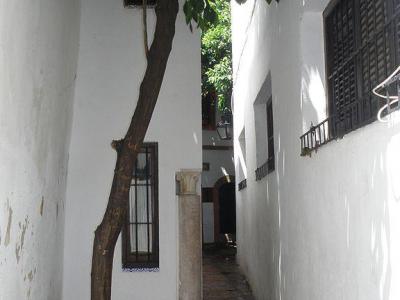
3) Calleja del Panuelo (Handkerchief Alley)
The Handkerchief Alley also known as Calle de Pedro Jiménez, is one of the most touristy streets in the city of Córdoba. It is located very close to the Mosque-Cathedral and Calleja de las Flores. It is also considered the narrowest street in the capital of Córdoba and one of the narrowest in Europe. It is part of the historic center of Córdoba, which was declared a UNESCO World Heritage Site in 1994.
The street gets its name from the length of the old handkerchiefs that gentlemen wore in the lapels of their suits (about 50 centimeters), as it would coincide exactly with the width of the street. The official name of the street, Pedro Jiménez, is said to come from the soldier of the Flanders Tercios who brought with him the Pedro Ximénez grape variety, very famous in Andalusia. Even on the same street, some grapevines can be found.
The street leads to a dead-end plaza, made of typical cobblestones, where there is a fountain made of baked clay with a niche, which used to be decorated with tiles and faces an Arab-origin well. Remains of an ancient column, some orange trees that provide shade, and houses that used to belong to the Cabildo due to their proximity to the main temple can be seen. Some of them still belong to the Cabildo, such as the one inhabited by the Company of Saint Teresa of Jesus, whose entrance is located in Plaza de la Concha.
In 1953, during the mayoralty of Antonio Cruz-Conde, this street was paved, illuminated with lamps, flower beds were built for the planting of orange trees and climbing plants, and a fountain with an Arab-style wellhead was made.
The street gets its name from the length of the old handkerchiefs that gentlemen wore in the lapels of their suits (about 50 centimeters), as it would coincide exactly with the width of the street. The official name of the street, Pedro Jiménez, is said to come from the soldier of the Flanders Tercios who brought with him the Pedro Ximénez grape variety, very famous in Andalusia. Even on the same street, some grapevines can be found.
The street leads to a dead-end plaza, made of typical cobblestones, where there is a fountain made of baked clay with a niche, which used to be decorated with tiles and faces an Arab-origin well. Remains of an ancient column, some orange trees that provide shade, and houses that used to belong to the Cabildo due to their proximity to the main temple can be seen. Some of them still belong to the Cabildo, such as the one inhabited by the Company of Saint Teresa of Jesus, whose entrance is located in Plaza de la Concha.
In 1953, during the mayoralty of Antonio Cruz-Conde, this street was paved, illuminated with lamps, flower beds were built for the planting of orange trees and climbing plants, and a fountain with an Arab-style wellhead was made.
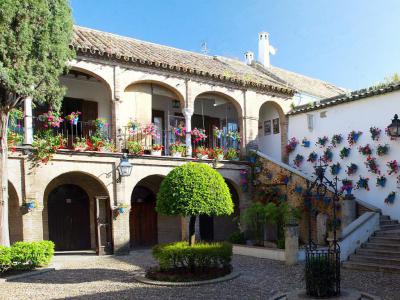
4) El Zoco Municipal Souk
El Zoco Municipal is a lively artisan market placed within the winding streets of the Jewish Quarter. Created in the 1950s as one of Spain’s first municipal craft markets, it was designed to preserve and promote traditional Andalusian craftsmanship at a time when many artisanal trades were fading.
Set around a beautiful Andalusian courtyard, the Zoco combines the atmosphere of an old shop place with the order of a modern marketplace. Whitewashed walls, flower-filled balconies, and a central fountain create an inviting oasis for visitors exploring the neighborhood. Inside, small workshops and boutiques display handmade leather goods, ceramics, silver jewelry, embroidered textiles, and delicate fans — all produced by local artisans who often craft their pieces on-site.
The market not only offers unique souvenirs but also provides a glimpse into Córdoba’s creative heritage. Each stall reflects centuries-old techniques once practiced in the city’s medieval quarters. Occasional performances, art exhibitions, and seasonal fairs bring extra life to the courtyard.
Set around a beautiful Andalusian courtyard, the Zoco combines the atmosphere of an old shop place with the order of a modern marketplace. Whitewashed walls, flower-filled balconies, and a central fountain create an inviting oasis for visitors exploring the neighborhood. Inside, small workshops and boutiques display handmade leather goods, ceramics, silver jewelry, embroidered textiles, and delicate fans — all produced by local artisans who often craft their pieces on-site.
The market not only offers unique souvenirs but also provides a glimpse into Córdoba’s creative heritage. Each stall reflects centuries-old techniques once practiced in the city’s medieval quarters. Occasional performances, art exhibitions, and seasonal fairs bring extra life to the courtyard.
5) Maimónides Square and Statue
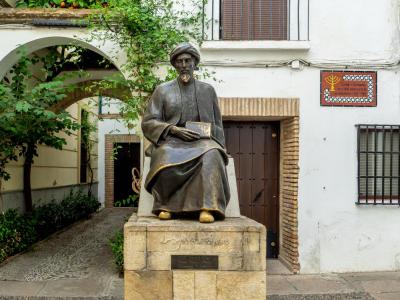
Maimónides Square, located in the heart of Córdoba’s Jewish Quarter, is dedicated to one of the city’s most influential historical figures: the philosopher, physician, and theologian Moses Maimonides. Born in Córdoba during the height of its cultural flourishing under Muslim rule, Maimonides later became one of the most important thinkers in Jewish history, shaping philosophy and law for centuries to come. His legacy makes this plaza not just a scenic corner of the neighborhood, but a symbolic tribute to the city’s intellectual Golden Age.
The centerpiece of the square is a bronze statue of Maimonides, created in 1964. The philosopher is depicted seated, holding a book — a reference to his vast scholarly output, which includes “The Guide for the Perplexed” and his influential legal writings. Many visitors gently touch the statue’s bronze foot, a charming tradition believed to bring good fortune and wisdom.
Surrounded by narrow alleyways, whitewashed façades, and artisan workshops, the square offers a peaceful moment to reflect on the deep blend of cultures that once thrived here.
The centerpiece of the square is a bronze statue of Maimonides, created in 1964. The philosopher is depicted seated, holding a book — a reference to his vast scholarly output, which includes “The Guide for the Perplexed” and his influential legal writings. Many visitors gently touch the statue’s bronze foot, a charming tradition believed to bring good fortune and wisdom.
Surrounded by narrow alleyways, whitewashed façades, and artisan workshops, the square offers a peaceful moment to reflect on the deep blend of cultures that once thrived here.
6) Casa Andalusi (Andalusian House Museum)
The Andalusian House feels less like a museum and more like you’ve just wandered into the 12th century and no one’s told the owners. This small Moorish gem wraps itself around a leafy courtyard, a cool refuge just steps from the synagogue and a short stroll from the Almodóvar Gate.
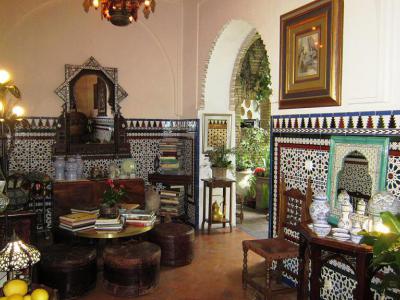
Inside, rooms brim with the spoils of medieval home life-plush furnishings, hand-woven tapestries, shelves of old books, and enough delicate pottery to make you walk carefully. The décor leans heavily on Moorish elegance with a dash of Eastern flair, from its geometric tilework to its arched wall recesses.
The courtyard is its own quiet theatre: patterned cobblestones underfoot, arcaded porches framing the space, and fountains murmuring under a canopy of vines and potted greenery. For a shift in mood, head below ground to find a Roman floor and other remnants dug straight out of the city’s earlier layers.
And then there’s the Paper Museum-an unexpected detour into the world of early papermaking. Here you’ll find tools, history, and even a wooden scale model of one of the West’s earliest paper mills, proof that this city’s appetite for knowledge wasn’t just about collecting books-it knew how to make them, too.
Inside, rooms brim with the spoils of medieval home life-plush furnishings, hand-woven tapestries, shelves of old books, and enough delicate pottery to make you walk carefully. The décor leans heavily on Moorish elegance with a dash of Eastern flair, from its geometric tilework to its arched wall recesses.
The courtyard is its own quiet theatre: patterned cobblestones underfoot, arcaded porches framing the space, and fountains murmuring under a canopy of vines and potted greenery. For a shift in mood, head below ground to find a Roman floor and other remnants dug straight out of the city’s earlier layers.
And then there’s the Paper Museum-an unexpected detour into the world of early papermaking. Here you’ll find tools, history, and even a wooden scale model of one of the West’s earliest paper mills, proof that this city’s appetite for knowledge wasn’t just about collecting books-it knew how to make them, too.
7) Calle de los Judios (Jewish Street in Jewish Quarter) (must see)
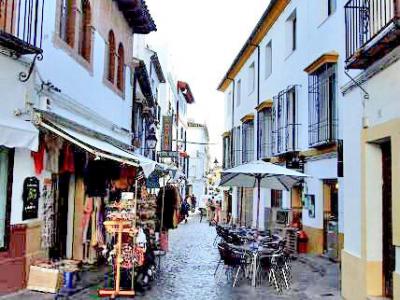
The Jewish Quarter of Córdoba isn’t so much a neighbourhood as it is a time capsule with street signs. Dating back to the 10th century, it sprawls through a knot of lanes named Deanes, Manríquez, Tomás Conde, Judíos, Almanzor, and Romero. This UNESCO-listed patch of the Old City packs in some heavy hitters: the Mosque-Cathedral, the city’s sole surviving synagogue, the Zoco Municipal Market, and, in a twist only Spain could pull off, the Bullfighting Museum.
Along Jewish Street, you’ll find a bronze statue of Maimonides-the Jewish philosopher and physician whose reputation travelled farther than most armies of his day. Back when Córdoba was under Umayyad rule, roughly from the 10th to the 15th century, the city was considered the cultural capital of the Western world, a place where ideas and inventions crossed paths as easily as merchants in its markets.
The fortified Gate of Almodóvar serves as one of the quarter’s main entrances, its two towers bridged by a stone arch topped with a crown of battlements. Nearby, Maimonides Square offers a quiet pause before you plunge back into streets that are equal parts map and maze-many of them ending abruptly, as if the medieval planners just got distracted. The famous Alley of the Flowers is here too, framing postcard shots with practiced ease. Keep going, and you’ll reach the quarter’s spiritual heart: Córdoba’s synagogue, a survivor that has worn many hats over the centuries-temple, hospital, hermitage, nursery school.
Right next door, the House of Sepharad-also called the House of Memory-preserves the stories, music, and traditions of Jewish Spain in a 14th-century building. The Andalusian House showcases the city’s role in early papermaking, back when the Caliphate was churning out books faster than most of Europe could read them. And then there’s Handkerchief Alley, a sliver of a street so narrow you could block it with an outstretched scarf. At its end, as if to reward your efforts, is a tiny courtyard with a fountain murmuring away like nothing’s changed in centuries.
Along Jewish Street, you’ll find a bronze statue of Maimonides-the Jewish philosopher and physician whose reputation travelled farther than most armies of his day. Back when Córdoba was under Umayyad rule, roughly from the 10th to the 15th century, the city was considered the cultural capital of the Western world, a place where ideas and inventions crossed paths as easily as merchants in its markets.
The fortified Gate of Almodóvar serves as one of the quarter’s main entrances, its two towers bridged by a stone arch topped with a crown of battlements. Nearby, Maimonides Square offers a quiet pause before you plunge back into streets that are equal parts map and maze-many of them ending abruptly, as if the medieval planners just got distracted. The famous Alley of the Flowers is here too, framing postcard shots with practiced ease. Keep going, and you’ll reach the quarter’s spiritual heart: Córdoba’s synagogue, a survivor that has worn many hats over the centuries-temple, hospital, hermitage, nursery school.
Right next door, the House of Sepharad-also called the House of Memory-preserves the stories, music, and traditions of Jewish Spain in a 14th-century building. The Andalusian House showcases the city’s role in early papermaking, back when the Caliphate was churning out books faster than most of Europe could read them. And then there’s Handkerchief Alley, a sliver of a street so narrow you could block it with an outstretched scarf. At its end, as if to reward your efforts, is a tiny courtyard with a fountain murmuring away like nothing’s changed in centuries.
8) Puerta de Almodovar (Almodovar Gate)
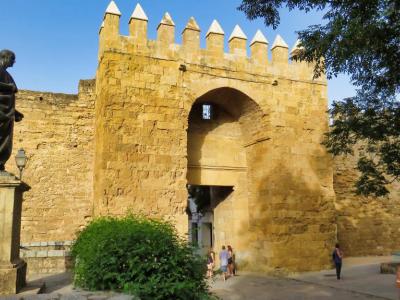
The Almodóvar Gate isn’t just a hole in Córdoba’s old town walls-it’s a survivor. Dating from the 14th century, it’s one of only three medieval gates still standing, named for the road that once led to the nearby town of Almodóvar del Río. Built from sandstone and brick, the gate’s big open arch is flanked by two sturdy towers capped with battlements, like it’s still half-expecting trouble from the past. Step through and you’re straight into the Jewish Quarter, where the streets seem to have been designed by someone who liked puzzles.
Just outside, Cairuán Street runs alongside the walls like a quiet backstage corridor. It’s a stone walkway shaded by greenery, with a fountain feeding a neat row of rectangular ponds-an easy stroll for anyone wanting a break from the city’s buzz.
Keeping watch by the gate is a bronze statue of Seneca the Younger, born here in 4 B.C., who went on to become a Roman philosopher, playwright, and, at times, reluctant political insider. Follow Cairuán Street a little further and you’ll meet another hometown heavyweight: Averroes, the medieval philosopher who brought Aristotle back into fashion in the Islamic world. Two thinkers, two statues, and one gate that’s been standing long enough to hear it all.
Just outside, Cairuán Street runs alongside the walls like a quiet backstage corridor. It’s a stone walkway shaded by greenery, with a fountain feeding a neat row of rectangular ponds-an easy stroll for anyone wanting a break from the city’s buzz.
Keeping watch by the gate is a bronze statue of Seneca the Younger, born here in 4 B.C., who went on to become a Roman philosopher, playwright, and, at times, reluctant political insider. Follow Cairuán Street a little further and you’ll meet another hometown heavyweight: Averroes, the medieval philosopher who brought Aristotle back into fashion in the Islamic world. Two thinkers, two statues, and one gate that’s been standing long enough to hear it all.
9) Murallas Romana de Cordoba (Roman Walls of Cordoba)
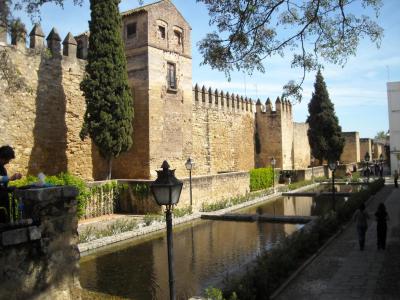
The Roman Walls (Murallas Romana de Córdoba) surrounded Cordoba. They were almost 9,000 feet in length and made of cut stone. There was an outer wall nine feet high and a four-foot inner wall. A 20-foot gap between the outer and inner walls was filled with rubble. There were semicircular defensive towers along the external wall.
The southern wall was demolished during the reign of Augustus to extend the city limits to the river Guadalquivir. The ruins of the Roman Walls remain in the Alcazar, by the Roman Bridge and the Roman Temple. The arches next to the Sevilla Gate (Puerta de Sevilla) are part of the Roman aqueduct.
In 711 AD, seven hundred Moorish soldiers led by a Berber commander Tariq Ibn Ziyad scaled the walls at night and drove out the startled Visigoths. Since the Islamic settlements were generally without defensive walls, the Roman structure gradually crumbled. In 1236 King Fernando of Castile conquered the city after a long siege.
In the 14th century, the walls were extended parallel to the river from the Albolafia water mill north and back again, reconnecting with the old walls at the Seville Gate (Puerta de Seville). Napoleon demolished parts of the wall. Today the remaining gates are the Almodovar Gate, Seville Gate, Bridge Gate, and the 1408 Malmuerta Tower.
The Roman Walls now form part of the historic center of Córdoba, a UNESCO World Heritage site, since 1984.
The southern wall was demolished during the reign of Augustus to extend the city limits to the river Guadalquivir. The ruins of the Roman Walls remain in the Alcazar, by the Roman Bridge and the Roman Temple. The arches next to the Sevilla Gate (Puerta de Sevilla) are part of the Roman aqueduct.
In 711 AD, seven hundred Moorish soldiers led by a Berber commander Tariq Ibn Ziyad scaled the walls at night and drove out the startled Visigoths. Since the Islamic settlements were generally without defensive walls, the Roman structure gradually crumbled. In 1236 King Fernando of Castile conquered the city after a long siege.
In the 14th century, the walls were extended parallel to the river from the Albolafia water mill north and back again, reconnecting with the old walls at the Seville Gate (Puerta de Seville). Napoleon demolished parts of the wall. Today the remaining gates are the Almodovar Gate, Seville Gate, Bridge Gate, and the 1408 Malmuerta Tower.
The Roman Walls now form part of the historic center of Córdoba, a UNESCO World Heritage site, since 1984.
10) Patios de Cordoba (Cordoba Cortyards) and San Basilio Patio 44 (must see)
Córdoba’s summers have been hot and bone-dry for as long as anyone’s been keeping track-which is why the Romans, Visigoths, Muslims, and later Andalusians all agreed on one thing: survival required shade, airflow, and a dash of beauty. The solution was the patio-an inward-facing courtyard designed to let in the light while keeping out the worst of the heat. A fountain provided cool sound and cooler air, while a basin caught precious rainwater. Islamic architects refined the idea with a shaded passageway that funneled you off the street and into a green, blooming refuge.
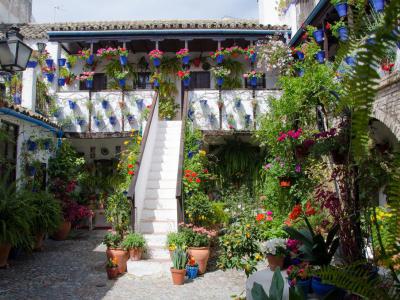
In the Saint Basilio district, Patio 44 takes that tradition and turns it into a calling card. Dating back to the 15th century, it now houses the Friends Association of Cordoban Patios-a group dedicated to keeping the city’s courtyards both alive and in bloom.
Step through its porch and you find yourself in a two-story courtyard wrapped in balconies, where the ground floor hums with studios and shops showing off local craftsmanship. Here, ceramics, leatherwork, and other Cordoban specialties are as much part of the scenery as the flowers.
Every May since 1921, the Town Hall has made patios the star of their own celebration: the Courtyards and Crosses Festival. For a few weeks, homeowners compete-not quietly-to outdo each other in floral displays. Singing, dancing, wine, tapas, and unapologetic colour fill the air, turning the city into an open invitation to wander.
In the Saint Basilio district, Patio 44 takes that tradition and turns it into a calling card. Dating back to the 15th century, it now houses the Friends Association of Cordoban Patios-a group dedicated to keeping the city’s courtyards both alive and in bloom.
Step through its porch and you find yourself in a two-story courtyard wrapped in balconies, where the ground floor hums with studios and shops showing off local craftsmanship. Here, ceramics, leatherwork, and other Cordoban specialties are as much part of the scenery as the flowers.
Every May since 1921, the Town Hall has made patios the star of their own celebration: the Courtyards and Crosses Festival. For a few weeks, homeowners compete-not quietly-to outdo each other in floral displays. Singing, dancing, wine, tapas, and unapologetic colour fill the air, turning the city into an open invitation to wander.
11) Puerta del Puente (Gate of the Bridge)
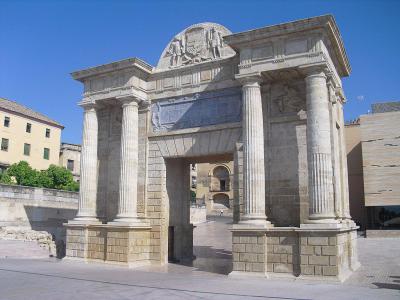
The Gate of the Bridge has been standing guard since the days of Julius Caesar, back when traffic on the Roman road Augusta way meant chariots, not tour buses. It marked the main entrance into Córdoba and linked up with the Roman Bridge, forming part of what was essentially the city’s ancient welcome mat. Rumor has it a statue of Venus once topped the gate-using her status as goddess of love to attract city visitors. She didn’t make it past the Moorish period, though-wrong pantheon.
Under Islamic rule, the gate picked up a handful of different names, depending on who you asked. Some called it Bab al-Qantara, meaning the Gate of the Bridge. Others went with Bab al-Wadi, the Gate of the River, or Bab al-Yazir, the Gate of Algeciras. When Christian forces reclaimed Córdoba during the Reconquest, they decided to keep the Algeciras name-because why mess with a label that already worked? By the late 1500s, Mayor Ortega figured the old gate needed a royal upgrade before King Felipe II showed up. Architect Montalbán began the makeover, and Ruiz the Younger wrapped it up in 1576.
Hopping to 1912-King Alfonso XIII is on the throne, and the gate has had enough of being boxed in by neighbors. The surrounding buildings were cleared, and by 1928, it had evolved into the solo monument you see today, standing like a proud relic that just got its own spotlight.
Nowadays, the gate is more than just a photo op. You can actually go inside. There’s a small exhibition room with illustrations of its past lives, and if you climb to the top, the balcony offers a sweeping view of the square, the bridge, and the slow march of time.
Under Islamic rule, the gate picked up a handful of different names, depending on who you asked. Some called it Bab al-Qantara, meaning the Gate of the Bridge. Others went with Bab al-Wadi, the Gate of the River, or Bab al-Yazir, the Gate of Algeciras. When Christian forces reclaimed Córdoba during the Reconquest, they decided to keep the Algeciras name-because why mess with a label that already worked? By the late 1500s, Mayor Ortega figured the old gate needed a royal upgrade before King Felipe II showed up. Architect Montalbán began the makeover, and Ruiz the Younger wrapped it up in 1576.
Hopping to 1912-King Alfonso XIII is on the throne, and the gate has had enough of being boxed in by neighbors. The surrounding buildings were cleared, and by 1928, it had evolved into the solo monument you see today, standing like a proud relic that just got its own spotlight.
Nowadays, the gate is more than just a photo op. You can actually go inside. There’s a small exhibition room with illustrations of its past lives, and if you climb to the top, the balcony offers a sweeping view of the square, the bridge, and the slow march of time.
12) Puente Romano de Cordoba (Roman Bridge of Cordoba) (must see)
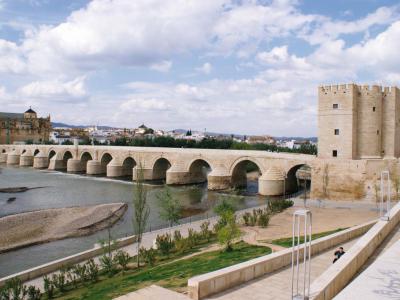
Stretching across the Guadalquivir River with quiet confidence is Cordoba’s Roman Bridge-less “majestic” and more “still standing after two millennia.” On one end, the Mosque-Cathedral anchors the view; on the other, the Calahorra Tower keeps watch. Back in the 12th century, Arab cartographer Muhammad al-Idrisi wasn’t shy with praise-he called it the best-looking, sturdiest bridge around.
Originally built in the 1st century BC, it carried the mighty Augusta way, the Roman highway that once stitched together Rome and Cádiz. In the early 700s, the bridge had a full makeover-sixteen arches, 800-plus feet long, wide enough for carts, soldiers, and the occasional goat.
Let's skip forward to the medieval times: the Calahorra Tower was added on one side, and the Gate of the Bridge on the other. A statue of Saint Raphael landed center stage in the 17th century. Over the years, repairs came and went-today, only two arches on the north end remain truly Roman. The rest? Roman-adjacent.
In 2006, a major restoration stirred the pot. Architect Juan Montilla gave the bridge a polish-pink granite paving, minimalist lighting, and a tidy-up of the starling-shaped breakwaters. Even the saints’ niches got spruced up. The north end was lifted slightly to meet the riverside promenade-practical, if not purist.
Now protected as a cultural monument since 1931, the bridge, gate, and tower joined UNESCO’s World Heritage list in 1984. Oh, and for fantasy fans: the Roman Bridge served as the Long Bridge of Volantis in Game of Thrones. Try not to imagine dragons.
Originally built in the 1st century BC, it carried the mighty Augusta way, the Roman highway that once stitched together Rome and Cádiz. In the early 700s, the bridge had a full makeover-sixteen arches, 800-plus feet long, wide enough for carts, soldiers, and the occasional goat.
Let's skip forward to the medieval times: the Calahorra Tower was added on one side, and the Gate of the Bridge on the other. A statue of Saint Raphael landed center stage in the 17th century. Over the years, repairs came and went-today, only two arches on the north end remain truly Roman. The rest? Roman-adjacent.
In 2006, a major restoration stirred the pot. Architect Juan Montilla gave the bridge a polish-pink granite paving, minimalist lighting, and a tidy-up of the starling-shaped breakwaters. Even the saints’ niches got spruced up. The north end was lifted slightly to meet the riverside promenade-practical, if not purist.
Now protected as a cultural monument since 1931, the bridge, gate, and tower joined UNESCO’s World Heritage list in 1984. Oh, and for fantasy fans: the Roman Bridge served as the Long Bridge of Volantis in Game of Thrones. Try not to imagine dragons.
13) Torre De Calahorra (Calahorra Tower)
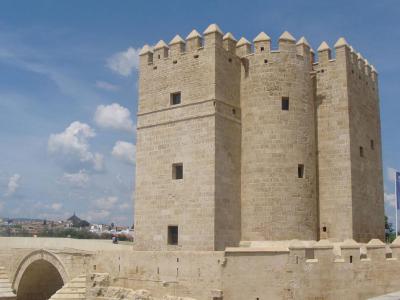
At the southern tip of the Roman Bridge, standing guard like it never got the memo the war ended, is the Calahorra Tower-Cordoba’s original “no entry” sign. Built in the 12th century when Muslims were still in charge , this chunky gatehouse wasn’t here for decoration-it was here to keep trouble off the bridge and out of the city.
Originally, it was just two square towers connected by an arch. Then things got dramatic. In 1369, King Enrique III of Castile gave it a full medieval upgrade-fortified it, bulked it up, and added a third, round tower in the middle. You might wonder why. Well, he wasn’t a fan of being overthrown by his famously villainous brother, Pedro the Cruel. Family reunions were tense back then.
Inside, you’ll find eight rooms now home to the Al-Andalus Living Museum. It’s not your average museum: think immersive audio-visuals, not dusty glass cases. The exhibits recreate Cordoba’s golden age-when scholars, artists, and thinkers from Islam, Christianity, and Judaism shared ideas (and sometimes dinner) from the 9th to the 13th century.
And if history doesn’t do it for you, the rooftop might. The pierced terrace delivers wide-angle views of the Mosque-Cathedral and the entire Old City-minus the medieval siege engines, thankfully.
Originally, it was just two square towers connected by an arch. Then things got dramatic. In 1369, King Enrique III of Castile gave it a full medieval upgrade-fortified it, bulked it up, and added a third, round tower in the middle. You might wonder why. Well, he wasn’t a fan of being overthrown by his famously villainous brother, Pedro the Cruel. Family reunions were tense back then.
Inside, you’ll find eight rooms now home to the Al-Andalus Living Museum. It’s not your average museum: think immersive audio-visuals, not dusty glass cases. The exhibits recreate Cordoba’s golden age-when scholars, artists, and thinkers from Islam, Christianity, and Judaism shared ideas (and sometimes dinner) from the 9th to the 13th century.
And if history doesn’t do it for you, the rooftop might. The pierced terrace delivers wide-angle views of the Mosque-Cathedral and the entire Old City-minus the medieval siege engines, thankfully.
14) Plaza de la Corredera (Corredera Square)
The Corredera Square is one of the most iconic squares in Cordoba. Its history dates back to the 17th century when it was built as a bullring, one of the oldest in Spain. However, its origins go back even further.
During the Roman era, the site was a marketplace and a meeting place for the citizens of Cordoba. After the Reconquista, the Catholic Monarchs granted the land to the city of Cordoba, and it was used as a place for local markets and fairs.
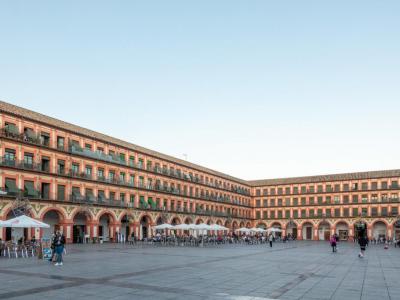
In 1570, under the reign of King Felipe II, the square was redesigned as a bullring. It became known as the "Plaza de los Toros" and quickly became a popular venue for bullfighting events. The bullring had a unique design, with three levels of arcades and a capacity of up to 10,000 spectators.
Over the years, the bullring underwent several renovations and upgrades. It was used for bullfights until the early 20th century when it fell into disuse. In the 1970s, the city of Cordoba decided to transform the bullring into a public square, and it was renamed Plaza de la Corredera.
Today, Corredera Square is a bustling square in the heart of Cordoba's historic district. It is surrounded by beautiful buildings with colorful facades, many of which house restaurants and bars. The square is a popular gathering place for locals and tourists alike, and it is often used for cultural events and concerts. It remains a symbol of Cordoba's rich history and vibrant culture.
During the Roman era, the site was a marketplace and a meeting place for the citizens of Cordoba. After the Reconquista, the Catholic Monarchs granted the land to the city of Cordoba, and it was used as a place for local markets and fairs.
In 1570, under the reign of King Felipe II, the square was redesigned as a bullring. It became known as the "Plaza de los Toros" and quickly became a popular venue for bullfighting events. The bullring had a unique design, with three levels of arcades and a capacity of up to 10,000 spectators.
Over the years, the bullring underwent several renovations and upgrades. It was used for bullfights until the early 20th century when it fell into disuse. In the 1970s, the city of Cordoba decided to transform the bullring into a public square, and it was renamed Plaza de la Corredera.
Today, Corredera Square is a bustling square in the heart of Cordoba's historic district. It is surrounded by beautiful buildings with colorful facades, many of which house restaurants and bars. The square is a popular gathering place for locals and tourists alike, and it is often used for cultural events and concerts. It remains a symbol of Cordoba's rich history and vibrant culture.
