Custom Walk in Beijing, China by ggaria2403_9882c created on 2025-06-17
Guide Location: China » Beijing
Guide Type: Custom Walk
# of Sights: 8
Tour Duration: 4 Hour(s)
Travel Distance: 11 Km or 6.8 Miles
Share Key: 4X4JW
Guide Type: Custom Walk
# of Sights: 8
Tour Duration: 4 Hour(s)
Travel Distance: 11 Km or 6.8 Miles
Share Key: 4X4JW
How It Works
Please retrieve this walk in the GPSmyCity app. Once done, the app will guide you from one tour stop to the next as if you had a personal tour guide. If you created the walk on this website or come to the page via a link, please follow the instructions below to retrieve the walk in the app.
Retrieve This Walk in App
Step 1. Download the app "GPSmyCity: Walks in 1K+ Cities" on Apple App Store or Google Play Store.



Step 2. In the GPSmyCity app, download(or launch) the guide "Beijing Map and Walking Tours".
Step 3. Tap the menu button located at upper right corner of the "Walks" screen and select "Retrieve custom walk". Enter the share key: 4X4JW
1) Temple of Heaven (must see)
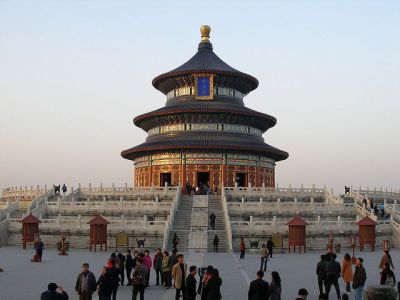
The Temple of Heaven is located in central Beijing’s southeastern part. This complex consists of Taoist buildings and was constructed during Yongle Emperor’s reign between 1406 and 1420 especially for the Emperors to offer prayers. Though the practice of Chinese Worship of heaven by the emperors was existent much before Taoism, this temple is considered to be a Taoist temple.
In the sixteenth century, the Jiajing Emperor named it the Temple of Heaven. He also constructed the Temple of Earth, Sun and Moon.
Anglo-French Alliance occupied the Temple of Heaven during the Second Opium War. In 1900, this temple complex was used as the temporary command by the Eight-Nation Alliance forces during the Boxing rebellion.
During this period, the temple and its garden were seriously damaged and artifacts were stolen. The complex further fell to ruins with Qing dynasty downfall. It again came into prominence when the Republic of China President Yuan Shikai held a prayer ceremony here in 1914 in his bid to become the Emperor of China. The Temple of Heaven was first opened to the public in 1918.
Today, this temple is a popular spot where people come for Tai Chi and other activities. Its impressive architecture and landscape design attract many tourists from around the world.
Why You Should Visit:
Spectacular scenic views and famous landmark & historic site in Beijing as well as China.
It is always very interesting to see how domestic people enjoy time at weekends.
Tip:
Having a guide will help with understanding what you're looking as history is what this place is mostly about.
If you'd rather avoid huge crowds of tourists, try going in the late morning or early afternoon.
As for the admission, consider purchasing the full ticket because if you are to do them individually, you will pay much more.
In the sixteenth century, the Jiajing Emperor named it the Temple of Heaven. He also constructed the Temple of Earth, Sun and Moon.
Anglo-French Alliance occupied the Temple of Heaven during the Second Opium War. In 1900, this temple complex was used as the temporary command by the Eight-Nation Alliance forces during the Boxing rebellion.
During this period, the temple and its garden were seriously damaged and artifacts were stolen. The complex further fell to ruins with Qing dynasty downfall. It again came into prominence when the Republic of China President Yuan Shikai held a prayer ceremony here in 1914 in his bid to become the Emperor of China. The Temple of Heaven was first opened to the public in 1918.
Today, this temple is a popular spot where people come for Tai Chi and other activities. Its impressive architecture and landscape design attract many tourists from around the world.
Why You Should Visit:
Spectacular scenic views and famous landmark & historic site in Beijing as well as China.
It is always very interesting to see how domestic people enjoy time at weekends.
Tip:
Having a guide will help with understanding what you're looking as history is what this place is mostly about.
If you'd rather avoid huge crowds of tourists, try going in the late morning or early afternoon.
As for the admission, consider purchasing the full ticket because if you are to do them individually, you will pay much more.
2) Qianmen (Zhengyangmen)
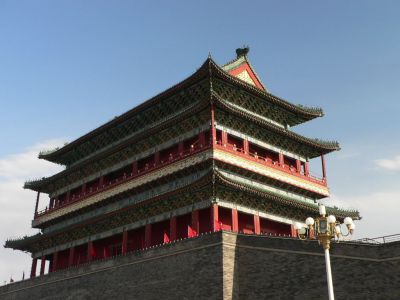
When you visit the historic Beijing city wall, do not miss out the Zhengyangmen, which is one of the wall's gates. Popularly called the Qianmen, this wall was constructed during the Ming Dynasty in 1419. The gate featured a large barbican all with an archery tower, the side walls and the side gates. Direct entry to the imperial city was guarded by this gate.
Qianmen Station, the first railway station in the city was constructed just outside the gate. During the Boxer Rebellion of 1900, the gate suffered extensive damage. In 1914, the gate was completely reconstructed and restored to its original glory.
The People Liberation Army's Beijing garrison occupied the Zhengyangmen gatehouse in 1949 after the victory of Communists. The gate became a major tourist attraction after the military vacated in 1980. This gate stands tall at 42 meters and is the highest gate in the city wall.
Tip:
You can access the interior of the structure that sits atop the former wall, where there are fascinating displays of the history of Beijing, along with art displays on one floor, and (of course) a gift shop. There is a magnificent 360-degree view of the city!
Qianmen Station, the first railway station in the city was constructed just outside the gate. During the Boxer Rebellion of 1900, the gate suffered extensive damage. In 1914, the gate was completely reconstructed and restored to its original glory.
The People Liberation Army's Beijing garrison occupied the Zhengyangmen gatehouse in 1949 after the victory of Communists. The gate became a major tourist attraction after the military vacated in 1980. This gate stands tall at 42 meters and is the highest gate in the city wall.
Tip:
You can access the interior of the structure that sits atop the former wall, where there are fascinating displays of the history of Beijing, along with art displays on one floor, and (of course) a gift shop. There is a magnificent 360-degree view of the city!
3) Tiananmen Square (must see)
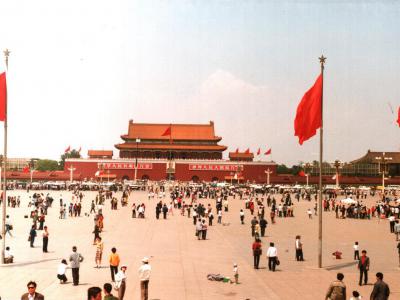
The name Tiananmen Square is the heart of Beijing. Tourists flock from all over China and around the world to this square that features the Tiananmen tower, Mao Zedong Memorial Hall, the Monument to the People’s Heroes and the Great Hall of the People.
Functionally this square was Forbidden City’s front door. Constructed during the Ming Dynasty in 1417, the square was used to inform people whenever a change of ruling power occurred. The tower located to the north of the square was accessible only to aristocrats and the royal family and was not open to the public until 1911 when feudal rule came to an end. The Monument of People’s Heroes, constructed in 1952 is the largest in China. This granite monument is located at the center of the square.
The Great Hall of the People is located to the west of the square. Constructed in 1959, this hall is an impressive site where prominent diplomatic activities and political meetings are held. To the south of the square, you can find the Memorial Hall of Chairman Mao. Chairman Mao’s body is kept here in a crystal coffin and decorated with flowers. The National Museum of China is located to the square’s eastern side. This museum showcases the country’s rich history.
Why You Should Visit:
A must-see place for its historical and political significance, but also a great place to meet and interact with people from China. It is quite a sight in the evening, completely lit up, with lots of people around.
Tip:
To be allowed access to the Tiananmen Square you must go through a series of security checks and you must have your passport. This goes for a visit to the Forbidden City as well since the south entrance is facing the square.
Functionally this square was Forbidden City’s front door. Constructed during the Ming Dynasty in 1417, the square was used to inform people whenever a change of ruling power occurred. The tower located to the north of the square was accessible only to aristocrats and the royal family and was not open to the public until 1911 when feudal rule came to an end. The Monument of People’s Heroes, constructed in 1952 is the largest in China. This granite monument is located at the center of the square.
The Great Hall of the People is located to the west of the square. Constructed in 1959, this hall is an impressive site where prominent diplomatic activities and political meetings are held. To the south of the square, you can find the Memorial Hall of Chairman Mao. Chairman Mao’s body is kept here in a crystal coffin and decorated with flowers. The National Museum of China is located to the square’s eastern side. This museum showcases the country’s rich history.
Why You Should Visit:
A must-see place for its historical and political significance, but also a great place to meet and interact with people from China. It is quite a sight in the evening, completely lit up, with lots of people around.
Tip:
To be allowed access to the Tiananmen Square you must go through a series of security checks and you must have your passport. This goes for a visit to the Forbidden City as well since the south entrance is facing the square.
4) Imperial Ancestral Temple
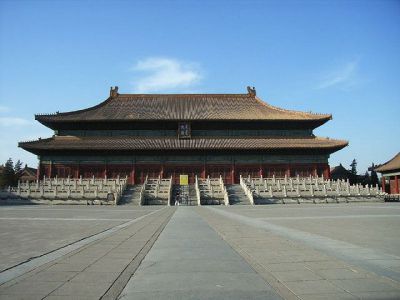
Located to the east of Tiananmen Square, the Imperial Ancestral Temple is also known as the Working People’s Cultural Palace. It was here that the Ming and Qing dynasties offered sacrifices to Earth and Heaven. This temple was built in 1420 during the Ming dynasty ruler Yongle’s reign.
Covering an area of 197,000 square meters, this temple has three red walls surrounding it. As you enter through the Halberd Gate, you will be struck by the solemn and imposing central structures. The roofs of the three halls in this structure are covered with yellow glazed tiles.
The Sacrificial Hall is where grand sacrificial ceremonies used to be held. The sumeru, three-tiered base of this hall is made of white marble. The hall’s interior looks grand with sixty-eight columns made of exquisite and expensive nanmu golden silkwood. The ceiling dazzles with its gilded colored paintings and is complemented by the golden brick paved floor.
On each side of the hall, you will find long, spacious corridors leading to a compound at the southern end. Here you can see exquisite stone bridges over the Golden River. Visit this temple that takes you right back to those ancient times.
Why You Should Visit:
Lots of history, way cheaper than the Forbidden City – like a smaller version that's quieter and also easier on the legs, but with similar architecture and still significant.
Tip:
A great place to get uncrowded photos, to walk around with only a handful of others and to enjoy a pleasant park, right in the heart of Beijing.
Covering an area of 197,000 square meters, this temple has three red walls surrounding it. As you enter through the Halberd Gate, you will be struck by the solemn and imposing central structures. The roofs of the three halls in this structure are covered with yellow glazed tiles.
The Sacrificial Hall is where grand sacrificial ceremonies used to be held. The sumeru, three-tiered base of this hall is made of white marble. The hall’s interior looks grand with sixty-eight columns made of exquisite and expensive nanmu golden silkwood. The ceiling dazzles with its gilded colored paintings and is complemented by the golden brick paved floor.
On each side of the hall, you will find long, spacious corridors leading to a compound at the southern end. Here you can see exquisite stone bridges over the Golden River. Visit this temple that takes you right back to those ancient times.
Why You Should Visit:
Lots of history, way cheaper than the Forbidden City – like a smaller version that's quieter and also easier on the legs, but with similar architecture and still significant.
Tip:
A great place to get uncrowded photos, to walk around with only a handful of others and to enjoy a pleasant park, right in the heart of Beijing.
5) Wangfujing Street (must see)
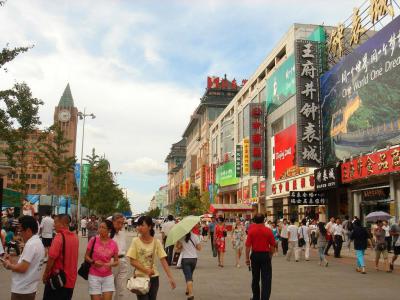
Wangfujing Street is a very popular street in Beijing. This street is 1500 meters long and is well known for its combination of commerce, culture, modernity and tradition. Starting from the East Changan Street, Wangfujing Street extends to the China Art Museum.
On Wangfujing Street you can find a symbolically restored ancient well after which the street was named. Some of the prominent tourist attractions close to the street include the Tiananmen Square and the Forbidden City.
As you walk around this charming and attractive street, enjoy browsing around the 200 odd shops. Some of the most popular shopping spots here include Wangfujing Book Store, Beijing Department Store, Sun Dong An Market and Donghuamen Night Fair.
The Catholic Church on this street was originally built in 1905. This church was refurbished in 2000 and is lit by bright lights. There are many luxury hotels around Wangfujing Street where tourists prefer to stay. Some of the popular hotels include The Grand Hotel Beijing, Beijing Hotel, Taiwan Hotel, Peace Hotel, Palace Hotel and Tianlun Dynasty Hotel.
A visit to this street is a must on your trip to Beijing. Shop to your heart’s content for exclusive Chinese artifacts and enjoy delicious food at any of the fine dining restaurants here.
Why You Should Visit:
To soak in the atmosphere and check out the little Chinese things you can buy not mentioning the various Beijing delicacies you can try – from noodle soup and dumplings to starfish-on-a-stick. Lots of people daring each other to try various insects and taking pics, so a very interesting place to visit. Easy to get around but crowded and open late.
Tip:
Make sure to check out the side streets, as there are plenty of curious things to see, but don't forget to barter with the vendors!
On Wangfujing Street you can find a symbolically restored ancient well after which the street was named. Some of the prominent tourist attractions close to the street include the Tiananmen Square and the Forbidden City.
As you walk around this charming and attractive street, enjoy browsing around the 200 odd shops. Some of the most popular shopping spots here include Wangfujing Book Store, Beijing Department Store, Sun Dong An Market and Donghuamen Night Fair.
The Catholic Church on this street was originally built in 1905. This church was refurbished in 2000 and is lit by bright lights. There are many luxury hotels around Wangfujing Street where tourists prefer to stay. Some of the popular hotels include The Grand Hotel Beijing, Beijing Hotel, Taiwan Hotel, Peace Hotel, Palace Hotel and Tianlun Dynasty Hotel.
A visit to this street is a must on your trip to Beijing. Shop to your heart’s content for exclusive Chinese artifacts and enjoy delicious food at any of the fine dining restaurants here.
Why You Should Visit:
To soak in the atmosphere and check out the little Chinese things you can buy not mentioning the various Beijing delicacies you can try – from noodle soup and dumplings to starfish-on-a-stick. Lots of people daring each other to try various insects and taking pics, so a very interesting place to visit. Easy to get around but crowded and open late.
Tip:
Make sure to check out the side streets, as there are plenty of curious things to see, but don't forget to barter with the vendors!
6) Xindong'an Market
What to buy here: Beijing Dough Figurines.
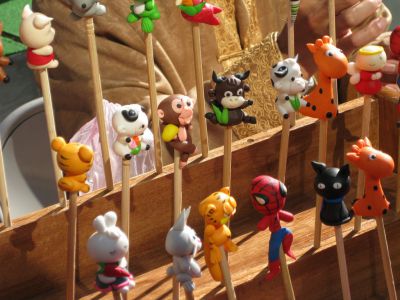
Beijing dough figurines are a traditional handicraft, they are made of wheat and glutinous rice flour, and carved with a small bamboo knife. The dough figurines have a high artistic value for the locals and may be compared to Chinese sculpture. Although an ancient handicraft, it hasn't received widespread attention until the Qing dynasty, and only became truly popular at the beginning of the 21st century. The figurines are made on different occasions throughout the year and are used as gifts for children. Please keep in mind that there are edible and inedible dough toys. These can be found in abundance at temple fairs during the Spring Festival.
Beijing dough figurines are a traditional handicraft, they are made of wheat and glutinous rice flour, and carved with a small bamboo knife. The dough figurines have a high artistic value for the locals and may be compared to Chinese sculpture. Although an ancient handicraft, it hasn't received widespread attention until the Qing dynasty, and only became truly popular at the beginning of the 21st century. The figurines are made on different occasions throughout the year and are used as gifts for children. Please keep in mind that there are edible and inedible dough toys. These can be found in abundance at temple fairs during the Spring Festival.
7) Jingshan Park (must see)
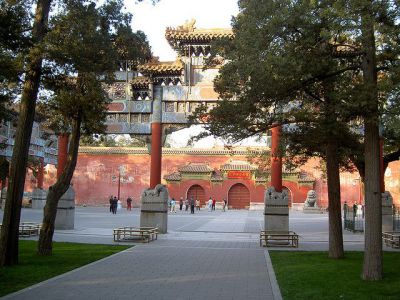
Jingshan Park is a popular tourist attraction in Beijing. This park is situated at the city’s center on Jingshan Hill and is spread over an area of 230,000 square meters. The royal, spectacular garden features a unique and stunning landscape and is located right opposite Forbidden City’s north gate. You can enjoy an amazing view of the Forbidden City from the peak of Jingshan Park.
Jingshan Hill was laid out in a proper manner during the Ming Dynasty rule though it had been serving as the imperial garden during the Yuan, Ming and Qing dynasties between 1271 and 1911.
Jingshan Park was first opened to the public in 1928 and was completely rebuilt with paved paths. Today this park attracts millions of tourists from around the world. The first thing you will see the moment you enter the park’s front gate is the Qiwang Pavilion. Green cypresses embrace this charming pavilion where the memorial tablet of Confucius was worshipped by the emperors. This two-storied, majestic and dignified pavilion features a golden-glazed roof and white marble balustrades.
There are five summits in Jingshan Hill and on each summit, you can find a pavilion. There was a copper Buddha statue on each pavilion representing the five tastes namely bitter, salty, sweet, sour, and pungent. During the 1900 war, all statues were destroyed.
Wanchun Pavilion is the most popular among the five located in the middle of the five summits. This is Beijing’s highest point from where you can enjoy a spectacular view of the city. As you stand on the pavilion, to your north you can see the dignified Bell and Drum Towers, the magnificent and resplendent Forbidden City to the South and the White Dagoba Temple and Beihai Park to the West.
Why You Should Visit:
A really nice upkept garden park, featuring nice outdoor covered areas and old trees. The calm and serenity here is refreshing and the view from the top of the hill is amazing.
Tip:
You can enter via 3 gates: East, West, and South (all have ticket booths), the latter being accessed directly opposite the exit to the Forbidden City’s North gate exit. The city views, as you ascend, get better and better.
Jingshan Hill was laid out in a proper manner during the Ming Dynasty rule though it had been serving as the imperial garden during the Yuan, Ming and Qing dynasties between 1271 and 1911.
Jingshan Park was first opened to the public in 1928 and was completely rebuilt with paved paths. Today this park attracts millions of tourists from around the world. The first thing you will see the moment you enter the park’s front gate is the Qiwang Pavilion. Green cypresses embrace this charming pavilion where the memorial tablet of Confucius was worshipped by the emperors. This two-storied, majestic and dignified pavilion features a golden-glazed roof and white marble balustrades.
There are five summits in Jingshan Hill and on each summit, you can find a pavilion. There was a copper Buddha statue on each pavilion representing the five tastes namely bitter, salty, sweet, sour, and pungent. During the 1900 war, all statues were destroyed.
Wanchun Pavilion is the most popular among the five located in the middle of the five summits. This is Beijing’s highest point from where you can enjoy a spectacular view of the city. As you stand on the pavilion, to your north you can see the dignified Bell and Drum Towers, the magnificent and resplendent Forbidden City to the South and the White Dagoba Temple and Beihai Park to the West.
Why You Should Visit:
A really nice upkept garden park, featuring nice outdoor covered areas and old trees. The calm and serenity here is refreshing and the view from the top of the hill is amazing.
Tip:
You can enter via 3 gates: East, West, and South (all have ticket booths), the latter being accessed directly opposite the exit to the Forbidden City’s North gate exit. The city views, as you ascend, get better and better.
8) Beihai Park (must see)
Beihai Park is situated in the center of Beijing and is a popular tourist attraction for various reasons. This park is an imperial garden preserved till today with great care. This largest and oldest park lies to the east of Jingshan Park and Forbidden City.
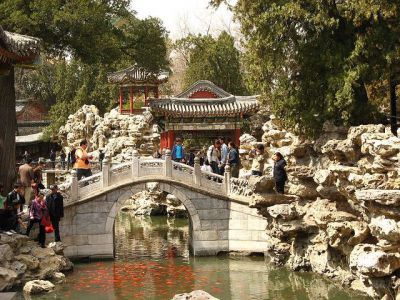
The 1000-year-old park was created in keeping with a traditional Chinese legend. More than fifty percent of its total 0.71 square kilometer is covered by a lake. The Northern Shore Area, Eastern Shore Area, the Circular City located near the north gate and the Botanical Garden are the four major scenic areas to check out.
You can find the Jade Flowery Islet at the center of the lake. The imposing White Dagoba, focal point of Beihai Park can be found at this islet. White Dagoba Temple is situated right opposite the White Dagoba. As you tour Beihai Park, do not miss any of the beautiful and famous places here such as the Bell and Drum Towers, Zhengjue Hall and the Stone Tablets of Qiongdao Chunyin scattered across the Qionghua Islet slope.
Qionghua Islet stands at the center of the park densely populated with pavilions, rockeries and halls. Do not miss out the exquisite garden at the Circular City located to the Southeast of the park.
Why You Should Visit:
Huge park with a good mix of locals and foreign visitors and lots of small hidden spots to check out.
Tip:
Make sure you climb up the stairs to the white pagoda – very pretty views from up there!
This place is also home to the one and only double-sided Nine-Dragon screen, i.e. the only screen having nine huge dragons on both sides among the most famous three Nine-Dragon screens in China.
The 1000-year-old park was created in keeping with a traditional Chinese legend. More than fifty percent of its total 0.71 square kilometer is covered by a lake. The Northern Shore Area, Eastern Shore Area, the Circular City located near the north gate and the Botanical Garden are the four major scenic areas to check out.
You can find the Jade Flowery Islet at the center of the lake. The imposing White Dagoba, focal point of Beihai Park can be found at this islet. White Dagoba Temple is situated right opposite the White Dagoba. As you tour Beihai Park, do not miss any of the beautiful and famous places here such as the Bell and Drum Towers, Zhengjue Hall and the Stone Tablets of Qiongdao Chunyin scattered across the Qionghua Islet slope.
Qionghua Islet stands at the center of the park densely populated with pavilions, rockeries and halls. Do not miss out the exquisite garden at the Circular City located to the Southeast of the park.
Why You Should Visit:
Huge park with a good mix of locals and foreign visitors and lots of small hidden spots to check out.
Tip:
Make sure you climb up the stairs to the white pagoda – very pretty views from up there!
This place is also home to the one and only double-sided Nine-Dragon screen, i.e. the only screen having nine huge dragons on both sides among the most famous three Nine-Dragon screens in China.
