Custom Walk in Istanbul, Turkey by smolivas10_64393 created on 2025-06-19
Guide Location: Turkey » Istanbul
Guide Type: Custom Walk
# of Sights: 8
Tour Duration: 7 Hour(s)
Travel Distance: 18.5 Km or 11.5 Miles
Share Key: SSE8S
Guide Type: Custom Walk
# of Sights: 8
Tour Duration: 7 Hour(s)
Travel Distance: 18.5 Km or 11.5 Miles
Share Key: SSE8S
How It Works
Please retrieve this walk in the GPSmyCity app. Once done, the app will guide you from one tour stop to the next as if you had a personal tour guide. If you created the walk on this website or come to the page via a link, please follow the instructions below to retrieve the walk in the app.
Retrieve This Walk in App
Step 1. Download the app "GPSmyCity: Walks in 1K+ Cities" on Apple App Store or Google Play Store.



Step 2. In the GPSmyCity app, download(or launch) the guide "Istanbul Map and Walking Tours".
Step 3. Tap the menu button located at upper right corner of the "Walks" screen and select "Retrieve custom walk". Enter the share key: SSE8S
1) Blue Mosque (must see)
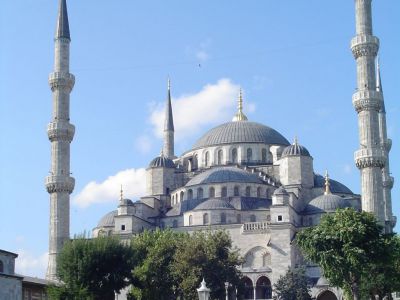
If there's one “celebrity monument” with its own fan club in Istanbul, it is undoubtedly the Sultan Ahmed Mosque - better known as the “Blue Mosque.” Why this nickname? Step inside and you’ll see for yourself -thousands of shimmering blue tiles that turn the whole interior into a calming ocean of color. Built between 1609 and 1616 under Sultan Ahmed I, this place isn’t just a pretty façade but is also home to the Sultan’s tomb. Formerly a religious school (or madrassah), it also housed, once, what used to be a hospice. And despite welcoming tourists from sunrise to sunset, it still functions as a real mosque. That means the call to prayer - five times a day - pauses sightseeing (for approximately half an hour) and reminds everyone that this is primarily a place of worship rather than a photo backdrop...
The Blue Mosque stands right across from Hagia Sophia, making Sultanahmet Square the heavyweight championship ring of world architecture. Surrounded by museums, cafés, parks, and postcard-perfect views in every direction, it’s basically the center of Istanbul’s charm offensive. Curious fact: the mosque was built on top of the old Byzantine Imperial Palace grounds and parts of the Hippodrome. Inside, the walls are covered with breathtaking Islamic art and masterful calligraphy that feels like history’s own handwriting.
The fact that it’s free, world-famous, and (unlike many other similar attractions) is incredibly easy to reach, makes this mosque a definite must-visit. Yes, there are dress codes, security checks, and lines that might make you consider new career paths while waiting… but once inside that peaceful, domed interior - despite all the crowds - you will gladly realize it's been worth it.
Pro tip: Arrive early to avoid queues - your future self will thank you. While waiting, instead of counting heads in line, admire the details around you; Islamic design rewards those who actually look up. And when hunger strikes, don’t worry - great food and drinks are just steps away. Even from the outside, the mosque is a dream for photographers… So, go ahead, circle it like a curious cat and capture every angle.
The Blue Mosque stands right across from Hagia Sophia, making Sultanahmet Square the heavyweight championship ring of world architecture. Surrounded by museums, cafés, parks, and postcard-perfect views in every direction, it’s basically the center of Istanbul’s charm offensive. Curious fact: the mosque was built on top of the old Byzantine Imperial Palace grounds and parts of the Hippodrome. Inside, the walls are covered with breathtaking Islamic art and masterful calligraphy that feels like history’s own handwriting.
The fact that it’s free, world-famous, and (unlike many other similar attractions) is incredibly easy to reach, makes this mosque a definite must-visit. Yes, there are dress codes, security checks, and lines that might make you consider new career paths while waiting… but once inside that peaceful, domed interior - despite all the crowds - you will gladly realize it's been worth it.
Pro tip: Arrive early to avoid queues - your future self will thank you. While waiting, instead of counting heads in line, admire the details around you; Islamic design rewards those who actually look up. And when hunger strikes, don’t worry - great food and drinks are just steps away. Even from the outside, the mosque is a dream for photographers… So, go ahead, circle it like a curious cat and capture every angle.
2) Basilica Cistern (Yerebatan Sarnıcı) (must see)
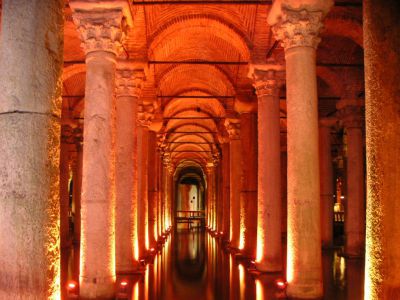
Deep beneath the busy streets near Hagia Sophia lies one of Istanbul’s coolest secrets - literally - the Basilica Cistern. Its Turkish name, translating to something like “the cistern that sank into the ground,” sounds dramatic… and honestly, it lives up to the hype. Built in the 6th century AD by Emperor Justinian I, this underground wonder once helped supply water to the Great Palace of Constantinople. And yes, history tells us, more than 7,000 slaves worked on it, which in turn explains how it became so massive.
The endless rows of columns, dim lighting, and still water reflecting everything like a spooky mirror... If this feels a bit like stepping into a fantasy movie set, that’s because thousands of years ago, the Byzantines were already masters of atmospheric design. Even when the Ottomans took over, the cistern kept doing its job quietly - providing water to Topkapi Palace and proving itself far more reliable than your average plumbing system.
These days, the Basilica Cistern is less about water supply and more about blowing visitors’ minds. You can stroll past ancient triumphal arches, admire rows of marble pillars, and, of course, meet the most famous residents: two giant Medusa heads casually holding up columns in the northwest corner. One sideways, one upside-down… because when you have mythological monster heads lying around, why not get creative?
And if you like incredible photos, mysterious echoes, and that thrilling “did I just feel a ghost breeze?” vibe - this place delivers. Plus, it’s right next to Hagia Sophia, Topkapi Palace, and the Blue Mosque, so you can easily squeeze it into your ancient-monument marathon.
A word of warning: surfaces can get slippery - especially around Medusa - so walk like you’re in a suspense movie. And also bring a jacket, for it gets rather chilly underground... Ready to descend into Istanbul’s past? The cistern is waiting below… just mind the water.
The endless rows of columns, dim lighting, and still water reflecting everything like a spooky mirror... If this feels a bit like stepping into a fantasy movie set, that’s because thousands of years ago, the Byzantines were already masters of atmospheric design. Even when the Ottomans took over, the cistern kept doing its job quietly - providing water to Topkapi Palace and proving itself far more reliable than your average plumbing system.
These days, the Basilica Cistern is less about water supply and more about blowing visitors’ minds. You can stroll past ancient triumphal arches, admire rows of marble pillars, and, of course, meet the most famous residents: two giant Medusa heads casually holding up columns in the northwest corner. One sideways, one upside-down… because when you have mythological monster heads lying around, why not get creative?
And if you like incredible photos, mysterious echoes, and that thrilling “did I just feel a ghost breeze?” vibe - this place delivers. Plus, it’s right next to Hagia Sophia, Topkapi Palace, and the Blue Mosque, so you can easily squeeze it into your ancient-monument marathon.
A word of warning: surfaces can get slippery - especially around Medusa - so walk like you’re in a suspense movie. And also bring a jacket, for it gets rather chilly underground... Ready to descend into Istanbul’s past? The cistern is waiting below… just mind the water.
3) Hagia Sophia (Ayasofya) (must see)
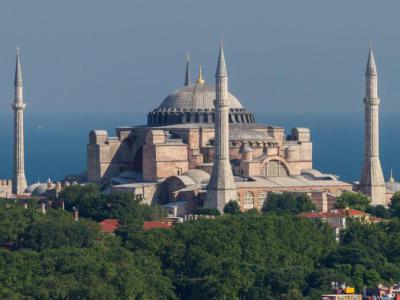
Hagia Sophia is the ultimate overachiever of both architecture and religion. Built in the 6th century for Emperor Justinian I, it began life as a grand Christian cathedral-basically the power seat of the Eastern Orthodox world. Its giant dome was such an engineering feat that people said it hung from heaven by a chain. At 180 feet tall and 100 feet wide, it still gets a lot of impressed neck-craning today.
Still, history wasn’t satisfied with just one identity for Hagia Sophia. When the Ottomans conquered Constantinople in 1453, Sultan Mehmed II turned it into a mosque. Up went the minarets, out came the church bells, and Christian images were masterly covered-like someone switching décor for a very different house party... Today, you’ll see a fascinating mash-up: Islamic calligraphy panels right beside shimmering mosaics of the Virgin Mary and Jesus. History lesson and cultural fusion rolled into one.
Inside, look for the famous Deësis mosaic from the 13th century, featuring Christ, John the Baptist, and the Virgin Mary, expressing emotion so well it almost feels like they’re watching you back. And don’t miss the “wishing column.” Legend says that if you stick your thumb in the little hole and rotate it just right, you get a miracle. Rumor has it, even Emperor Justinian tried it for headaches-indeed, who needs aspirin when you have ancient architecture?
Recognized as a UNESCO World Heritage Site, Hagia Sophia continues to reinvent itself. After a stretch as a museum, it has returned to its original mission as a place of worship, while its historical displays now live at the nearby Ibrahim Pasha Palace.
Indeed, one shouldn't miss the opportunity to visit here, because where else can you stand in one spot and admire 1,500 years of spiritual remixing? Hagia Sophia’s layers of faith, art, and genius design make it impossible to look away-so go ahead and stare in awe!
Still, history wasn’t satisfied with just one identity for Hagia Sophia. When the Ottomans conquered Constantinople in 1453, Sultan Mehmed II turned it into a mosque. Up went the minarets, out came the church bells, and Christian images were masterly covered-like someone switching décor for a very different house party... Today, you’ll see a fascinating mash-up: Islamic calligraphy panels right beside shimmering mosaics of the Virgin Mary and Jesus. History lesson and cultural fusion rolled into one.
Inside, look for the famous Deësis mosaic from the 13th century, featuring Christ, John the Baptist, and the Virgin Mary, expressing emotion so well it almost feels like they’re watching you back. And don’t miss the “wishing column.” Legend says that if you stick your thumb in the little hole and rotate it just right, you get a miracle. Rumor has it, even Emperor Justinian tried it for headaches-indeed, who needs aspirin when you have ancient architecture?
Recognized as a UNESCO World Heritage Site, Hagia Sophia continues to reinvent itself. After a stretch as a museum, it has returned to its original mission as a place of worship, while its historical displays now live at the nearby Ibrahim Pasha Palace.
Indeed, one shouldn't miss the opportunity to visit here, because where else can you stand in one spot and admire 1,500 years of spiritual remixing? Hagia Sophia’s layers of faith, art, and genius design make it impossible to look away-so go ahead and stare in awe!

4) Topkapi Palace (must see)
For most tourists, the Topkapi Palace is usually the number one attraction in Istanbul. And if you don’t have it on your list, are you sure you're visiting Istanbul? Constructed soon after the Ottoman conquest of Constantinople in 1453, it was commissioned by Sultan Mehmed II and was completed in the late 15th century. For nearly 400 years, it served as the political and ceremonial center of the Ottoman Empire, as well as the primary residence of its sultans.
Unlike many European royal residences, which typically consist of a single grand building, Topkapi was designed as a sprawling complex, covering about 700,000 square meters on the tip of the historic peninsula. It includes numerous pavilions, courtyards, gardens, mosques, and state rooms, each added and modified by different sultans over time. One of its most famous sections is the Harem, where the sultan’s family, including Valide Sultan (or the Queen Mother) and other influential women of the court, lived. This private space played an important role in politics, especially during a period often called the “Sultanate of Women,” when leading females inside the Harem influenced major state decisions.
Although Topkapi symbolized imperial authority for centuries, its role changed in the 19th century as the empire modernized. Sultan Abdulmejid I moved the royal court to the newly constructed Dolmabahçe Palace, which offered European-style luxury and modern conveniences. Even after the move, Topkapi retained great importance by housing sacred relics of Islam, including personal items (notably, the swords) of the Prophet Muhammad and his close companions.
After the fall of the Ottoman Empire and the founding of the Republic of Turkey in 1923, Topkapi Palace was turned into a museum the following year by the country's first president, Mustafa Kemal Atatürk. In 1985, it was recognized as part of Istanbul’s UNESCO World Heritage Sites.
At Topkapi, every stone whispers a secret, every doorway leads to another chapter of history, and the views of the Bosphorus Strait are always throne-worthy. To take it all in, especially the Harem and Holy Relics that really steal the show, visitors are encouraged to allocate a whole day. Practical tips include arriving early to avoid crowds, renting an audio guide with a valid ID, and respecting photography restrictions in many exhibit areas.
So, get ready: enjoy the royal treatment-minus the sultan’s responsibilities...
Unlike many European royal residences, which typically consist of a single grand building, Topkapi was designed as a sprawling complex, covering about 700,000 square meters on the tip of the historic peninsula. It includes numerous pavilions, courtyards, gardens, mosques, and state rooms, each added and modified by different sultans over time. One of its most famous sections is the Harem, where the sultan’s family, including Valide Sultan (or the Queen Mother) and other influential women of the court, lived. This private space played an important role in politics, especially during a period often called the “Sultanate of Women,” when leading females inside the Harem influenced major state decisions.
Although Topkapi symbolized imperial authority for centuries, its role changed in the 19th century as the empire modernized. Sultan Abdulmejid I moved the royal court to the newly constructed Dolmabahçe Palace, which offered European-style luxury and modern conveniences. Even after the move, Topkapi retained great importance by housing sacred relics of Islam, including personal items (notably, the swords) of the Prophet Muhammad and his close companions.
After the fall of the Ottoman Empire and the founding of the Republic of Turkey in 1923, Topkapi Palace was turned into a museum the following year by the country's first president, Mustafa Kemal Atatürk. In 1985, it was recognized as part of Istanbul’s UNESCO World Heritage Sites.
At Topkapi, every stone whispers a secret, every doorway leads to another chapter of history, and the views of the Bosphorus Strait are always throne-worthy. To take it all in, especially the Harem and Holy Relics that really steal the show, visitors are encouraged to allocate a whole day. Practical tips include arriving early to avoid crowds, renting an audio guide with a valid ID, and respecting photography restrictions in many exhibit areas.
So, get ready: enjoy the royal treatment-minus the sultan’s responsibilities...
5) Dolmabahce Palace (must see)
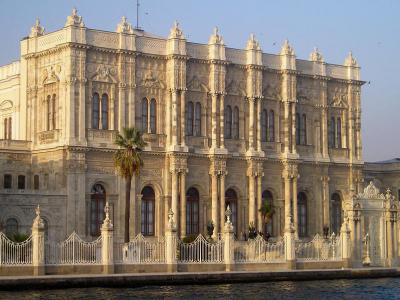
The Ottoman sultans shifted from Topkapi Palace to the newly built Dolmabahce in the 1850s. Designed by the renowned Armenian architect Garabet Balyan, it is the largest and most extravagant of all the palaces on the Bosphorus – especially the Ceremonial Hall with its famous Bohemian crystal chandelier glowing with 750 lamps, gifted by Queen Victoria.
Sultan Abdülmecid and his family clearly wanted a residence comparable to those of his contemporary European monarchs. On this note, it is quite evident that not only were European luxury goods desirable from an aesthetic viewpoint, but also from a symbolic one. The palace not only makes use of European goods but also of European technology to indicate that the Ottoman Empire has not been outdistanced by Europe.
Guided tours are broadly divided into two sections: the public and the private (known as the Selamlik and the Harem, respectively), access to which is given by separate tickets. Interiors are fairly well-preserved and many of the personal belongings of the Sultans and their families on display. Unfortunately, photography is not allowed inside.
Outside, there is a small, but attractive garden around the buildings, with magnificent magnolias, little water-lily ponds, and excellent views over the Bosphorus.
Tip:
Going early is highly encouraged – you'll have entire rooms all to yourself!
The audio guide is a must if you want to get into the cultural benefit of the visit.
Consider taking a rest at the small outdoor cafe in-between visiting the Selamlik and the Harem.
Several good restaurants are nearby on a popular street nearby (Şair Nedim Cd.) that you can walk to in five minutes.
Sultan Abdülmecid and his family clearly wanted a residence comparable to those of his contemporary European monarchs. On this note, it is quite evident that not only were European luxury goods desirable from an aesthetic viewpoint, but also from a symbolic one. The palace not only makes use of European goods but also of European technology to indicate that the Ottoman Empire has not been outdistanced by Europe.
Guided tours are broadly divided into two sections: the public and the private (known as the Selamlik and the Harem, respectively), access to which is given by separate tickets. Interiors are fairly well-preserved and many of the personal belongings of the Sultans and their families on display. Unfortunately, photography is not allowed inside.
Outside, there is a small, but attractive garden around the buildings, with magnificent magnolias, little water-lily ponds, and excellent views over the Bosphorus.
Tip:
Going early is highly encouraged – you'll have entire rooms all to yourself!
The audio guide is a must if you want to get into the cultural benefit of the visit.
Consider taking a rest at the small outdoor cafe in-between visiting the Selamlik and the Harem.
Several good restaurants are nearby on a popular street nearby (Şair Nedim Cd.) that you can walk to in five minutes.
6) Galata Tower (must see)
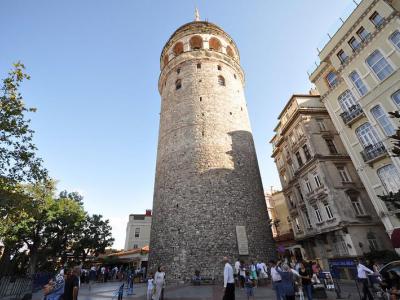
The Galata Tower, one of Istanbul’s most recognizable landmarks, rises above the city as a lasting emblem of power, endurance, and transformation. Erected in 1348 by Genoese merchants, it originally bore the name the “Tower of Christ” and served both as a watchtower and defensive stronghold for the independent Genoese colony of Galata, located across the Golden Horn from Byzantine Constantinople. Standing nine stories tall and approximately 67 meters high, the stone tower was the tallest structure of its time and offered an unmatched panoramic view of the city and sea. Even today, its circular viewing platform provides visitors with a 360-degree perspective of Istanbul’s skyline, encompassing the Bosphorus, Golden Horn, and the city’s historic landmarks.
When the Ottomans conquered Constantinople in 1453, the tower’s purpose evolved to meet new needs. Sultan Mehmed II converted it into a fire watchtower, capitalizing on its strategic vantage point to spot fires that frequently broke out in the city’s wooden neighborhoods. Over the centuries, it also served as a prison for sailors, a warehouse, and briefly as an observatory. These changing uses reflected the Ottoman practice of adapting existing structures to fit new civic or administrative functions, integrating the Genoese-built monument into the life of the empire.
Perhaps the most famous tale linked to the Galata Tower is that of Hezarfen Ahmed Çelebi, a 17th-century Ottoman aviator who reportedly leapt from its summit wearing artificial wings and glided across the Bosphorus. Though likely embellished, the story captures the inventive spirit and imagination long associated with Istanbul’s cultural identity.
Throughout its history, the tower suffered multiple fires, notably in 1794 and 1831, prompting major restorations that eventually gave it its distinctive conical roof. It continued to function as a fire lookout post until the 1960s before being restored once more and opened to the public as a museum and viewpoint.
Today, the Galata Tower remains a highlight for visitors who can ascend by elevator to its observation deck, enjoy a drink at the café, or dine at the restaurant offering evening cabaret shows. Surrounded by lively streets, music shops, and historic charm, the tower encapsulates nearly seven centuries of Istanbul’s layered heritage-where Genoese ambition, Ottoman resilience, and modern vitality meet in a single, soaring monument.
When the Ottomans conquered Constantinople in 1453, the tower’s purpose evolved to meet new needs. Sultan Mehmed II converted it into a fire watchtower, capitalizing on its strategic vantage point to spot fires that frequently broke out in the city’s wooden neighborhoods. Over the centuries, it also served as a prison for sailors, a warehouse, and briefly as an observatory. These changing uses reflected the Ottoman practice of adapting existing structures to fit new civic or administrative functions, integrating the Genoese-built monument into the life of the empire.
Perhaps the most famous tale linked to the Galata Tower is that of Hezarfen Ahmed Çelebi, a 17th-century Ottoman aviator who reportedly leapt from its summit wearing artificial wings and glided across the Bosphorus. Though likely embellished, the story captures the inventive spirit and imagination long associated with Istanbul’s cultural identity.
Throughout its history, the tower suffered multiple fires, notably in 1794 and 1831, prompting major restorations that eventually gave it its distinctive conical roof. It continued to function as a fire lookout post until the 1960s before being restored once more and opened to the public as a museum and viewpoint.
Today, the Galata Tower remains a highlight for visitors who can ascend by elevator to its observation deck, enjoy a drink at the café, or dine at the restaurant offering evening cabaret shows. Surrounded by lively streets, music shops, and historic charm, the tower encapsulates nearly seven centuries of Istanbul’s layered heritage-where Genoese ambition, Ottoman resilience, and modern vitality meet in a single, soaring monument.
7) Fatih Mosque (must see)
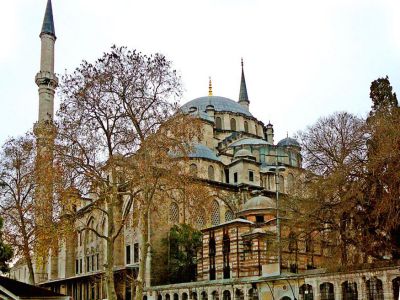
The Fatih Camii (“Conqueror’s Mosque”) is one of the largest examples of Turkish-Islamic architecture in Istanbul and was built over the original site of the Church of the Holy Apostles.
Constructed during 1462-1470 by Sultan Fatih Mehmet (Mehmet the Conqueror), the Fatih Mosque is rather distinct in structure. It consists of a hospital, a caravansary, kitchens, a marketplace and several hammams (Turkish baths). The mosque also houses a madrassah (Islamic school) which can accommodate over 1000 students.
The Sultan wanted to make a spectacular structure and when architect Atik Sinan was unable to create a mosque higher than the Avasofya (Hagia Sophia), the Sultan ordered both his hands cut off. Located atop the highest hill in Istanbul, the Fatih Mosque consists of a tall central dome, and semi-domes on all four sides.
An earthquake devastated the complex in 1771, upon which it went under major restoration by Mustafa III. From the original compound, only the inner courtyard, the madrassah (Islamic school) and the mihrab (prayer direction niche) have survived. The mosque’s interior has many depictions of Islamic Art. Outside the mihrab wall, the tombs of Sultan Mehmet II and his wife are found.
Why You Should Visit:
Maybe the best mosque to observe the culture & architecture of conservative Turks (you won't see many non-Muslim tourists).
Surrounded by numerous shops selling spices, sweets etc. (on Wednesdays there's a big open market, too).
Tip:
Make sure to take your shoes off and wear long trousers/skirts (ladies should bring a scarf).
Constructed during 1462-1470 by Sultan Fatih Mehmet (Mehmet the Conqueror), the Fatih Mosque is rather distinct in structure. It consists of a hospital, a caravansary, kitchens, a marketplace and several hammams (Turkish baths). The mosque also houses a madrassah (Islamic school) which can accommodate over 1000 students.
The Sultan wanted to make a spectacular structure and when architect Atik Sinan was unable to create a mosque higher than the Avasofya (Hagia Sophia), the Sultan ordered both his hands cut off. Located atop the highest hill in Istanbul, the Fatih Mosque consists of a tall central dome, and semi-domes on all four sides.
An earthquake devastated the complex in 1771, upon which it went under major restoration by Mustafa III. From the original compound, only the inner courtyard, the madrassah (Islamic school) and the mihrab (prayer direction niche) have survived. The mosque’s interior has many depictions of Islamic Art. Outside the mihrab wall, the tombs of Sultan Mehmet II and his wife are found.
Why You Should Visit:
Maybe the best mosque to observe the culture & architecture of conservative Turks (you won't see many non-Muslim tourists).
Surrounded by numerous shops selling spices, sweets etc. (on Wednesdays there's a big open market, too).
Tip:
Make sure to take your shoes off and wear long trousers/skirts (ladies should bring a scarf).
8) Grand Bazaar (must see)
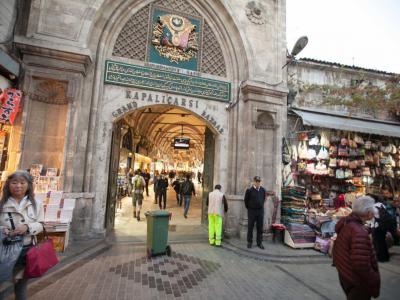
Imagine stepping into a shopping mall built in the 1400s. Welcome to the Grand Bazaar, Istanbul’s legendary “Covered Market,” where more than 4,000 shops squeeze into 58 winding streets-all under one gigantic roof! Naturally, it gets crowded, with hundreds of thousands of visitors per day, all hunting for treasures, Turkish delights, or maybe just a good excuse to bargain like a pro.
The bazaar's story began shortly after the Ottoman conquest of Constantinople in 1453, when Sultan Mehmed II ordered a marketplace to support the economy of the new capital. Initially designed as a secure trading place for valuable goods, it featured domed structures called “bedestens” that stored textiles, jewelry, and precious metals.
As trade expanded, the Sandal Bedesten was constructed to accommodate the thriving silk market. Soon, shops and workshops gradually formed a vast commercial maze around the main halls. By the 17th century, the Grand Bazaar had reached a size close to what visitors can see today. Its strategic location on historic trade routes, including the Silk Road, helped it grow into a major economic and cultural crossroads connecting Europe, Asia, and the Middle East.
Throughout its long history, the bazaar has endured fires and earthquakes that led to repeated restorations. A major one took place after the 1894 earthquake. Over time, it got split into sections specializing in carpets, leather, pottery, spices, gold, and many other products. It is especially known for the Turkish Evil Eye amulet, commonly sold across its colorful streets.
During the late Ottoman and early Turkish Republic periods, modernization brought electricity and updated shop designs. Tourism became increasingly significant, transforming the place into a global attraction. Today, the Grand Bazaar covers more than 30,000 square meters and continues to function not only as a marketplace but as a cultural monument complete with its two hammams, two mosques, four fountains, and numerous cafes and restaurants-because shopping for hours can get really tiresome and thus demands rehabilitation...
Best of all, despite the influence of modern commerce, the bazaar keeps its traditional atmosphere alive. Haggling isn’t just encouraged-it’s expected here as a customary part of shopping, and the spirit of craftsmanship continues to define many stalls. Each narrow passage offers unexpected discoveries, making it an exciting place to explore even without buying anything.
So, take a deep breath, dive into the whirlwind, and let the Grand Bazaar remind you that Istanbul has always been the world’s busiest crossroads-with excellent shopping!
The bazaar's story began shortly after the Ottoman conquest of Constantinople in 1453, when Sultan Mehmed II ordered a marketplace to support the economy of the new capital. Initially designed as a secure trading place for valuable goods, it featured domed structures called “bedestens” that stored textiles, jewelry, and precious metals.
As trade expanded, the Sandal Bedesten was constructed to accommodate the thriving silk market. Soon, shops and workshops gradually formed a vast commercial maze around the main halls. By the 17th century, the Grand Bazaar had reached a size close to what visitors can see today. Its strategic location on historic trade routes, including the Silk Road, helped it grow into a major economic and cultural crossroads connecting Europe, Asia, and the Middle East.
Throughout its long history, the bazaar has endured fires and earthquakes that led to repeated restorations. A major one took place after the 1894 earthquake. Over time, it got split into sections specializing in carpets, leather, pottery, spices, gold, and many other products. It is especially known for the Turkish Evil Eye amulet, commonly sold across its colorful streets.
During the late Ottoman and early Turkish Republic periods, modernization brought electricity and updated shop designs. Tourism became increasingly significant, transforming the place into a global attraction. Today, the Grand Bazaar covers more than 30,000 square meters and continues to function not only as a marketplace but as a cultural monument complete with its two hammams, two mosques, four fountains, and numerous cafes and restaurants-because shopping for hours can get really tiresome and thus demands rehabilitation...
Best of all, despite the influence of modern commerce, the bazaar keeps its traditional atmosphere alive. Haggling isn’t just encouraged-it’s expected here as a customary part of shopping, and the spirit of craftsmanship continues to define many stalls. Each narrow passage offers unexpected discoveries, making it an exciting place to explore even without buying anything.
So, take a deep breath, dive into the whirlwind, and let the Grand Bazaar remind you that Istanbul has always been the world’s busiest crossroads-with excellent shopping!
