Custom Walk in Sofia, Bulgaria by limjhgrace_dec2c created on 2025-06-20
Guide Location: Bulgaria » Sofia
Guide Type: Custom Walk
# of Sights: 5
Tour Duration: 1 Hour(s)
Travel Distance: 2.6 Km or 1.6 Miles
Share Key: 3AU5V
Guide Type: Custom Walk
# of Sights: 5
Tour Duration: 1 Hour(s)
Travel Distance: 2.6 Km or 1.6 Miles
Share Key: 3AU5V
How It Works
Please retrieve this walk in the GPSmyCity app. Once done, the app will guide you from one tour stop to the next as if you had a personal tour guide. If you created the walk on this website or come to the page via a link, please follow the instructions below to retrieve the walk in the app.
Retrieve This Walk in App
Step 1. Download the app "GPSmyCity: Walks in 1K+ Cities" on Apple App Store or Google Play Store.



Step 2. In the GPSmyCity app, download(or launch) the guide "Sofia Map and Walking Tours".
Step 3. Tap the menu button located at upper right corner of the "Walks" screen and select "Retrieve custom walk". Enter the share key: 3AU5V
1) Alexander Nevsky Cathedral (must see)
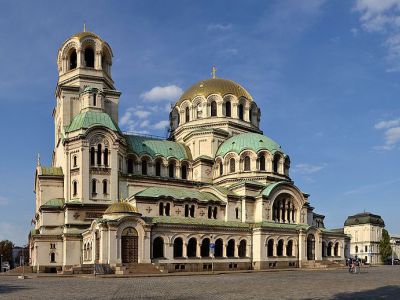
Construction of Sofia’s Alexander Nevsky Cathedral was dedicated to the Russian soldiers who died in the Russo-Turkish War of 1877–1878— the conflict that finally brought an end to centuries of Ottoman rule in Bulgaria. The cathedral takes its name from Saint Alexander Nevsky, the 13th-century prince whose title “Nevsky” refers to his famed victory over Swedish forces at the Battle of the Neva River in 1240.
The cathedral’s design was created by Alexander N. Pomerantsev, a Russian architect known for his eclectic style. He envisioned a grand Neo-Byzantine cross-domed basilica, drawing inspiration from early Eastern Orthodox architecture. Multiple domes rise above the structure, culminating in a uppermost dome sheathed in real gold. With its arches and monumental presence, the cathedral is often described as one of the largest Orthodox church buildings in the world.
If you stand on the square in front of the cathedral and look up, you will see a gold dome above the bell tower. The bell tower holds twelve bells weighing a total of 23 tons. The larger central golden dome behind it reaches 148 feet in height, while the nave roof spans an impressive 92 feet. As you step inside, you will notice its vast interior—covering 34,000 square feet—and said to be able to accommodate up to 5,000 worshipers.
One of the treasures inside is a pair if royal thrones located on a raised platform in front of the iconostasis. Above the thrones, in the arch, is a mosaic portrait of King Ferdinand and Queen Eleonore in full ceremonial robes, holding a model of the cathedral. Near the altar, a reliquary displays a rib believed to belong to Saint Alexander Nevsky himself. It is recommended that you visit the crypt museum beneath the cathedral, as it houses one of Europe’s largest collections of Orthodox icons.
The cathedral also preserves notable historical artifacts and craftsmanship. The Italian-made marble iconostasis remains one of its most admired features. The crypt museum, open separately from the main sanctuary, displays over 300 icons spanning the 9th to the 19th century, offering one of the most comprehensive surveys of Orthodox icon painting in Europe.
The cathedral’s design was created by Alexander N. Pomerantsev, a Russian architect known for his eclectic style. He envisioned a grand Neo-Byzantine cross-domed basilica, drawing inspiration from early Eastern Orthodox architecture. Multiple domes rise above the structure, culminating in a uppermost dome sheathed in real gold. With its arches and monumental presence, the cathedral is often described as one of the largest Orthodox church buildings in the world.
If you stand on the square in front of the cathedral and look up, you will see a gold dome above the bell tower. The bell tower holds twelve bells weighing a total of 23 tons. The larger central golden dome behind it reaches 148 feet in height, while the nave roof spans an impressive 92 feet. As you step inside, you will notice its vast interior—covering 34,000 square feet—and said to be able to accommodate up to 5,000 worshipers.
One of the treasures inside is a pair if royal thrones located on a raised platform in front of the iconostasis. Above the thrones, in the arch, is a mosaic portrait of King Ferdinand and Queen Eleonore in full ceremonial robes, holding a model of the cathedral. Near the altar, a reliquary displays a rib believed to belong to Saint Alexander Nevsky himself. It is recommended that you visit the crypt museum beneath the cathedral, as it houses one of Europe’s largest collections of Orthodox icons.
The cathedral also preserves notable historical artifacts and craftsmanship. The Italian-made marble iconostasis remains one of its most admired features. The crypt museum, open separately from the main sanctuary, displays over 300 icons spanning the 9th to the 19th century, offering one of the most comprehensive surveys of Orthodox icon painting in Europe.
2) Church of Saint George (must see)
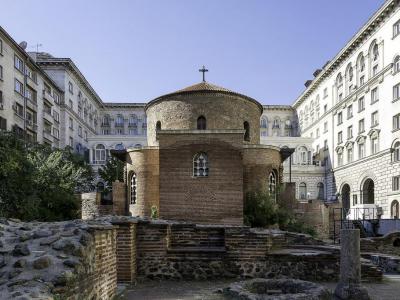
The Church of Saint George is a red brick rotunda dating from the 4th century. Originally built as part of a Roman bath complex in ancient Sofia, it is considered the oldest standing building in Bulgaria’s capital. The structure was converted into a Christian church in late Antiquity and today functions under the Bulgarian Orthodox Church.
The rotunda is cylindrical, set on a square base, and topped with a dome. Inside are remarkable frescoes from the 12th, 13th, and 14th centuries, with earlier layers dating back to the 10th century. A ring of 22 prophets surrounds the dome. These paintings were covered during the Ottoman period—when the church was used as a mosque—and rediscovered during restoration work in the 20th century.
The dome rises about 45 feet above the floor. Five distinct layers of frescoes have been documented. The oldest, Roman-Byzantine in style, features floral and geometric ornament. Above this is a medieval Bulgarian layer with 10th-century angels. The third layer is a frieze of prophets and scenes such as the Ascension and the Assumption. The fourth contains a 14th-century portrait of a bishop, while the final layer shows Islamic decoration added during Ottoman rule.
The church sits within a courtyard surrounded by former government buildings from the 1950s. On significant occasions, the rotunda is used for military ceremonies and concerts featuring classical or sacred music. A small archaeological zone around the entrance preserves remains of Roman streets, buildings, and an early Christian baptistery, offering visitors a rare glimpse of ancient Sofia.
The rotunda is cylindrical, set on a square base, and topped with a dome. Inside are remarkable frescoes from the 12th, 13th, and 14th centuries, with earlier layers dating back to the 10th century. A ring of 22 prophets surrounds the dome. These paintings were covered during the Ottoman period—when the church was used as a mosque—and rediscovered during restoration work in the 20th century.
The dome rises about 45 feet above the floor. Five distinct layers of frescoes have been documented. The oldest, Roman-Byzantine in style, features floral and geometric ornament. Above this is a medieval Bulgarian layer with 10th-century angels. The third layer is a frieze of prophets and scenes such as the Ascension and the Assumption. The fourth contains a 14th-century portrait of a bishop, while the final layer shows Islamic decoration added during Ottoman rule.
The church sits within a courtyard surrounded by former government buildings from the 1950s. On significant occasions, the rotunda is used for military ceremonies and concerts featuring classical or sacred music. A small archaeological zone around the entrance preserves remains of Roman streets, buildings, and an early Christian baptistery, offering visitors a rare glimpse of ancient Sofia.
3) St. Nedelya Church (must see)
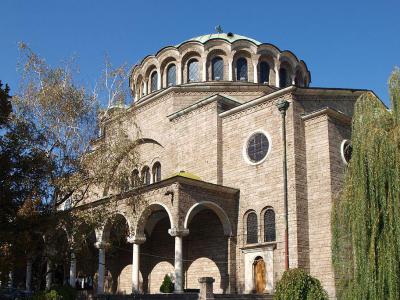
Saint Nedelya Church, meaning “Holy Sunday”, reflects centuries of Christian worship and linguistic tradition. Built in the medieval period, the church has been destroyed, rebuilt, expanded, and even targeted in a deadly political attack. The first version of Saint Nedelya is believed to have been built in the 10th century. Its foundation was of stone, but the rest of the structure was wooden. By the 18th century, it had become a bishop’s residence and the resting place of Serbian King Stefan Milutin, whose relics had been moved several times since 1460 before finding a home here.
The old church was demolished in 1856 to make way for a larger cathedral. Construction faced setbacks, including damage from an earthquake in 1858, but the new church was completed in 1863. In May 1867, it was inaugurated in front of an enormous crowd of 20,000 people. A new belfry was added in 1879 to house a carillon donated by Prince Alexander M. Dondukov-Korsakov.
In 1925, Saint Nedelya became the site of the deadliest political attack in Bulgarian history, when Communist militants bombed the church during a state funeral, killing more than 150 people. The church was rebuilt between 1927 and 1933, preserving its size while adding a central dome that rises 93 feet above the floor.
Renovation continued into modern times. By 1994, the floor had been replaced and the north colonnade reglazed, and in 2000 the façade received a full cleaning. Today, Saint Nedelya remains an active place of worship and a powerful symbol of Sofia’s endurance through centuries of upheaval.
The old church was demolished in 1856 to make way for a larger cathedral. Construction faced setbacks, including damage from an earthquake in 1858, but the new church was completed in 1863. In May 1867, it was inaugurated in front of an enormous crowd of 20,000 people. A new belfry was added in 1879 to house a carillon donated by Prince Alexander M. Dondukov-Korsakov.
In 1925, Saint Nedelya became the site of the deadliest political attack in Bulgarian history, when Communist militants bombed the church during a state funeral, killing more than 150 people. The church was rebuilt between 1927 and 1933, preserving its size while adding a central dome that rises 93 feet above the floor.
Renovation continued into modern times. By 1994, the floor had been replaced and the north colonnade reglazed, and in 2000 the façade received a full cleaning. Today, Saint Nedelya remains an active place of worship and a powerful symbol of Sofia’s endurance through centuries of upheaval.
4) Russian Church (must see)
The final years of Ottoman rule in Bulgaria brought dramatic changes to Sofia’s skyline. In 1882, the Saray Mosque was demolished, leaving an open plot of land directly beside the Russian Embassy. With Bulgaria newly liberated after the Russo-Turkish War of 1877–1878, the location seemed almost destined for an official Russian church—a symbol of gratitude and alliance.
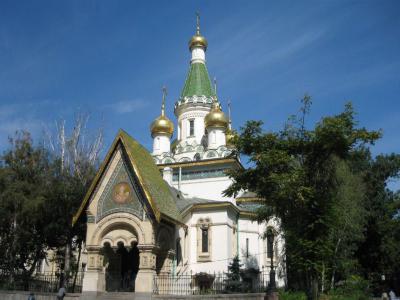
The church was dedicated to Saint Nicholas the Miracle-Maker, the patron saint of Tsar Nicholas II. Russian architect Mikhail Preobrazhenski designed it in a distinct Russian Revival style. Its exterior shimmers with multicolored tiles, while the interior frescoes were painted by the same team responsible for the murals in the grand cathedral next door. Above the church rise five gold-plated domes, accompanied by a carillon gifted by Tsar Nicholas II.
Construction began in 1907, and the church was consecrated in 1914, just as the Russian Empire was approaching its own collapse. Remarkably, the Russian Church remained open throughout Bulgaria’s Communist period. While many religious institutions faced pressure or closure, this one continued to hold services under close, but ultimately non-interfering, state supervision.
One of the most significant features of the church lies below ground: the crypt, which contains the relics of Saint Archbishop Seraphim Sobolev. As the leading figure of Russian Orthodoxy in Bulgaria from 1921 until his death in 1950, he became a beloved spiritual guide. After his canonization, accounts of miracles began to circulate, and visitors today still leave handwritten notes at his tomb, asking for help or blessing.
The church has two entrances, each marked by a meaningful image. The south entrance on Tsar Osvoboditel Boulevard bears the face of Saint Nicholas, while the north entrance, opening toward a nearby park, features the likeness of Alexander Nevsky. For visitors interested in learning more, guided tours are available with advance arrangement.
The church was dedicated to Saint Nicholas the Miracle-Maker, the patron saint of Tsar Nicholas II. Russian architect Mikhail Preobrazhenski designed it in a distinct Russian Revival style. Its exterior shimmers with multicolored tiles, while the interior frescoes were painted by the same team responsible for the murals in the grand cathedral next door. Above the church rise five gold-plated domes, accompanied by a carillon gifted by Tsar Nicholas II.
Construction began in 1907, and the church was consecrated in 1914, just as the Russian Empire was approaching its own collapse. Remarkably, the Russian Church remained open throughout Bulgaria’s Communist period. While many religious institutions faced pressure or closure, this one continued to hold services under close, but ultimately non-interfering, state supervision.
One of the most significant features of the church lies below ground: the crypt, which contains the relics of Saint Archbishop Seraphim Sobolev. As the leading figure of Russian Orthodoxy in Bulgaria from 1921 until his death in 1950, he became a beloved spiritual guide. After his canonization, accounts of miracles began to circulate, and visitors today still leave handwritten notes at his tomb, asking for help or blessing.
The church has two entrances, each marked by a meaningful image. The south entrance on Tsar Osvoboditel Boulevard bears the face of Saint Nicholas, while the north entrance, opening toward a nearby park, features the likeness of Alexander Nevsky. For visitors interested in learning more, guided tours are available with advance arrangement.
5) Saint Sofia Church (must see)
Saint Sofia Church dates to the 6th century, built during the reign of the Byzantine emperor Justinian I, placing it in the same era as Constantinople’s Hagia Sophia. Like its famous counterpart, it was turned into a mosque under Ottoman rule—yet unlike Hagia Sophia, it eventually returned to Christian worship, reclaiming its original identity.
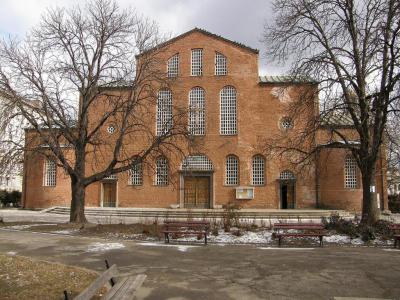
It is the second-oldest church in the Bulgarian capital. In the 14th century, its name—Sofia, meaning “Wisdom”—was adopted by the city itself. If you are admiring the church from the outside, you'll see its rectangular basilica form, with undecorated walls made from red brick and small, evenly spaced window openings. You can notice a simple construction, with a low and pitched roofline, without domes, towers, or a bell tower.
During its conversion into a mosque in the 16th century, the church gained two minarets. In the 19th century, two earthquakes struck the building—one minaret collapsed, and the mosque was abandoned soon after. Large-scale restoration only began in 1900, following the end of Ottoman rule.
When you step inside the church, you’ll see the same simple red-brick walls. During the Ottoman period, when the church was converted into a mosque, its medieval frescoes were lost. Head to the Underground Museum, where layers of buildings from across the centuries are exposed, reaching back as far as the 3rd century AD. Here, excavations have revealed an extensive necropolis beneath and around the basilica, with numerous tombs, crypts, and remnants of earlier sanctuaries now accessible to visitors. Pay attention to the floors decorated with early Christian mosaics featuring detailed animal and floral patterns.
For centuries, local tradition has held that Saint Sofia’s protective power guarded the church through invasions, epidemics, and natural disasters—perhaps part of the reason it remains so well preserved today. In Orthodox iconography, Sofia appears as a woman symbolizing Divine Wisdom, standing above the allegorical figures of Faith, Hope, and Love, linking the church’s name to one of Christianity’s most enduring spiritual ideals.
It is the second-oldest church in the Bulgarian capital. In the 14th century, its name—Sofia, meaning “Wisdom”—was adopted by the city itself. If you are admiring the church from the outside, you'll see its rectangular basilica form, with undecorated walls made from red brick and small, evenly spaced window openings. You can notice a simple construction, with a low and pitched roofline, without domes, towers, or a bell tower.
During its conversion into a mosque in the 16th century, the church gained two minarets. In the 19th century, two earthquakes struck the building—one minaret collapsed, and the mosque was abandoned soon after. Large-scale restoration only began in 1900, following the end of Ottoman rule.
When you step inside the church, you’ll see the same simple red-brick walls. During the Ottoman period, when the church was converted into a mosque, its medieval frescoes were lost. Head to the Underground Museum, where layers of buildings from across the centuries are exposed, reaching back as far as the 3rd century AD. Here, excavations have revealed an extensive necropolis beneath and around the basilica, with numerous tombs, crypts, and remnants of earlier sanctuaries now accessible to visitors. Pay attention to the floors decorated with early Christian mosaics featuring detailed animal and floral patterns.
For centuries, local tradition has held that Saint Sofia’s protective power guarded the church through invasions, epidemics, and natural disasters—perhaps part of the reason it remains so well preserved today. In Orthodox iconography, Sofia appears as a woman symbolizing Divine Wisdom, standing above the allegorical figures of Faith, Hope, and Love, linking the church’s name to one of Christianity’s most enduring spiritual ideals.
