Custom Walk in Toronto, Canada by enormand47_6663f created on 2025-06-24
Guide Location: Canada » Toronto
Guide Type: Custom Walk
# of Sights: 16
Tour Duration: 12 Hour(s)
Travel Distance: 31.7 Km or 19.7 Miles
Share Key: ZKHFH
Guide Type: Custom Walk
# of Sights: 16
Tour Duration: 12 Hour(s)
Travel Distance: 31.7 Km or 19.7 Miles
Share Key: ZKHFH
How It Works
Please retrieve this walk in the GPSmyCity app. Once done, the app will guide you from one tour stop to the next as if you had a personal tour guide. If you created the walk on this website or come to the page via a link, please follow the instructions below to retrieve the walk in the app.
Retrieve This Walk in App
Step 1. Download the app "GPSmyCity: Walks in 1K+ Cities" on Apple App Store or Google Play Store.



Step 2. In the GPSmyCity app, download(or launch) the guide "Toronto Map and Walking Tours".
Step 3. Tap the menu button located at upper right corner of the "Walks" screen and select "Retrieve custom walk". Enter the share key: ZKHFH
1) Ontario Place
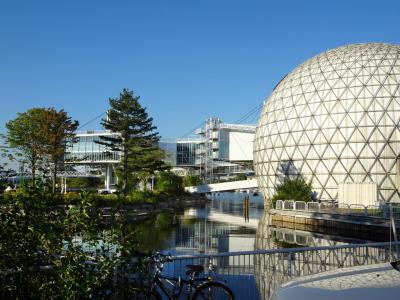
Ontario Place, nestled on three artificial islands in Lake Ontario near downtown Toronto, serves as a multifaceted venue blending entertainment, event spaces, and parkland. Initially opened on May 22, 1971, Ontario Place thrived as a theme park that celebrated Ontario's culture and featured various family attractions. However, in 2012, a significant shift occurred when the Government of Ontario decided to close the park for redevelopment, marking the end of its operation as a traditional theme park.
Post-closure, Ontario Place transitioned into a public park, now accessible without an admission fee, though devoid of many previous attractions. The site has continued to evolve, with select facilities remaining operational and others undergoing transformations. Among the enduring attractions is the Budweiser Stage, a popular venue for summer concerts. The Cinesphere, known for being the world's first permanent IMAX theatre, has also been revitalized with state-of-the-art projection equipment and continues to screen films.
In 2017, further developments included the opening of Trillium Park and the William G. Davis Trail on the East Island, enhancing the site's recreational offerings. Additionally, a seasonal marina, uniquely sheltered by three submerged lake freighters, adds a nautical charm to the venue.
Post-closure, Ontario Place transitioned into a public park, now accessible without an admission fee, though devoid of many previous attractions. The site has continued to evolve, with select facilities remaining operational and others undergoing transformations. Among the enduring attractions is the Budweiser Stage, a popular venue for summer concerts. The Cinesphere, known for being the world's first permanent IMAX theatre, has also been revitalized with state-of-the-art projection equipment and continues to screen films.
In 2017, further developments included the opening of Trillium Park and the William G. Davis Trail on the East Island, enhancing the site's recreational offerings. Additionally, a seasonal marina, uniquely sheltered by three submerged lake freighters, adds a nautical charm to the venue.
2) Rogers Centre (must see)
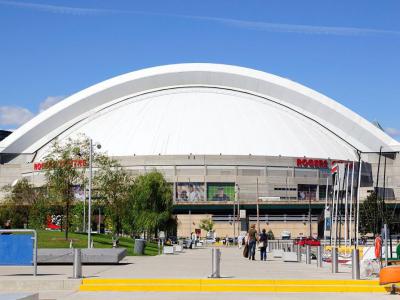
Rogers Centre, also known as Toronto's SkyDome, is an impressive stadium renowned for being the pioneer of retractable roof technology. It is conveniently located near the shores of Lake Ontario, adjacent to the CN Tower. Unveiled in 1989 on the former Railway Lands, this multipurpose stadium serves as the home for the Toronto Blue Jays of Major League Baseball and the Toronto Argonauts of the Canadian Football League. In addition, the Buffalo Bills of the National Football League have been participating in various regular-season and pre-season games at the venue since 2008 as part of the Bills Toronto Series.
While primarily recognized as a sports venue, Rogers Centre also plays host to a diverse range of large-scale events including conventions, trade fairs, concerts, traveling funfairs, and exhilarating monster truck shows. In 2005, the stadium underwent a name change to "Rogers Centre" after being acquired by Rogers Communications, which also purchased the Toronto Blue Jays. However, it remains popularly known as Skydome among the locals.
One notable feature of the stadium is its fully retractable motorized roof, marking a groundbreaking advancement in the stadium's architecture. Moreover, the stadium boasts a remarkable 348-room hotel, with 70 rooms offering captivating views of the field. It holds the distinction of being the most recent major-league stadium in North America designed to accommodate both football and baseball.
Rogers Centre had the honor of hosting the opening and closing ceremonies of the 2015 Pan American Games, further solidifying its significance as a world-class venue.
Why You Should Visit:
Fabulous place to watch the games; neatly maintained, with friendly staff, better than decent food/beer options (though you're also allowed food and drinks from outside in sealed containers), sufficient restrooms, and many entrances for quick entry or exit. There's even a giant bat made from a tree near sections 110 / 108.
Tip:
Try to hit this place up in mid-summer when the dome is open and you won't forget it.
While primarily recognized as a sports venue, Rogers Centre also plays host to a diverse range of large-scale events including conventions, trade fairs, concerts, traveling funfairs, and exhilarating monster truck shows. In 2005, the stadium underwent a name change to "Rogers Centre" after being acquired by Rogers Communications, which also purchased the Toronto Blue Jays. However, it remains popularly known as Skydome among the locals.
One notable feature of the stadium is its fully retractable motorized roof, marking a groundbreaking advancement in the stadium's architecture. Moreover, the stadium boasts a remarkable 348-room hotel, with 70 rooms offering captivating views of the field. It holds the distinction of being the most recent major-league stadium in North America designed to accommodate both football and baseball.
Rogers Centre had the honor of hosting the opening and closing ceremonies of the 2015 Pan American Games, further solidifying its significance as a world-class venue.
Why You Should Visit:
Fabulous place to watch the games; neatly maintained, with friendly staff, better than decent food/beer options (though you're also allowed food and drinks from outside in sealed containers), sufficient restrooms, and many entrances for quick entry or exit. There's even a giant bat made from a tree near sections 110 / 108.
Tip:
Try to hit this place up in mid-summer when the dome is open and you won't forget it.
3) Rogers Center
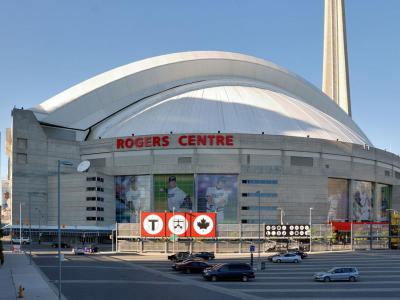
Located in Downtown Toronto, adjacent to the northern shores of Lake Ontario and at the foot of the CN Tower, the versatile retractable roof stadium originally known as SkyDome has been renamed Rogers Centre. Its inauguration took place in 1989 on the former Railway Lands and it has since served as the home stadium for the Toronto Blue Jays, a renowned Major League Baseball (MLB) team. In addition to its primary role as a sports venue, Rogers Centre offers a multitude of functions, accommodating conventions, trade fairs, concerts, traveling carnivals, circuses, and even monster truck shows.
The name change to Rogers Centre occurred in 2005 when the stadium was acquired by Rogers Communications, the corporation that also owns the Toronto Blue Jays. Substantial enhancements were made to the facility in 2007, including the expansion of Jays Shop – Stadium Edition. This expansion resulted in an impressive 8,000-square-foot retail space along the main concourse.
If you are in search of Toronto Blue Jays merchandise, be sure to visit Jays Shop at The Rogers Centre. Whether you desire a memento from a specific day, an item used by your favorite player, or an addition to your Memorabilia collection, you will find a wide array of options here. Available items include game-used or team-issued baseballs, jerseys, bats, bases, and much more. Additionally, the shop offers an assortment of gifts and souvenirs featuring the Toronto Blue Jays logo.
The name change to Rogers Centre occurred in 2005 when the stadium was acquired by Rogers Communications, the corporation that also owns the Toronto Blue Jays. Substantial enhancements were made to the facility in 2007, including the expansion of Jays Shop – Stadium Edition. This expansion resulted in an impressive 8,000-square-foot retail space along the main concourse.
If you are in search of Toronto Blue Jays merchandise, be sure to visit Jays Shop at The Rogers Centre. Whether you desire a memento from a specific day, an item used by your favorite player, or an addition to your Memorabilia collection, you will find a wide array of options here. Available items include game-used or team-issued baseballs, jerseys, bats, bases, and much more. Additionally, the shop offers an assortment of gifts and souvenirs featuring the Toronto Blue Jays logo.
4) Ripley's Aquarium of Canada (must see)
Ripley's Aquarium of Canada, located in Toronto, is a public aquatic facility owned and operated by Ripley Entertainment. With a total volume of 5.7 million liters (1.25 million gallons), this aquarium showcases diverse marine and freshwater habitats from across the globe. Inside its exhibits, visitors can marvel at over 16,000 extraordinary specimens, representing over 450 different species.
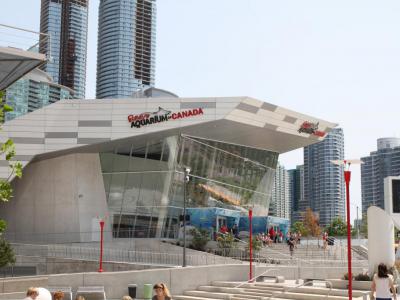
The architectural design of the building is truly remarkable, featuring a multi-faceted shell adorned with large aluminum panels. At the main entrance, the roof creates the illusion of the earth's crust peeling away, providing a captivating window into the mesmerizing underwater world. The structure incorporates colored surfaces that beautifully contrast with reflective aluminum soffits. Furthermore, special precautions were taken during the design process to ensure that the electrical systems of the building do not disturb the sharks residing within.
The aquarium presents a captivating array of marine and freshwater habitats from around the world, divided into ten distinct galleries. These galleries include Canadian Waters, Rainbow Reef, Dangerous Lagoon, Discovery Centre, The Gallery, Ray Bay, Swarm: Nature by Numbers, Planet Jellies, Life Support Systems, and the Shoreline Gallery. Altogether, the facility serves as a home to an impressive population of over 20,000 remarkable animals.
The architectural design of the building is truly remarkable, featuring a multi-faceted shell adorned with large aluminum panels. At the main entrance, the roof creates the illusion of the earth's crust peeling away, providing a captivating window into the mesmerizing underwater world. The structure incorporates colored surfaces that beautifully contrast with reflective aluminum soffits. Furthermore, special precautions were taken during the design process to ensure that the electrical systems of the building do not disturb the sharks residing within.
The aquarium presents a captivating array of marine and freshwater habitats from around the world, divided into ten distinct galleries. These galleries include Canadian Waters, Rainbow Reef, Dangerous Lagoon, Discovery Centre, The Gallery, Ray Bay, Swarm: Nature by Numbers, Planet Jellies, Life Support Systems, and the Shoreline Gallery. Altogether, the facility serves as a home to an impressive population of over 20,000 remarkable animals.
5) Toronto Island Park (must see)
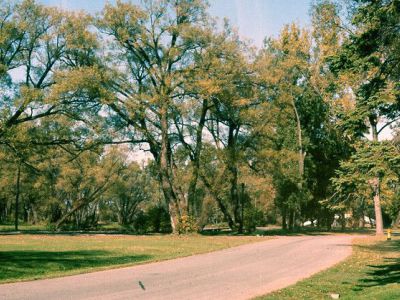
The Toronto Islands Park, also known as the Island or Toronto Island, can be found in Lake Ontario, just a 13-minute ferry ride away from downtown Toronto. The Jack Layton Ferry Terminal, situated at the foot of Bay Street and Queen's Quay, serves as the departure point for boats heading to the Island. Comprising a collection of 15 interconnected islands, one can easily traverse the Island from end to end on foot. Stretching approximately 5 kilometers from Ward's Island to Hanlan's Point, the Island offers a range of attractions suitable for individuals of all ages.
Visitors to the Island, whether young or old, will discover a plethora of activities and sights to enjoy. Sandy swimming beaches, including the renowned Clothing Optional Beach on Hanlan's Point, beckon beachgoers. Sports enthusiasts can make use of the various sports facilities available, while those seeking outdoor adventures can rent bikes, canoes, and kayaks. Additionally, the Island boasts a boating marina, expansive grassy fields perfect for picnics, a theater, nature paths, and even emergency medical services and a fire station. Not to be missed is the charming 150-year-old community of 600 year-round residents living in quaint cottage-like homes.
However, it's important to note that the park operates seasonally, with its vibrant atmosphere from May to late September. During the winter months, the Island becomes eerily quiet, and most facilities close down.
The view of the city from the Islands is truly stunning, and the islands themselves are equally picturesque, making it a paradise for photographers. If you've never had the chance to visit the islands, be sure to add it to your to-do list!
Visitors to the Island, whether young or old, will discover a plethora of activities and sights to enjoy. Sandy swimming beaches, including the renowned Clothing Optional Beach on Hanlan's Point, beckon beachgoers. Sports enthusiasts can make use of the various sports facilities available, while those seeking outdoor adventures can rent bikes, canoes, and kayaks. Additionally, the Island boasts a boating marina, expansive grassy fields perfect for picnics, a theater, nature paths, and even emergency medical services and a fire station. Not to be missed is the charming 150-year-old community of 600 year-round residents living in quaint cottage-like homes.
However, it's important to note that the park operates seasonally, with its vibrant atmosphere from May to late September. During the winter months, the Island becomes eerily quiet, and most facilities close down.
The view of the city from the Islands is truly stunning, and the islands themselves are equally picturesque, making it a paradise for photographers. If you've never had the chance to visit the islands, be sure to add it to your to-do list!
6) Distillery Historic District (must see)
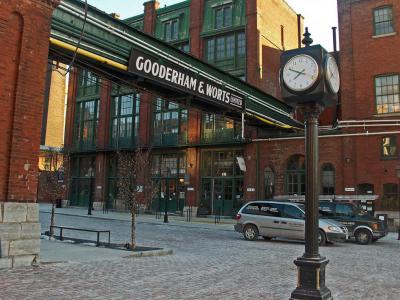
The Distillery District in Toronto is an enchanting area that combines history and entertainment. Situated east of Downtown Toronto, this district has a rich industrial past. It was once the largest industrial zone in Toronto but saw a decline in the distilling industry, leading to its transformation into a bustling shopping and entertainment destination. Spanning over 13 acres (53,000 square meters), the district boasts more than 40 beautifully preserved heritage buildings and 10 charming streets, making it the largest collection of Victorian-era industrial architecture in North America.
A distinguishing feature of the Distillery District is its traditional brick-paved streets and lanes, which are exclusively reserved for pedestrians and cyclists. Vehicle traffic is restricted to the streets and parking areas outside the district's historic center, ensuring a tranquil and pedestrian-friendly environment. Adding to its charm, the lanes are adorned with several captivating sculptures, with three located on Distillery Lane and the final one at the parking area towards the end of Trinity Street. One of the prominent landmarks in the area is the chimney stack atop the Boiler House complex.
Visitors to the Distillery District can find both informal and formal public spaces to relax, socialize, and enjoy the unique ambiance. Pedestrianized streets offer inviting chairs and tables where people can gather and unwind. Additionally, various coffee houses and restaurants feature formal patios, providing an ideal setting for a delightful dining experience. This well-designed district not only attracts pedestrian traffic but also encourages visitors to spend quality time in its inviting spaces.
Why You Should Visit:
The old buildings in combination with art stores & galleries, eateries, craft breweries, and occasional live performances make a stroll worthwhile if you have spare time.
Tip:
They run a Christmas market in the District and it's quite fun and well-decorated. The whole area is closed off with entrances and you can walk about looking, eating, drinking, and shopping all you like.
A distinguishing feature of the Distillery District is its traditional brick-paved streets and lanes, which are exclusively reserved for pedestrians and cyclists. Vehicle traffic is restricted to the streets and parking areas outside the district's historic center, ensuring a tranquil and pedestrian-friendly environment. Adding to its charm, the lanes are adorned with several captivating sculptures, with three located on Distillery Lane and the final one at the parking area towards the end of Trinity Street. One of the prominent landmarks in the area is the chimney stack atop the Boiler House complex.
Visitors to the Distillery District can find both informal and formal public spaces to relax, socialize, and enjoy the unique ambiance. Pedestrianized streets offer inviting chairs and tables where people can gather and unwind. Additionally, various coffee houses and restaurants feature formal patios, providing an ideal setting for a delightful dining experience. This well-designed district not only attracts pedestrian traffic but also encourages visitors to spend quality time in its inviting spaces.
Why You Should Visit:
The old buildings in combination with art stores & galleries, eateries, craft breweries, and occasional live performances make a stroll worthwhile if you have spare time.
Tip:
They run a Christmas market in the District and it's quite fun and well-decorated. The whole area is closed off with entrances and you can walk about looking, eating, drinking, and shopping all you like.
7) St. Lawrence Market (must see)
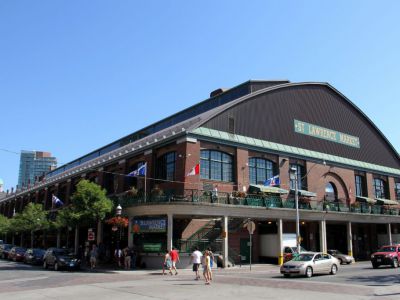
Established in 1803, Saint Lawrence Market is the nerve centre of Toronto's commercial activity. Located in the former industrial area (between Jarvis, Front, King, and Church streets), this is the city's largest and perhaps most famous market. The bulk of its crowd are locals doing regular grocery shopping or simply popping in for a cup of coffee or chit-chat with neighbors. Tourists are also seen here rather often, lured by the bustling atmosphere and tasty foods.
Undoubtedly, food is the main draw at Saint Lawrence. Here, you can find everything: from beef to kangaroo meat, plus hundreds of kinds of cheeses, gourmet dog treats, local wines, French baked goods, Greek olive oil, and even New Zealand honey. There is also plenty of prepared food, such as the famous peameal bacon sandwich, that you can eat right on site.
The South Market section houses daily sales of fresh produce, dairy, and meats. Freshly-baked goods are also available here all day, much as some non-food items. There is a number of artisan shops selling jewelry and other crafts. Also, the Market Gallery, on the second floor, has an area for cultural events.
The North Market section traditionally houses a Saturday farmer’s market (featuring producers from southern Ontario) and a Sunday antiques sale. Both ventures start at 5 o'clock in the morning and run until 5 o'clock in the evening.
From an architectural standpoint, Saint Lawrence is just as attractive. Its massive main brick building, with a cast-iron ceiling inspired by London’s Saint Pancras train station, was constructed in 1902. Part of the Old City Hall, which dates from 1845, was incorporated into the building, and you can still see part of the original jail on the lower level of the market.
Undoubtedly, food is the main draw at Saint Lawrence. Here, you can find everything: from beef to kangaroo meat, plus hundreds of kinds of cheeses, gourmet dog treats, local wines, French baked goods, Greek olive oil, and even New Zealand honey. There is also plenty of prepared food, such as the famous peameal bacon sandwich, that you can eat right on site.
The South Market section houses daily sales of fresh produce, dairy, and meats. Freshly-baked goods are also available here all day, much as some non-food items. There is a number of artisan shops selling jewelry and other crafts. Also, the Market Gallery, on the second floor, has an area for cultural events.
The North Market section traditionally houses a Saturday farmer’s market (featuring producers from southern Ontario) and a Sunday antiques sale. Both ventures start at 5 o'clock in the morning and run until 5 o'clock in the evening.
From an architectural standpoint, Saint Lawrence is just as attractive. Its massive main brick building, with a cast-iron ceiling inspired by London’s Saint Pancras train station, was constructed in 1902. Part of the Old City Hall, which dates from 1845, was incorporated into the building, and you can still see part of the original jail on the lower level of the market.
8) Hockey Hall of Fame (must see)
Situated in Toronto, the Hockey Hall of Fame serves as a museum dedicated to preserving the rich history of ice hockey. Its establishment in 1943 owes much to the unwavering dedication of James Thomas Sutherland, a revered figure in the sport, known affectionately as the "Father of Hockey."
Encompassing an expansive area spanning 57,000 square feet, this venue is thoughtfully divided into 15 distinct sections. Each section showcases the remarkable achievements and honors earned by both NHL teams and international counterparts, along with the celebrated players who graced the ice. Within these exhibits, visitors can marvel at prestigious cups, trophies, cherished memorabilia, as well as the iconic equipment and jerseys worn by renowned hockey personalities.
The inclusion of interactive displays adds an element of excitement, allowing visitors to test their skills by facing real pucks as goaltenders-a particular favorite among children. Additionally, the on-site shop offers an excellent selection of team apparel for enthusiastic fans.
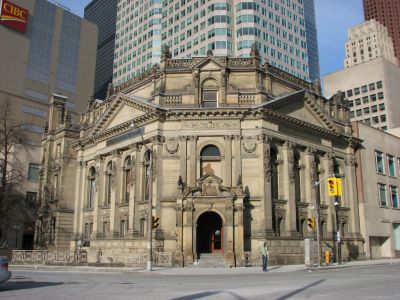
The Hockey Hall of Fame finds its home in a former Bank of Montreal office building, a captivating attraction in its own right. Once Canada's largest bank branch, this architectural masterpiece dates back to 1885 and showcases the exquisite Beaux-Arts style. Its facades are adorned with ornate stonework, a testament to an era when projecting an image of prosperity and security was paramount. Renowned as one of the city's most remarkable bank structures ever constructed, it exudes a sense of opulence and grandeur.
Tip:
For a few extra bucks, you can get a photo taken with the Stanley Cup – three printed copies and one digital.
Encompassing an expansive area spanning 57,000 square feet, this venue is thoughtfully divided into 15 distinct sections. Each section showcases the remarkable achievements and honors earned by both NHL teams and international counterparts, along with the celebrated players who graced the ice. Within these exhibits, visitors can marvel at prestigious cups, trophies, cherished memorabilia, as well as the iconic equipment and jerseys worn by renowned hockey personalities.
The inclusion of interactive displays adds an element of excitement, allowing visitors to test their skills by facing real pucks as goaltenders-a particular favorite among children. Additionally, the on-site shop offers an excellent selection of team apparel for enthusiastic fans.
The Hockey Hall of Fame finds its home in a former Bank of Montreal office building, a captivating attraction in its own right. Once Canada's largest bank branch, this architectural masterpiece dates back to 1885 and showcases the exquisite Beaux-Arts style. Its facades are adorned with ornate stonework, a testament to an era when projecting an image of prosperity and security was paramount. Renowned as one of the city's most remarkable bank structures ever constructed, it exudes a sense of opulence and grandeur.
Tip:
For a few extra bucks, you can get a photo taken with the Stanley Cup – three printed copies and one digital.
9) Old City Hall
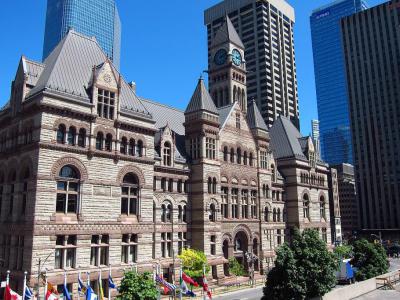
Located at the intersection of Queen and Bay Streets in Downtown Toronto stands an impressive building with Romanesque-style architecture. This remarkable structure, known today as the Old City Hall, served as the Toronto City Council's home from 1899 to 1966, becoming the third city hall constructed for the flourishing city. Upon its completion, it ranked among the largest buildings in Toronto and stood as the largest civic edifice in North America.
Renowned architect Edward James Lennox led the creation of this masterpiece. Over a decade of construction, the majestic City Hall emerged as an iconic landmark. Its remarkable clock tower, standing at 103.6 meters (340 feet), became the city's crown jewel. The clock mechanism was crafted in Croydon, England. Inside the clock room, three bells were placed: two smaller ones that chimed every quarter hour, and a bourdon bell weighing 5,443 kilograms, which tolled every hour.
Matching the splendid exterior, the interior of the building exuded charm, adorned with intricate details. Noteworthy features include a grand staircase adorned with stained glass windows depicting Canadian history, various murals, statues, and other decorative elements.
Despite its grandeur, the Old City Hall proved inadequate for Toronto's expanding municipal government within a few decades of its construction. In the 1960s, plans were made to demolish the building and make way for a retail complex known as the Eaton Centre. However, thanks to public outcry, the Old City Hall was saved and repurposed as a courthouse. In 1984, it received the prestigious designation as a National Historic Site, preserving its historical significance for future generations.
Tip:
Make sure to visit the small "lake" close by, as many of the pictures from Toronto you might know are taken from this place while facing the "TORONTO" sign.
Renowned architect Edward James Lennox led the creation of this masterpiece. Over a decade of construction, the majestic City Hall emerged as an iconic landmark. Its remarkable clock tower, standing at 103.6 meters (340 feet), became the city's crown jewel. The clock mechanism was crafted in Croydon, England. Inside the clock room, three bells were placed: two smaller ones that chimed every quarter hour, and a bourdon bell weighing 5,443 kilograms, which tolled every hour.
Matching the splendid exterior, the interior of the building exuded charm, adorned with intricate details. Noteworthy features include a grand staircase adorned with stained glass windows depicting Canadian history, various murals, statues, and other decorative elements.
Despite its grandeur, the Old City Hall proved inadequate for Toronto's expanding municipal government within a few decades of its construction. In the 1960s, plans were made to demolish the building and make way for a retail complex known as the Eaton Centre. However, thanks to public outcry, the Old City Hall was saved and repurposed as a courthouse. In 1984, it received the prestigious designation as a National Historic Site, preserving its historical significance for future generations.
Tip:
Make sure to visit the small "lake" close by, as many of the pictures from Toronto you might know are taken from this place while facing the "TORONTO" sign.
10) Nathan Phillips Square
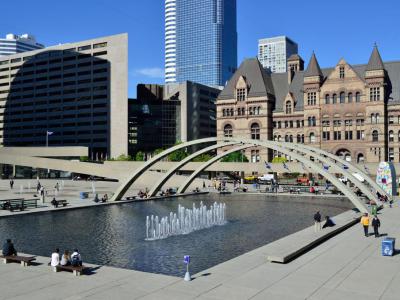
Nathan Phillips Square stands as a bustling urban plaza, positioned as the welcoming space before Toronto City Hall, also known as New City Hall. Situated at the intersection of Queen Street West and Bay Street, this vibrant square derives its name from Nathan Phillips, who served as the mayor of Toronto between 1955 and 1962. The visionary architect Viljo Revell, in collaboration with landscape architect Richard Strong, crafted the design of this square, which was officially inaugurated in 1965.
In present times, Nathan Phillips Square remains a vibrant hub, hosting a diverse range of public events. It serves as a venue for captivating art exhibitions, thrilling concerts, inspiring rallies, and a bustling weekly farmers' market, among other ceremonies. Notable annual occasions include the lively New Year's Eve Party and the enchanting Cavalcade of Lights Festival, where the official Christmas tree is splendidly illuminated.
The square also welcomes the renowned Nuit Blanche art festival, which transforms the square into an artistic haven, extending its displays into the underground parking garage. Furthermore, during the winter months, the reflective pool undergoes a marvelous metamorphosis, transforming into an inviting ice rink for ice-skating enthusiasts.
Year after year, Nathan Phillips Square magnetizes an estimated 1.5 million visitors, allured by its charm and grandeur. Covering an expansive area of 4.85 hectares (12.0 acres), this city square proudly claims the title of Canada's largest, offering an expansive and captivating experience to all who venture within its borders.
In present times, Nathan Phillips Square remains a vibrant hub, hosting a diverse range of public events. It serves as a venue for captivating art exhibitions, thrilling concerts, inspiring rallies, and a bustling weekly farmers' market, among other ceremonies. Notable annual occasions include the lively New Year's Eve Party and the enchanting Cavalcade of Lights Festival, where the official Christmas tree is splendidly illuminated.
The square also welcomes the renowned Nuit Blanche art festival, which transforms the square into an artistic haven, extending its displays into the underground parking garage. Furthermore, during the winter months, the reflective pool undergoes a marvelous metamorphosis, transforming into an inviting ice rink for ice-skating enthusiasts.
Year after year, Nathan Phillips Square magnetizes an estimated 1.5 million visitors, allured by its charm and grandeur. Covering an expansive area of 4.85 hectares (12.0 acres), this city square proudly claims the title of Canada's largest, offering an expansive and captivating experience to all who venture within its borders.
11) Yonge-Dundas Square (must see)
Yonge-Dundas Square is an unparalleled destination that embodies the essence of Toronto. It was conceived in 1997 as part of an initiative to revitalize the bustling intersection of Yonge and Dundas streets Downtown. Although not a traditional square, this vibrant space forms an irregular pentagon, encompassed by Dundas Street East to the north, Victoria Street to the east, Yonge Street to the west, and Dundas Square to the south.
Designed with careful intention, this so-called square features a gentle incline that enhances its theatrical ambiance. Since its completion in 2002, Yonge-Dundas Square has become the beating heart of Toronto's cultural scene, serving as a focal point within the Yonge entertainment and shopping district, and radiating with perpetual liveliness.
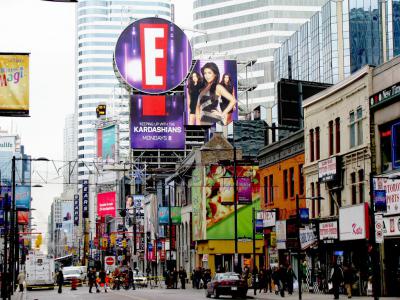
Illuminated by colossal billboard screens and adorned with corporate logos, the square often draws comparisons to the iconic Times Square in New York City, the vibrant Shibuya district in Tokyo, and the renowned Piccadilly Circus in London. To manage the tremendous influx of pedestrians, surpassing an astounding 100,000 per day, a pedestrian scramble was introduced in 2008, making it the first of its kind in the city.
Encompassing the square, one can find notable landmarks such as the Toronto Eaton Centre, Ed Mirvish Theatre, and the Citytv building. The centerpiece of Yonge-Dundas Square is an enchanting array of fountains: two rows of ten fountains gracefully dispersed along the main walkway, inviting visitors to pass through or around them.
This public square serves as a unifying space, bringing together individuals from all walks of life. It stands as a prominent emblem of Toronto, regularly hosting public events, celebrations, performances, and captivating art displays.
Designed with careful intention, this so-called square features a gentle incline that enhances its theatrical ambiance. Since its completion in 2002, Yonge-Dundas Square has become the beating heart of Toronto's cultural scene, serving as a focal point within the Yonge entertainment and shopping district, and radiating with perpetual liveliness.
Illuminated by colossal billboard screens and adorned with corporate logos, the square often draws comparisons to the iconic Times Square in New York City, the vibrant Shibuya district in Tokyo, and the renowned Piccadilly Circus in London. To manage the tremendous influx of pedestrians, surpassing an astounding 100,000 per day, a pedestrian scramble was introduced in 2008, making it the first of its kind in the city.
Encompassing the square, one can find notable landmarks such as the Toronto Eaton Centre, Ed Mirvish Theatre, and the Citytv building. The centerpiece of Yonge-Dundas Square is an enchanting array of fountains: two rows of ten fountains gracefully dispersed along the main walkway, inviting visitors to pass through or around them.
This public square serves as a unifying space, bringing together individuals from all walks of life. It stands as a prominent emblem of Toronto, regularly hosting public events, celebrations, performances, and captivating art displays.
12) Eaton Centre (must see)
Toronto caters to any visitor's idea of the "best shopping day ever" as its shopping destinations are perfectly compatible with all budgets, however diverse. Still, no shopping experience in Toronto is complete without visiting the Eaton Centre.
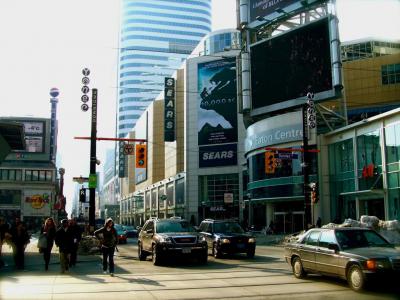
Quite literally "shop-till-you-drop", this Downtown location – anchored between Queen, Dundas, and Yonge streets – is the largest shopping mall in Eastern Canada. The colossal – 160,000 square meters – shopping complex contains more than 230 retail outlets, restaurants, and services under one roof and has definitely something for everyone.
The place is named for Timothy Eaton, owner of a dry goods store on Yonge Street, who in the 19th century revolutionized retailing in Canada. By the 20th century, Eaton's chain of department stores was the largest in the country and owned most of the land in the neighbourhood.
In the mid-1960s, the chain announced plans to build a massive shopping mall that would occupy several city blocks. This implied the demolition of the Old City Hall and the Church of the Holy Trinity. Although the plans were eventually revised, to make way for the new complex, several streets ultimately disappeared from the city street grid.
The Eaton Centre's first phase opened in 1977, featuring ultra-modern, for that time, exterior design as a token of dominance and aspirations. Originally marketed as "Eaton Centre", the complex was renamed "Toronto Eaton Centre" in the early 1990s to disambiguate from other Eaton Centres spawned across Canada.
Today, apart from the high-end boutiques and exclusive stores, inside this premier shopping venue you will find popular universal brands and even bargain marts. With a massive visitor count of over one million a year, the Toronto Eaton Centre has become a regular entry on every tourist’s list.
Quite literally "shop-till-you-drop", this Downtown location – anchored between Queen, Dundas, and Yonge streets – is the largest shopping mall in Eastern Canada. The colossal – 160,000 square meters – shopping complex contains more than 230 retail outlets, restaurants, and services under one roof and has definitely something for everyone.
The place is named for Timothy Eaton, owner of a dry goods store on Yonge Street, who in the 19th century revolutionized retailing in Canada. By the 20th century, Eaton's chain of department stores was the largest in the country and owned most of the land in the neighbourhood.
In the mid-1960s, the chain announced plans to build a massive shopping mall that would occupy several city blocks. This implied the demolition of the Old City Hall and the Church of the Holy Trinity. Although the plans were eventually revised, to make way for the new complex, several streets ultimately disappeared from the city street grid.
The Eaton Centre's first phase opened in 1977, featuring ultra-modern, for that time, exterior design as a token of dominance and aspirations. Originally marketed as "Eaton Centre", the complex was renamed "Toronto Eaton Centre" in the early 1990s to disambiguate from other Eaton Centres spawned across Canada.
Today, apart from the high-end boutiques and exclusive stores, inside this premier shopping venue you will find popular universal brands and even bargain marts. With a massive visitor count of over one million a year, the Toronto Eaton Centre has become a regular entry on every tourist’s list.
13) Chinatown (must see)
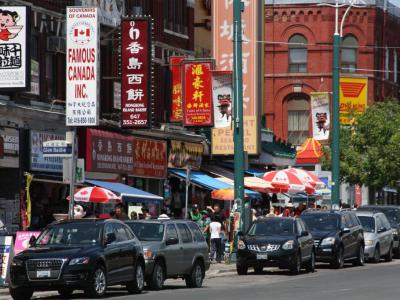
Toronto's Chinatown, also referred to as Downtown Chinatown or West Chinatown, stands as one of the largest enclaves of Chinese culture in North America. Situated at the crossroads of Spadina Avenue and Dundas Street West, this neighborhood emerged from a modest Chinese community in the 1950s-1960s, nestled within what was primarily a Jewish district at the time.
Initially, the area was predominantly inhabited by individuals from southern China and Hong Kong. However, following Hong Kong's transfer to the People's Republic of China in the late 1990s, there has been a significant influx of migrants from mainland China. In recent years, Chinatown has adapted to changing demographics and gentrification, largely influenced by the growing interest of urban professionals and young individuals working in the Financial District.
While several renowned restaurants and barbecue shops on Dundas Street West have closed as a result, the majority of grocery stores have endured. Notable Chinese malls like Dragon City and Chinatown Centre continue to thrive. Alongside these Chinese establishments, visitors will also discover a diverse array of shops and restaurants representing other East Asian cultures, including Vietnamese, Thai, and Japanese.
Nevertheless, amidst these transformations, a few longstanding establishments have withstood the test of time since before the neighborhood acquired its Chinatown status. One such example is the El Mocambo live music venue, which opened its doors in the 1940s. Other enduring attractions include vibrant open-air markets and shops along Spadina Avenue, where one can find fresh fruits, vegetables, herbal medicine, and souvenirs.
Chinese New Year festivities, featuring live stage performances, martial arts demonstrations, and lion dances, constitute yet another local highlight that captivates both tourists and residents alike. The abundance of Chinese signage grants this enchanting neighborhood a captivating atmosphere, particularly during a leisurely stroll.
Furthermore, its appeal is heightened, especially late at night, by the wide range of affordable eateries offering diverse menus, spanning from dim sum to pho to modern fusion. For those seeking unique gifts to bring home, Chinatown offers a broad selection at more affordable prices compared to the city center and other locales.
Initially, the area was predominantly inhabited by individuals from southern China and Hong Kong. However, following Hong Kong's transfer to the People's Republic of China in the late 1990s, there has been a significant influx of migrants from mainland China. In recent years, Chinatown has adapted to changing demographics and gentrification, largely influenced by the growing interest of urban professionals and young individuals working in the Financial District.
While several renowned restaurants and barbecue shops on Dundas Street West have closed as a result, the majority of grocery stores have endured. Notable Chinese malls like Dragon City and Chinatown Centre continue to thrive. Alongside these Chinese establishments, visitors will also discover a diverse array of shops and restaurants representing other East Asian cultures, including Vietnamese, Thai, and Japanese.
Nevertheless, amidst these transformations, a few longstanding establishments have withstood the test of time since before the neighborhood acquired its Chinatown status. One such example is the El Mocambo live music venue, which opened its doors in the 1940s. Other enduring attractions include vibrant open-air markets and shops along Spadina Avenue, where one can find fresh fruits, vegetables, herbal medicine, and souvenirs.
Chinese New Year festivities, featuring live stage performances, martial arts demonstrations, and lion dances, constitute yet another local highlight that captivates both tourists and residents alike. The abundance of Chinese signage grants this enchanting neighborhood a captivating atmosphere, particularly during a leisurely stroll.
Furthermore, its appeal is heightened, especially late at night, by the wide range of affordable eateries offering diverse menus, spanning from dim sum to pho to modern fusion. For those seeking unique gifts to bring home, Chinatown offers a broad selection at more affordable prices compared to the city center and other locales.
14) Royal Ontario Museum (must see)
The Royal Ontario Museum in Toronto offers a captivating blend of ancient wonders and cultural treasures, making it a must-visit destination. Whether your interests lie in dinosaurs, meteorology, historical artifacts, famous paintings, or hands-on exhibits, this museum has something for everyone. Delving into the past, whether it be through historical, archaeological, or scientific lenses, is a rewarding experience at the Royal Ontario Museum.
Drawing in over a million visitors annually, the Royal Ontario Museum is a top priority for any tourist exploring Toronto. Its vast collection of over six million artifacts spans ancient history, art, meteorology, science, anthropology, archaeology, and paleontology, leaving no mystery behind its renowned reputation.
Notably, the museum proudly houses the world's most esteemed fossil field, the Burgess Shale, with the largest collection of fossils. Since its establishment in 1912, the museum has maintained a close affiliation with the University of Toronto. However, it was not until 1968 that the Royal Museum became an independent and separate institution.
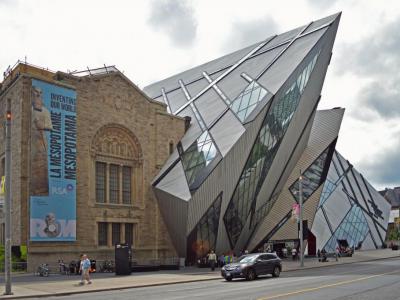
The architecture of the museum also deserves special recognition. It showcases a harmonious blend of various architectural styles and designs, encompassing Neo-Romanesque, Byzantine, and strikingly modern and contemporary elements. The Royal Ontario Museum is not only a visual delight but also sparks imagination and satisfies curiosity, providing a feast for the senses.
Why You Should Visit:
Royal and relevant; not only are the exhibits great and diverse too – the architecture alone is also an attraction.
Has over 40 galleries, a fantastic kids' area on the 2nd floor, a nice souvenir shop & more.
Tip:
There are special events held often, and on certain Friday nights, the museum will become party central with an organized social, bar, and opportunity to mingle among the artifacts.
Plan on being at the museum for about one hour per exhibit/collection and note that some special exhibitions may have an additional charge.
The c5 Restaurant Lounge, located at the top of the Crystal, offers views of Liza's Garden, a sustainable garden installed on the museum rooftop, as well as the Toronto skyline, and there are also other fine dining/coffee spots inside or close by.
Drawing in over a million visitors annually, the Royal Ontario Museum is a top priority for any tourist exploring Toronto. Its vast collection of over six million artifacts spans ancient history, art, meteorology, science, anthropology, archaeology, and paleontology, leaving no mystery behind its renowned reputation.
Notably, the museum proudly houses the world's most esteemed fossil field, the Burgess Shale, with the largest collection of fossils. Since its establishment in 1912, the museum has maintained a close affiliation with the University of Toronto. However, it was not until 1968 that the Royal Museum became an independent and separate institution.
The architecture of the museum also deserves special recognition. It showcases a harmonious blend of various architectural styles and designs, encompassing Neo-Romanesque, Byzantine, and strikingly modern and contemporary elements. The Royal Ontario Museum is not only a visual delight but also sparks imagination and satisfies curiosity, providing a feast for the senses.
Why You Should Visit:
Royal and relevant; not only are the exhibits great and diverse too – the architecture alone is also an attraction.
Has over 40 galleries, a fantastic kids' area on the 2nd floor, a nice souvenir shop & more.
Tip:
There are special events held often, and on certain Friday nights, the museum will become party central with an organized social, bar, and opportunity to mingle among the artifacts.
Plan on being at the museum for about one hour per exhibit/collection and note that some special exhibitions may have an additional charge.
The c5 Restaurant Lounge, located at the top of the Crystal, offers views of Liza's Garden, a sustainable garden installed on the museum rooftop, as well as the Toronto skyline, and there are also other fine dining/coffee spots inside or close by.
15) Casa Loma (must see)
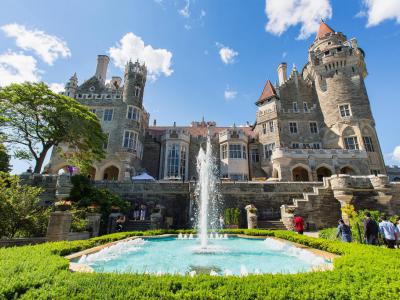
Casa Loma, which translates to "Hill House" in Spanish (although not entirely accurate), is a remarkable mansion and garden located in midtown Toronto. Built between 1911 and 1914, this Gothic Revival castle-style residence was commissioned by financier Sir Henry Pellatt and designed by the renowned architect E. J. Lennox, who was responsible for creating various notable landmarks throughout the city. Situated at an elevation of 140 meters (460 feet) above sea level, Casa Loma proudly stands 66 meters (217 feet) above Lake Ontario.
The structure itself is a captivating representation of the Edwardian era. Within the castle's walls, visitors can delight in the opulence of its exquisite furnishings, lavishly adorned rooms, elegant bathrooms, concealed passageways, and a splendid garden embellished with sculptures and fountains. Sir Henry enlisted the talents of skilled artisans from Europe to craft much of the furniture and other distinctive features found within the mansion. Spanning across five acres, Casa Loma's gardens add to its allure.
A tunnel discreetly connects Casa Loma to the Hunting Lodge and the stables, which include a garage, potting shed, stalls, carriage room, and tack rooms. This seamless integration of architectural elements is a testament to the attention to detail and grandeur of the estate.
Thanks to its distinctive architectural charm in Toronto, Casa Loma has become a sought-after filming location for movies and television productions. Furthermore, it serves as a popular choice for wedding ceremonies, and it is even possible to rent Casa Loma in the evenings for private events after the museum closes its doors to the public.
Why You Should Visit:
Cool to learn some Toronto history. Neat old building with lots of areas to explore.
Tip:
Take the audioguide (freely available downstairs next to the restaurant and gift shop) as it allows you to walk around the building/grounds at your own pace and see all the things you want to see.
Make sure you also head all the way to the towers for an incredible view of the city.
The structure itself is a captivating representation of the Edwardian era. Within the castle's walls, visitors can delight in the opulence of its exquisite furnishings, lavishly adorned rooms, elegant bathrooms, concealed passageways, and a splendid garden embellished with sculptures and fountains. Sir Henry enlisted the talents of skilled artisans from Europe to craft much of the furniture and other distinctive features found within the mansion. Spanning across five acres, Casa Loma's gardens add to its allure.
A tunnel discreetly connects Casa Loma to the Hunting Lodge and the stables, which include a garage, potting shed, stalls, carriage room, and tack rooms. This seamless integration of architectural elements is a testament to the attention to detail and grandeur of the estate.
Thanks to its distinctive architectural charm in Toronto, Casa Loma has become a sought-after filming location for movies and television productions. Furthermore, it serves as a popular choice for wedding ceremonies, and it is even possible to rent Casa Loma in the evenings for private events after the museum closes its doors to the public.
Why You Should Visit:
Cool to learn some Toronto history. Neat old building with lots of areas to explore.
Tip:
Take the audioguide (freely available downstairs next to the restaurant and gift shop) as it allows you to walk around the building/grounds at your own pace and see all the things you want to see.
Make sure you also head all the way to the towers for an incredible view of the city.
16) High Park (must see)
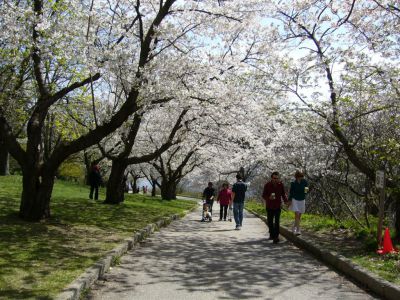
High Park, situated in Toronto, is a municipal park offering a blend of recreational and natural spaces. It boasts an array of facilities such as sports grounds, cultural venues, educational establishments, gardens, playgrounds, and even a zoo. A notable portion of the park, approximately one-third, remains untouched, featuring a rare oak savannah ecosystem.
The park was originally made accessible to the public in 1876, thanks to a generous land bequest from John George Howard to the City of Toronto. Encompassing a vast area of 161 hectares (400 acres), it stands as the second-largest municipal park in Toronto, second only to Centennial Park.
Located west of downtown Toronto, north of Humber Bay, High Park falls under the stewardship of the City of Toronto Parks Department. Its borders span from Bloor Street West to The Queensway, just north of Lake Ontario, while being bounded by Ellis Park Road and Grenadier Pond on the west and Parkside Drive on the east.
The park's topography is characterized by undulating hills and is marked by two deep ravines that stretch across its entire north-south expanse. Several natural areas within the park hold significant provincial designation as Areas of Natural and Scientific Interest.
High Park boasts numerous attractions that captivate visitors. These include the historic Colborne Lodge museum, delightful hillside gardens, the zoo, the Grenadier Cafe, and an amphitheater. Additionally, the park offers sports fields, a hockey rink, a pool, tennis courts, playgrounds, nature trails, and picnic spots.
During the spring and fall seasons, visitors can enjoy a unique experience aboard the "trackless train." This train, pulled by a tractor, features several wagons cleverly designed to resemble a red and white train. The train operates on a 30-minute schedule, allowing passengers to tour various areas of the park. Stops along the route include Bloor Street, the northwestern playground, west of the Grenadier Cafe, Grenadier Pond, south of Colborne Lodge, and the Bell playground. To board the train, tickets can be purchased directly from the train conductor.
The park was originally made accessible to the public in 1876, thanks to a generous land bequest from John George Howard to the City of Toronto. Encompassing a vast area of 161 hectares (400 acres), it stands as the second-largest municipal park in Toronto, second only to Centennial Park.
Located west of downtown Toronto, north of Humber Bay, High Park falls under the stewardship of the City of Toronto Parks Department. Its borders span from Bloor Street West to The Queensway, just north of Lake Ontario, while being bounded by Ellis Park Road and Grenadier Pond on the west and Parkside Drive on the east.
The park's topography is characterized by undulating hills and is marked by two deep ravines that stretch across its entire north-south expanse. Several natural areas within the park hold significant provincial designation as Areas of Natural and Scientific Interest.
High Park boasts numerous attractions that captivate visitors. These include the historic Colborne Lodge museum, delightful hillside gardens, the zoo, the Grenadier Cafe, and an amphitheater. Additionally, the park offers sports fields, a hockey rink, a pool, tennis courts, playgrounds, nature trails, and picnic spots.
During the spring and fall seasons, visitors can enjoy a unique experience aboard the "trackless train." This train, pulled by a tractor, features several wagons cleverly designed to resemble a red and white train. The train operates on a 30-minute schedule, allowing passengers to tour various areas of the park. Stops along the route include Bloor Street, the northwestern playground, west of the Grenadier Cafe, Grenadier Pond, south of Colborne Lodge, and the Bell playground. To board the train, tickets can be purchased directly from the train conductor.
