Custom Walk in Edinburgh, Scotland by katherinecullen72_f69f6 created on 2025-07-11
Guide Location: Scotland » Edinburgh
Guide Type: Custom Walk
# of Sights: 6
Tour Duration: 2 Hour(s)
Travel Distance: 3.3 Km or 2.1 Miles
Share Key: HCZSM
Guide Type: Custom Walk
# of Sights: 6
Tour Duration: 2 Hour(s)
Travel Distance: 3.3 Km or 2.1 Miles
Share Key: HCZSM
How It Works
Please retrieve this walk in the GPSmyCity app. Once done, the app will guide you from one tour stop to the next as if you had a personal tour guide. If you created the walk on this website or come to the page via a link, please follow the instructions below to retrieve the walk in the app.
Retrieve This Walk in App
Step 1. Download the app "GPSmyCity: Walks in 1K+ Cities" on Apple App Store or Google Play Store.



Step 2. In the GPSmyCity app, download(or launch) the guide "Edinburgh Map and Walking Tours".
Step 3. Tap the menu button located at upper right corner of the "Walks" screen and select "Retrieve custom walk". Enter the share key: HCZSM
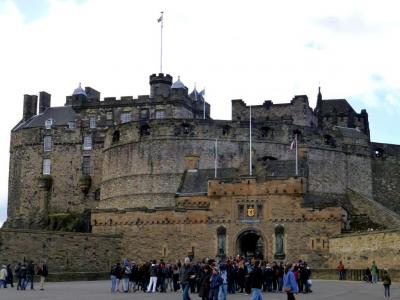
1) Edinburgh Castle (must see)
Edinburgh Castle, looming large over the Scottish capital, is the second most visited attraction in the UK (after the Tower of London, which is still number one). The history of Scotland is deeply etched into its ancient stones, making it a timeline in fortress form.
Perched atop Castle Rock (a hardened basaltic plug from an extinct volcano eroded by glaciers), this area has been drawing humans since the 9th millennium BC. The first castle on the site was built in the 12th century by King David I. It remained a royal residence until 1603, when the monarchy packed up and moved to London-presumably for better weather and indoor plumbing...
Indeed, as a fortress, it was virtually impregnable, except for one major-geological-drawback: the basalt rock on which it stands doesn’t hold water (literally). The 28-meter-deep well inside the fortress was about as useful as a chocolate teapot during a siege. So, when the well ran dry, surrender-or dehydration-was the only choice for those inside.
The original castle was mostly destroyed during the Lang Siege of 1573. The only remainder from its early days is St. Margaret’s Chapel. By the 17th century, it had shifted from royal digs to military barracks, housing troops up to the 1920s.
Presently, the castle hosts the Scottish National War Memorial, the National War Museum, and enough regimental museums to keep military buffs busy till closing time. Don't miss the One O’Clock Gun, which is fired daily (except Sundays) at 1 PM with Swiss-watch precision-yes, Edinburgh literally sets its clocks by it...
Also, in the Crown Room, you will see Scotland’s royal bling-crown, scepter, and sword-resting under heavy guard. Period-costumed actors occasionally swoop in to re-enact history with full flair. And if you’re visiting in August, the Military Tattoo takes over the esplanade with kilts, cannons, and bagpipes galore.
Oh, and in the north-east corner of the esplanade, don't miss that rather unassuming little iron fountain. Called Witches' Well, it marks the spot where, back in the day, many women accused of witchcraft were burned at the stake. Spooky, grim, and sadly true...
The panoramic views are postcard-worthy, the historical nooks are endlessly fascinating, and honestly, it just feels epic to stand where centuries of royals, rebels, and rock-solid drama unfolded.
Pro Tips:
The entry is cheaper, and more importantly, faster, if you book online.
Take a free guided tour – running every hour. Otherwise, consider grabbing the £3 audio guide if you like facts with flair.
Being at the mountain's top, it may get breezy, so definitely bring a windproof jacket if visiting in cold weather.
Perched atop Castle Rock (a hardened basaltic plug from an extinct volcano eroded by glaciers), this area has been drawing humans since the 9th millennium BC. The first castle on the site was built in the 12th century by King David I. It remained a royal residence until 1603, when the monarchy packed up and moved to London-presumably for better weather and indoor plumbing...
Indeed, as a fortress, it was virtually impregnable, except for one major-geological-drawback: the basalt rock on which it stands doesn’t hold water (literally). The 28-meter-deep well inside the fortress was about as useful as a chocolate teapot during a siege. So, when the well ran dry, surrender-or dehydration-was the only choice for those inside.
The original castle was mostly destroyed during the Lang Siege of 1573. The only remainder from its early days is St. Margaret’s Chapel. By the 17th century, it had shifted from royal digs to military barracks, housing troops up to the 1920s.
Presently, the castle hosts the Scottish National War Memorial, the National War Museum, and enough regimental museums to keep military buffs busy till closing time. Don't miss the One O’Clock Gun, which is fired daily (except Sundays) at 1 PM with Swiss-watch precision-yes, Edinburgh literally sets its clocks by it...
Also, in the Crown Room, you will see Scotland’s royal bling-crown, scepter, and sword-resting under heavy guard. Period-costumed actors occasionally swoop in to re-enact history with full flair. And if you’re visiting in August, the Military Tattoo takes over the esplanade with kilts, cannons, and bagpipes galore.
Oh, and in the north-east corner of the esplanade, don't miss that rather unassuming little iron fountain. Called Witches' Well, it marks the spot where, back in the day, many women accused of witchcraft were burned at the stake. Spooky, grim, and sadly true...
The panoramic views are postcard-worthy, the historical nooks are endlessly fascinating, and honestly, it just feels epic to stand where centuries of royals, rebels, and rock-solid drama unfolded.
Pro Tips:
The entry is cheaper, and more importantly, faster, if you book online.
Take a free guided tour – running every hour. Otherwise, consider grabbing the £3 audio guide if you like facts with flair.
Being at the mountain's top, it may get breezy, so definitely bring a windproof jacket if visiting in cold weather.
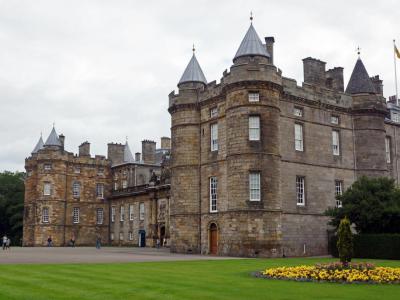
2) Holyroodhouse (must see)
If you're ticking off Edinburgh landmarks, Holyroodhouse is one you can't skip-not unless you're on the run from the crown... Sitting at the royal end of the Royal Mile, this stately pad is the official Scottish residence of the British monarch and once housed none other than Mary, Queen of Scots. That’s right, drama lives here rent-free...
The whole saga begins with King David I, who founded the nearby Holyrood Abbey in 1128 (after a divine deer encounter, according to legend). A few centuries later, precisely by 1501, a palace was built beside the abbey. Now, calling it a “palace”, back then, was maybe a touch ambitious-a grand country house, more like it, rather than Versailles-but it did get bigger in 1532 and 1536. The property was thoroughly renovated in 1633, only to be trashed when Cromwell’s soldiers used it as barracks and then a fire added insult to injury...
Then came the 1670s, when Sir William Bruce, the architectural fixer of the day, rebuilt the place. The abbey chapel became the Chapel Royal, hosting pious activity until 1768, when the roof rather unceremoniously fell in. More restorations followed after that-first in 1822 for a royal visit, and then again in the 20th century when King George V and Queen Mary decided the palace could really use indoor plumbing. Royal flush, anyone?
When the royals are away, the house is open to the public. Inside, you can marvel at ceiling stucco so delicate it practically whispers, and gawk at an entire lineup of Scottish monarchs-some real, some as fictional as their hairlines-painted by the Dutch Golden Age artist Jacob de Wet. Then, dive into the Royal Collection, a five-century mix of armor, jewels, manuscripts, and silverware. Basically, it’s the attic of your dreams-if your attic had Rembrandts and 17th-century clocks.
Oh, and don’t wander off alone unless you're cool with ghosts. Legend has it that Agnes Sampson, accused of witchcraft and executed in 1592, still makes the occasional appearance here. So, if you feel a chill or hear something whispering about herbal remedies... maybe don’t investigate.
Palace, ghosts, ceilings, swords, and sovereign bling-are all here. Holyroodhouse doesn’t just bring the royal drama-it curates it.
The whole saga begins with King David I, who founded the nearby Holyrood Abbey in 1128 (after a divine deer encounter, according to legend). A few centuries later, precisely by 1501, a palace was built beside the abbey. Now, calling it a “palace”, back then, was maybe a touch ambitious-a grand country house, more like it, rather than Versailles-but it did get bigger in 1532 and 1536. The property was thoroughly renovated in 1633, only to be trashed when Cromwell’s soldiers used it as barracks and then a fire added insult to injury...
Then came the 1670s, when Sir William Bruce, the architectural fixer of the day, rebuilt the place. The abbey chapel became the Chapel Royal, hosting pious activity until 1768, when the roof rather unceremoniously fell in. More restorations followed after that-first in 1822 for a royal visit, and then again in the 20th century when King George V and Queen Mary decided the palace could really use indoor plumbing. Royal flush, anyone?
When the royals are away, the house is open to the public. Inside, you can marvel at ceiling stucco so delicate it practically whispers, and gawk at an entire lineup of Scottish monarchs-some real, some as fictional as their hairlines-painted by the Dutch Golden Age artist Jacob de Wet. Then, dive into the Royal Collection, a five-century mix of armor, jewels, manuscripts, and silverware. Basically, it’s the attic of your dreams-if your attic had Rembrandts and 17th-century clocks.
Oh, and don’t wander off alone unless you're cool with ghosts. Legend has it that Agnes Sampson, accused of witchcraft and executed in 1592, still makes the occasional appearance here. So, if you feel a chill or hear something whispering about herbal remedies... maybe don’t investigate.
Palace, ghosts, ceilings, swords, and sovereign bling-are all here. Holyroodhouse doesn’t just bring the royal drama-it curates it.
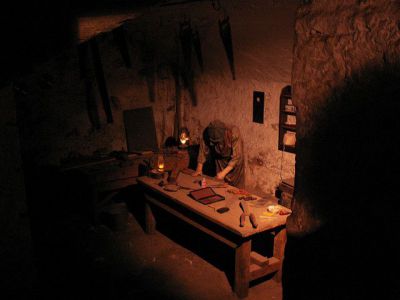
3) Mary King's Close (must see)
If ghost stories give you chills in a good way, then Real Mary King’s Close might just be your perfect haunt in Edinburgh. Tucked beneath the Royal Exchange, this underground maze of shadowy alleyways and crumbling tenement rooms has a reputation for being one of the most haunted corners of the city-and in Edinburgh, that’s saying something...
Originally a bustling neighborhood, the close was sealed off after the Great Plague of 1645 rolled into town, carried by flea-infested rats from merchant ships. With zero plumbing and not a bar of soap in sight, these cramped quarters became ground zero for infection. In a desperate attempt to contain the spread, entire blocks-predominantly the poorer areas, including Mary King’s Close-were bricked in as urgent quarantine measures. Legend has it, some unlucky souls were trapped inside at the mercy of plague or starvation... and they never left. At least, not in spirit.
One ghost in particular likes to make her presence known: Annie, a small girl, who is said to have lost her doll-and possibly much more-when the plague swept through. Visitors claim to feel her presence, and many bring her gifts: toys, trinkets, or coins, all of which are passed on to children’s hospitals and local charities. So, even the ghostly get a little goodwill...
The area was uncovered during renovations to the Royal Exchange and was opened to the public in 2003 as a tourist attraction. Since then, costumed guides have been leading brave guests through these 17th-century underground time capsules, sharing tales of the little Annie and Mary King-a respected businesswoman and seamstress after whom it is named-as well as the dark chapters etched into every cobbled corner.
So, if you’re in the mood for a little historical horror with a charitable twist, Mary King’s Close is calling. Just... don’t forget Annie’s doll.
Originally a bustling neighborhood, the close was sealed off after the Great Plague of 1645 rolled into town, carried by flea-infested rats from merchant ships. With zero plumbing and not a bar of soap in sight, these cramped quarters became ground zero for infection. In a desperate attempt to contain the spread, entire blocks-predominantly the poorer areas, including Mary King’s Close-were bricked in as urgent quarantine measures. Legend has it, some unlucky souls were trapped inside at the mercy of plague or starvation... and they never left. At least, not in spirit.
One ghost in particular likes to make her presence known: Annie, a small girl, who is said to have lost her doll-and possibly much more-when the plague swept through. Visitors claim to feel her presence, and many bring her gifts: toys, trinkets, or coins, all of which are passed on to children’s hospitals and local charities. So, even the ghostly get a little goodwill...
The area was uncovered during renovations to the Royal Exchange and was opened to the public in 2003 as a tourist attraction. Since then, costumed guides have been leading brave guests through these 17th-century underground time capsules, sharing tales of the little Annie and Mary King-a respected businesswoman and seamstress after whom it is named-as well as the dark chapters etched into every cobbled corner.
So, if you’re in the mood for a little historical horror with a charitable twist, Mary King’s Close is calling. Just... don’t forget Annie’s doll.
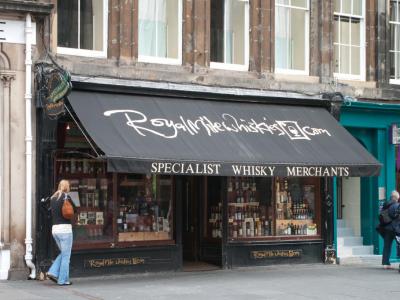
4) Royal Mile Whiskies
Wondering what to buy in Edinburgh? Whisky, of course-malt Scotch whisky to be precise. And honestly, there’s no better address for it than the Royal Mile. If you’re hunting for a gift that won’t just gather dust on a shelf, a bottle of single malt will do the trick. This isn’t just Scotland’s pride and joy-it is also the country’s biggest export. Edinburgh even hosts the Malt Whisky Society, home to the largest whisky collection on the planet.
Enter Royal Mile Whiskies, a shop that’s been making a name for itself since 1991. And not just any name, either-they’ve scooped up Whisky Magazine’s “Retailer of the Year” more times than most distilleries have casks. Step inside, and you’ll find yourself in the company of staff who don’t just sell whisky-they live and breathe it. These folks can spot a hesitant beginner and an overconfident connoisseur at twenty paces, and they’ll happily talk barrels, peat, and barley until you feel like part of the clan.
The selection? Let’s just say it’s world-class. From Scotland’s legendary distilleries to rarities you didn’t even know existed, the shelves here carry liquid history in every bottle. Some are everyday drams that start around 30 bucks a bottle, while others, priced north of 1500, might require you to whisper “investment” to your bank account. Either way, each bottle has a story-and chances are, the staff will pour you a sample and tell it.
So, whether you leave with a humble dram or a collector’s masterpiece, Royal Mile Whiskies delivers exactly what it promises: Scotland in a glass, ready to travel home with you.
Enter Royal Mile Whiskies, a shop that’s been making a name for itself since 1991. And not just any name, either-they’ve scooped up Whisky Magazine’s “Retailer of the Year” more times than most distilleries have casks. Step inside, and you’ll find yourself in the company of staff who don’t just sell whisky-they live and breathe it. These folks can spot a hesitant beginner and an overconfident connoisseur at twenty paces, and they’ll happily talk barrels, peat, and barley until you feel like part of the clan.
The selection? Let’s just say it’s world-class. From Scotland’s legendary distilleries to rarities you didn’t even know existed, the shelves here carry liquid history in every bottle. Some are everyday drams that start around 30 bucks a bottle, while others, priced north of 1500, might require you to whisper “investment” to your bank account. Either way, each bottle has a story-and chances are, the staff will pour you a sample and tell it.
So, whether you leave with a humble dram or a collector’s masterpiece, Royal Mile Whiskies delivers exactly what it promises: Scotland in a glass, ready to travel home with you.
5) St. Giles' Cathedral (must see)
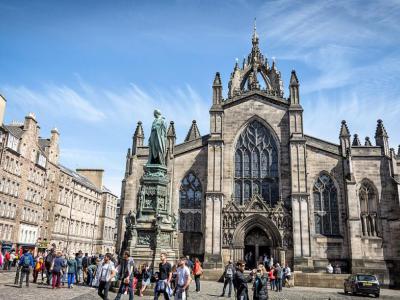
Smack in the middle of the Royal Mile, St Giles’ Cathedral-otherwise known as the High Kirk (or High Church) of Edinburgh-isn't one to be missed. The original building went up in the 12th century but didn’t survive a nasty fire-only the central pillars lived to tell the tale. The replacement was built in 1385. Over the years, it had numerous chapels added-known as aisles-resulting in a kind of charming architectural chaos. At one point, the church had over 50 side altars, like a medieval supermarket of holiness...
In 1466, St Giles’ became a collegiate church, which, in 1490, saw the now-iconic, crown-shaped lantern tower completed. During the Reformation, in 1560, things got a bit dramatic. Most of the church’s treasures vanished-stolen, sold, or just spirited away-including its star relic: Saint Giles’ withered arm and hand, complete with a diamond ring on one skeletal finger (macabre bling at its finest...). In addition to that, the church was partitioned by walls into multiple preaching zones-a kind of Protestant “feng shui,” if you will...
Despite being called a cathedral, it only technically wore that title twice, briefly, during the 17th-century Bishop Wars. The statute of “High Kirk” remains its real claim to fame. A 19th-century restoration gave the church a glow-up-partitions were removed and several chapels pulled down. Among the surviving chapels, perhaps the most beautiful is the Thistle Chapel from 1911: a jaw-dropping High Gothic gem dripping in wood and stone carvings, fluttering heraldic banners, and a breathtaking, delicately carved vaulted ceiling.
Once here, look out for a bronze plaque to Robert Louis Stevenson, author of Treasure Island, in the Moray Aisle, a marble tribute to the dashing but doomed 1st Marquis of Montrose, in the Chapman Aisle, and another to his bitter rival, Archibald Campbell, the 1st Marquis of Argyll, in the Saint Eloi Aisle. Fun fact: these two, once the main signatories of the National Covenant in 1638 (the document signed to oppose attempts to impose Anglican religious practices on the Church of Scotland), became sworn enemies towards the end of their lives. Edinburgh drama, anyone?
Aside from all that, the place is absolutely gorgeous, packed to the rim with stained glass beauty. You’ll walk out with neck cramp from all the ceiling admiration-and it’ll be worth it.
Pro tips:
Entry is free or by donation, but if you’re planning a photo shoot, prepare to fork over £2 for a "permit".
Best to get onto a tour, as there's much you could miss just wandering on your own. Also, if you're feeling adventurous, take the rooftop tour (worth £6).
And yes-don't miss a cozy café downstairs that serves tasty bites. Praise be!
In 1466, St Giles’ became a collegiate church, which, in 1490, saw the now-iconic, crown-shaped lantern tower completed. During the Reformation, in 1560, things got a bit dramatic. Most of the church’s treasures vanished-stolen, sold, or just spirited away-including its star relic: Saint Giles’ withered arm and hand, complete with a diamond ring on one skeletal finger (macabre bling at its finest...). In addition to that, the church was partitioned by walls into multiple preaching zones-a kind of Protestant “feng shui,” if you will...
Despite being called a cathedral, it only technically wore that title twice, briefly, during the 17th-century Bishop Wars. The statute of “High Kirk” remains its real claim to fame. A 19th-century restoration gave the church a glow-up-partitions were removed and several chapels pulled down. Among the surviving chapels, perhaps the most beautiful is the Thistle Chapel from 1911: a jaw-dropping High Gothic gem dripping in wood and stone carvings, fluttering heraldic banners, and a breathtaking, delicately carved vaulted ceiling.
Once here, look out for a bronze plaque to Robert Louis Stevenson, author of Treasure Island, in the Moray Aisle, a marble tribute to the dashing but doomed 1st Marquis of Montrose, in the Chapman Aisle, and another to his bitter rival, Archibald Campbell, the 1st Marquis of Argyll, in the Saint Eloi Aisle. Fun fact: these two, once the main signatories of the National Covenant in 1638 (the document signed to oppose attempts to impose Anglican religious practices on the Church of Scotland), became sworn enemies towards the end of their lives. Edinburgh drama, anyone?
Aside from all that, the place is absolutely gorgeous, packed to the rim with stained glass beauty. You’ll walk out with neck cramp from all the ceiling admiration-and it’ll be worth it.
Pro tips:
Entry is free or by donation, but if you’re planning a photo shoot, prepare to fork over £2 for a "permit".
Best to get onto a tour, as there's much you could miss just wandering on your own. Also, if you're feeling adventurous, take the rooftop tour (worth £6).
And yes-don't miss a cozy café downstairs that serves tasty bites. Praise be!
6) Victoria Street
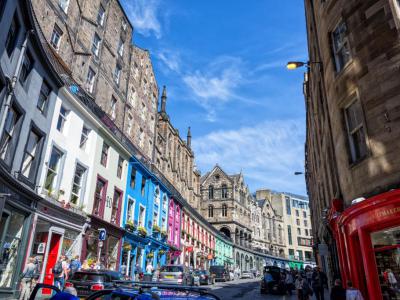
Perhaps the most photographed location in all of Edinburgh, Victoria Street-with its gentle curve, candy-coloured shopfronts, and fairytale charm-is the Old Town icon that throughout the decades has graced everything from tourist postcards to glossy TV ads. Indeed, if streets had agents, this one would have been booked solid.
Built between 1829 and 1834, Victoria Street wasn’t always the whimsical rainbow we know today, though. Credit-or creative blame for it, rather-goes to Thomas Hamilton, a mastermind behind Edinburgh’s numerous architectural wonders, better known for his love affair with all things neoclassical. On this occasion, however, he deviated from his habitual neoclassical stamp, being told to create something mimicking the Old Flemish style. For this purpose, many of the area's old buildings were torn down. The result of such a dramatic medieval makeover was the appearance of arches, lining the new terrace, which now house some of the city’s most charming little shops.
And then came the magic. In recent years, Victoria Street-along with its downhill cousin, the West Bow-has gained notoriety as possible real-world prototypes for none other than Diagon Alley, featured in the Harry Potter books (you know, wizards, magic wands, and all that...).
Given that Edinburgh was home turf for JK Rowling while she penned her famous boy-wizard saga, it’s not a stretch to imagine Victoria Street as an inspiration for the ever-so fabulous wizard market after all. Packed with the cobbled stones, higgledy-piggledy medley of vibrant buildings, quirky boutiques, and a general air of eccentricity, it practically shouts Diagon Alley. So, whether you're here for the architecture, the shopping, or the spellcasting vibes, just know-this street has layers, arches, and more than a dash of enchantment...
Built between 1829 and 1834, Victoria Street wasn’t always the whimsical rainbow we know today, though. Credit-or creative blame for it, rather-goes to Thomas Hamilton, a mastermind behind Edinburgh’s numerous architectural wonders, better known for his love affair with all things neoclassical. On this occasion, however, he deviated from his habitual neoclassical stamp, being told to create something mimicking the Old Flemish style. For this purpose, many of the area's old buildings were torn down. The result of such a dramatic medieval makeover was the appearance of arches, lining the new terrace, which now house some of the city’s most charming little shops.
And then came the magic. In recent years, Victoria Street-along with its downhill cousin, the West Bow-has gained notoriety as possible real-world prototypes for none other than Diagon Alley, featured in the Harry Potter books (you know, wizards, magic wands, and all that...).
Given that Edinburgh was home turf for JK Rowling while she penned her famous boy-wizard saga, it’s not a stretch to imagine Victoria Street as an inspiration for the ever-so fabulous wizard market after all. Packed with the cobbled stones, higgledy-piggledy medley of vibrant buildings, quirky boutiques, and a general air of eccentricity, it practically shouts Diagon Alley. So, whether you're here for the architecture, the shopping, or the spellcasting vibes, just know-this street has layers, arches, and more than a dash of enchantment...
