Custom Walk in San Francisco, California by robina_walker_dbae3 created on 2025-07-14
Guide Location: USA » San Francisco
Guide Type: Custom Walk
# of Sights: 11
Tour Duration: 4 Hour(s)
Travel Distance: 9.4 Km or 5.8 Miles
Share Key: MLXLU
Guide Type: Custom Walk
# of Sights: 11
Tour Duration: 4 Hour(s)
Travel Distance: 9.4 Km or 5.8 Miles
Share Key: MLXLU
How It Works
Please retrieve this walk in the GPSmyCity app. Once done, the app will guide you from one tour stop to the next as if you had a personal tour guide. If you created the walk on this website or come to the page via a link, please follow the instructions below to retrieve the walk in the app.
Retrieve This Walk in App
Step 1. Download the app "GPSmyCity: Walks in 1K+ Cities" on Apple App Store or Google Play Store.



Step 2. In the GPSmyCity app, download(or launch) the guide "San Francisco Map and Walking Tours".
Step 3. Tap the menu button located at upper right corner of the "Walks" screen and select "Retrieve custom walk". Enter the share key: MLXLU
1) Union Square (must see)
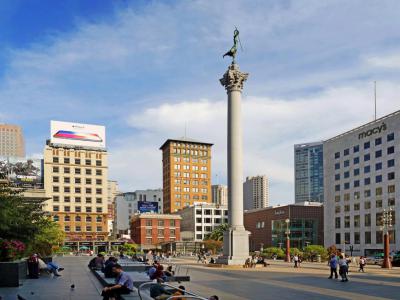
While there are lots of tourist sights in San Francisco to behold, there is none more representative of the city's spirit than the iconic Union Square. With so many layers of history, cuisine, commerce, and culture gathered in one spot, it is no wonder that this place has appeared in film and television scores of times over the years! One could teach a master class on the goings on at Union Square through the decades.
Starting from the pro-US rallies during the Civil War (hence the "Union" name) to the red-light district on (ironically) Maiden Lane, the Dewey Monument, and Alma Spreckels, the Saint Francis Hotel and its famous guests, the 1960s protests, the Theater District, the Powell cable car line, the Flood Building, and the Woolworth's counter – the list is long. Add to this the rooftop amusement park, the concerts, the window displays, and key appearances in famous movies – and you get the place that is quintessentially San Francisco in much of the same way as Times Square is for New York City.
Nowadays, the square is known as a sanctuary for the shopaholic at heart, ringed by premium boutiques, high-end department stores, and mega-brands – but also as one of maybe two places in the city where you can go ice-skating outdoors during the winter.
If you're looking for the best cheap eats, consider Sear's Fine Food or the Pinecrest Diner. For mid-range – there's Cheesecake Factory with a spectacular view of the square and the unforgettable Rotunda at Neiman Marcus. And if you want to go posh, there are too many choices, but Scala's Bistro at the Sir Francis Drake Hotel is ideal; also, The Oak Room, if you have the means.
Finally, no tour of Union Square is complete without visiting the venerable Hotel Saint Francis, where kings, presidents, movie stars, and other historical figures from every field have stayed. In its grand lobby stands an antique clock, and the phrase "Meet me at the clock" is known to most San Franciscans. During holidays, the hotel is decked out in festive décor, with a giant chocolate castle diorama to salivate over. It feels like stepping into a bygone era of luxury and superb service.
Given the range of delights available at Union Square (stores, restaurants, theaters, as well as the famous cable cars), it is safe to say it is at the heart of it all and makes a logical starting point for the exploration of San Francisco.
Tip:
Take the Powell/Hyde cable car ride (which starts and ends at Union Square) for the best views of the city. And don't mind the line if there is one – it can move quickly.
Starting from the pro-US rallies during the Civil War (hence the "Union" name) to the red-light district on (ironically) Maiden Lane, the Dewey Monument, and Alma Spreckels, the Saint Francis Hotel and its famous guests, the 1960s protests, the Theater District, the Powell cable car line, the Flood Building, and the Woolworth's counter – the list is long. Add to this the rooftop amusement park, the concerts, the window displays, and key appearances in famous movies – and you get the place that is quintessentially San Francisco in much of the same way as Times Square is for New York City.
Nowadays, the square is known as a sanctuary for the shopaholic at heart, ringed by premium boutiques, high-end department stores, and mega-brands – but also as one of maybe two places in the city where you can go ice-skating outdoors during the winter.
If you're looking for the best cheap eats, consider Sear's Fine Food or the Pinecrest Diner. For mid-range – there's Cheesecake Factory with a spectacular view of the square and the unforgettable Rotunda at Neiman Marcus. And if you want to go posh, there are too many choices, but Scala's Bistro at the Sir Francis Drake Hotel is ideal; also, The Oak Room, if you have the means.
Finally, no tour of Union Square is complete without visiting the venerable Hotel Saint Francis, where kings, presidents, movie stars, and other historical figures from every field have stayed. In its grand lobby stands an antique clock, and the phrase "Meet me at the clock" is known to most San Franciscans. During holidays, the hotel is decked out in festive décor, with a giant chocolate castle diorama to salivate over. It feels like stepping into a bygone era of luxury and superb service.
Given the range of delights available at Union Square (stores, restaurants, theaters, as well as the famous cable cars), it is safe to say it is at the heart of it all and makes a logical starting point for the exploration of San Francisco.
Tip:
Take the Powell/Hyde cable car ride (which starts and ends at Union Square) for the best views of the city. And don't mind the line if there is one – it can move quickly.
2) Chinatown Gate (Dragon's Gate)
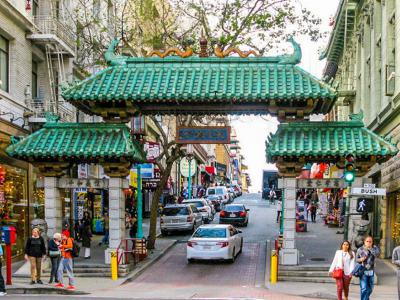
In keeping with Feng Shui principles, the southern edge of San Francisco’s Chinatown is marked by a towering gateway that straddles the bustle of Grant Avenue. This is the Dragon Gate, a flamboyant arch dressed in curling green dragons and traditional tiles. It might look timeless, but it’s actually a relative newcomer-unveiled only in 1970. Its materials were a gift from Taiwan, while the elegant design came from Chinese-American architect Clayton Lee, who modeled it after the ceremonial village gates of old China. Across the top, four carved Chinese characters proclaim a message of welcome: “All under heaven is for the good of the people.”
Guarding the arch are a pair of stone lions, known as fu dogs. On the west side, the male lion steadies a ball beneath his paw, symbolizing protection of the outside world. On the east, the lioness rests her paw on a playful cub, representing the nurturing of family. Together, they embody the balance of strength and care, ensuring that any evil spirits think twice before crossing the threshold.
Pass beneath the gate, and the character of the neighborhood unfolds in full color. In the 1920s, local merchants reinvented Chinatown’s appearance by adding pagoda-roofed façades and bright ornamental details-a pioneering initiative which created an identity that has drawn visitors ever since. The once-notorious red-light district gave way to lantern-strung streets. As evening sets in, the dragon-shaped streetlights flicker on, casting a warm glow across the lively thoroughfare, bustling with herbal shops, bakeries, tea houses, and jewelry stores.
Guarding the arch are a pair of stone lions, known as fu dogs. On the west side, the male lion steadies a ball beneath his paw, symbolizing protection of the outside world. On the east, the lioness rests her paw on a playful cub, representing the nurturing of family. Together, they embody the balance of strength and care, ensuring that any evil spirits think twice before crossing the threshold.
Pass beneath the gate, and the character of the neighborhood unfolds in full color. In the 1920s, local merchants reinvented Chinatown’s appearance by adding pagoda-roofed façades and bright ornamental details-a pioneering initiative which created an identity that has drawn visitors ever since. The once-notorious red-light district gave way to lantern-strung streets. As evening sets in, the dragon-shaped streetlights flicker on, casting a warm glow across the lively thoroughfare, bustling with herbal shops, bakeries, tea houses, and jewelry stores.
3) Transamerica Pyramid
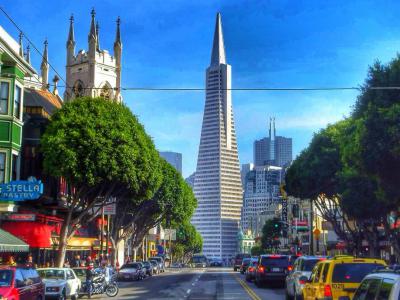
Rising above the dense cluster of Victorian and early-20th-century buildings, the Transamerica Pyramid stands as San Francisco’s most striking symbol of modernity. Located at 600 Montgomery Street in the Financial District, the 48-story skyscraper represents a defining moment in the city’s architectural evolution. Conceived in the late 1960s by architect William L. Pereira for Transamerica Corporation’s CEO, John R. Beckett, the building was intended to create a headquarters unlike any other—a bold structure that would project progress and innovation rather than conformity. When first proposed, however, the design was met with fierce debate. Detractors called it alien and incompatible with the city’s historic skyline, while supporters recognized its audacious vision.
Construction began in 1969 and concluded in 1972. At 853 feet (or 260 meters), the building briefly held the title of the tallest skyscraper west of Chicago and even ranked among the world’s top ten. Its distinctive form—a tapering pyramid capped with a spire—was not purely aesthetic. Pereira’s design allowed more natural light to reach the streets below, reducing the canyon-like shadows typical of high-rises, while maintaining stability during earthquakes through a deep, reinforced foundation. Two angular wings along the façade house elevators and stairwells without interrupting the sleek symmetry of the core. The exterior, clad in white quartz aggregate panels, gives the tower its iconic brightness that shifts subtly with the city’s fog and sun.
Despite initial controversy, the Transamerica Pyramid came to define San Francisco’s skyline. Even after Transamerica Corporation relocated its headquarters in 1999, the tower’s silhouette remained so closely tied to the brand that it continues to appear in the company’s logo. Over time, public perception transformed from skepticism to admiration; what was once considered an eyesore became an emblem of the city’s spirit of reinvention. From vantage points like Coit Tower or the Embarcadero, the Pyramid now feels inseparable from the cityscape, harmonizing with the eclectic mix of hills, light, and architecture that define San Francisco.
In recent years, a renovation project led by architect Norman Foster has aimed to restore and modernize the complex. The plans include revitalizing the lobby, expanding the small Redwood Park at its base, and upgrading the surrounding block to reflect contemporary sustainability standards. More than half a century after its debut, the Transamerica Pyramid remains both a historical landmark and a living testament to architectural daring in the face of doubt.
Construction began in 1969 and concluded in 1972. At 853 feet (or 260 meters), the building briefly held the title of the tallest skyscraper west of Chicago and even ranked among the world’s top ten. Its distinctive form—a tapering pyramid capped with a spire—was not purely aesthetic. Pereira’s design allowed more natural light to reach the streets below, reducing the canyon-like shadows typical of high-rises, while maintaining stability during earthquakes through a deep, reinforced foundation. Two angular wings along the façade house elevators and stairwells without interrupting the sleek symmetry of the core. The exterior, clad in white quartz aggregate panels, gives the tower its iconic brightness that shifts subtly with the city’s fog and sun.
Despite initial controversy, the Transamerica Pyramid came to define San Francisco’s skyline. Even after Transamerica Corporation relocated its headquarters in 1999, the tower’s silhouette remained so closely tied to the brand that it continues to appear in the company’s logo. Over time, public perception transformed from skepticism to admiration; what was once considered an eyesore became an emblem of the city’s spirit of reinvention. From vantage points like Coit Tower or the Embarcadero, the Pyramid now feels inseparable from the cityscape, harmonizing with the eclectic mix of hills, light, and architecture that define San Francisco.
In recent years, a renovation project led by architect Norman Foster has aimed to restore and modernize the complex. The plans include revitalizing the lobby, expanding the small Redwood Park at its base, and upgrading the surrounding block to reflect contemporary sustainability standards. More than half a century after its debut, the Transamerica Pyramid remains both a historical landmark and a living testament to architectural daring in the face of doubt.
4) National Shrine of Saint Francis of Assisi
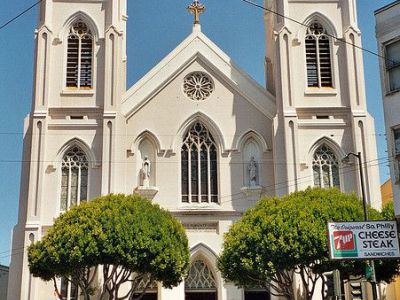
The National Shrine of Saint Francis of Assisi in San Francisco began life amid the California Gold Rush. Back then, with barely 500 residents, mostly dust, dreams, and a few gold pans clinking in the distance, the area was far from any importance or popularity until 1849. That year saw the beginning of the Gold Rush, and suddenly this quiet corner of the West exploded into chaos and ambition. Amid the frenzy spreading like wildfire (drawing people from far and away), the humble parish of Saint Francis of Assisi was founded in June 1849 to tend to the city’s rapidly growing Catholic immigrants.
Initially housed in a simple wooden shanty built by U.S. Army personnel, it was soon replaced by an adobe church, consecrated in 1851 by Bishop Joseph Alemany. The following year, California witnessed its very first priestly ordination right here.
By the late 1850s, the congregation had outgrown the building. A new Norman-Gothic church with twin towers was built over the original in 1859, opening proudly on March 17, 1860. But in 1906, disaster struck—the infamous earthquake and fires gutted the interior, though the exterior walls and towers stood firm. Between 1906 and 1919, the church rose again within its original shell, fortified with steel and resilience, and was re-dedicated with the same steadfast spirit on March 2, 1919.
Throughout the 20th century, it remained a prominent urban parish. Officially recognized as a San Francisco Landmark in 1968 and then a California Historical Landmark in 1972, it reached new heights in 1999 when elevated to a National Shrine.
Today, no longer a parish church, the Shrine is a living echo of faith and art entrusted to the care of the Capuchin Franciscan friars. It welcomes pilgrims, offering quiet sanctuary and liturgical services. Visitors will find relics of Franciscan saints (such as Francis himself, as well as Clare and Anthony), plus stained glass and murals depicting the life of St. Francis, and even a replica of the Porziuncola chapel, inviting all who enter to slow down, reflect, and maybe—just maybe—breathe in a little holiness amid the city’s clamor...
Initially housed in a simple wooden shanty built by U.S. Army personnel, it was soon replaced by an adobe church, consecrated in 1851 by Bishop Joseph Alemany. The following year, California witnessed its very first priestly ordination right here.
By the late 1850s, the congregation had outgrown the building. A new Norman-Gothic church with twin towers was built over the original in 1859, opening proudly on March 17, 1860. But in 1906, disaster struck—the infamous earthquake and fires gutted the interior, though the exterior walls and towers stood firm. Between 1906 and 1919, the church rose again within its original shell, fortified with steel and resilience, and was re-dedicated with the same steadfast spirit on March 2, 1919.
Throughout the 20th century, it remained a prominent urban parish. Officially recognized as a San Francisco Landmark in 1968 and then a California Historical Landmark in 1972, it reached new heights in 1999 when elevated to a National Shrine.
Today, no longer a parish church, the Shrine is a living echo of faith and art entrusted to the care of the Capuchin Franciscan friars. It welcomes pilgrims, offering quiet sanctuary and liturgical services. Visitors will find relics of Franciscan saints (such as Francis himself, as well as Clare and Anthony), plus stained glass and murals depicting the life of St. Francis, and even a replica of the Porziuncola chapel, inviting all who enter to slow down, reflect, and maybe—just maybe—breathe in a little holiness amid the city’s clamor...
5) Saints Peter and Paul Church
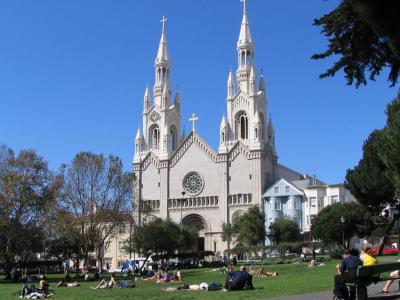
Standing proudly at 666 Filbert Street, Saints Peter and Paul Church has been watching over Washington Square Park since the late 19th century. Born in 1884 to serve San Francisco’s booming Italian community, the original church met a fiery end in the 1906 earthquake. But like any good North Beach legend, it made a comeback—bigger, bolder, and with twin spires soaring 191 feet into the fog. When the rebuilt church opened in 1924, it didn’t just reclaim its place in the skyline; it became a defiant symbol of faith and survival.
Step closer, and the details tell their own story. The façade borrows straight from Italian Gothic playbooks, featuring a mosaic line from Dante’s Paradise and stone carvings of the four Evangelists. Inside, the star attraction is a 40-ton Carrara marble altar designed by Charles Fantoni in 1926. It gleams under frescoes and statuary, the kind of craftsmanship that makes you whisper even if you’re not praying...
But the 1920s brought not only growth but also turmoil. The church suffered several bombing attacks by radical anti-Catholic anarchists, including a fatal incident in 1927 that shattered its doors and windows. Still, the parish carried on—first for Italian immigrants, and then embracing the growing Chinese-American Catholic community. These days, Mass is celebrated in English, Italian, Cantonese, and occasionally Latin, reflecting the parish’s enduring diversity.
And then there’s the celebrity chapter. Baseball legend Joe DiMaggio tied the knot here in 1939, and decades later, his funeral returned him to the same pews. The church also appeared in films such as Dirty Harry and The Dead Pool (both starring Clint Eastwood). Known affectionately as “the Italian Cathedral of the West,” Saints Peter's and Paul's remains a blend of beauty, grit, and grace that continues to anchor the soul of North Beach—admired for its architecture, layered history, and continuing role in the city’s spiritual life.
Step closer, and the details tell their own story. The façade borrows straight from Italian Gothic playbooks, featuring a mosaic line from Dante’s Paradise and stone carvings of the four Evangelists. Inside, the star attraction is a 40-ton Carrara marble altar designed by Charles Fantoni in 1926. It gleams under frescoes and statuary, the kind of craftsmanship that makes you whisper even if you’re not praying...
But the 1920s brought not only growth but also turmoil. The church suffered several bombing attacks by radical anti-Catholic anarchists, including a fatal incident in 1927 that shattered its doors and windows. Still, the parish carried on—first for Italian immigrants, and then embracing the growing Chinese-American Catholic community. These days, Mass is celebrated in English, Italian, Cantonese, and occasionally Latin, reflecting the parish’s enduring diversity.
And then there’s the celebrity chapter. Baseball legend Joe DiMaggio tied the knot here in 1939, and decades later, his funeral returned him to the same pews. The church also appeared in films such as Dirty Harry and The Dead Pool (both starring Clint Eastwood). Known affectionately as “the Italian Cathedral of the West,” Saints Peter's and Paul's remains a blend of beauty, grit, and grace that continues to anchor the soul of North Beach—admired for its architecture, layered history, and continuing role in the city’s spiritual life.
6) Coit Tower (must see)
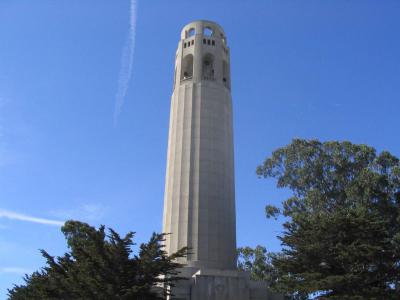
Rising above the treetops of Telegraph Hill like a sleek concrete lighthouse, the Coit Memorial Tower keeps an elegant watch over San Francisco. At 64 meters tall, it’s impossible to miss—an Art Deco exclamation point on the city’s skyline, gleaming in that familiar Bay light. Built to honor the city’s firefighters, it’s both a monument to bravery and a reliable spot for killer panoramic selfies.
The story behind it is as colorful as the city it crowns. The tower was built in 1933 upon request from a devoted patron of the firefighters of San Francisco—Lillie Hitchcock Coit, local socialite, fire-chaser, and all-around legend. Back in the 1800s, Lillie was so devoted to the city’s fire crews that on many occasions she famously helped haul hoses to burning buildings in her fancy skirts. In fact, her eccentric and brave nature made her the mascot of the Engine Co. and the Matron Saint of the San Francisco fire squad.
When Lillie passed away in 1929, she left one-third of her fortune “to beautify San Francisco.” The result was a tower dedicated to the heroes who ran toward the flames while everyone else ran away—a kind of stylish thank-you note from the city in concrete form...
Inside, Depression-era murals burst with scenes of working life, a time capsule of 1930s idealism painted right onto the curved walls. Outside, the view is pure San Francisco—rolling hills, the Golden Gate, and Alcatraz all posing for your admiration.
Indeed, the views from the base are almost as jaw-dropping as the ones from the top, so if the elevator line feels longer than a cable car climb, stay put and take the scenic stroll around the hill instead. And remember—Coit Tower closes at 5 p.m. and only takes cash. So, consider it part of the city’s vintage charm...
The story behind it is as colorful as the city it crowns. The tower was built in 1933 upon request from a devoted patron of the firefighters of San Francisco—Lillie Hitchcock Coit, local socialite, fire-chaser, and all-around legend. Back in the 1800s, Lillie was so devoted to the city’s fire crews that on many occasions she famously helped haul hoses to burning buildings in her fancy skirts. In fact, her eccentric and brave nature made her the mascot of the Engine Co. and the Matron Saint of the San Francisco fire squad.
When Lillie passed away in 1929, she left one-third of her fortune “to beautify San Francisco.” The result was a tower dedicated to the heroes who ran toward the flames while everyone else ran away—a kind of stylish thank-you note from the city in concrete form...
Inside, Depression-era murals burst with scenes of working life, a time capsule of 1930s idealism painted right onto the curved walls. Outside, the view is pure San Francisco—rolling hills, the Golden Gate, and Alcatraz all posing for your admiration.
Indeed, the views from the base are almost as jaw-dropping as the ones from the top, so if the elevator line feels longer than a cable car climb, stay put and take the scenic stroll around the hill instead. And remember—Coit Tower closes at 5 p.m. and only takes cash. So, consider it part of the city’s vintage charm...
7) Pier 39 (must see)
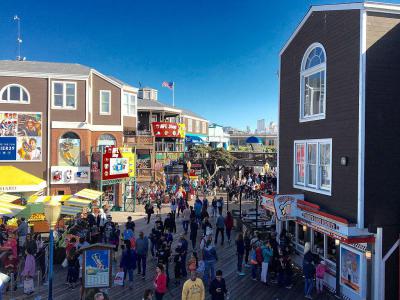
Pier 39—the beating, barking heart of Fisherman’s Wharf—isn’t much of a fisherman’s pier anymore. The old fleet has long since sailed off into history, but in its place rose something entirely different: a carnival by the sea. Imagine a boardwalk that decided to go full extrovert—complete with a glittering carousel (hidden toward the end of the pier like a shy performer), neon amusements, and the constant hum of tourists chasing their next photo op. Revamped in the 1970s to resemble a quaint wooden fishing village, it now welcomes thousands daily—none of whom are catching fish, though, but plenty of those catching Instagram stories...
It’s essentially an open-air shopping mall in a sailor’s disguise. Between the street performers, the Aquarium of the Bay, and enough snack stands to feed a small ship’s crew, there’s no shortage of things to distract you from the ocean view. If you need a recharge, the visitor center has you covered—literally—with phone-charging stations and a place to stash your bags while you explore.
Then there’s the food—because let’s be honest, half the crowd here comes for the chowder. Fourteen restaurants dish out everything from cioppino (which is the Italian-American shellfish and tomato stew) to locally-sourced oysters, with Fog Harbor Fish House leading the pack in both flavor and sustainability. If you’re feeling adventurous, there’s even a floating restaurant—Forbes Island—where the catch of the day comes with a side of gentle rocking.
But the true stars of Pier 39 aren’t human at all. The sea lions, self-appointed landlords since 1989, lounge across the docks like sunbathing celebrities—loud, lazy, and utterly unbothered by their audience. Slightly stinky, yes, but undeniably charming...
From the pier, you’ll spot Angel Island, Alcatraz, and both the Golden Gate and Bay Bridges stretching across the horizon. Boat tickets and ferry rides await those itching to head out on the water. Just remember: San Francisco’s sea breeze doesn’t care about your vacation outfit—so bring a jacket, or risk looking windswept in every photo...
It’s essentially an open-air shopping mall in a sailor’s disguise. Between the street performers, the Aquarium of the Bay, and enough snack stands to feed a small ship’s crew, there’s no shortage of things to distract you from the ocean view. If you need a recharge, the visitor center has you covered—literally—with phone-charging stations and a place to stash your bags while you explore.
Then there’s the food—because let’s be honest, half the crowd here comes for the chowder. Fourteen restaurants dish out everything from cioppino (which is the Italian-American shellfish and tomato stew) to locally-sourced oysters, with Fog Harbor Fish House leading the pack in both flavor and sustainability. If you’re feeling adventurous, there’s even a floating restaurant—Forbes Island—where the catch of the day comes with a side of gentle rocking.
But the true stars of Pier 39 aren’t human at all. The sea lions, self-appointed landlords since 1989, lounge across the docks like sunbathing celebrities—loud, lazy, and utterly unbothered by their audience. Slightly stinky, yes, but undeniably charming...
From the pier, you’ll spot Angel Island, Alcatraz, and both the Golden Gate and Bay Bridges stretching across the horizon. Boat tickets and ferry rides await those itching to head out on the water. Just remember: San Francisco’s sea breeze doesn’t care about your vacation outfit—so bring a jacket, or risk looking windswept in every photo...
8) Sea Lion Center
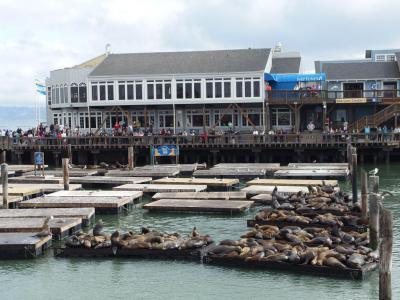
You’ve probably heard them before you’ve seen them—the deep, throaty “arf-arf-arf” echoing across San Francisco Bay. That’s your cue: you’ve reached the Sea Lion Center at Pier 39, where the city’s most famous sunbathers have taken over the floating K-Dock. These California sea lions showed up uninvited after the 1989 Loma Prieta earthquake, decided the marina was prime real estate, and have been flopping, barking, and generally ignoring eviction notices ever since.
What started as a few curious visitors quickly became a full-blown colony—hundreds of whiskered residents lounging on the docks as if they’d booked an all-inclusive spa package. The reason? Perfect conditions: no sharks, plenty of fish, and just enough space to argue over who gets the best sunspot. They’ve turned this once-ordinary pier into one of San Francisco’s most beloved (and noisiest) attractions.
Hovering just above the commotion, the Sea Lion Center turns the spectacle into something smarter. Run by the nonprofit Bay Ecotarium (the same folks behind the Aquarium of the Bay), it’s a compact but clever space filled with interactive displays, videos, and a life-size sea lion skeleton that gives you an X-ray look at these flippered comedians. The staff are part biologist, part storyteller, and fully ready to answer any sea-lion-related question your inner child—or actual child—can come up with.
It’s free to visit (though tossing a donation into the jar earns you good eco-karma), and open daily from roughly 10 a.m. to 4 p.m. (or a bit later on weekends). By the end, you’ll walk away grinning, smelling faintly of sea air, and maybe feeling a little more protective of the planet’s wilder tenants. Because here at Pier 39, conservation isn’t just a lesson—it’s loud, proud, and covered in whiskers...
What started as a few curious visitors quickly became a full-blown colony—hundreds of whiskered residents lounging on the docks as if they’d booked an all-inclusive spa package. The reason? Perfect conditions: no sharks, plenty of fish, and just enough space to argue over who gets the best sunspot. They’ve turned this once-ordinary pier into one of San Francisco’s most beloved (and noisiest) attractions.
Hovering just above the commotion, the Sea Lion Center turns the spectacle into something smarter. Run by the nonprofit Bay Ecotarium (the same folks behind the Aquarium of the Bay), it’s a compact but clever space filled with interactive displays, videos, and a life-size sea lion skeleton that gives you an X-ray look at these flippered comedians. The staff are part biologist, part storyteller, and fully ready to answer any sea-lion-related question your inner child—or actual child—can come up with.
It’s free to visit (though tossing a donation into the jar earns you good eco-karma), and open daily from roughly 10 a.m. to 4 p.m. (or a bit later on weekends). By the end, you’ll walk away grinning, smelling faintly of sea air, and maybe feeling a little more protective of the planet’s wilder tenants. Because here at Pier 39, conservation isn’t just a lesson—it’s loud, proud, and covered in whiskers...
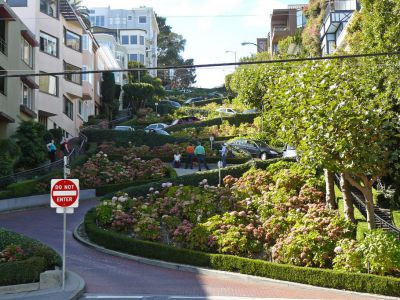
9) Lombard Street (must see)
As a tourist magnet, Lombard Street is recognized as the most crooked street in the world. It takes eight turns on a 24-degree slope to make one feel that it is also, indeed, one of the steepest.
Even though walking or cycling this one-way (downhill) street may instill a sense of immediate vertigo, which can be risky at times, the reason for Lombard's crooked form, surprisingly, is safety. Given the natural grading of the land, the zig-zag pattern reduces the effect of the slope's steepness, making it easier to play on. As far back as 1920, it was suggested that scenic switchbacks to be added to bring a certain appeal to the surroundings, and apparently, it worked.
Year after year, Lombard Street manages to get more than its share of visitors who marvel at its scenic beauty and strangeness. Although zig-zag patterns may be enough to visit, a lesser-known fact about this street is that it houses some of San Francisco's most magnificent mansions. One of them – the Montandon House – is also reputed for being haunted.
For many, if not all, guests of San Francisco, a visit to Lombard Street is a must, if only to check it off their bucket list!
Tip:
Around 10 am is the best time to visit due to less crowd and sunshine. It is nice to start at the top and look down, then walk down and look up. Not only is it a lot easier, but if you carry on down the road, it will lead you to Coit Tower, another attraction in its own right, offering panoramic views over the city and the bay.
Even though walking or cycling this one-way (downhill) street may instill a sense of immediate vertigo, which can be risky at times, the reason for Lombard's crooked form, surprisingly, is safety. Given the natural grading of the land, the zig-zag pattern reduces the effect of the slope's steepness, making it easier to play on. As far back as 1920, it was suggested that scenic switchbacks to be added to bring a certain appeal to the surroundings, and apparently, it worked.
Year after year, Lombard Street manages to get more than its share of visitors who marvel at its scenic beauty and strangeness. Although zig-zag patterns may be enough to visit, a lesser-known fact about this street is that it houses some of San Francisco's most magnificent mansions. One of them – the Montandon House – is also reputed for being haunted.
For many, if not all, guests of San Francisco, a visit to Lombard Street is a must, if only to check it off their bucket list!
Tip:
Around 10 am is the best time to visit due to less crowd and sunshine. It is nice to start at the top and look down, then walk down and look up. Not only is it a lot easier, but if you carry on down the road, it will lead you to Coit Tower, another attraction in its own right, offering panoramic views over the city and the bay.
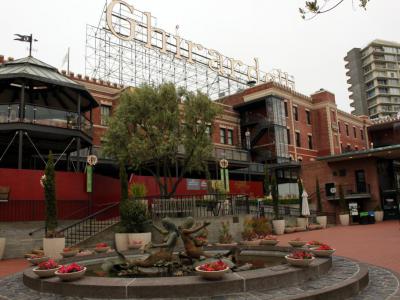
10) Ghirardelli Square
Once a chocolate factory and a wool mill, this is the most attractive of San Fran's refurbished industrial facilities. Looming above the Maritime National Historical Park with its mix of old red-brick buildings and modern stores and restaurants, this shopping center retains the famous Ghirardelli trademark clock tower and original electric roof sign.
The Ghirardelli Chocolate Manufactory on the plaza beneath the tower still houses vintage chocolate-making machinery and sells the confection. These days, you can find pretty much everything under the sun here (if you know where to look), from succulents to small souvenirs and mementos to coffee, cheese, and ice cream sundaes.
At the square, there is always some live music playing. Its centerpiece, Andrea's Fountain, is decorated with bronze sculptures of mermaids and turtles and is the most popular gathering point for shoppers, day and night, much as the top location for all Instagram-ers looking for a perfect backdrop.
The views at night, opening from the end of Van Ness Pier, are even better. You can frame the quaint square (with high rises looming up behind it), the Coit Tower on the left, and a quiet cove full of sailboats immediately in front. And the whole image is reflected in the water.
Tip:
The chocolate shop gives out free samples every day, so stop in and give yourself a treat.
The Ghirardelli Chocolate Manufactory on the plaza beneath the tower still houses vintage chocolate-making machinery and sells the confection. These days, you can find pretty much everything under the sun here (if you know where to look), from succulents to small souvenirs and mementos to coffee, cheese, and ice cream sundaes.
At the square, there is always some live music playing. Its centerpiece, Andrea's Fountain, is decorated with bronze sculptures of mermaids and turtles and is the most popular gathering point for shoppers, day and night, much as the top location for all Instagram-ers looking for a perfect backdrop.
The views at night, opening from the end of Van Ness Pier, are even better. You can frame the quaint square (with high rises looming up behind it), the Coit Tower on the left, and a quiet cove full of sailboats immediately in front. And the whole image is reflected in the water.
Tip:
The chocolate shop gives out free samples every day, so stop in and give yourself a treat.
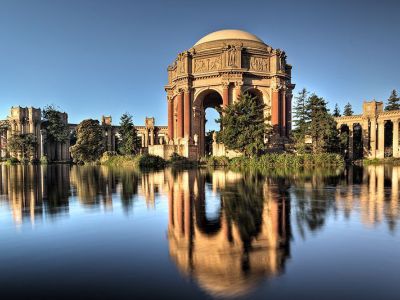
11) Palace of Fine Arts (must see)
The Palace of Fine Arts stands as an impressive edifice situated in San Francisco's Marina District, originally erected for the 1915 Panama–Pacific International Exposition to showcase magnificent works of art. Though the passing years have taken their toll, the structure underwent a complete reconstruction from 1964 to 1974, making it the sole surviving building from the historical exposition.
Embracing a small man-made lagoon, the Palace of Fine Arts features a sprawling 1,100 feet (0.34 kilometer) pergola encircling a central rotunda, gracefully positioned near the water's edge. The designers drew inspiration from European classical settings, where serene bodies of water mirrored the grand architecture, offering a tranquil vista to behold from afar.
Adorning the rotunda's entablature, Bruno Zimm's three repeating panels portray "The Struggle for the Beautiful," a tribute to Greek culture. Additionally, sculptor Ulric Ellerhusen contributed the statues of weeping women atop the colonnade, along with a sculpted frieze and allegorical figures representing Contemplation, Wonderment, and Meditation.
Underneath the rotunda's dome, one can find eight substantial insets that once showcased murals by Robert Reid. Four of these depicted the inception and birth of Art, its relationship with the Earth, its progression, and its acceptance by human intellect. The remaining insets celebrated California's four "golds," symbolizing poppies, citrus fruits, metallic gold, and wheat.
Designed to evoke the essence of ancient Roman ruins, the Palace of Fine Arts has become an iconic landmark of San Francisco. In the early months of 2009, extensive renovations were carried out, revitalizing the lagoons, and walkways, and ensuring the structure's seismic resilience.
Why You Should Visit:
Historic architectural structure in a sweet area for picnic lunch!
Worth checking out especially if you are into photography.
Tip:
Go inside and see the museum if it's open. There's no fee and you can walk across the street and check out the bay right afterwards.
Embracing a small man-made lagoon, the Palace of Fine Arts features a sprawling 1,100 feet (0.34 kilometer) pergola encircling a central rotunda, gracefully positioned near the water's edge. The designers drew inspiration from European classical settings, where serene bodies of water mirrored the grand architecture, offering a tranquil vista to behold from afar.
Adorning the rotunda's entablature, Bruno Zimm's three repeating panels portray "The Struggle for the Beautiful," a tribute to Greek culture. Additionally, sculptor Ulric Ellerhusen contributed the statues of weeping women atop the colonnade, along with a sculpted frieze and allegorical figures representing Contemplation, Wonderment, and Meditation.
Underneath the rotunda's dome, one can find eight substantial insets that once showcased murals by Robert Reid. Four of these depicted the inception and birth of Art, its relationship with the Earth, its progression, and its acceptance by human intellect. The remaining insets celebrated California's four "golds," symbolizing poppies, citrus fruits, metallic gold, and wheat.
Designed to evoke the essence of ancient Roman ruins, the Palace of Fine Arts has become an iconic landmark of San Francisco. In the early months of 2009, extensive renovations were carried out, revitalizing the lagoons, and walkways, and ensuring the structure's seismic resilience.
Why You Should Visit:
Historic architectural structure in a sweet area for picnic lunch!
Worth checking out especially if you are into photography.
Tip:
Go inside and see the museum if it's open. There's no fee and you can walk across the street and check out the bay right afterwards.
