Custom Walk in Montreal, Canada by meriwida_ec32f created on 2025-07-14
Guide Location: Canada » Montreal
Guide Type: Custom Walk
# of Sights: 15
Tour Duration: 8 Hour(s)
Travel Distance: 20.9 Km or 13 Miles
Share Key: 79DVX
Guide Type: Custom Walk
# of Sights: 15
Tour Duration: 8 Hour(s)
Travel Distance: 20.9 Km or 13 Miles
Share Key: 79DVX
How It Works
Please retrieve this walk in the GPSmyCity app. Once done, the app will guide you from one tour stop to the next as if you had a personal tour guide. If you created the walk on this website or come to the page via a link, please follow the instructions below to retrieve the walk in the app.
Retrieve This Walk in App
Step 1. Download the app "GPSmyCity: Walks in 1K+ Cities" on Apple App Store or Google Play Store.



Step 2. In the GPSmyCity app, download(or launch) the guide "Montreal Map and Walking Tours".
Step 3. Tap the menu button located at upper right corner of the "Walks" screen and select "Retrieve custom walk". Enter the share key: 79DVX
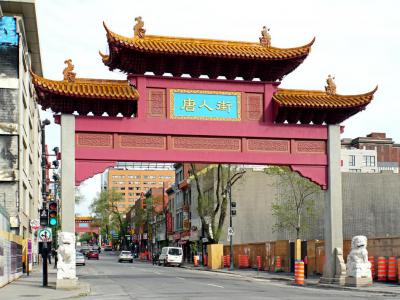
1) Chinatown
Dating back to the 1860s, Montreal's Chinatown with its actual perimeter defined by guardian lions is far smaller than many of those found in other parts of N America. If you only plan to stroll in order to enjoy the hustle and bustle, the architecture and the waft of the exotic (including traditional festivals and holidays), it is easily covered within about an hour. Otherwise, it's a place where to believe what you see, you must eat it.
If limited in time or budget, check the PÂTISSERIE HARMONIE for some savory buns or Vietnamese 'bánh mì' sandwich. Alternatively, for ultimate satisfaction in this realm one must try local noodles, dumplings, dim sum, and/or the Peking duck. The Vietnamese pho, Japanese ramen/sushi, and Korean bibimbap/kimchi are also all there for you to discover.
Here is a list of current favorites: NOUILLES DE LAN ZHOU for hand-pulled noodles; KIM FUNG for dim sum; MAI XIANG YUAN or BIEN MAISON for steamed dumplings; PHO BAC for Vietnamese; CHEZ BONG for Korean; ORANGE ROUGE for high-end fusion; SUMO RAMEN for ramen; LE MAL NÉCESSAIRE for cocktail bar; BEIJING or MON NAN for Peking duck; and LA CAPITAL TACOS for flavorful Mexican/Latin cuisine served in Chinese dinnerware. On another note, the Dragon's Beard candy from BONBONS À LA BARBE DE DRAGON and the crispy duck/pork/chicken from LAM KEE are good take-outs.
If limited in time or budget, check the PÂTISSERIE HARMONIE for some savory buns or Vietnamese 'bánh mì' sandwich. Alternatively, for ultimate satisfaction in this realm one must try local noodles, dumplings, dim sum, and/or the Peking duck. The Vietnamese pho, Japanese ramen/sushi, and Korean bibimbap/kimchi are also all there for you to discover.
Here is a list of current favorites: NOUILLES DE LAN ZHOU for hand-pulled noodles; KIM FUNG for dim sum; MAI XIANG YUAN or BIEN MAISON for steamed dumplings; PHO BAC for Vietnamese; CHEZ BONG for Korean; ORANGE ROUGE for high-end fusion; SUMO RAMEN for ramen; LE MAL NÉCESSAIRE for cocktail bar; BEIJING or MON NAN for Peking duck; and LA CAPITAL TACOS for flavorful Mexican/Latin cuisine served in Chinese dinnerware. On another note, the Dragon's Beard candy from BONBONS À LA BARBE DE DRAGON and the crispy duck/pork/chicken from LAM KEE are good take-outs.
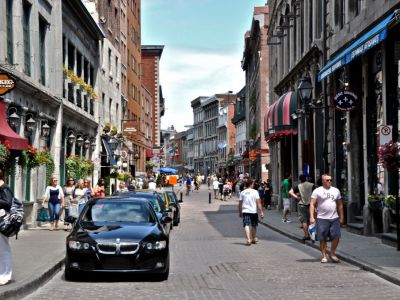
2) Old Montreal (must see)
Transporting you back to the era of New France, Old Montreal stands as one of the most ancient districts frequented by tourists. Positioned ideally within Ville-Marie's borough, this neighborhood is bordered by Ruelle des Fortifications to the north, McGill Street to the west, the majestic Saint Lawrence River to the south, and Berri Street to the east.
Ville-Marie borough remains vibrant and dynamic, fueled by its perpetually lively neighborhoods, including the bustling downtown core, McGill Ghetto, Latin Quarter, Chinatown, Gay Village, and Old Montreal. Visitors revel in exploring this area using public transportation, indulging in shopping, dining at exquisite restaurants, and exploring renowned museums within Ville-Marie.
Should you find yourself in Old Montreal between July and October, an enthralling experience awaits you-the renowned Montreal Ghost Walks. Led by a local storyteller, this captivating journey uncovers the darker aspects of the area's history, guiding you through haunted locations that will send chills down your spine. You have the option to embark on either the west or east side walking tour. Undoubtedly, Old Montreal offers an unparalleled visitor experience, leaving a lasting impression.
Why You Should Visit:
A stroll through Old Montreal will give you a feel of European charm in North America. The cobblestone streets, the architecture, the restaurants and art galleries – all make an irresistible combination.
Tip:
You can walk from one end to the other of what is Old Montreal in 15-20 minutes, but there is a lot packed into that small section so you can easily spend 2 to 3 days exploring it.
Ville-Marie borough remains vibrant and dynamic, fueled by its perpetually lively neighborhoods, including the bustling downtown core, McGill Ghetto, Latin Quarter, Chinatown, Gay Village, and Old Montreal. Visitors revel in exploring this area using public transportation, indulging in shopping, dining at exquisite restaurants, and exploring renowned museums within Ville-Marie.
Should you find yourself in Old Montreal between July and October, an enthralling experience awaits you-the renowned Montreal Ghost Walks. Led by a local storyteller, this captivating journey uncovers the darker aspects of the area's history, guiding you through haunted locations that will send chills down your spine. You have the option to embark on either the west or east side walking tour. Undoubtedly, Old Montreal offers an unparalleled visitor experience, leaving a lasting impression.
Why You Should Visit:
A stroll through Old Montreal will give you a feel of European charm in North America. The cobblestone streets, the architecture, the restaurants and art galleries – all make an irresistible combination.
Tip:
You can walk from one end to the other of what is Old Montreal in 15-20 minutes, but there is a lot packed into that small section so you can easily spend 2 to 3 days exploring it.
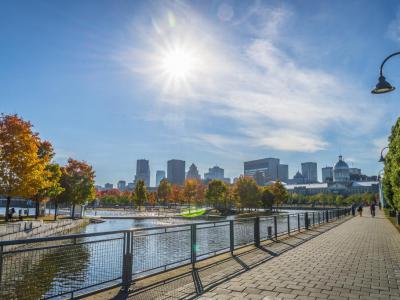
3) Old Port (Vieux-Port) (must see)
Located on the north bank of the Saint Lawrence River, the historic Old Port of Montreal (Vieux-Port de Montréal) stretches for over two kilometers (1.2 miles) south of Old Montreal, in a natural harbor that was once frequented by Amerindian canoes and then by barges and ships of French fur traders and others.
In service from as early as 1611, the port bore witness to the economic and cultural development of Montreal and remained in use until 1976, when the present Port of Montreal was launched further east. In the early 1990s, the territory was redeveloped and in 2005 changed its name to The Quays of the Old Port of Montreal. Today, it serves as a recreational and historical area, attracting annually over six million visitors.
A place for all seasons, there's always something happening here! Summer is great for all sorts of riverfront activities such as rollerblading, cycling, quadricycling, and pleasure boating. Taking a boat cruise on the Saint Lawrence river, or renting a pedal boat for a trip around Bonsecours Basin is also available. A thin park, running the entire length of the Old Port Promenade, offers tourists and locals an ideal spot to relax and catch a cool breeze off the water.
Winter is ideal for skating on the outdoor rink or just playing in the snow. At all times of the year, the Saint Lawrence river is awe-inspiring and powerful.
The on-site attractions include a "labyrinth" in Shed 16 (which is a maze of alleys and obstacles built inside an old waterfront warehouse), the Montreal Science Centre (complete with an IMAX Theatre) on King Edward Pier, and the Montreal Clock Tower.
One of the Port's gems is the Montreal-based Cirque du Soleil which approximately every two years, in spring, launches a new show from the Jacques Cartier Quay by setting up its signature blue-and-yellow-striped tents. In June 2012, an urban beach, called the Clock Tower Beach (Plage de l'Horloge), was opened adjacent to the Clock Tower.
Cultural events in the area include the Montreal High Lights Festival (Festival Montréal en lumière), Igloofest, and the Matsuri Japon festival.
If you have a couple of hours to kill in Montreal, wandering around the Old Port is worth considering.
In service from as early as 1611, the port bore witness to the economic and cultural development of Montreal and remained in use until 1976, when the present Port of Montreal was launched further east. In the early 1990s, the territory was redeveloped and in 2005 changed its name to The Quays of the Old Port of Montreal. Today, it serves as a recreational and historical area, attracting annually over six million visitors.
A place for all seasons, there's always something happening here! Summer is great for all sorts of riverfront activities such as rollerblading, cycling, quadricycling, and pleasure boating. Taking a boat cruise on the Saint Lawrence river, or renting a pedal boat for a trip around Bonsecours Basin is also available. A thin park, running the entire length of the Old Port Promenade, offers tourists and locals an ideal spot to relax and catch a cool breeze off the water.
Winter is ideal for skating on the outdoor rink or just playing in the snow. At all times of the year, the Saint Lawrence river is awe-inspiring and powerful.
The on-site attractions include a "labyrinth" in Shed 16 (which is a maze of alleys and obstacles built inside an old waterfront warehouse), the Montreal Science Centre (complete with an IMAX Theatre) on King Edward Pier, and the Montreal Clock Tower.
One of the Port's gems is the Montreal-based Cirque du Soleil which approximately every two years, in spring, launches a new show from the Jacques Cartier Quay by setting up its signature blue-and-yellow-striped tents. In June 2012, an urban beach, called the Clock Tower Beach (Plage de l'Horloge), was opened adjacent to the Clock Tower.
Cultural events in the area include the Montreal High Lights Festival (Festival Montréal en lumière), Igloofest, and the Matsuri Japon festival.
If you have a couple of hours to kill in Montreal, wandering around the Old Port is worth considering.
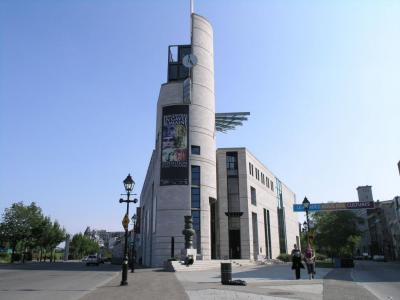
4) Pointe-a-Calliere Museum (must see)
Old Montreal is, indeed, old. Walking through it, you will pass along narrow streets lined with buildings that, in some cases, predate Canada as an independent nation. But stepping inside the Pointe-a-Calliere museum will make you see things that are even older – right from the Natives era.
Dedicated to the history and archaeology of Montreal, this museum was founded in 1992, and named after the site of the original settlement of Fort Ville-Marie (precursor of Montreal) – Pointe-a-Calliere.
The museum complex consists of several locations, connected by underground passages, among which are the Mariners' House, the Youville Pumping Station, and the Éperon Building housing the main exhibition spaces.
The museum's exhibits cover a wide range of topics, such as the First Nations heritage, the French colonial period, the British colonial period, and the city's industrialization and modernization. There are also exhibits dedicated to specific topics, such as the history of the Montreal Canadiens hockey team, the archaeology of the city's sewers, and the role of Montreal in the Underground Railroad.
One of the highlights of the complex is the Archaeological Crypt, located beneath the Éperon Building. The crypt contains the ruins of some of Montreal's earliest buildings, including its first Catholic cemetery and the old city hall. Another notable exhibit is the Multimedia Show, which is held in the Mariners' House and uses a combination of sound, light, and video to tell the story of Montreal from its earliest days to the present.
The museum also houses a variety of permanent and temporary exhibitions that showcase different aspects of Montreal's history, such as the city's role in the fur trade, its importance as a port city, and its cultural diversity. One of the most popular exhibits is called "Building Montreal", exploring the city's architectural heritage through the centuries.
In addition to the exhibits, the Pointe-a-Calliere Museum has a restaurant and a gift shop, which sells souvenirs, books, and other items related to Montreal's history and culture.
Tip:
If you have kids, it's worth checking the museum website to see what's going on for the little ones.
Dedicated to the history and archaeology of Montreal, this museum was founded in 1992, and named after the site of the original settlement of Fort Ville-Marie (precursor of Montreal) – Pointe-a-Calliere.
The museum complex consists of several locations, connected by underground passages, among which are the Mariners' House, the Youville Pumping Station, and the Éperon Building housing the main exhibition spaces.
The museum's exhibits cover a wide range of topics, such as the First Nations heritage, the French colonial period, the British colonial period, and the city's industrialization and modernization. There are also exhibits dedicated to specific topics, such as the history of the Montreal Canadiens hockey team, the archaeology of the city's sewers, and the role of Montreal in the Underground Railroad.
One of the highlights of the complex is the Archaeological Crypt, located beneath the Éperon Building. The crypt contains the ruins of some of Montreal's earliest buildings, including its first Catholic cemetery and the old city hall. Another notable exhibit is the Multimedia Show, which is held in the Mariners' House and uses a combination of sound, light, and video to tell the story of Montreal from its earliest days to the present.
The museum also houses a variety of permanent and temporary exhibitions that showcase different aspects of Montreal's history, such as the city's role in the fur trade, its importance as a port city, and its cultural diversity. One of the most popular exhibits is called "Building Montreal", exploring the city's architectural heritage through the centuries.
In addition to the exhibits, the Pointe-a-Calliere Museum has a restaurant and a gift shop, which sells souvenirs, books, and other items related to Montreal's history and culture.
Tip:
If you have kids, it's worth checking the museum website to see what's going on for the little ones.
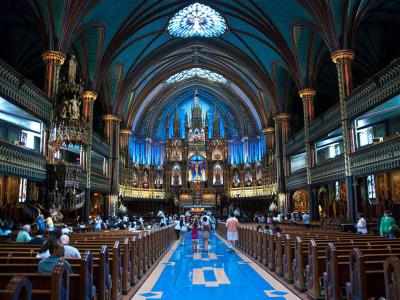
5) Notre-Dame Basilica (must see)
The Notre Dame Basilica of Montreal (Basilique Notre-Dame de Montréal) is a stunning piece of Gothic Revival architecture. Designed by the Irish-American architect James O'Donnell, it was completed, for the most part, in 1829.
The sanctuary was constructed a year later, while the first and second towers were added in 1841 and 1843, respectively. Both towers have bells: the West Tower (La Persévérance), has a bourdon bell nicknamed Jean-Baptiste. It was cast in John Dod Ward’s Eagle Foundry in 1848 and weighs 10,900 kg. Jean-Baptiste tolls only on special occasions, such as funerals, great religious festivals, and Christmas Eve. The East Tower (La Temperance), houses a ten-bell carillon from the same foundry, made in 1842.
The facade of the church was completed in 1865 and includes, among other features, three statues by the French sculptor Henri Bouriché, namely: the Virgin Mary (representing Montreal), Saint John the Baptist (representing Quebec), and Saint Joseph (representing Canada).
The interior – colorful and lavish – took much longer to complete and is quite impressive with its richly decorated columns, intricate wood carvings, statues, and elaborate stained glass windows. Quite unusual for a church, the stained glass windows here depict scenes from the history of Montreal rather than biblical scenes. Another spectacular highlight of the basilica is the Casavant Frères pipe organ, created in 1891, which is one of the largest organs in North America, comprising four keyboards and 7,000 individual pipes.
The Notre-Dame church was raised to the status of a minor basilica, by Pope John Paul II, in 1982 and was designated a National Historic Site of Canada in 1989.
Today, the Notre Dame of Montreal is a popular landmark, attracting yearly more than 11 million tourists from around the globe, making it one of the most visited sites in North America. Even the $10 admission fee doesn't turn visitors away.
Over the years, the basilica has hosted a number of important events, such as Céline Dion's wedding in 1994 and the funeral of the former Canadian Prime Minister, Pierre Trudeau, in 2000.
If you're interested in classical and religious music, the basilica offers musical programming of choral and organ performances, including Handel's Messiah every Christmas.
Tip:
The provided on-site brochure is very informative and can be used as a self-guide. Additionally, there's a free 20-minute English/French tour available at entry.
The 'AURA' light show (starting usually at 7 and 9 pm) is exceptional but often sold out, so plan your visit in advance: you can book a ticket online or come early to get a place. Try sitting somewhere in the middle to get the best music & light experience.
The sanctuary was constructed a year later, while the first and second towers were added in 1841 and 1843, respectively. Both towers have bells: the West Tower (La Persévérance), has a bourdon bell nicknamed Jean-Baptiste. It was cast in John Dod Ward’s Eagle Foundry in 1848 and weighs 10,900 kg. Jean-Baptiste tolls only on special occasions, such as funerals, great religious festivals, and Christmas Eve. The East Tower (La Temperance), houses a ten-bell carillon from the same foundry, made in 1842.
The facade of the church was completed in 1865 and includes, among other features, three statues by the French sculptor Henri Bouriché, namely: the Virgin Mary (representing Montreal), Saint John the Baptist (representing Quebec), and Saint Joseph (representing Canada).
The interior – colorful and lavish – took much longer to complete and is quite impressive with its richly decorated columns, intricate wood carvings, statues, and elaborate stained glass windows. Quite unusual for a church, the stained glass windows here depict scenes from the history of Montreal rather than biblical scenes. Another spectacular highlight of the basilica is the Casavant Frères pipe organ, created in 1891, which is one of the largest organs in North America, comprising four keyboards and 7,000 individual pipes.
The Notre-Dame church was raised to the status of a minor basilica, by Pope John Paul II, in 1982 and was designated a National Historic Site of Canada in 1989.
Today, the Notre Dame of Montreal is a popular landmark, attracting yearly more than 11 million tourists from around the globe, making it one of the most visited sites in North America. Even the $10 admission fee doesn't turn visitors away.
Over the years, the basilica has hosted a number of important events, such as Céline Dion's wedding in 1994 and the funeral of the former Canadian Prime Minister, Pierre Trudeau, in 2000.
If you're interested in classical and religious music, the basilica offers musical programming of choral and organ performances, including Handel's Messiah every Christmas.
Tip:
The provided on-site brochure is very informative and can be used as a self-guide. Additionally, there's a free 20-minute English/French tour available at entry.
The 'AURA' light show (starting usually at 7 and 9 pm) is exceptional but often sold out, so plan your visit in advance: you can book a ticket online or come early to get a place. Try sitting somewhere in the middle to get the best music & light experience.
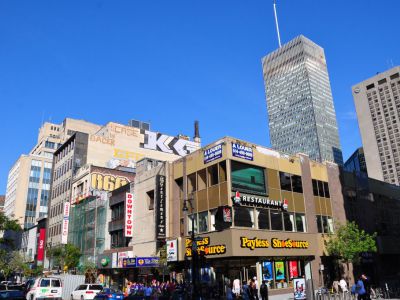
6) Ste-Catherine Street (Rue Ste-Catherine) (must see)
Rue Sainte-Catherine represents the main busy-bee area for shopping, commerce, pedestrian sights, sounds and smells of downtown Montréal. A kind of kaleidoscope for your sensory perception – visual, auditory, and olfactory, it's a wonderful place for a social anthropologist or the everyday citizen-visitor to come experience the vibe of the city in centre-ville.
This street runs a long way (15 kilometers/9 miles) from east to west across the city. You can explore the west end where a plethora of fashion boutiques and restaurants/cafes can be found, or check out the pink balls (put up in summer of 2016) over in the east-end Gay Village. Retailers on the west end are a mix of chains and independents – but, really, more of the former.
The vibe is completely different in summertime, when Montréal comes most alive and part of Sainte-Catherine becomes a wide pedestrian walkway. Starting around the 1st weekend of June, people can be found at all hours of the day soaking in the sun, enjoying street festivals and the fleeting warm weather. Winters can be harsh, as wind can whip through the street like a wind tunnel. Whenever you decide to visit, be courteous and explore the possibilities for dining and entertainment.
This street runs a long way (15 kilometers/9 miles) from east to west across the city. You can explore the west end where a plethora of fashion boutiques and restaurants/cafes can be found, or check out the pink balls (put up in summer of 2016) over in the east-end Gay Village. Retailers on the west end are a mix of chains and independents – but, really, more of the former.
The vibe is completely different in summertime, when Montréal comes most alive and part of Sainte-Catherine becomes a wide pedestrian walkway. Starting around the 1st weekend of June, people can be found at all hours of the day soaking in the sun, enjoying street festivals and the fleeting warm weather. Winters can be harsh, as wind can whip through the street like a wind tunnel. Whenever you decide to visit, be courteous and explore the possibilities for dining and entertainment.
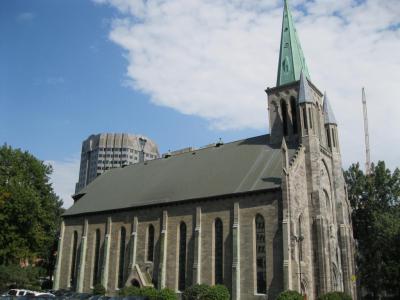
7) St. Patrick's Basilica (must see)
Built in 1847, during the Famine Migration from Ireland, Saint Patrick's is to Montréal's Anglophone Catholics what the Notre-Dame Basilica is to their French-speaking brethren. Among the country's purest examples of the Gothic Revival style, it was declared a historic monument and a National Historic site of Canada in 1996. A true feast for the eyes, you will gorge on its magnificent beauty and revel in the intricate ornate details imbued within.
Stained glass windows adorn the basilica throughout its corners and walls, and on a sunny day, the interior blossoms into a dazzling cornucopia of colour. The tall, slender columns are actually pine logs lashed together and decorated to look like marble, lending an air of majesty and solemness. Another major attraction is the large hanging lamp weighing 1,800 pounds, with six angels adorning the perimeter. You've never seen anything quite like it.
Why You Should Visit:
Not as opulent as Notre-Dame, but lovely on its own. It's lighter and brighter, with glorious woodwork and other details.
On a sunny day, the stained glass windows and Gothic architecture are textbook perfect and golden in hue.
Plus, the place is free to visit and you'll probably be the only tourist there, free to sit and contemplate.
Tip:
Visit after lunch and you might catch the organist practicing for upcoming services.
A side door is usually unlocked most days in case you can't get through the main entrance.
Stained glass windows adorn the basilica throughout its corners and walls, and on a sunny day, the interior blossoms into a dazzling cornucopia of colour. The tall, slender columns are actually pine logs lashed together and decorated to look like marble, lending an air of majesty and solemness. Another major attraction is the large hanging lamp weighing 1,800 pounds, with six angels adorning the perimeter. You've never seen anything quite like it.
Why You Should Visit:
Not as opulent as Notre-Dame, but lovely on its own. It's lighter and brighter, with glorious woodwork and other details.
On a sunny day, the stained glass windows and Gothic architecture are textbook perfect and golden in hue.
Plus, the place is free to visit and you'll probably be the only tourist there, free to sit and contemplate.
Tip:
Visit after lunch and you might catch the organist practicing for upcoming services.
A side door is usually unlocked most days in case you can't get through the main entrance.
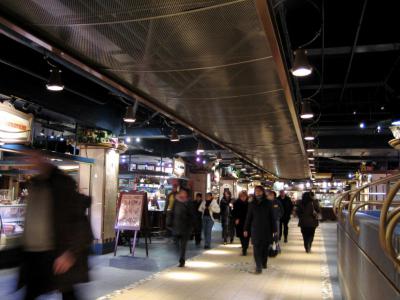
8) Underground City. Place Bonaventure
Montreal's Underground City, also known as La Ville Souterraine in French, attracts tourists from around the globe. It comprises a series of interconnected complexes beneath and above the ground in Downtown Montreal. Renowned as the Indoor City, it stands as the largest complex of its kind worldwide.
The creation of the Underground City was inspired by the vision of urbanist Vincent Ponte. In November 2006, a commemorative plaque was unveiled at Place Ville-Marie in his honor. As you explore this city, you'll discover that certain sections extend above ground as well.
These above-ground and underground areas are linked by tunnels, boasting exceptional lighting. Both spaces are air-conditioned, and the tunnels are spacious enough to accommodate shops on either side. Within the 32 kilometers of tunnels, spread across 12 square kilometers, you'll find banks, condominiums, hotels, apartment buildings, shopping malls, seven metro stations, universities, museums, the Bell Center amphitheater and arena, a regional bus terminal, and two commuter train stations.
With over 120 exterior access points, you can easily enter the Underground City. Located in Downtown Montreal, Place Bonaventure serves as an office, exhibition, and hotel complex. Its name derives from the nearby Bonaventure Station, a former railway station. Place Bonaventure is also connected to Montreal's underground city.
Why You Should Visit:
Shop, eat & drink and walk to another part of town, all out of the weather! Very clean, well lit/ventilated and dry (even when the rain is pouring above).
Tip:
There is a revolving restaurant on the top floor which is worth a visit for lunch as the views are fantastic.
The creation of the Underground City was inspired by the vision of urbanist Vincent Ponte. In November 2006, a commemorative plaque was unveiled at Place Ville-Marie in his honor. As you explore this city, you'll discover that certain sections extend above ground as well.
These above-ground and underground areas are linked by tunnels, boasting exceptional lighting. Both spaces are air-conditioned, and the tunnels are spacious enough to accommodate shops on either side. Within the 32 kilometers of tunnels, spread across 12 square kilometers, you'll find banks, condominiums, hotels, apartment buildings, shopping malls, seven metro stations, universities, museums, the Bell Center amphitheater and arena, a regional bus terminal, and two commuter train stations.
With over 120 exterior access points, you can easily enter the Underground City. Located in Downtown Montreal, Place Bonaventure serves as an office, exhibition, and hotel complex. Its name derives from the nearby Bonaventure Station, a former railway station. Place Bonaventure is also connected to Montreal's underground city.
Why You Should Visit:
Shop, eat & drink and walk to another part of town, all out of the weather! Very clean, well lit/ventilated and dry (even when the rain is pouring above).
Tip:
There is a revolving restaurant on the top floor which is worth a visit for lunch as the views are fantastic.
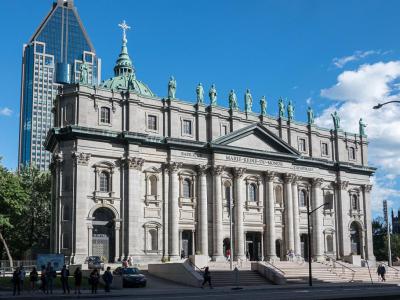
9) Mary, Queen of the World Cathedral (Cathedrale Marie-Reine-du-Monde) (must see)
Montréal has many beautiful churches and this is one of those that you should see when visiting downtown. Despite being nestled among many high-rise structures, its dome is unmistakable, modeled on Saint Peter's in Rome. Though somewhat “scaled-down”, the church is a perfect replica of the same, right down to the red copper baldachin over the altar that was fully hand-carved in Rome.
Dating back to in the 1890s, the cathedral appears older than its years, while at the same time feeling relatively modern as compared to Notre-Dame across town or even other cathedrals in other major cities – mostly due to the cleaner, simpler design. While not particularly ornate, the interior is still pretty, marked by soft hues that lend a gentle and slightly feminine touch. On a sunny day, the brilliant colors of the stained glass windows make it easy to observe the details – from the vibrant ceiling to the altar and the beautiful organ pipes at the back. You may also notice the baptismal font is surmounted by an impressive stucco crucifix – one of the most important pieces of religious sculpture in Quebec.
While the floor and walls are covered in Italian marble the main works of art are dedicated to the city's devout Catholics, including depictions of Marguerite Bourgeoys and Grey Nuns founder Marguerite d'Youville. Like Saint Peter's, the cathedral also has 13 statues that adorn the facade, but breaking with tradition they do not represent Jesus and the 12 apostles. Instead, they represent the patron saints of parishes that offered them to the diocese and include Saint Hyacinthe, Saint Francis of Assisi, and Saint John the Baptist.
Why You Should Visit:
Peaceful and ornate, this Cathedral will make you feel as if you are in an old basilica in Europe.
Tip:
Don't forget to check the gift shop that has many unique gift and jewelry items.
Dating back to in the 1890s, the cathedral appears older than its years, while at the same time feeling relatively modern as compared to Notre-Dame across town or even other cathedrals in other major cities – mostly due to the cleaner, simpler design. While not particularly ornate, the interior is still pretty, marked by soft hues that lend a gentle and slightly feminine touch. On a sunny day, the brilliant colors of the stained glass windows make it easy to observe the details – from the vibrant ceiling to the altar and the beautiful organ pipes at the back. You may also notice the baptismal font is surmounted by an impressive stucco crucifix – one of the most important pieces of religious sculpture in Quebec.
While the floor and walls are covered in Italian marble the main works of art are dedicated to the city's devout Catholics, including depictions of Marguerite Bourgeoys and Grey Nuns founder Marguerite d'Youville. Like Saint Peter's, the cathedral also has 13 statues that adorn the facade, but breaking with tradition they do not represent Jesus and the 12 apostles. Instead, they represent the patron saints of parishes that offered them to the diocese and include Saint Hyacinthe, Saint Francis of Assisi, and Saint John the Baptist.
Why You Should Visit:
Peaceful and ornate, this Cathedral will make you feel as if you are in an old basilica in Europe.
Tip:
Don't forget to check the gift shop that has many unique gift and jewelry items.
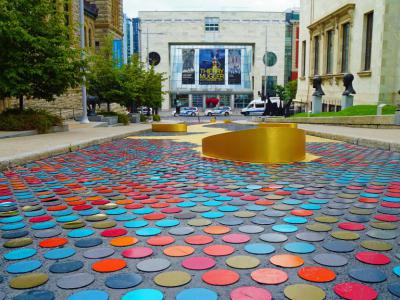
10) Museum of Fine Arts (Musee des Beaux-Arts) (must see)
The Montréal Museum of Fine Arts is housed in three separate buildings on either side of Sherbrooke Street, which are connected through underground walkways. One ticket, valid for a full day, allows access to them all (except for the special exhibit which costs extra and is often not to be missed), taking you on a perfectly balanced art-history tour.
The five pavilions, with their distinct designs, speak volumes about the museum's exhibitions. The modernist Desmarais Pavilion (where the main entrance and the restaurant are located) is filled with light and houses most of the permanent collection of exquisite artworks from around the world, including treasures from Africa, Asia, the Mediterranean, the Middle East, Oceania and the Americas dating from the 4th millennium B.C.E. to today. The back of this building connects to the recent addition of the Hornstein pavilion, which hosts 750 classical-to-early-modern artworks and actually goes the length of using projectors and LCDs to create that moonlight-in-a-forest atmosphere that so many people find "romantic".
After enjoying traditional paintings and sculpture, you may transition to more modern, contemporary and Canadian exhibits, or visit the pavilion dedicated to decorative arts, featuring fun and funky stuff to delight the eye and imagination. It's all rather spread out on a very complex layout, so give yourself enough time to make the experience worthwhile.
***The RMS Titanic Walking Tour***
The frieze on the building's exterior is the work of second class passenger Leopold Weisz, 33, who drowned in the disaster. A Hungarian-born Jewish stone carver, Weisz got the job in Canada carving the frieze for the Museum of Arts building in 1911, following which he was contracted to do the stone shields which decorate the Dominion Express Building at 201 Saint Jacques Street W. He had gone back to England to fetch his wife and the couple were to have returned on another vessel, but because of the coal strike, were transferred to Titanic. Mrs Weisz survived, but was about to be deported as an indigent from Canada until her husband's body was recovered, with $15,000 worth of gold sewn into the lining. It was returned to her, and she remained in Montréal.
Why You Should Visit:
If you're happy to discover artists you are not already familiar with or to stop and spend time with at least one masterpiece, this place is a good choice, especially when the weather isn't great to be outside. Collections are well spaced out in appropriate themes and one can't help but be impressed by the lighting and staging of the artwork.
Tip:
Note the reduced admission fees to major exhibitions between 5–9pm on Fridays.
In addition, the first Sunday of each month is free for all and sundry.
The five pavilions, with their distinct designs, speak volumes about the museum's exhibitions. The modernist Desmarais Pavilion (where the main entrance and the restaurant are located) is filled with light and houses most of the permanent collection of exquisite artworks from around the world, including treasures from Africa, Asia, the Mediterranean, the Middle East, Oceania and the Americas dating from the 4th millennium B.C.E. to today. The back of this building connects to the recent addition of the Hornstein pavilion, which hosts 750 classical-to-early-modern artworks and actually goes the length of using projectors and LCDs to create that moonlight-in-a-forest atmosphere that so many people find "romantic".
After enjoying traditional paintings and sculpture, you may transition to more modern, contemporary and Canadian exhibits, or visit the pavilion dedicated to decorative arts, featuring fun and funky stuff to delight the eye and imagination. It's all rather spread out on a very complex layout, so give yourself enough time to make the experience worthwhile.
***The RMS Titanic Walking Tour***
The frieze on the building's exterior is the work of second class passenger Leopold Weisz, 33, who drowned in the disaster. A Hungarian-born Jewish stone carver, Weisz got the job in Canada carving the frieze for the Museum of Arts building in 1911, following which he was contracted to do the stone shields which decorate the Dominion Express Building at 201 Saint Jacques Street W. He had gone back to England to fetch his wife and the couple were to have returned on another vessel, but because of the coal strike, were transferred to Titanic. Mrs Weisz survived, but was about to be deported as an indigent from Canada until her husband's body was recovered, with $15,000 worth of gold sewn into the lining. It was returned to her, and she remained in Montréal.
Why You Should Visit:
If you're happy to discover artists you are not already familiar with or to stop and spend time with at least one masterpiece, this place is a good choice, especially when the weather isn't great to be outside. Collections are well spaced out in appropriate themes and one can't help but be impressed by the lighting and staging of the artwork.
Tip:
Note the reduced admission fees to major exhibitions between 5–9pm on Fridays.
In addition, the first Sunday of each month is free for all and sundry.
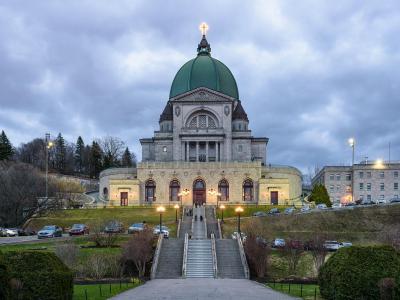
11) Saint Joseph's Oratory of Mount-Royal (must see)
Saint Joseph's Oratory of Mount Royal is a Roman Catholic minor basilica and national shrine situated on Queen Mary Road in Montreal, Quebec's Côte-des-Neiges neighborhood. It holds the distinction of being Canada's largest church and is designated as a National Historic Site of Canada. The oratory's location on Mount Royal's Westmount Summit grants it prominence, with its towering height and one of the world's largest church domes.
Saint André Bessette established the Oratory in 1904 as a tribute to his patron saint, Saint Joseph. Over the course of six decades, countless architects and workers contributed to its creation. The Oratory's grandeur, featuring a Renaissance Revival facade and an Art Deco interior, has made it an iconic landmark globally, drawing more than 2 million visitors and pilgrims annually.
Remarkably, the Oratory is Montreal's tallest structure, rising over 30 meters above the summit of Mount Royal, making it visible from several kilometers away. It stands out for its defiance of the height restrictions outlined in the municipal building code of Montreal, which generally prohibits structures, including skyscrapers, from surpassing the mountain's elevation.
Since 2018, extensive renovations have been underway on the Oratory's dome and lantern, with completion expected in 2024. The esteemed architecture firms Atelier TAG and Architecture49 have undertaken this project. Once finished, it will provide secure access to the lantern, affording an unparalleled 360-degree view of the city and the mountain.
Why You Should Visit:
Enormous upper church and lower crypt church. Accessible by either stairs or escalators/elevators. Terraces have outstanding views looking down on Montreal. Awe-inspiring.
Tip:
Free pipe organ concerts with organists from around the world on Sunday afternoons!
Saint André Bessette established the Oratory in 1904 as a tribute to his patron saint, Saint Joseph. Over the course of six decades, countless architects and workers contributed to its creation. The Oratory's grandeur, featuring a Renaissance Revival facade and an Art Deco interior, has made it an iconic landmark globally, drawing more than 2 million visitors and pilgrims annually.
Remarkably, the Oratory is Montreal's tallest structure, rising over 30 meters above the summit of Mount Royal, making it visible from several kilometers away. It stands out for its defiance of the height restrictions outlined in the municipal building code of Montreal, which generally prohibits structures, including skyscrapers, from surpassing the mountain's elevation.
Since 2018, extensive renovations have been underway on the Oratory's dome and lantern, with completion expected in 2024. The esteemed architecture firms Atelier TAG and Architecture49 have undertaken this project. Once finished, it will provide secure access to the lantern, affording an unparalleled 360-degree view of the city and the mountain.
Why You Should Visit:
Enormous upper church and lower crypt church. Accessible by either stairs or escalators/elevators. Terraces have outstanding views looking down on Montreal. Awe-inspiring.
Tip:
Free pipe organ concerts with organists from around the world on Sunday afternoons!
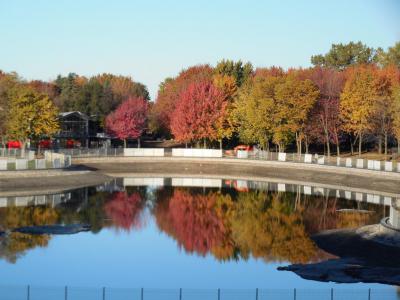
12) Mount Royal Park (must see)
Mount Royal Park was opened in 1876. Fredrick Law Olmsted, a famous landscape architect designed this park. It is now one of the largest green spaces in Montreal that attracts more than 5 million visitors every year. If you are a passionate outdoor enthusiast, you will definitely enjoy the wide variety of plants and birds in this park. It also offers plenty of outdoor activities for all ages in all seasons.
Mount Royal Park offers some of the most mesmerizing skyline views of the city. Summit Park is a must-see spot in this park. You can see some rare wild plants here. The Georges Etienne Cartier monument is another important attraction that draws crowds. In recent times, the monument is the site for the popular TamTam’s festivities. The Beaver Lake in Mount Royal Park is an ideal picnic spot for locals and tourists.
Mount Royal Park also houses the Smith House, which is a major spot for those who want to obtain historical information about the park and the city. Mount Royal Cemetery is a pleasant place if you want to enjoy a relaxed walking or biking. It is a perfect place for picnicking too. The cemetery is more attractive in May when flowering trees bloom.
Why You Should Visit:
Great panoramic view of Montreal and the large area allows winter activities like cross-country skiing while summer and fall make a great place to hike, jog or walk.
Tip:
It takes about 20 to 30 minutes to get to the top of Mount Royal once you have reached the park. There is a gravel trail (mainly for bikes) and also a wooden staircase (for walkers) to the top. There is at least one lower vantage point that might make you think you're done, but keep going till you get to 'The Chalet'.
Mount Royal Park offers some of the most mesmerizing skyline views of the city. Summit Park is a must-see spot in this park. You can see some rare wild plants here. The Georges Etienne Cartier monument is another important attraction that draws crowds. In recent times, the monument is the site for the popular TamTam’s festivities. The Beaver Lake in Mount Royal Park is an ideal picnic spot for locals and tourists.
Mount Royal Park also houses the Smith House, which is a major spot for those who want to obtain historical information about the park and the city. Mount Royal Cemetery is a pleasant place if you want to enjoy a relaxed walking or biking. It is a perfect place for picnicking too. The cemetery is more attractive in May when flowering trees bloom.
Why You Should Visit:
Great panoramic view of Montreal and the large area allows winter activities like cross-country skiing while summer and fall make a great place to hike, jog or walk.
Tip:
It takes about 20 to 30 minutes to get to the top of Mount Royal once you have reached the park. There is a gravel trail (mainly for bikes) and also a wooden staircase (for walkers) to the top. There is at least one lower vantage point that might make you think you're done, but keep going till you get to 'The Chalet'.
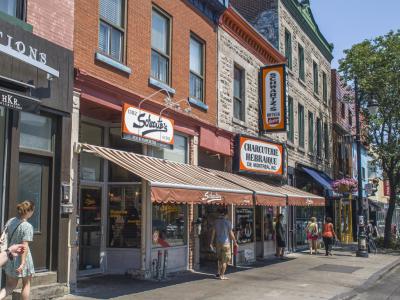
13) Schwartz's / Jewish Quarter (must see)
Along with bagels, smoked meat has been popular in Montreal since the 19th century and is identified as emblematic of the city's cuisine. Many have laid claims to its introduction into the city; regardless, all of these stories indicate the creators are of the Jewish Diaspora from Romania or Eastern Europe. Although the preparation method may be similar to New York pastrami, the meat is cured in seasoning with more cracked peppercorns and savory flavorings, such as coriander, garlic, and mustard seeds, and significantly less sugar.
Soft and succulent with a flavor of its own, the meat served at Schwartz's tastes all the better layered on bread with coleslaw, pickles and a dash of mustard. Opened in 1928, the deli's long popularity has led to it being considered a cultural institution of Montreal. The place remains largely unchanged, right down to its place-mat menus, banquette seating, fast service, fluorescent lighting, and location in the Jewish Quarter.
You can order the old-fashioned sandwich or, if you are going for the first time, try the combination platter which has both smoked meat and rib eye steak with in-house spices. Not only does the platter have a good serving size of meat but you also get to sample two of the restaurant's signature meats and decide what to order if you need more.
Tip:
If you are going for dinner, try to arrive early (around 6pm) for minimal wait times.
Soft and succulent with a flavor of its own, the meat served at Schwartz's tastes all the better layered on bread with coleslaw, pickles and a dash of mustard. Opened in 1928, the deli's long popularity has led to it being considered a cultural institution of Montreal. The place remains largely unchanged, right down to its place-mat menus, banquette seating, fast service, fluorescent lighting, and location in the Jewish Quarter.
You can order the old-fashioned sandwich or, if you are going for the first time, try the combination platter which has both smoked meat and rib eye steak with in-house spices. Not only does the platter have a good serving size of meat but you also get to sample two of the restaurant's signature meats and decide what to order if you need more.
Tip:
If you are going for dinner, try to arrive early (around 6pm) for minimal wait times.
14) Plateau Mont-Royal (must see)
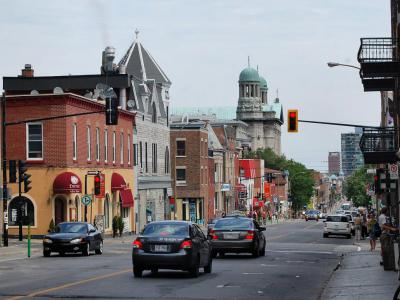
Situated east of Mont-Royal and north of downtown, Plateau Mont-Royal is a must-see destination when visiting Montreal. Its name stems from its location on the flat terrain of Sherbrooke Street.
Historically, the western part of the Plateau was inhabited by Jews, while the eastern part was predominantly occupied by Quebecois. It was primarily a working-class neighborhood and served as the residence for renowned Quebec writers like Mordecai Richler and Michel Tremblay. Their literary works often featured the Plateau during the 1950s and 1960s.
Prepare to be pleasantly enchanted by the lively ambiance of Plateau Mont-Royal, characterized by vibrant, colorful houses, cozy bookstores, delightful cafes, and a friendly demeanor. Don't miss the chance to explore popular attractions along Saint Laurent Boulevard.
A visit to Schwartz's Deli is a must to experience the origins of the delectable Montreal smoked meat. If you're there in the summer, you can immerse yourself in the bustling street fair that takes place on weekends. This neighborhood emanates a bohemian atmosphere and benefits from its proximity to the esteemed McGill University, which has attracted many residents to settle here.
Presently, the Saint-Denis and Saint-Laurent strip is lined with an array of nightclubs, upscale restaurants, and exclusive fashion stores, offering a diverse range of entertainment options.
Why You Should Visit:
This part of town has a unique architecture with many wrought iron staircases outside the homes. Really elegant area and a great place to walk.
It's worth a trip just to visit Parc de La Fontaine during the summer or fall.
Tip:
Nightlife is good: make sure you go by Saint Denis or Saint Laurent streets.
Historically, the western part of the Plateau was inhabited by Jews, while the eastern part was predominantly occupied by Quebecois. It was primarily a working-class neighborhood and served as the residence for renowned Quebec writers like Mordecai Richler and Michel Tremblay. Their literary works often featured the Plateau during the 1950s and 1960s.
Prepare to be pleasantly enchanted by the lively ambiance of Plateau Mont-Royal, characterized by vibrant, colorful houses, cozy bookstores, delightful cafes, and a friendly demeanor. Don't miss the chance to explore popular attractions along Saint Laurent Boulevard.
A visit to Schwartz's Deli is a must to experience the origins of the delectable Montreal smoked meat. If you're there in the summer, you can immerse yourself in the bustling street fair that takes place on weekends. This neighborhood emanates a bohemian atmosphere and benefits from its proximity to the esteemed McGill University, which has attracted many residents to settle here.
Presently, the Saint-Denis and Saint-Laurent strip is lined with an array of nightclubs, upscale restaurants, and exclusive fashion stores, offering a diverse range of entertainment options.
Why You Should Visit:
This part of town has a unique architecture with many wrought iron staircases outside the homes. Really elegant area and a great place to walk.
It's worth a trip just to visit Parc de La Fontaine during the summer or fall.
Tip:
Nightlife is good: make sure you go by Saint Denis or Saint Laurent streets.
15) Montreal Botanical Garden (must see)
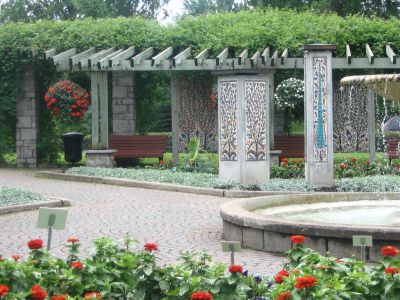
The Montreal Botanical Garden is a vast botanical garden located in Montreal. Encompassing 75 hectares (190 acres) of beautifully curated thematic gardens and greenhouses, it holds great significance as one of the world's most prominent botanical gardens. Recognized as a National Historic Site of Canada in 2008, its extensive collections and top-notch facilities contribute to its esteemed status.
Established in 1931 during the challenging times of the Great Depression, the garden was brought to life through the efforts of Mayor Camillien Houde and Brother Marie-Victorin, who tirelessly campaigned for its creation. The visionary design of the grounds was executed by Henry Teuscher, while the architect Lucien F. Kéroack skillfully crafted the Art Deco style administration building. Today, the garden nurtures around 20,000 plant species, showcasing a diverse range of alpine plants, ferns, bonsai, commercially important plants, medicinal herbs, woodland plants, cacti, succulents, begonias, aroids, bromeliads, and gesneriads. Additionally, it houses a herbarium with nearly 100,000 reference specimens.
The Montreal Botanical Garden serves as an educational hub, enlightening both the general public and horticulture students. It plays a crucial role in conserving endangered plant species. Moreover, within its grounds, you'll find a botanical research institution, the Société d'astronomie de Montréal, and the Montreal Insectarium. The Garden's dedicated staff also manages the Ferme Angrignon educational farm and petting zoo, even though it's located offsite.
While there is an admission fee, city residents have the privilege of obtaining a pass that grants them free access to the outdoor gardens. Consequently, many people visit regularly, drawn to the tranquil atmosphere and the chance to relax beneath the shade of the trees. Notably, during the summer season (May to September), the outdoor areas are open to everyone free of charge from 6 pm until nightfall.
Why You Should Visit:
An all-season place to go.
In the Winter you can stick to the glass house; in the Spring you start with the butterflies in the glass house then a quick tour of the gardens and Insectarium;
In Summer you also go to the gardens (Chinese & Japanese); in the Fall you go to see the pumpkins and the lanterns in the Chinese garden and the colors in the arboretum part.
Tip:
Leave time for a drink on the large patio outside the restaurant which features excellent local beers and ciders.
Established in 1931 during the challenging times of the Great Depression, the garden was brought to life through the efforts of Mayor Camillien Houde and Brother Marie-Victorin, who tirelessly campaigned for its creation. The visionary design of the grounds was executed by Henry Teuscher, while the architect Lucien F. Kéroack skillfully crafted the Art Deco style administration building. Today, the garden nurtures around 20,000 plant species, showcasing a diverse range of alpine plants, ferns, bonsai, commercially important plants, medicinal herbs, woodland plants, cacti, succulents, begonias, aroids, bromeliads, and gesneriads. Additionally, it houses a herbarium with nearly 100,000 reference specimens.
The Montreal Botanical Garden serves as an educational hub, enlightening both the general public and horticulture students. It plays a crucial role in conserving endangered plant species. Moreover, within its grounds, you'll find a botanical research institution, the Société d'astronomie de Montréal, and the Montreal Insectarium. The Garden's dedicated staff also manages the Ferme Angrignon educational farm and petting zoo, even though it's located offsite.
While there is an admission fee, city residents have the privilege of obtaining a pass that grants them free access to the outdoor gardens. Consequently, many people visit regularly, drawn to the tranquil atmosphere and the chance to relax beneath the shade of the trees. Notably, during the summer season (May to September), the outdoor areas are open to everyone free of charge from 6 pm until nightfall.
Why You Should Visit:
An all-season place to go.
In the Winter you can stick to the glass house; in the Spring you start with the butterflies in the glass house then a quick tour of the gardens and Insectarium;
In Summer you also go to the gardens (Chinese & Japanese); in the Fall you go to see the pumpkins and the lanterns in the Chinese garden and the colors in the arboretum part.
Tip:
Leave time for a drink on the large patio outside the restaurant which features excellent local beers and ciders.
