Custom Walk in London, England by marc_7b4ec created on 2025-07-18
Guide Location: England » London
Guide Type: Custom Walk
# of Sights: 6
Tour Duration: 2 Hour(s)
Travel Distance: 4.9 Km or 3 Miles
Share Key: RVSZJ
Guide Type: Custom Walk
# of Sights: 6
Tour Duration: 2 Hour(s)
Travel Distance: 4.9 Km or 3 Miles
Share Key: RVSZJ
How It Works
Please retrieve this walk in the GPSmyCity app. Once done, the app will guide you from one tour stop to the next as if you had a personal tour guide. If you created the walk on this website or come to the page via a link, please follow the instructions below to retrieve the walk in the app.
Retrieve This Walk in App
Step 1. Download the app "GPSmyCity: Walks in 1K+ Cities" on Apple App Store or Google Play Store.



Step 2. In the GPSmyCity app, download(or launch) the guide "London Map and Walking Tours".
Step 3. Tap the menu button located at upper right corner of the "Walks" screen and select "Retrieve custom walk". Enter the share key: RVSZJ
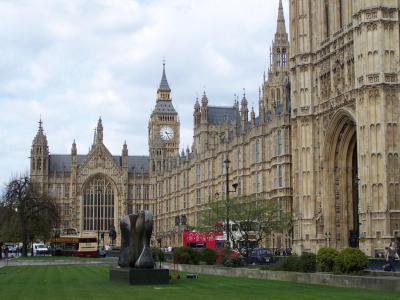
1) Big Ben & Houses of Parliament (must see)
Ah yes, Big Ben-London’s most famous timekeeper! Often mistaken for the entire tower, technically, it's just the bell inside. The tower itself, once modestly named the Clock Tower, got a royal upgrade in 2012 and is now known as the Elizabeth Tower, in honor of Queen Elizabeth II’s Diamond Jubilee.
As for Big Ben-the bell-it weighs a jaw-dropping 15 tonnes. That’s about the weight of three adult elephants. It chimes every hour with a deep, resonant bong that echoes across the city, while four smaller bells handle the quarter-hour duties like loyal timekeeping sidekicks.
As for the name “Big Ben”, theories abound. Some say it was named after Benjamin Hall, the rather large man in charge of installing the bell. Others swear it honors Benjamin Caunt, a Victorian heavyweight boxer. Either way, it’s clear: you didn’t get to be “Big Ben” by being discreet.
Just next door, you'll find the Palace of Westminster, home of the Houses of Parliament-that’s the House of Commons and the House of Lords for those keeping score. After a fire in 1834 burned the old palace to a crisp, King William IV generously offered up Buckingham Palace as a backup. The MPs politely declined, presumably because having tea in the Throne Room seemed a bit too much.
These days, the House of Commons is often in the headlines, especially during the theatrical Wednesdays known as Prime Minister’s Questions. Yes, it’s as lively as it sounds. The public can watch the action live, either by scoring a free ticket through their MP or simply queuing up outside (bonus points if it’s raining-very British).
In terms of security, expect the full “airport-lite” treatment. Bags scanned, belts off, shoes inspected-but thankfully, no need to explain your carry-on liquids.
Now, if the idea of parliamentary debates doesn’t tickle your fancy and you’re more into aesthetic admiration, simply head over to Westminster Bridge-some 500 yards away. From there, you’ll get the postcard shot of Big Ben and the Parliament buildings, no queuing or shoe removal required. Just you, the view, and a thousand other camera-happy tourists. Smile for history!
As for Big Ben-the bell-it weighs a jaw-dropping 15 tonnes. That’s about the weight of three adult elephants. It chimes every hour with a deep, resonant bong that echoes across the city, while four smaller bells handle the quarter-hour duties like loyal timekeeping sidekicks.
As for the name “Big Ben”, theories abound. Some say it was named after Benjamin Hall, the rather large man in charge of installing the bell. Others swear it honors Benjamin Caunt, a Victorian heavyweight boxer. Either way, it’s clear: you didn’t get to be “Big Ben” by being discreet.
Just next door, you'll find the Palace of Westminster, home of the Houses of Parliament-that’s the House of Commons and the House of Lords for those keeping score. After a fire in 1834 burned the old palace to a crisp, King William IV generously offered up Buckingham Palace as a backup. The MPs politely declined, presumably because having tea in the Throne Room seemed a bit too much.
These days, the House of Commons is often in the headlines, especially during the theatrical Wednesdays known as Prime Minister’s Questions. Yes, it’s as lively as it sounds. The public can watch the action live, either by scoring a free ticket through their MP or simply queuing up outside (bonus points if it’s raining-very British).
In terms of security, expect the full “airport-lite” treatment. Bags scanned, belts off, shoes inspected-but thankfully, no need to explain your carry-on liquids.
Now, if the idea of parliamentary debates doesn’t tickle your fancy and you’re more into aesthetic admiration, simply head over to Westminster Bridge-some 500 yards away. From there, you’ll get the postcard shot of Big Ben and the Parliament buildings, no queuing or shoe removal required. Just you, the view, and a thousand other camera-happy tourists. Smile for history!
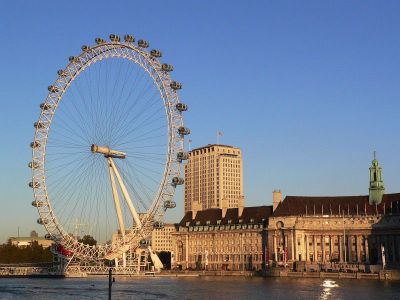
2) London Eye (must see)
Say hello to the London Eye - or, if you’re feeling fancy, the Millennium Wheel. Built to welcome the year 2000 in style, it had its soft launch in late 1999 and officially opened in March 2000. Designed by architects David Marks and Julia Barfield, it was supposed to be temporary... but Londoners loved it so much, they basically said, “Nope, it’s staying.”
At 135 meters (that’s 443 feet if you’re still thinking imperial), the Eye was once the tallest observation wheel on the planet - and it still holds the crown in Europe. The ride - a slow, elegant spin takes about 30 minutes, offering jaw-dropping, 360-degree views stretching up to 40 kilometers on a clear day. From Big Ben to Buckingham Palace - and if you squint, even Windsor Castle - London is laid out before you like a pop-up storybook.
Each of the 32 sleek glass capsules (one for each London borough) can carry up to 28 people. Great for selfies, great for proposals, and perfect if you just want to stare out and feel dramatically reflective.
Want to dial up the experience? Your ticket comes with a 4D cinema show, or you can upgrade to private pods or champagne flights if you're feeling extra. Plus, the Eye sits right on the South Bank - a hop away from the SEA LIFE Aquarium, the London Dungeon, and the laid-back Jubilee Gardens.
Fun fact: The Eye’s giant bicycle-wheel design is a true European team effort - with British steel, Dutch engineering, and a smattering of German, French, Czech, and Italian parts.
Bottom line: Whether you're new in town or just want to fall in love with London all over again, the London Eye is a must-spin.
Tip:
Book online to save cash and skip the long lines. Your Instagram will thank you.
At 135 meters (that’s 443 feet if you’re still thinking imperial), the Eye was once the tallest observation wheel on the planet - and it still holds the crown in Europe. The ride - a slow, elegant spin takes about 30 minutes, offering jaw-dropping, 360-degree views stretching up to 40 kilometers on a clear day. From Big Ben to Buckingham Palace - and if you squint, even Windsor Castle - London is laid out before you like a pop-up storybook.
Each of the 32 sleek glass capsules (one for each London borough) can carry up to 28 people. Great for selfies, great for proposals, and perfect if you just want to stare out and feel dramatically reflective.
Want to dial up the experience? Your ticket comes with a 4D cinema show, or you can upgrade to private pods or champagne flights if you're feeling extra. Plus, the Eye sits right on the South Bank - a hop away from the SEA LIFE Aquarium, the London Dungeon, and the laid-back Jubilee Gardens.
Fun fact: The Eye’s giant bicycle-wheel design is a true European team effort - with British steel, Dutch engineering, and a smattering of German, French, Czech, and Italian parts.
Bottom line: Whether you're new in town or just want to fall in love with London all over again, the London Eye is a must-spin.
Tip:
Book online to save cash and skip the long lines. Your Instagram will thank you.
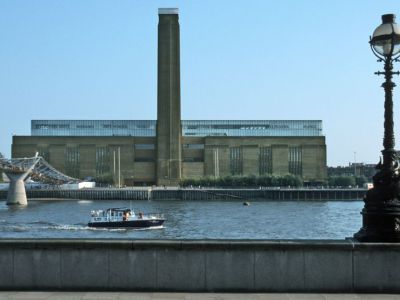
3) Tate Modern (must see)
Once upon a smokestack, this mid-20th-century power station went from fueling machines to fueling imaginations - and today, this is one of the most-visited modern art museums on the planet: the Tate Modern.
Inside, the art doesn’t march along a tidy timeline. Instead, it sprawls across eight thematically curated zones, mixing heavy-hitters like Matisse with up-to-the-minute works by contemporary rebels. The temporary exhibitions here also feature big names and bold ideas. Think Gauguin, Modigliani, Picasso, O’Keeffe… and entire showcases exploring Soviet art between the Revolution and Stalin’s iron curtain call.
Step into the Turbine Hall - Tate’s dramatic entrance that could probably house a small airport - and you’ll be greeted by gravity-defying installations like Olafur Eliasson’s indoor sun, Ai Weiwei’s sea of porcelain sunflower seeds, or Carsten Höller’s towering steel slides that turn art appreciation into a full-body experience.
Dive underground and you’ll hit The Tanks: not for oil anymore, but for experimental art. We're talking performance pieces, soundscapes, and moving images that make your brain do backflips. Climb skyward to the rooftop terrace for a killer panoramic view of London’s skyline (and if you’re lucky, some weather to match).
In between, there are three expansive exhibition levels featuring everything from global contemporary art to interactive displays and full-room installations. Level 2 is home to the Start Display, where color takes center stage in a global conversation between cultures and eras.
Tip:
If your feet get tired or your brain starts spinning, grab a seat and a snack. There’s a restaurant with skyline views on Level 9, a relaxed café on Level 1, and a cozy espresso bar on Level 3. Don’t miss the balcony on Level 3 either - the view of St. Paul’s from there is pure poetry. Oh, and don’t leave without trying the Tate Draw. Sketch, swipe, and project your masterpiece onto the wall like the digital da Vinci you are.
Inside, the art doesn’t march along a tidy timeline. Instead, it sprawls across eight thematically curated zones, mixing heavy-hitters like Matisse with up-to-the-minute works by contemporary rebels. The temporary exhibitions here also feature big names and bold ideas. Think Gauguin, Modigliani, Picasso, O’Keeffe… and entire showcases exploring Soviet art between the Revolution and Stalin’s iron curtain call.
Step into the Turbine Hall - Tate’s dramatic entrance that could probably house a small airport - and you’ll be greeted by gravity-defying installations like Olafur Eliasson’s indoor sun, Ai Weiwei’s sea of porcelain sunflower seeds, or Carsten Höller’s towering steel slides that turn art appreciation into a full-body experience.
Dive underground and you’ll hit The Tanks: not for oil anymore, but for experimental art. We're talking performance pieces, soundscapes, and moving images that make your brain do backflips. Climb skyward to the rooftop terrace for a killer panoramic view of London’s skyline (and if you’re lucky, some weather to match).
In between, there are three expansive exhibition levels featuring everything from global contemporary art to interactive displays and full-room installations. Level 2 is home to the Start Display, where color takes center stage in a global conversation between cultures and eras.
Tip:
If your feet get tired or your brain starts spinning, grab a seat and a snack. There’s a restaurant with skyline views on Level 9, a relaxed café on Level 1, and a cozy espresso bar on Level 3. Don’t miss the balcony on Level 3 either - the view of St. Paul’s from there is pure poetry. Oh, and don’t leave without trying the Tate Draw. Sketch, swipe, and project your masterpiece onto the wall like the digital da Vinci you are.
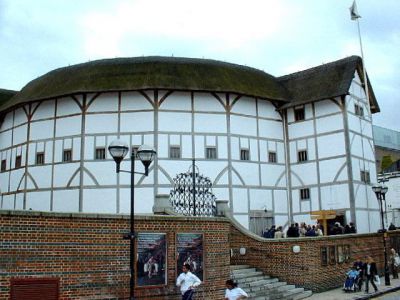
4) Shakespeare's Globe (must see)
Welcome to Shakespeare’s Globe-or, as some like to call it, the Bard’s comeback tour, 400 years in the making. This stunning open-air theater is a faithful, full-thatch, no-nails, "mind the splinters" replica of the original Globe Playhouse. The original Globe opened in 1599 but met a rather dramatic end in 1613 when a stage cannon misfired during a performance. Boom! Theater barbecue...
A few centuries on, enter Sam Wanamaker-an American actor and director with a British theater obsession and the patience of a saint. He spent decades rallying support to resurrect the Globe, and by 1997, his dream was finally realized. The new Globe stands just 200 yards from where the original once stood, crafted with the same old-school tools and materials (no concrete shortcuts here). Today, it stages Shakespeare’s hits, deep cuts, and even some gems by his playwright pals.
Now, if you're planning to channel your inner Elizabethan and stand as a "Groundling"-congrats! You'll be closest to the action. But don’t expect a seat or sympathy for your aching feet. Want to sit like a civilized 17th-century noble? Great, there are benches-wooden, backless, and full of historical charm. Pro tip: rent a cushion. Or bring one. Or risk the full Tudor chiropractic experience...
And yes, this is an open-air venue. Come rain or shine, or heatwave, or hail-the show must go on. Umbrellas are a no-go (sorry, your neighbor’s view matters too), but you can grab a stylish Globe poncho, which doubles as a weather shield and souvenir.
The main season runs from April to October. If you prefer candlelit drama without the outdoor breeze, head next door to the Sam Wanamaker Playhouse, a 350-seat Jacobean gem lit entirely by candlelight. It’s cozy, atmospheric, and yes-some benches are still backless. You’ve been warned.
Why visit? – You may ask. Because this is as close as you’ll ever get to actual time travel without a DeLorean (remember that car from the Back to the Future trilogy). So, if you’re a die-hard Shakespeare fan or just in it for the costumes and swordfights, the Globe delivers the drama, the laughs, and the full Renaissance vibes all the same.
Curtain up, ponchos on-see you in Southwark...
Tip:
Join a guided tour before 4 pm (unless a matinee’s on, then get in before noon). Wanamaker tours are rarer, so book those in advance if you're lucky enough to find one.
A few centuries on, enter Sam Wanamaker-an American actor and director with a British theater obsession and the patience of a saint. He spent decades rallying support to resurrect the Globe, and by 1997, his dream was finally realized. The new Globe stands just 200 yards from where the original once stood, crafted with the same old-school tools and materials (no concrete shortcuts here). Today, it stages Shakespeare’s hits, deep cuts, and even some gems by his playwright pals.
Now, if you're planning to channel your inner Elizabethan and stand as a "Groundling"-congrats! You'll be closest to the action. But don’t expect a seat or sympathy for your aching feet. Want to sit like a civilized 17th-century noble? Great, there are benches-wooden, backless, and full of historical charm. Pro tip: rent a cushion. Or bring one. Or risk the full Tudor chiropractic experience...
And yes, this is an open-air venue. Come rain or shine, or heatwave, or hail-the show must go on. Umbrellas are a no-go (sorry, your neighbor’s view matters too), but you can grab a stylish Globe poncho, which doubles as a weather shield and souvenir.
The main season runs from April to October. If you prefer candlelit drama without the outdoor breeze, head next door to the Sam Wanamaker Playhouse, a 350-seat Jacobean gem lit entirely by candlelight. It’s cozy, atmospheric, and yes-some benches are still backless. You’ve been warned.
Why visit? – You may ask. Because this is as close as you’ll ever get to actual time travel without a DeLorean (remember that car from the Back to the Future trilogy). So, if you’re a die-hard Shakespeare fan or just in it for the costumes and swordfights, the Globe delivers the drama, the laughs, and the full Renaissance vibes all the same.
Curtain up, ponchos on-see you in Southwark...
Tip:
Join a guided tour before 4 pm (unless a matinee’s on, then get in before noon). Wanamaker tours are rarer, so book those in advance if you're lucky enough to find one.
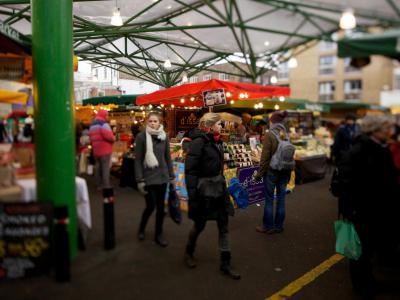
5) Borough Market (must see)
Borough Market is London’s oldest and most atmospheric food market, boasting a history that spans over 1,000 years. Its origins trace back to the 11th century - and possibly earlier - when farmers would bring fresh produce to London Bridge, then the only southern entrance into the city. By the 18th century, the market had become so chaotic that Parliament decided to shut it down in 1756, though local volunteers soon revived it nearby. The structures seen today, with ornate Victorian ironwork and soaring arcades, were developed largely in the 19th century.
Today, with a railway rumbling overhead, this historic market hums below as a vibrant maze of culinary treasures. Visitors can explore an impressive range of artisan stalls offering cheeses, fresh bread, meats, seafood, organic produce, spices, handmade sweets, and gourmet street food. While British classics like meat pies and sausages are readily available, the real appeal lies in the diversity - from Ethiopian stews and Indian curries to Spanish paella and Middle Eastern falafel.
Navigating the market is part of the fun. Begin your adventure through the central labyrinth of food stalls until you reach Stoney Street on the western edge. From there, stroll along Park Street - a film location favorite - where you’ll find a lively pub and the famous Neal’s Yard Dairy cheese shop. Across the way, the Ginger Pig draws crowds for its traditional English bacon and sausages. For a local favorite, stop by Maria’s Market Café, a classic haunt for longtime market workers. Around every corner, more delights await, including covered terraces with extra seating for diners.
Rain or shine, Borough Market delivers. The partial roof makes it an all-weather destination, and beyond eating and shopping, visitors can enjoy food tastings, seasonal festivals, cooking demos, and culinary workshops. The market thrives on community and celebration, drawing food lovers from around the world.
Conveniently located near landmarks like Southwark Cathedral, The Shard, and Shakespeare’s Globe Theatre, it’s a perfect stop during a day exploring London’s South Bank.
Tip:
Before committing to a meal, take your time wandering. Getting a bit lost is part of the charm - and often leads to the tastiest surprises.
Today, with a railway rumbling overhead, this historic market hums below as a vibrant maze of culinary treasures. Visitors can explore an impressive range of artisan stalls offering cheeses, fresh bread, meats, seafood, organic produce, spices, handmade sweets, and gourmet street food. While British classics like meat pies and sausages are readily available, the real appeal lies in the diversity - from Ethiopian stews and Indian curries to Spanish paella and Middle Eastern falafel.
Navigating the market is part of the fun. Begin your adventure through the central labyrinth of food stalls until you reach Stoney Street on the western edge. From there, stroll along Park Street - a film location favorite - where you’ll find a lively pub and the famous Neal’s Yard Dairy cheese shop. Across the way, the Ginger Pig draws crowds for its traditional English bacon and sausages. For a local favorite, stop by Maria’s Market Café, a classic haunt for longtime market workers. Around every corner, more delights await, including covered terraces with extra seating for diners.
Rain or shine, Borough Market delivers. The partial roof makes it an all-weather destination, and beyond eating and shopping, visitors can enjoy food tastings, seasonal festivals, cooking demos, and culinary workshops. The market thrives on community and celebration, drawing food lovers from around the world.
Conveniently located near landmarks like Southwark Cathedral, The Shard, and Shakespeare’s Globe Theatre, it’s a perfect stop during a day exploring London’s South Bank.
Tip:
Before committing to a meal, take your time wandering. Getting a bit lost is part of the charm - and often leads to the tastiest surprises.
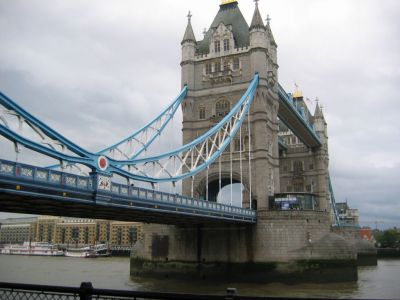
6) Tower Bridge (must see)
Tower Bridge-yes, that famous one with the twin towers and rising roadways-surprisingly didn’t swing into action until 1894. That’s right: it’s younger than your great-great-grandma’s fruitcake recipe, though you'd never guess it based on the number of fridge magnets it’s starred on. Indeed, in just over a century, it’s managed to become one of London’s most iconic symbols-practically the Victorian era in bridge form.
Now here’s a royal twist: Queen Victoria wasn’t exactly thrilled about it at first. She worried the bridge might compromise the security of the nearby Tower of London, which at that time doubled as an armory. Still, they painted it her favorite color-chocolate brown-and forged ahead, perhaps hoping that a well-dressed bridge would soothe Her Majesty’s nerves.
Under the hood (well, under the road), it was all quite steamy-literally. Sophisticated steam-powered engines lifted the bridge’s bascules to allow tall ships to pass through. In its very first year, the bridge went up over 6,000 times-talk about an overachiever! These days, it opens around 1,000 times a year, and somehow, they’ve managed to avoid any major mishaps. If you’re lucky, you might even catch one of those dramatic lifts in real time-free theater, London-style...
For an unforgettable experience, take in the sweeping views of the Thames, the sci-fi egg that is City Hall, the gleaming glass Shard, and the chaos of central London from the top of the bridge. Better yet, grab a ticket and ride the elevator to the elevated walkways. Up there, you’ll find a glass floor for peeking at the world below (great for photos, or mild panic), plus a museum showcasing the original steam engines-because nothing says Victorian romance like big brass machinery. Bonus points: Yes, there are restrooms at the top, so no need to “hold it” at altitude.
And in case you wonder, why you should go?-This masterpiece of Victorian engineering also sparkles at night, and-let’s face it-your trip to London wouldn't be complete without seeing it.
Now here’s a royal twist: Queen Victoria wasn’t exactly thrilled about it at first. She worried the bridge might compromise the security of the nearby Tower of London, which at that time doubled as an armory. Still, they painted it her favorite color-chocolate brown-and forged ahead, perhaps hoping that a well-dressed bridge would soothe Her Majesty’s nerves.
Under the hood (well, under the road), it was all quite steamy-literally. Sophisticated steam-powered engines lifted the bridge’s bascules to allow tall ships to pass through. In its very first year, the bridge went up over 6,000 times-talk about an overachiever! These days, it opens around 1,000 times a year, and somehow, they’ve managed to avoid any major mishaps. If you’re lucky, you might even catch one of those dramatic lifts in real time-free theater, London-style...
For an unforgettable experience, take in the sweeping views of the Thames, the sci-fi egg that is City Hall, the gleaming glass Shard, and the chaos of central London from the top of the bridge. Better yet, grab a ticket and ride the elevator to the elevated walkways. Up there, you’ll find a glass floor for peeking at the world below (great for photos, or mild panic), plus a museum showcasing the original steam engines-because nothing says Victorian romance like big brass machinery. Bonus points: Yes, there are restrooms at the top, so no need to “hold it” at altitude.
And in case you wonder, why you should go?-This masterpiece of Victorian engineering also sparkles at night, and-let’s face it-your trip to London wouldn't be complete without seeing it.
