Custom Walk in Dubrovnik, Croatia by gardenstatetravelers_44a33 created on 2025-07-25
Guide Location: Croatia » Dubrovnik
Guide Type: Custom Walk
# of Sights: 10
Tour Duration: 2 Hour(s)
Travel Distance: 2.4 Km or 1.5 Miles
Share Key: FWWLV
Guide Type: Custom Walk
# of Sights: 10
Tour Duration: 2 Hour(s)
Travel Distance: 2.4 Km or 1.5 Miles
Share Key: FWWLV
How It Works
Please retrieve this walk in the GPSmyCity app. Once done, the app will guide you from one tour stop to the next as if you had a personal tour guide. If you created the walk on this website or come to the page via a link, please follow the instructions below to retrieve the walk in the app.
Retrieve This Walk in App
Step 1. Download the app "GPSmyCity: Walks in 1K+ Cities" on Apple App Store or Google Play Store.



Step 2. In the GPSmyCity app, download(or launch) the guide "Dubrovnik Map and Walking Tours".
Step 3. Tap the menu button located at upper right corner of the "Walks" screen and select "Retrieve custom walk". Enter the share key: FWWLV
1) Bogišićev Park
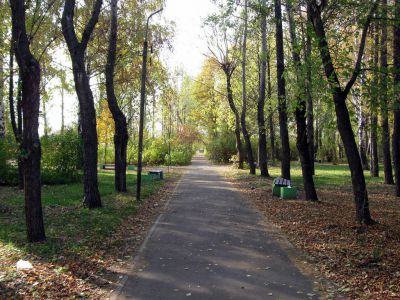
Bogisicev Park, situated just outside Dubrovnik’s Old Town near Pile Gate, offers a quiet green refuge amid the city’s bustling streets and historic stone walls. Named after the distinguished jurist and collector Baltazar Bogisic, the park serves both as a memorial to his contributions and as a place of leisure for locals and visitors. Its elevated location gives it an airy, open feel, making it a pleasant pause point before or after exploring the city’s medieval landmarks.
The park is designed with shaded pathways, Mediterranean plants, and benches that invite visitors to linger. Mature trees provide a natural canopy from the summer heat, while smaller garden areas bring a touch of color and softness to the rugged backdrop of Dubrovnik’s fortifications. From certain points, one can also enjoy glimpses of the Adriatic Sea and the rooftops of the Old Town, adding to the park’s appeal as a scenic resting spot.
Beyond its greenery, Bogisicev Park has cultural significance. Baltazar Bogisic, after whom it is named, was a 19th-century scholar from Cavtat whose extensive library and collection of manuscripts are preserved today in Cavtat’s Bogisic Collection. The park honors his role in shaping Croatian legal and cultural heritage, making it more than just an urban garden-it is a subtle link between Dubrovnik’s living present and intellectual past.
For visitors, Bogisicev Park is a place to slow down, enjoy the shade, and take in the quieter side of Dubrovnik. It is not a large park, but its combination of history, greenery, and atmosphere provides a refreshing contrast to the city’s lively streets.
The park is designed with shaded pathways, Mediterranean plants, and benches that invite visitors to linger. Mature trees provide a natural canopy from the summer heat, while smaller garden areas bring a touch of color and softness to the rugged backdrop of Dubrovnik’s fortifications. From certain points, one can also enjoy glimpses of the Adriatic Sea and the rooftops of the Old Town, adding to the park’s appeal as a scenic resting spot.
Beyond its greenery, Bogisicev Park has cultural significance. Baltazar Bogisic, after whom it is named, was a 19th-century scholar from Cavtat whose extensive library and collection of manuscripts are preserved today in Cavtat’s Bogisic Collection. The park honors his role in shaping Croatian legal and cultural heritage, making it more than just an urban garden-it is a subtle link between Dubrovnik’s living present and intellectual past.
For visitors, Bogisicev Park is a place to slow down, enjoy the shade, and take in the quieter side of Dubrovnik. It is not a large park, but its combination of history, greenery, and atmosphere provides a refreshing contrast to the city’s lively streets.
2) Fort Lovrijenac (must see)
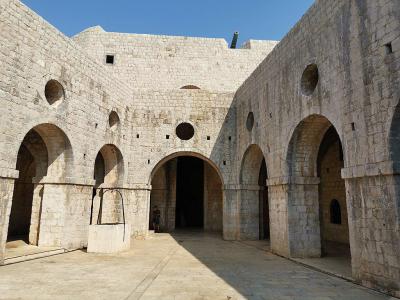
Fort Lovrijenac, often called the “Gibraltar of Dubrovnik,” is one of the city’s most iconic landmarks. Rising dramatically from a 37-meter-high cliff just outside the western walls, the fortress was built in the early 11th century as a defensive stronghold against Venetian ambitions. Local legend tells that the Venetians once planned to construct their own fort on this very spot, but Dubrovnik’s citizens preempted them by completing Lovrijenac in record time. Since then, it has stood as a symbol of the city’s independence and resilience.
The triangular fort, with walls as thick as 12 meters on the seaward side and just 60 centimeters on the landward side, reflects its strategic purpose. Its position controlled both land and sea approaches to the city, making it nearly impossible for enemies to penetrate Dubrovnik’s defenses. Above the entrance is the carved Latin motto Non Bene Pro Toto Libertas Venditur Auro-“Freedom is not sold for all the gold in the world”-a clear statement of the city’s values and determination to remain free.
Today, Fort Lovrijenac is not only a historical monument but also a cultural stage. Its dramatic setting has hosted countless performances of Shakespeare’s Hamlet during the Dubrovnik Summer Festival, with the fortress itself serving as a natural backdrop. Fans of modern pop culture will also recognize it as a filming location for the television series Game of Thrones, where it doubled as the Red Keep in King’s Landing.
For visitors, the fort offers sweeping views over the Adriatic Sea, the city walls, and the red-tiled roofs of Dubrovnik’s Old Town. Exploring its stone terraces and vaulted chambers provides a glimpse into the city’s military past, while the vantage point rewards with some of the best panoramas in Dubrovnik.
*** Game of Thrones Tour ***
Fort Lovrijenac also gained fame as the recognizable Red Keep double in King’s Landing, frequently appearing in Season 2 and Season 3 of Game of Thrones. In particular, it was the location for King Joffrey’s naming ceremony in Season 2, Episode 1, ‘The North Remembers’, where a celebratory tournament was held.
Later in the same episode, the Red Keep is where Cersei confronts Littlefinger, and he tells her ‘Knowledge is power’ to which she exclaims: ''Power is power.'' It is also the destination where King Joffrey is headed after being attacked at Pile Gate and where Tyrion slaps him across the face.
The triangular fort, with walls as thick as 12 meters on the seaward side and just 60 centimeters on the landward side, reflects its strategic purpose. Its position controlled both land and sea approaches to the city, making it nearly impossible for enemies to penetrate Dubrovnik’s defenses. Above the entrance is the carved Latin motto Non Bene Pro Toto Libertas Venditur Auro-“Freedom is not sold for all the gold in the world”-a clear statement of the city’s values and determination to remain free.
Today, Fort Lovrijenac is not only a historical monument but also a cultural stage. Its dramatic setting has hosted countless performances of Shakespeare’s Hamlet during the Dubrovnik Summer Festival, with the fortress itself serving as a natural backdrop. Fans of modern pop culture will also recognize it as a filming location for the television series Game of Thrones, where it doubled as the Red Keep in King’s Landing.
For visitors, the fort offers sweeping views over the Adriatic Sea, the city walls, and the red-tiled roofs of Dubrovnik’s Old Town. Exploring its stone terraces and vaulted chambers provides a glimpse into the city’s military past, while the vantage point rewards with some of the best panoramas in Dubrovnik.
*** Game of Thrones Tour ***
Fort Lovrijenac also gained fame as the recognizable Red Keep double in King’s Landing, frequently appearing in Season 2 and Season 3 of Game of Thrones. In particular, it was the location for King Joffrey’s naming ceremony in Season 2, Episode 1, ‘The North Remembers’, where a celebratory tournament was held.
Later in the same episode, the Red Keep is where Cersei confronts Littlefinger, and he tells her ‘Knowledge is power’ to which she exclaims: ''Power is power.'' It is also the destination where King Joffrey is headed after being attacked at Pile Gate and where Tyrion slaps him across the face.
3) Pile Gate (must see)
"Kill them, kill them all!" King Joffrey is under attack by an angry mob when he returns to Red Keep. But wait. There is no King Joffrey and there is no Red Keep. This is actually season two, episode 6 of the TV series, "Game of Thrones." The "Red Keep" is Pile Gate, the main entrance to the old walled city of Dubrovnik, Croatia.
The name Pile is derived from the Greek word "pylaj", meaning "gate." Most walking tours of the Old City start at the 15th-century Pile Gate. It is a good starting point for a walk on the city walls as well. The gate is located on the western side of the walls. It leads directly to Stradun Street, the main promenade of Dubrovnik.
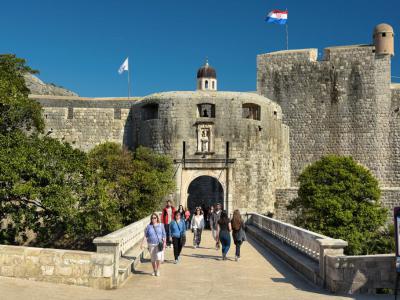
Pile Gate is actually made up of two gates. The inner gate was built in 1460. The outer gate dates from 1537. The Pile Gate complex is defended by the Cylindrical Fort Bokar and the formidable moat that ran around the outside of the inner wall. The moat today is dry. It is a ribbon of landscaped parkland between the two walls.
A stone bridge with Gothic arches at each end, designed by architect Paskoje Milicevic in 1471, connects to a wooden drawbridge inserted over the moat. At night, the drawbridge would be raised to block the gateway. A Romanesque statue of the patron Saint Blaise is above the gateway arch. He holds a model of the city in one hand.
The entire Old City is enclosed in a veritable curtain of stone. The walls are 6,373 feet long and as much as 82 feet high in some places. The landside wall is supported by 10 circular bastions and a casemate fortress. The two main entrances to the city are The Pile Gate in the west and the Polce Gate in the east.
*** Game of Thrones Tour ***
The Pile Gate has been featured in a number of episodes of Game of Thrones Seasons 2 and 3, most notably in Season 2, Episode 6 ‘The Old Gods and the New’. In a scene where King Joffrey returns to Red Keep after Marcella is sent away to Dorne, he gets attacked by the angry mob gathered at the entrance and screams ‘Kill them, kill them all’. The Gate also shows in Season 3, Episode 10 ‘Mhysa’ when Jamie Lannister returns to King’s Landing.
The name Pile is derived from the Greek word "pylaj", meaning "gate." Most walking tours of the Old City start at the 15th-century Pile Gate. It is a good starting point for a walk on the city walls as well. The gate is located on the western side of the walls. It leads directly to Stradun Street, the main promenade of Dubrovnik.
Pile Gate is actually made up of two gates. The inner gate was built in 1460. The outer gate dates from 1537. The Pile Gate complex is defended by the Cylindrical Fort Bokar and the formidable moat that ran around the outside of the inner wall. The moat today is dry. It is a ribbon of landscaped parkland between the two walls.
A stone bridge with Gothic arches at each end, designed by architect Paskoje Milicevic in 1471, connects to a wooden drawbridge inserted over the moat. At night, the drawbridge would be raised to block the gateway. A Romanesque statue of the patron Saint Blaise is above the gateway arch. He holds a model of the city in one hand.
The entire Old City is enclosed in a veritable curtain of stone. The walls are 6,373 feet long and as much as 82 feet high in some places. The landside wall is supported by 10 circular bastions and a casemate fortress. The two main entrances to the city are The Pile Gate in the west and the Polce Gate in the east.
*** Game of Thrones Tour ***
The Pile Gate has been featured in a number of episodes of Game of Thrones Seasons 2 and 3, most notably in Season 2, Episode 6 ‘The Old Gods and the New’. In a scene where King Joffrey returns to Red Keep after Marcella is sent away to Dorne, he gets attacked by the angry mob gathered at the entrance and screams ‘Kill them, kill them all’. The Gate also shows in Season 3, Episode 10 ‘Mhysa’ when Jamie Lannister returns to King’s Landing.
4) Minceta Tower (must see)
Constructed in 1463, the Minčeta Tower was built during a time when the threat of a Turkish invasion loomed large. Designed by local architect Nicifor Ranjina, with the assistance of Italian engineers sent by Pope Pius II, it initially served as a formidable four-sided fortress. This architectural gem earned its name from the Menčetić family, the original landowners on which the tower was erected.
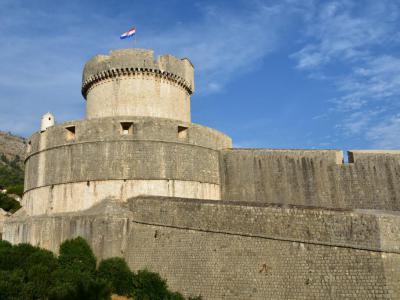
The tower is not only historically significant but also an architectural marvel. It stands tall as the most prominent point in Dubrovnik's defense system from the land. In the mid-15th century, it underwent renovations by Italian architect and sculptor Michelozzo di Bartolomeo Michelozzi. He transformed it into a new round tower, incorporating cutting-edge warfare techniques and connecting it to a modern system of low scarp walls. The tower's full six-meter thick walls boasted protected gun ports, and further enhancements were made by Giorgio da Sebenico of Zadar. The result was the iconic high narrow round tower that we see today, complete with battlements.
Minčeta Tower stands as a symbol of the city's indomitable spirit and was completed in 1464. It continues to be a symbol of Dubrovnik's resilience and strength. In modern times, the tower serves as a museum, allowing visitors to explore its historical and architectural significance. Beneath it, in Gornji ugao (Upper Tower), a 16th-century cannon foundry was discovered after extensive excavation.
From its vantage point atop the city walls, Minčeta Tower provides visitors with breathtaking panoramic views of the city of Dubrovnik. It's a place where history comes alive and where one can stand in awe of both the city's past and its present.
*** Game of Thrones Tour ***
The Minčeta Tower found its way into popular culture through the television series Game of Thrones. In Season 2, Episode 10, the tower was featured as the House of the Undying in Qarth, where Daenerys Targaryen had her dragons stolen. The tower's unique architecture and seemingly doorless exterior made it an ideal location for the show's magical and enigmatic scenes.
The tower is not only historically significant but also an architectural marvel. It stands tall as the most prominent point in Dubrovnik's defense system from the land. In the mid-15th century, it underwent renovations by Italian architect and sculptor Michelozzo di Bartolomeo Michelozzi. He transformed it into a new round tower, incorporating cutting-edge warfare techniques and connecting it to a modern system of low scarp walls. The tower's full six-meter thick walls boasted protected gun ports, and further enhancements were made by Giorgio da Sebenico of Zadar. The result was the iconic high narrow round tower that we see today, complete with battlements.
Minčeta Tower stands as a symbol of the city's indomitable spirit and was completed in 1464. It continues to be a symbol of Dubrovnik's resilience and strength. In modern times, the tower serves as a museum, allowing visitors to explore its historical and architectural significance. Beneath it, in Gornji ugao (Upper Tower), a 16th-century cannon foundry was discovered after extensive excavation.
From its vantage point atop the city walls, Minčeta Tower provides visitors with breathtaking panoramic views of the city of Dubrovnik. It's a place where history comes alive and where one can stand in awe of both the city's past and its present.
*** Game of Thrones Tour ***
The Minčeta Tower found its way into popular culture through the television series Game of Thrones. In Season 2, Episode 10, the tower was featured as the House of the Undying in Qarth, where Daenerys Targaryen had her dragons stolen. The tower's unique architecture and seemingly doorless exterior made it an ideal location for the show's magical and enigmatic scenes.
5) Franciscan Monastery & Museum (must see)
The document dating from 1235 mentions the Franciscan Monastery of Saint Thomas in the Pile suburb of Dubrovnik. The monastery was demolished and re-established within the city walls in 1317 under threats of war with King Uros II of Serbia. After the quake of 1667, the church was renovated in the Baroque style.
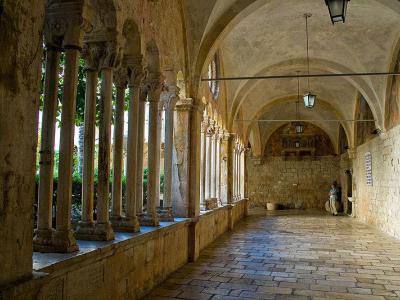
The monastery complex is grandiose. There are two cloisters. The upper one is Renaissance, with arches and semicircular vaults. The lower cloister is a combination of Romanesque and Gothic elements. A courtyard is surrounded by galleries of arches with double columns, having capitals with flora, fauna, and geometric embellishments.
The cloister was built by architect Mihoje Brajkov of Bar in the early 13th century. It has 120 columns and 12 enormous pilasters. A fountain and statue of Saint Francis is in the center of the cloister. The well-preserved Minor Friars Pharmacy has inventory from 1317. It has furnishings from Siena and Florence from the 15th and 16th centuries.
Other exhibits in the museum include presses, mortars, scales, a 14th-century still, and rare manuscripts. The Museum Library holds copies of medieval manuscripts, chorales, and highly valued paintings by forgotten masters. There is a 14th-century head relic of Saint Ursula and an assortment of ex-voto jewelry (a collection of one-of-a-kind and limited edition pieces designed by Elizabeth from antique elements).
The monastery complex is grandiose. There are two cloisters. The upper one is Renaissance, with arches and semicircular vaults. The lower cloister is a combination of Romanesque and Gothic elements. A courtyard is surrounded by galleries of arches with double columns, having capitals with flora, fauna, and geometric embellishments.
The cloister was built by architect Mihoje Brajkov of Bar in the early 13th century. It has 120 columns and 12 enormous pilasters. A fountain and statue of Saint Francis is in the center of the cloister. The well-preserved Minor Friars Pharmacy has inventory from 1317. It has furnishings from Siena and Florence from the 15th and 16th centuries.
Other exhibits in the museum include presses, mortars, scales, a 14th-century still, and rare manuscripts. The Museum Library holds copies of medieval manuscripts, chorales, and highly valued paintings by forgotten masters. There is a 14th-century head relic of Saint Ursula and an assortment of ex-voto jewelry (a collection of one-of-a-kind and limited edition pieces designed by Elizabeth from antique elements).
6) Stradun Street (must see)
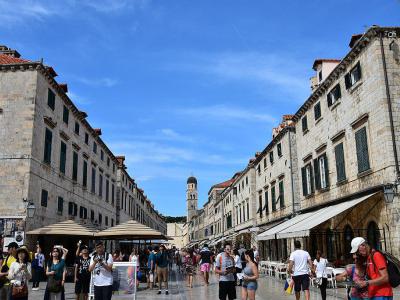
Stradun or Placa is the limestone-paved pedestrianized Main Street of Dubrovnik. It extends to around 1,000 feet through the walled Old Town. In the 13th century, a swampy channel ran where Stradun Street is today. The street reaches neatly in an east-west direction between the western Pile Gate to Ploce Gate in the east.
The Large Onofrio's Fountain and the Franciscan Monastery are found by Pile Gate. The Small Onofrio's Fountain and the Dubrovnik Bell Tower are at the other end of the street by Ploce Gate. Stradun's current appearance is the result of rebuilding after the devastating earthquake of 1667.
The buildings lining the street today are all "of a size" rather uniform in design. Before the quake, houses on the street had arcades and were elaborately decorated. Most were destroyed by the fire that followed the earthquake. After all the quaking and burning, the Republic generated laws regulating housing construction in the city.
So, the 13th-century street has 17th-century housing. Ground levels were designed with shop fronts under a semicircular arch. The first floor (2nd floor USA) was meant as a living space. The floors above held extra rooms and a kitchen loft.
Stradun has become a favorite esplanade for tourists. Processions and events are held in the street. The Feast of Saint Blaise, the patron saint of the city, passes through on the 3rd of February. There are concerts at other times and of course, New Year's Eve.
The best way to see Stradun is to walk the street. Take a seat at one of the many cafes. Have a drink and watch the passing throng. The steps of Saint Blaise Church offer a good vantage point. Then there's always Orlando's Column in Luza Square.
Erected in 1418, the knight Orlando stands with a sword and shield in a niche. Some say Orlando defeated Saracen pirates in the eighth century. It's only a legend, but Orlando is a monument to the freedom of Dubrovnik.
The Large Onofrio's Fountain and the Franciscan Monastery are found by Pile Gate. The Small Onofrio's Fountain and the Dubrovnik Bell Tower are at the other end of the street by Ploce Gate. Stradun's current appearance is the result of rebuilding after the devastating earthquake of 1667.
The buildings lining the street today are all "of a size" rather uniform in design. Before the quake, houses on the street had arcades and were elaborately decorated. Most were destroyed by the fire that followed the earthquake. After all the quaking and burning, the Republic generated laws regulating housing construction in the city.
So, the 13th-century street has 17th-century housing. Ground levels were designed with shop fronts under a semicircular arch. The first floor (2nd floor USA) was meant as a living space. The floors above held extra rooms and a kitchen loft.
Stradun has become a favorite esplanade for tourists. Processions and events are held in the street. The Feast of Saint Blaise, the patron saint of the city, passes through on the 3rd of February. There are concerts at other times and of course, New Year's Eve.
The best way to see Stradun is to walk the street. Take a seat at one of the many cafes. Have a drink and watch the passing throng. The steps of Saint Blaise Church offer a good vantage point. Then there's always Orlando's Column in Luza Square.
Erected in 1418, the knight Orlando stands with a sword and shield in a niche. Some say Orlando defeated Saracen pirates in the eighth century. It's only a legend, but Orlando is a monument to the freedom of Dubrovnik.

7) War Photo Limited (must see)
The Museum of War Photo Limited is located just off Stradun in the center of the Old Town. It is open only from April through October. The War Photos fill two floors with exhibits. These are photojournalistic displays featuring recent and current global and regional conflicts. The images are moving, but some material may be disturbing.
The idea of the museum is to show the realities of war through photography. The images are sometimes raw and terrifying, without any aesthetics or ideals. The exhibition depicts wars and conflicts around the globe in Afghanistan, Sierra Leone, Iraq, and Croatia. Images brightly lit on dark walls range from stark violence to absurdity.
The second floor contains a permanent exhibition of the effects of war on Croatia and Dubrovnik following the disintegration of Yugoslavia. War Photo Limited is without a political agenda or goals. Their self-proclaimed mission is to collect and exhibit photographic images of modern wars without regard to any emotional impact.
The idea of the museum is to show the realities of war through photography. The images are sometimes raw and terrifying, without any aesthetics or ideals. The exhibition depicts wars and conflicts around the globe in Afghanistan, Sierra Leone, Iraq, and Croatia. Images brightly lit on dark walls range from stark violence to absurdity.
The second floor contains a permanent exhibition of the effects of war on Croatia and Dubrovnik following the disintegration of Yugoslavia. War Photo Limited is without a political agenda or goals. Their self-proclaimed mission is to collect and exhibit photographic images of modern wars without regard to any emotional impact.
8) Saint Ignatius Church (must see)
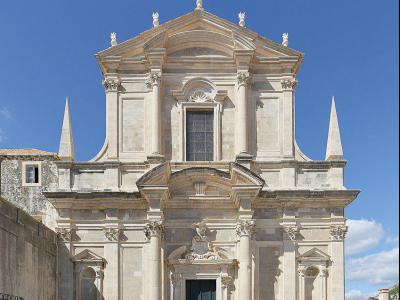
The Church of Saint Ignatius is located in Ruder Boskovic Field, reached by climbing steps designed after the famed Spanish Steps of Rome by architect Pietro Passalacqua. The church is built as a Jesuit church in the Roman Baroque style. It was completed in 1725 as a single-nave church and designed by Ignazio Pozzo.
Baroque frescoes inside showing the life of Saint Ignatius are the work of artist Gaetano Garcia. In 1885 a cave was created in the church dedicated to Our Lady of Lourdes. The cave was painted by the Jesuit master Antonio Moscheni. There are balconies and boxes on each side. Daylight through the stained-glass roof illuminates all within.
The facade is characterized by a High Baroque aesthetic. The central zone has free-standing columns and an ornate portal adorned with sculpted angels by architect Marino Groppelli. Next to the church is the Jesuit Collegium, built in 1662 and rebuilt in 1669-1725 after the devastating earthquake of 1667.
The Collegium was where the world-famous scholar Ruder Boskovic once taught. Today it is home to the Classical Gymnasium High School of Dubrovnik.
Baroque frescoes inside showing the life of Saint Ignatius are the work of artist Gaetano Garcia. In 1885 a cave was created in the church dedicated to Our Lady of Lourdes. The cave was painted by the Jesuit master Antonio Moscheni. There are balconies and boxes on each side. Daylight through the stained-glass roof illuminates all within.
The facade is characterized by a High Baroque aesthetic. The central zone has free-standing columns and an ornate portal adorned with sculpted angels by architect Marino Groppelli. Next to the church is the Jesuit Collegium, built in 1662 and rebuilt in 1669-1725 after the devastating earthquake of 1667.
The Collegium was where the world-famous scholar Ruder Boskovic once taught. Today it is home to the Classical Gymnasium High School of Dubrovnik.
9) Rector's Palace (must see)
Initially, the 13th-century Rector's Palace was built as living quarters for the Rector to stay in for the duration of his one-month term. During this time he was allowed to leave only for official functions. Spouses and family had to stay elsewhere. He was the daily keeper of the keys to the city gates.
In addition to being the Rector's residence pro tem, the palace also served as the headquarters of the Republic Major and Minor Councils, the main arsenal, and the city prison. There was access to the courtroom and the Great Council Palace. It was all business, no place for family.
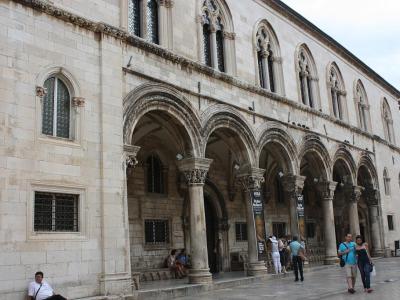
Located just south of Luza Square, the palace, like the city, has been ravaged many times by wars, earthquakes, fires, and sieges. Its style is Gothic, with reconstructions involving Renaissance and Baroque influences. The palace got its current form, including the atrium and front portico, after the explosion of 1463.
The western facade entrance features a portico with carved columns and capitals. The loggia has marble benches for public seating. The interior atrium and courtyard have rows of Corinthian columns and a Baroque staircase leading to the mezzanine gallery.
Below the staircase is a small 15th-century fountain and a statue by sculptor Piero Paolo Giacometti erected in 1638. The statue honors Miho Pracat, a wealthy citizen who left his entire estate to the Republic. The atrium has splendid acoustics. It is frequently the venue for concerts held at the Dubrovnik Summer Festival.
Today, the Rector's Palace is home to the Museum of Dubrovnik. The exhibitions show artifacts from the city's history, furniture, portraits, seals, crests, and coins. The keys to the city gates are still here, together with archives of Republic Council meetings. The old pharmacy and its 15th-century House of Christ ("Domus Christi") artifacts are here.
The Rector's Palace is managed and operated by the Museum of Dubrovnik since 1872.
In addition to being the Rector's residence pro tem, the palace also served as the headquarters of the Republic Major and Minor Councils, the main arsenal, and the city prison. There was access to the courtroom and the Great Council Palace. It was all business, no place for family.
Located just south of Luza Square, the palace, like the city, has been ravaged many times by wars, earthquakes, fires, and sieges. Its style is Gothic, with reconstructions involving Renaissance and Baroque influences. The palace got its current form, including the atrium and front portico, after the explosion of 1463.
The western facade entrance features a portico with carved columns and capitals. The loggia has marble benches for public seating. The interior atrium and courtyard have rows of Corinthian columns and a Baroque staircase leading to the mezzanine gallery.
Below the staircase is a small 15th-century fountain and a statue by sculptor Piero Paolo Giacometti erected in 1638. The statue honors Miho Pracat, a wealthy citizen who left his entire estate to the Republic. The atrium has splendid acoustics. It is frequently the venue for concerts held at the Dubrovnik Summer Festival.
Today, the Rector's Palace is home to the Museum of Dubrovnik. The exhibitions show artifacts from the city's history, furniture, portraits, seals, crests, and coins. The keys to the city gates are still here, together with archives of Republic Council meetings. The old pharmacy and its 15th-century House of Christ ("Domus Christi") artifacts are here.
The Rector's Palace is managed and operated by the Museum of Dubrovnik since 1872.
10) Buza Bar and Blaze Beach
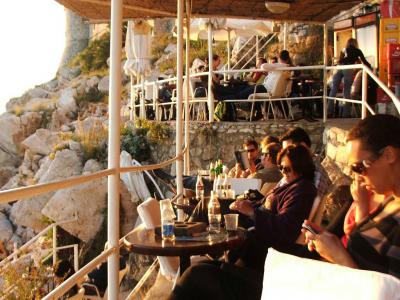
Buza Bar, found about 20 minutes into the walk along the wall, offers visitors a unique coastal experience like no other. Perched atop the cliffs, this café provides patrons with awe-inspiring views of the endless expanse of the Adriatic Ocean. With tables and chairs arranged to maximize your enjoyment of the scenery, Buza Bar is the perfect spot to relax and savor a beverage while soaking in the natural beauty that surrounds you.
What sets Buza Bar apart is the small area where adventurous souls can take a short walk down to the cliff's edge and, if they dare, leap into the crystal-clear waters of the Adriatic. It's an exhilarating experience that many tourists can't resist.
The nearby rocky area known as Blaze Beach is a popular destination for visitors. Here, you can sunbathe, take a refreshing swim, or explore the underwater wonders by snorkeling. You can enjoy the Adriatic Sea at Buza Bar and Blaze Beach, whether you prefer a relaxed lunch, a cool drink, a quick swim, or a snorkeling adventure.
What sets Buza Bar apart is the small area where adventurous souls can take a short walk down to the cliff's edge and, if they dare, leap into the crystal-clear waters of the Adriatic. It's an exhilarating experience that many tourists can't resist.
The nearby rocky area known as Blaze Beach is a popular destination for visitors. Here, you can sunbathe, take a refreshing swim, or explore the underwater wonders by snorkeling. You can enjoy the Adriatic Sea at Buza Bar and Blaze Beach, whether you prefer a relaxed lunch, a cool drink, a quick swim, or a snorkeling adventure.
