Custom Walk in Zagreb, Croatia by laurahofmann413_a3797 created on 2025-07-25
Guide Location: Croatia » Zagreb
Guide Type: Custom Walk
# of Sights: 14
Tour Duration: 5 Hour(s)
Travel Distance: 9.9 Km or 6.2 Miles
Share Key: M7SZJ
Guide Type: Custom Walk
# of Sights: 14
Tour Duration: 5 Hour(s)
Travel Distance: 9.9 Km or 6.2 Miles
Share Key: M7SZJ
How It Works
Please retrieve this walk in the GPSmyCity app. Once done, the app will guide you from one tour stop to the next as if you had a personal tour guide. If you created the walk on this website or come to the page via a link, please follow the instructions below to retrieve the walk in the app.
Retrieve This Walk in App
Step 1. Download the app "GPSmyCity: Walks in 1K+ Cities" on Apple App Store or Google Play Store.



Step 2. In the GPSmyCity app, download(or launch) the guide "Zagreb Map and Walking Tours".
Step 3. Tap the menu button located at upper right corner of the "Walks" screen and select "Retrieve custom walk". Enter the share key: M7SZJ

1) King Tomislav Square
King Tomislav Square is a meticulously maintained public area, surrounded by lush trees and vibrant flowerbeds, and is highlighted by the striking yellow exterior of the Art Pavilion. It's adjacent to an underground shopping center and faces the bustling central train station, making it a popular spot for locals and visitors alike.
Originally named after Franz Joseph I, the square was renamed to honor King Tomislav post the Austro-Hungarian Empire's dissolution. Tomislav is celebrated for unifying the Croatian regions of Dalmatia and Pannonia, forming the Kingdom of Croatia. A prominent monument, unveiled in 1947, stands in the square, showcasing King Tomislav on horseback atop a substantial base.
The north end of the square features the Art Pavilion, an architectural marvel that fuses classical design with elements of Art Nouveau. On sunny summer days, the square is a favorite spot for locals to bask in the sun and relax on the grass. You can rest on a bench near the central fountain or walk along the perimeter paths, admiring the meticulously kept flower beds.
In winter, the square transforms with an ice rink and trees adorned with fairy lights, creating a festive atmosphere. The square remains open to the public at all times. For a different experience, visit at night when the Art Pavilion is lit up, bathing the northern end of the square in a warm, golden light.
Originally named after Franz Joseph I, the square was renamed to honor King Tomislav post the Austro-Hungarian Empire's dissolution. Tomislav is celebrated for unifying the Croatian regions of Dalmatia and Pannonia, forming the Kingdom of Croatia. A prominent monument, unveiled in 1947, stands in the square, showcasing King Tomislav on horseback atop a substantial base.
The north end of the square features the Art Pavilion, an architectural marvel that fuses classical design with elements of Art Nouveau. On sunny summer days, the square is a favorite spot for locals to bask in the sun and relax on the grass. You can rest on a bench near the central fountain or walk along the perimeter paths, admiring the meticulously kept flower beds.
In winter, the square transforms with an ice rink and trees adorned with fairy lights, creating a festive atmosphere. The square remains open to the public at all times. For a different experience, visit at night when the Art Pavilion is lit up, bathing the northern end of the square in a warm, golden light.
2) Ban Jelačić Square (must see)
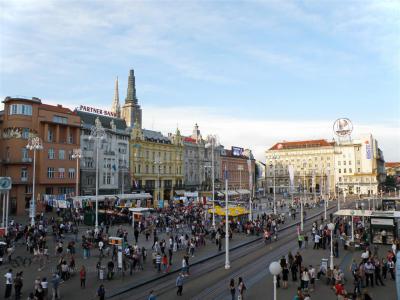
Ban Jelacic Square is named for Josip Jelacic, Ban (ruler) of Croatia and leader of Croatian independence from Austria in the 19th century. The name, locally, is Jelacic Plac. It is in the center of Zagreb's downtown pedestrian zone. It is located below the early medieval settlements of Gradec (1242) and Kaptol (1094), south of Dolac Market.
In 1641 it became necessary to create a new marketplace outside the old nucleus of Gradec and Kaptol, near the spring of Mandusevec. Initially called Mandusevec, the square's name was later changed to Harmica. The square became Ban Jelacic Plac in 1848.
A statue of Josip Jelacic on his horse, created by Austrian sculptor Anton Dominik Fernkorn, was erected by the Austrian administration. In 1947 it was removed by the Communist authorities, who renamed the place "Republic Square."
When the World University Games were held in Zagreb in 1987, the city was renovated and revitalized. The square was repaved in stone blocks and pedestrianized. The Mandusevec Fountain and the Mandusevec Spring, buried in 1898, were uncovered. In 1990 the Communists era ended, and Josip Jelacic, on his trusty steed, returned to the square.
At Christmas time, Ban Jelacic Square is adorned with trees and lights illuminate the facades of the surrounding antique Classicist, Secessionist, and Modernist buildings.
In 1641 it became necessary to create a new marketplace outside the old nucleus of Gradec and Kaptol, near the spring of Mandusevec. Initially called Mandusevec, the square's name was later changed to Harmica. The square became Ban Jelacic Plac in 1848.
A statue of Josip Jelacic on his horse, created by Austrian sculptor Anton Dominik Fernkorn, was erected by the Austrian administration. In 1947 it was removed by the Communist authorities, who renamed the place "Republic Square."
When the World University Games were held in Zagreb in 1987, the city was renovated and revitalized. The square was repaved in stone blocks and pedestrianized. The Mandusevec Fountain and the Mandusevec Spring, buried in 1898, were uncovered. In 1990 the Communists era ended, and Josip Jelacic, on his trusty steed, returned to the square.
At Christmas time, Ban Jelacic Square is adorned with trees and lights illuminate the facades of the surrounding antique Classicist, Secessionist, and Modernist buildings.
3) Ilica Street
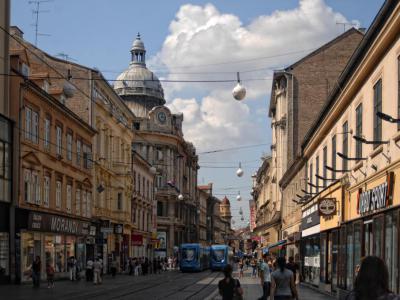
Ilica Street, 3.5 miles long, almost spans the entire northwestern part of town, from Ban Jelacic Square to the western district of Vrapce. Ilica, in the 14th century, was called Potters' Village (Loncarska ves). The name, Ilica, was first recorded in 1431.
Ilica is a classic European Main Street. There are innumerable shops, restaurants, and cafes. Traffic is a busy mix of cars, trucks, and trams. Upmarket shops, boutiques, patisseries, and clothing stores are not scarce. This touristy street is convenient to Zagreb Cathedral, Ban Jelacic Square, and the Croatian National Theatre.
The famous blue tram transports passengers from one end of the street to the other. Trams Nr. 1, 6, or 11 can be had from Ban Jelacic Square. A good first stop is the Zagreb 360 Observation Deck, a great view with coffee.
At House number 18, a right turn will access Tomiceva Street and the Funicular to the Upper Town and the Museum of Broken Relationships. Back on Ilica Street, get great craft beers at Pivnica Medvedgrad. Across the street is number 72 and the Museum of Illusions. Take a tram to Nr. 222 to Pivana, maybe the oldest bar in Zagreb.
Ilica has parks and public buildings, hospitals, and ministries. After a tour, it's time for nightlife. Hop over to Tkalciceva Street, the nightlife Mecca of Zagreb.
Ilica is a classic European Main Street. There are innumerable shops, restaurants, and cafes. Traffic is a busy mix of cars, trucks, and trams. Upmarket shops, boutiques, patisseries, and clothing stores are not scarce. This touristy street is convenient to Zagreb Cathedral, Ban Jelacic Square, and the Croatian National Theatre.
The famous blue tram transports passengers from one end of the street to the other. Trams Nr. 1, 6, or 11 can be had from Ban Jelacic Square. A good first stop is the Zagreb 360 Observation Deck, a great view with coffee.
At House number 18, a right turn will access Tomiceva Street and the Funicular to the Upper Town and the Museum of Broken Relationships. Back on Ilica Street, get great craft beers at Pivnica Medvedgrad. Across the street is number 72 and the Museum of Illusions. Take a tram to Nr. 222 to Pivana, maybe the oldest bar in Zagreb.
Ilica has parks and public buildings, hospitals, and ministries. After a tour, it's time for nightlife. Hop over to Tkalciceva Street, the nightlife Mecca of Zagreb.
4) Tkalčićeva Street (must see)
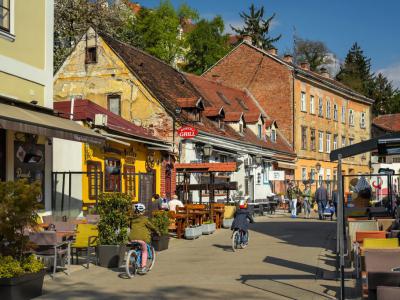
Tkalciceva Street was once the course of Medvescak Creek, creating the border between the twin settlements of Gradec and Kaptol. Since the earliest days of the city, the Medvescak had supported water mills along its length. The mills were the basis of Zagreb's industry, producing cloth, paper, soap, liquor, and leather.
Competition among the mills triggered feuds between Kaptol and Gradec. A treaty of 1392 limited the construction of new mills on the shared border. That left only two mills within the city, both owned by the Cistercian Monastery. The creek was covered over, and the mills were demolished in 1898. The result was the creation of a street named Creek Street.
In 1913, Creek Street (Ulica Potok) was renamed Tkalciceva Street in honor of historian and priest Ivan Tkalcic, who had died in 1905. Most of the houses on Tkalciceva Street date from the 18th or 19th century. The creek now serves as part of the Zagreb sewer system, but it had been a source of power to the Medvescak Fountain.
The street runs parallel to and in between Upper Town (Gornji Grad) and New Village (Nova Ves). It reaches Ban Jelacic Square to Little Street (Mala Ulica). Initially, it had been paved with gravel taken from the Sala River. In the 20th century, it was resurfaced with asphalt. Small businesses replaced the mills, and the leather industry closed shop in 1938.
Tkalciceva Street was a "red light" district in the early 20th century. Prostitution was legal, and the street was a popular tourist attraction. Every other house was a brothel. The most high-toned house was the Kod Zelene Lampe (Green Lantern). The sex business went the way of the mills and the leather shops with the coming of WW II.
Competition among the mills triggered feuds between Kaptol and Gradec. A treaty of 1392 limited the construction of new mills on the shared border. That left only two mills within the city, both owned by the Cistercian Monastery. The creek was covered over, and the mills were demolished in 1898. The result was the creation of a street named Creek Street.
In 1913, Creek Street (Ulica Potok) was renamed Tkalciceva Street in honor of historian and priest Ivan Tkalcic, who had died in 1905. Most of the houses on Tkalciceva Street date from the 18th or 19th century. The creek now serves as part of the Zagreb sewer system, but it had been a source of power to the Medvescak Fountain.
The street runs parallel to and in between Upper Town (Gornji Grad) and New Village (Nova Ves). It reaches Ban Jelacic Square to Little Street (Mala Ulica). Initially, it had been paved with gravel taken from the Sala River. In the 20th century, it was resurfaced with asphalt. Small businesses replaced the mills, and the leather industry closed shop in 1938.
Tkalciceva Street was a "red light" district in the early 20th century. Prostitution was legal, and the street was a popular tourist attraction. Every other house was a brothel. The most high-toned house was the Kod Zelene Lampe (Green Lantern). The sex business went the way of the mills and the leather shops with the coming of WW II.
5) Dolac Market
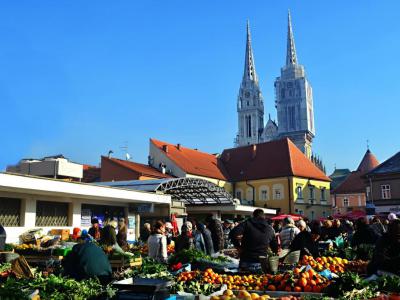
The Dolac Market located a few yards from Ban Jelacic Square, the main square of Zagreb, is a popular farmer's market. It consists of an open market of stalls on a raised square reached by stairs from a sheltered market below. It is immediately behind Ban Jelacic Square in the oldest part of Zagreb.
The market has been a main trading post since 1930. Farmers sell homemade foods, fruits, and vegetables in the open market. In the covered market below, there is a mixed crowd of butchers and fishmongers vying among elderly ladies selling cheeses and cream, flowers, and lace. Nearby, the renovated fish market, Ribarnica, now sells produce.
Around the square, small bars and luncheonettes offer "gableci," lunches at a discount. A mezzanine has been added in the indoor section of the market. Florists are on the top level, where the Dolac meets Opatinova Park.
Strolling through the market, noshing on cream cheese with paprika and onions with cornbread, meet the kumicas, the women stall managers. A kumica is part trader and part godmother. By the market entrance is a bronze Kumica Barica Statue with a basket on her head. The statue is the work of sculptor Stjepan Gračan.
At the back of the hall are buckets of sauerkraut (finely cut raw cabbage that has been fermented by various lactic acid bacteria). In two bars at each end of the hall, hungry traders dig into cabana goulash after a very busy morning. Next door, sit on the terrace, munching on grilled sardines chased with wine, and watch the Dolac in action.
The market has been a main trading post since 1930. Farmers sell homemade foods, fruits, and vegetables in the open market. In the covered market below, there is a mixed crowd of butchers and fishmongers vying among elderly ladies selling cheeses and cream, flowers, and lace. Nearby, the renovated fish market, Ribarnica, now sells produce.
Around the square, small bars and luncheonettes offer "gableci," lunches at a discount. A mezzanine has been added in the indoor section of the market. Florists are on the top level, where the Dolac meets Opatinova Park.
Strolling through the market, noshing on cream cheese with paprika and onions with cornbread, meet the kumicas, the women stall managers. A kumica is part trader and part godmother. By the market entrance is a bronze Kumica Barica Statue with a basket on her head. The statue is the work of sculptor Stjepan Gračan.
At the back of the hall are buckets of sauerkraut (finely cut raw cabbage that has been fermented by various lactic acid bacteria). In two bars at each end of the hall, hungry traders dig into cabana goulash after a very busy morning. Next door, sit on the terrace, munching on grilled sardines chased with wine, and watch the Dolac in action.
6) Zagreb Cathedral (must see)
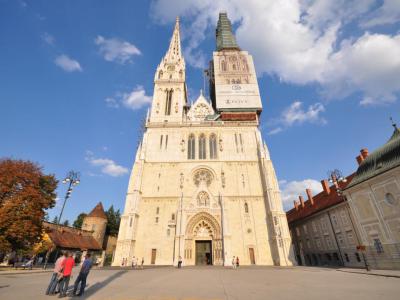
In 1093, king and warrior-saint Ladislaus I of Hungary moved the seat of a bishop from Sisak to Zagreb. He declared the church in Zagreb to be a cathedral. Reconstruction began at once and continued after the death of Ladislaus in 1095. The Zagreb Cathedral was consecrated by King Andrew II of Hungary in 1217.
The building was destroyed by Mongol invaders in 1242 and rebuilt shortly thereafter. The continuing threat of the Ottoman Empire prompted the structure of walls and a watchtower. The cathedral was rebuilt again after the earthquake of 1880. It was restored in its present Neo-Gothic form by Franco-German architect Hermann Bolle.
Dedicated to the Assumption of the Blessed Virgin Mary, the building, looming over the city, is the tallest in Croatia. On the main facade, the tympanum between the bell towers depicts the Virgin and Child and two angels. On both sides of the entry are statues of saints Methodius, George, Barbara, Catherine, Florian, and Cyril.
Above the doorway, the statue of Christ is flanked by the sainted kings Stephen and Ladislaus. Inside, the high altar portrays the Holy Family. Light from stained glass windows illuminate the tomb of the martyred Cardinal Aloysius Stepinac. There is a relief inside the cathedral by sculptor Ivan Mestrovic of the Cardinal with Christ.
The building was destroyed by Mongol invaders in 1242 and rebuilt shortly thereafter. The continuing threat of the Ottoman Empire prompted the structure of walls and a watchtower. The cathedral was rebuilt again after the earthquake of 1880. It was restored in its present Neo-Gothic form by Franco-German architect Hermann Bolle.
Dedicated to the Assumption of the Blessed Virgin Mary, the building, looming over the city, is the tallest in Croatia. On the main facade, the tympanum between the bell towers depicts the Virgin and Child and two angels. On both sides of the entry are statues of saints Methodius, George, Barbara, Catherine, Florian, and Cyril.
Above the doorway, the statue of Christ is flanked by the sainted kings Stephen and Ladislaus. Inside, the high altar portrays the Holy Family. Light from stained glass windows illuminate the tomb of the martyred Cardinal Aloysius Stepinac. There is a relief inside the cathedral by sculptor Ivan Mestrovic of the Cardinal with Christ.
7) Gornji Grad (Upper Town)
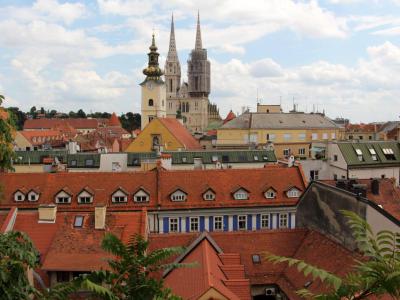
Gornji Grad–Medveščak (Upper Town–Medveščak ), one of Zagreb districts, is known as "Upper Town" for its elevated position above the "Lower Town" or Donji Grad. Centrally located, it had a population of 30,962 across an area of 10.19 square kilometers.
This district is notable for its many historical landmarks and tourist spots. It includes Gradec and Kaptol, two medieval areas that now make up the Upper Town. Key sites in Upper Town include the city's Cathedral, Saint Mark's Church, and the Croatian Parliament, alongside Tkalčićeva, a popular café-lined pedestrian street. The district also houses significant sites like the Mirogoj cemetery, established in 1876, located further north.
The main road in the district runs from south to north, starting as Ribnjak street near Ribnjak park, becoming wider and renamed as Medveščak street, and later becoming Ksaver in the north. This road is a key tram route for the district, with lines 8 and 14 serving Medveščak. Other important tram lines run along Ilica, Jurišićeva, and Vlaška streets in the southern part. The historic Zagreb funicular connects the Lower and Upper towns, and there are also bus routes, though less frequent, through the hillier, sparsely populated northern areas.
Why You Should Visit:
Gornji Grad is the oldest part of Zagreb, a must-see for anyone visiting the city. There is a lot to see and do here so take your time to explore the area.
This district is notable for its many historical landmarks and tourist spots. It includes Gradec and Kaptol, two medieval areas that now make up the Upper Town. Key sites in Upper Town include the city's Cathedral, Saint Mark's Church, and the Croatian Parliament, alongside Tkalčićeva, a popular café-lined pedestrian street. The district also houses significant sites like the Mirogoj cemetery, established in 1876, located further north.
The main road in the district runs from south to north, starting as Ribnjak street near Ribnjak park, becoming wider and renamed as Medveščak street, and later becoming Ksaver in the north. This road is a key tram route for the district, with lines 8 and 14 serving Medveščak. Other important tram lines run along Ilica, Jurišićeva, and Vlaška streets in the southern part. The historic Zagreb funicular connects the Lower and Upper towns, and there are also bus routes, though less frequent, through the hillier, sparsely populated northern areas.
Why You Should Visit:
Gornji Grad is the oldest part of Zagreb, a must-see for anyone visiting the city. There is a lot to see and do here so take your time to explore the area.
8) Mirogoj Cemetery (must see)
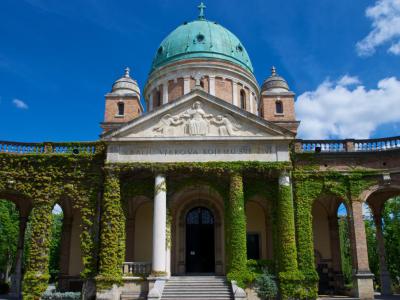
The Mirogoj City Cemetery is a notable cemetery park in Zagreb. It's known for its inclusive nature, accommodating individuals from various religious backgrounds, such as Catholics, Orthodox, Muslims, Jews, Protestants, and Latter Day Saints, as well as those without religious affiliations. Many prominent Croatians are interred within its arcades.
Ljudevit Gaj, a linguist, once owned the land where Mirogoj Cemetery now stands. After his passing in 1872, the city acquired the property and commissioned architect Hermann Bollé to design the main building. The cemetery officially opened on November 6, 1876.
Construction of the arcades, cupolas, and the entryway church began in 1879 but wasn't completed until 1929 due to financial constraints. Unlike earlier church-owned cemeteries, Mirogoj was city-owned and welcomed individuals from diverse religious backgrounds.
On March 22, 2020, a 5.5 magnitude earthquake struck Zagreb, causing significant damage throughout the city, including the renowned arcades of Mirogoj Cemetery.
Ljudevit Gaj, a linguist, once owned the land where Mirogoj Cemetery now stands. After his passing in 1872, the city acquired the property and commissioned architect Hermann Bollé to design the main building. The cemetery officially opened on November 6, 1876.
Construction of the arcades, cupolas, and the entryway church began in 1879 but wasn't completed until 1929 due to financial constraints. Unlike earlier church-owned cemeteries, Mirogoj was city-owned and welcomed individuals from diverse religious backgrounds.
On March 22, 2020, a 5.5 magnitude earthquake struck Zagreb, causing significant damage throughout the city, including the renowned arcades of Mirogoj Cemetery.
9) Saint Mark's Church and Square (must see)
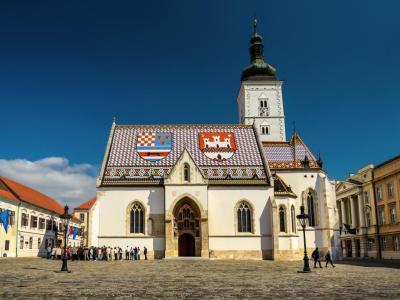
It is claimed by some that Saint Mark's Church in Saint Mark's Square is the oldest architectural monument in Zagreb. The evidence says maybe so or maybe not. The distinctly Romanesque window on the south facade strongly suggests the 13th century. Saint Mary's Chapel has a semicircular ground plan that indicates the same.
Here's the spoiler. In the 14th century, the church was rebuilt. It became a plain, three-nave Gothic church, ergo, not so old. The ribbed vaults are supported by stout columns. The intricately sculpted south portal has 15 figures of the Holy Family, Saint Mark, and the Apostles in niches. It is the richest Gothic portal in Central Europe.
The roof tiles, laid in 1880 by architects Friedrich von Schmidt and Herman Bolle, bear the coats of arms of Zagreb and the Triune Kingdom of Croatia. Inside are sculptures by artists Ivan Mestrovic, Jozo Kljakovic, and Ljubo Babic. There are renovated frescoes and a gilded 22-carat gold leaf ceiling.
Saint Mark's Church is in the center of Saint Mark's Square. Surrounding the square are the Banski Dvori (Ban's Court) seat of the government of Croatia, the Parliament, and the Constitutional Court of Croatia. The Old City Hall, on the corner of the square and Ciril and Metod Streets, is where the City Council meets.
The Saint Mark's Square was renovated in 2006. The ban on demonstrations in the square was lifted a bit in 2012. Until 2020 it was the site of the inaugurations of Croatian presidents. In 2020 Zoran Milanovic took his oath in the Presidential Palace.
The 2020 shooting, or the Saint Mark's Square attack, was the work of Danijel Bezuk, a 22-year-old, self-styled right wing sniper. Bezuk attacked a police officer at the Constitutional Court using an AK-74 automatic rifle. Police in the square returned fire. Bezuk fled to Jabukovak Street, where he took his own life.
Saint Mark's Square was still closed off as of 2023. Its closure has had a negative economic impact on the neighborhood. There is hope for better days.
Here's the spoiler. In the 14th century, the church was rebuilt. It became a plain, three-nave Gothic church, ergo, not so old. The ribbed vaults are supported by stout columns. The intricately sculpted south portal has 15 figures of the Holy Family, Saint Mark, and the Apostles in niches. It is the richest Gothic portal in Central Europe.
The roof tiles, laid in 1880 by architects Friedrich von Schmidt and Herman Bolle, bear the coats of arms of Zagreb and the Triune Kingdom of Croatia. Inside are sculptures by artists Ivan Mestrovic, Jozo Kljakovic, and Ljubo Babic. There are renovated frescoes and a gilded 22-carat gold leaf ceiling.
Saint Mark's Church is in the center of Saint Mark's Square. Surrounding the square are the Banski Dvori (Ban's Court) seat of the government of Croatia, the Parliament, and the Constitutional Court of Croatia. The Old City Hall, on the corner of the square and Ciril and Metod Streets, is where the City Council meets.
The Saint Mark's Square was renovated in 2006. The ban on demonstrations in the square was lifted a bit in 2012. Until 2020 it was the site of the inaugurations of Croatian presidents. In 2020 Zoran Milanovic took his oath in the Presidential Palace.
The 2020 shooting, or the Saint Mark's Square attack, was the work of Danijel Bezuk, a 22-year-old, self-styled right wing sniper. Bezuk attacked a police officer at the Constitutional Court using an AK-74 automatic rifle. Police in the square returned fire. Bezuk fled to Jabukovak Street, where he took his own life.
Saint Mark's Square was still closed off as of 2023. Its closure has had a negative economic impact on the neighborhood. There is hope for better days.
10) Museum of Broken Relationships (must see)
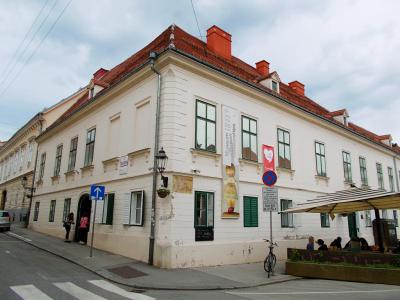
The Museum of Broken Relationships in Zagreb is a unique museum dedicated to failed love relationships. This museum showcases personal items left behind by former lovers along with brief descriptions of the relationships. The museum started as a traveling collection of donated items and later found a permanent location in Zagreb.
The exhibits in the museum are categorized into several segments. The "material remains layout" includes objects and documents like photographs, letters, and messages with dates and locations of the relationships. Annotations by anonymous donors accompany each item. Due to physical space constraints, older exhibits may be archived and transferred to the virtual part of the museum.
The "virtual web museum" allows registered visitors to become donors by uploading their images and documents. Donors have the option to open their personal collections for viewing by other users of the museum.
The interactive part of the museum is called the "confessional." Visitors can store their objects or messages or record their confessions in a restricted and intimate space.
Overall, the Museum of Broken Relationships is an emotional experience that showcases the many facets of human relationships and the objects that come to represent them.
The exhibits in the museum are categorized into several segments. The "material remains layout" includes objects and documents like photographs, letters, and messages with dates and locations of the relationships. Annotations by anonymous donors accompany each item. Due to physical space constraints, older exhibits may be archived and transferred to the virtual part of the museum.
The "virtual web museum" allows registered visitors to become donors by uploading their images and documents. Donors have the option to open their personal collections for viewing by other users of the museum.
The interactive part of the museum is called the "confessional." Visitors can store their objects or messages or record their confessions in a restricted and intimate space.
Overall, the Museum of Broken Relationships is an emotional experience that showcases the many facets of human relationships and the objects that come to represent them.
11) Antique Market
Zagreb boasts two distinct flea markets, each offering a unique vibe and customer base. The first, a vast array of miscellaneous items, operates on Wednesdays and Sundays at Hrelić, located on Sajmišna Cesta, just south of the Sava River. The second market, in contrast, resembles more an upscale antique and collectibles fair, noted for its refined ambiance and higher quality merchandise.
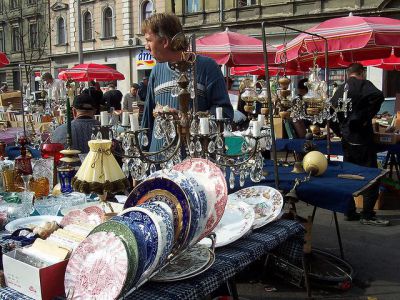
Situated conveniently near Zagreb's renowned Ban Jelačić Square, the British Square Flea Market stands as a bustling hub, constantly thronged with individuals seeking rare antiques or special, characterful gifts. On Sundays, the regular fruit and vegetable vendors of British Square make way for an impressive antiques and miscellaneous items market. Here, over a hundred vendors gather from dawn to offer a diverse range of goods.
The British Square Flea Market is a treasure trove, where you can find everything from vintage lampshades to antique porcelain. The varied offerings include paintings, jewelry, historical currency, badges, glass bottles, vintage furniture, old cameras and optical devices, spare mechanical parts, historical images on glass plates, rare books and maps, gramophones complete with vinyl records, picture frames, religious icons, ornamental mirrors, posters, tableware, silver items, archaic farming tools, lampshades, and much more. True to flea market tradition, prices here are often negotiable.
The British Square Flea Market is not just a marketplace but a vibrant community event, offering a genuine taste of Zagreb's culture and traditions. A visit here is an immersion into a realm filled with vivid hues, antiques, quirky items, dusty books, glossy porcelain, and weathered tin cups. Each item has its own history, and the market's atmosphere sparks the imagination.
Situated conveniently near Zagreb's renowned Ban Jelačić Square, the British Square Flea Market stands as a bustling hub, constantly thronged with individuals seeking rare antiques or special, characterful gifts. On Sundays, the regular fruit and vegetable vendors of British Square make way for an impressive antiques and miscellaneous items market. Here, over a hundred vendors gather from dawn to offer a diverse range of goods.
The British Square Flea Market is a treasure trove, where you can find everything from vintage lampshades to antique porcelain. The varied offerings include paintings, jewelry, historical currency, badges, glass bottles, vintage furniture, old cameras and optical devices, spare mechanical parts, historical images on glass plates, rare books and maps, gramophones complete with vinyl records, picture frames, religious icons, ornamental mirrors, posters, tableware, silver items, archaic farming tools, lampshades, and much more. True to flea market tradition, prices here are often negotiable.
The British Square Flea Market is not just a marketplace but a vibrant community event, offering a genuine taste of Zagreb's culture and traditions. A visit here is an immersion into a realm filled with vivid hues, antiques, quirky items, dusty books, glossy porcelain, and weathered tin cups. Each item has its own history, and the market's atmosphere sparks the imagination.
12) Croatian National Theater
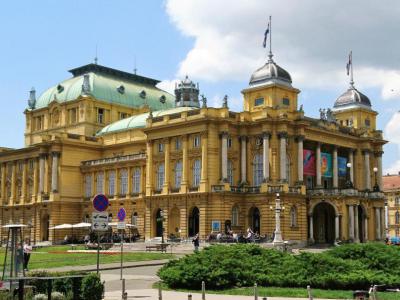
The Croatian National Theatre is a cultural institution in Zagreb that encompasses theater, opera, and ballet performances. Its origins can be traced back to 1834 when the first city theater was established in what is now the Old City Hall. However, it officially became the Croatian National Theatre in 1860 and received government support in 1861, elevating it to the status of other prominent European national theaters. In 1870, an opera company was integrated into the theater, and in 1895, it relocated to its present location on Republic of Croatia Square in Zagreb's Lower Town.
Emperor Franz Joseph I of the Austro-Hungarian Empire attended the inauguration of this new building during his visit to the city in 1895. This architectural masterpiece was designed by renowned Viennese architects Ferdinand Fellner and Herman Helmer, who had previously created several theaters in Vienna. The theater's entrance is adorned with a wall fountain called "The Source of Life" (Zdenac života), which was designed by Croatian artist and sculptor Ivan Meštrović in 1905.
Throughout its history, the theater has been home to numerous prominent Croatian artists. Its initial manager and dramatist was the Greek-Croatian poet Dimitrija Demeter, a key figure in the Croatian national revival movement, with Ivan Zajc serving as the first conductor. Notable figures like Branko Gavella, the renowned Croatian theater director, and Mia Čorak Slavenska, the first Croatian prima ballerina, began their careers at this institution.
Over the years, the theater has welcomed numerous international artists, including Franz Liszt, Sarah Bernhardt, Franz Lehár, Richard Strauss, Gérard Philipe, Vivien Leigh, Laurence Olivier, Jean-Louis Barrault, Peter Brook, Mario Del Monaco, and José Carreras.
Why You Should Visit:
It is a gorgeous building in a park-like setting, surrounded by other beautiful buildings. If you are lucky, you may catch a performance and get a chance to see its equally gorgeous interiors, too.
Emperor Franz Joseph I of the Austro-Hungarian Empire attended the inauguration of this new building during his visit to the city in 1895. This architectural masterpiece was designed by renowned Viennese architects Ferdinand Fellner and Herman Helmer, who had previously created several theaters in Vienna. The theater's entrance is adorned with a wall fountain called "The Source of Life" (Zdenac života), which was designed by Croatian artist and sculptor Ivan Meštrović in 1905.
Throughout its history, the theater has been home to numerous prominent Croatian artists. Its initial manager and dramatist was the Greek-Croatian poet Dimitrija Demeter, a key figure in the Croatian national revival movement, with Ivan Zajc serving as the first conductor. Notable figures like Branko Gavella, the renowned Croatian theater director, and Mia Čorak Slavenska, the first Croatian prima ballerina, began their careers at this institution.
Over the years, the theater has welcomed numerous international artists, including Franz Liszt, Sarah Bernhardt, Franz Lehár, Richard Strauss, Gérard Philipe, Vivien Leigh, Laurence Olivier, Jean-Louis Barrault, Peter Brook, Mario Del Monaco, and José Carreras.
Why You Should Visit:
It is a gorgeous building in a park-like setting, surrounded by other beautiful buildings. If you are lucky, you may catch a performance and get a chance to see its equally gorgeous interiors, too.
13) Ethnographic Museum
The Ethnographic Museum, situated at Ivan Mažuranić Square in Zagreb, was established in 1919 by Salamon Berger. It's housed in an Art Nouveau structure that was originally the Trades Hall, built in 1903 and designed by architect Vjekoslav Bastl. The façade features statues by Rudolf Valdec, while the dome's interior is adorned with frescoes by Oton Iveković.
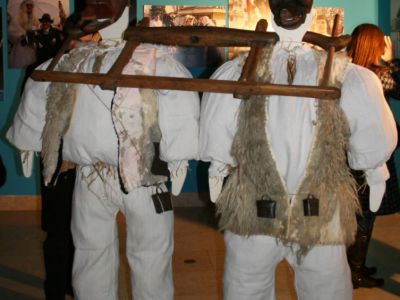
The collection, comprising around 80,000 pieces, showcases Croatia's ethnographic legacy, segmented into Pannonian, Dinaric, and Adriatic cultural regions. It vividly presents traditional Croatian lifestyles through items like intricately gold-embroidered costumes, ceremonial attire, musical instruments, furniture, culinary implements, and tools. Life-sized reconstructions of farmhouses and interiors offer a glimpse into the historical daily lives of farmers and fishermen. Additionally, the Ljeposav Perinić collection includes numerous dolls attired in traditional clothing.
Permanent exhibitions at the museum delve into the life in Kosovo during the Ottoman period, adopting a 'circle of life' theme that encompasses birth, life, death, and inheritance. Spread across two buildings, the displays recreate rooms as they would have appeared in Ottoman times, including specific rooms dedicated to birth and death. Other exhibits feature traditional jewelry, clothing, pottery, weaponry, and various tools. The museum also provides knowledgeable English-speaking guides who can enrich your visit with further insights into the region's history and culture.
The collection, comprising around 80,000 pieces, showcases Croatia's ethnographic legacy, segmented into Pannonian, Dinaric, and Adriatic cultural regions. It vividly presents traditional Croatian lifestyles through items like intricately gold-embroidered costumes, ceremonial attire, musical instruments, furniture, culinary implements, and tools. Life-sized reconstructions of farmhouses and interiors offer a glimpse into the historical daily lives of farmers and fishermen. Additionally, the Ljeposav Perinić collection includes numerous dolls attired in traditional clothing.
Permanent exhibitions at the museum delve into the life in Kosovo during the Ottoman period, adopting a 'circle of life' theme that encompasses birth, life, death, and inheritance. Spread across two buildings, the displays recreate rooms as they would have appeared in Ottoman times, including specific rooms dedicated to birth and death. Other exhibits feature traditional jewelry, clothing, pottery, weaponry, and various tools. The museum also provides knowledgeable English-speaking guides who can enrich your visit with further insights into the region's history and culture.

14) Art Pavilion
The Art Pavilion in Zagreb, established in 1898, holds the distinction of being the oldest gallery in Southeast Europe. Furthermore, it stands as the sole gallery in Zagreb that was purpose-built to house large-scale exhibitions. The initial proposal for this gallery's creation was made by Croatian painter Vlaho Bukovac in the spring of 1895.
The gallery boasts a spacious display area covering 600 square meters, yet it does not maintain a permanent collection. Instead, it specializes in hosting unique solo and group exhibitions that showcase significant artistic works and movements from various time periods and styles. These exhibitions feature the creations of both Croatian and international artists.
Over the course of its history, the gallery has organized approximately 700 exhibitions, featuring artists ranging from the Earth Group collective to prominent figures like George Grosz, Henry Moore, Auguste Rodin, Andy Warhol, Mimmo Rotella, and numerous others. Since 2005, an annual tradition has seen the publication of a CD-ROM, typically released around the anniversary of the Pavilion's founding. This CD-ROM offers a virtual tour of the exhibitions held in the preceding year.
Why You Should Visit:
It is a magnificent historical building with beautiful interiors and surrounded by lovely gardens, plus it always has some interesting exhibitions inside. Well worth the ticket price.
The gallery boasts a spacious display area covering 600 square meters, yet it does not maintain a permanent collection. Instead, it specializes in hosting unique solo and group exhibitions that showcase significant artistic works and movements from various time periods and styles. These exhibitions feature the creations of both Croatian and international artists.
Over the course of its history, the gallery has organized approximately 700 exhibitions, featuring artists ranging from the Earth Group collective to prominent figures like George Grosz, Henry Moore, Auguste Rodin, Andy Warhol, Mimmo Rotella, and numerous others. Since 2005, an annual tradition has seen the publication of a CD-ROM, typically released around the anniversary of the Pavilion's founding. This CD-ROM offers a virtual tour of the exhibitions held in the preceding year.
Why You Should Visit:
It is a magnificent historical building with beautiful interiors and surrounded by lovely gardens, plus it always has some interesting exhibitions inside. Well worth the ticket price.
