Custom Walk in Santiago, Chile by lmpc5343_22966 created on 2025-07-28
Guide Location: Chile » Santiago
Guide Type: Custom Walk
# of Sights: 11
Tour Duration: 3 Hour(s)
Travel Distance: 5.5 Km or 3.4 Miles
Share Key: S54WV
Guide Type: Custom Walk
# of Sights: 11
Tour Duration: 3 Hour(s)
Travel Distance: 5.5 Km or 3.4 Miles
Share Key: S54WV
How It Works
Please retrieve this walk in the GPSmyCity app. Once done, the app will guide you from one tour stop to the next as if you had a personal tour guide. If you created the walk on this website or come to the page via a link, please follow the instructions below to retrieve the walk in the app.
Retrieve This Walk in App
Step 1. Download the app "GPSmyCity: Walks in 1K+ Cities" on Apple App Store or Google Play Store.



Step 2. In the GPSmyCity app, download(or launch) the guide "Santiago Map and Walking Tours".
Step 3. Tap the menu button located at upper right corner of the "Walks" screen and select "Retrieve custom walk". Enter the share key: S54WV
1) Plaza de Armas (Arms Square) (must see)
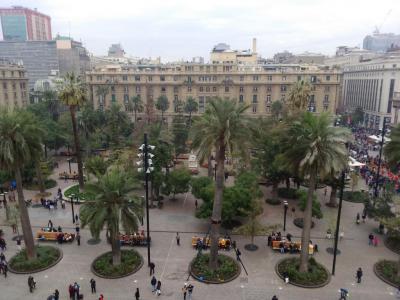
The Arms Square was founded along with Santiago in 1541. During the time of the Spanish colonization, it was customary to leave a city block empty and surround it with government buildings and a cathedral. If an attack happened, the city's residents could gather in the square and be defended.
Most of the buildings surrounding the Arms Square were completed in the 1800s. The beautiful Metropolitan Cathedral dominates the square. Other notable buildings in the square include the Royal Palace and the Central Post Office. A glorious fountain celebrating liberator Simón Bolívar stands in the center of the square. Over 100 palm trees shade the fountain.
There are several indoor malls with entrances from Arms Square. You'll find handcrafted goods, cafes, and fascinating corridors. The Chess Club of Santiago meets on the outdoor stage regularly. Just walk up and ask for a game.
On the weekends, you'll find musicians, painters, entertainers, and food vendors in the busy square. Dancers join together to dance the Cueca, a traditional Chilean dance.
Most of the buildings surrounding the Arms Square were completed in the 1800s. The beautiful Metropolitan Cathedral dominates the square. Other notable buildings in the square include the Royal Palace and the Central Post Office. A glorious fountain celebrating liberator Simón Bolívar stands in the center of the square. Over 100 palm trees shade the fountain.
There are several indoor malls with entrances from Arms Square. You'll find handcrafted goods, cafes, and fascinating corridors. The Chess Club of Santiago meets on the outdoor stage regularly. Just walk up and ask for a game.
On the weekends, you'll find musicians, painters, entertainers, and food vendors in the busy square. Dancers join together to dance the Cueca, a traditional Chilean dance.
2) Municipal Theater
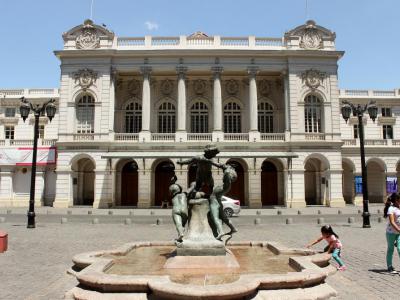
In the heart of Santiago Municipal Theater hangs a mesmerizing teardrop crystal chandelier, a silent witness to a rich tapestry of extraordinary performances that have graced its hallowed halls. This exquisite chandelier holds within it the stories of renowned ballet dancers, pianists, conductors, and violinists, whose artistic brilliance has been etched into the very walls of the theater.
The construction of this architectural marvel, the result of collaboration among several talented architects, culminated in its grand inauguration in 1857. On that momentous occasion, the theater hosted its maiden show, "Ernani," an opera by Giuseppe Verde, presented by an esteemed Italian company. The theater, boasting a capacity to accommodate 1,800 spectators, came alive with an air of anticipation and delight.
Throughout the passage of time, the majestic building endured the ravages of numerous fires and earthquakes, each catastrophe met with meticulous restoration efforts. In recognition of its historical and cultural significance, the theater received the honor of being declared a national monument in 1974. In the years that followed, it continued to foster a stellar reputation for artistic excellence, delivering unparalleled performances that captivated audiences from far and wide.
More than a bastion of captivating live performances, the theater has also embraced the digital age, carving a unique place for itself with its digital documentation center. Safeguarding the theater's cherished history and the cultural heritage of the country, this repository of knowledge offers invaluable insights into the past. The information housed within the center is made accessible to all through the Internet, providing a priceless resource free of charge.
Why You Should Visit:
Ballet, theatre, philharmonic orchestra and operas with artists and dances from all over the world.
There are guided tours twice a day, and you can visit areas not normally included in theater tours.
Tip:
There are limited spaces, of course, so for big events, you would need to book early.
The construction of this architectural marvel, the result of collaboration among several talented architects, culminated in its grand inauguration in 1857. On that momentous occasion, the theater hosted its maiden show, "Ernani," an opera by Giuseppe Verde, presented by an esteemed Italian company. The theater, boasting a capacity to accommodate 1,800 spectators, came alive with an air of anticipation and delight.
Throughout the passage of time, the majestic building endured the ravages of numerous fires and earthquakes, each catastrophe met with meticulous restoration efforts. In recognition of its historical and cultural significance, the theater received the honor of being declared a national monument in 1974. In the years that followed, it continued to foster a stellar reputation for artistic excellence, delivering unparalleled performances that captivated audiences from far and wide.
More than a bastion of captivating live performances, the theater has also embraced the digital age, carving a unique place for itself with its digital documentation center. Safeguarding the theater's cherished history and the cultural heritage of the country, this repository of knowledge offers invaluable insights into the past. The information housed within the center is made accessible to all through the Internet, providing a priceless resource free of charge.
Why You Should Visit:
Ballet, theatre, philharmonic orchestra and operas with artists and dances from all over the world.
There are guided tours twice a day, and you can visit areas not normally included in theater tours.
Tip:
There are limited spaces, of course, so for big events, you would need to book early.
3) Barrio Bellavista
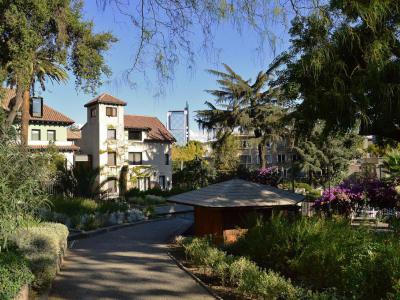
The Bellavista neighborhood in Santiago lies between the northern bank of the Mapocho River and the San Cristóbal Hill. It is bordered by the communes of Providencia to the east and Recoleta to the west, with Pío Nono Street serving as its central axis.
Originally known as La Chimba during colonial times, Bellavista's development progressed with the construction of the Cal y Canto bridge, integrating it with the rest of the city in the early 19th century. Once a Catholic and aristocratic area, the neighborhood has evolved over time to become a vibrant district where popular bars coexist with cultural centers and diverse national and international gastronomy. Today, it is renowned as the country's main bohemian neighborhood.
Bellavista offers several attractions, including the renowned "La Chascona" House, which belonged to the Chilean poet Pablo Neruda. Constructed in 1953, now, it was transformed into a museum. The area also boasts upscale restaurants offering diverse gastronomic delights on Constitución Street, as well as around the corner of Mallinkrodt with Dardignac. Additionally, Loreto Street is dotted with various eateries, bars, cités, and old mansions from the 19th century.
For those seeking outdoor adventures, the neighborhood provides access to the Metropolitan Park of Santiago through the funicular at the end of Pío Nono Street, which nearly reaches the top of Cerro San Cristóbal. From there, visitors can continue on foot to reach the statue of the Virgin. The Metropolitan Park encompasses the entirety of Cerro San Cristóbal and its surrounding lands, offering a recreational center, nursery, forests, and a popular zoological garden.
Originally known as La Chimba during colonial times, Bellavista's development progressed with the construction of the Cal y Canto bridge, integrating it with the rest of the city in the early 19th century. Once a Catholic and aristocratic area, the neighborhood has evolved over time to become a vibrant district where popular bars coexist with cultural centers and diverse national and international gastronomy. Today, it is renowned as the country's main bohemian neighborhood.
Bellavista offers several attractions, including the renowned "La Chascona" House, which belonged to the Chilean poet Pablo Neruda. Constructed in 1953, now, it was transformed into a museum. The area also boasts upscale restaurants offering diverse gastronomic delights on Constitución Street, as well as around the corner of Mallinkrodt with Dardignac. Additionally, Loreto Street is dotted with various eateries, bars, cités, and old mansions from the 19th century.
For those seeking outdoor adventures, the neighborhood provides access to the Metropolitan Park of Santiago through the funicular at the end of Pío Nono Street, which nearly reaches the top of Cerro San Cristóbal. From there, visitors can continue on foot to reach the statue of the Virgin. The Metropolitan Park encompasses the entirety of Cerro San Cristóbal and its surrounding lands, offering a recreational center, nursery, forests, and a popular zoological garden.
4) VeraCruz Church
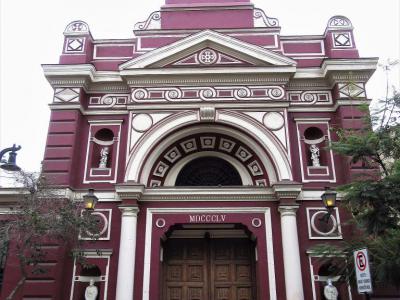
Pedro de Valdivia, the conquistador and founder of Santiago, is commemorated through several monuments, with the most prominent one being the Veracruz Church situated in the Lastarria district of Santiago. Erected in the 19th century, this temple stands as a remarkable tribute to his historical significance.
The architectural splendor of the Veracruz Church lies in its unassuming simplicity. The facade exhibits elegant vertical lines and a Doric-influenced doorway, lending an understated yet captivating charm to the structure. Adjacent to the church, there are two neoclassic houses dedicated to parish activities.
Inside the church, visitors are greeted by a captivating sight dominated by a figure of Jesus Christ, gifted by the Spanish King during the 16th century to the religious order of Our Lady of Mercy. Throughout the years, countless pilgrims have journeyed to the church annually to pay their respects to this sacred symbol. In 1983, the Veracruz Church was rightfully recognized as a remarkable piece of both historical and architectural heritage, being designated as a National Monument.
The architectural splendor of the Veracruz Church lies in its unassuming simplicity. The facade exhibits elegant vertical lines and a Doric-influenced doorway, lending an understated yet captivating charm to the structure. Adjacent to the church, there are two neoclassic houses dedicated to parish activities.
Inside the church, visitors are greeted by a captivating sight dominated by a figure of Jesus Christ, gifted by the Spanish King during the 16th century to the religious order of Our Lady of Mercy. Throughout the years, countless pilgrims have journeyed to the church annually to pay their respects to this sacred symbol. In 1983, the Veracruz Church was rightfully recognized as a remarkable piece of both historical and architectural heritage, being designated as a National Monument.
5) Barrio Lastarria
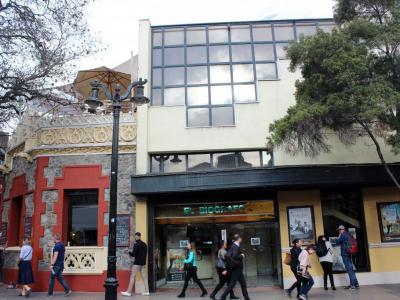
Barrio Lastarria, also known as the Lastarria Neighborhood, holds a significant place in Santiago, owing to its rich historical heritage. Situated at the heart of the city, this area has transformed into a beloved tourist destination, thriving as a hub for cultural activities. With a vibrant array of cinemas, theaters, museums, restaurants, and bars, Barrio Lastarria never fails to captivate visitors. The streets of Lastarria come alive with festivals and live performances, epitomizing its strong cultural essence.
The origins of Barrio Lastarria trace back to the Conquest of Chile when Pedro de Valdivia ceded control of the area to Bartolomé Blumenthal, a German migrant who constructed a mill on the site. Like many other neighborhoods in Santiago, Barrio Lastarria evolved around a central church, the Iglesia de la Veracruz. The charming houses along winding streets, such as the one at Plaza Mulato Gil de Castro dating back to the early 19th century, narrate the district's historical journey.
During the 1990s, Barrio Lastarria underwent a meticulous restoration process, carefully safeguarding its bohemian and intellectual atmosphere. This decade witnessed the emergence of numerous cafés, bars, and cultural centers, which only added to the area's allure. In 2001 and 2002, the facades of the Iglesia de la Veracruz received their much-needed restoration, enhancing the neighborhood's overall charm.
Despite experiencing some new developments, Barrio Lastarria has succeeded in preserving its traditional character as a testament to Santiago's history. Recognizing its historical importance, Chile officially declared Barrio Lastarria a Zona Típica (Typical Zone) in 1997.
The origins of Barrio Lastarria trace back to the Conquest of Chile when Pedro de Valdivia ceded control of the area to Bartolomé Blumenthal, a German migrant who constructed a mill on the site. Like many other neighborhoods in Santiago, Barrio Lastarria evolved around a central church, the Iglesia de la Veracruz. The charming houses along winding streets, such as the one at Plaza Mulato Gil de Castro dating back to the early 19th century, narrate the district's historical journey.
During the 1990s, Barrio Lastarria underwent a meticulous restoration process, carefully safeguarding its bohemian and intellectual atmosphere. This decade witnessed the emergence of numerous cafés, bars, and cultural centers, which only added to the area's allure. In 2001 and 2002, the facades of the Iglesia de la Veracruz received their much-needed restoration, enhancing the neighborhood's overall charm.
Despite experiencing some new developments, Barrio Lastarria has succeeded in preserving its traditional character as a testament to Santiago's history. Recognizing its historical importance, Chile officially declared Barrio Lastarria a Zona Típica (Typical Zone) in 1997.
6) Santa Lucía Hill (must see)
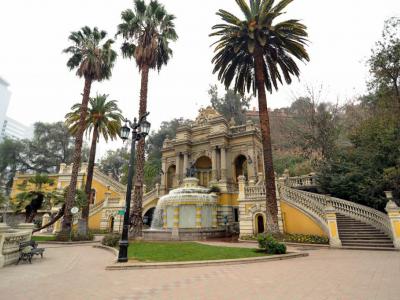
Santa Lucia Hill is 629 meters (or 2,064 feet) above sea level and 69 meters (or 226 feet) above the local area. This unique hill is the remainder of a 15 million-year-old volcano.
The hill was originally called Huelén in pre-colonial times. In 1541, Spanish conquierer Pedro de Valdivia claimed the hill for the Spanish and named the hill Santa Lucia. Pedro de Valdivia founded Santiago from Santa Lucia, making this hill an important historical site. During Santiago's early days, missionaries used the hill to pray and worship.
In the early 1800s, Manuel Olaguer Feliú, a Spanish military engineer, built two forts on the hill. Hidalgo Castle was built in 1820, and the fort is open to the public. Today, the site is home to an enormous park. A series of stone steps lead visitors to the top for an incredible view. The climb may be challenging, especially on a hot day.
The steep steps twist their way past terraces, trees, statues, fountains, and gardens that have been erected over the centuries. Each terrace allows visitors to rest before continuing. Don't miss the beautiful Neptune Fountain.
In 1849, United States Naval Officer James Melville Gilliss founded an American observatory on the hill. Gilliss sought to measure the solar parallax precisely. Chile purchased the equipment and formed Chile's first National Astronomical Observatory on the site.
Traditionally, an 1824 cannon is fired every day to mark the noon hour.
Tips:
Visit on a clear weekend day. On the weekends, there is less traffic, and the air is often clearer with less smog. The clearer the air, the better your view of the mountains.
The hill was originally called Huelén in pre-colonial times. In 1541, Spanish conquierer Pedro de Valdivia claimed the hill for the Spanish and named the hill Santa Lucia. Pedro de Valdivia founded Santiago from Santa Lucia, making this hill an important historical site. During Santiago's early days, missionaries used the hill to pray and worship.
In the early 1800s, Manuel Olaguer Feliú, a Spanish military engineer, built two forts on the hill. Hidalgo Castle was built in 1820, and the fort is open to the public. Today, the site is home to an enormous park. A series of stone steps lead visitors to the top for an incredible view. The climb may be challenging, especially on a hot day.
The steep steps twist their way past terraces, trees, statues, fountains, and gardens that have been erected over the centuries. Each terrace allows visitors to rest before continuing. Don't miss the beautiful Neptune Fountain.
In 1849, United States Naval Officer James Melville Gilliss founded an American observatory on the hill. Gilliss sought to measure the solar parallax precisely. Chile purchased the equipment and formed Chile's first National Astronomical Observatory on the site.
Traditionally, an 1824 cannon is fired every day to mark the noon hour.
Tips:
Visit on a clear weekend day. On the weekends, there is less traffic, and the air is often clearer with less smog. The clearer the air, the better your view of the mountains.
7) San Francisco Church
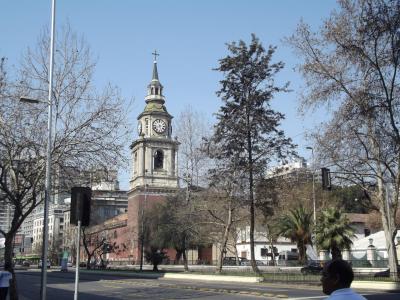
The oldest religious site in Santiago, embodying the city's former symbol, is the church and convent of San Francisco. This colonial complex holds immense spiritual importance for the people of Santiago and is a treasure trove of memories.
Originally constructed in 1554 to house the Virgen del Socorro, the church's history is inseparably intertwined with that of the city. Unfortunately, an earthquake razed the initial building to the ground, leading to the construction of the present-day structure on the same site. Despite the passing centuries, the weathered walls stand as a testament to its ancient origins, having undergone several modifications and reinforcements.
Over time, numerous ornamental additions have graced the church's architecture, notably a beautifully adorned wooden roof, a sight of breathtaking magnificence. Adjacent to the church stands a convent, showcasing a splendid collection of colonial art, including intricate silverware, tapestries, figurines, and paintings. This extraordinary assortment could easily contend for the title of the most extensive and finest colonial art collection in Chile.
The convent also houses a diverse array of religious and monk-related artifacts, along with a marvelous collection of silverware, carvings, and dozens of paintings in the rear rooms, depicting life during Saint Francis' era. The entire complex remains a living testament to Santiago's historical and spiritual legacy, inviting visitors to explore the rich heritage it encapsulates.
Why You Should Visit:
Full of Spanish paintings and other art forms in the unique style of the time. The attached museum also contains a vast array of extremely old ecclesiastical items and artworks which can't be photographed so the only way to see them is to go there. Well worth the small entry fee, but note that there is very little information in English.
Tip:
The peaceful internal garden is a cool oasis on a hot day, with chickens and peacocks roaming about, and stunning tropical flowers.
Originally constructed in 1554 to house the Virgen del Socorro, the church's history is inseparably intertwined with that of the city. Unfortunately, an earthquake razed the initial building to the ground, leading to the construction of the present-day structure on the same site. Despite the passing centuries, the weathered walls stand as a testament to its ancient origins, having undergone several modifications and reinforcements.
Over time, numerous ornamental additions have graced the church's architecture, notably a beautifully adorned wooden roof, a sight of breathtaking magnificence. Adjacent to the church stands a convent, showcasing a splendid collection of colonial art, including intricate silverware, tapestries, figurines, and paintings. This extraordinary assortment could easily contend for the title of the most extensive and finest colonial art collection in Chile.
The convent also houses a diverse array of religious and monk-related artifacts, along with a marvelous collection of silverware, carvings, and dozens of paintings in the rear rooms, depicting life during Saint Francis' era. The entire complex remains a living testament to Santiago's historical and spiritual legacy, inviting visitors to explore the rich heritage it encapsulates.
Why You Should Visit:
Full of Spanish paintings and other art forms in the unique style of the time. The attached museum also contains a vast array of extremely old ecclesiastical items and artworks which can't be photographed so the only way to see them is to go there. Well worth the small entry fee, but note that there is very little information in English.
Tip:
The peaceful internal garden is a cool oasis on a hot day, with chickens and peacocks roaming about, and stunning tropical flowers.
8) Paseo Ahumada (Ahumada Promenade)
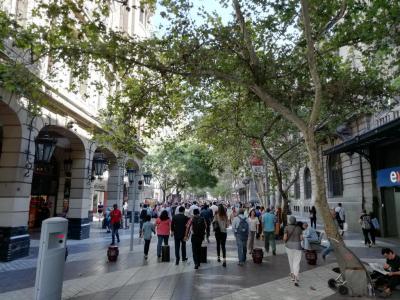
Ahumada Promenade is a four-block-long pedestrian-only street used by two and a half million pedestrians each year. Here, you'll find historic buildings, shops, and restaurants. The highlight of a walk along Ahumada Promenade is watching busy Santiagans go about their daily life. Immerse yourself in city culture as locals travel from their offices, grab lunch, and go shopping.
Street musicians and performers often entertain passersby. You'll see ballroom dancers, folk dancers, and musicians of all kinds. Street vendors hawk their goods; this is an excellent place to shop for trinkets and souvenirs. Ahumada Promenade is lined with trees, providing shade and respite on this busy street.
The Bank of Chile building is one of the historic buildings found along Ahumada Promenade. The 1926 building is a gorgeous example of Beaux-Arts-style architecture. Classical columns create an imposing effect, while the ironwork gives the building an ornate look.
As you walk, stop at one of the popular mote con huesillo stands. You'll enjoy this popular local drink made with a sweet peach punch and wheat.
Street musicians and performers often entertain passersby. You'll see ballroom dancers, folk dancers, and musicians of all kinds. Street vendors hawk their goods; this is an excellent place to shop for trinkets and souvenirs. Ahumada Promenade is lined with trees, providing shade and respite on this busy street.
The Bank of Chile building is one of the historic buildings found along Ahumada Promenade. The 1926 building is a gorgeous example of Beaux-Arts-style architecture. Classical columns create an imposing effect, while the ironwork gives the building an ornate look.
As you walk, stop at one of the popular mote con huesillo stands. You'll enjoy this popular local drink made with a sweet peach punch and wheat.
9) Plaza de la Constitución (Constitution Square)
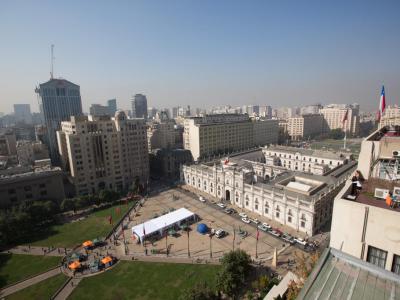
Constitution Square is named in recognition of Chile’s ten constitutions. The square is surrounded by key government buildings such as the Ministry of Foreign Affairs, the Ministry of Finance, the Ministry of Justice, the Municipality of Santiago, and the Chilean Central Bank. It was renovated in 1983, adding new paths, grassy areas, trees, and an underground parking lot.
In the southern part of Constitution Square, two elegant water fountains add charm and balance to Santiago’s grand civic space. Set against the backdrop of La Moneda Palace, these fountains mirror each other.
Throughout the square, visitors will also find five statues commemorating influential Chileans. Diego Portales is honored as the founder of the Chilean Republic, while the other statues depict former presidents: Pedro Aguirre Cerda, Jorge Alessandri, Eduardo Frei Montalva, and Salvador Allende.
The La Moneda Palace dominates the square and serves as the seat of government. In front of the palace, visitors can see flags representing Chile’s 12 regions. Don’t miss the Changing of the Guard, which takes place every other day at 10:00 a.m. in front of the flags - a colorful display of national tradition and ceremony.
In the southern part of Constitution Square, two elegant water fountains add charm and balance to Santiago’s grand civic space. Set against the backdrop of La Moneda Palace, these fountains mirror each other.
Throughout the square, visitors will also find five statues commemorating influential Chileans. Diego Portales is honored as the founder of the Chilean Republic, while the other statues depict former presidents: Pedro Aguirre Cerda, Jorge Alessandri, Eduardo Frei Montalva, and Salvador Allende.
The La Moneda Palace dominates the square and serves as the seat of government. In front of the palace, visitors can see flags representing Chile’s 12 regions. Don’t miss the Changing of the Guard, which takes place every other day at 10:00 a.m. in front of the flags - a colorful display of national tradition and ceremony.
10) Calle Bandera (Flag Street)
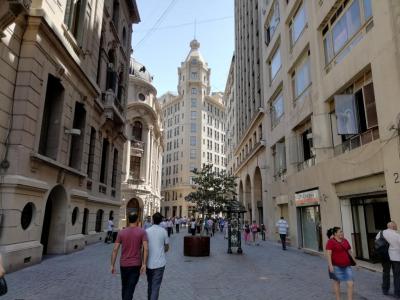
Calle Bandera (formerly Calle de La Bandera ) is a street in the center of the city of Santiago, which begins in the south from Libertador General Bernardo O'Higgins Avenue and continues north to the Mapocho River.
The name of this street is due to Pedro Chacón y Morales, a well-known merchant from Santiago who in 1817 had his flags shop on the street known as "Atravesada de La Compañía". Pedro Chacón, who was the grandfather of national hero Arturo Prat Chacón, raised a Chilean flag every time there was a victory for the independence forces, and the street became known as "the street of the flag."
The neighborhood around Calle Bandera was home to the Chilean literary bohemian in late 19th century and early 20th century. There were many bars, restaurants, and cabarets which were frequented by writers, poets, and artists such as Pablo Neruda, Juvencio Valle, Diego Muñoz, Alberto Valdivia, Rubén Azócar, Alberto Rojas Jiménez, and Tomás Lagos.
Today the street houses important historical buildings and financial institutions in the country including Pre-Columbian Art Museum, Palace of the Courts of Santiago and Building of the former National Congress. Since December 2018, Calle Bandera became a pedestrian street from the underpass of Libertador General Bernardo O'Higgins Avenue to the north.
If you’re into thrifting, Calle Bandera is the place to be. You will find there countless second-hand, vintage and thrift stores. The street is also covered by beautiful painted artworks and is a popular Instagram spot in the city.
The name of this street is due to Pedro Chacón y Morales, a well-known merchant from Santiago who in 1817 had his flags shop on the street known as "Atravesada de La Compañía". Pedro Chacón, who was the grandfather of national hero Arturo Prat Chacón, raised a Chilean flag every time there was a victory for the independence forces, and the street became known as "the street of the flag."
The neighborhood around Calle Bandera was home to the Chilean literary bohemian in late 19th century and early 20th century. There were many bars, restaurants, and cabarets which were frequented by writers, poets, and artists such as Pablo Neruda, Juvencio Valle, Diego Muñoz, Alberto Valdivia, Rubén Azócar, Alberto Rojas Jiménez, and Tomás Lagos.
Today the street houses important historical buildings and financial institutions in the country including Pre-Columbian Art Museum, Palace of the Courts of Santiago and Building of the former National Congress. Since December 2018, Calle Bandera became a pedestrian street from the underpass of Libertador General Bernardo O'Higgins Avenue to the north.
If you’re into thrifting, Calle Bandera is the place to be. You will find there countless second-hand, vintage and thrift stores. The street is also covered by beautiful painted artworks and is a popular Instagram spot in the city.
11) Pre-Columbian Art Museum (must see)
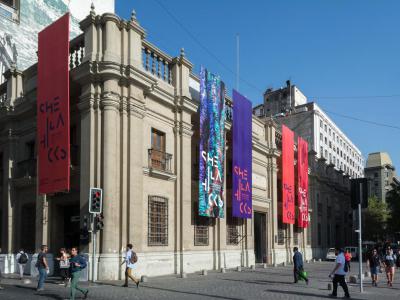
The Pre-Columbian Art Museum is one of the world's top museums and a highlight of Latin American museums. Visitors will gain an important historical look at the wonderful culture of the Pre-Columbian Americas. The museum is located in the Old Royal Customs House, built in 1807.
Inside, the museum’s permanent collection includes thousands of artifacts representing more than 100 indigenous cultures. Among the exhibits are finely crafted ceramics, intricate textiles, gold and silver ornaments, and stone carvings. Each piece reveals details about the daily life, beliefs, and artistic expression of societies such as the Maya, Aztec, Inca, and Mapuche.
One of the most remarkable sections is the Andean Hall, which explores the civilizations that flourished along the Andes Mountains. Visitors can see elaborately woven fabrics that have survived for centuries thanks to the region’s dry climate, as well as ceremonial masks and musical instruments.
The Chile Before Chile exhibit is fabulous and gives visitors a real insight into the lives of the original inhabitants of this land before colonization. The Chinchorro people mummified their dead before the more well-known Egyptian culture began mummifying their dead. The museum has a Chinchorro mummy on display, dating back to 1,900 BCE.
Visitors will also learn about the Anconcágua culture, which survived for 9,000 years hunting animals that are now extinct. Other unique pieces include Mapuche totem poles which were each carved from a single tree. Visitors will be impressed by the Rapa Nui wooden statues.
The displays are labeled in Spanish and English.
Tip:
Try to arrive before lunchtime, as it is usually packed.
Inside, the museum’s permanent collection includes thousands of artifacts representing more than 100 indigenous cultures. Among the exhibits are finely crafted ceramics, intricate textiles, gold and silver ornaments, and stone carvings. Each piece reveals details about the daily life, beliefs, and artistic expression of societies such as the Maya, Aztec, Inca, and Mapuche.
One of the most remarkable sections is the Andean Hall, which explores the civilizations that flourished along the Andes Mountains. Visitors can see elaborately woven fabrics that have survived for centuries thanks to the region’s dry climate, as well as ceremonial masks and musical instruments.
The Chile Before Chile exhibit is fabulous and gives visitors a real insight into the lives of the original inhabitants of this land before colonization. The Chinchorro people mummified their dead before the more well-known Egyptian culture began mummifying their dead. The museum has a Chinchorro mummy on display, dating back to 1,900 BCE.
Visitors will also learn about the Anconcágua culture, which survived for 9,000 years hunting animals that are now extinct. Other unique pieces include Mapuche totem poles which were each carved from a single tree. Visitors will be impressed by the Rapa Nui wooden statues.
The displays are labeled in Spanish and English.
Tip:
Try to arrive before lunchtime, as it is usually packed.
