Custom Walk in Halifax, Canada by mdb_c743f created on 2025-08-01
Guide Location: Canada » Halifax
Guide Type: Custom Walk
# of Sights: 12
Tour Duration: 4 Hour(s)
Travel Distance: 9.3 Km or 5.8 Miles
Share Key: QRC8S
Guide Type: Custom Walk
# of Sights: 12
Tour Duration: 4 Hour(s)
Travel Distance: 9.3 Km or 5.8 Miles
Share Key: QRC8S
How It Works
Please retrieve this walk in the GPSmyCity app. Once done, the app will guide you from one tour stop to the next as if you had a personal tour guide. If you created the walk on this website or come to the page via a link, please follow the instructions below to retrieve the walk in the app.
Retrieve This Walk in App
Step 1. Download the app "GPSmyCity: Walks in 1K+ Cities" on Apple App Store or Google Play Store.



Step 2. In the GPSmyCity app, download(or launch) the guide "Halifax Map and Walking Tours".
Step 3. Tap the menu button located at upper right corner of the "Walks" screen and select "Retrieve custom walk". Enter the share key: QRC8S
1) Halifax Citadel National Historic Site (must see)
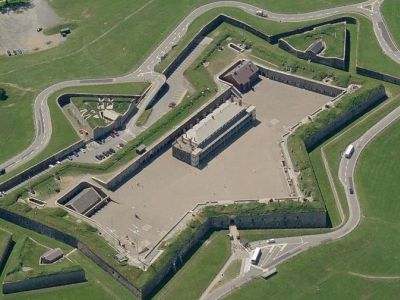
Halifax Citadel National Historic Site rests on Citadel Hill. The site was fortified in 1749 when the city was founded by the British. The Citadel was meant to defend Halifax Harbor and the Royal Navy Dockyard.
Four citadels have been built on Citadel Hill. The first came in 1749. It was a small redoubt, with a flagstaff and guardhouse near the summit. By 1761 its condition had deteriorated.
The second citadel was completed in 1776. It was a permanent fortification that could accommodate 100 troops. The British military presence in Halifax through Citadel Hill is thought to be one of the main reasons that Nova Scotia-the fourteenth British colony-remained loyal to the Crown throughout and after the American Revolutionary War.
However, poor construction caused the second citadel to fall into ruins in less than 10 years.
The third citadel was completed in 1796. It was larger than the previous two due to the oversight of Prince Edward, Duke of Kent. He had ordered the Citadel Hill be leveled in order to accommodate the larger space. This citadel lasted slightly longer than the others, but by 1825 it had fallen into disrepair.
The fourth and final citadel was built between 1828 and 1856. This massive masonry-construction fort was designed to repel both a land-based attack or attack from the water by United States forces. It was a star-shaped hillock citadel with internal courtyard and a clear harbor view from armored ramparts.
However the Halifax Citadel quickly became obsolete following the introduction of more powerful rifled guns in the 1860s. By the end of the 19th century, the role of the Citadel in the defense of Halifax Harbor had evolved as it was used as a command center for other, more distant harbor defensive works. It also provided barrack accommodations.
After the World War II, the fort began to decay but it was restored and opened as a living history museum and historic site in 1956.
Visitors can tour the Halifax Citadel throughout the year. They can expect different programs at the historic site depending on the time of year they arrive. From spring to fall, re-enactors are on the grounds of the Citadel portraying tradespeople, civilians and military forces from the late 19th century.
In the fall through Halloween, ghost tours are held at the fort. A Victorian Christmas celebration takes place every winter with crafts, games and Christmas carols.
Four citadels have been built on Citadel Hill. The first came in 1749. It was a small redoubt, with a flagstaff and guardhouse near the summit. By 1761 its condition had deteriorated.
The second citadel was completed in 1776. It was a permanent fortification that could accommodate 100 troops. The British military presence in Halifax through Citadel Hill is thought to be one of the main reasons that Nova Scotia-the fourteenth British colony-remained loyal to the Crown throughout and after the American Revolutionary War.
However, poor construction caused the second citadel to fall into ruins in less than 10 years.
The third citadel was completed in 1796. It was larger than the previous two due to the oversight of Prince Edward, Duke of Kent. He had ordered the Citadel Hill be leveled in order to accommodate the larger space. This citadel lasted slightly longer than the others, but by 1825 it had fallen into disrepair.
The fourth and final citadel was built between 1828 and 1856. This massive masonry-construction fort was designed to repel both a land-based attack or attack from the water by United States forces. It was a star-shaped hillock citadel with internal courtyard and a clear harbor view from armored ramparts.
However the Halifax Citadel quickly became obsolete following the introduction of more powerful rifled guns in the 1860s. By the end of the 19th century, the role of the Citadel in the defense of Halifax Harbor had evolved as it was used as a command center for other, more distant harbor defensive works. It also provided barrack accommodations.
After the World War II, the fort began to decay but it was restored and opened as a living history museum and historic site in 1956.
Visitors can tour the Halifax Citadel throughout the year. They can expect different programs at the historic site depending on the time of year they arrive. From spring to fall, re-enactors are on the grounds of the Citadel portraying tradespeople, civilians and military forces from the late 19th century.
In the fall through Halloween, ghost tours are held at the fort. A Victorian Christmas celebration takes place every winter with crafts, games and Christmas carols.
2) Army Museum
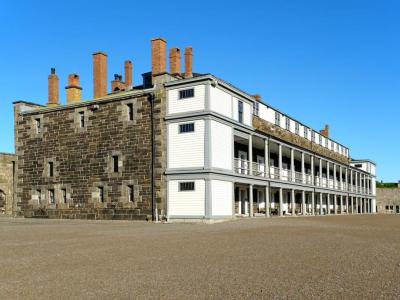
Located within the imposing granite walls of the Halifax Citadel, the Army Museum Halifax Citadel is a treasure trove of Nova Scotia’s military history. Established in 1953, this private, non-profit institution is dedicated to preserving and showcasing the legacy of Atlantic Canada’s soldiers, offering visitors an in-depth look at over a century of military service, sacrifice, and innovation.
With a collection exceeding 100,000 artifacts, the museum brings history to life through an impressive array of weapons, uniforms, medals, and memorabilia. From the First World War to modern military conflicts, the exhibits provide a fascinating journey through time, illustrating the evolution of combat, technology, and the personal stories of those who served.
Beyond traditional displays, the museum engages the public through interactive exhibits, educational programs, and guided experiences. Schools, organizations, and families are invited to participate in activities that foster a deeper understanding of the courage and dedication of Canada’s military personnel.
As a proud member of the Organization of Military Museums of Canada and the Association of Nova Scotia Museums (ANSM), the Army Museum works closely with Parks Canada and the Nova Scotia Museum to continue its mission of remembrance and education. Visitors can also explore the museum’s gift shop, offering unique military-themed souvenirs.
Whether you’re a history enthusiast or simply curious about Nova Scotia’s role in shaping Canada’s armed forces, the Army Museum Halifax Citadel is an essential stop in understanding the region’s deep-rooted military past.
With a collection exceeding 100,000 artifacts, the museum brings history to life through an impressive array of weapons, uniforms, medals, and memorabilia. From the First World War to modern military conflicts, the exhibits provide a fascinating journey through time, illustrating the evolution of combat, technology, and the personal stories of those who served.
Beyond traditional displays, the museum engages the public through interactive exhibits, educational programs, and guided experiences. Schools, organizations, and families are invited to participate in activities that foster a deeper understanding of the courage and dedication of Canada’s military personnel.
As a proud member of the Organization of Military Museums of Canada and the Association of Nova Scotia Museums (ANSM), the Army Museum works closely with Parks Canada and the Nova Scotia Museum to continue its mission of remembrance and education. Visitors can also explore the museum’s gift shop, offering unique military-themed souvenirs.
Whether you’re a history enthusiast or simply curious about Nova Scotia’s role in shaping Canada’s armed forces, the Army Museum Halifax Citadel is an essential stop in understanding the region’s deep-rooted military past.
3) Public Gardens (must see)
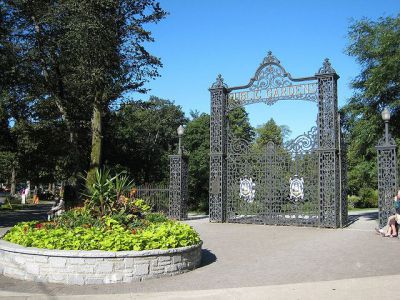
The Public Gardens were established in Halifax in 1867. They are 16 acres of Victoria formal gardens. The gardens are comprised of a wide number of flower beds, three fountains, three ponds, two stone bridges and a number of statues.
In addition to the statues and flower beds, there are a number of plaques throughout the gardens. These plaques honor service members like Charles Carroll Wood, the first Canadian casualty of the Boer War. They also honor members of the Temperance movement who helped women gain the right to vote.
The Public Gardens was established in 1874 by combining two older gardens, the Nova Scotia Horticultural Society Garden (laid out in 1837) and an adjacent public park (opened in 1866). They are one of the finest surviving examples of a Victorian garden in North America. The Public Gardens were named a National Historic Site of Canada in 1984.
Free public concerts take place at the garden bandstand every Sunday in the summer. The Public Gardens also host large celebrations on Canada Day and Natal Day. The gardens are open from May 1 through November 1. The gates open at 8 AM. They begin closing one hour prior to sunset. The final gate closes 30 minutes before sunset.
In addition to the statues and flower beds, there are a number of plaques throughout the gardens. These plaques honor service members like Charles Carroll Wood, the first Canadian casualty of the Boer War. They also honor members of the Temperance movement who helped women gain the right to vote.
The Public Gardens was established in 1874 by combining two older gardens, the Nova Scotia Horticultural Society Garden (laid out in 1837) and an adjacent public park (opened in 1866). They are one of the finest surviving examples of a Victorian garden in North America. The Public Gardens were named a National Historic Site of Canada in 1984.
Free public concerts take place at the garden bandstand every Sunday in the summer. The Public Gardens also host large celebrations on Canada Day and Natal Day. The gardens are open from May 1 through November 1. The gates open at 8 AM. They begin closing one hour prior to sunset. The final gate closes 30 minutes before sunset.

4) Halifax Central Library
Halifax Central Library is a public library in downtown Halifax. It is the flagship library of the Halifax Public Library System. This library was completed in 2014 in a Modern architectural style designed.
The library is notable for its ultra-modern design. It has the appearance of multiple levels stacked atop each other at varying angles. This includes the fifth floor, which
juts over the plaza providing shade to the benches and tables below.
Along with books, the library offers community rooms, an auditorium and two cafes. The rooftop terrace is a popular spot for visitors to get a beautiful view of Halifax from a unique location.
The library is also home to public artwork created by Cliff Eyland. Eyland painted 5,000 miniature paintings on canvas the size of library cards, fittingly called "Library Cards." Before his death, Eyland also made a smaller version called "Book Shelf Paintings," which was comprised of 1,000 mini paintings.
The library is notable for its ultra-modern design. It has the appearance of multiple levels stacked atop each other at varying angles. This includes the fifth floor, which
juts over the plaza providing shade to the benches and tables below.
Along with books, the library offers community rooms, an auditorium and two cafes. The rooftop terrace is a popular spot for visitors to get a beautiful view of Halifax from a unique location.
The library is also home to public artwork created by Cliff Eyland. Eyland painted 5,000 miniature paintings on canvas the size of library cards, fittingly called "Library Cards." Before his death, Eyland also made a smaller version called "Book Shelf Paintings," which was comprised of 1,000 mini paintings.

5) Halifax Farmers' Market
The Halifax Farmers' Market holds the distinction of being the oldest continuously operating farmers' market in North America, with its origins tracing back to 1750. Established by Royal Proclamation just a year after the founding of Halifax, the market was initially designated a site at what is now the Bank of Montreal building. For its first fifty years, it functioned as a meat and cattle market, supplying Halifax with fresh produce and livestock from Acadian farms in the Annapolis Valley and other local sources.
Throughout its history, the market has relocated multiple times, each move reflecting the evolving needs of the city and its vendors. One of its most notable homes was Keith’s Brewery Building on Lower Water Street, where it operated for many years. In 1848, following Halifax’s incorporation as a city, the original market property was officially conveyed to the city for public use, ensuring its place as a community institution.
A significant shift occurred in 2010 when the majority of the market’s cooperative members moved to a newly constructed space at the Halifax Seaport. This relocation gave rise to the Halifax Seaport Farmers' Market, while a small number of vendors chose to remain at the former site, rebranding themselves as the Historic Farmers' Market. Despite the division, both markets maintain their dedication to local commerce and the celebration of fresh, regional products.
Today, the Halifax Seaport Farmers’ Market continues to thrive, offering a vibrant selection of goods from farmers, artisans, and food vendors every weekend, year-round. Marking 265 years of operation in 2015, the market remains an enduring symbol of Halifax’s deep-rooted agricultural and economic traditions, connecting the past with the present in a dynamic marketplace by the sea.
Throughout its history, the market has relocated multiple times, each move reflecting the evolving needs of the city and its vendors. One of its most notable homes was Keith’s Brewery Building on Lower Water Street, where it operated for many years. In 1848, following Halifax’s incorporation as a city, the original market property was officially conveyed to the city for public use, ensuring its place as a community institution.
A significant shift occurred in 2010 when the majority of the market’s cooperative members moved to a newly constructed space at the Halifax Seaport. This relocation gave rise to the Halifax Seaport Farmers' Market, while a small number of vendors chose to remain at the former site, rebranding themselves as the Historic Farmers' Market. Despite the division, both markets maintain their dedication to local commerce and the celebration of fresh, regional products.
Today, the Halifax Seaport Farmers’ Market continues to thrive, offering a vibrant selection of goods from farmers, artisans, and food vendors every weekend, year-round. Marking 265 years of operation in 2015, the market remains an enduring symbol of Halifax’s deep-rooted agricultural and economic traditions, connecting the past with the present in a dynamic marketplace by the sea.
6) Canadian Museum of Immigration at Pier 21 (must see)
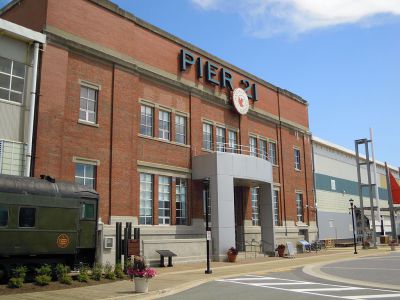
The Canadian Museum of Immigration at Pier 21 is the nation's premiere museum of immigration. It rests on Pier 21 as the pier is the last remaining ocean immigration shed in the country.
The museum was founded in 1999 by the Pier 21 Society. The goal was to celebrate the 1.5 million immigrants who pass through the pier on the way to their new homes in Canada. The Canadian government first worked as a partner with the Pier 21 Society, and then began fully operating the museum in 2011.
Permanent exhibitions in the museum include the Pier 21 Story, which shows the immigration process. It is a hands-on display that allows visitors to walk through replica train cars. Another permanent exhibit is the Canadian Immigration Hall, which has oral histories and an immigration map.
The museum also features a number of temporary exhibits, memorials and tributes to community members and cultural groups.
The museum was founded in 1999 by the Pier 21 Society. The goal was to celebrate the 1.5 million immigrants who pass through the pier on the way to their new homes in Canada. The Canadian government first worked as a partner with the Pier 21 Society, and then began fully operating the museum in 2011.
Permanent exhibitions in the museum include the Pier 21 Story, which shows the immigration process. It is a hands-on display that allows visitors to walk through replica train cars. Another permanent exhibit is the Canadian Immigration Hall, which has oral histories and an immigration map.
The museum also features a number of temporary exhibits, memorials and tributes to community members and cultural groups.
7) Halifax Waterfront Boardwalk (must see)
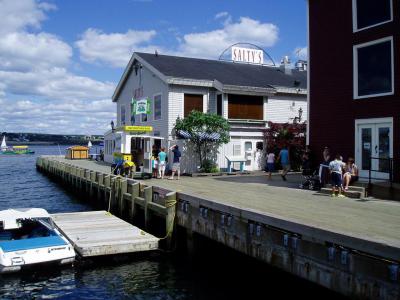
The Halifax Waterfront Boardwalk is a walking path that follows Halifax Harbor. The boardwalk is lined with shops, historic properties and tour boat operators. It is an excellent place for shopping, dining, getting some exercise or people watching.
Museums along the boardwalk include the Canadian Museum of Immigration at Pier 21, the Maritime Museum of the Atlantic and HMCS Sackville. Other interesting things to see along the boardwalk include Purdy's Wharf, the CSS Acadia, Bishop's Landing, the Samuel Cunard Monument and the Cunard Center.
The boardwalk features plenty of recreational space for young and old. There are hammocks, a dance floor and public art. The murals and sculptures reflect the sea and leisure activities. The Drunken Lampposts are a sculpture that show two lampposts displaying all of the fun that can be had at the local beer gardens.
The boardwalk stretches from Halifax Seaport to Casino Nova Scotia. It is about a two mile walk, making it an easy stretch any time of the day or night.
Museums along the boardwalk include the Canadian Museum of Immigration at Pier 21, the Maritime Museum of the Atlantic and HMCS Sackville. Other interesting things to see along the boardwalk include Purdy's Wharf, the CSS Acadia, Bishop's Landing, the Samuel Cunard Monument and the Cunard Center.
The boardwalk features plenty of recreational space for young and old. There are hammocks, a dance floor and public art. The murals and sculptures reflect the sea and leisure activities. The Drunken Lampposts are a sculpture that show two lampposts displaying all of the fun that can be had at the local beer gardens.
The boardwalk stretches from Halifax Seaport to Casino Nova Scotia. It is about a two mile walk, making it an easy stretch any time of the day or night.
8) Maritime Museum of the Atlantic (must see)
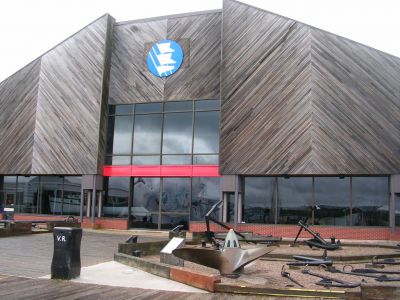
The Maritime Museum of the Atlantic, located in downtown Halifax, is Canada’s oldest and largest maritime museum. A member of the Nova Scotia Museum system, it boasts an extensive collection of over 30,000 artifacts, including 70 small craft and the historic steamship CSS Acadia. The museum also houses 30,000 photographs, a vast selection of charts, and rare books, making it a key institution for maritime history enthusiasts.
Originally founded in 1948 as the Maritime Museum of Canada, it was first based at HMC Dockyard in Halifax Harbour. The museum’s early years saw naval officers serving as volunteer chairs until 1959 when Niels Jannasch was appointed as its founding director, a role he held until 1985. Over the decades, the museum moved locations several times before settling into its current waterfront facility in 1981, as part of a redevelopment initiative. The CSS Acadia was acquired in 1982, further enriching the museum’s collection.
Situated on the Halifax Waterfront, the museum enjoys a prime location with piers, boatsheds, and a direct view of Halifax Harbour, including Georges Island and Dartmouth. Among its facilities is the restored Robertson Store ship chandler building, dating back to the 1880s, alongside the modern exhibit spaces of the Devonian Wing. During the summer months, the HMCS Sackville, a World War II Flower-class corvette, is docked adjacent to the museum, although it is not part of its administration.
The museum showcases maritime history through exhibits on sailing, steamships, small craft, the Canadian Navy, the Halifax Explosion, and shipwrecks. A standout is the Titanic exhibit, highlighting Nova Scotia’s role in recovering victims. It features the world’s largest collection of Titanic wooden artifacts, including a rare deck chair and children’s shoes that helped identify Sidney Leslie Goodwin as the “unknown child.”
Beyond its exhibitions, the museum actively engages in restoration projects. The boatsheds behind the museum house part of its small craft collection, including the ongoing restoration of Whim, a 1937 C-class sloop. In 2017, the museum completed the restoration of the small schooner Hebridee II. Three operational boats from the working small craft collection are moored next to CSS Acadia during the summer months.
The museum houses the Niels Jannasch Library, Canada’s largest ship portrait collection, and ship models, including Theodore Tugboat originals. A key part of Halifax’s culture, it showcases maritime history through exhibits and restoration projects.
Originally founded in 1948 as the Maritime Museum of Canada, it was first based at HMC Dockyard in Halifax Harbour. The museum’s early years saw naval officers serving as volunteer chairs until 1959 when Niels Jannasch was appointed as its founding director, a role he held until 1985. Over the decades, the museum moved locations several times before settling into its current waterfront facility in 1981, as part of a redevelopment initiative. The CSS Acadia was acquired in 1982, further enriching the museum’s collection.
Situated on the Halifax Waterfront, the museum enjoys a prime location with piers, boatsheds, and a direct view of Halifax Harbour, including Georges Island and Dartmouth. Among its facilities is the restored Robertson Store ship chandler building, dating back to the 1880s, alongside the modern exhibit spaces of the Devonian Wing. During the summer months, the HMCS Sackville, a World War II Flower-class corvette, is docked adjacent to the museum, although it is not part of its administration.
The museum showcases maritime history through exhibits on sailing, steamships, small craft, the Canadian Navy, the Halifax Explosion, and shipwrecks. A standout is the Titanic exhibit, highlighting Nova Scotia’s role in recovering victims. It features the world’s largest collection of Titanic wooden artifacts, including a rare deck chair and children’s shoes that helped identify Sidney Leslie Goodwin as the “unknown child.”
Beyond its exhibitions, the museum actively engages in restoration projects. The boatsheds behind the museum house part of its small craft collection, including the ongoing restoration of Whim, a 1937 C-class sloop. In 2017, the museum completed the restoration of the small schooner Hebridee II. Three operational boats from the working small craft collection are moored next to CSS Acadia during the summer months.
The museum houses the Niels Jannasch Library, Canada’s largest ship portrait collection, and ship models, including Theodore Tugboat originals. A key part of Halifax’s culture, it showcases maritime history through exhibits and restoration projects.
9) City Hall
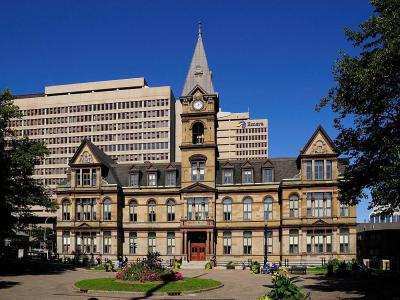
Halifax City Hall was built in 1890. It was originally built to replace the old courthouse and for other public use. Halifax City Hall is notable for being one of the oldest public buildings in Nova Scotia. With four floors and a seven-story clock tower, it is also one of the largest.
The city hall was designed by architect Edward Elliot in the Late-Victorian Eclectic architecture style. The city hall building was built from the timbers of the demolished Dalhousie University, granite and sandstone laid in the freestone masonry technique.
The building underwent a major refurbishment in 2011. Most of the exterior stone was replaced along with the heating and cooling system and the elevator shaft. It was also wired for modern technology.
Visitors to Halifax will find the city hall conveniently located near many of the city's main attractions. It is a close walk to many historic sites, dining establishments, shopping boutiques and the harbor.
The city hall was designed by architect Edward Elliot in the Late-Victorian Eclectic architecture style. The city hall building was built from the timbers of the demolished Dalhousie University, granite and sandstone laid in the freestone masonry technique.
The building underwent a major refurbishment in 2011. Most of the exterior stone was replaced along with the heating and cooling system and the elevator shaft. It was also wired for modern technology.
Visitors to Halifax will find the city hall conveniently located near many of the city's main attractions. It is a close walk to many historic sites, dining establishments, shopping boutiques and the harbor.
10) Town Clock
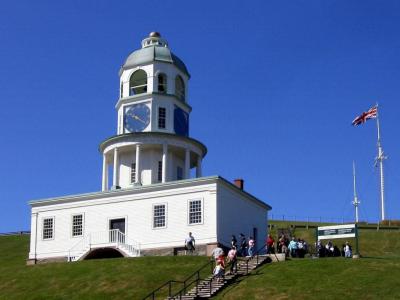
The Town Clock, also known as the Old Town Clock or the Citadel Clock Tower, is one of Halifax’s most recognizable landmarks, perched on the eastern slope of Citadel Hill overlooking Brunswick Street. This historic clock tower, a reconstruction of an early 19th-century Palladian-style structure, remains a symbol of the city’s military past and architectural heritage.
The idea for the Town Clock was conceived by Prince Edward, Duke of Kent, who served as the commander-in-chief of British North America’s military forces. Concerned about punctuality within the British Army and Royal Navy garrison in Halifax, he commissioned a turret clock before his return to England in 1800. The clock was manufactured by the prestigious House of Vulliamy, a renowned London-based firm of Royal Clockmakers.
The Town Clock officially began keeping time for Halifax’s garrison on October 20, 1803 and continues to function with its original mechanism-an intricate system of three weights, gears, and a 13-foot pendulum housed in a cast-iron frame. The bell chimes every quarter-hour and hour, maintaining the discipline of timekeeping established over two centuries ago.
The clock tower is a three-tiered octagonal structure, sitting atop a one-story rectangular white clapboard base that adheres to Palladian proportions. The building’s symmetrical design features classic elements such as a round-plan colonnade, supporting the octagonal clock level, which in turn gives way to an arcaded upper story, crowned with a copper dome, balustrade, and a decorative copper ball.
The clock face, set on all four sides, features Roman numerals, with “4” traditionally written as “IIII” rather than “IV” for aesthetic balance. The clock’s slow-moving mechanism has contributed to its longevity, requiring twice-weekly manual winding by employees of Citadel Hill National Historic Site, under the care of Parks Canada.
A Halifax icon, the Town Clock has appeared in various artworks, literature, and television, including the children’s show Theodore Tugboat, where it was personified as Chimey. As a historic timekeeper, it continues to bridge Halifax’s past and present, standing as a testament to its craftsmanship and enduring legacy.
The idea for the Town Clock was conceived by Prince Edward, Duke of Kent, who served as the commander-in-chief of British North America’s military forces. Concerned about punctuality within the British Army and Royal Navy garrison in Halifax, he commissioned a turret clock before his return to England in 1800. The clock was manufactured by the prestigious House of Vulliamy, a renowned London-based firm of Royal Clockmakers.
The Town Clock officially began keeping time for Halifax’s garrison on October 20, 1803 and continues to function with its original mechanism-an intricate system of three weights, gears, and a 13-foot pendulum housed in a cast-iron frame. The bell chimes every quarter-hour and hour, maintaining the discipline of timekeeping established over two centuries ago.
The clock tower is a three-tiered octagonal structure, sitting atop a one-story rectangular white clapboard base that adheres to Palladian proportions. The building’s symmetrical design features classic elements such as a round-plan colonnade, supporting the octagonal clock level, which in turn gives way to an arcaded upper story, crowned with a copper dome, balustrade, and a decorative copper ball.
The clock face, set on all four sides, features Roman numerals, with “4” traditionally written as “IIII” rather than “IV” for aesthetic balance. The clock’s slow-moving mechanism has contributed to its longevity, requiring twice-weekly manual winding by employees of Citadel Hill National Historic Site, under the care of Parks Canada.
A Halifax icon, the Town Clock has appeared in various artworks, literature, and television, including the children’s show Theodore Tugboat, where it was personified as Chimey. As a historic timekeeper, it continues to bridge Halifax’s past and present, standing as a testament to its craftsmanship and enduring legacy.
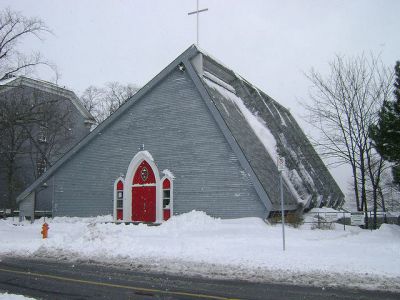
11) Brunswick Street United Church
Brunswick Street United Church stands as a distinctive landmark in Downtown Halifax, its gray exterior and bold red front door setting it apart from the surrounding buildings. The church’s architecture is unconventional, reflecting its rich history and enduring commitment to community service.
The origins of Brunswick Street United Church trace back to the 1830s when a fire destroyed the former Methodist church on the site. The current structure was initially built in the mid-1800s, but another fire in the 1970s left the building in ruins. The present-day church was reconstructed using the original stone walls, preserving a tangible connection to its past.
Beyond being a place of worship, Brunswick Street United Church has played a crucial role in social outreach. In the 1860s, the 'Edward Jost Mission' was established in Halifax’s North End, evolving into 'The City Mission' over the years. By 1929, the congregation of Brunswick Street United Church took over the Mission’s work, providing essential support services such as childcare, food, clothing, and employment assistance. As the scope of this work expanded, the congregation could no longer sustain it alone. In 2005, the Halifax Presbytery approved the creation of a separate organization, Brunswick Street Mission, which became a permanent entity in 2009. Today, the Mission continues its over 150-year-old commitment to addressing poverty in Halifax.
The church remains an active participant in various community initiatives, including collaborations with organizations like Colors, which focuses on supporting AIDS-affected orphans. While deeply rooted in history, Brunswick Street United Church continues to adapt and serve, embodying its mission of faith and outreach in the heart of Halifax.
The origins of Brunswick Street United Church trace back to the 1830s when a fire destroyed the former Methodist church on the site. The current structure was initially built in the mid-1800s, but another fire in the 1970s left the building in ruins. The present-day church was reconstructed using the original stone walls, preserving a tangible connection to its past.
Beyond being a place of worship, Brunswick Street United Church has played a crucial role in social outreach. In the 1860s, the 'Edward Jost Mission' was established in Halifax’s North End, evolving into 'The City Mission' over the years. By 1929, the congregation of Brunswick Street United Church took over the Mission’s work, providing essential support services such as childcare, food, clothing, and employment assistance. As the scope of this work expanded, the congregation could no longer sustain it alone. In 2005, the Halifax Presbytery approved the creation of a separate organization, Brunswick Street Mission, which became a permanent entity in 2009. Today, the Mission continues its over 150-year-old commitment to addressing poverty in Halifax.
The church remains an active participant in various community initiatives, including collaborations with organizations like Colors, which focuses on supporting AIDS-affected orphans. While deeply rooted in history, Brunswick Street United Church continues to adapt and serve, embodying its mission of faith and outreach in the heart of Halifax.

12) Fairview Lawn Cemetery
Fairview Lawn Cemetery, located in the North End of Halifax, is best known as the final resting place of over one hundred victims of the RMS Titanic disaster. Officially managed by the Parks Department of the Halifax Regional Municipality, this non-denominational cemetery has a significant historical legacy beyond its connection to the famous maritime tragedy.
The site of Fairview Lawn Cemetery has a long history, dating back to the 1750s when a blockhouse was built there to defend Halifax from attacks by the Mi'kmaq people. Over time, the land was developed into small farms until 1893, when it was acquired by a private company, Fairview Lawn Cemetery Limited, to serve as a burial ground. This move was prompted by the Camp Hill Cemetery nearing full capacity. The city of Halifax officially took control of Fairview in 1944.
The cemetery serves as a resting place for a diverse cross-section of Halifax’s residents, including sections designated for Greek and Chinese communities. It also holds a mass grave for victims of the Halifax Explosion of 1917, another tragedy that deeply impacted the city's history.
Following the sinking of the Titanic in 1912, Halifax was one of the key recovery points for victims. City coroner John Henry Barnstead designated Fairview Lawn Cemetery as the primary burial site, and it became the final resting place for 121 victims, more than any other cemetery in the world. The graves are laid out in three curved rows, unintentionally resembling the bow of a ship.
One of the most poignant graves is that of an unidentified child, originally known as The Unknown Child. Sailors from the Mackay-Bennett paid for his burial. In 2002, forensic tests first identified him as Eino Viljami Panula, but later DNA confirmed he was Sidney Leslie Goodwin, a 19-month-old who perished with his family.
Another well-known grave is marked “J. Dawson.” After Titanic (1997), visitors mistakenly linked it to Jack Dawson, Leonardo DiCaprio’s character. In reality, it belongs to Joseph Dawson, an Irish coal trimmer on the ship.
Fairview Lawn Cemetery remains a place of historical significance and a site of pilgrimage for Titanic enthusiasts and visitors paying their respects to the victims of one of history’s most infamous maritime disasters.
The site of Fairview Lawn Cemetery has a long history, dating back to the 1750s when a blockhouse was built there to defend Halifax from attacks by the Mi'kmaq people. Over time, the land was developed into small farms until 1893, when it was acquired by a private company, Fairview Lawn Cemetery Limited, to serve as a burial ground. This move was prompted by the Camp Hill Cemetery nearing full capacity. The city of Halifax officially took control of Fairview in 1944.
The cemetery serves as a resting place for a diverse cross-section of Halifax’s residents, including sections designated for Greek and Chinese communities. It also holds a mass grave for victims of the Halifax Explosion of 1917, another tragedy that deeply impacted the city's history.
Following the sinking of the Titanic in 1912, Halifax was one of the key recovery points for victims. City coroner John Henry Barnstead designated Fairview Lawn Cemetery as the primary burial site, and it became the final resting place for 121 victims, more than any other cemetery in the world. The graves are laid out in three curved rows, unintentionally resembling the bow of a ship.
One of the most poignant graves is that of an unidentified child, originally known as The Unknown Child. Sailors from the Mackay-Bennett paid for his burial. In 2002, forensic tests first identified him as Eino Viljami Panula, but later DNA confirmed he was Sidney Leslie Goodwin, a 19-month-old who perished with his family.
Another well-known grave is marked “J. Dawson.” After Titanic (1997), visitors mistakenly linked it to Jack Dawson, Leonardo DiCaprio’s character. In reality, it belongs to Joseph Dawson, an Irish coal trimmer on the ship.
Fairview Lawn Cemetery remains a place of historical significance and a site of pilgrimage for Titanic enthusiasts and visitors paying their respects to the victims of one of history’s most infamous maritime disasters.
